
Inspiration
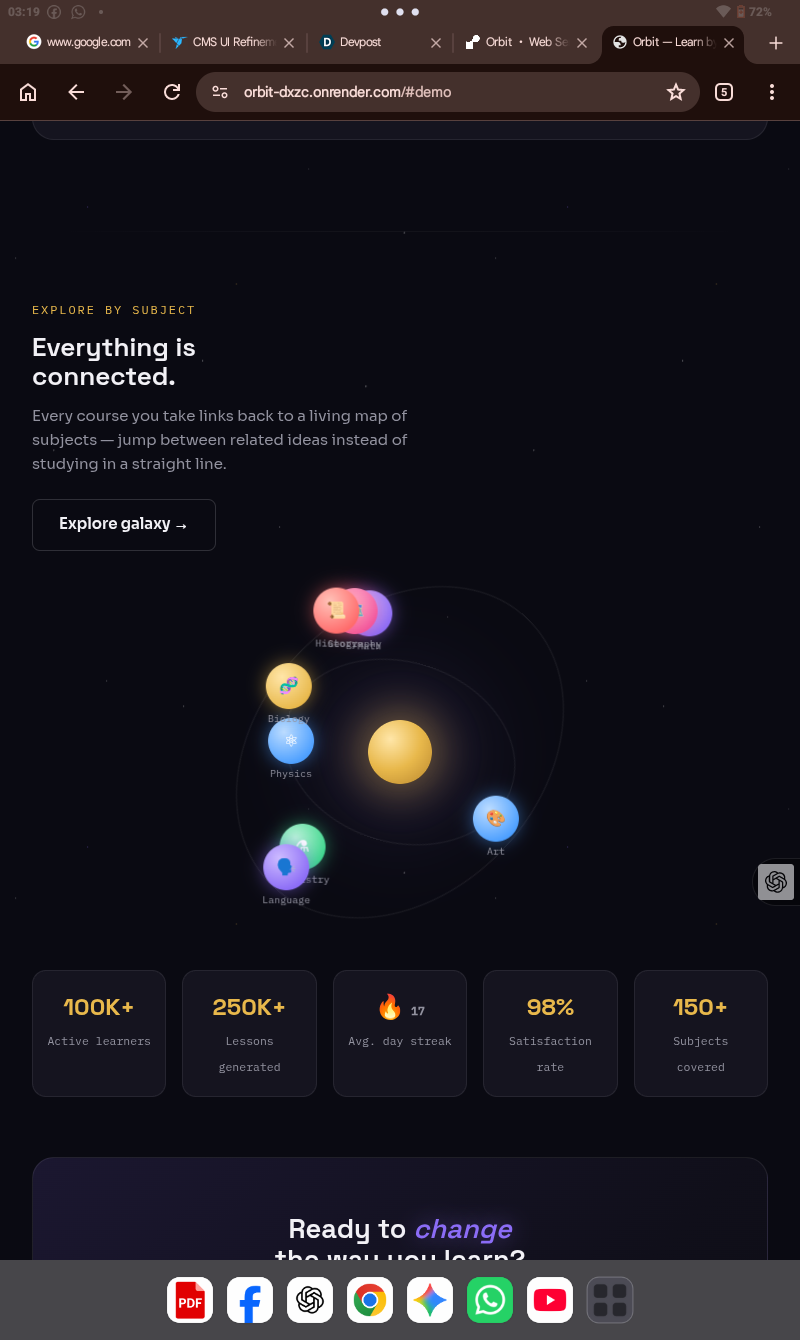
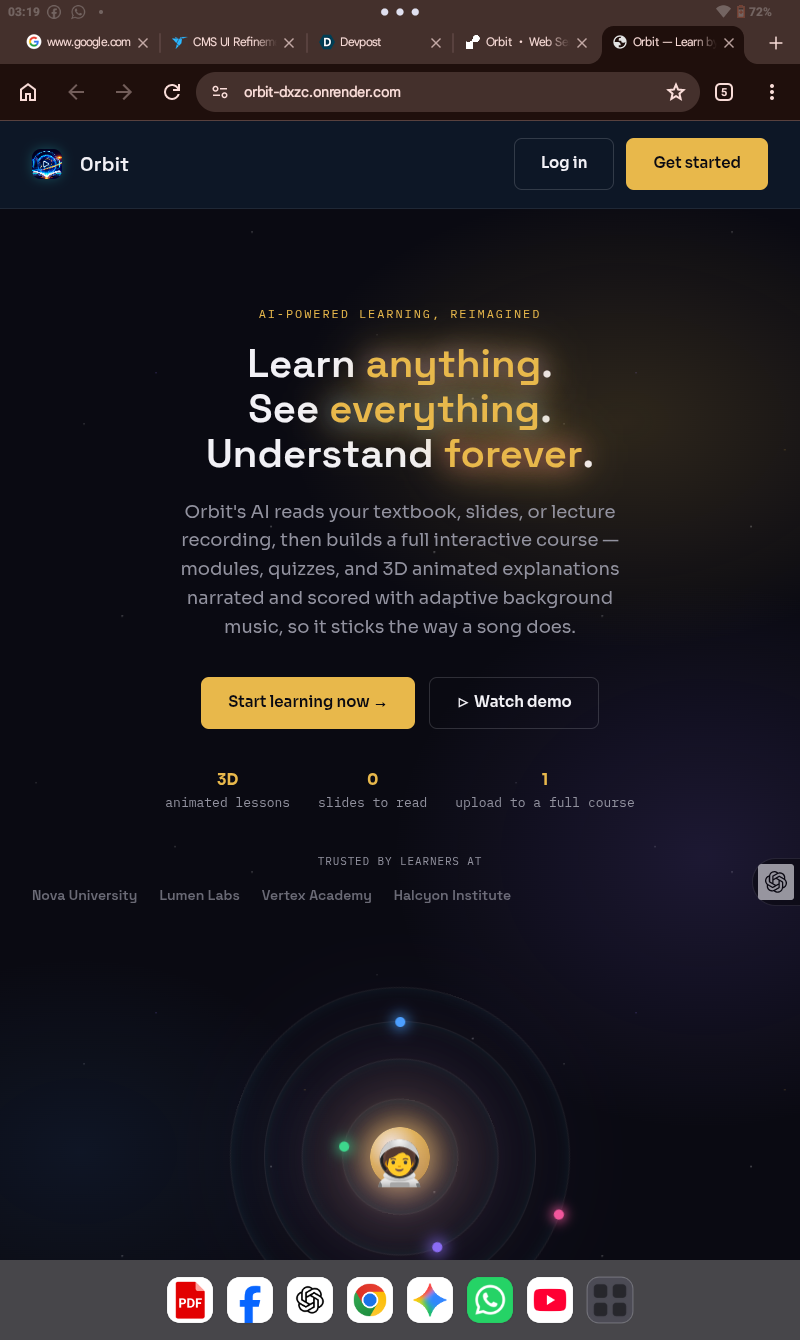
Education has a visualization problem. We realized that some of the hardest things to learn are the things students cannot easily see. A textbook can explain how a heart pumps blood, how electricity flows through a circuit, how an atom behaves, or how a financial market moves—but reading about something is not the same as experiencing it. We wanted to build something different. What if AI could take a complicated concept and transform it into something a student could actually see, explore, hear, and interact with? That idea became Orbit. Our vision is simple: 'turn learning from something you read into something you experience.'
What it does
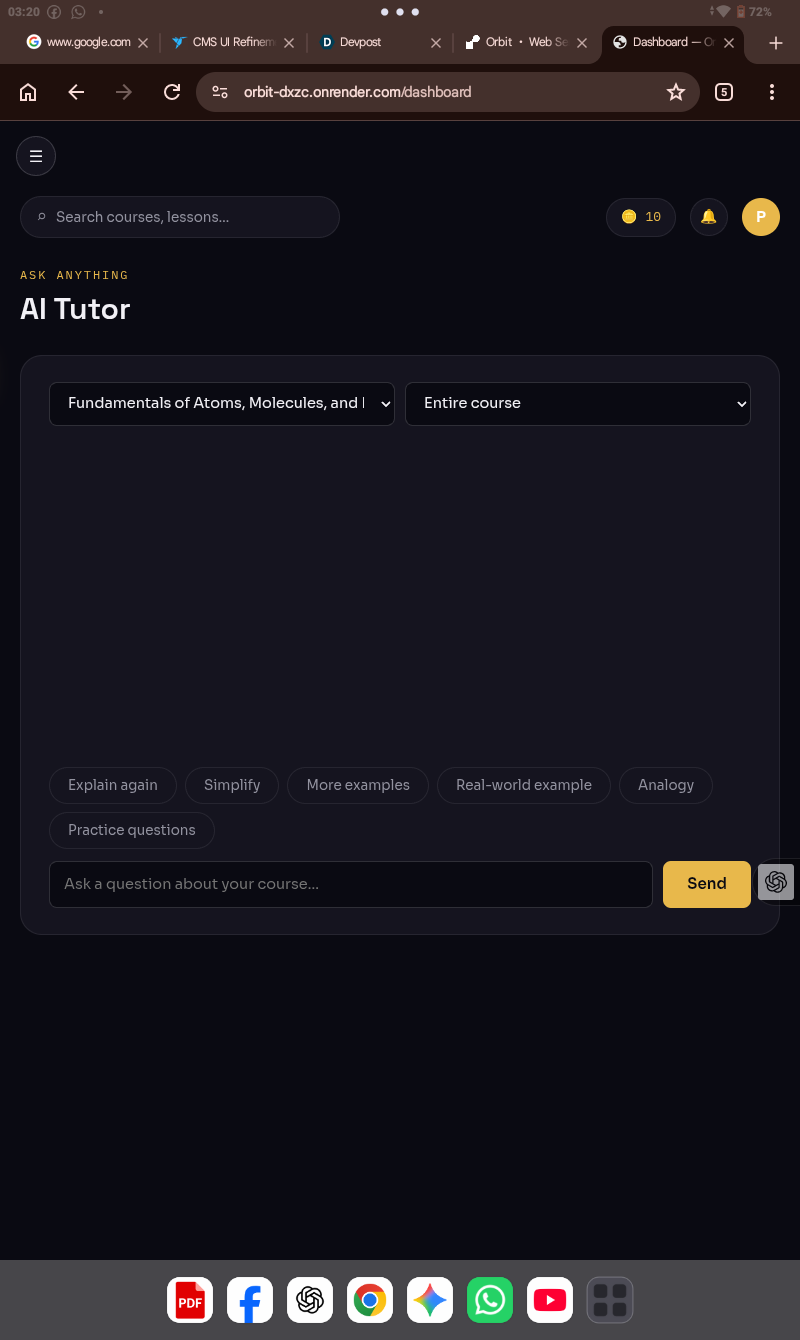
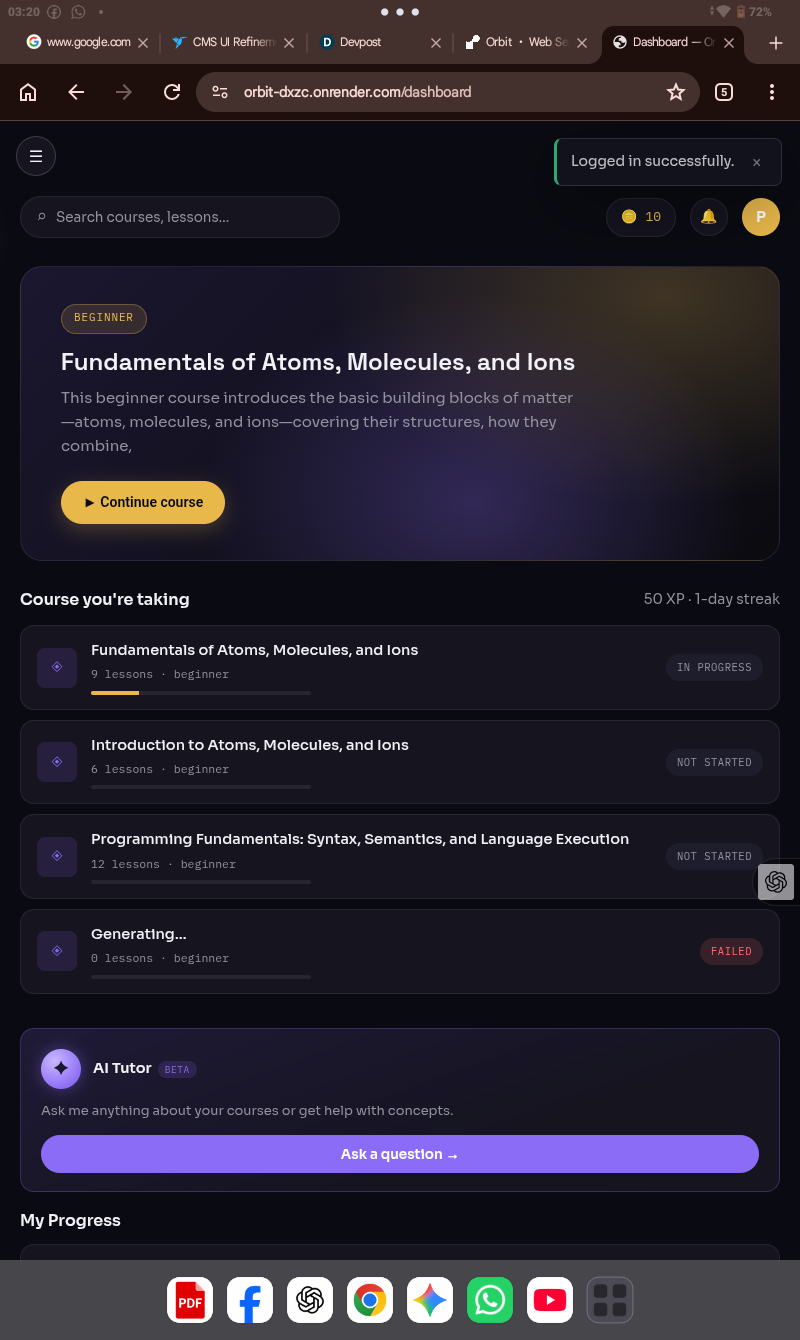
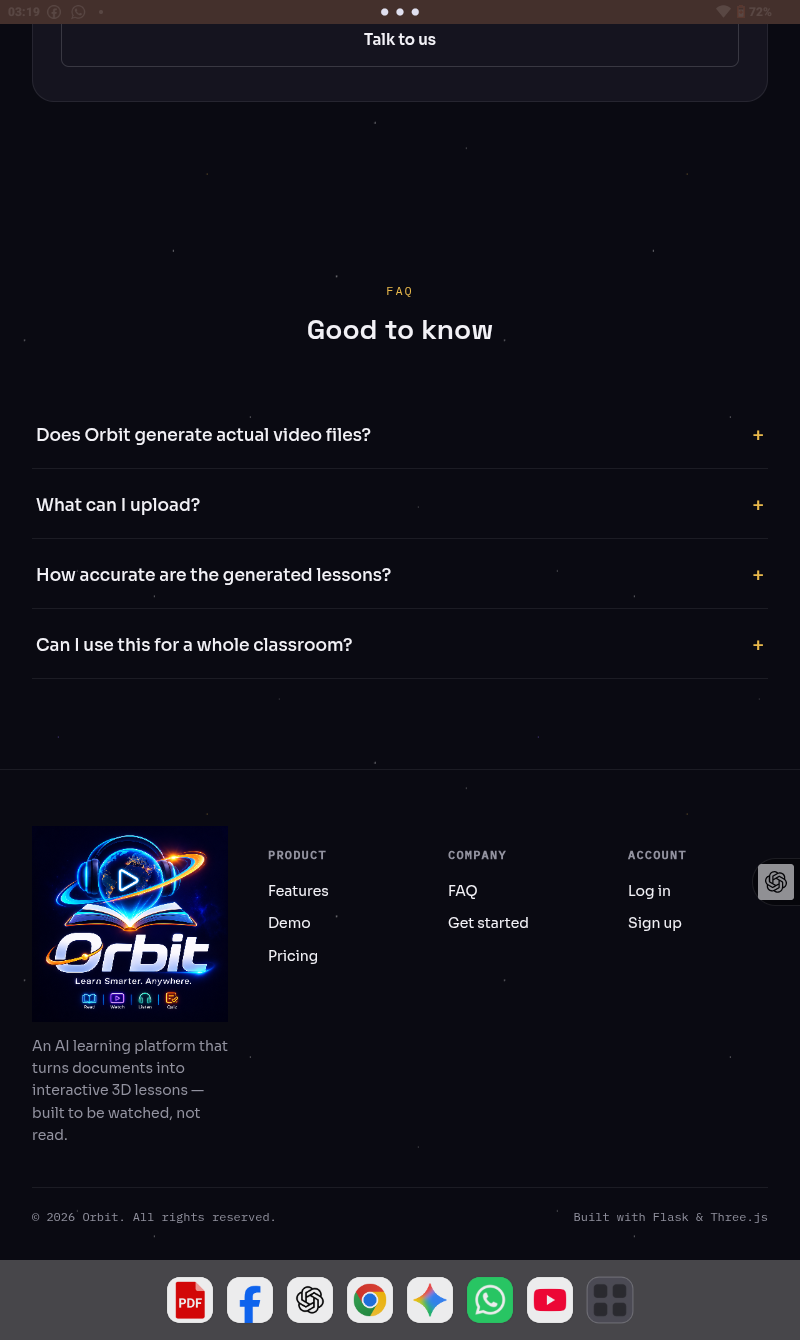
Orbit is an AI-powered interactive learning platform that transforms complex educational content into immersive visual learning experiences. A student can provide learning material such as a PDF or educational content. Orbit analyzes the material, understands the important concepts, structures them into lessons, and generates an interactive learning experience around them. Instead of giving students another wall of text, Orbit can explain concepts through:
- Interactive 3D visualizations
- AI-generated explanations
- Narrated lessons
- Structured courses
- Interactive exploration
- Quizzes
- Assessments
- Progress and understanding tracking
The goal is not simply to give students the answer.
Orbit shows them why the answer makes sense.
How we built it
Orbit combines an AI-powered backend with a browser-based 3D visualization engine. We use Python and Flask to power the backend and manage the application's core logic. AI models analyze educational material, extract concepts, generate explanations, structure lessons, and produce structured scene information that can be translated into visual experiences.
For visualization, we use Three.js to render interactive 3D environments directly in the browser.
The system essentially creates a pipeline:
Learning Material → AI Analysis → Concept Breakdown → Learning Structure → 3D Scene Generation → Narration → Quiz & Assessment
This allows Orbit to transform static educational material into something dynamic and interactive.
Challenges we ran into
One of our biggest challenges was connecting AI-generated knowledge with interactive 3D visualization.
An AI model can explain a concept extremely well in text, but turning that explanation into something that can actually be visualized requires structure.
We had to think about questions like:
What should appear? Where should it appear? How should it move? What should the student interact with? And how do we keep the visualization educational rather than just visually impressive?
We also faced challenges around maintaining accuracy, synchronizing narration with visual events, generating useful learning structures from different types of content, and building a smooth experience across the entire pipeline.
The biggest lesson was that creating an AI product is not just about connecting an API. The real challenge is designing the system around the intelligence.
Accomplishments that we're proud of
We are proud that Orbit goes beyond the traditional AI chatbot experience.
Instead of:
Student → Question → AI Answer
Orbit aims for:
Student → Content → AI Understanding → Visual Experience → Exploration → Assessment → Understanding
We built a working foundation where educational content can become structured lessons and interactive 3D experiences.
We are especially proud of combining technologies that are rarely presented together in a traditional learning platform:
Generative AI + Education + 3D Visualization + Narration + Assessment
Orbit isn't trying to replace teachers.
It is trying to give teachers and students a completely new way to experience difficult concepts.
What we learned
We learned that understanding is different from receiving information.
A student can read the correct explanation and still not understand the concept.
We also learned that AI becomes much more powerful when it is given a role beyond conversation.
AI can be the engine that understands the material.
3D can become the medium that visualizes it.
Narration can guide the student.
And assessment can determine whether the student actually understood it.
That combination is what makes Orbit different.
We also learned that building an ambitious AI product requires constant iteration. The first version rarely looks like the final vision. Every technical limitation forced us to rethink how the system should work—and each iteration made Orbit better.
What's next for Orbit
This is only the beginning.
Our next goal is to make Orbit capable of transforming almost any educational concept into an interactive visual experience.
We want to expand the platform with:
- More advanced AI-generated 3D scenes
- Real-time AI tutoring
- Personalized learning paths
- Adaptive assessments
- More accurate concept-to-visual mapping
- Voice-based interaction
- Teacher dashboards
- Collaborative classrooms
- More subjects and educational domains
- Richer simulations and virtual experiments
- Deeper learning analytics
Eventually, we envision a world where a student doesn't have to ask:
“Can someone explain this to me?”
They can simply give Orbit the material and say:
“Show me.”
And Orbit does.
Orbit — Don't just learn it. See it. Explore it. Understand it.
Built With
- css
- flask
- htnml
- javascript
- python
- render
- three.js

Log in or sign up for Devpost to join the conversation.