Inspiration
Most productivity apps feel cold, repetitive, and emotionally disconnected. We wanted to reimagine productivity as something immersive, motivating, and deeply personal — inspired by systems seen in games and anime like Solo Leveling, where progress feels meaningful and visible.
Orbit OS was born from a simple question:
“What if your life felt like a real progression system?”
Instead of treating tasks like boring checklists, Orbit OS transforms daily growth into a cinematic AI-powered operating system for human potential.
The goal was to create something that feels:
- emotionally engaging,
- futuristic,
- calming,
- intelligent,
- and motivating enough to make self-improvement addictive.
What it does
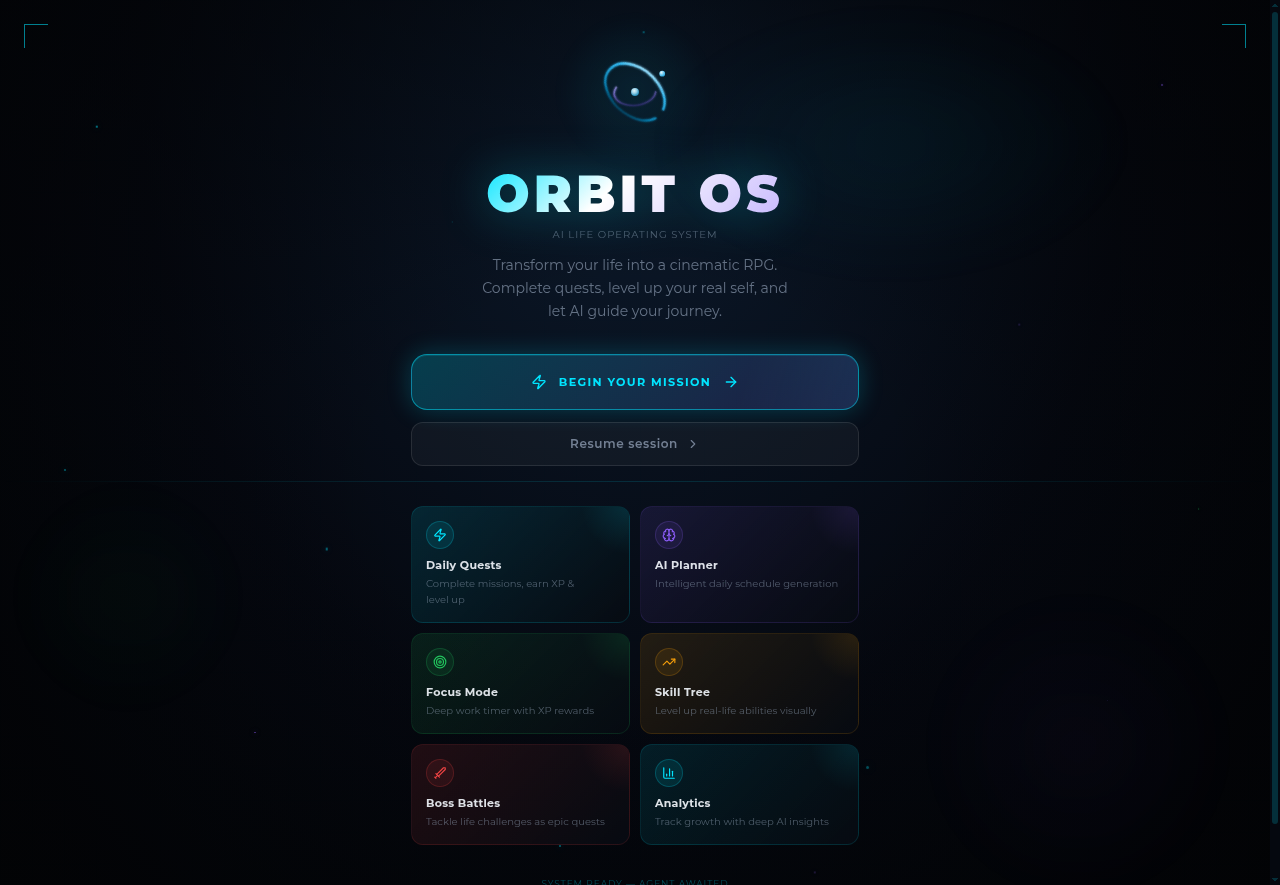
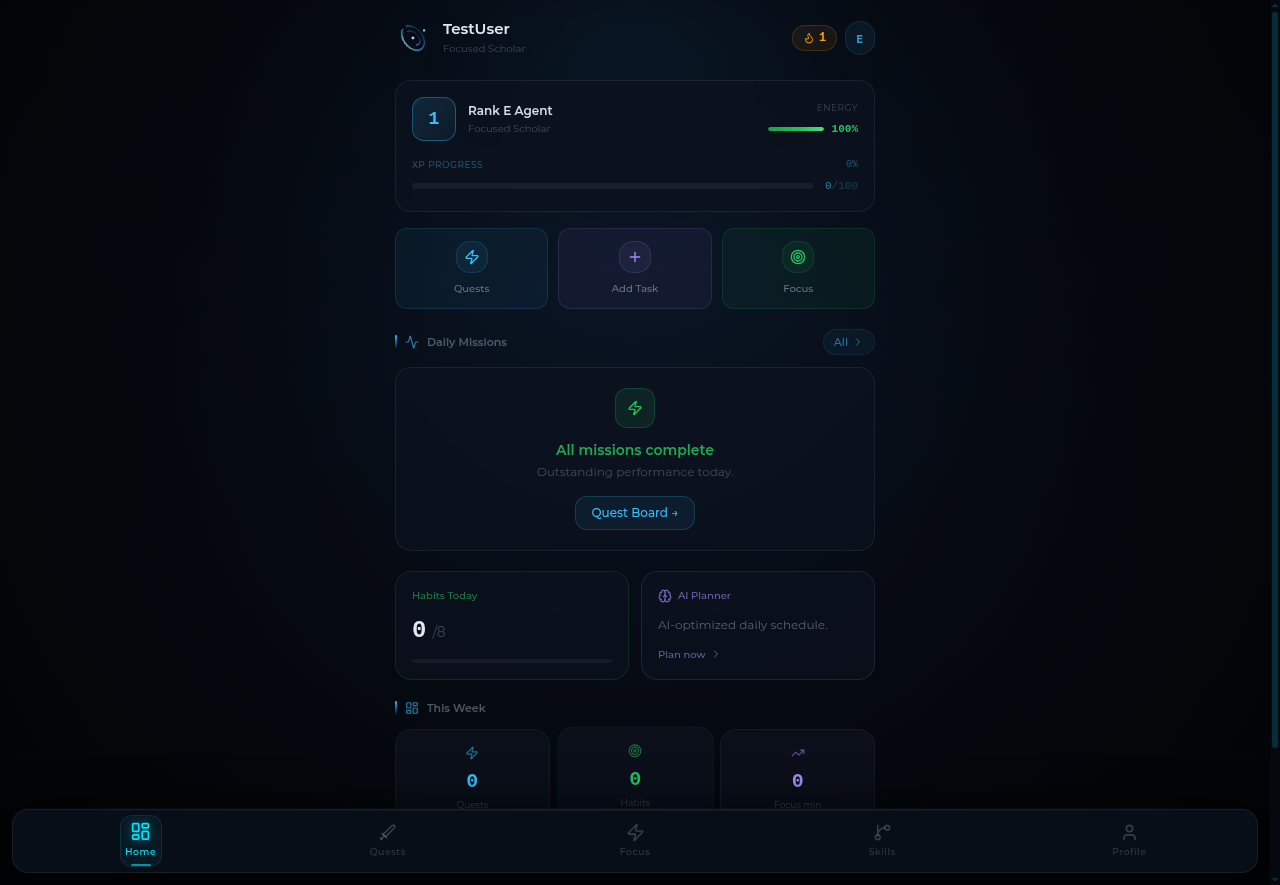
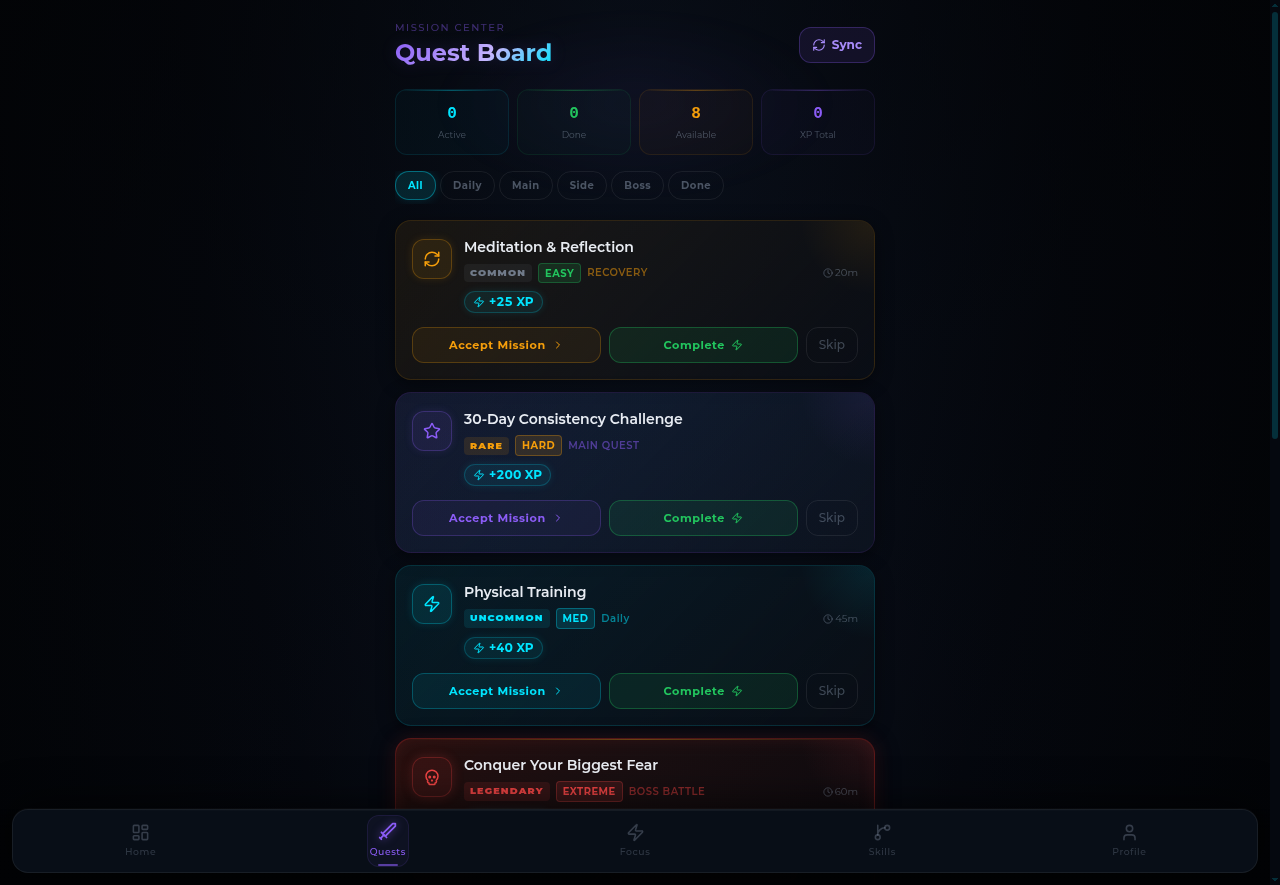
Orbit OS is an AI-powered life operating system that turns productivity, habits, focus, and personal growth into an immersive progression experience.
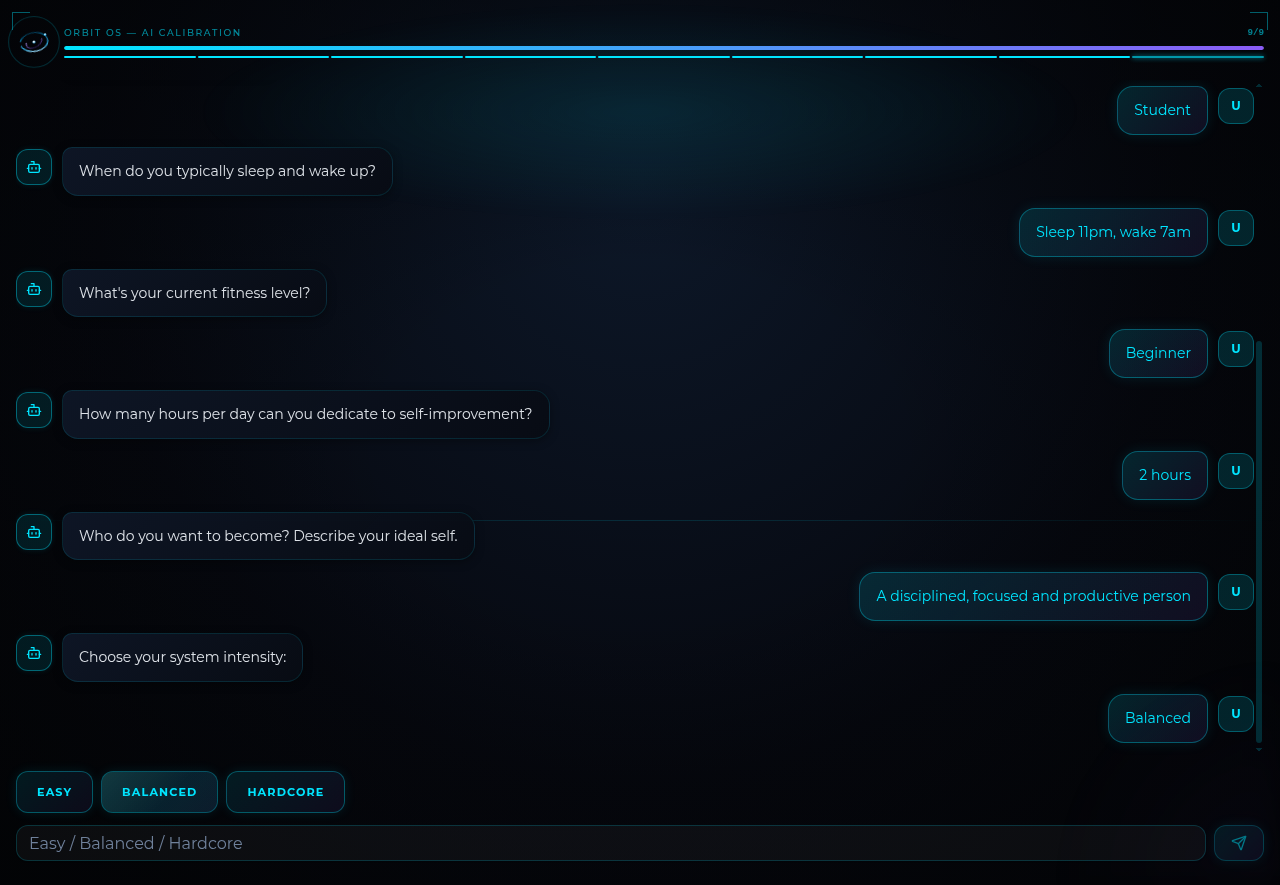
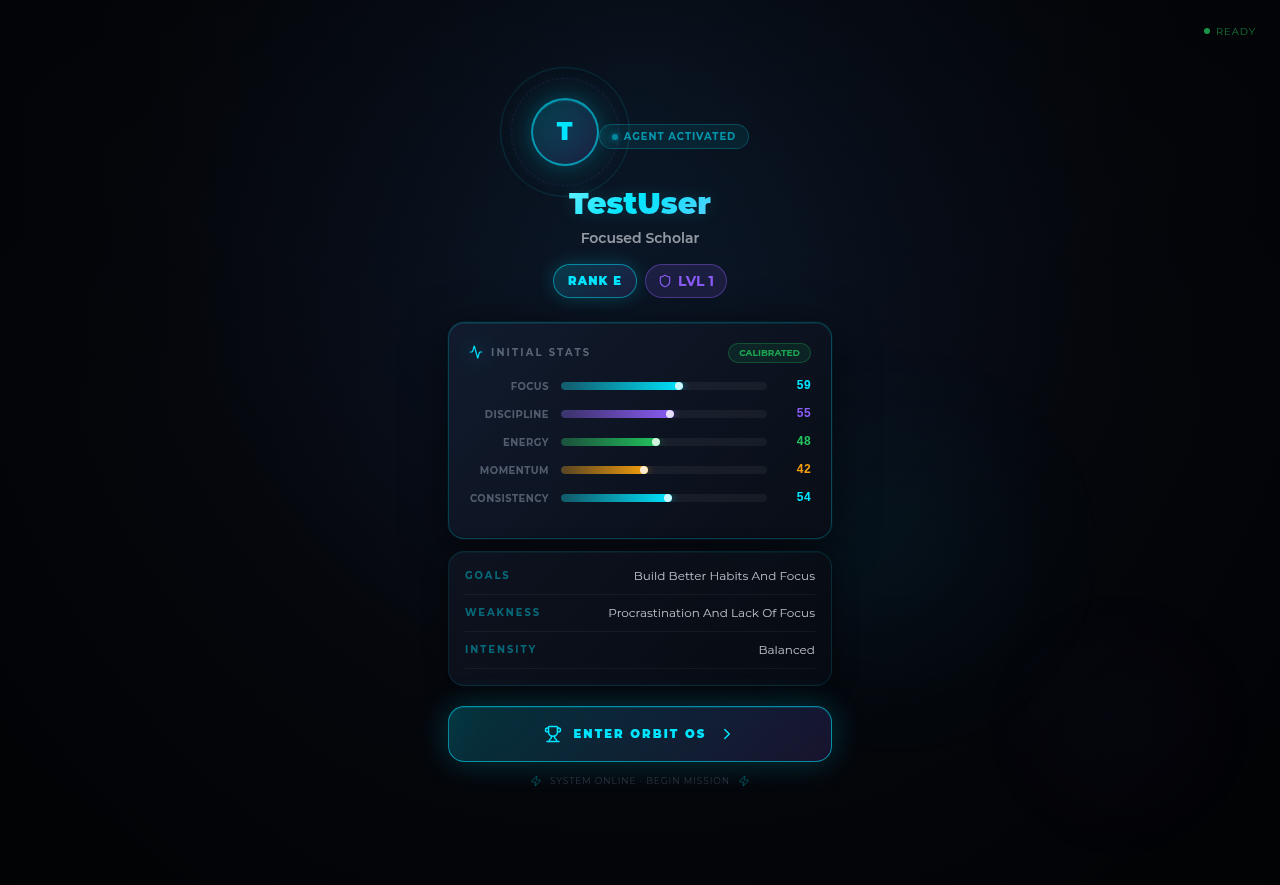
Users create a personalized AI profile through an onboarding sequence, and the system generates:
- missions,
- quests,
- focus sessions,
- skill trees,
- XP progression,
- streak systems,
- analytics,
- and AI-planned schedules.
Core features include:
- AI onboarding system
- Dynamic quest board
- AI daily planner
- Pomodoro-based focus mode
- Skill tree progression
- Habit tracking
- XP + level system
- Weekly AI review summaries
- Analytics dashboard
- Voice-enabled productivity input
- Cinematic onboarding and reveal flow
Orbit OS combines productivity psychology, game systems, and premium UI/UX design into one unified experience.
How we built it
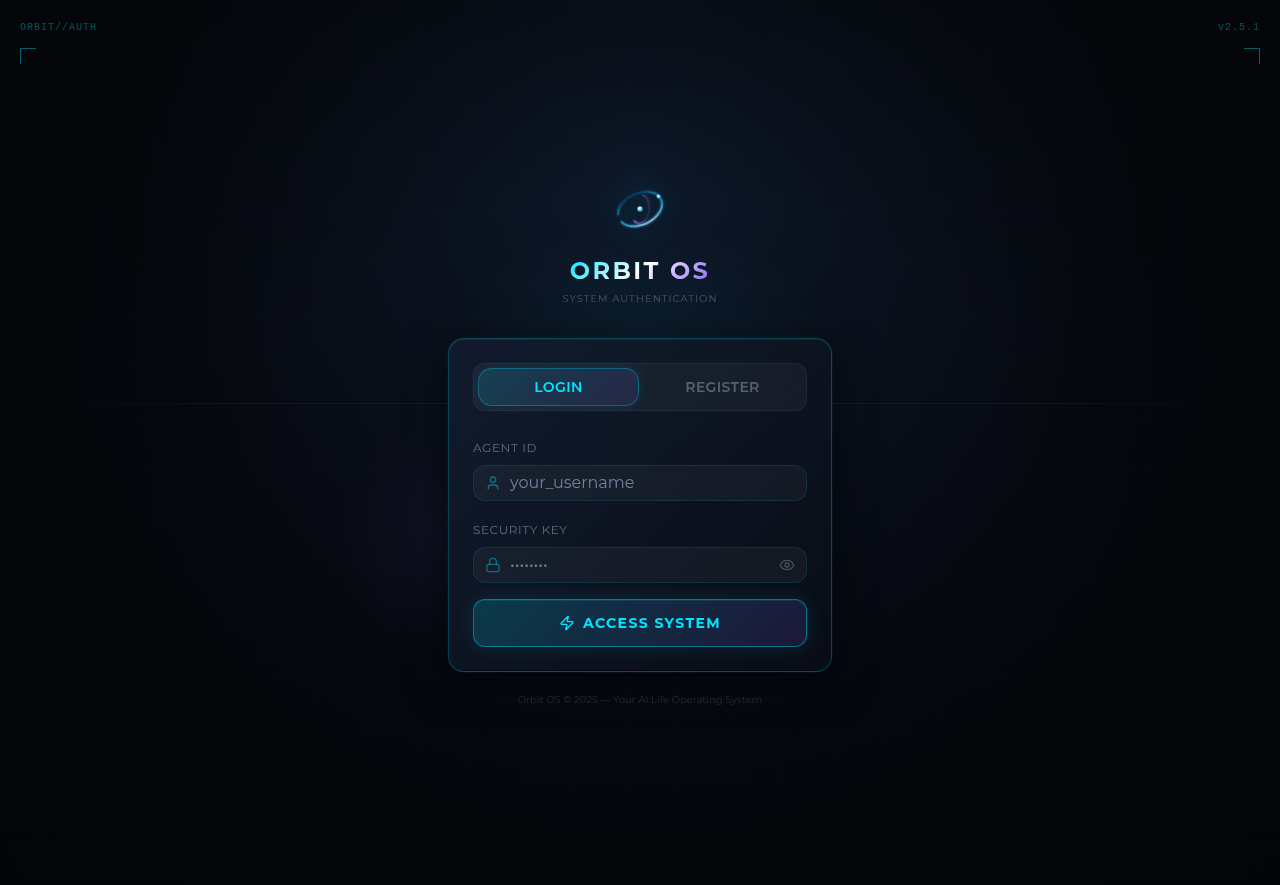
We built Orbit OS as a fully interactive multi-page web application focused heavily on cinematic UI/UX and emotional design psychology.
The project includes:
- 19 fully designed pages
- advanced glassmorphism UI
- animated onboarding flows
- AI-inspired interactions
- responsive layouts
- progression systems
- dynamic state-driven interfaces
- immersive motion design
- premium visual hierarchy
We focused on:
- clean component architecture,
- visual consistency,
- smooth transitions,
- premium typography,
- accessibility,
- and believable futuristic product aesthetics.
The interface evolved through multiple refinement passes — shifting from overly “gaming” aesthetics toward a calm, premium AI operating system feel inspired by products like:
- Arc Browser,
- Apple Vision Pro,
- Linear,
- and modern cinematic sci-fi interfaces.
Challenges we ran into
One of the biggest challenges was balancing:
- gamification,
- usability,
- and premium product realism.
Early versions became too “cyberpunk” and visually noisy. We had to carefully redesign:
- typography systems,
- glow intensity,
- animation timing,
- color hierarchy,
- spacing,
- and interface density.
Another challenge was making the app feel futuristic without becoming distracting or overwhelming.
We also spent significant time refining:
- onboarding psychology,
- progression mechanics,
- reward systems,
- and UI responsiveness across all screens.
Creating a believable AI operating system aesthetic while maintaining clarity and usability required many design iterations.
Accomplishments that we're proud of
We are especially proud of:
- building a complete cinematic UI experience,
- creating a fully unified design language across 19 pages,
- designing a custom futuristic brand identity,
- and transforming productivity into something emotionally immersive.
Some highlights include:
- the AI onboarding flow,
- the cinematic system generation sequence,
- the premium dashboard redesign,
- the skill tree visualization,
- and the calm futuristic interface aesthetic.
We are also proud that the project successfully evolved from a flashy concept into a believable premium product experience.
What we learned
This project taught us that great productivity design is not only about features — it is about emotion.
We learned:
- how visual psychology affects motivation,
- how animation pacing changes user perception,
- how color and spacing impact cognitive load,
- and how important restraint is in futuristic UI design.
We also learned the importance of:
- iterative refinement,
- visual hierarchy,
- microinteractions,
- and balancing aesthetics with usability.
Most importantly, we learned that people stay consistent longer when progress feels meaningful and emotionally rewarding.
What's next for Orbit OS
Our vision for Orbit OS is much bigger than a productivity app.
Future plans include:
- real AI integrations,
- adaptive mission generation,
- wearable integrations,
- behavioral analytics,
- AI coaching systems,
- smart notifications,
- social accountability systems,
- real-time personalization,
- and cross-platform deployment.
We also plan to evolve Orbit OS into a true “life operating system” capable of helping users improve:
- focus,
- discipline,
- health,
- learning,
- communication,
- and long-term personal growth.
The long-term vision is to build an AI system that helps people become the best version of themselves — one mission at a time.
Built With
- aiplanner
- aiux
- componentarchitecture
- framermotion
- gamification
- glassmorphism
- medo
- medoai
- mobilefirst
- motiondesign
- pomodoro
- pwa
- react
- responsivedesign
- skilltree
- statemanagement
- tailwindcss
- typescript
- vite
- voiceinput
- weatherapi
- xpsystem

Log in or sign up for Devpost to join the conversation.