-
-
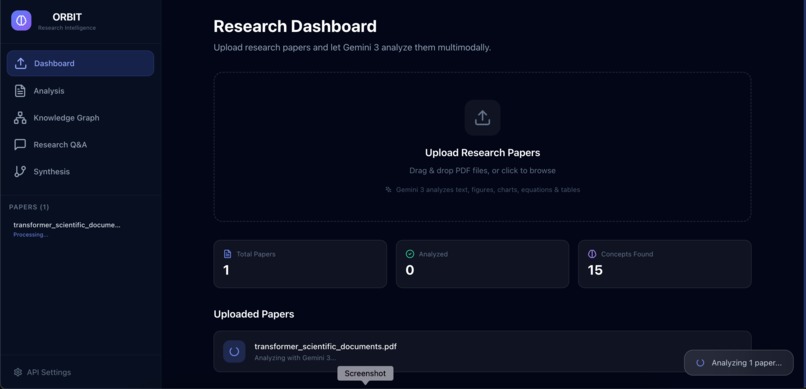
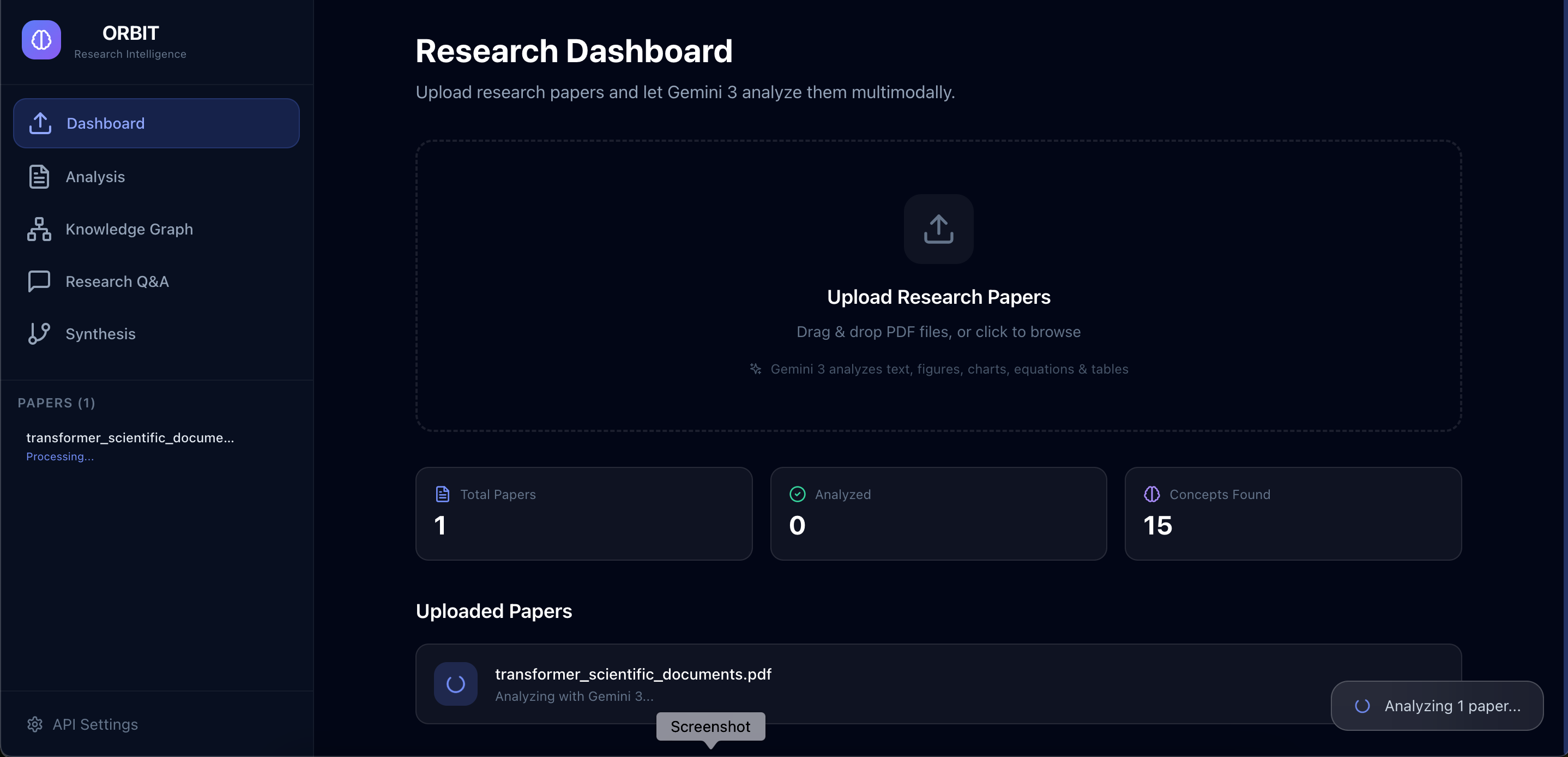
Dashboard view of ORBIT with uploaded research papers ready for analysis.
-
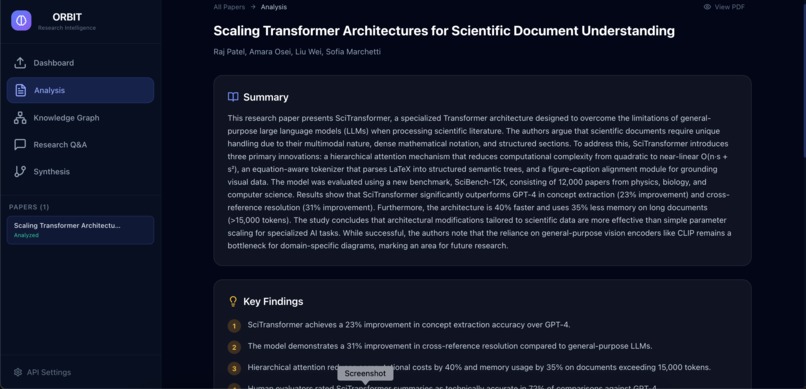
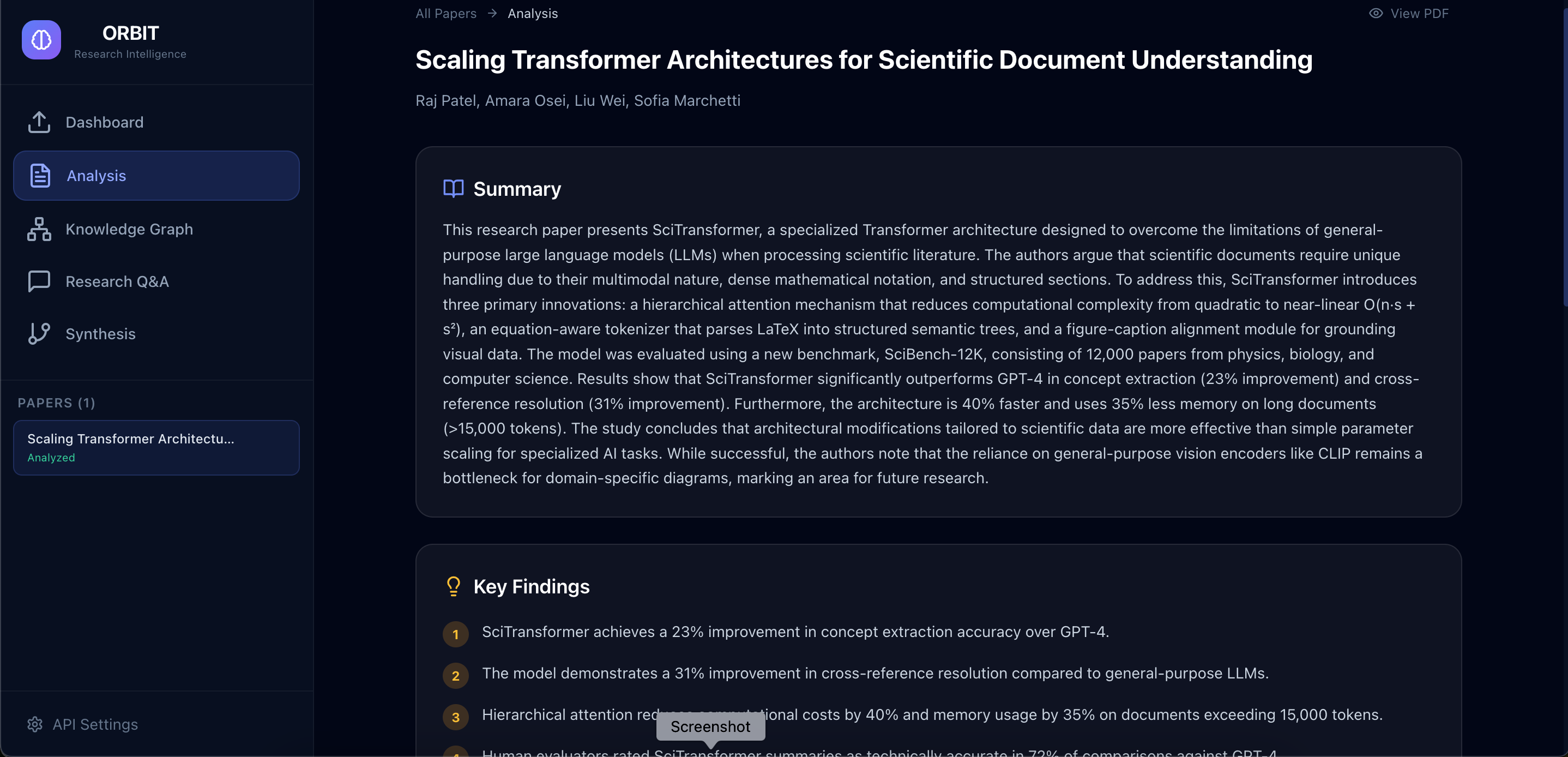
Detailed paper analysis showing key findings, methodologies, important concepts, and extracted insights powered by Gemini 3
-
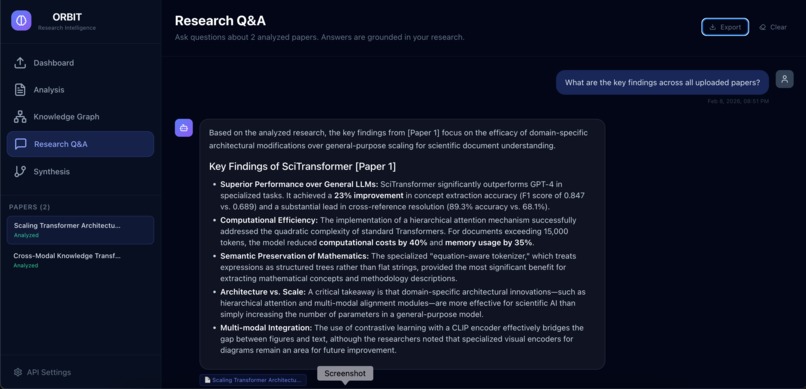
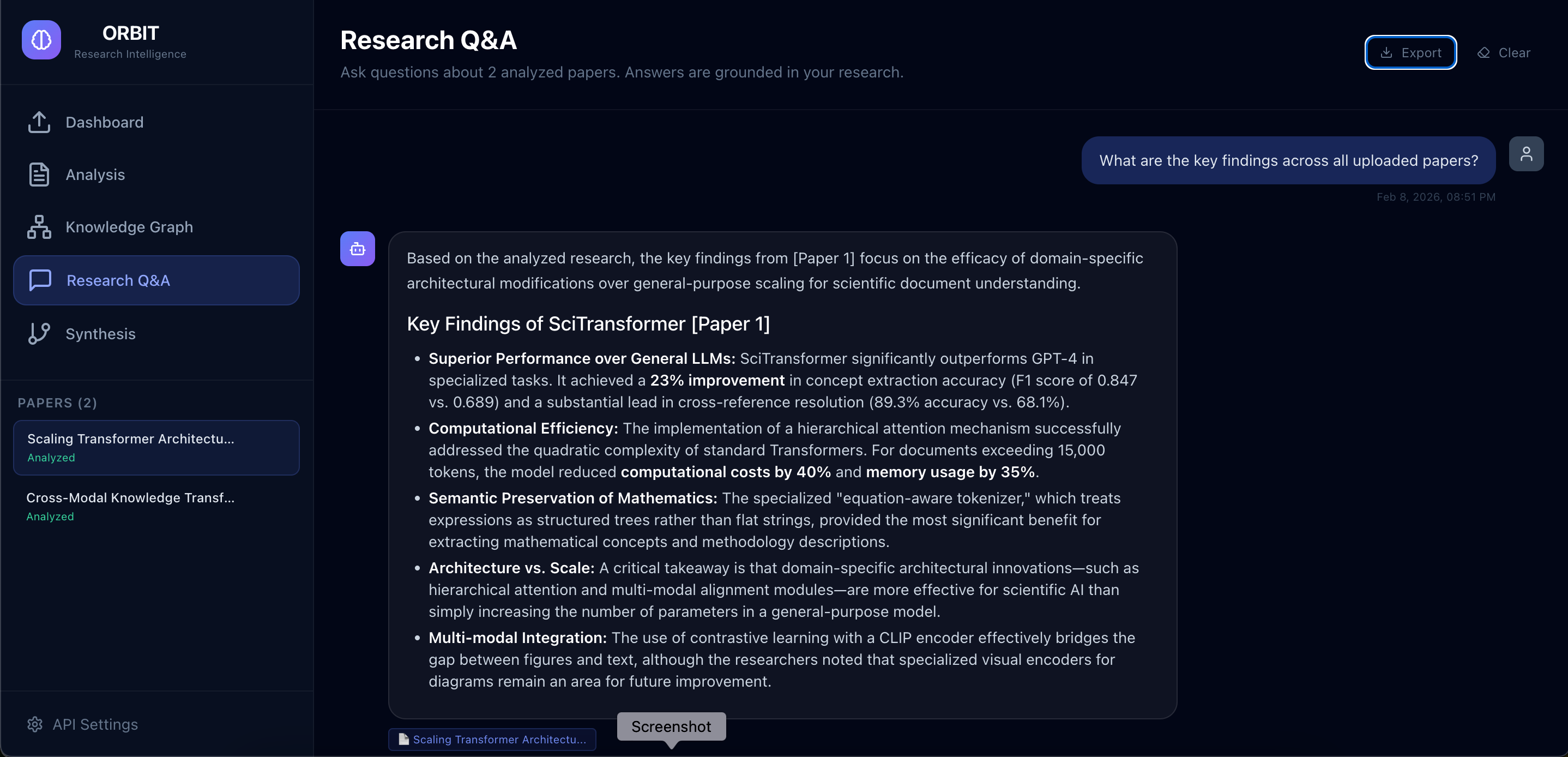
Ask questions about uploaded papers and get answers grounded in the research, with citations and contextual reasoning from Gemini 3.
-
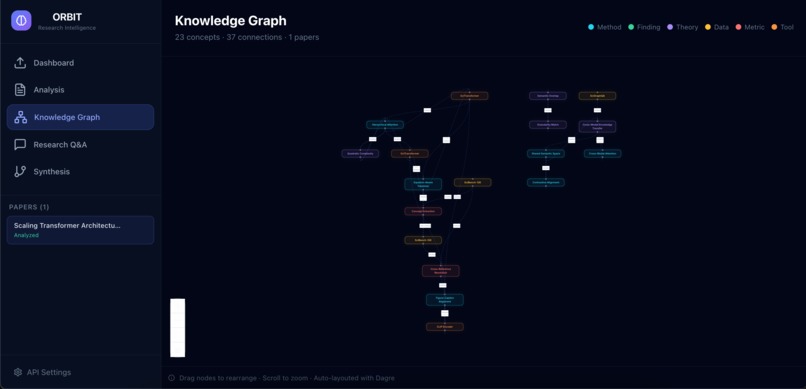
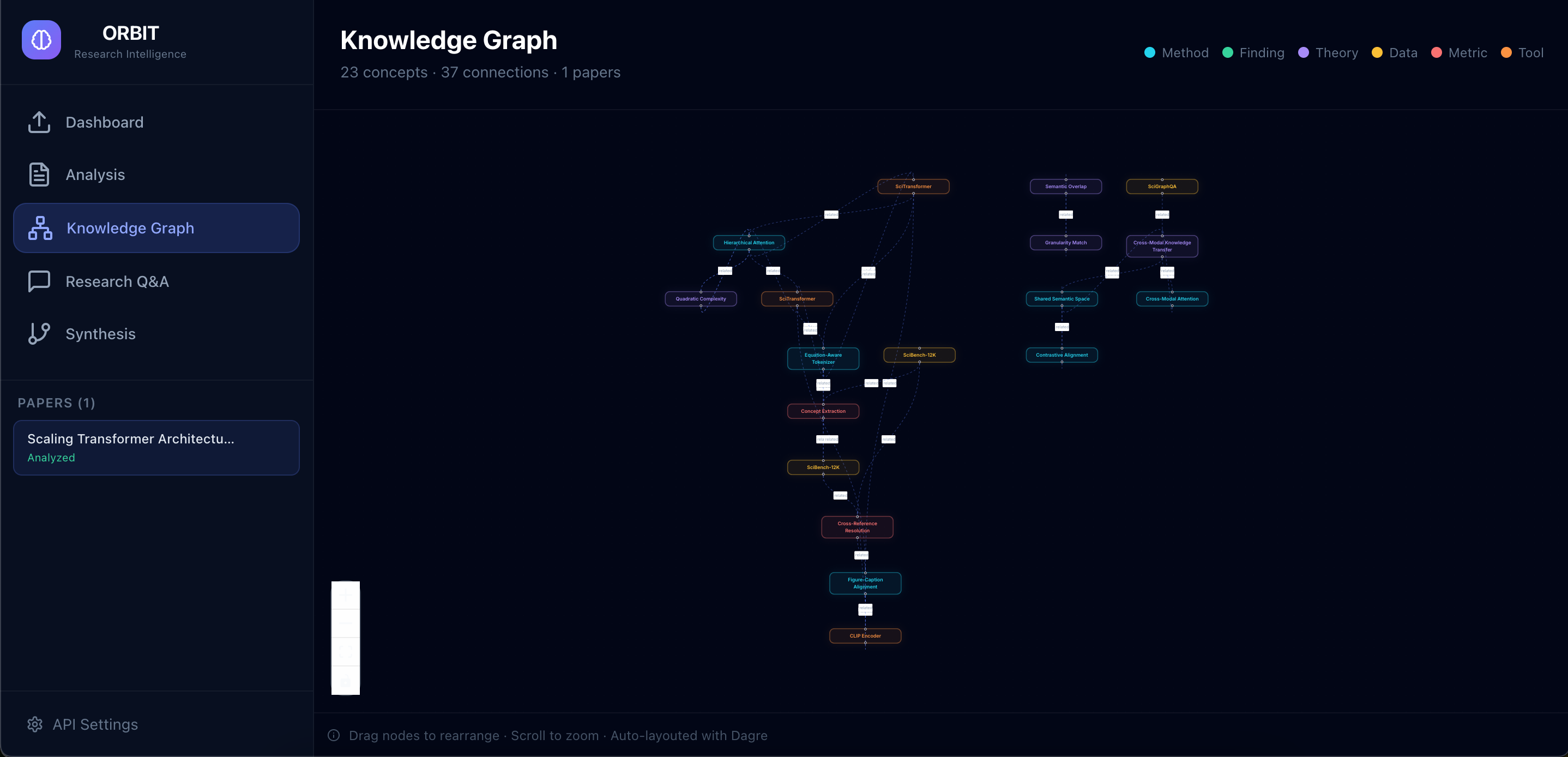
Interactive knowledge graph relationships between concepts across papers, highlighting connections, contradictions, and research gaps.
-
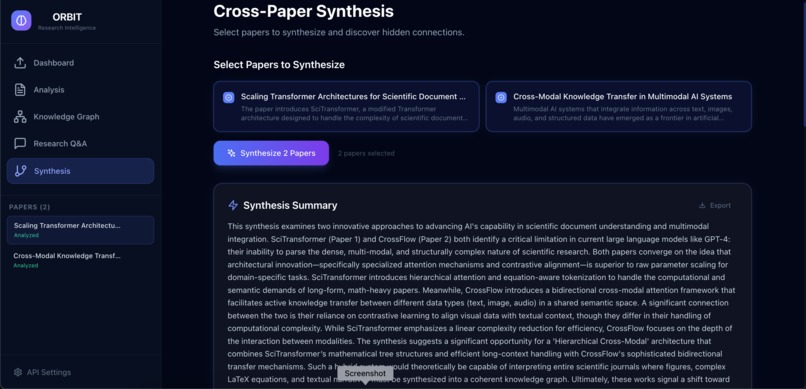
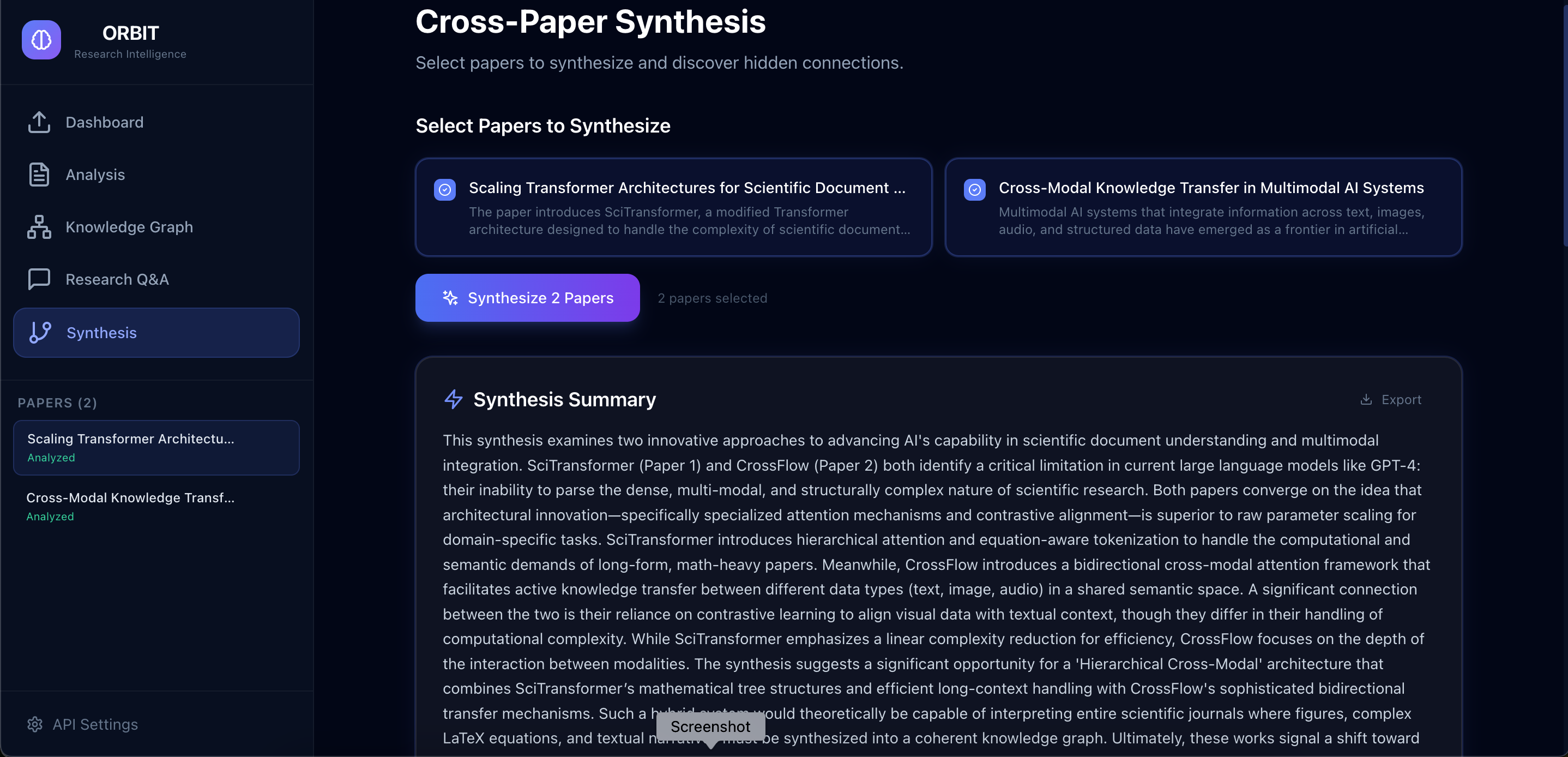
ORBIT synthesizes multiple papers to generate novel research hypotheses, highlighting gaps, connections, and future directions.
Inspiration
I’ve always felt that one of the hardest parts of research isn’t running experiments—it’s reading and connecting ideas across many papers. You can spend hours or even days trying to understand how different works relate to each other.
I wanted to see if AI could help with that, not just by summarizing papers, but by actually helping people see connections and come up with new ideas. When I started exploring multimodal models, it felt like the right opportunity to try building something like this.
That’s how ORBIT started.
What it does
ORBIT is a web app that helps people work with research papers more efficiently.
Users can:
- Upload research papers and automatically extract key findings and concepts
- Explore a visual knowledge graph of relationships
- Ask questions and get grounded answers based on the papers
- Compare multiple papers to discover connections or gaps
- Generate possible research directions based on those gaps
The goal is to make literature review faster, more visual, and more interactive.
How we built it
I built ORBIT as a full-stack web application using Next.js and TypeScript.
The frontend handles uploading papers, displaying structured insights, and visualizing relationships between concepts. The backend uses API routes to process documents and communicate with the Gemini API.
Gemini is used for:
- Multimodal paper analysis
- Research Q&A grounded in context
- Cross-paper synthesis and hypothesis generation
For visualization, I used React Flow and Dagre to generate knowledge graphs, and Zustand for state management. The interface was styled using Tailwind CSS and Framer Motion.
Most of the work went into designing how information flows through the system so outputs stay structured and meaningful instead of becoming generic summaries.
Challenges we ran into
One challenge was dealing with how different research papers are structured. Papers vary widely in terminology, layout, and formatting, so extracting consistent insights required a lot of iteration.
Another challenge was getting reliable structured output from the model. It took experimentation with prompts and data formatting to get consistent and grounded responses.
Visualizing concept relationships in a clear way was also harder than expected. It’s easy to generate data, but much harder to present it in a way that’s readable and useful.
Accomplishments that we're proud of
I’m proud that ORBIT goes beyond summarizing papers and actually helps reveal relationships between ideas and generate possible new directions.
I’m also happy with how interactive the experience feels. Turning complex research into something visual and explorable was an important goal from the beginning.
Most importantly, this project shows how multimodal AI can be used for real-world scientific workflows.
What we learned
Building ORBIT taught me that designing workflows around AI is just as important as the model itself. How context is structured and how tasks are broken down makes a big difference in output quality.
I also learned that usability matters a lot. Even powerful analysis isn’t helpful if users can’t explore results easily.
What's next for ORBIT — Open Research Breakthrough Intelligence Tool
Next, I want to improve how ORBIT handles larger collections of papers and strengthen the synthesis features so it becomes easier to track trends across research fields.
I’m also interested in adding collaboration features and integrations with open research repositories.
Long term, I see ORBIT becoming a tool that helps researchers move from reading papers to discovering new ideas much faster.
Built With
- aistudio
- dagre
- framer-motion
- google-gemini-3-api
- next.js
- node.js
- react
- react-flow
- tailwind-css
- typescript
- vercel
- zustand


Log in or sign up for Devpost to join the conversation.