-
-
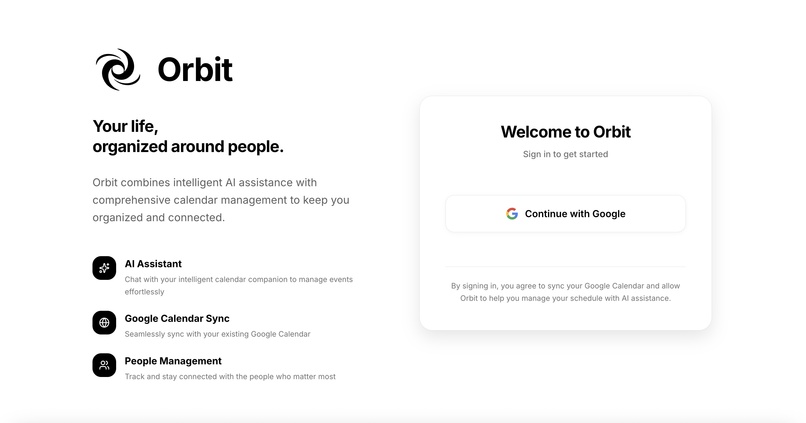
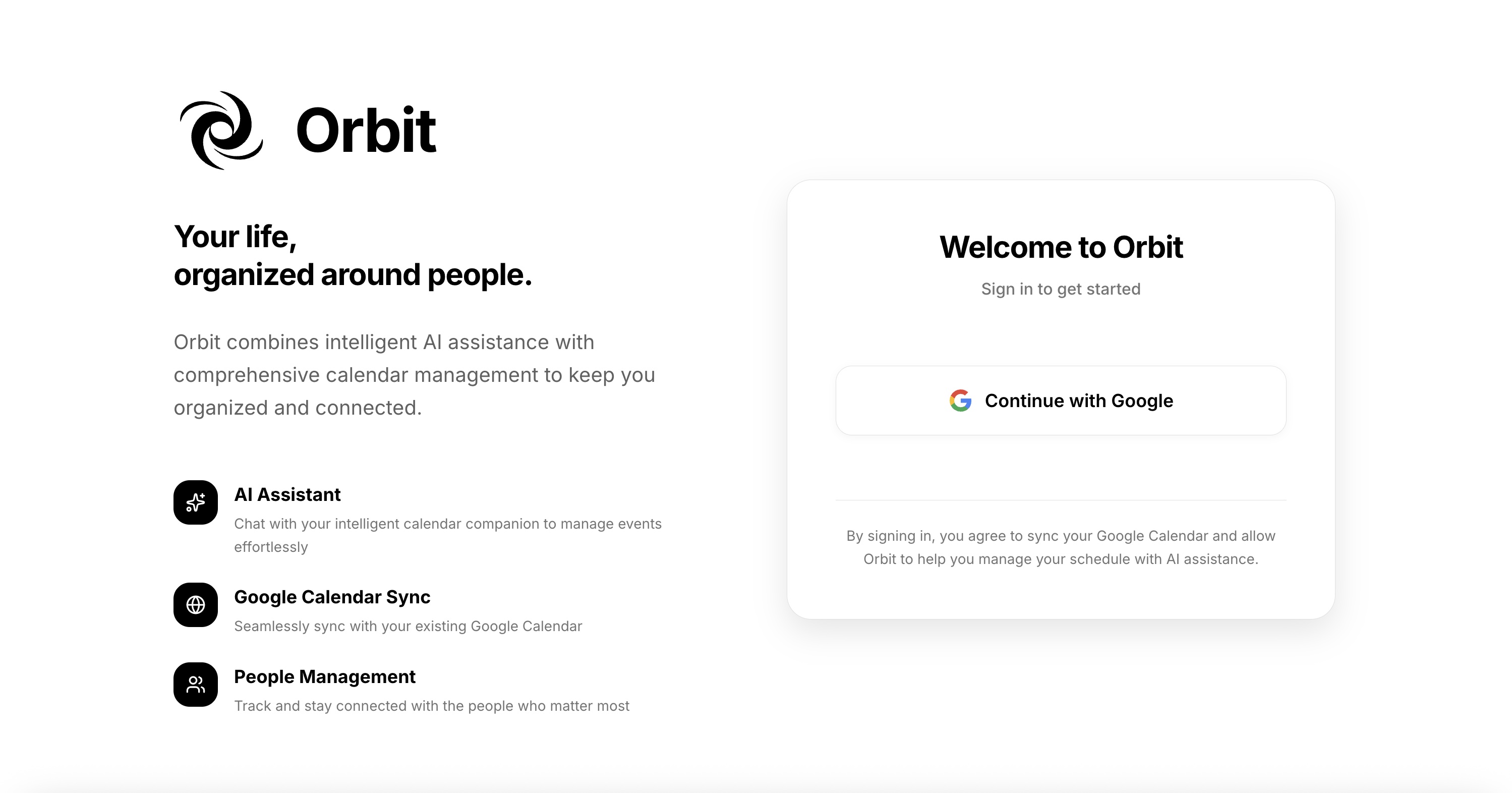
Sign up with Google — instantly sync your calendar
-
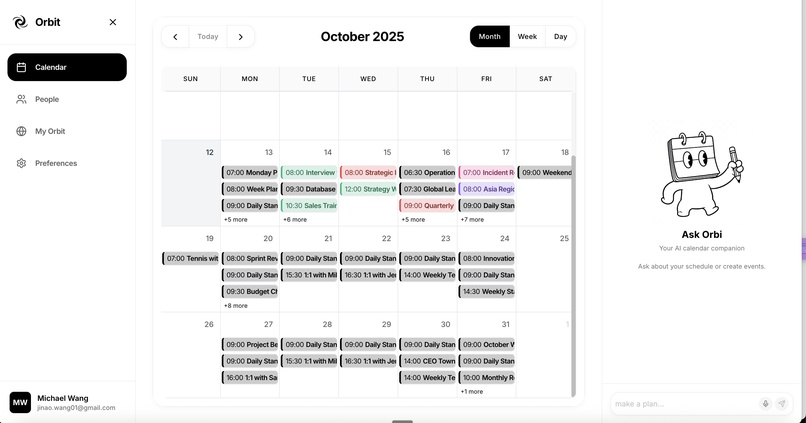
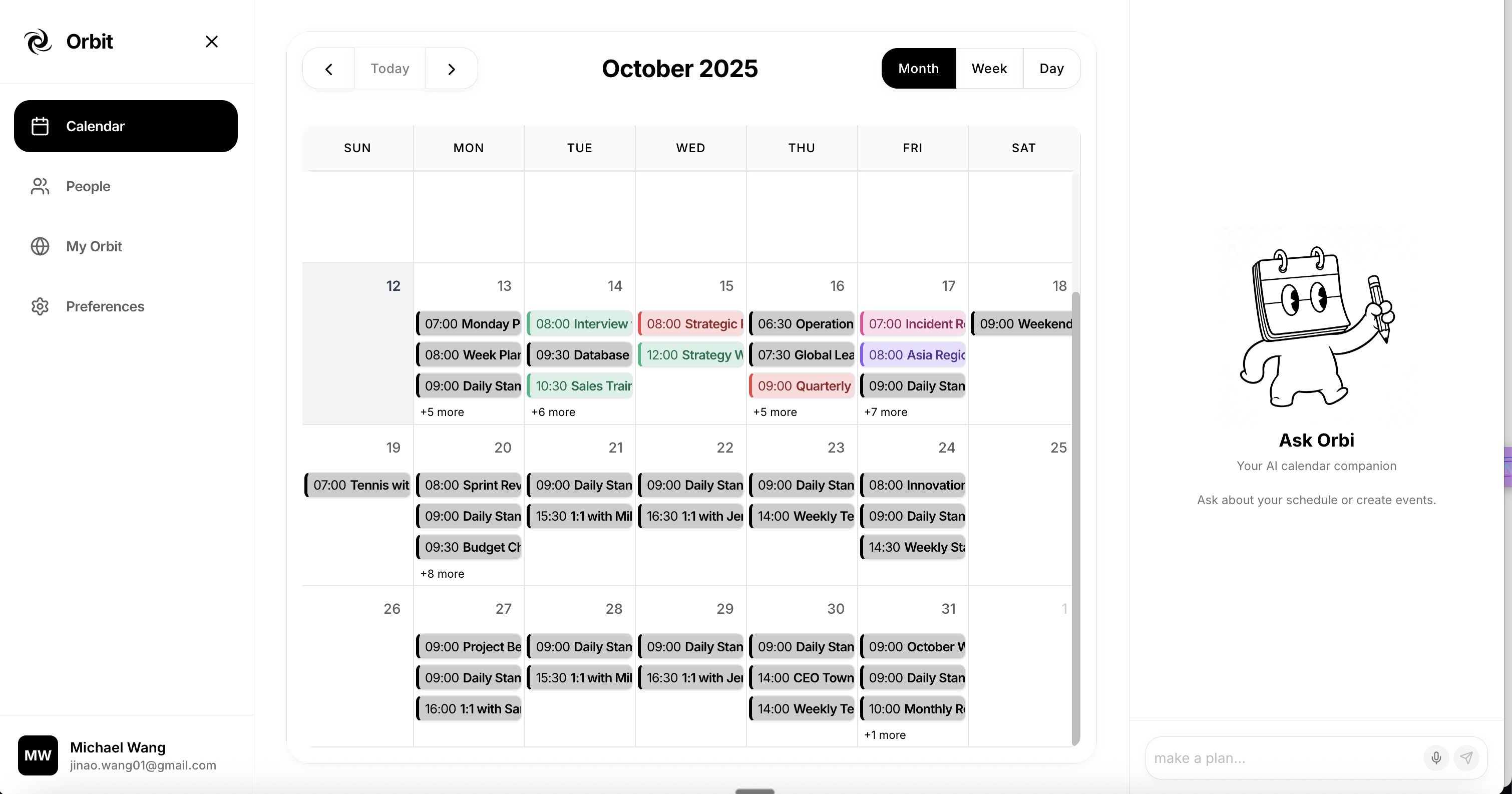
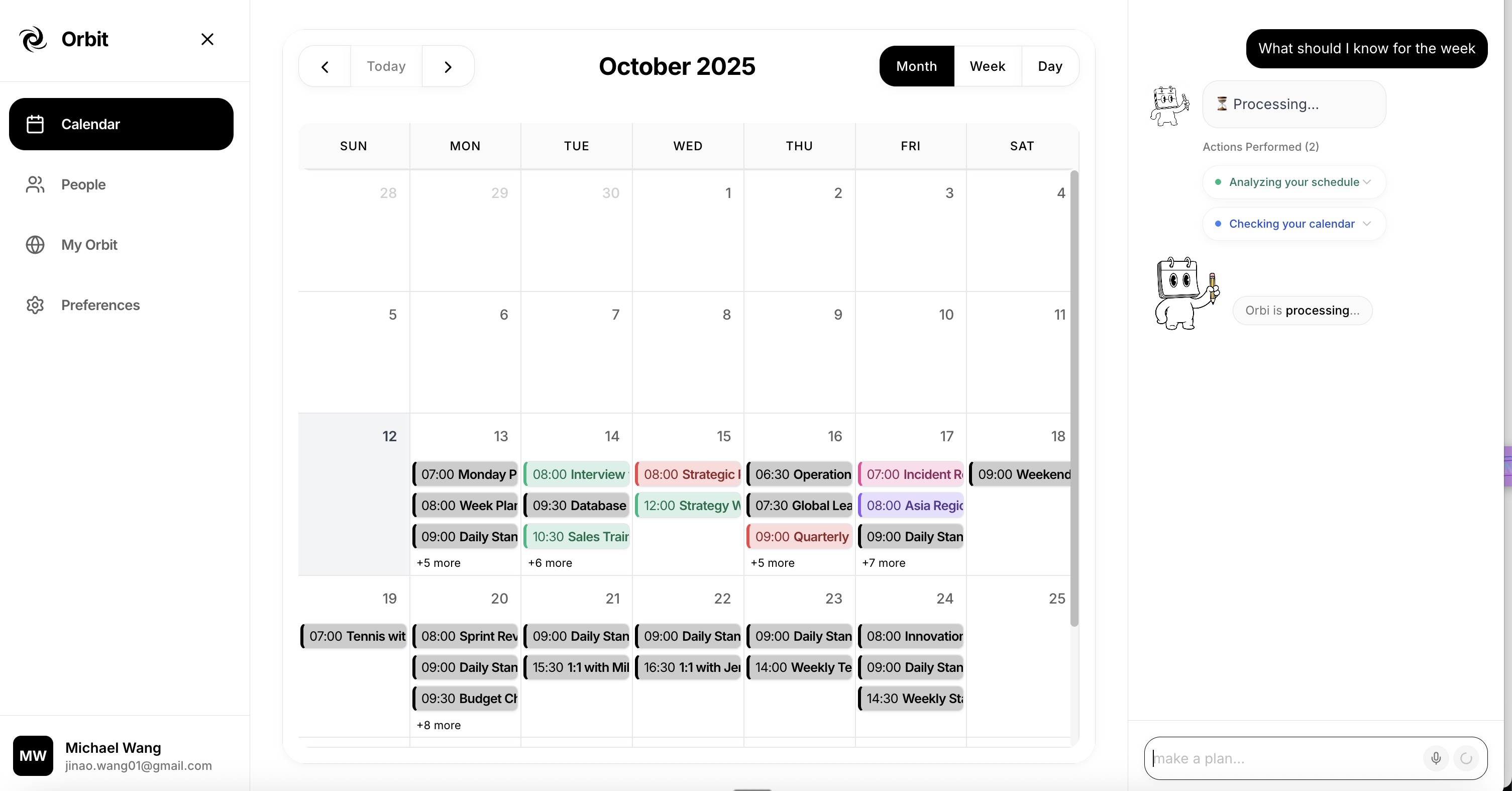
Beautiful calendar interface
-
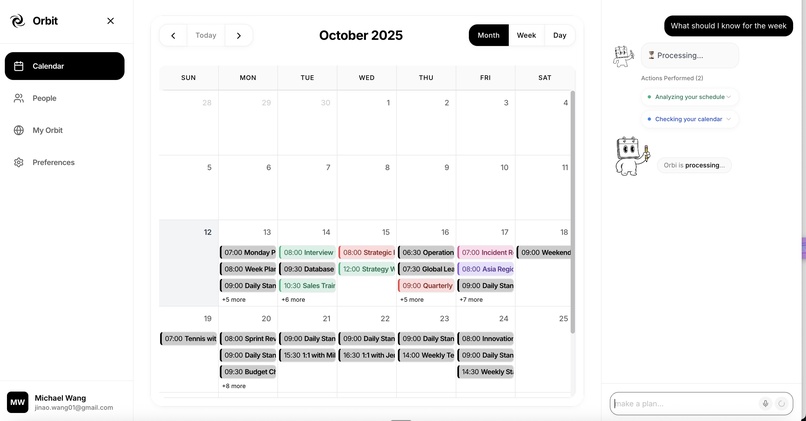
Meet Orbi — your cute personal assistant
-
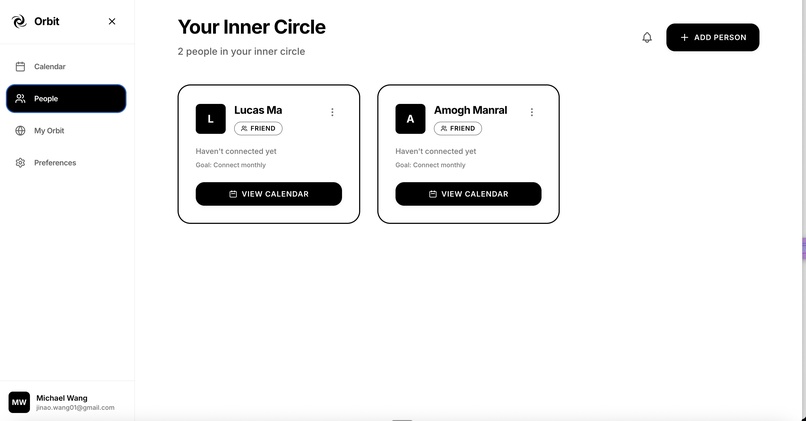
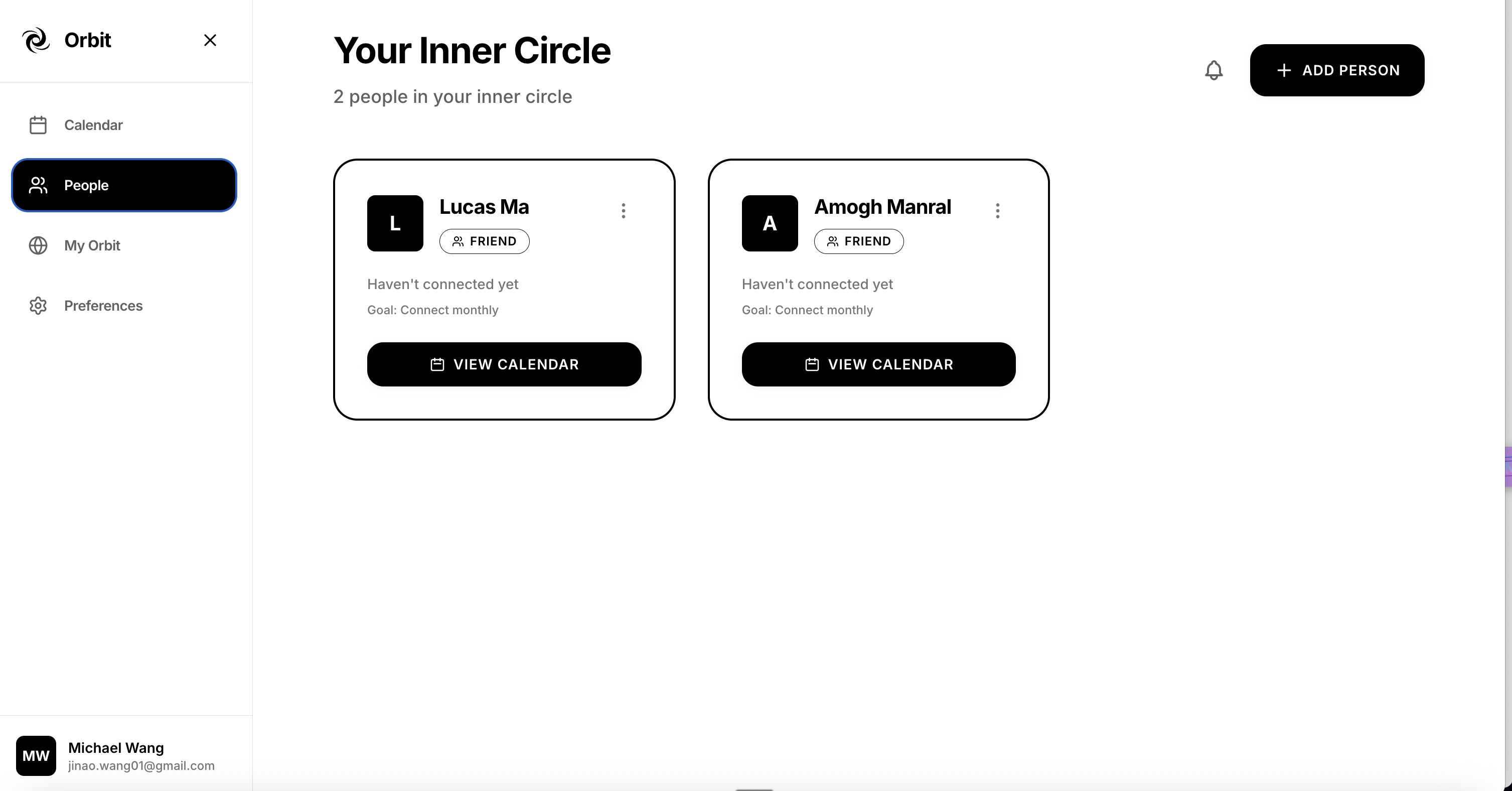
Manage your friendships
-
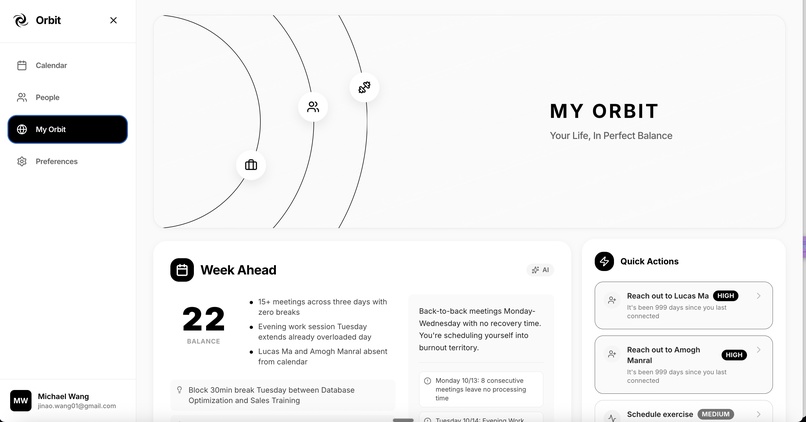
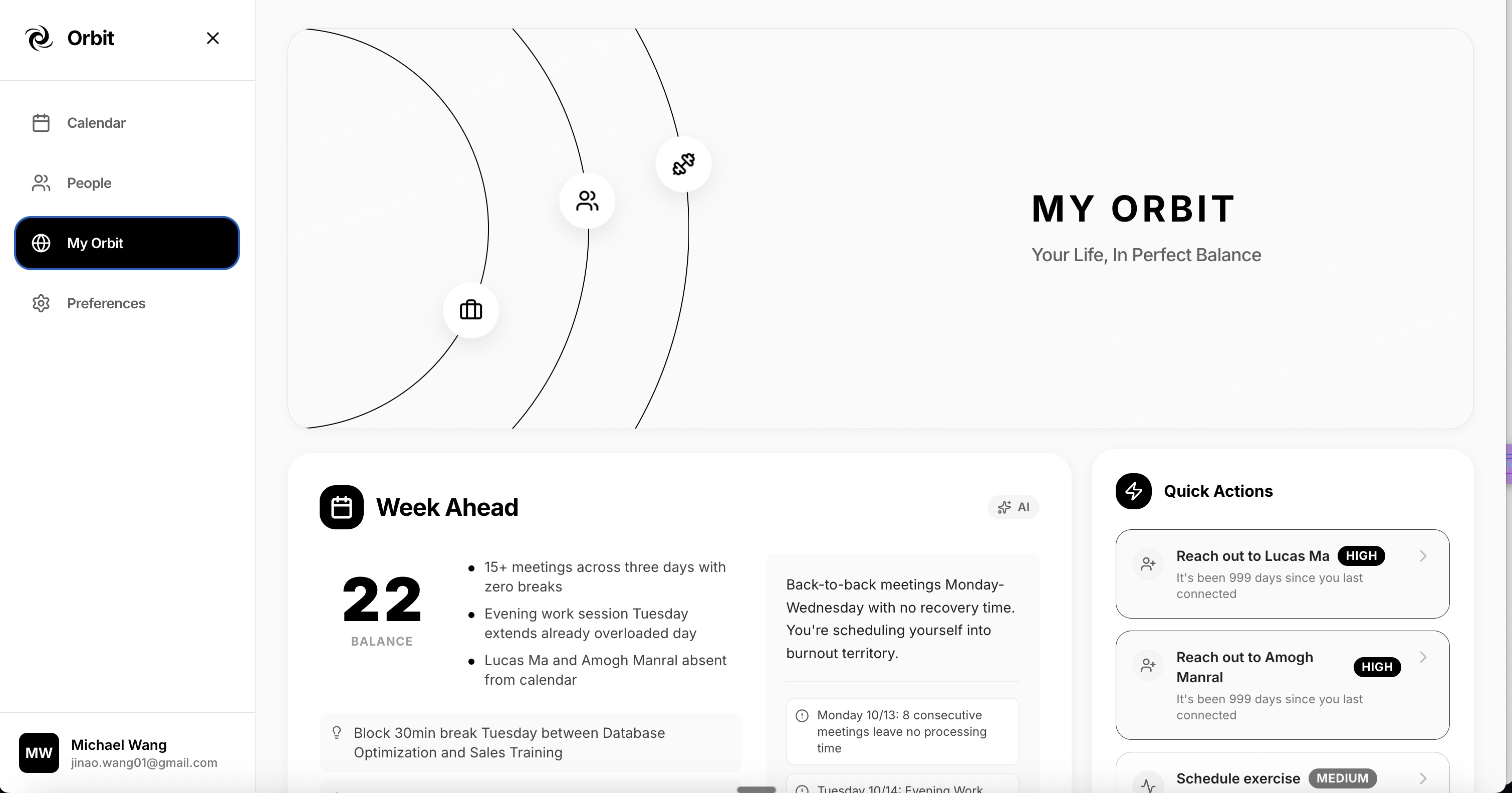
Analyze your time with a personalized dashboard
-
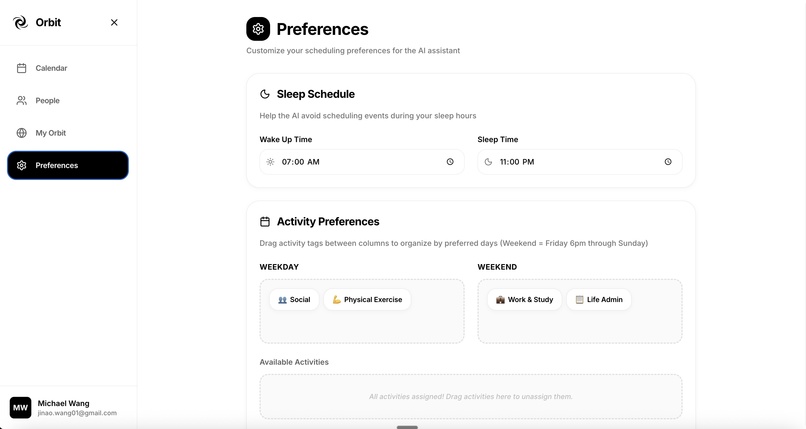
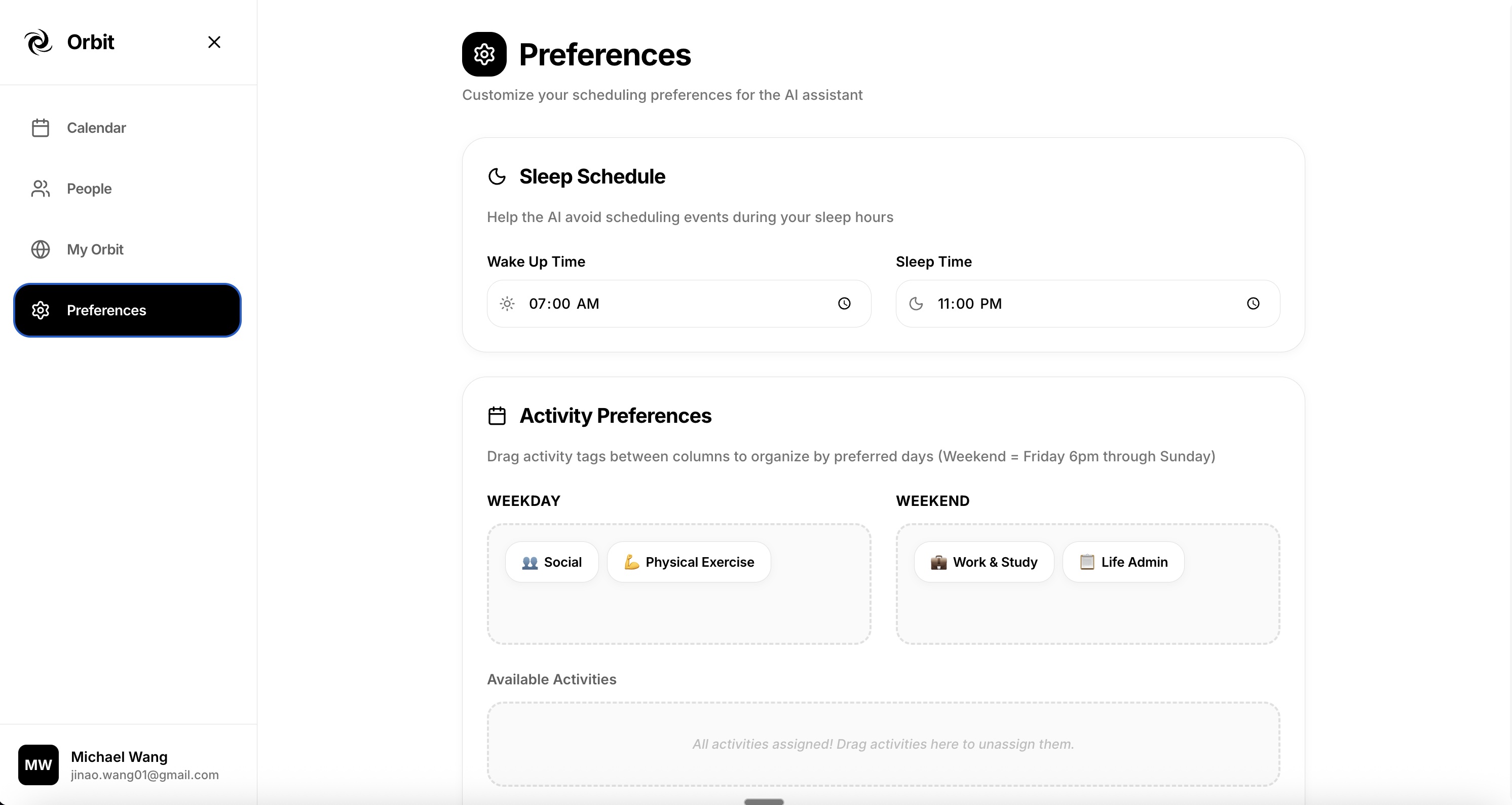
Personalize to your heart's content.
Inspiration
As busy college students living away from home, one of our biggest challenges is managing a packed schedule while still staying connected with the people who matter to us. Balancing the impossible triangle of sleep, study, and social life often feels like a losing game, and our to-do lists just keep growing — from classes and club meetings to errands and catch-ups.
Traditional calendar apps are rigid and work-focused, designed for productivity at the expense of everything else. When life inevitably changes — when you're running late, when priorities shift, when you get sick — these apps offer no help. You're left manually shuffling events, stressing over conflicts, and scrambling to keep up. Worse, they treat time with friends and family as an afterthought, just another item on an endless to-do list. The result? Important relationships slip through the cracks while you're drowning in calendar maintenance.
We wanted to build something different: a calendar that adapts to life as it happens, not one that demands you adapt to it. A system that puts people first and makes staying connected effortless, even when everything else is chaos.
What it does
Orbit is an AI-powered calendar assistant that transforms how you manage time and relationships. Instead of rigid scheduling, Orbit adapts to how you actually live — understanding that plans change, priorities shift, and staying connected with people matters more than perfectly organized to-do lists.
Users interact with Orbit through natural conversation, describing tasks and plans as casually as texting a friend. The AI understands context, learns preferences, and handles the complexity of modern scheduling: syncing with Google Calendar, coordinating across multiple people's schedules, automatically rescheduling when conflicts arise, and proactively suggesting ways to stay connected with friends and maintain habits.
At its core, Orbit is about making calendar management invisible — letting you focus on living your life while the AI handles the logistics of keeping everything organized and everyone connected.
How we built it
We built Orbit as a full-stack web application using React and TypeScript for the frontend, styled with Tailwind CSS to create a clean, modern interface. The application is powered by Supabase as our backend-as-a-service, providing PostgreSQL database management, real-time subscriptions, and secure authentication through Google OAuth.
The core intelligence of Orbit comes from integrating Anthropic's Claude API (specifically Claude Sonnet 4.5) to power our natural language processing. We engineered custom AI agents that understand user preferences, parse scheduling requests, and make intelligent decisions about event prioritization and rescheduling. This required careful prompt engineering and context management to ensure the AI could access user data, preferences, and calendar state while making contextually appropriate decisions.
We integrated the Google Calendar API with OAuth 2.0 to enable bidirectional synchronization — users can manage both Orbit-created events and external commitments from a single interface. For enhanced accessibility, we incorporated ElevenLabs voice API to enable voice-based interactions.
The architecture uses React Context API for state management across the application, with separate contexts for user authentication, settings/preferences, and calendar data. We implemented Row-Level Security (RLS) policies in Supabase to ensure users can only access their own data and calendars, with permission-based sharing for schedule coordination features.
Challenges we ran into
AI Agent Intelligence & Function Calling: Our biggest challenge was building AI agents that could truly understand and manipulate complex calendar data. The AI needed to comprehend user preferences, event metadata, scheduling constraints, and relationship contexts — then intelligently decide which calendar functions to call and with what parameters.
Getting the agents to handle nuanced requests like "reschedule my meetings tomorrow because I'm running behind" or "find time to grab coffee with Sarah this week" required extensive prompt engineering. We had to design a robust system for passing comprehensive context to the AI while ensuring it could reliably execute the right calendar operations — whether that's batch rescheduling multiple events, finding optimal meeting times across multiple schedules, or understanding the difference between flexible social events and rigid commitments.
The challenge wasn't just natural language parsing — it was building agents that could reason about time, priorities, and relationships, then take appropriate actions without creating scheduling chaos.
Accomplishments that we're proud of
Orbi: Our Intelligent Calendar Agent — We built an AI assistant that goes far beyond simple scheduling. Orbi can handle virtually any calendar modification through natural conversation: batch reschedule entire days when plans change, move conflicting events while respecting priorities, find optimal meeting times across multiple people's schedules, and answer incredibly specific questions like "How many hours did I spend with friends last month?" or "When's the last time I worked out?" The agent understands context, learns from preferences, and makes smart decisions about event flexibility, priority, and timing — effectively serving as a personal scheduling coordinator that adapts to how you actually live.
My Orbit Dashboard — A beautiful, personalized overview showing weekly summaries, statistics about time spent with different people, habit tracking, and insights into how you're using your time. It transforms raw calendar data into meaningful insights about your life.
Automated Friendship Maintenance — The system proactively tracks when you haven't seen friends in a while and suggests hangouts, with an in-app notification system that helps you stay connected effortlessly. It's like having a friend who remembers everyone's birthday and nudges you to reach out.
Comprehensive Preference System — Users can customize everything from working hours and meeting preferences to event flexibility and notification settings. These preferences inform every AI decision, making Orbit feel truly personalized.
Voice Integration — Seamless ElevenLabs integration enables truly hands-free calendar management — schedule while cooking, driving, or getting ready. The voice interface feels natural and intuitive.
Clean, Intuitive UI — Despite the complexity under the hood, we created an interface that feels simple and delightful to use, with smooth animations, thoughtful interactions, and a design that puts people first.
What we learned
AI Engineering is an Art — We learned that building reliable AI agents isn't just about having access to powerful models — it requires deep understanding of prompt engineering, context management, and fallback strategies. Getting the AI to consistently make good decisions required us to think carefully about how to structure data, what context to provide, and how to validate outputs.
State Management is Critical — In a complex application with multiple data sources (local state, Supabase, Google Calendar, AI responses), having a clear state management strategy from the beginning would have saved us significant refactoring time. We learned to appreciate React Context and structured state updates.
Database Design Matters — Our initial database schema evolved significantly as we built features. We learned the importance of thinking through relationships, permissions, and access patterns early, especially when implementing features like schedule sharing and friend tracking.
Real-time Sync is Hard — Building bidirectional sync between multiple systems (our database, Google Calendar, the UI) taught us about race conditions, eventual consistency, and the importance of optimistic updates for good UX.
Built With
- anthropic-api
- eleven-labs
- google-cloud
- react
- supabase


Log in or sign up for Devpost to join the conversation.