-
-
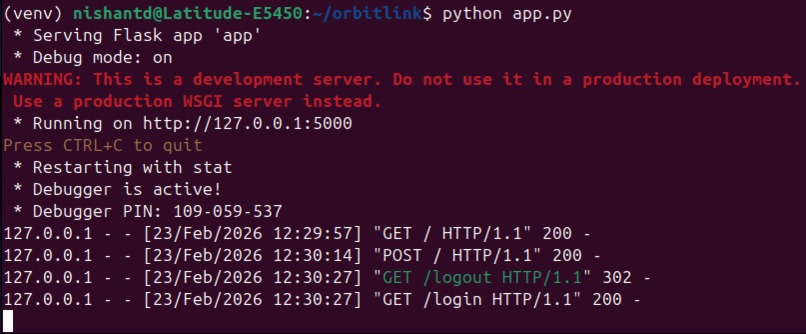
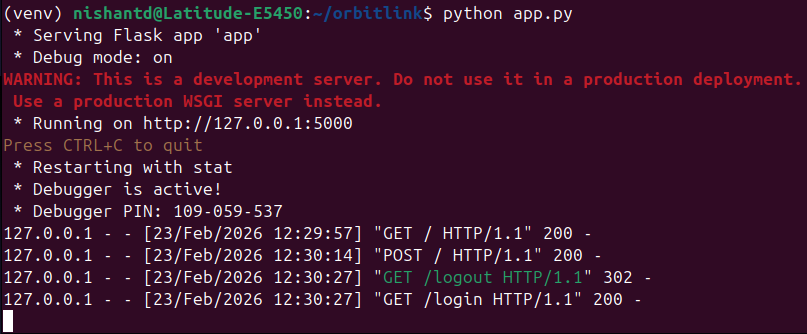
Running Live From CLI
-
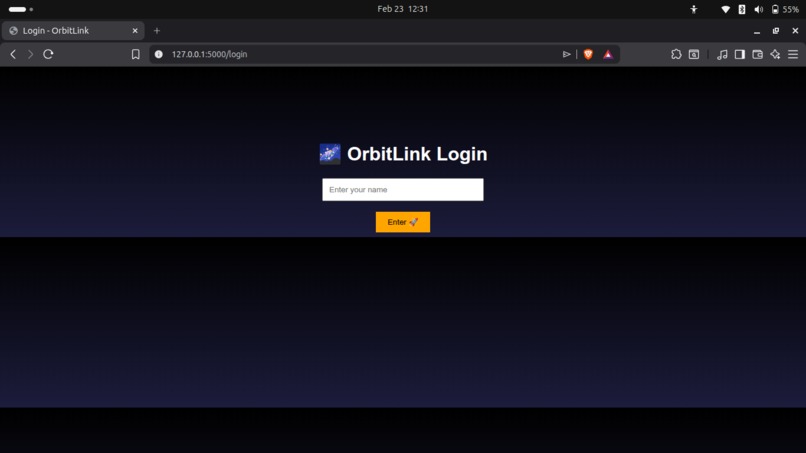
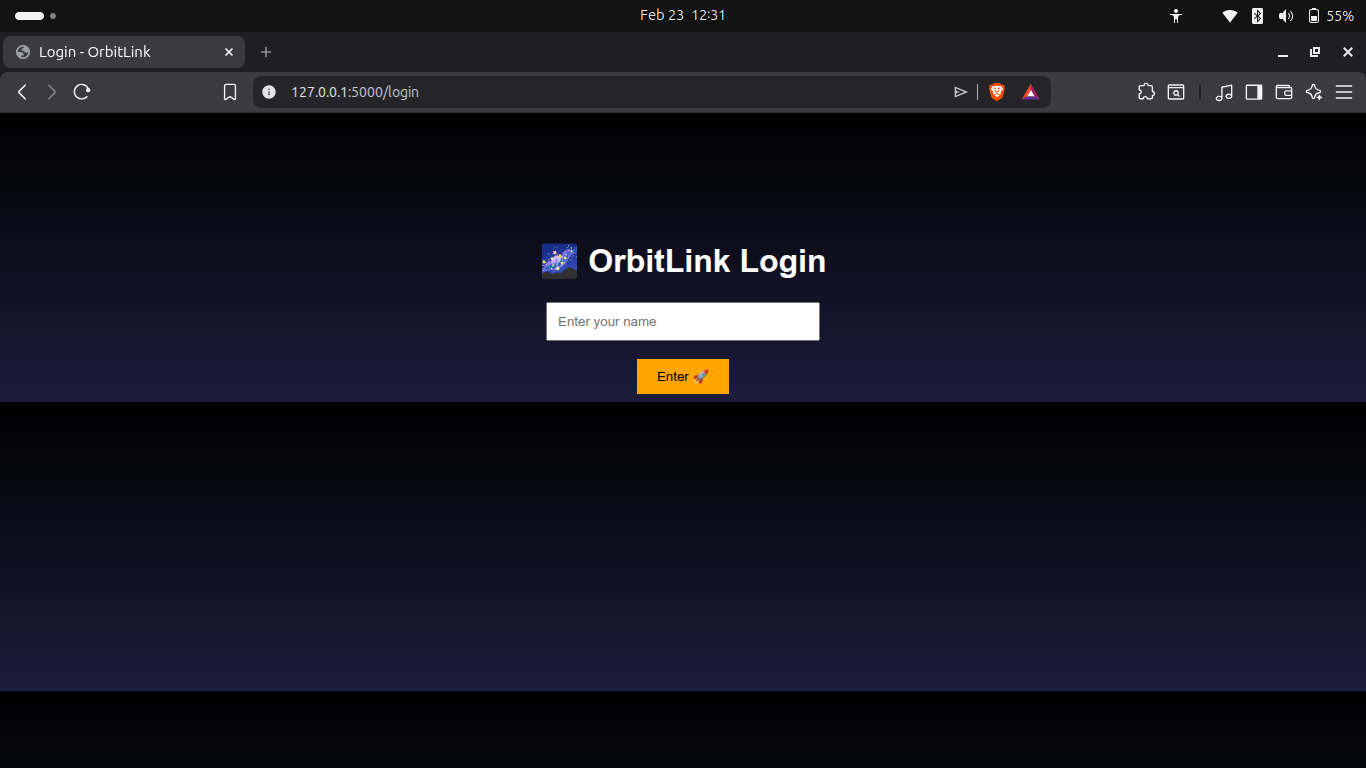
Login Page
-
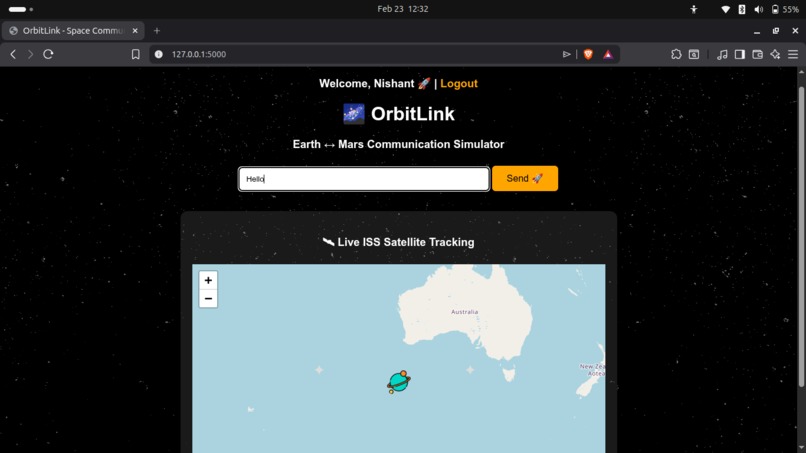
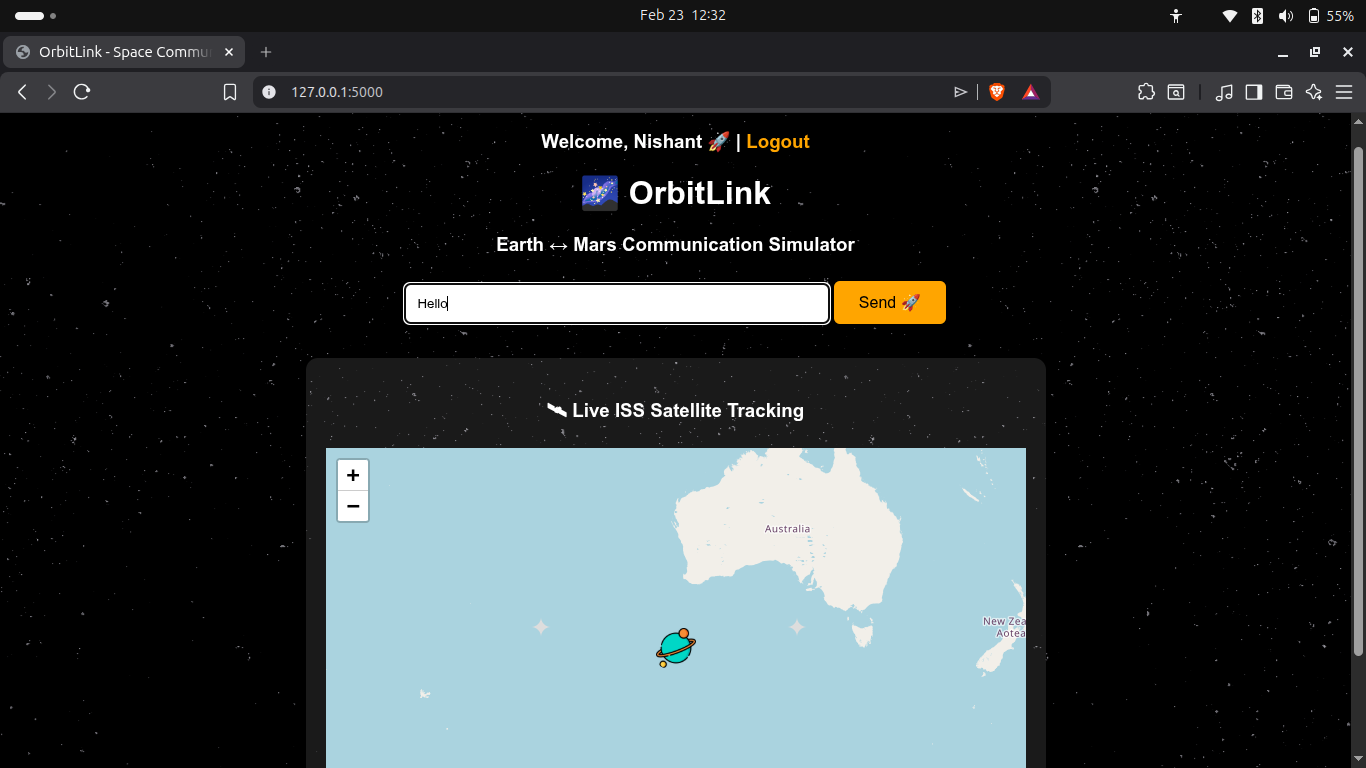
Homepage + ISS Map
-
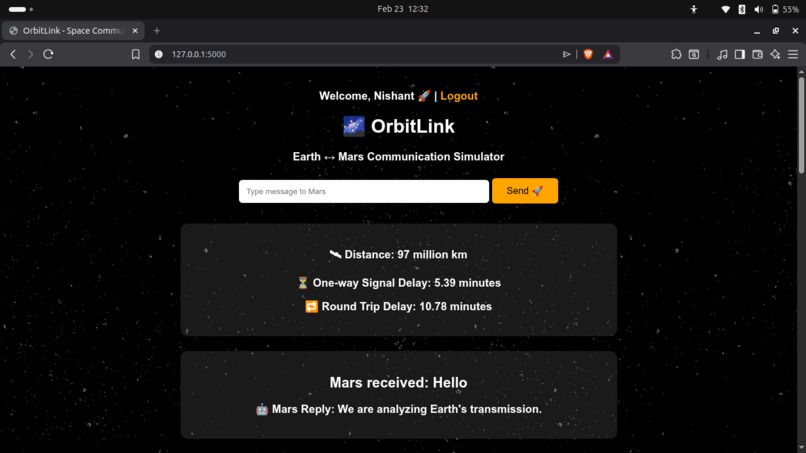
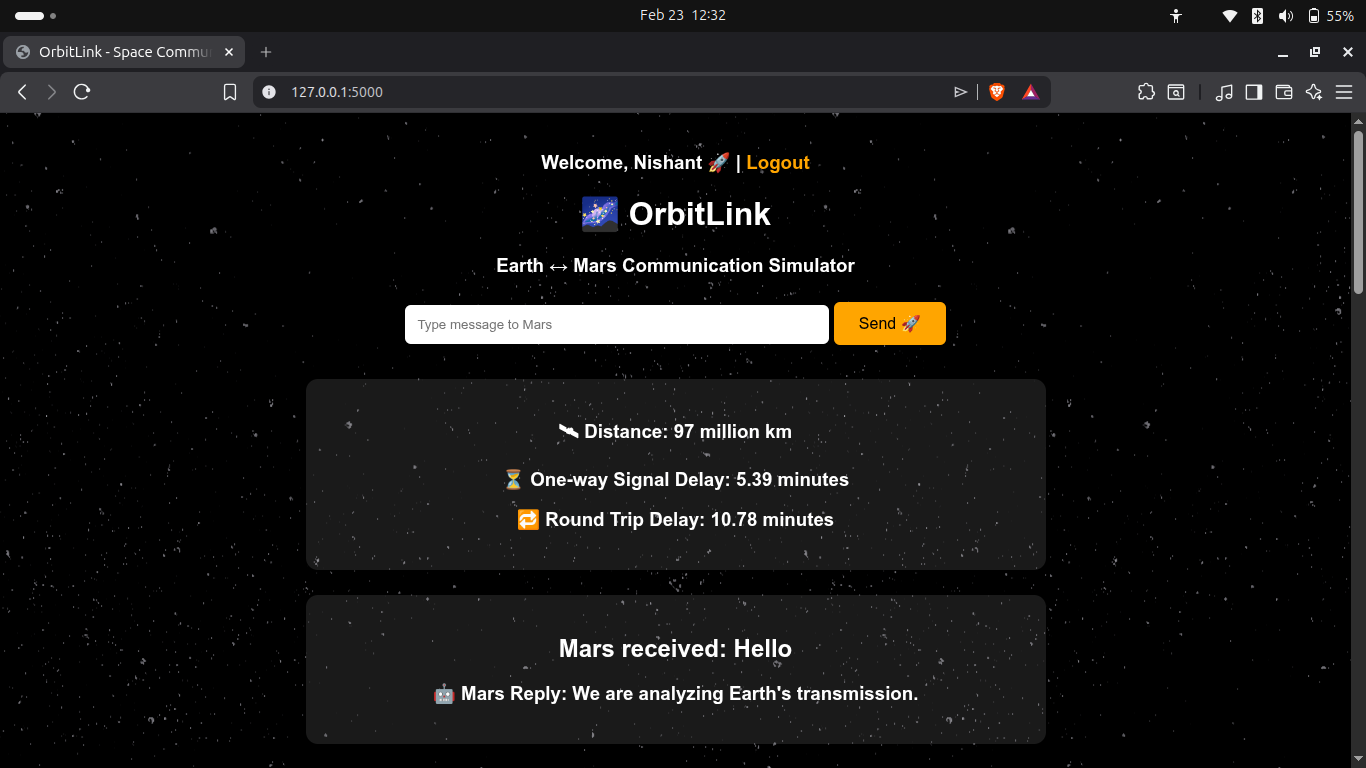
Message Received. Showing Distance
-
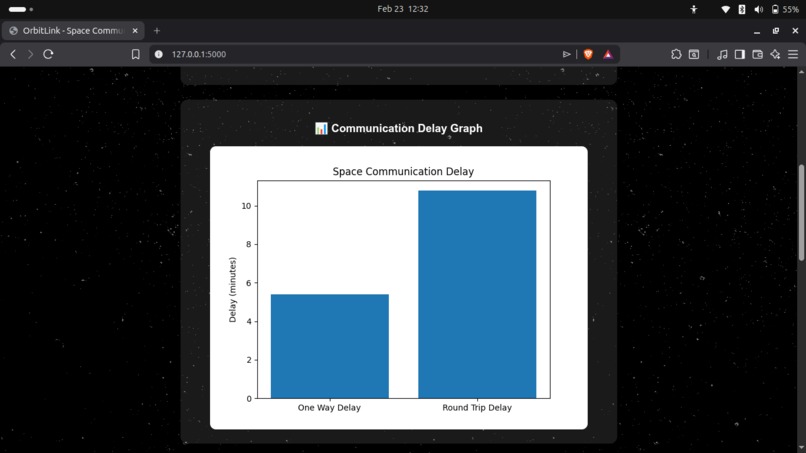
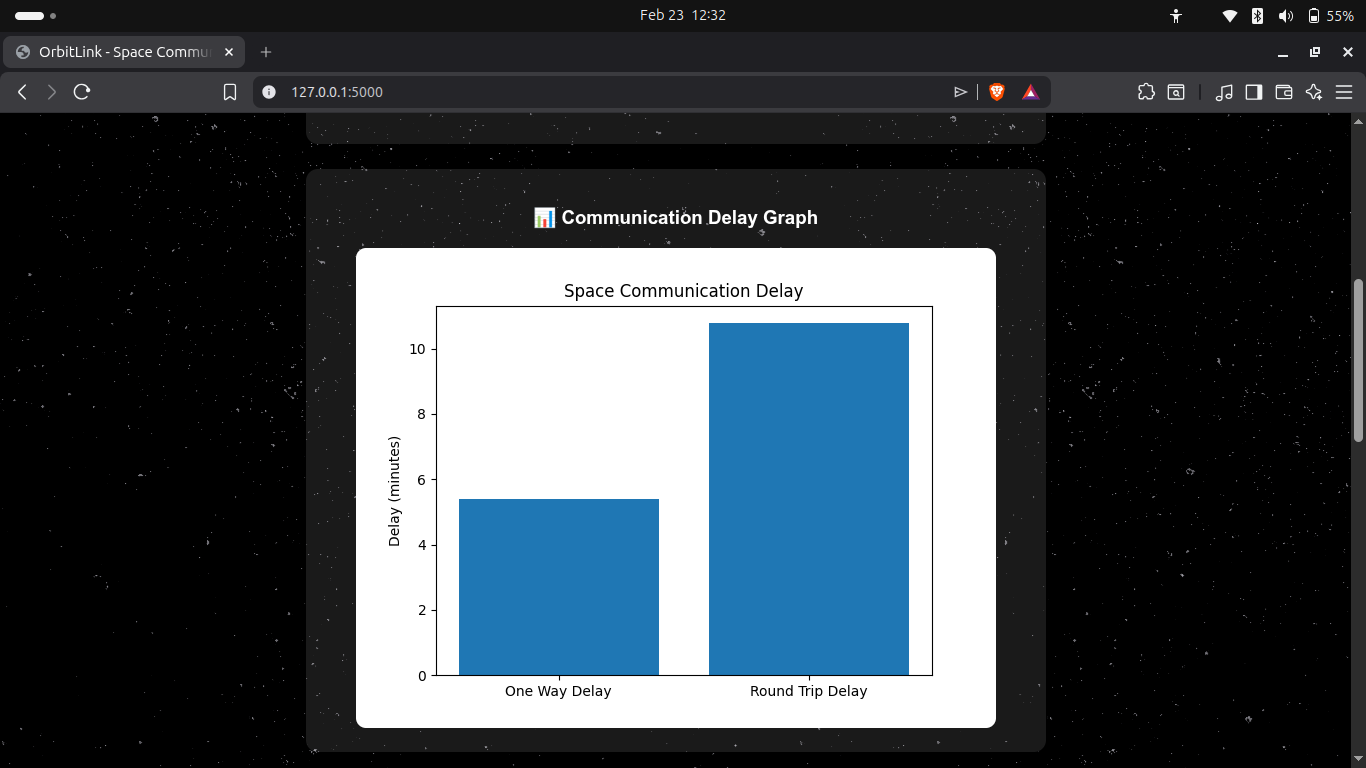
Graph Showing Delay
-
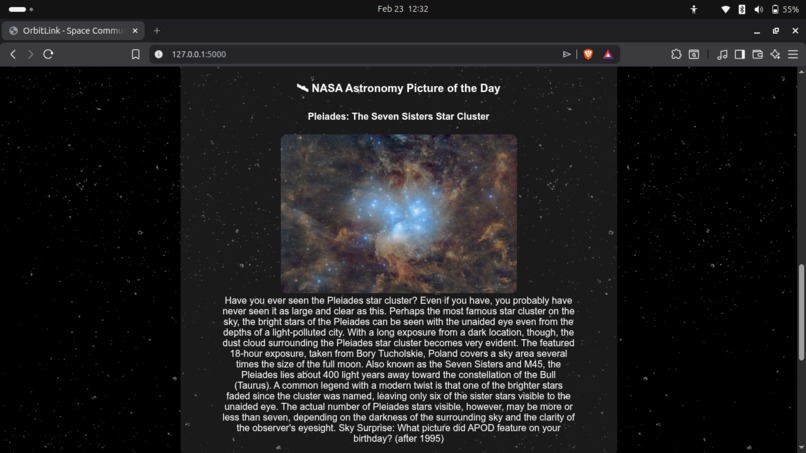
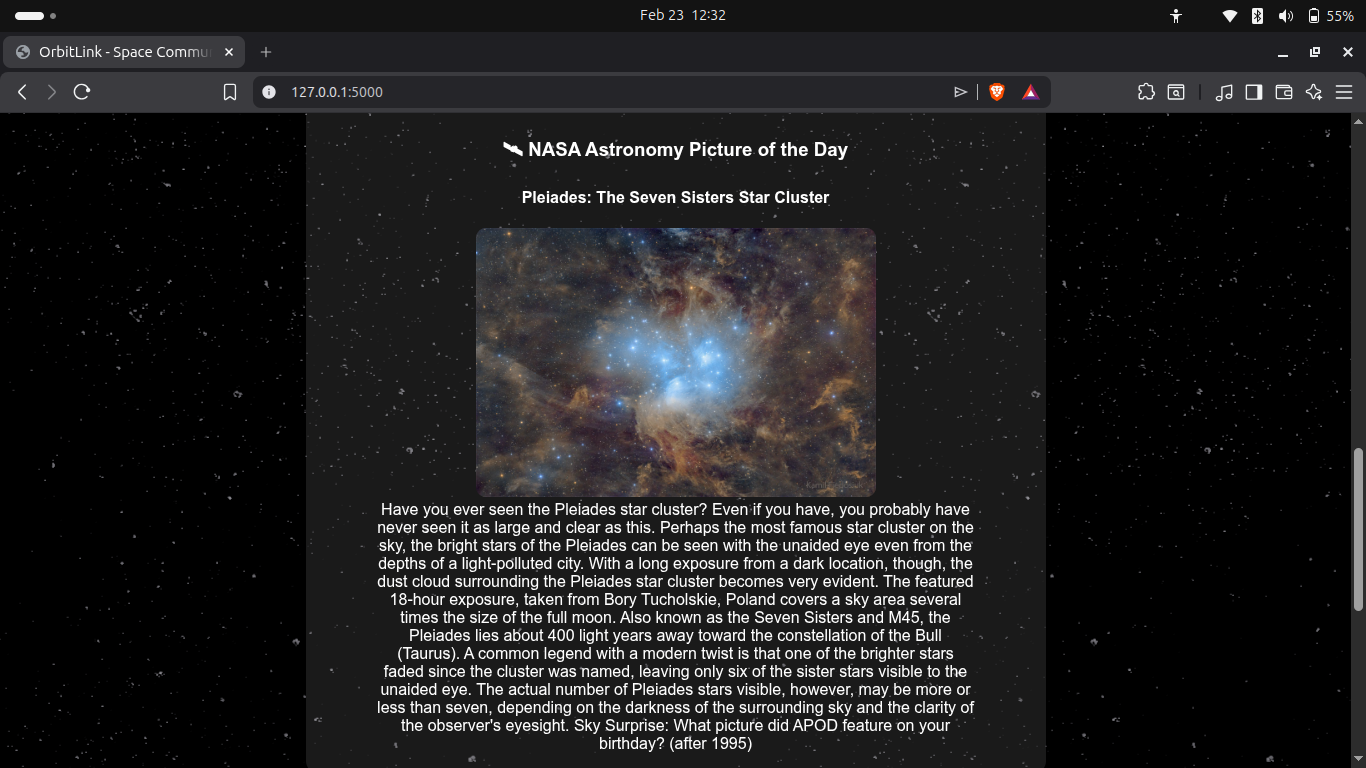
Nasa APOD API
Inspiration
OrbitLink was inspired by humanity’s fascination with space and the challenge of communication across vast distances. I wanted to build something that connects real-time space data with an interactive web experience. The idea was to simulate communication between Earth and space while integrating real-world APIs like NASA’s Astronomy Picture of the Day and live ISS tracking. The goal was to make space feel closer, accessible, and engaging for everyday users.
What it does
OrbitLink is a space-focused web application that:
- Fetches and displays NASA’s Astronomy Picture of the Day (APOD)
- Tracks the real-time position of the International Space Station (ISS) on an interactive world map
- Simulates communication delays between Earth and space
- Provides a clean login system for user interaction
- Displays graphical data visualization for delay simulation
The platform combines real-time APIs, interactive mapping, and data visualization into one seamless space-themed experience.
How we built it
OrbitLink was built using:
- Python (Flask) for backend logic and routing
- HTML, CSS, JavaScript for frontend interface
- Leaflet.js + OpenStreetMap for live ISS tracking
- NASA APOD API for daily space imagery
- Environment Variables for secure API key management
- Matplotlib / Graph plotting for delay visualization
The backend handles API requests and data processing, while the frontend dynamically renders maps, images, and graphs. The project structure was modular to allow easy expansion and clean separation between backend logic and UI components.
Challenges we ran into
- Deploying a Flask app properly on a cloud platform and configuring dynamic port binding (
0.0.0.0andPORTvariable) - Securing API keys using environment variables instead of hardcoding
- Handling API response errors and edge cases
- Making the UI responsive while keeping the space theme visually appealing
- Ensuring that live ISS tracking updated correctly without excessive API calls
Each challenge helped improve understanding of real-world deployment and production-level setup.
Accomplishments that we're proud of
- Successfully integrating multiple real-time APIs into one cohesive application
- Implementing secure environment variable handling
- Deploying the app to a live hosting platform
- Creating an engaging UI with real-time satellite tracking
- Building a full-stack project independently from scratch
OrbitLink demonstrates practical skills in backend development, API integration, and deployment.
What we learned
Through this project, we learned:
- How real-world APIs are structured and consumed
- Secure handling of sensitive credentials
- Deployment configuration and cloud hosting requirements
- Debugging production-level issues
- Structuring scalable Flask applications
This project strengthened both technical skills and problem-solving abilities.
🤖 AI Tools Used
During the development of OrbitLink, AI tools were used as supportive development assistants.
ChatGPT was used for:
- Debugging Flask deployment issues
- Improving code structure and error handling
- Understanding environment variable configuration
- Generating and refining documentation (README and project story)
- Getting guidance on API integration best practices
AI was not used to auto-generate the entire project. All core implementation, integration logic, UI design decisions, testing, and deployment were done manually. AI was used as a productivity and learning tool to enhance development efficiency.
What's next for Orbit Link
Future improvements include:
- Adding user accounts with persistent database storage
- Live satellite telemetry data visualization
- Multiple satellite tracking options
- Real-time chat simulation with space delay algorithms
- Improved UI animations and performance optimization
- Mobile-first design refinement
OrbitLink has strong potential to evolve into a full educational space-tech platform.
Built With
- css
- flask
- git
- github
- html5
- iss-live-location-api
- javascript
- leaflet.js
- nasa-api
- python
- python-dotenv

Log in or sign up for Devpost to join the conversation.