-
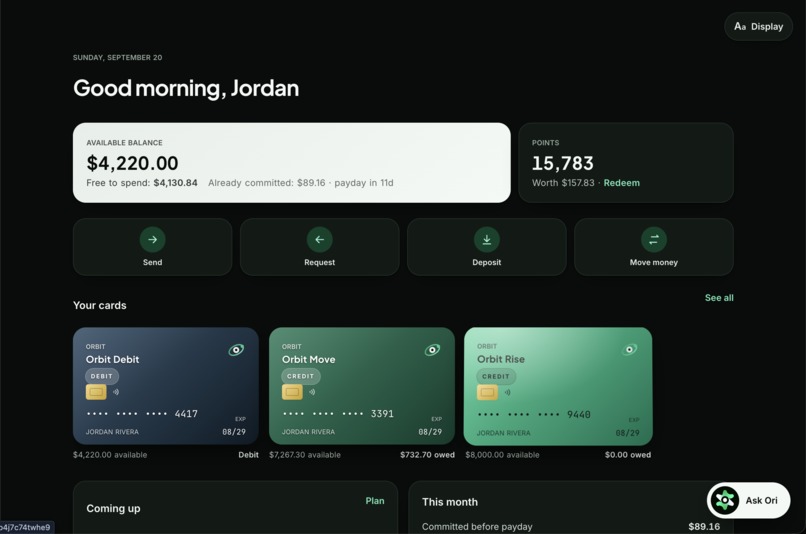
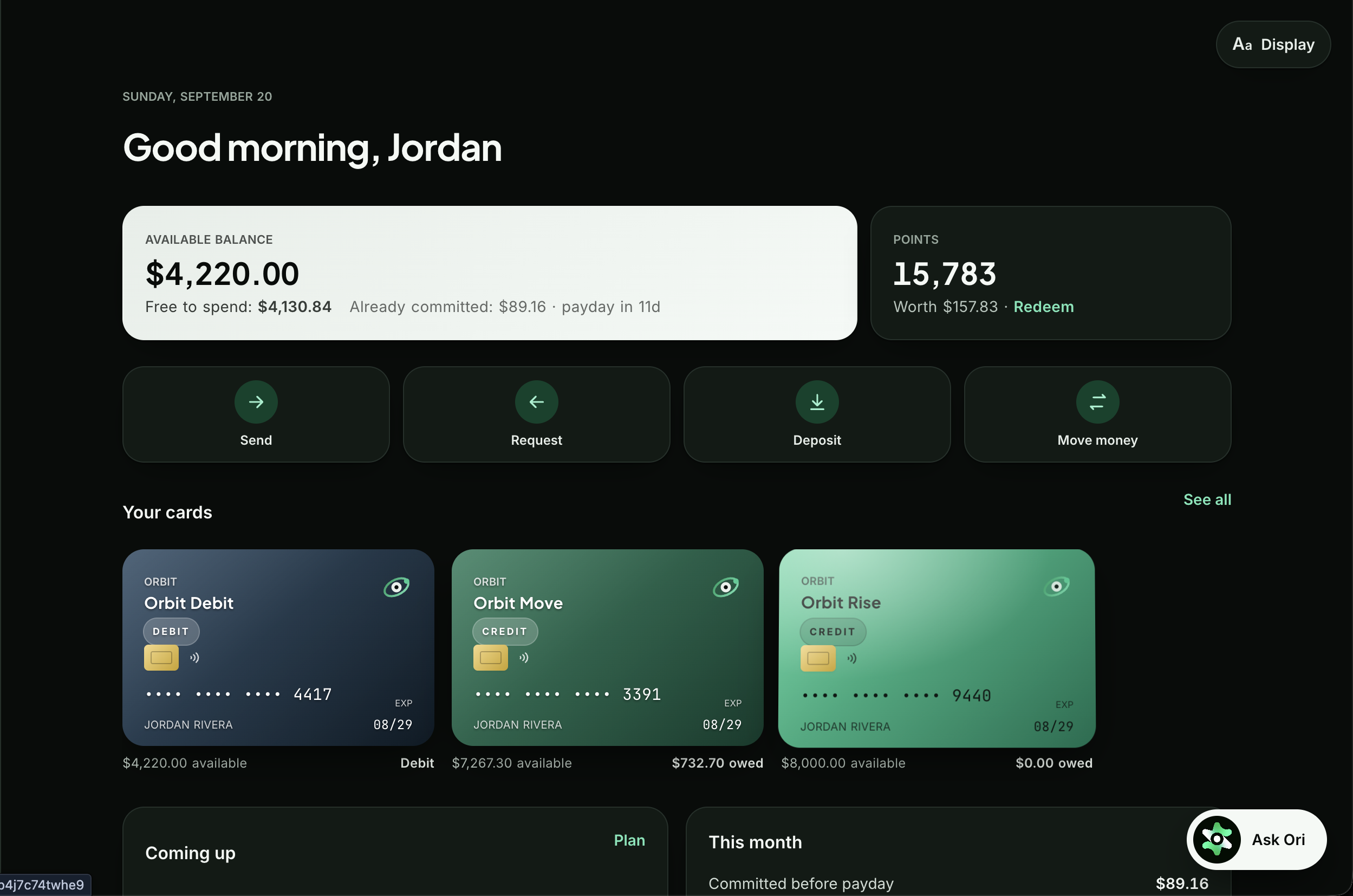
Home page
-
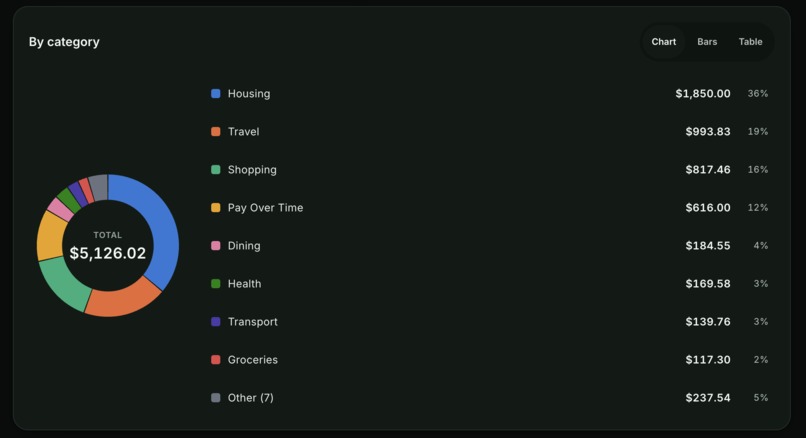
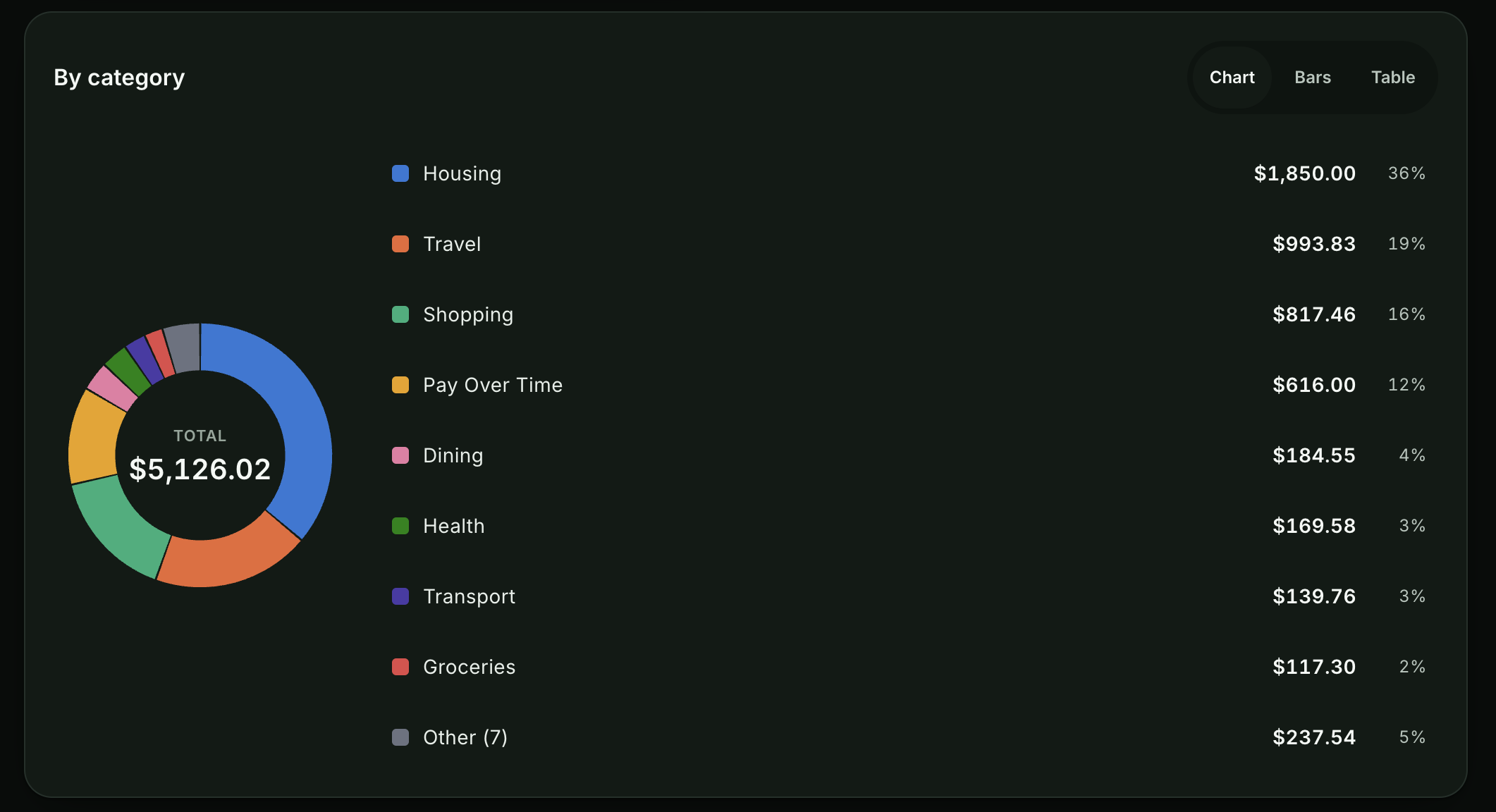
Overall spending pie chart
-
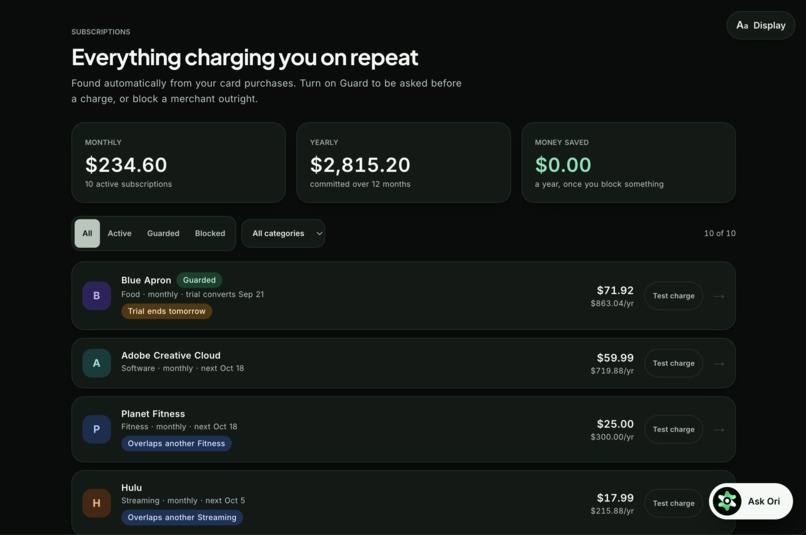
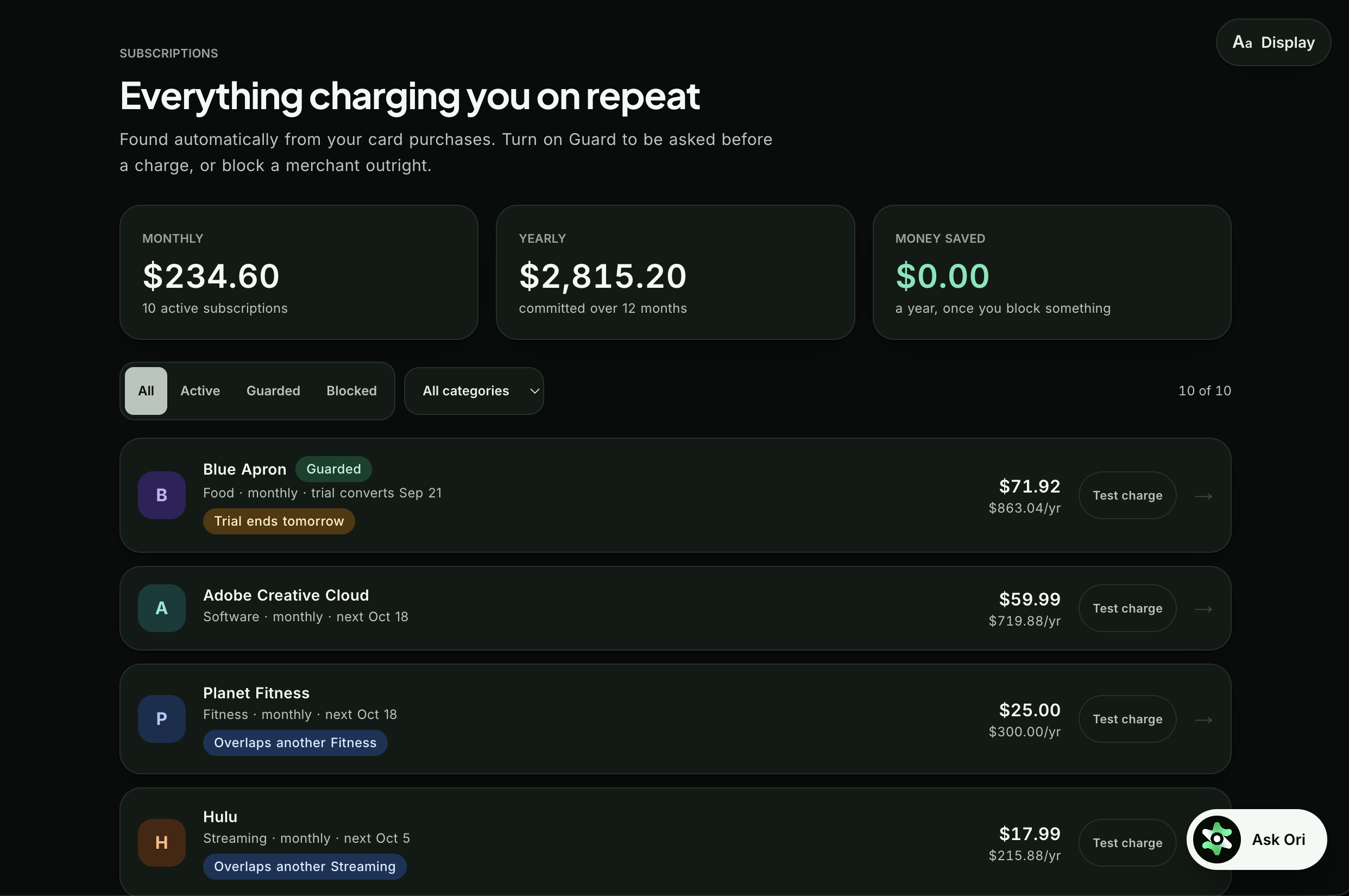
Subscriptions page
-
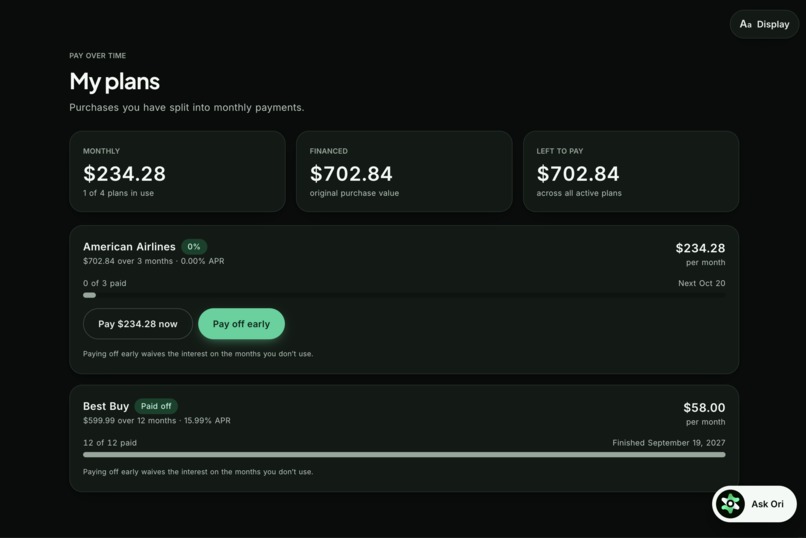
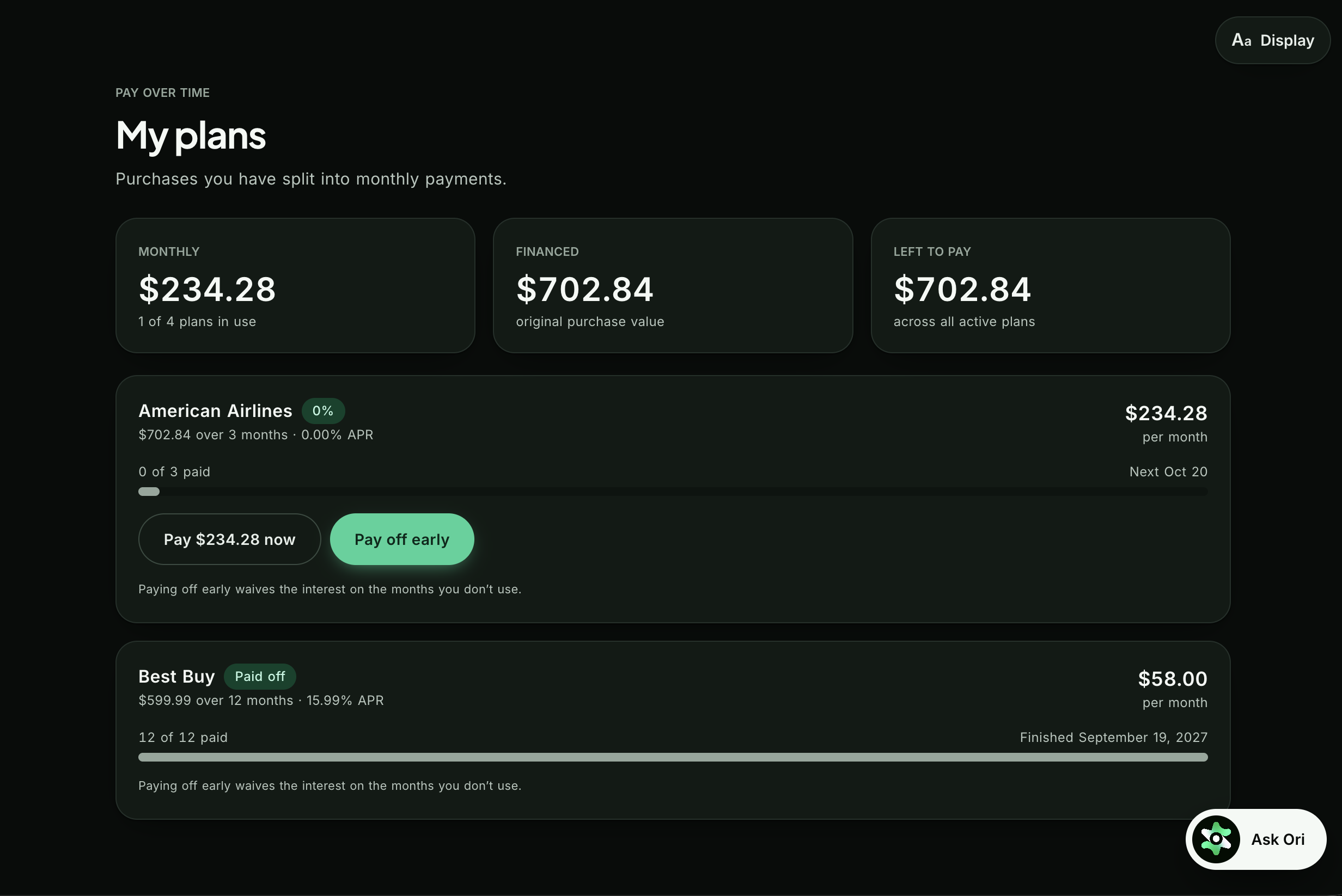
Pay over time
-
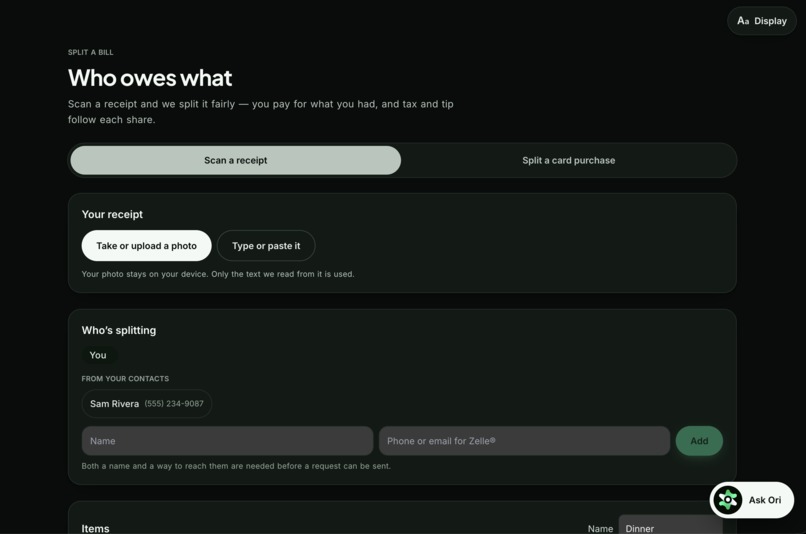
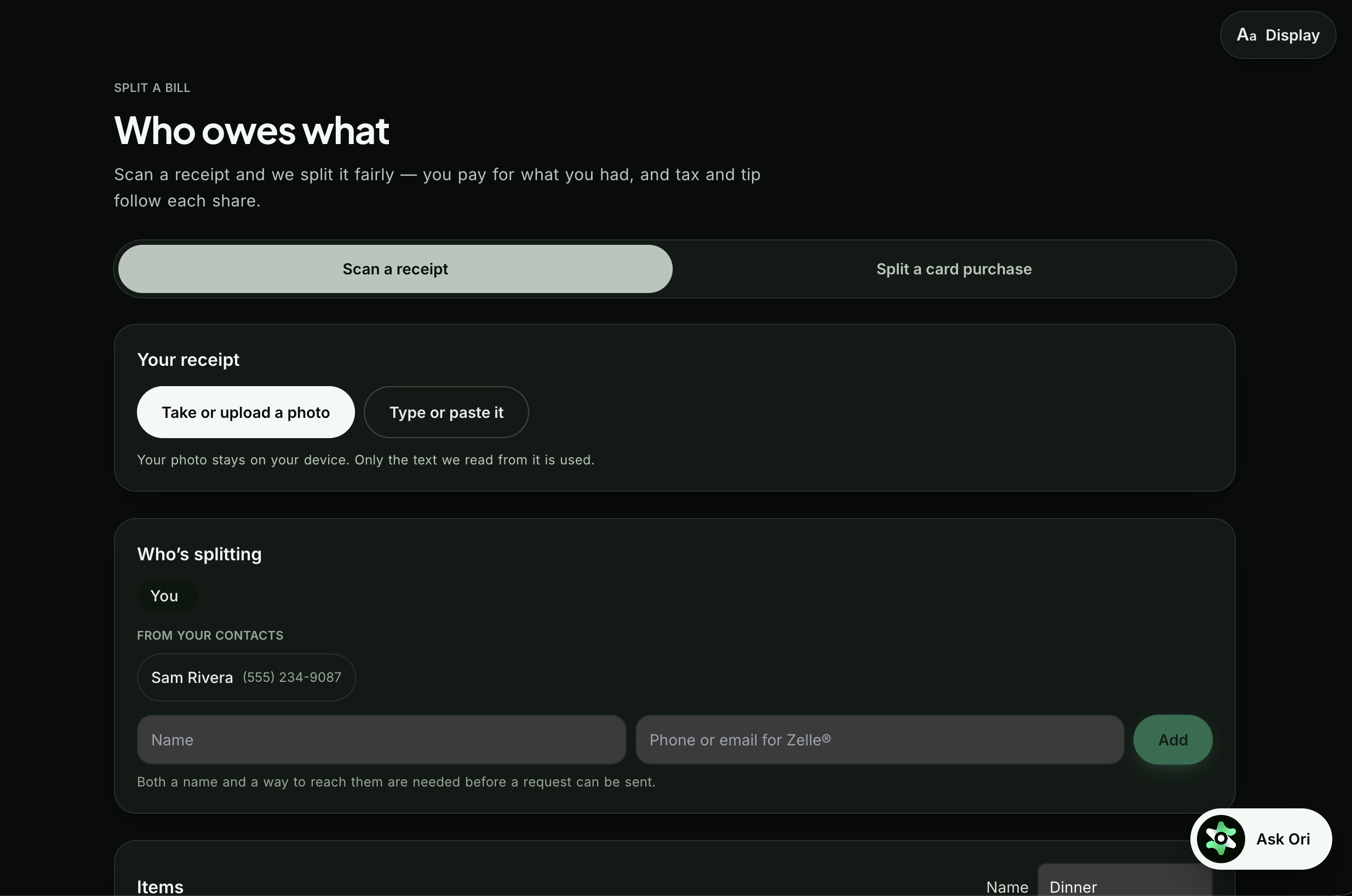
Split the bill
Inspiration
What it does
How we built it
Orbit - Hackathon Submission
Short Project Description Orbit removes the stress and guesswork from managing your money. We show you exactly what’s left in your account after upcoming bills, help you find hidden subscription charges, and let you plan your finances, all in one place. Meet Ori, our friendly assistant who guides you through your finances and always checks with you before making any important changes.
Project Story Inspiration We’ve all been there. You check your banking app, see a decent balance, and think you have extra cash, only to be surprised by an auto-renewing subscription or an unexpected utility bill. The number on your banking app rarely shows what you can really spend each day. We built Orbit with a simple idea: people deserve to know exactly what money is truly theirs to spend. What began as a basic banking app for transferring funds quickly grew into Orbit, a complete hub that brings all your daily money management tools together.
What it does Orbit isn’t just about showing you numbers. It helps you act on them. Here’s what you can do: See Your "True" Balance: Check your balances, upcoming payments, and spending habits in one simple, easy-to-use dashboard. This way, you’ll always know what’s actually safe to spend. Wrangle Your Subscriptions: Orbit finds recurring charges, hidden price increases, trial renewals, and overlapping services you may have forgotten about. This way, you’re never caught off guard. Take Control with "Guard": Tired of surprise charges? Set Guard to "Ask me first," approve charges as they appear, or block them completely. You can also give merchants their own virtual cards and set custom renewal reminders. Chat with Ori: Ask our assistant, Ori, for help in everyday English or Spanish. Ori is strictly an assistant, not a rogue agent. It will always ask for your clear approval before moving money or changing any settings. Budget Like a Pro: Get a daily spending guide that adapts to you, pick a budgeting style you actually like, and even share your plan with your household so everyone’s on the same page. Maximize Rewards: We make credit card points transMaximize Rewards: We make credit card points easy to understand. Compare card options and see exactly what your points are worth in real dollars (anchored at a clear base value of 100 points = 1). schedule future payments, and scan receipts to split the check (including tax and tip) fairly with friends. Explore Credit & Investing: Check your credit score estimates and try out different "what-if" scenarios. You can even experiment with fractional investing using as little as 1 (or points!) with our simulated market data. Experience Money, Your Way: Accessibility is built in from the start. Orbit offers large text, high contrast, dark mode, a simple interface, read-aloud options, and full Spanish support. Note: Orbit is a hackathon prototype. Market prices, travel inventory, verified codes, and support agents are simulated for the demo. Uploaded documents are not saved, and our P2P payments simulate a Zelle-style experience without an official Zelle integration.
How we built it We brought Orbit to life using Next.js, TypeScript, and Tailwind CSS for a snappy, responsive frontend. Under the hood, we used Node.js and Express, backed by Prisma and SQLite to manage our data. To simulate a real banking environment, our backend connects to Capital One's Nessie API. We mapped subscriptions as bills, payment plans as loans, and travel activity as purchases. To avoid losing any cents due to API rounding, Orbit keeps its own precise ledger. We also separated our core calculations from the database, making them easy to test and letting our demo run smoothly on local sample data even if the external API is unavailable. For our assistant, Ori, we chose a rule-based engine instead of a large, expensive language model. This keeps Ori fast, predictable, and free from API keys. For receipt splitting, we used Tesseract to process images directly on the device.
Challenges we ran into Like any good hackathon, we faced our share of challenges. The biggest was that the API documentation often didn’t match the real responses we received. We spent a lot of time debugging in real time to figure out the correct field names and data structures. Handling money calculations was another challenge. Many Nessie endpoints drop cents completely, and making a transaction didn’t always update the account balance. We built Orbit’s own ledger to ensure precise amounts and reliable balance updates. Keeping everything in sync was tough, too. If you block a subscription, it needs to instantly show up in your available spending view and your 'money saved' total. We found many bugs, such as virtual cards generating the same card number, which showed us how important end-to-end user testing is. Finally, setting Ori’s boundaries was tricky. We had to make sure it was helpful without being overbearing, and that it would hand things off to human support when needed. Accomplishments that we're proWe are very proud that Orbit grew naturally from a simple subscription tracker into a complete financial ecosystem, all while keeping its core mission.ission. Getting our 'Guard' feature to work smoothly, catching a renewal, asking the user for a decision, and carrying out the result, feels like a big win. We’re also proud that we made rewards clear, showing users when a redemption option is actually a bad deal. BBut our biggest achievement? Accessibility and internationalization in English and Spanish were included from the very beginning, not added at the end. Also, our project documentation includes 358 tests across the frontend and backend. Writing 358 tests during a hackathon is something we’re really proud of.What we learned We learned that a great financial app is half features and half clear, plain-English explanations. Users need to know exactly what an action will cost, what it affects, and why they are being asked to approve it. On the technical side, we learned to always check API behavior directly instead of just trusting the documentation, to avoid using floating-point math for currency, and to carefully test how small changes affect the whole app. We also learned that you don’t always need a huge AI model to build a great assistant. Clear rules, user confirmation, and simple backup plans build much more trust.
What's next for Orbit Our immediate next step is getting Orbit into the hands of real users to test our subscription and budgeting flows, as well as our accessibility features. After that, we want to replace our mock data with live market integrations, real travel inventory, actual SMS delivery, and live human support. We’d also like to build a secure document vault, finish a few remaining screens, and create a dashboard for businesses. In the end, we want to confirm our security and compliance requirements so we can take Orbit from a hackathon prototype to a real-money launch.
Submission Details
Links
Code: https://github.com/Lejogf/Orbit
Home: Showing the "free-to-spend" money and an upcoming renewal alert. Subscriptions: Showing overlapping services and a highlighted price increase. Guard: The UI waiting for a user decision on a renewal. Ori: The chat interface showing a proposed action and a confirmation prompt. Budget: The daily spending guide and categorized budget view. Rewards: The screen showing the comparison of point redemption values. Accessibility: A screen showcasing large text, high contrast, or the Spanish language toggle.
Built With
- api
- css
- express.js
- next.js
- node.js
- prisma
- sqlite
- tailwind
- typescript

Log in or sign up for Devpost to join the conversation.