-
-
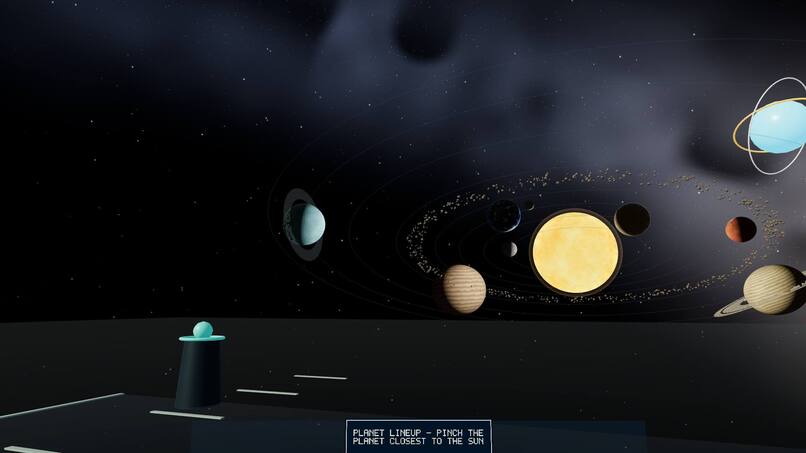
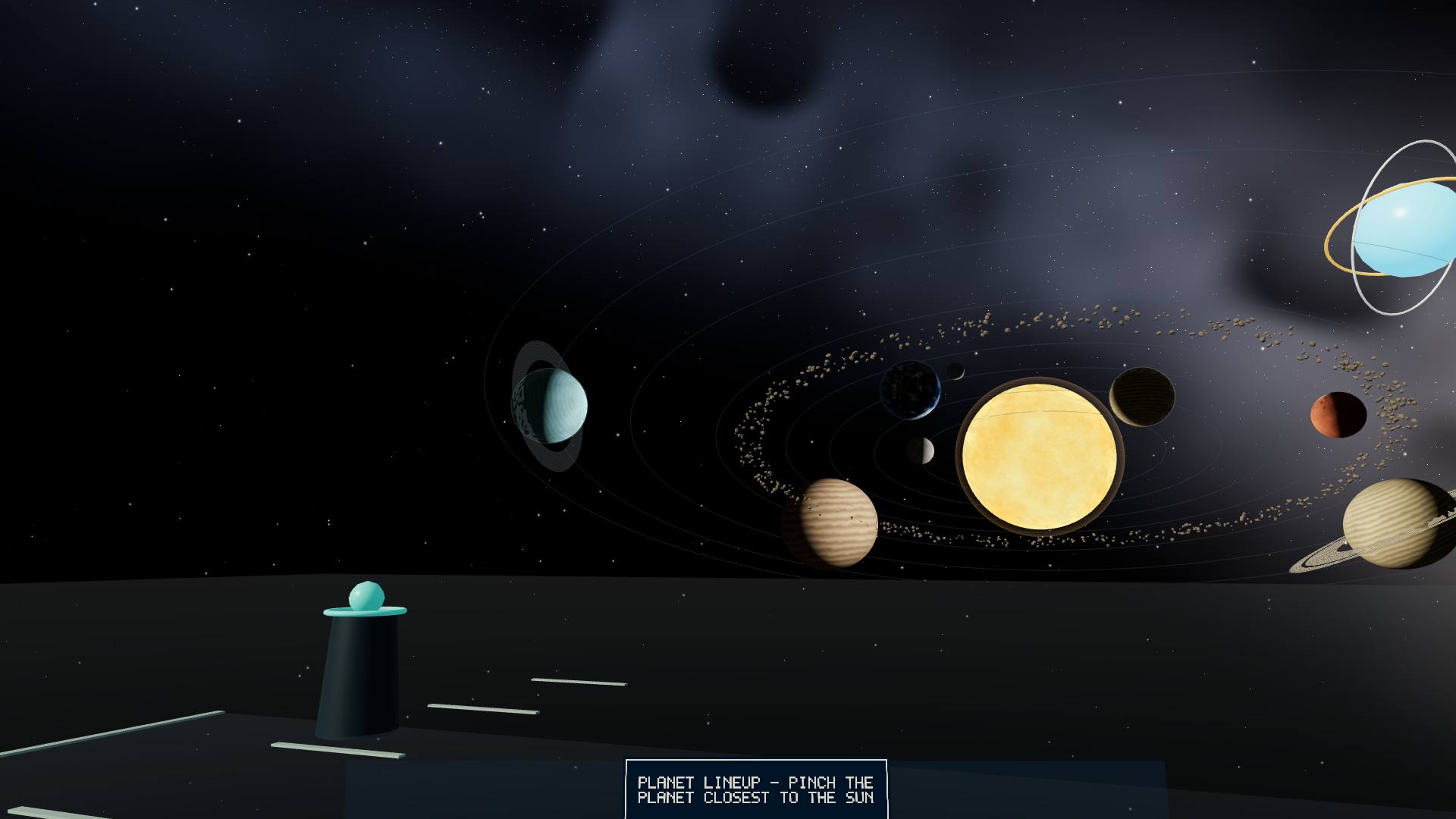
The space hub: the Sun, eight planets and the Milky Way, with Planet Lineup below.
-
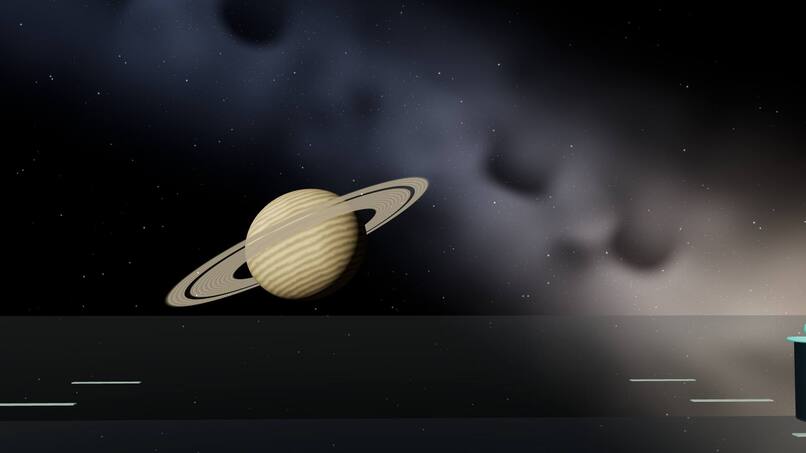
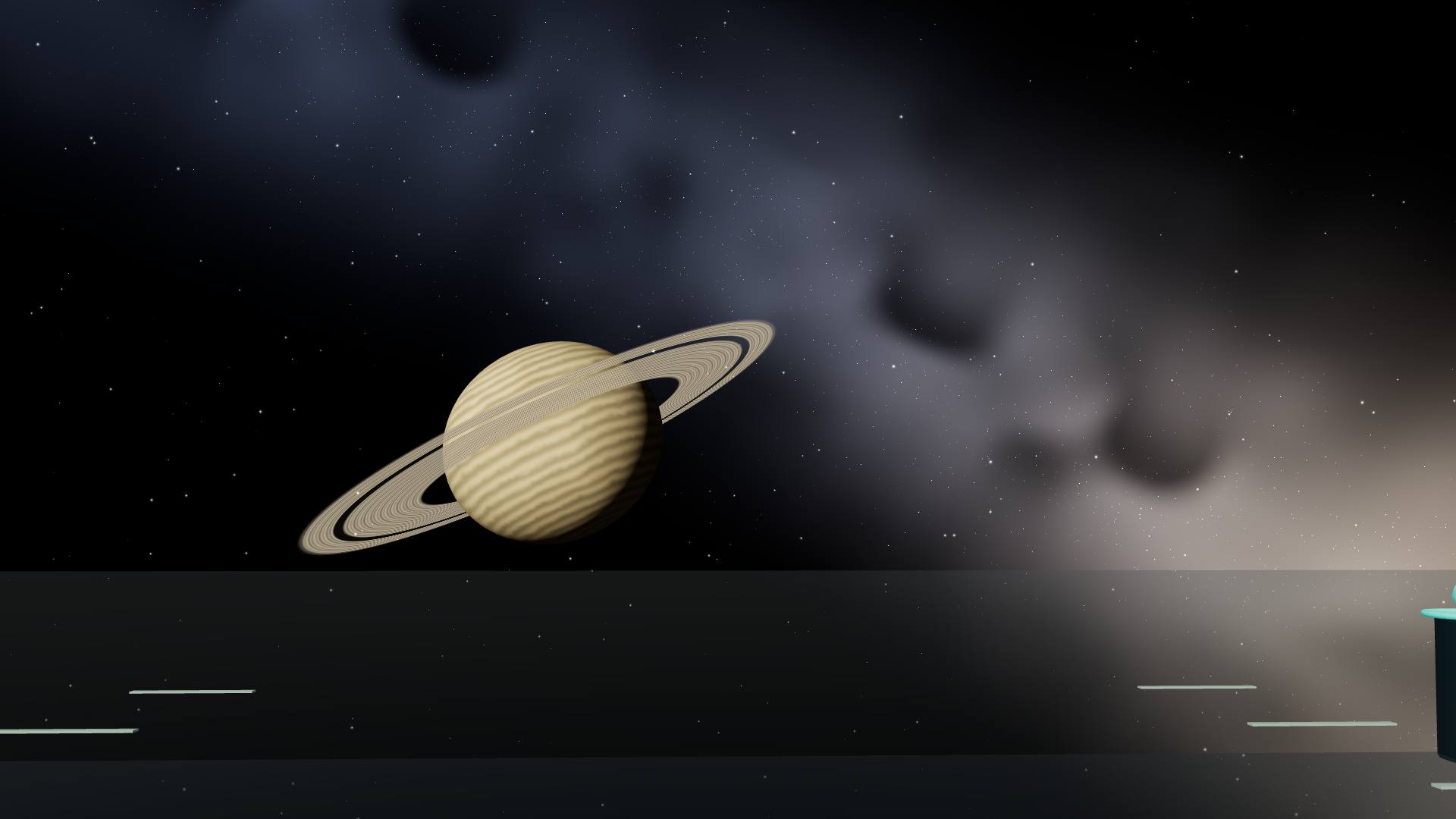
Saturn and its rings, one of eight planets to visit.
-
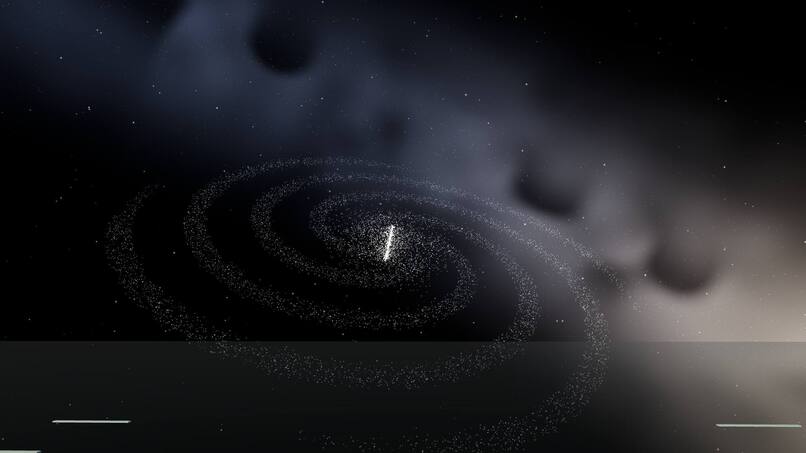
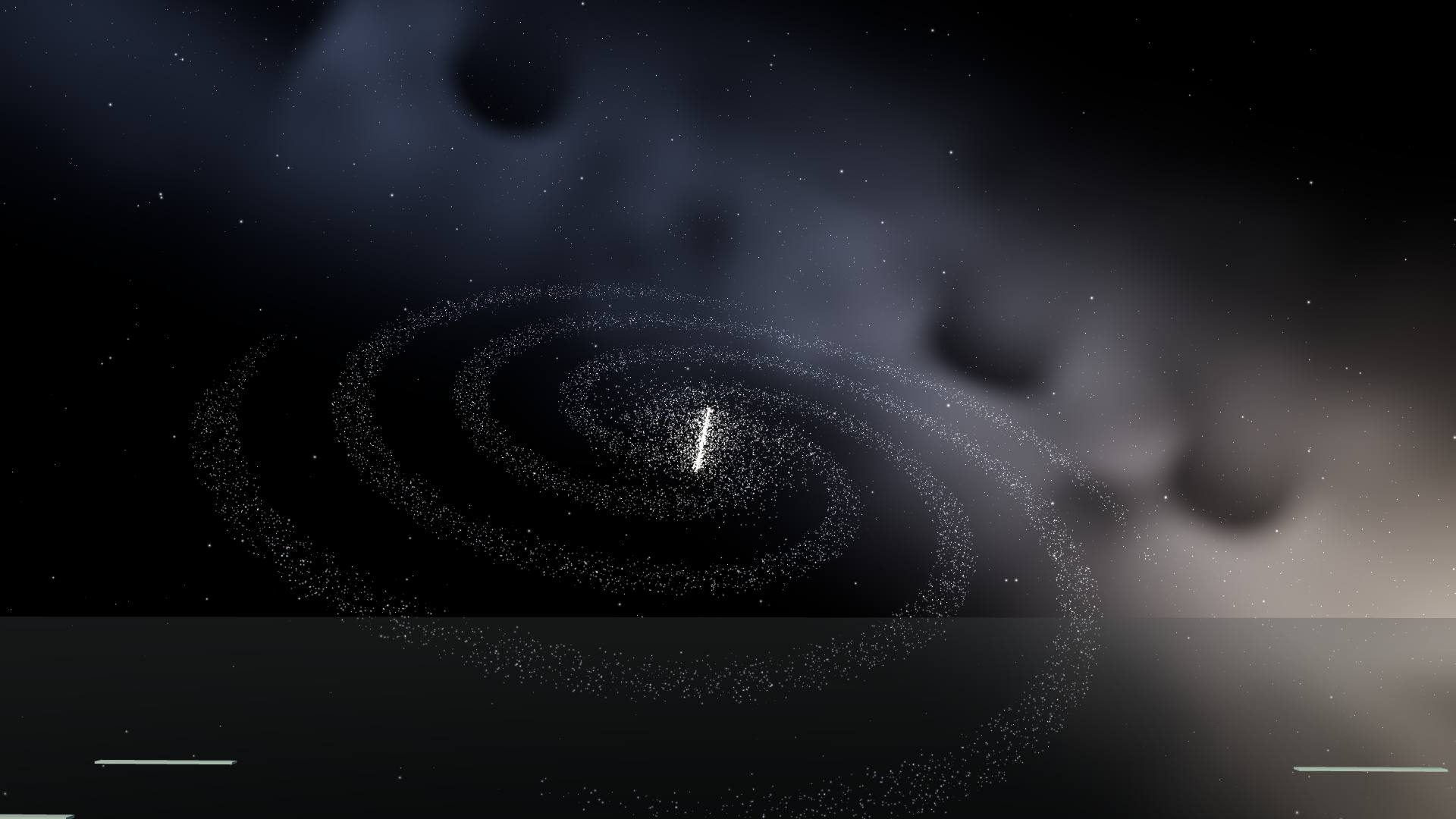
An illustrative view of the Milky Way.
-
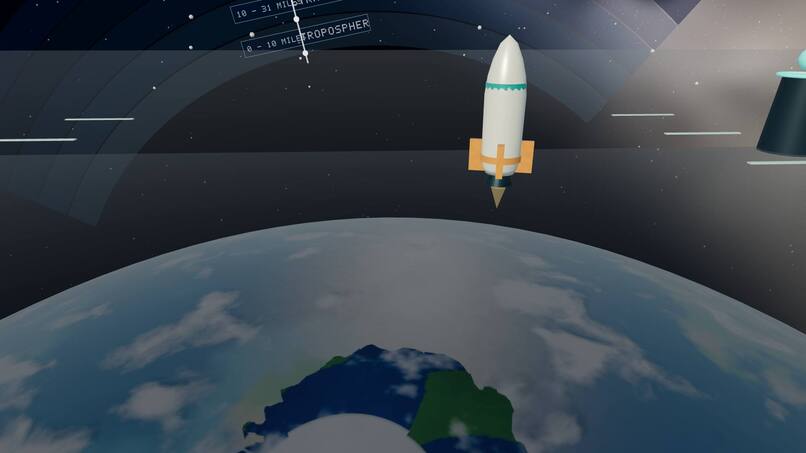
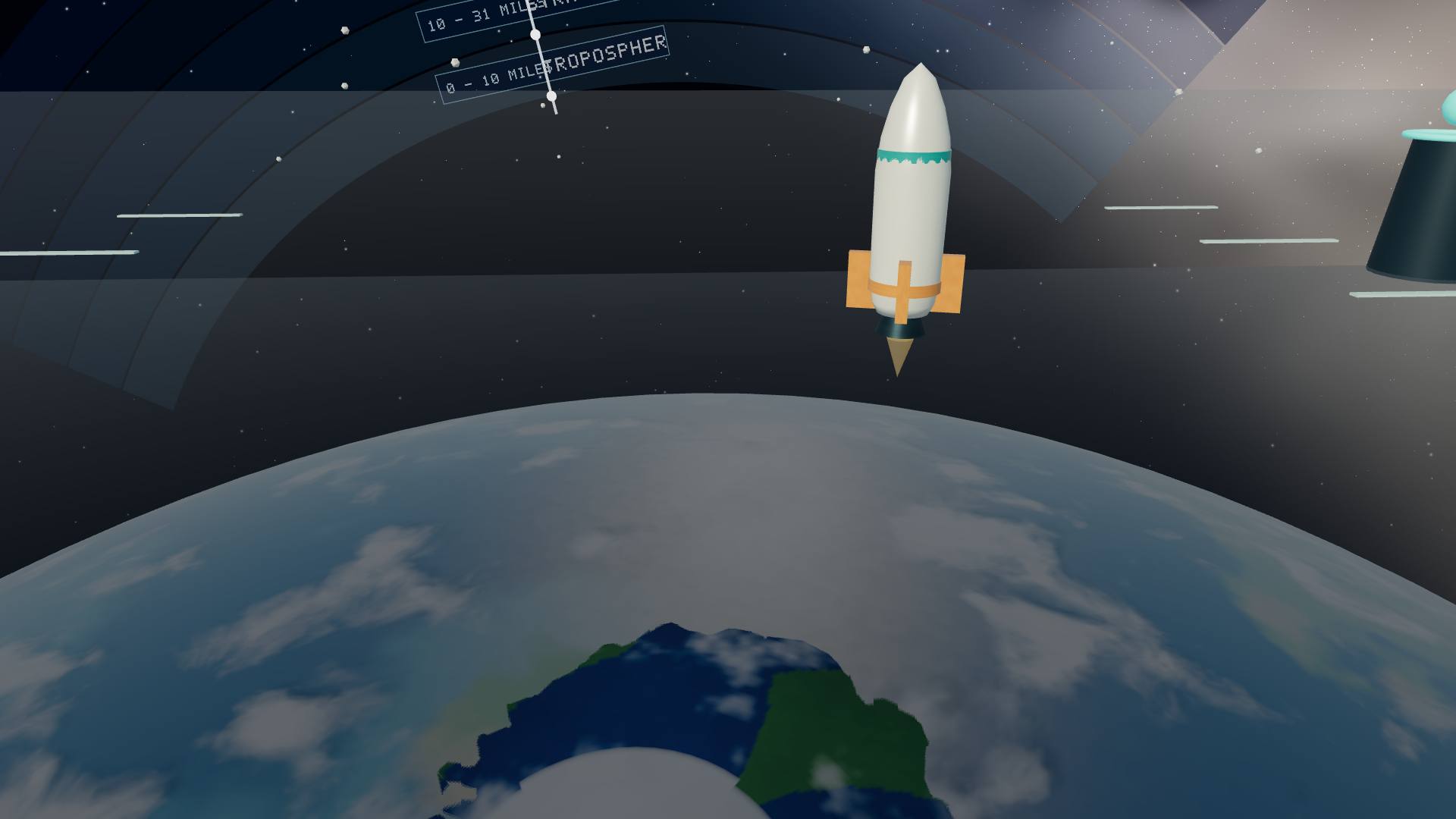
Exosphere: the rocket above Earth's curve at the top of the five-layer climb.
Inspiration
Most space experiences start in orbit. We wanted to start where a curious kid actually stands: on a street they recognise. Orbit Atlas begins on the ground, in a neighbourhood inspired by Gulzarbagh in Patna and a quiet village called Dumri, and only then climbs through the sky, layer by layer, until Earth is one small dot among eight planets. The idea is that space feels bigger when you have just left home.
What it does
Orbit Atlas is a seated, hands-first journey with 24 destinations. From a launch campus you pick a helicopter or a rocket. The helicopter visits Earth places: a city, two villages, mountains and the sea. The rocket rises through the troposphere, stratosphere, mesosphere, thermosphere and exosphere to a space hub, where you can visit all eight planets, the Moon, the Sun and a view of the Milky Way.
Nova, a small robot guide, meets you at every stop. Nova introduces the place, reads answers aloud and offers a three-question mission with three large answer cards. Every correct mission stamps a badge in your Explorer Passport, which is saved between visits. In the space hub, Planet Lineup challenges you to pinch eight shuffled planets into order from the Sun and keeps your best time. In the city, Courier Run is a timed eight-parcel route you can drive through the streets and over the bridge.
Space is built to feel like space: 9,000 stars coloured by temperature, a glowing Milky Way, glass decks that put Earth's curve beneath your feet, and a rocket roar that thins with the air until only the cabin hums.
Everything works by pointing and pinching. No controller is needed, the camera stays still during guided travel, and buttons keep stable positions so they are easy to find again. A full mission fits comfortably inside ten minutes.
How we built it
Orbit Atlas is a WebXR app built with Meta's Immersive Web SDK, TypeScript and Three.js, so it opens from a link with nothing to install. Game logic runs as entity-component systems, and the panels are spatial UI written in UIKitML.
Almost everything you see and hear is made for this project. The planets, Sun, Moon, rings, starfield, rocket, helicopter and Nova are procedural low-poly models with locally generated textures. All sound is synthesised in the browser with Web Audio: wind, birds, city hum, sea wash, rotor, engine notes, rocket rumble and a quiet cabin hum in space. The remaining buildings, trees and props are CC0 models from Kenney and Quaternius, credited in the app. Nova's guided answers are written for the experience and grounded in NASA's public learning pages, so the guide works fully offline.
What's next
- Tune performance and comfort on Quest hardware across every destination.
- Add a live "ask Nova anything" mode with voice questions.
- Add more Earth places, with more languages for Nova, starting with Hindi.
- Add a shared mode so a parent, teacher or friend can travel along.
- Package it as an installable app for the Meta Horizon Store.
Built With
- iwsdk
- three.js
- typescript
- uikitml
- vercel
- vite
- web-audio-api
- webxr


