-
-
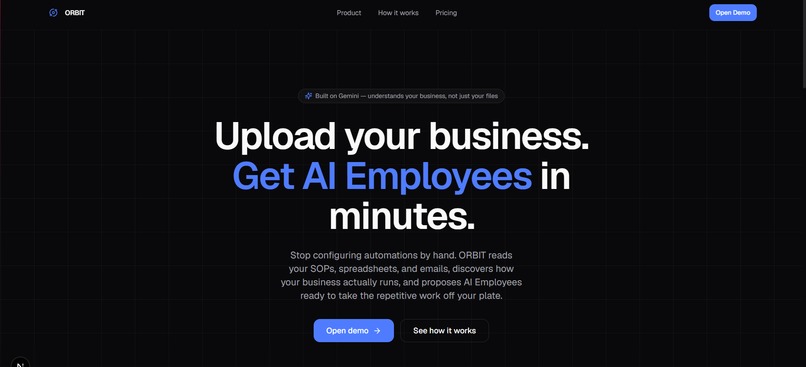
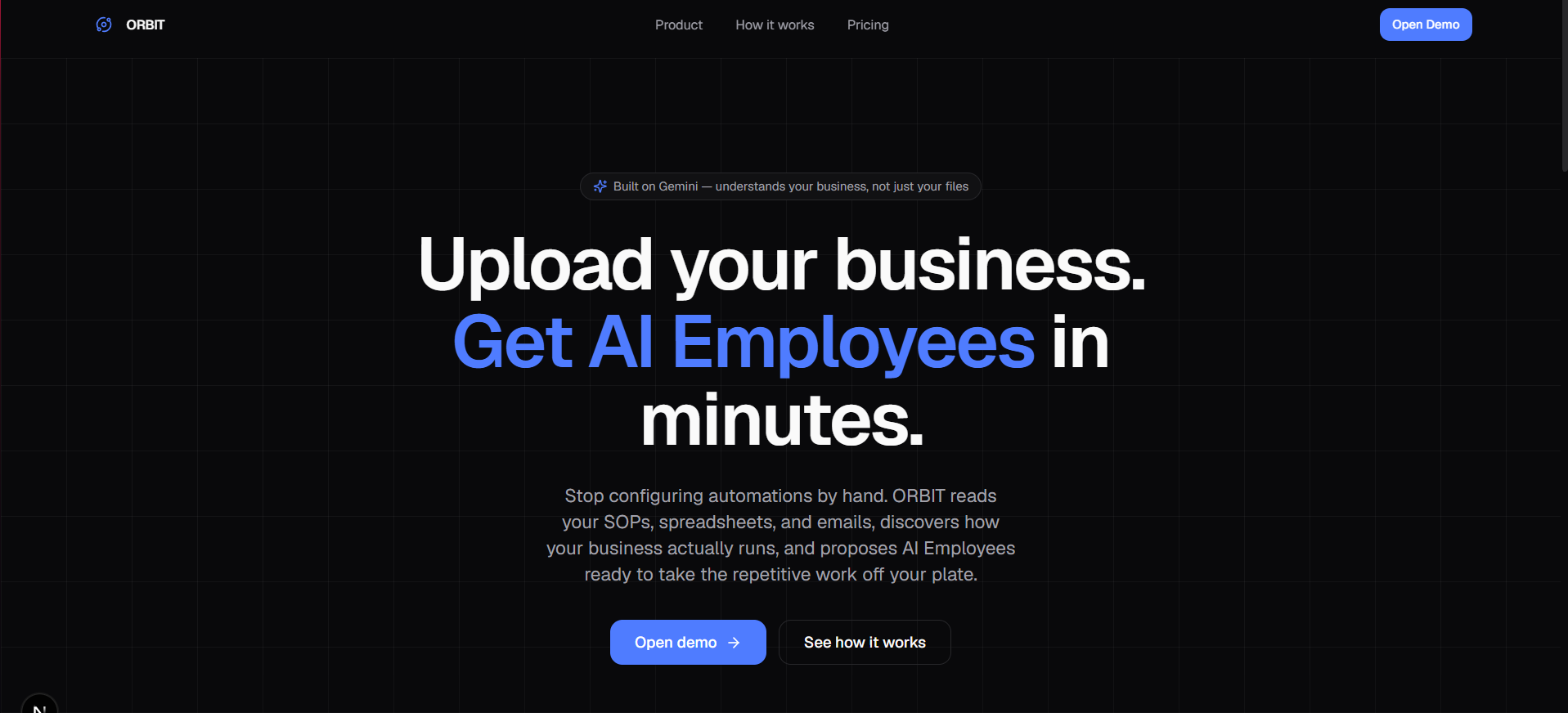
Upload your business. Get AI Employees in minutes.
-
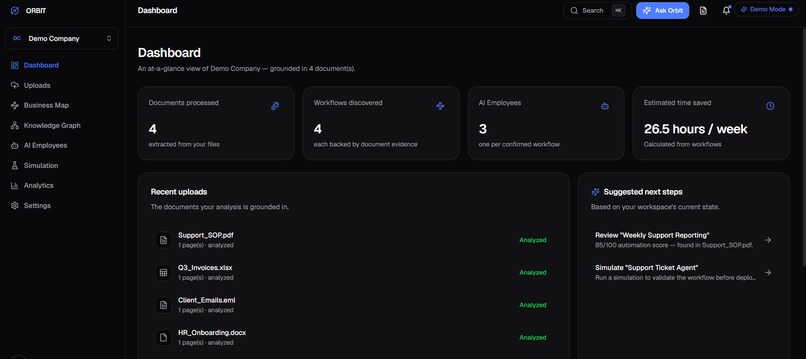
Dashboard
-
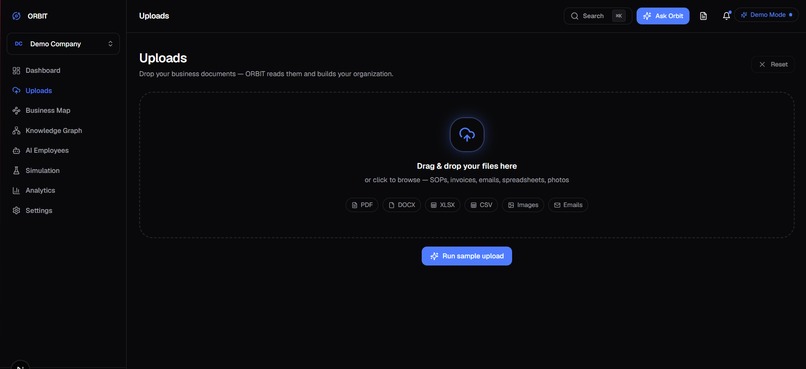
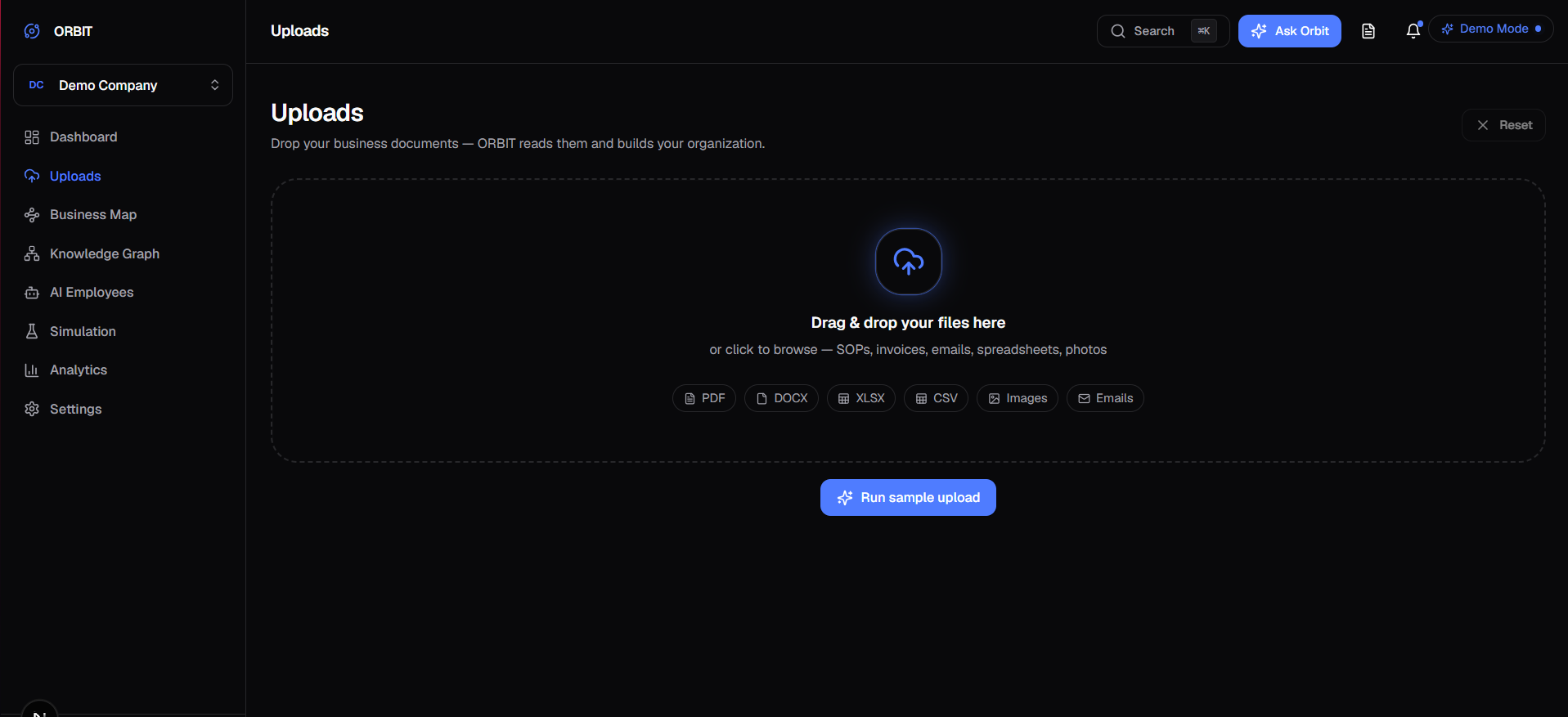
Drop your business documents — ORBIT reads them and builds your organization.
-
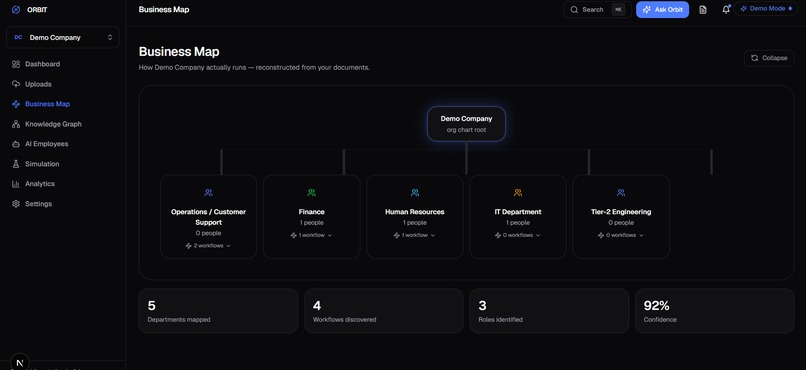
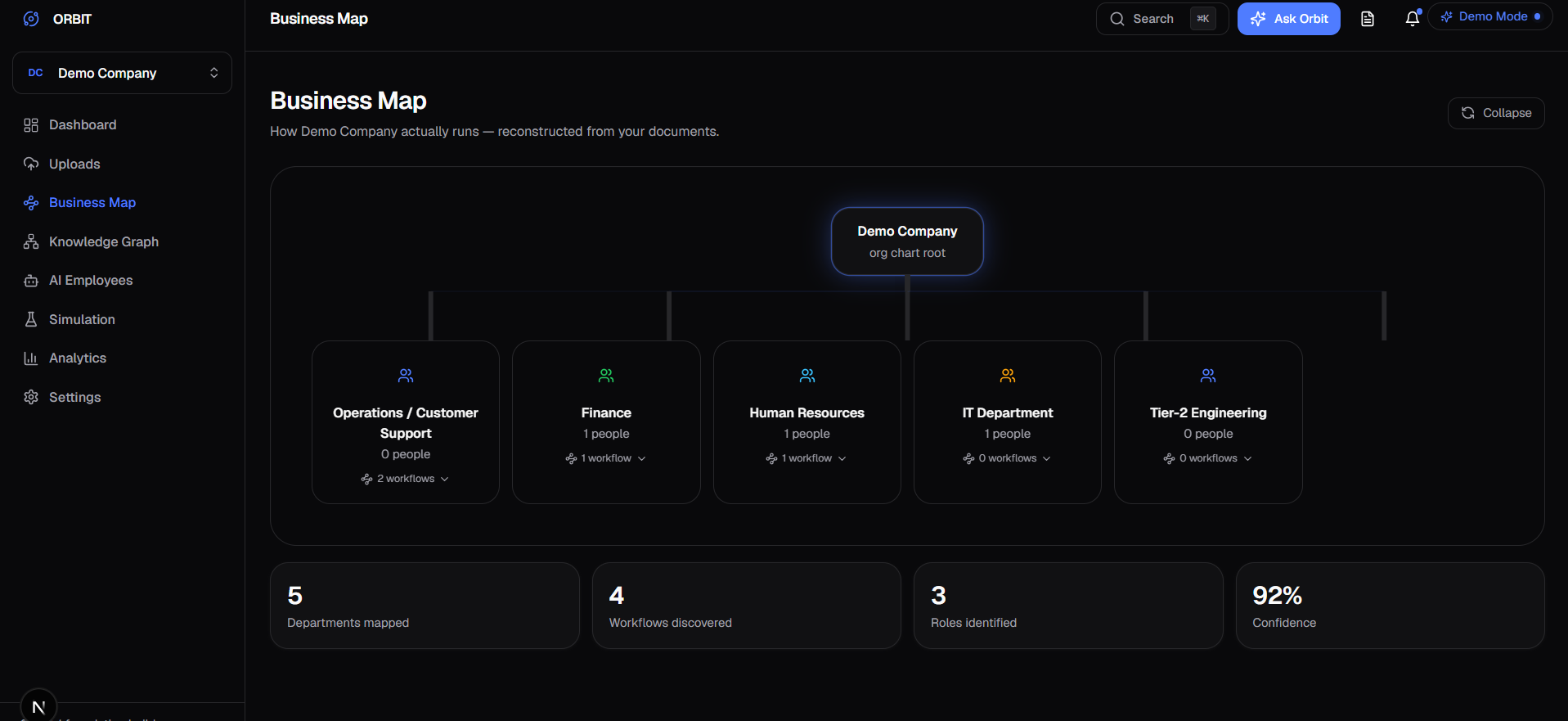
Business Map How Demo Company actually runs — reconstructed from your documents.
-
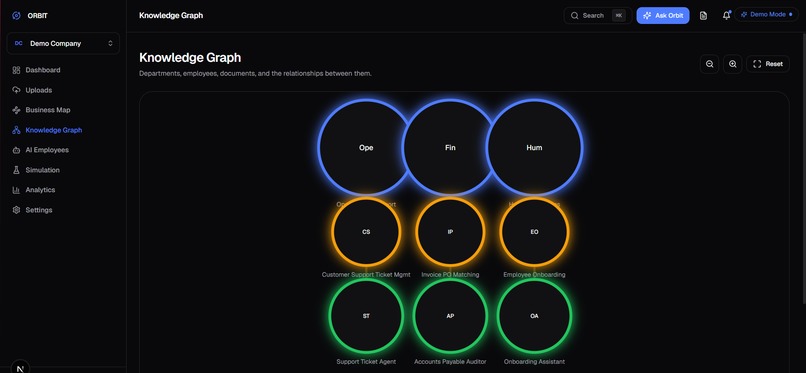
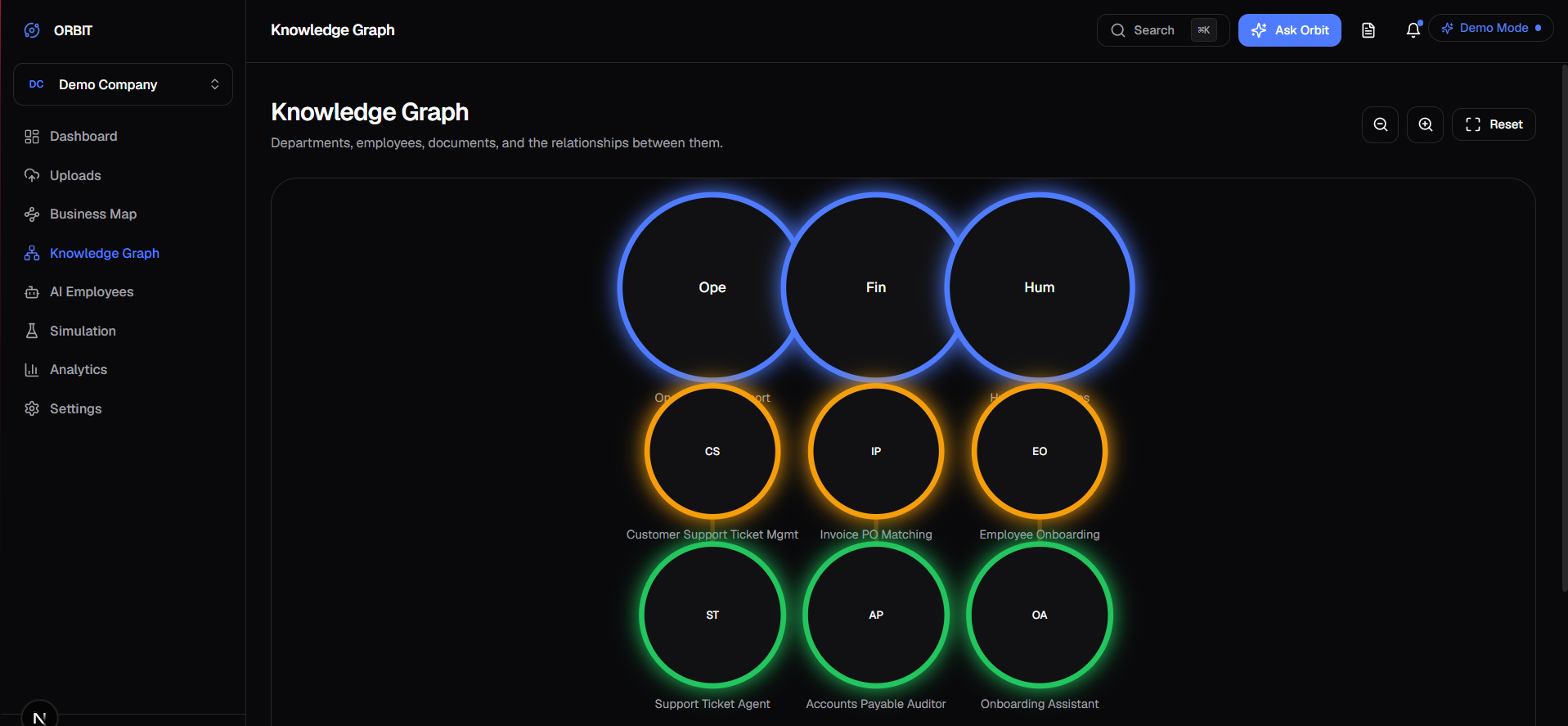
Knowledge Graph Departments, employees, documents, and the relationships between them.
-
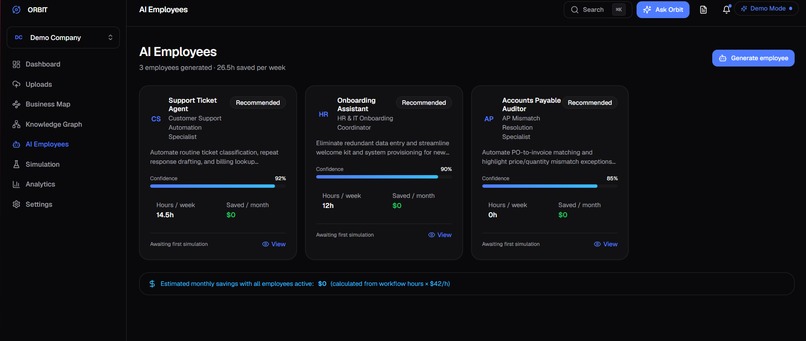
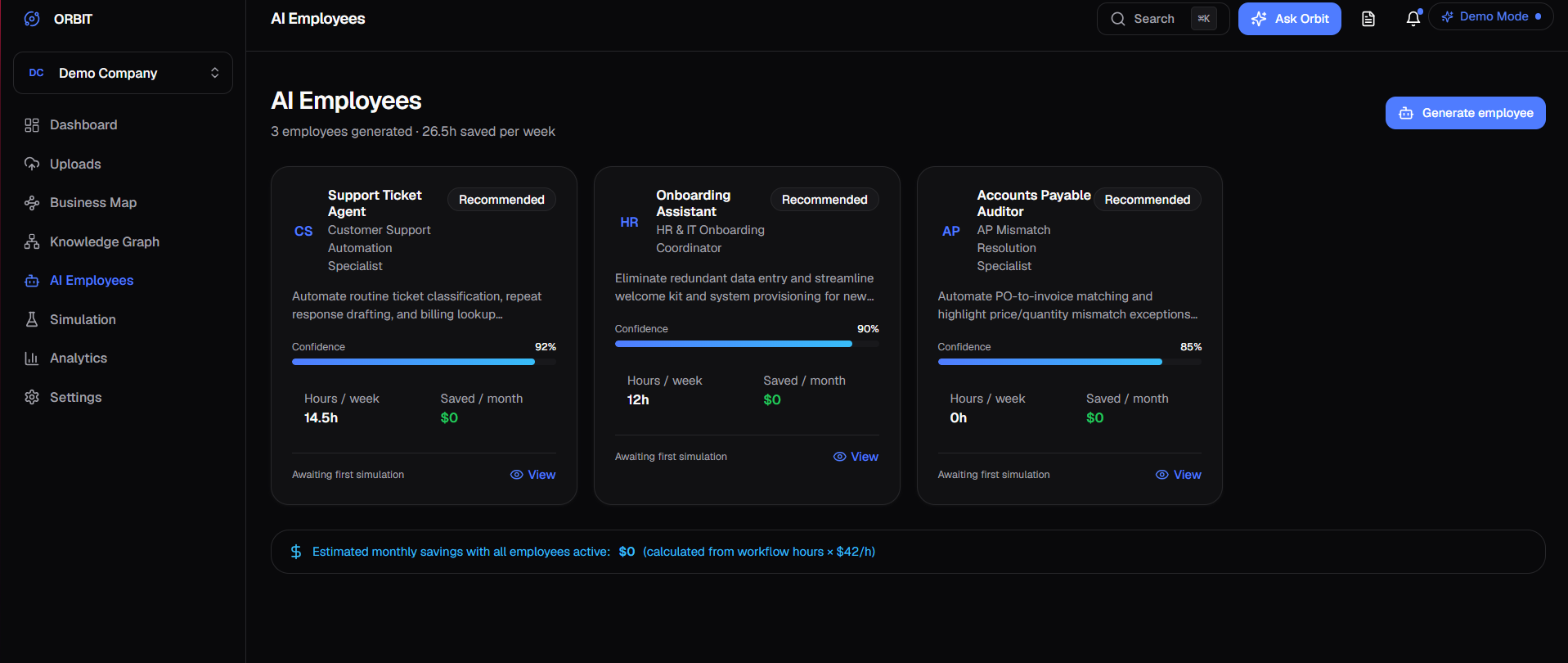
AI Employees
-
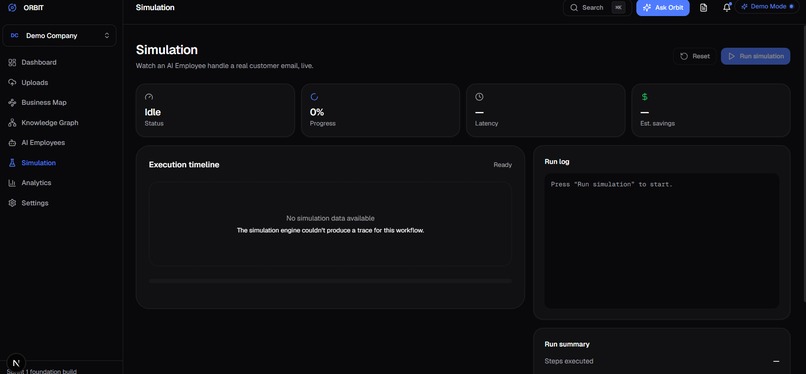
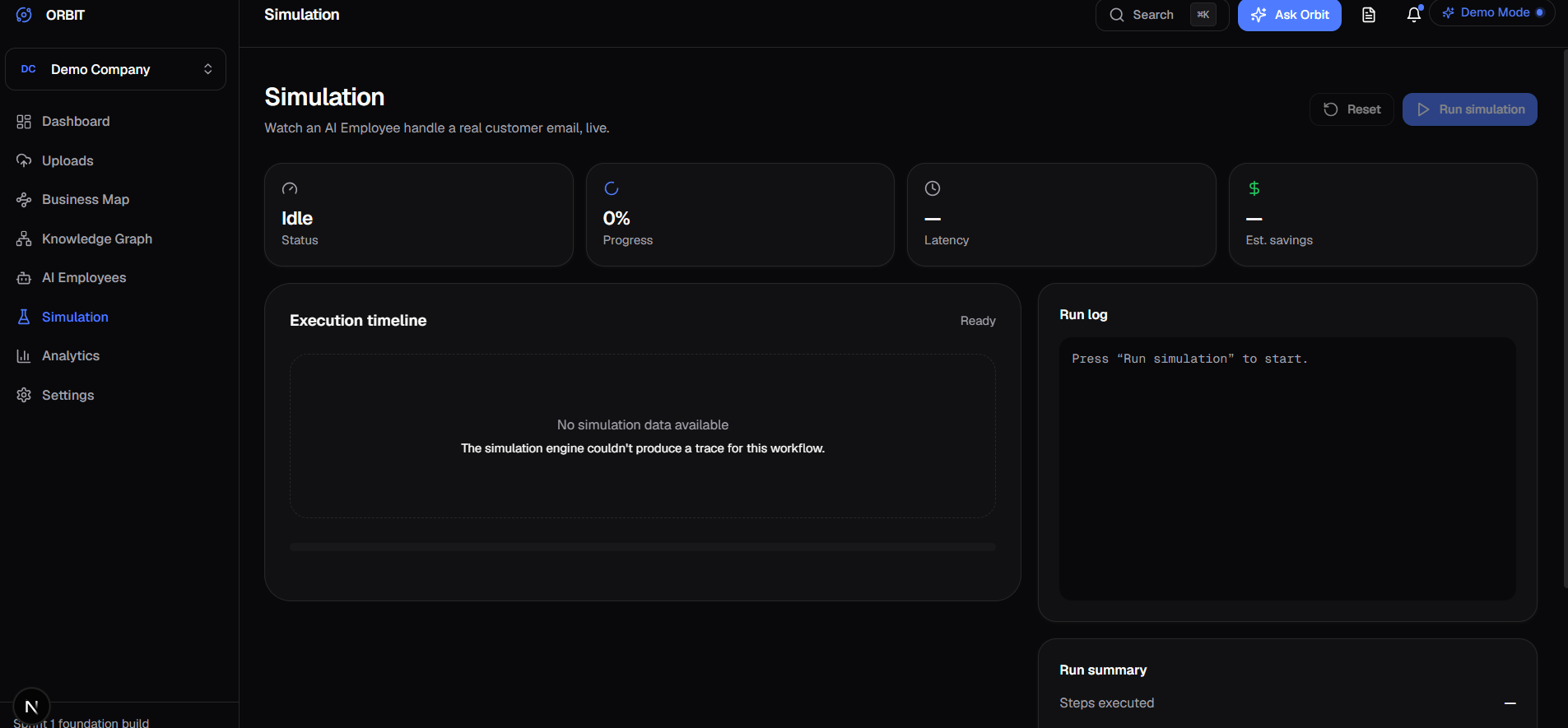
Simulation Watch an AI Employee handle a real customer email, live.
-
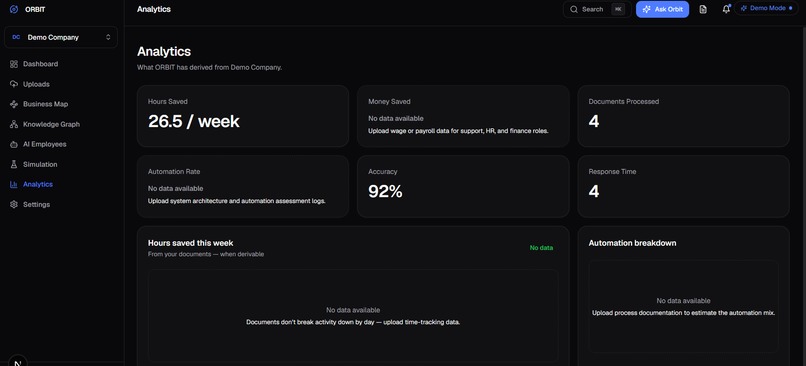
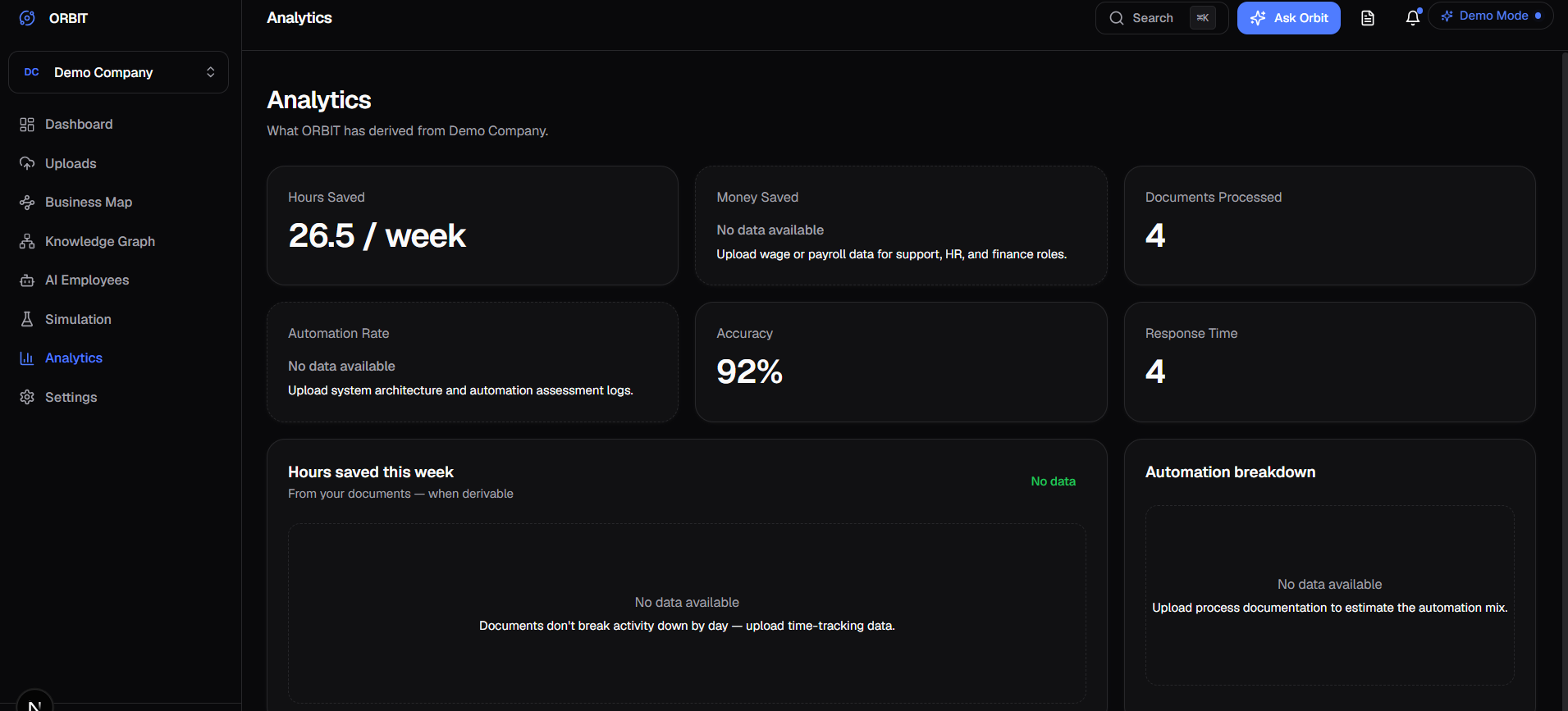
Analytics What ORBIT has derived from Demo Company.
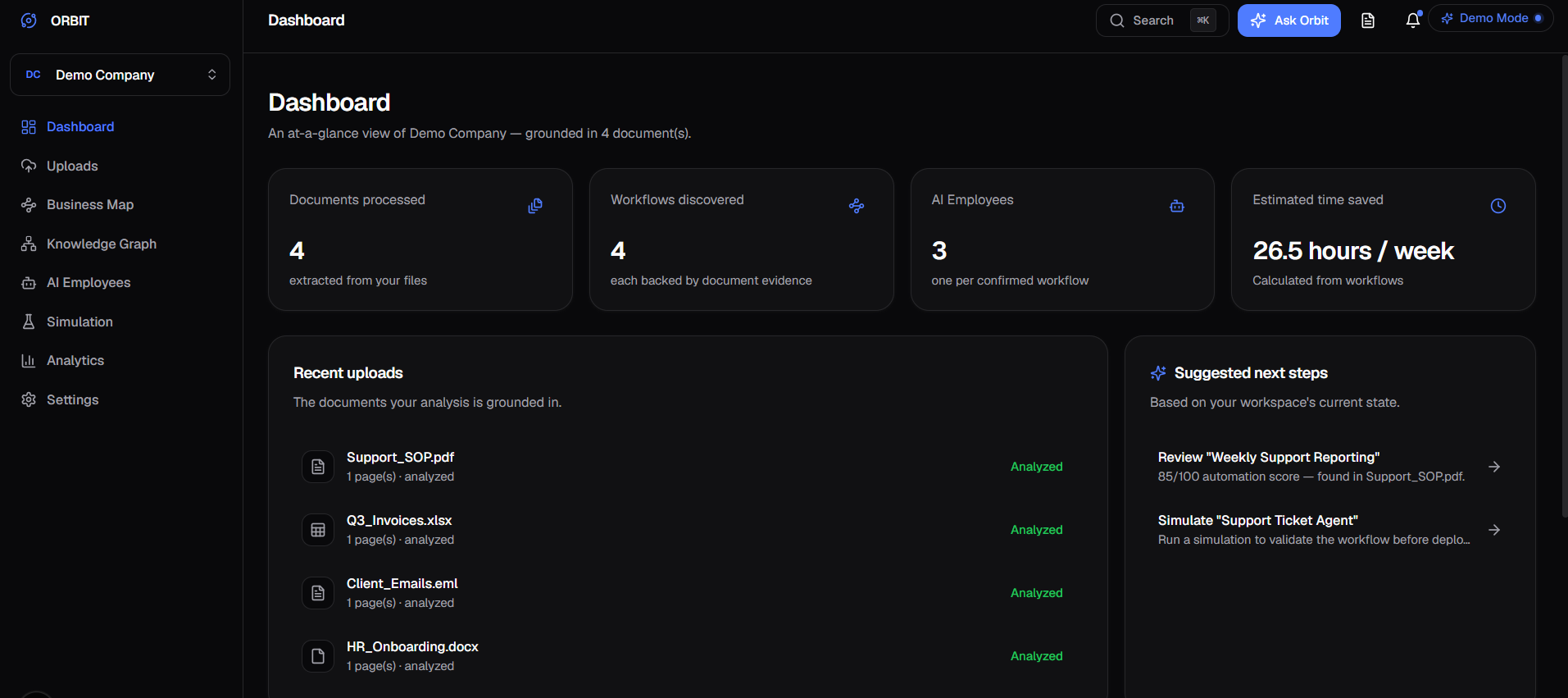
We started ORBIT after noticing something that almost every small business struggles with: they have hundreds of documents, emails, spreadsheets, invoices, SOPs, and reports, but all of that information is scattered across different folders and applications. The knowledge exists, but nobody has time to organize it or figure out how work actually happens.
Instead of building another chatbot, we wanted to build something that understands how a business operates.
ORBIT lets a company upload the documents they already have. From there, it analyzes relationships between people, departments, and processes, automatically maps business workflows, and creates specialized AI employees that understand each workflow instead of giving generic AI responses.
The goal is simple: help businesses understand themselves before they automate themselves.
What inspired us
We were inspired by watching businesses spend hours every week on repetitive work that already follows the same process every single day.
Invoices always go through the same approval flow.
Customer support follows the same escalation path.
HR onboarding repeats the same checklist.
Most of these workflows already exist inside documents and emails, but companies rarely have a system that connects everything together.
We wondered:
What if AI could learn how a company works just by reading its existing documents?
That idea eventually became ORBIT.
How we built it
We built ORBIT using Next.js, TypeScript, Tailwind CSS, Framer Motion, and Gemini AI.
The application guides users through a complete business analysis workflow:
Upload business documents Extract structured information Build a business knowledge graph Discover workflows automatically Generate AI employees for each workflow Simulate how those AI employees perform real business tasks Display analytics that are generated directly from the uploaded data
One thing we focused on throughout development was making every screen feel alive. We added animated processing stages, interactive graphs, simulations, smooth transitions, and contextual UI so users can actually see the AI working instead of waiting behind a loading spinner.
Challenges we faced
The biggest challenge was balancing ambition with time.
We had a lot of ideas but only limited time to implement them, so we constantly had to prioritize features that created the biggest impact.
Another challenge was making the interface believable.
Rather than displaying random demo numbers everywhere, we redesigned the system so metrics are generated from uploaded business data whenever possible, and whenever information doesn't exist, ORBIT clearly shows "No data available" instead of inventing statistics.
We also spent a significant amount of time refining the user experience—improving navigation, simplifying workflows, polishing animations, and making the platform feel like a real enterprise product rather than just another hackathon demo.
What we learned
This project taught us that AI alone isn't enough.
The real challenge is presenting AI outputs in a way that businesses can actually understand and trust.
We also learned how important product design is alongside engineering. A technically powerful system still needs an intuitive interface if people are going to use it confidently.
Perhaps the biggest lesson was that building under tight deadlines forces you to focus on what actually delivers value instead of chasing endless features.
What's next
This version demonstrates the core vision of ORBIT, but we see it becoming much more.
Future versions will support real-time collaboration, deeper integrations with workplace tools, continuous business monitoring, and AI employees that improve automatically as they observe more workflows.
Our long-term vision is for every business to have a living digital representation of how it operates—one that not only understands the company but also helps run it.
We believe ORBIT is a step toward that future.
Built With
- ai
- api
- css
- form
- framer
- gemini
- hook
- lucide
- motion
- next.js
- node.js
- postgresql
- radix
- react
- recharts
- shadcn/ui
- studio
- supabase
- tailwind
- typescript
- ui
- vercel
- zod

Log in or sign up for Devpost to join the conversation.