-
-
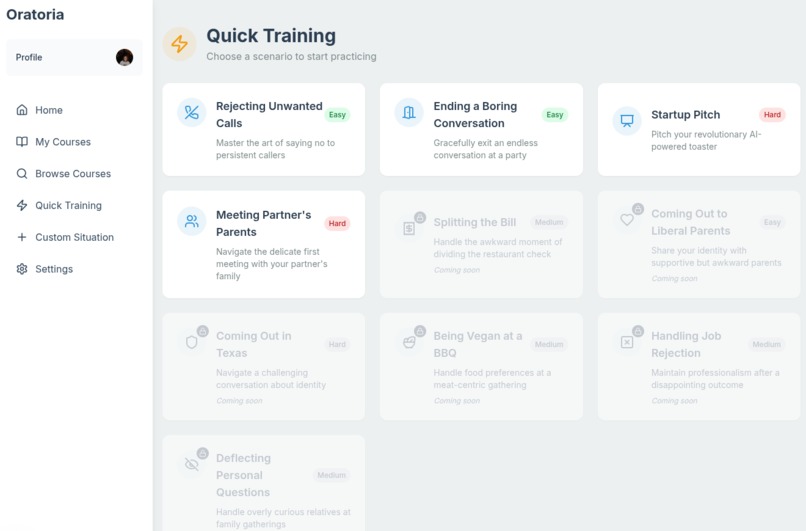
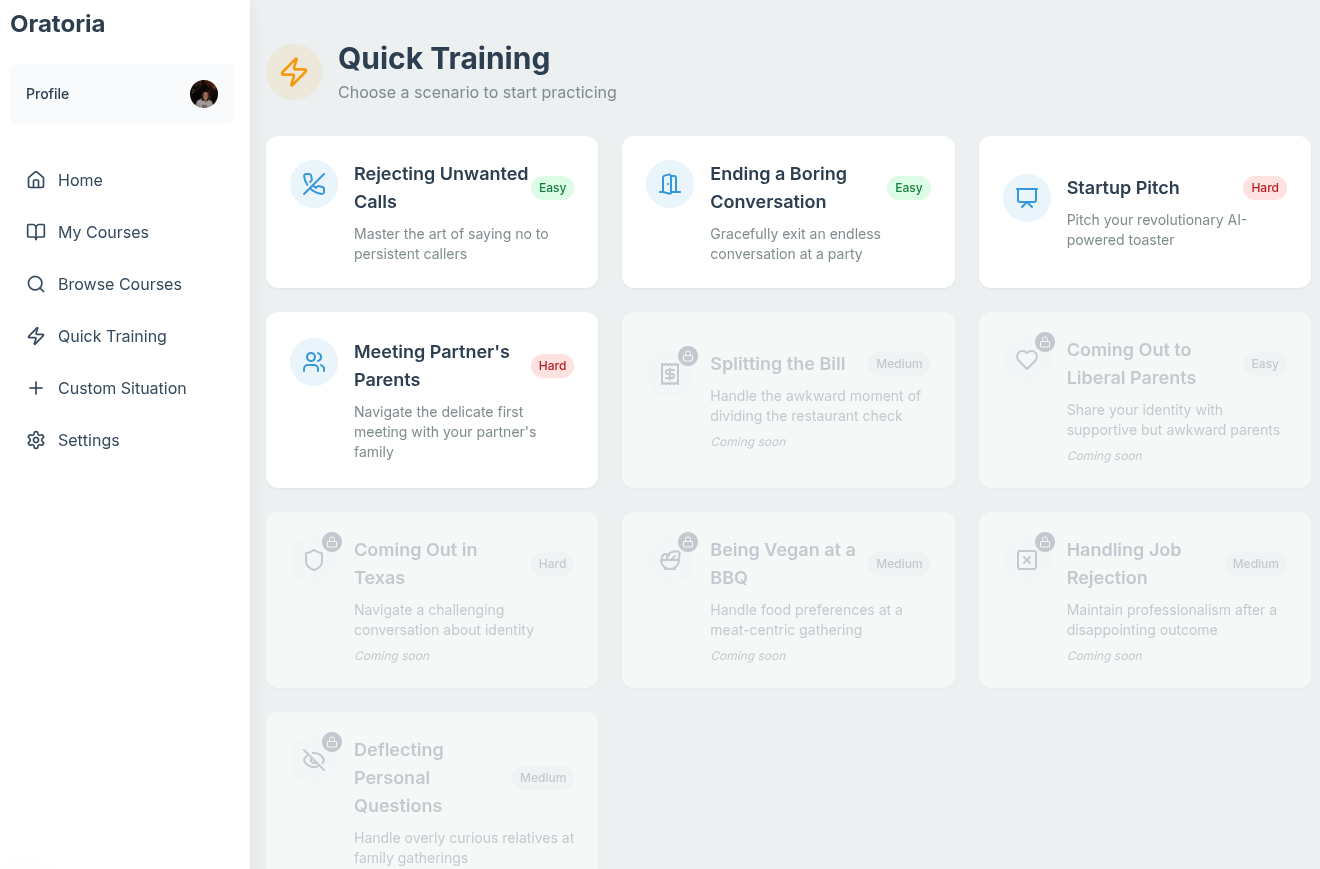
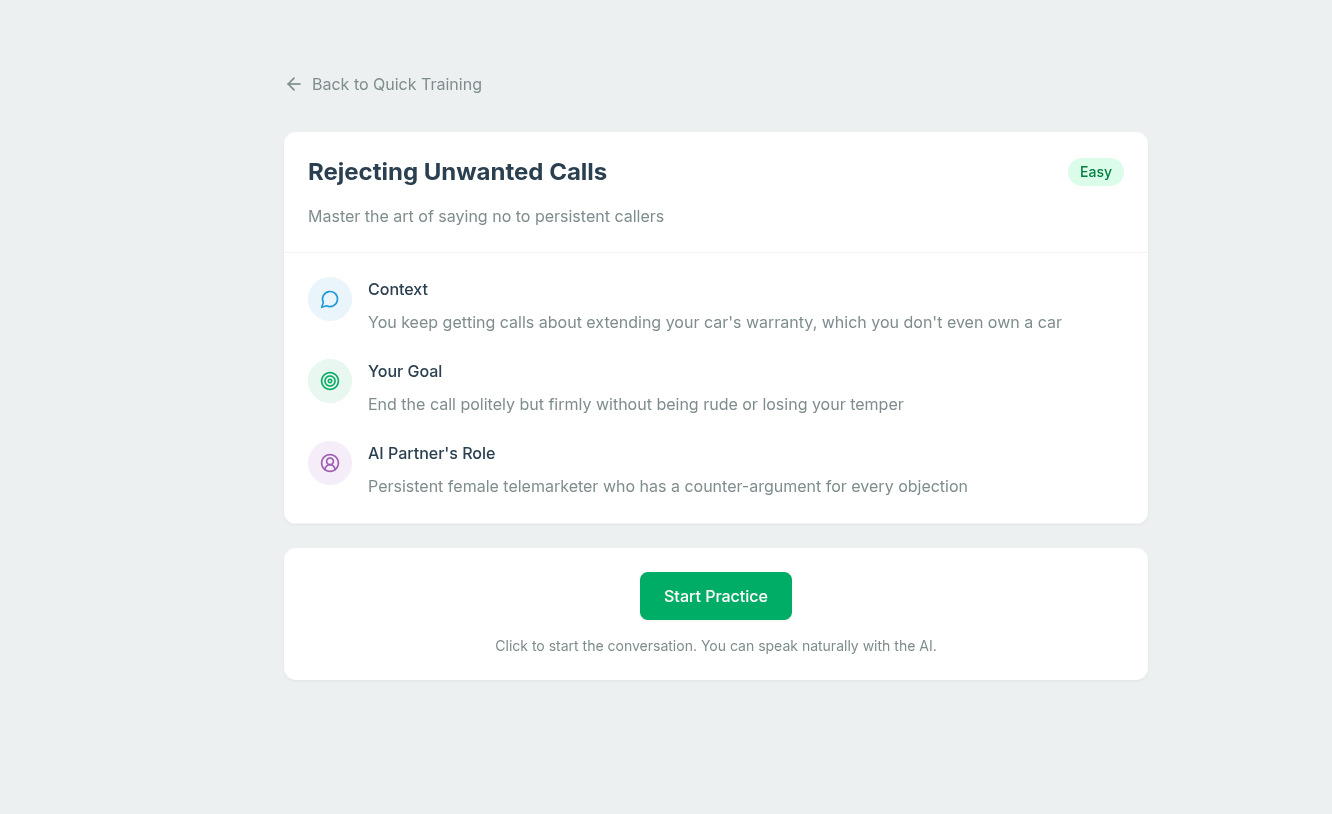
Choosing one of the standalone difficult conversation exercises
-
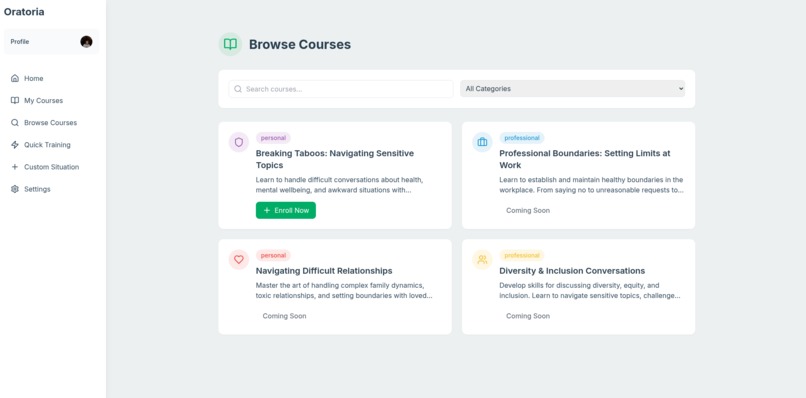
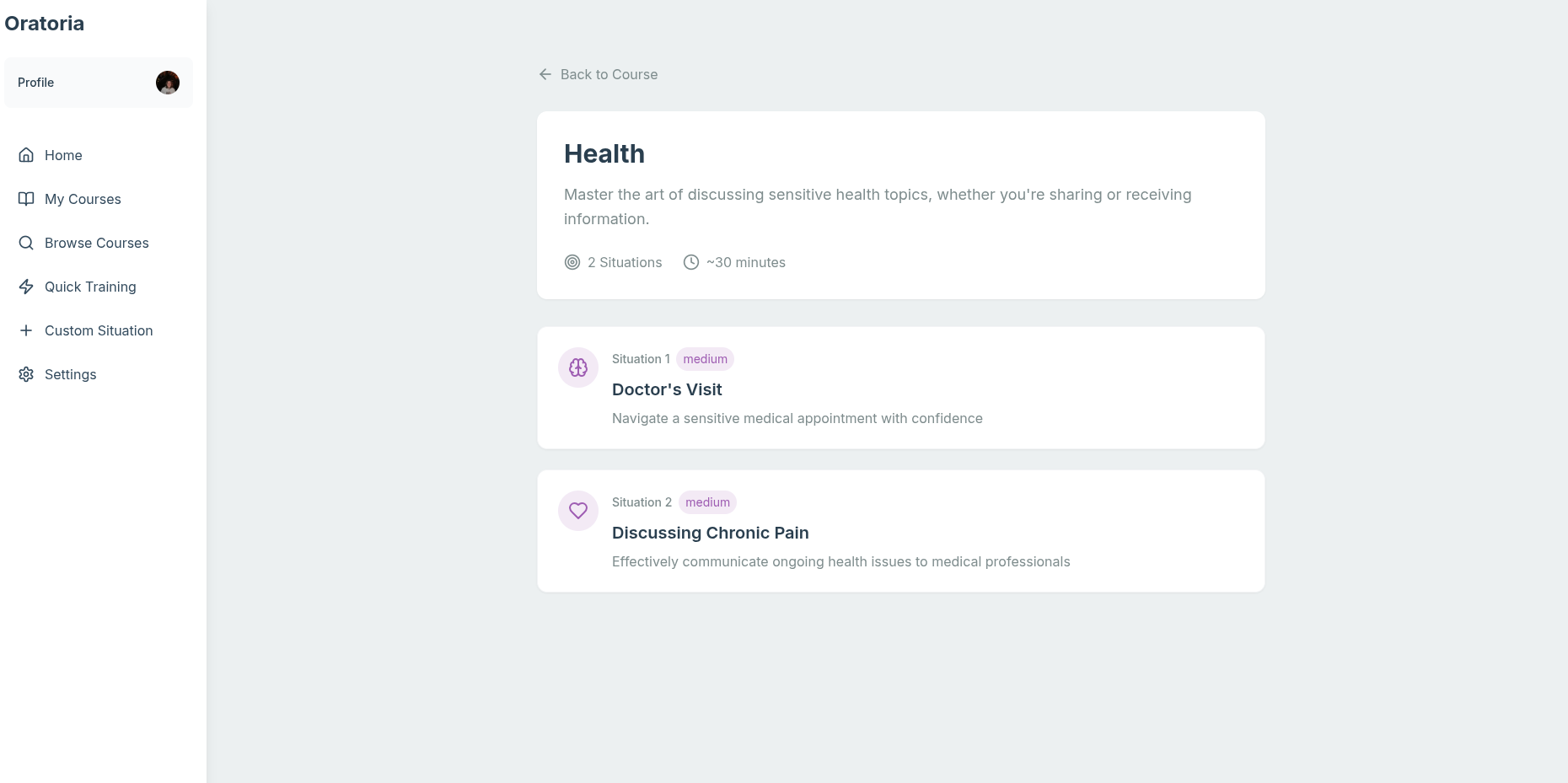
Difficult interactions are divided by classes
-
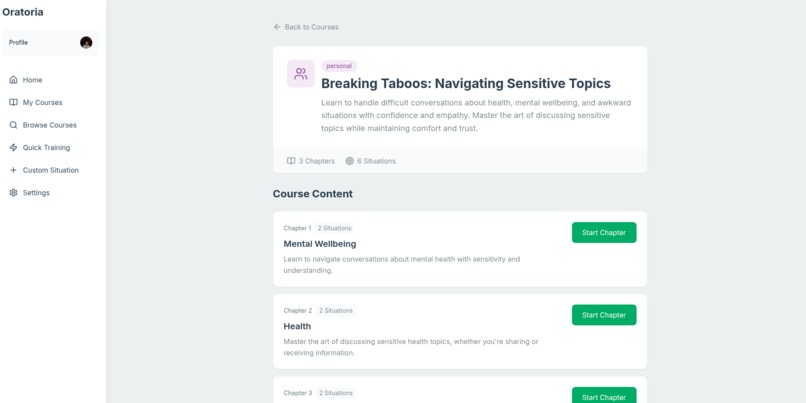
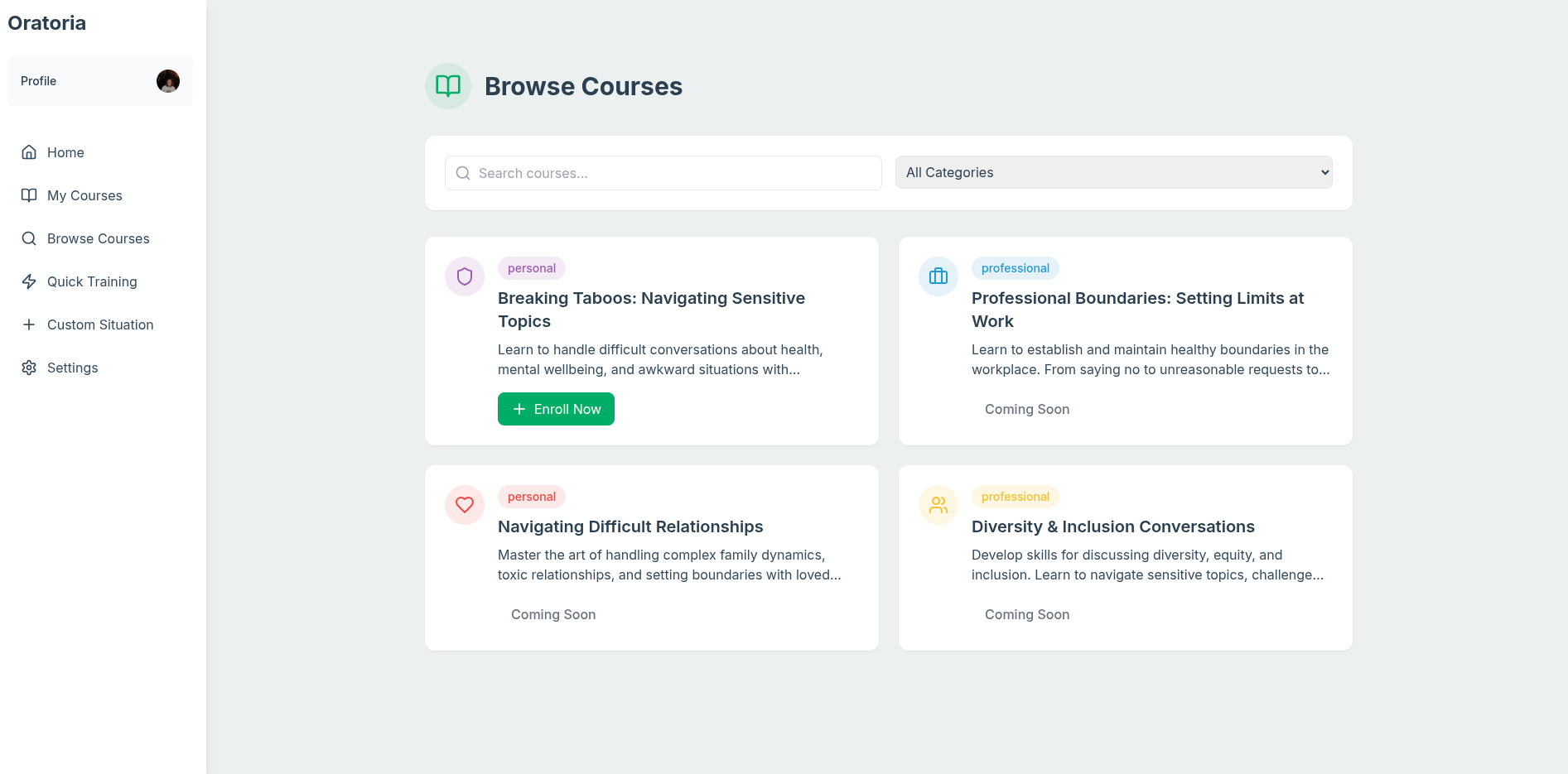
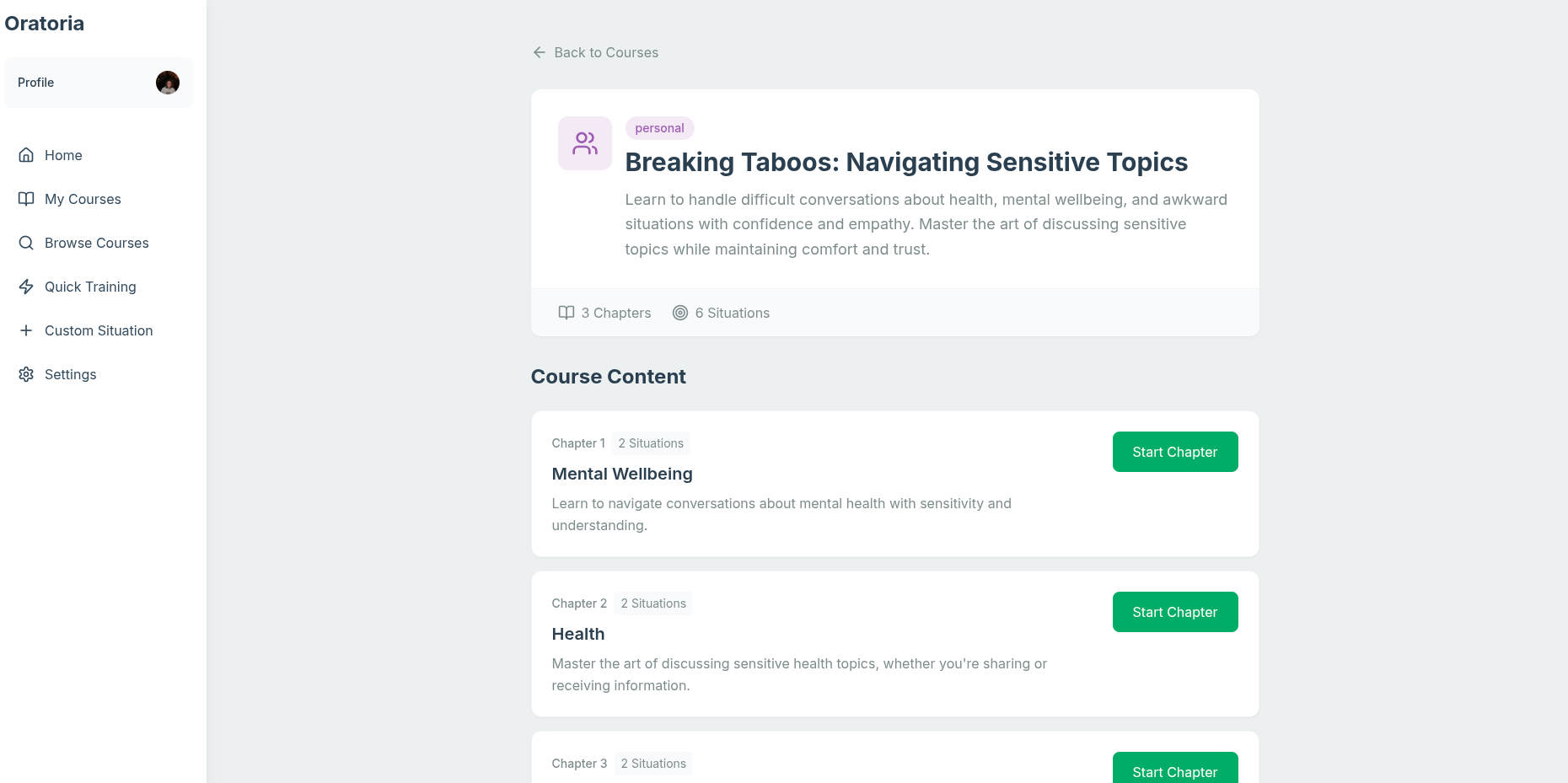
Chapter from a course about awkward topics
-
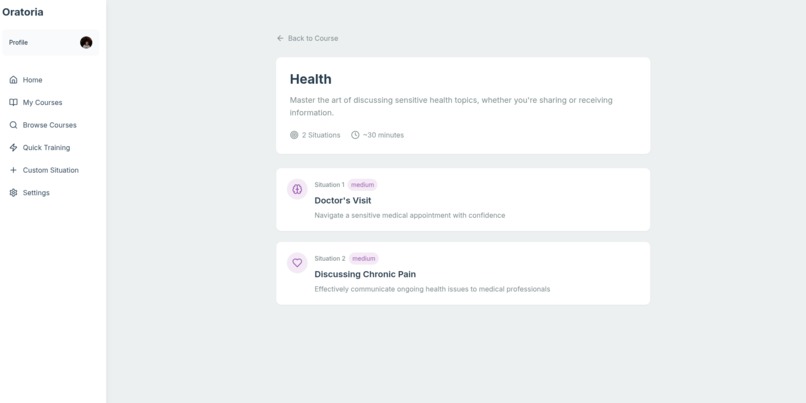
Chapters of a taboo-breaking course
-
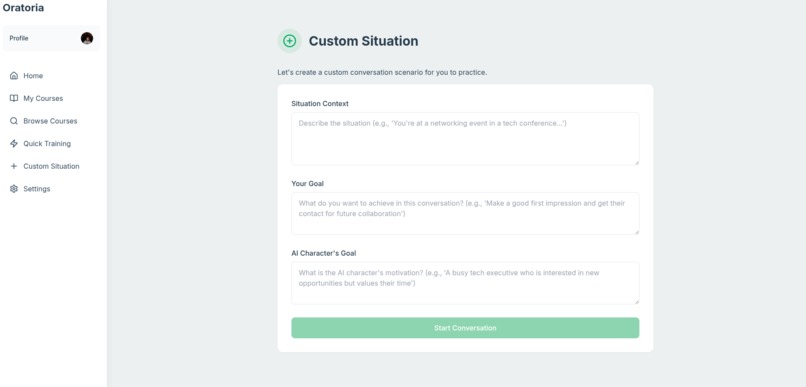
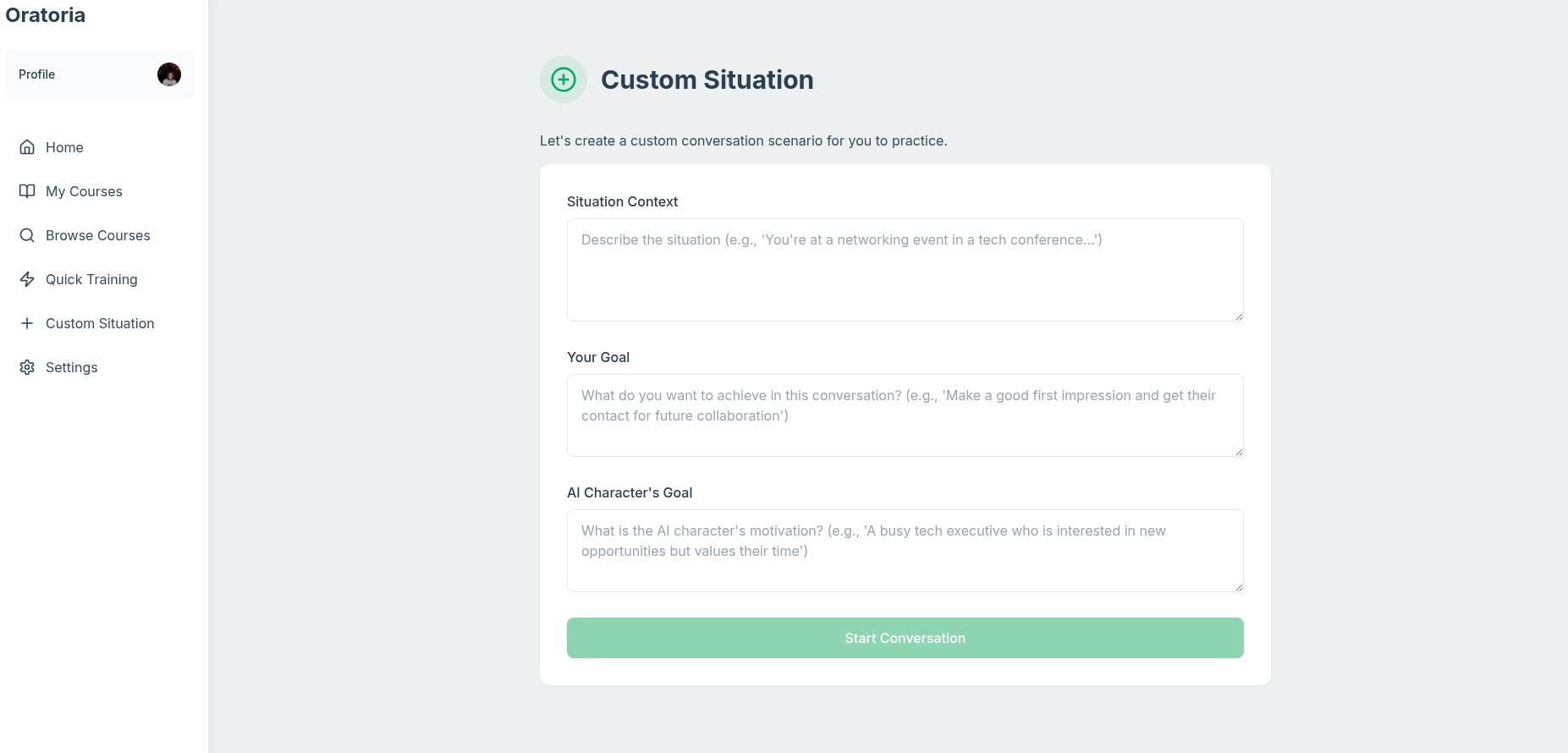
Custom interaction design
-
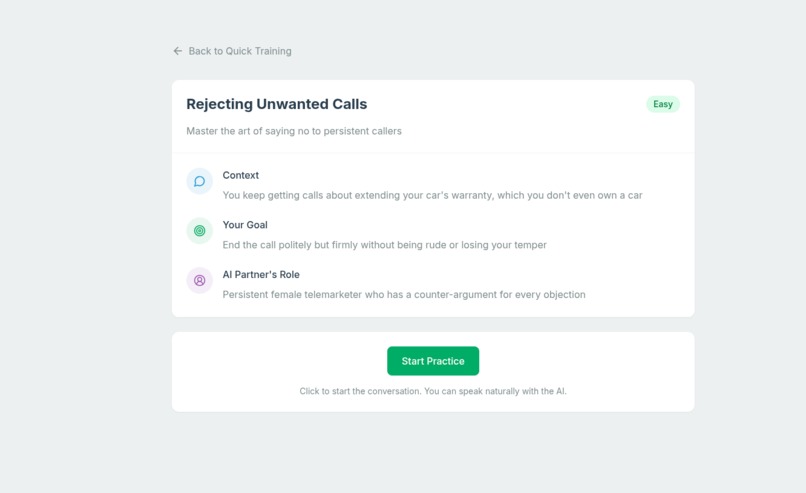
Conversation practice
Oratoria: Master Your Conversations with AI
Inspiration
Inspired by the ancient sophists and aristocrats who learned the art of rhetoric to influence society, I asked a question: Why isn’t there a modern tool to analyze, practice, and perfect the art of conversation? Just as elite athletes train for the Olympics and top chess players study their games, I imagined a platform that refines our conversational skills through practice, analysis, and targeted feedback.
What It Does
Oratoria exposes the theory behind conversations and empowers users to:
- Define their own style
- Practice challenging confrontations
- Prepare for interviews
- Analyze how others perceive them
Through immersive, AI-agent-driven scenarios, users receive real-time feedback, performance indicators, and actionable insights to sharpen their skills. The app is hosted on a custom domain and is fully accessible for testing.
How I Built It
The tech stack includes:
- Next.js – for a robust, scalable frontend.
- Supabase – a managed PostgreSQL database for storing user data.
- Clerk – for seamless authentication.
- Tailwind CSS – to achieve a clean, modern design.
- ElevenLabs – for natural, expressive text-to-speech.
- fal.ai – (using clause-3.5-sonnet, plus video generation for our epic trailer).
- Vercel – for effortless, zero-configuration hosting.
For more details, please see the repository.
Challenges
Do I regret debugging Vercel deployment for 8 hours straight? Maybe. Am I proud of the fact that the app is available as it is now? Absolutely. The biggest challenge was multitasking—juggling all aspects of development as a solo dev. The project certailny pushed my limits but it was fun, so I guess I'm happy.
What's Next?
I really liked this idea and plan to expand Oratoria by adding extra courses and exploring new ways to expand it. The journey has just begun, and I’m excited to see where it leads!
Built With
- cursor
- elevenlabs
- fal
- next.js
- supabase
- typescript
- vercel

Log in or sign up for Devpost to join the conversation.