-
-
Title Page
-
How It Works
-
The Problem
-
Target Audience
-
Product Itself
-
Product Description

Project Overview
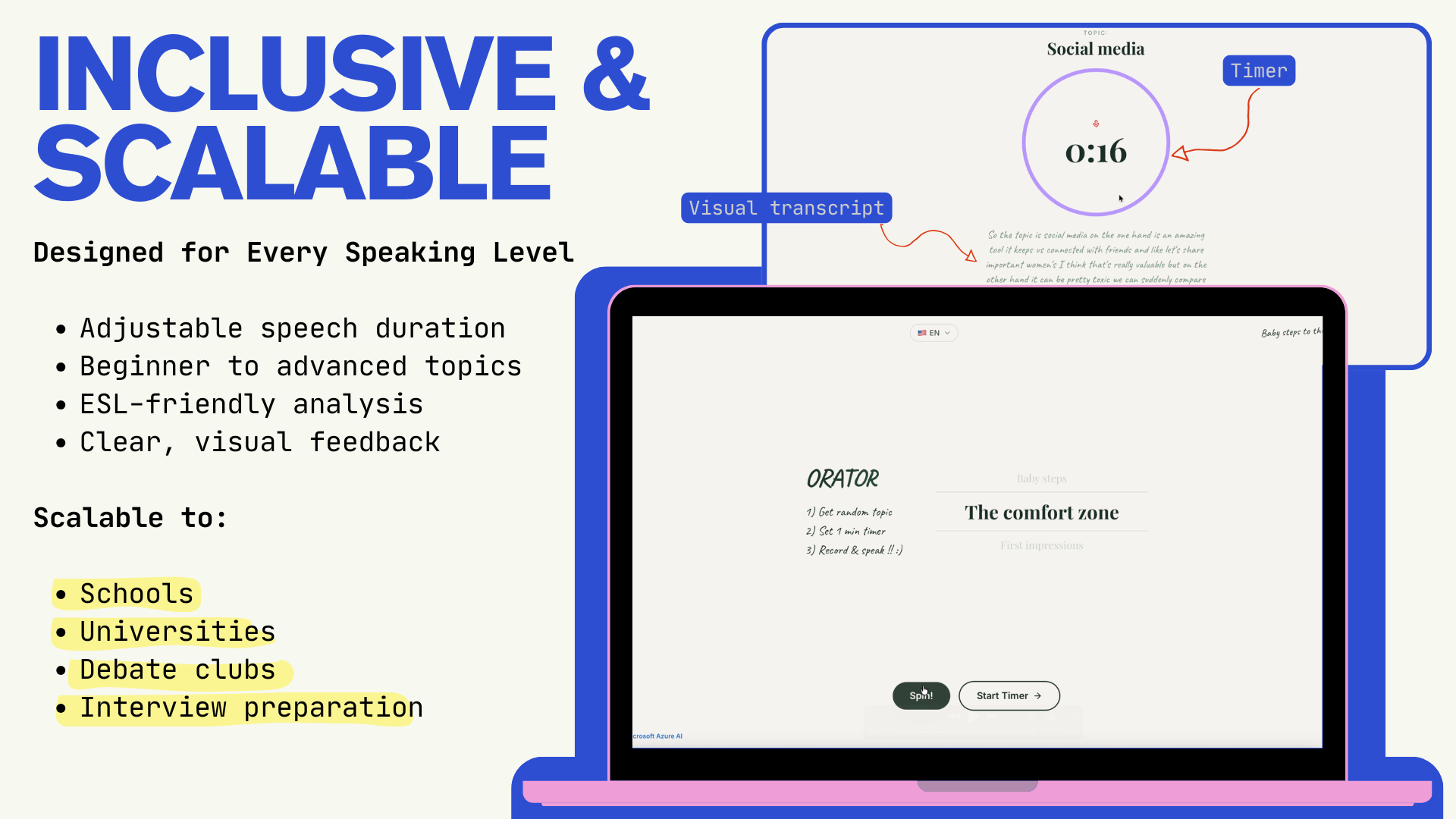
ORATOR is a bilingual (English and Hungarian) public speaking preparation lab built for one purpose: helping people practice before the real moment. Presentations, thesis defenses, interviews, and debates all create pressure, yet students rarely have access to structured rehearsal environments with meaningful feedback. ORATOR creates that space. It combines impromptu topic generation, real-time speech analysis, and AI coaching in a clean, gamified web experience that turns practice into measurable progress
Inspiration
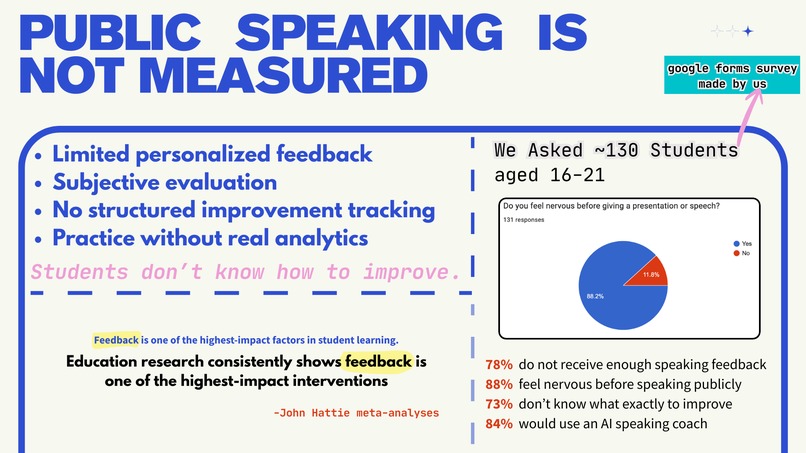
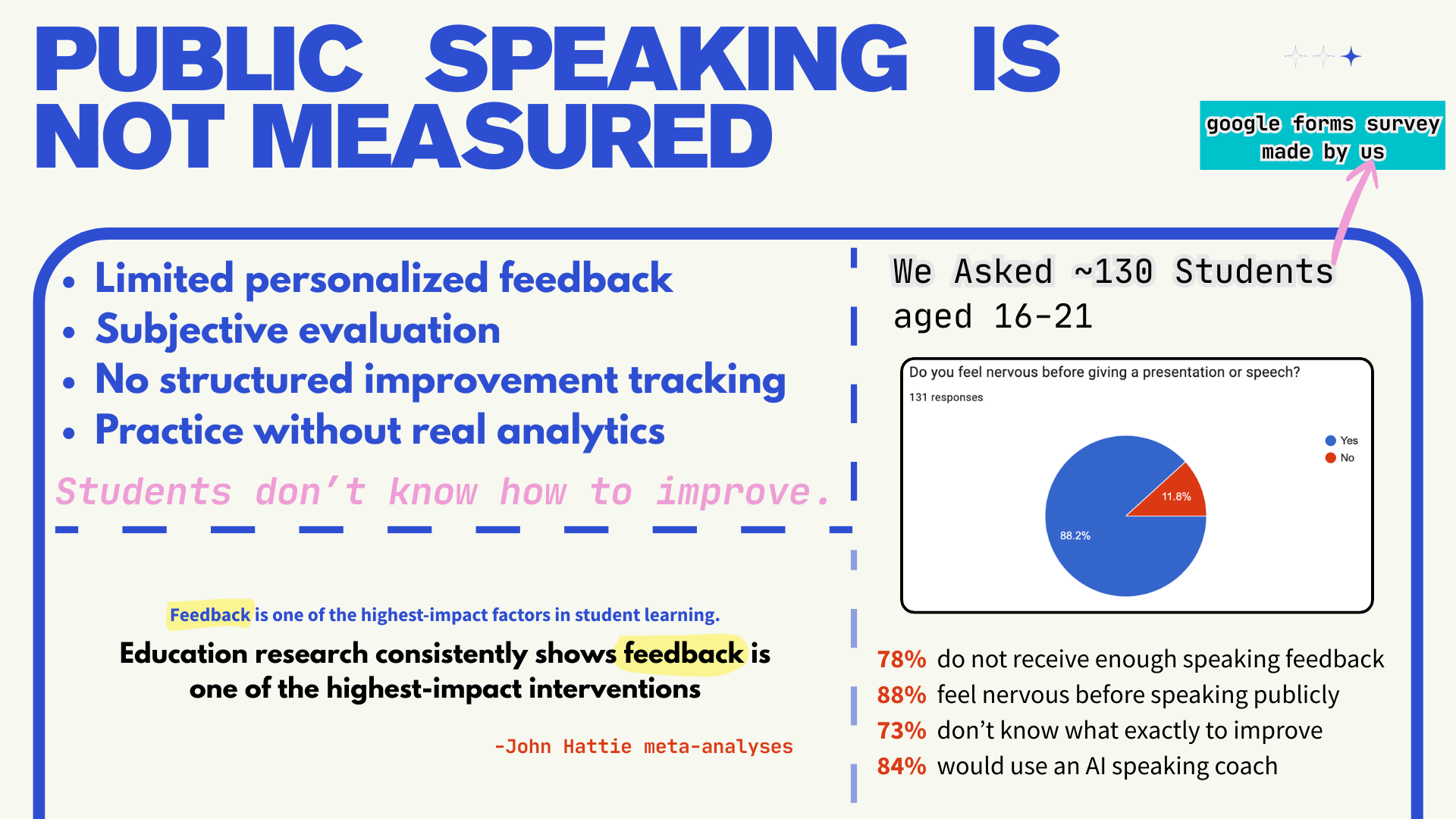
Public speaking is one of the most important skills in education, yet it is rarely practiced in a structured way. In classrooms, feedback is limited. In interviews, there are no second chances. Most students rehearse alone, unsure of what to improve. We surveyed over 130 students. (Survey Link below) We realized the issue is not talent. It is preparation. ORATOR was built as a rehearsal lab, not a grading tool.
What it does
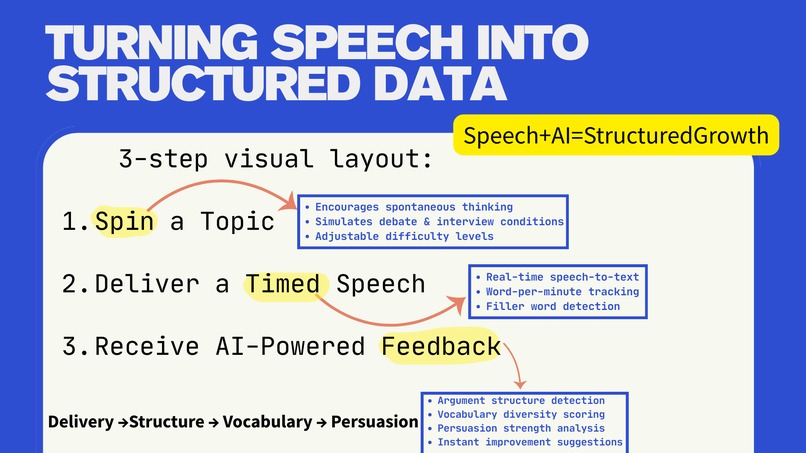
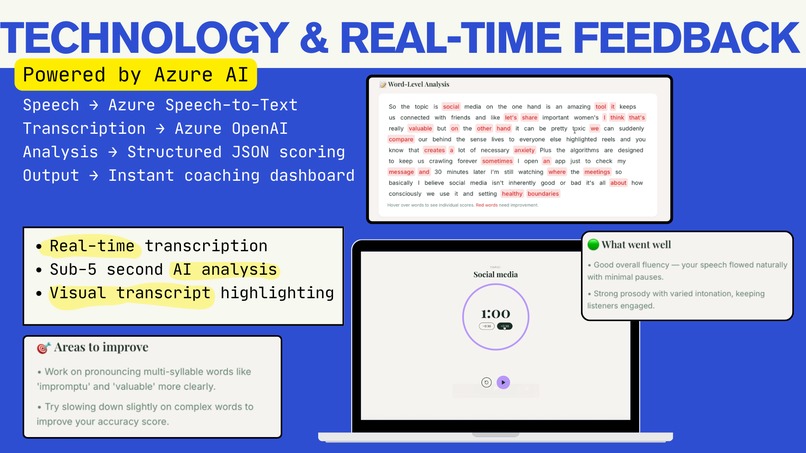
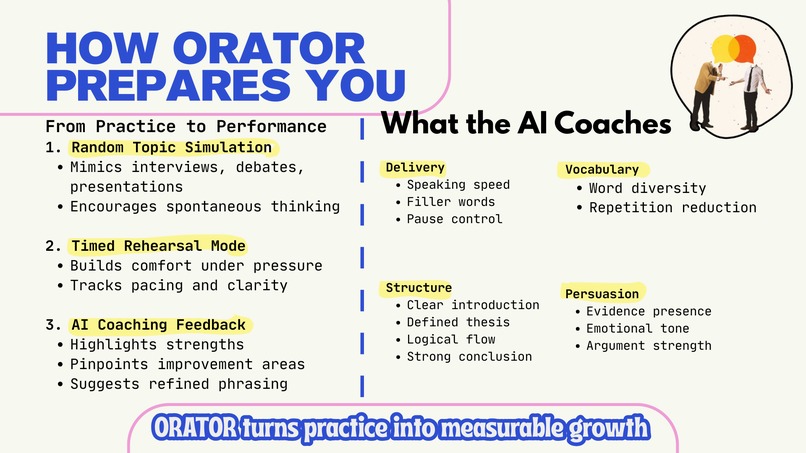
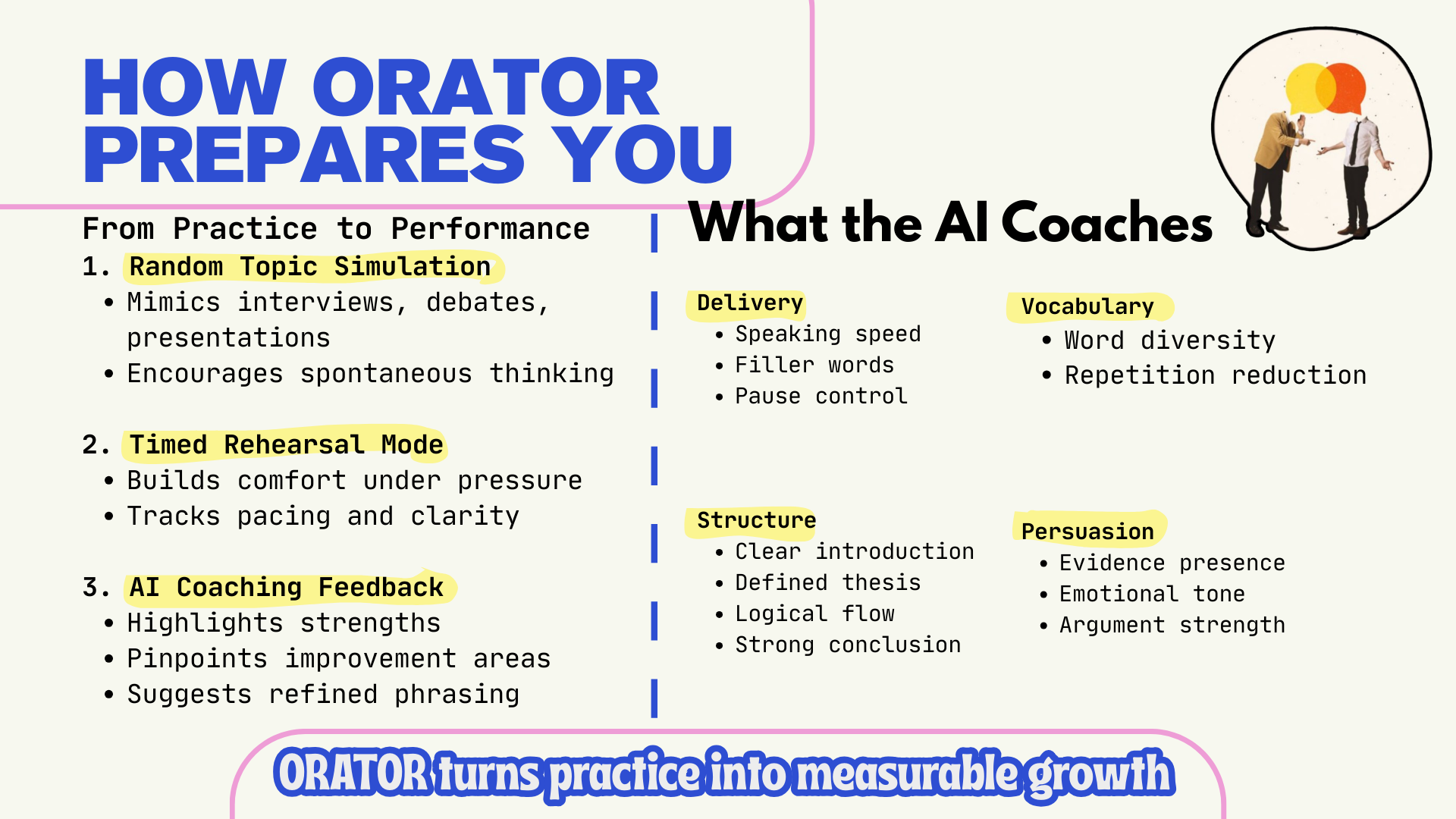
ORATOR simulates real-world speaking scenarios and delivers structured coaching within seconds. Users spin a random topic, deliver a timed speech, and receive AI-powered performance analysis. The system evaluates delivery such as pace, pauses, and fluency. It analyzes structure including introduction, thesis, arguments, and conclusion. It measures vocabulary strength and assesses persuasion quality.
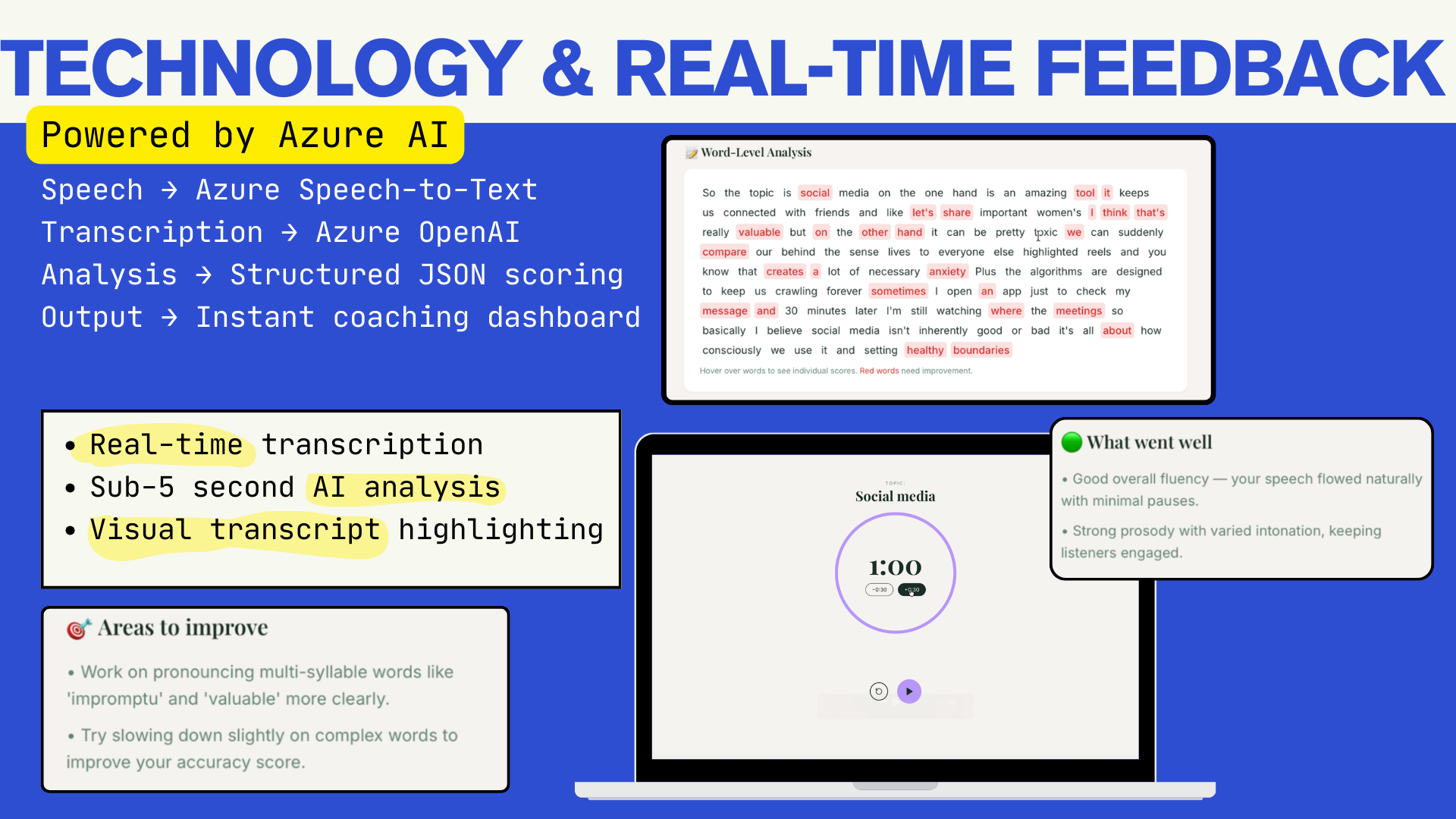
ORATOR highlights transcripts, detects filler words, measures fluency, and generates targeted improvement suggestions. It is private, repeatable, and pressure-free.
How we built it
ORATOR is built as a lightweight and scalable web platform. The frontend uses React with Vite, styled with Tailwind CSS and shadcn/ui. Framer Motion provides smooth, stress-reducing animations. The Web Speech API handles real-time transcription in the browser. The backend runs on FastAPI in Python. Microsoft Azure AI Speech provides pronunciation assessment metrics such as fluency, prosody, and pronunciation scores. OpenAI or Gemini APIs generate contextual coaching feedback through structured prompts.
Speaking speed is calculated as
Words Per Minute=(Total Words)/ (Speech Duration in minutes)
Vocabulary diversity is approximated using
TTR=(Unique Words) / (Total Words)
Azure provides objective speech metrics while the language model evaluates structure and argument quality. All feedback is returned as structured JSON and rendered into a clear visual dashboard.
Challenges we ran into
One of the biggest challenges was translating subjective qualities such as persuasion into measurable signals. Delivery metrics are straightforward, and structural detection is feasible, but evaluating argument strength requires repeated testing. Speed was another challenge. Real-time feedback must feel immediate. We optimized backend calls and prompt structure to keep total analysis time under five seconds. We also had to strike the right balance between depth and clarity. Too much feedback overwhelms users. Too little makes the system ineffective.
Accomplishments that we're proud of
We successfully integrated Azure Pronunciation Assessment for precise speech metrics. We built real-time bilingual speech support for English and Hungarian. We achieved sub-five-second AI coaching feedback. We designed a clean, calming interface that reduces speaking stress. We implemented structured performance scoring without requiring login complexity. Most importantly, we transformed practice into something trackable.
What we learned
Public speaking can be broken into measurable components: delivery, structure, vocabulary, and persuasion. Each can be improved deliberately when feedback is clear. We learned that feedback must be specific. General advice like “be more confident” does not drive improvement. Data-backed insight does. Technically, we strengthened our skills in real-time speech processing, Azure AI integration, structured prompt engineering, and building responsive educational tools under tight time constraints.
What's next for Orator
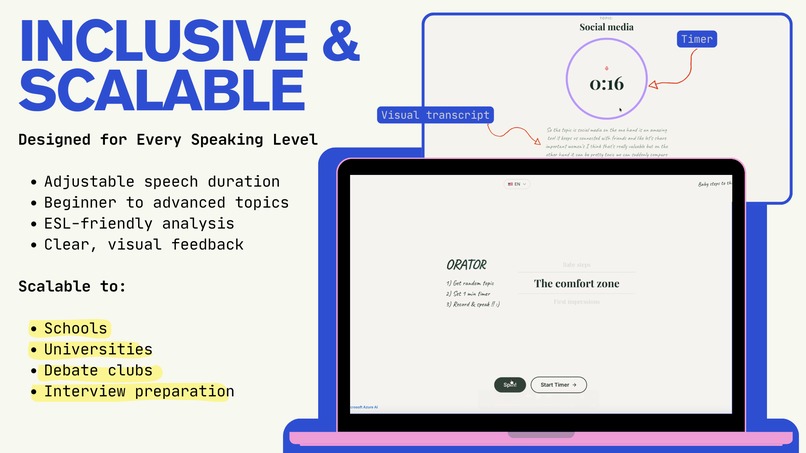
Future development includes an AI debate simulation mode, before-and-after performance comparison, a classroom dashboard for teachers, expanded language support, and adaptive topic difficulty. Our long-term goal is simple: make public speaking preparation accessible, measurable, and scalable.


Log in or sign up for Devpost to join the conversation.