-
-
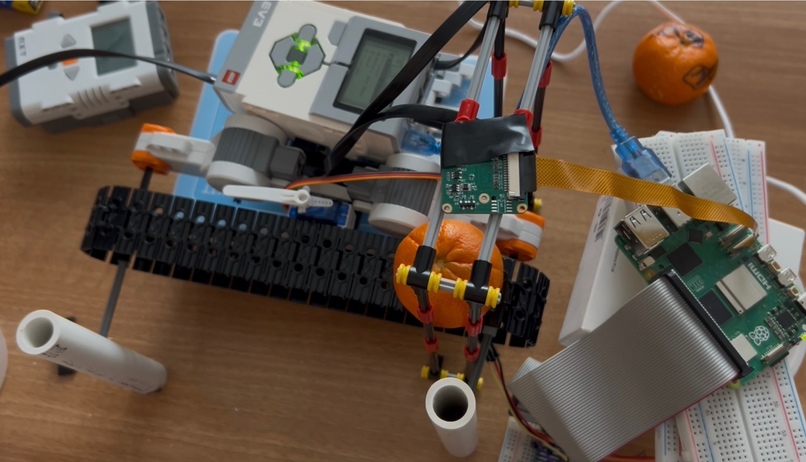
Final Design
-
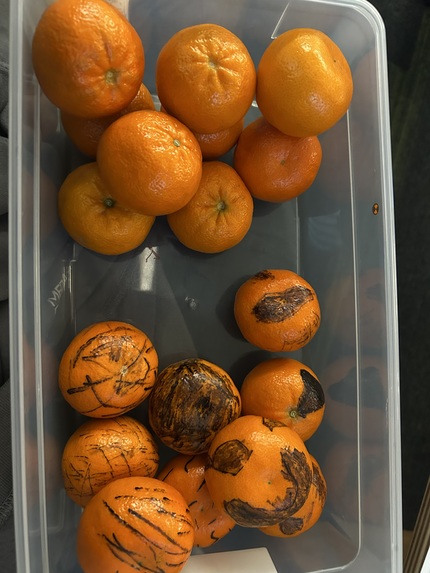
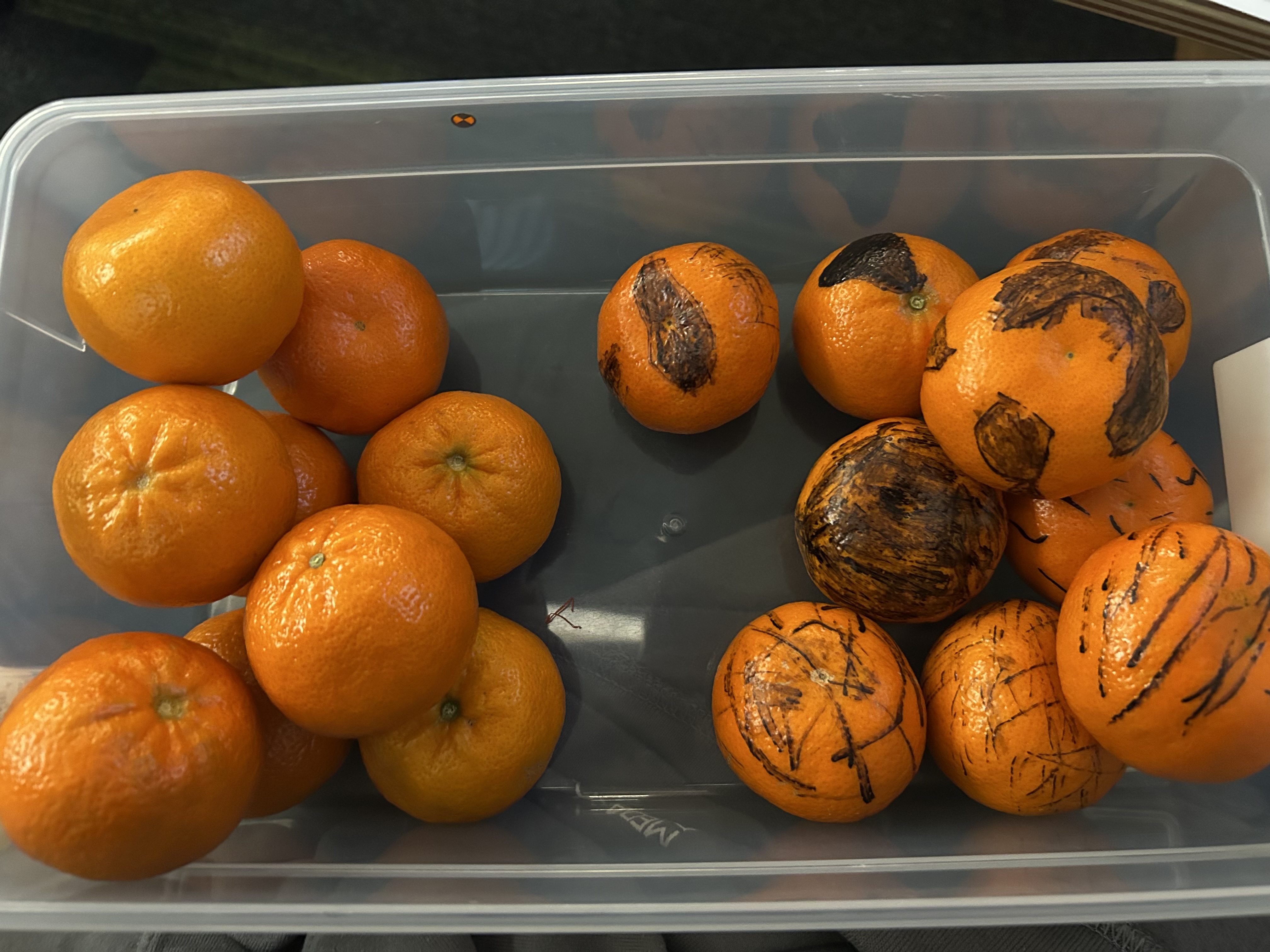
Test Oranges
-
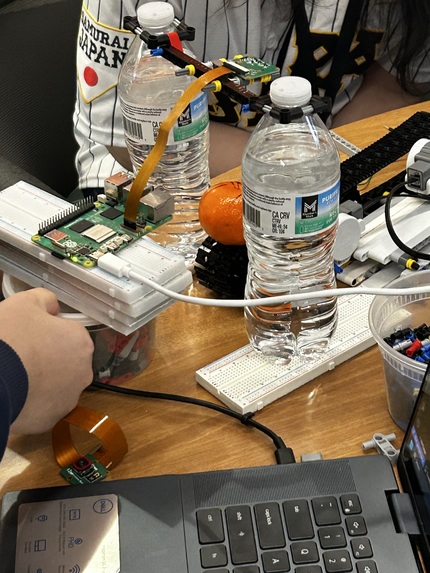
Capturing Dataset Images
-
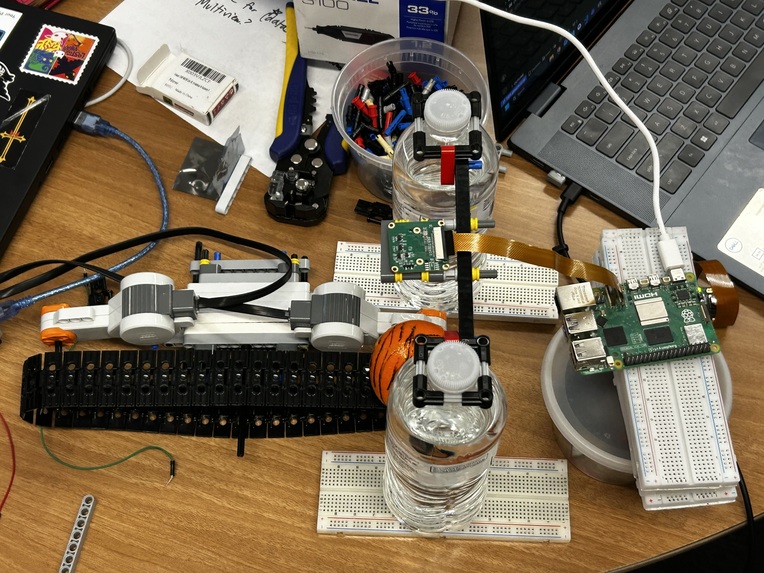
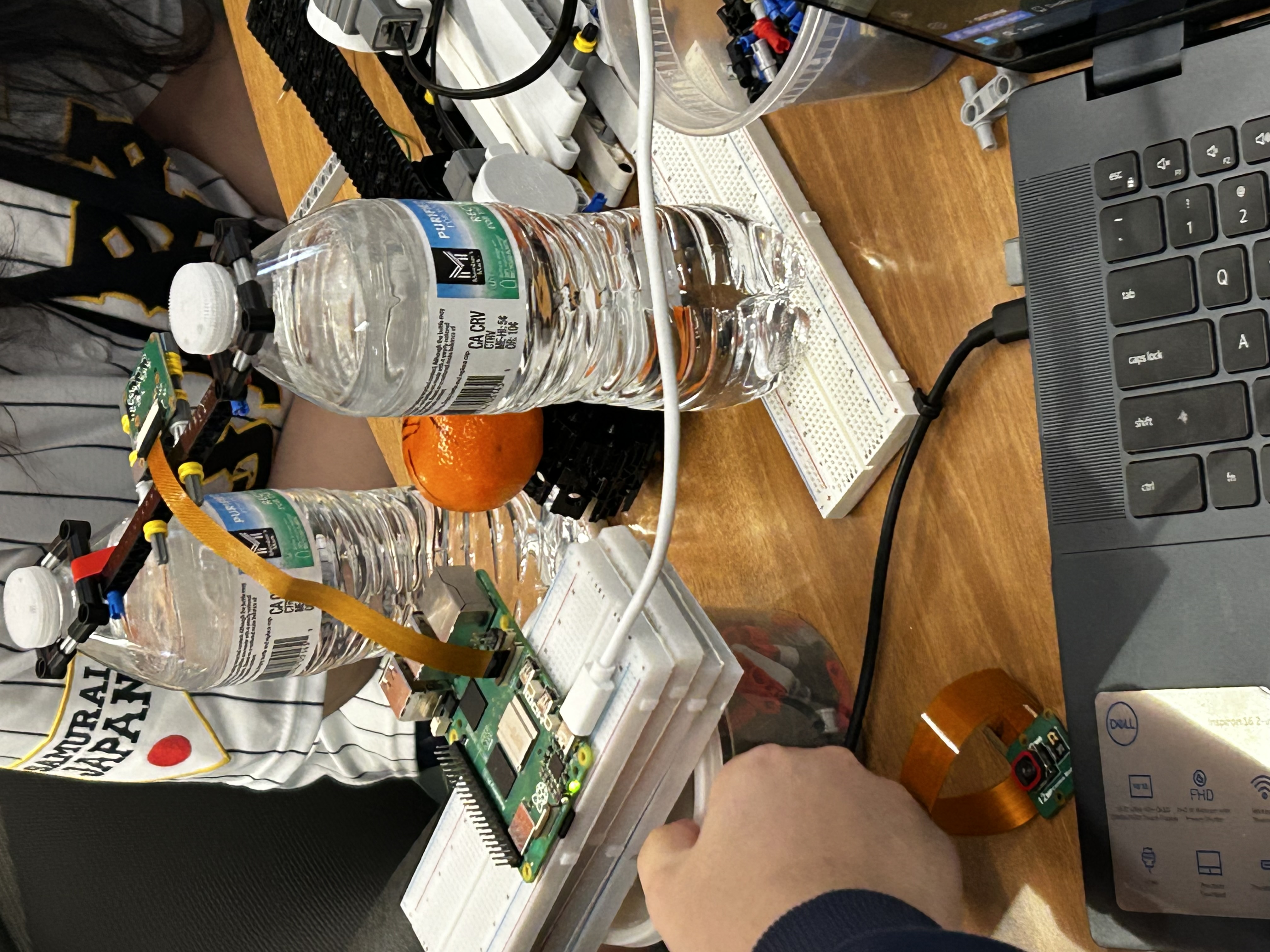
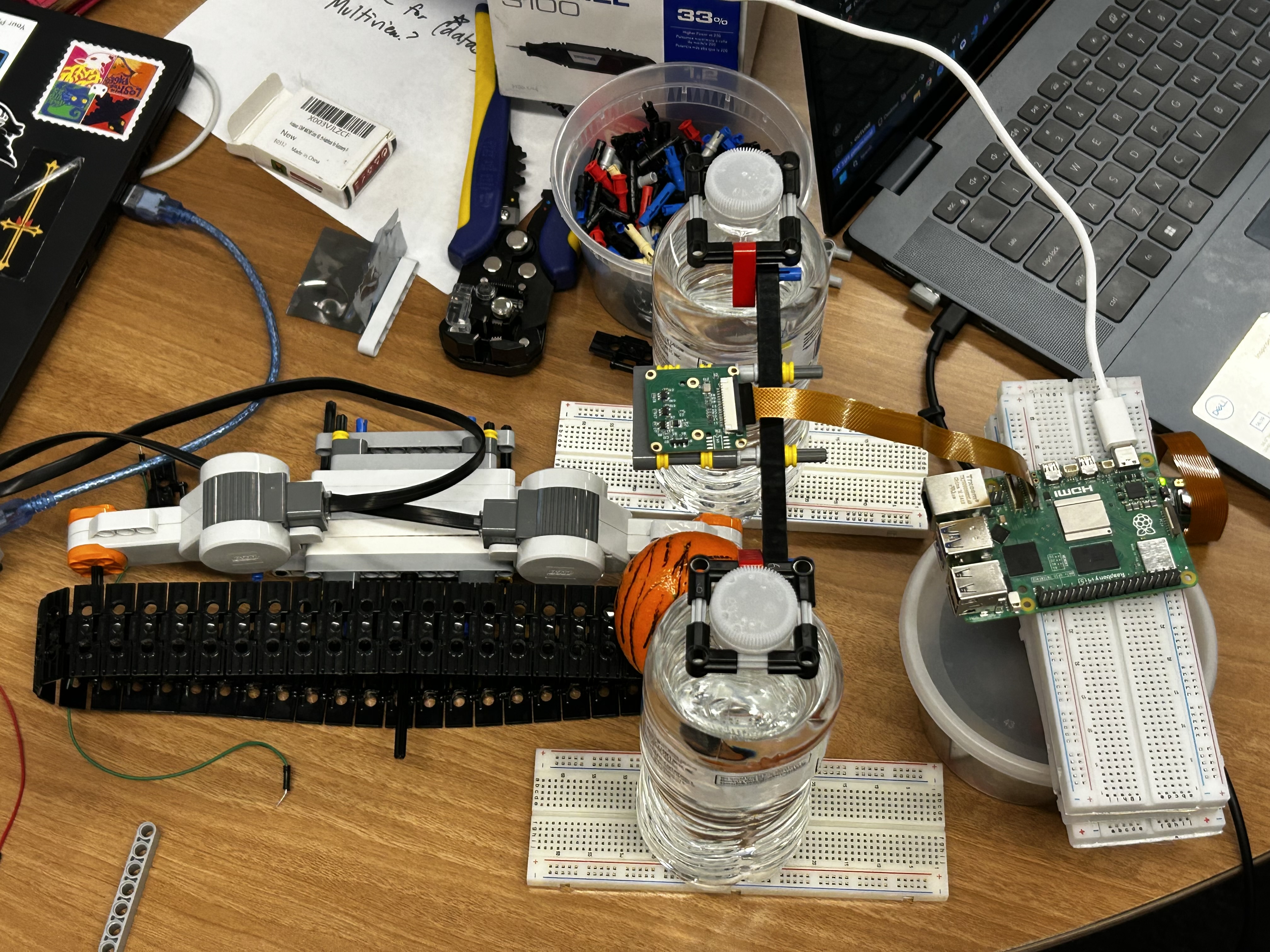
Prototype for Camera Stand/Conveyor Belt
-
Inspiration
Oranges are expensive 😓
One major reason is a disease called citrus greening. Citrus growers in Florida estimate that about 80% of trees are affected by this disease and has decreased orange production by 90%. It is essential for growers to catch the disease early to prevent the spread.
However, going through thousands of oranges can prove to be a challenge. That's where "Orange You Glad It's AI" steps in.
What it does
Orange you Glad It's AI is an automated fruit inspection system that uses computer vision and robotics to identify and remove diseased oranges.
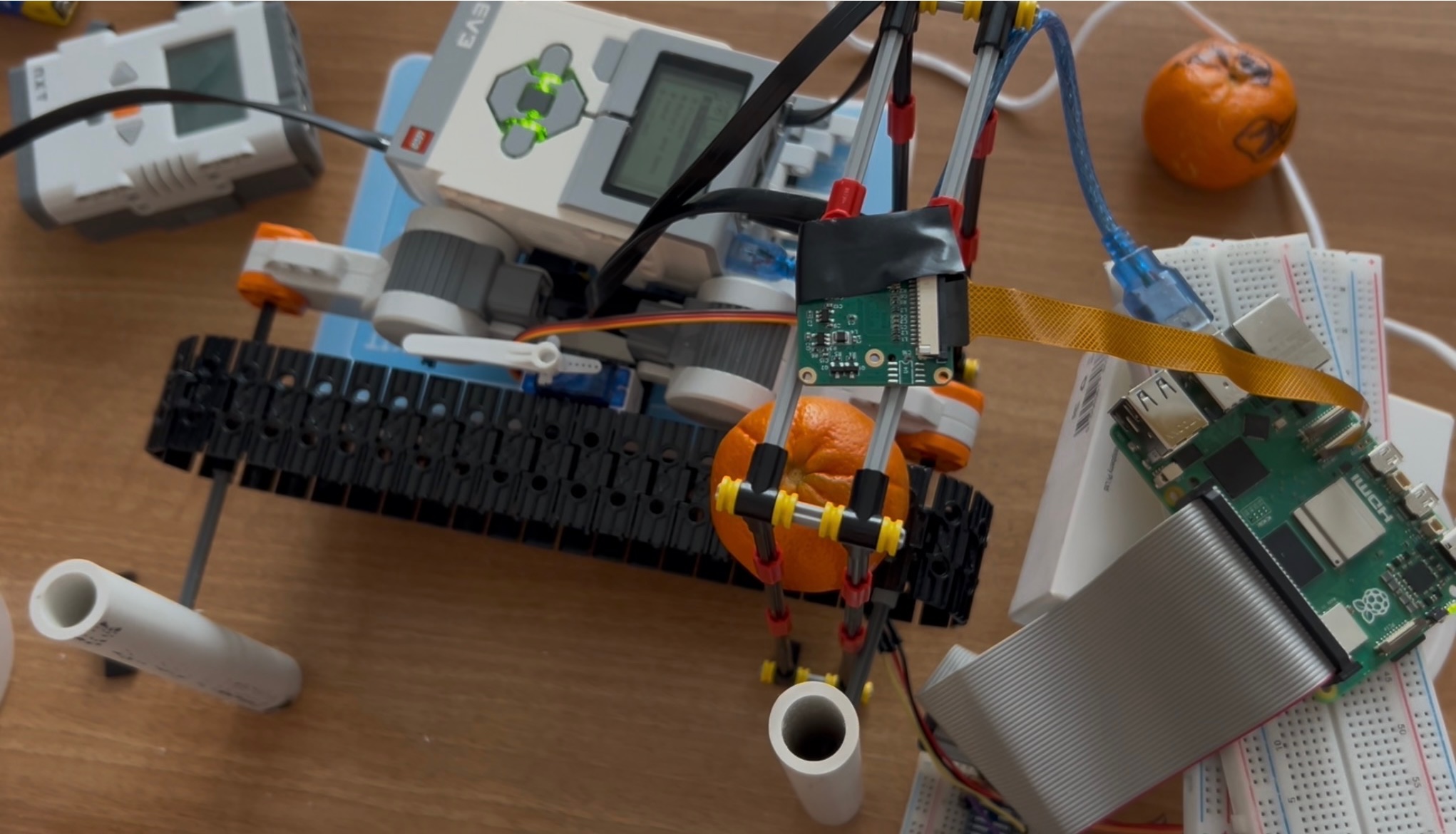
Oranges travel across a conveyor belt built using Mindstorms MV3 where a Raspberry Pi camera captures images of each fruit. Using OpenCV, the system analyzes the oranges and detects simulated disease marking (represented by Sharpie marks). If a diseased orange is detected, a servo-powered arm pushes it off the conveyor belt and into a separate area.
A LCD display tracks the sorting process in real time, showing how many oranges were classified as good or bad. By combining sensing, AI, and physical actuation, the system demonstrates how intelligent systems can interact directly with the physical world.
How we built it
We built our system by combining mechanical design, embedded hardware, and computer vision. First, we constructed a conveyor belt using LEGO Mindstorms EV3 parts, including tread links and rollers powered by a motor. Side rails were added to keep the oranges from rolling off the track while they moved along the belt.
Next, we set up a Raspberry Pi with an external camera positioned above the conveyor. Using OpenCV, we created a detection pipeline that analyzes the oranges as they pass underneath the camera and identifies disease markings.
When a diseased orange is detected, the Raspberry Pi triggers a servo motor connected through GPIO pins. The servo acts as a robotic arm that pushes the bad fruit off the conveyor belt. Finally, we integrated a LCD display using I2C, which updates live counts of good and bad oranges as the system runs.
Challenges we ran into
One of our biggest challenges was mechanical stability. Building a conveyor belt from LEGO components required several adjustments to keep the belt tight and ensure the oranges stayed on the track. We experimented with belt tension to prevent slipping and rolling.
Accomplishments that we're proud of
We’re proud that we successfully created a system that connects AI with the physical world. Instead of just running a computer vision model on a screen, our project actually interacts with real objects and makes decisions that trigger physical actions.
We’re also proud of building a fully functioning conveyor sorting system using accessible components like LEGO and a Raspberry Pi. The system successfully detects simulated diseased fruit and removes it automatically.
What we learned
Through this project, we learned how to combine AI with real-world hardware systems. Working with Raspberry Pi GPIO, servo motors, and sensors showed us how machine learning models can control physical devices. Additionally, we gained experience with OpenCV image processing, hardware communication protocols like I2C, and the challenges of building mechanical prototypes.
What's next for Orange You Glad It’s AI
In the future, we would like to improve the system by training using actual diseased oranges rather than simulated markings.
We would also like to
-Add additional cameras for a full view of the orange
-Improve conveyor belt design for smoother movement
Built With
- c++
- ev3
- opencv
- python
- raspberry-pi
- yolo


Log in or sign up for Devpost to join the conversation.