Inspiration
On the first day of the hackathon, we had the opportunity to speak directly with Lora Paglia, SVP and COO at Tangerine. Instead of pitching ideas in isolation, we asked a simple question:
What problems actually matter to you right now, and what would a “cool” but useful project look like from your perspective?
The answer was refreshingly concrete. Tangerine teams spend a significant amount of time on outbound calls, whether that is reminding customers about missed payments or running targeted promotions. These calls are operationally expensive, repetitive, and difficult to scale without impacting quality. Improving call engagement efficiency and overall client engagement was a clear priority.
The conversation made one thing obvious. This was not a problem about making more calls. It was a problem about making better calls with less internal effort, while still keeping customer satisfaction at the center. That became the foundation for this project.
What it does
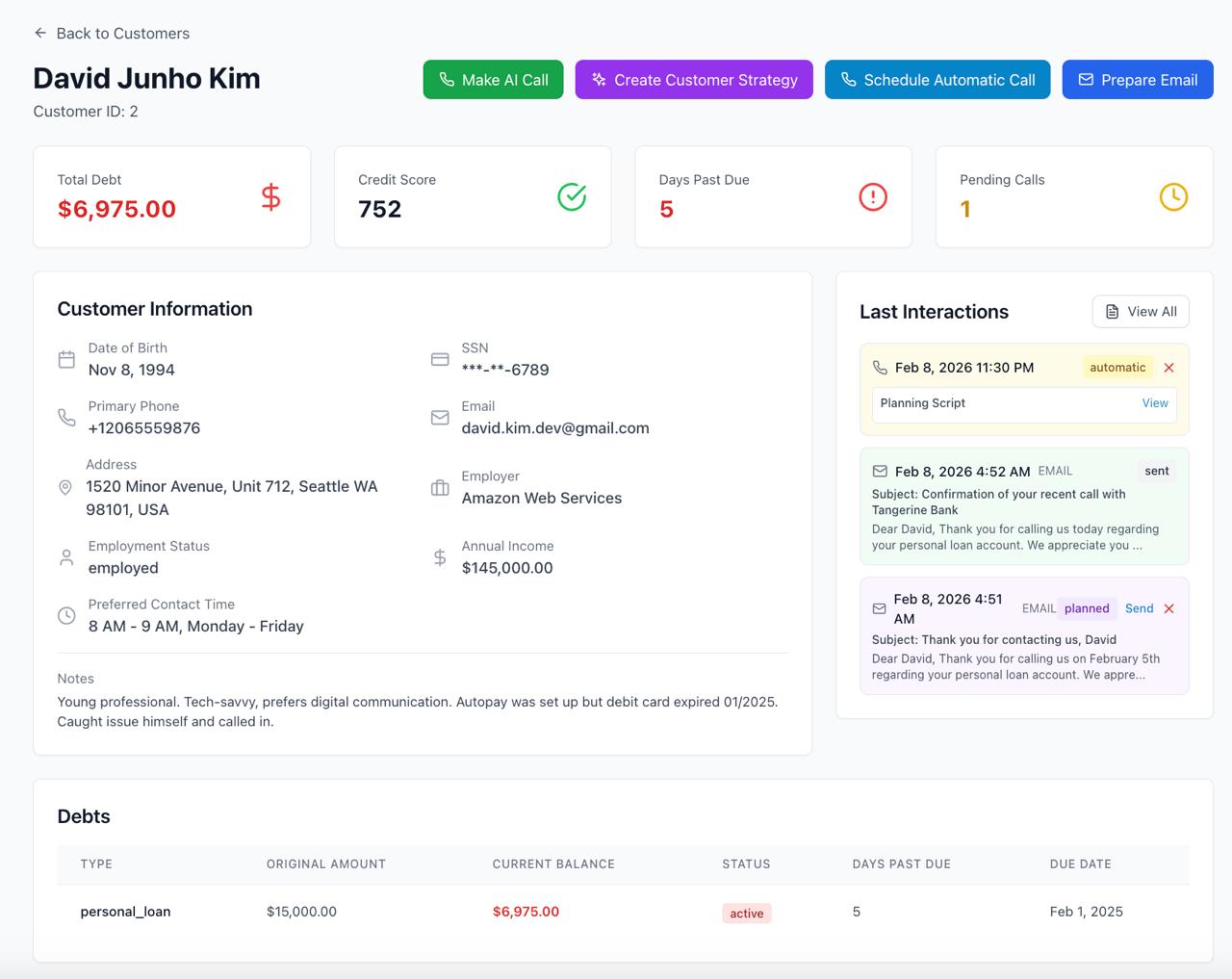
Scrooge is an AI-powered client engagement platform designed to optimize internal bank operations while improving customer communication outcomes.
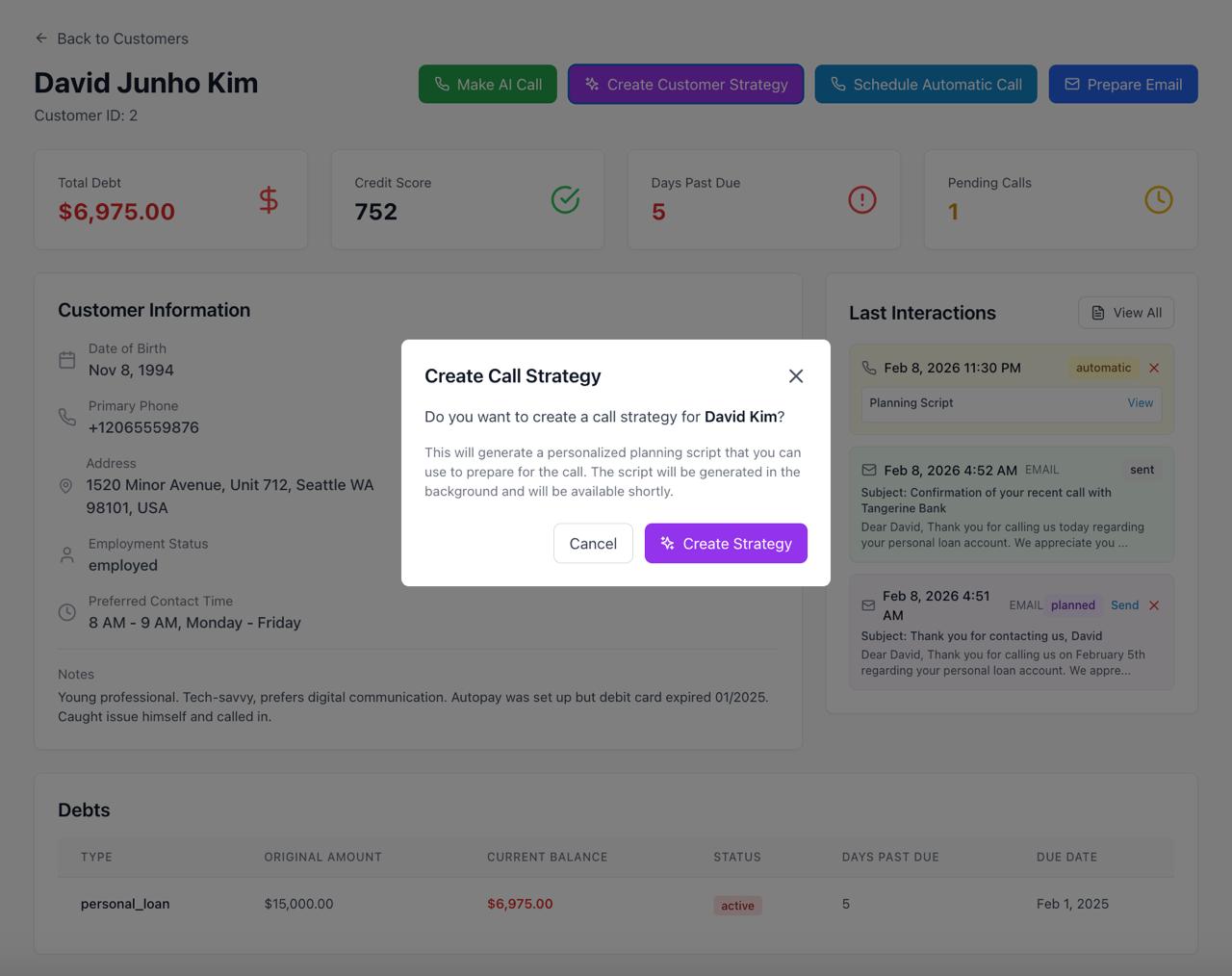
The system analyzes customer and account data, classifies customers into engagement profiles, and generates tailored communication strategies. From there, teams can either:
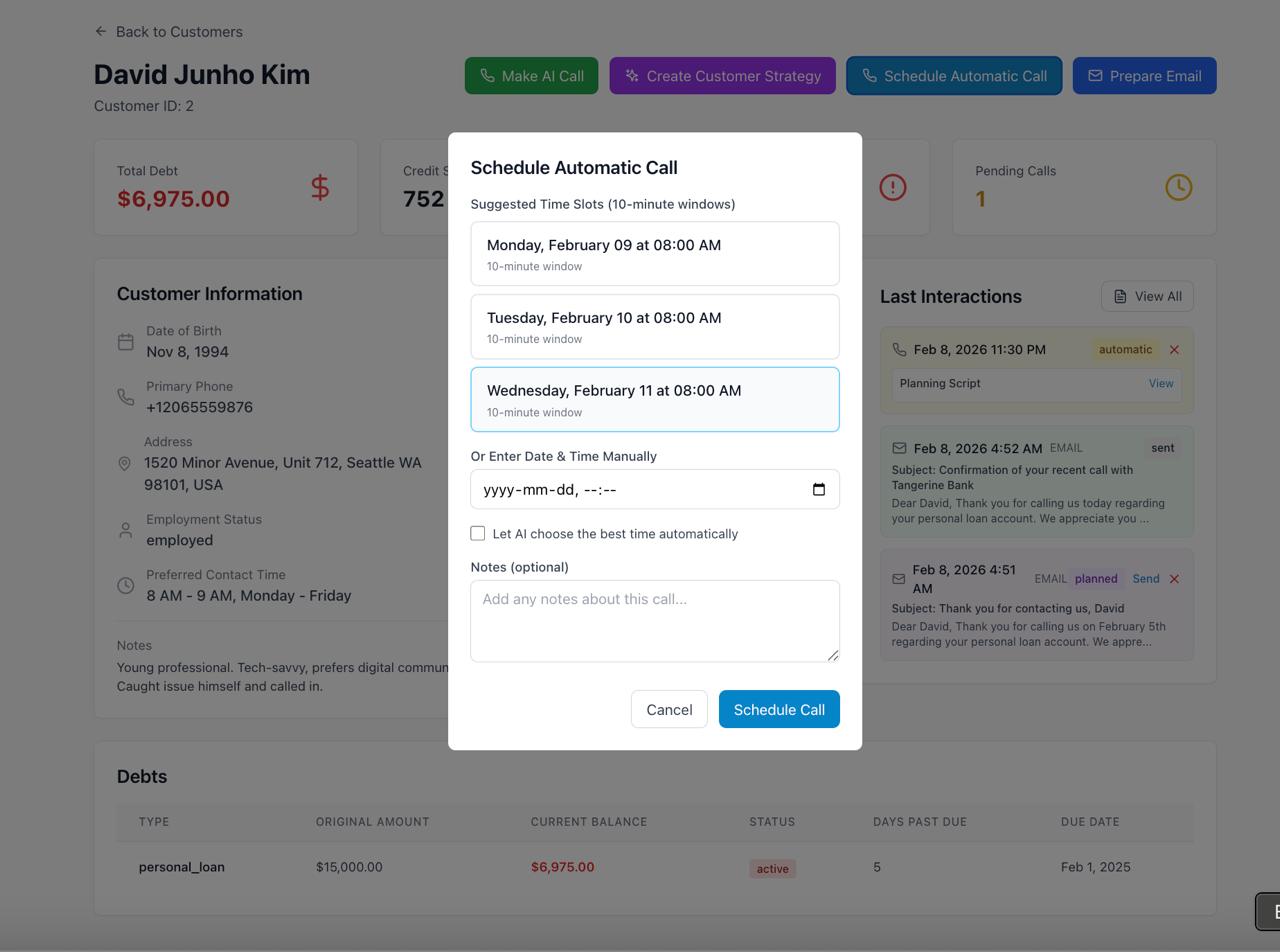
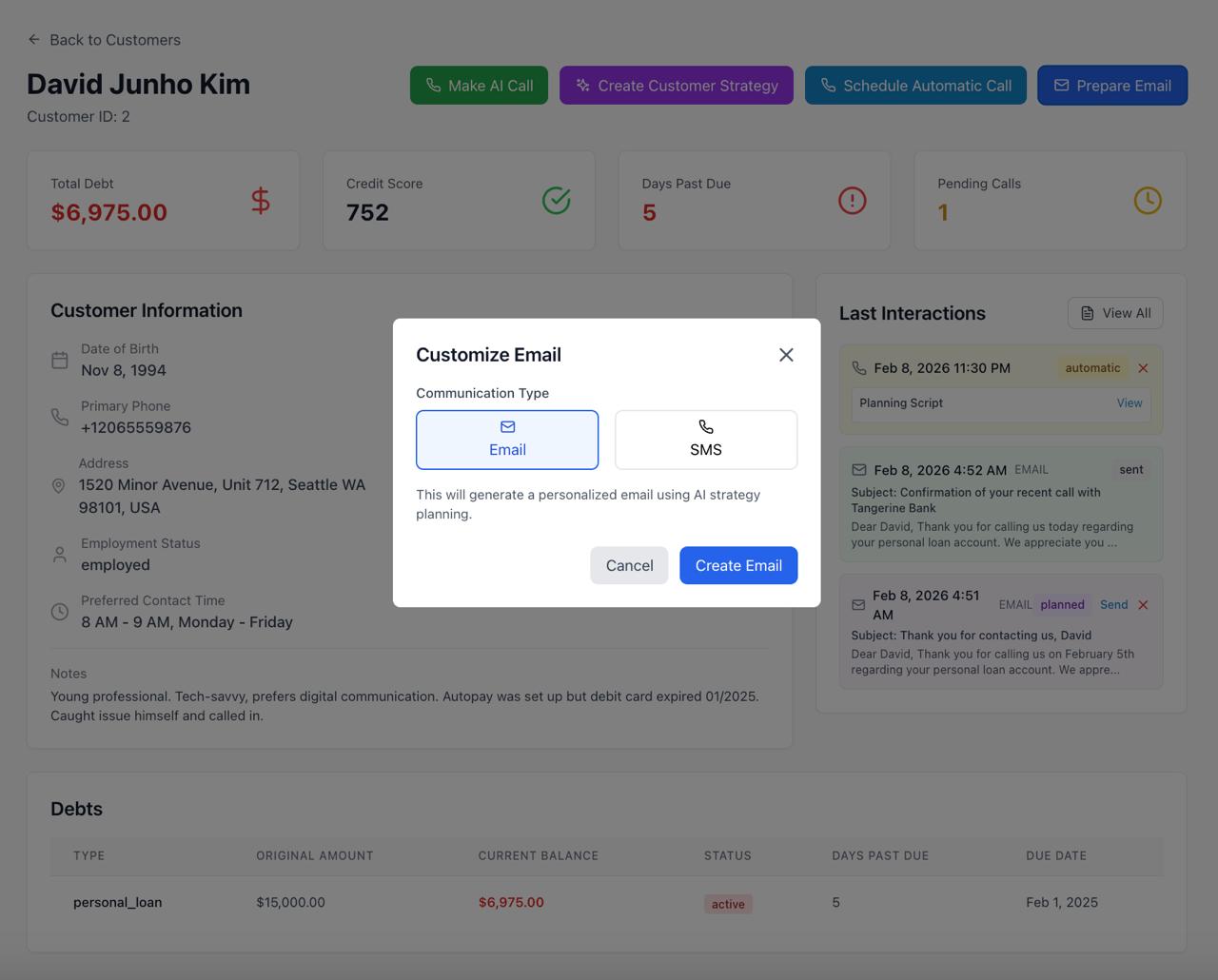
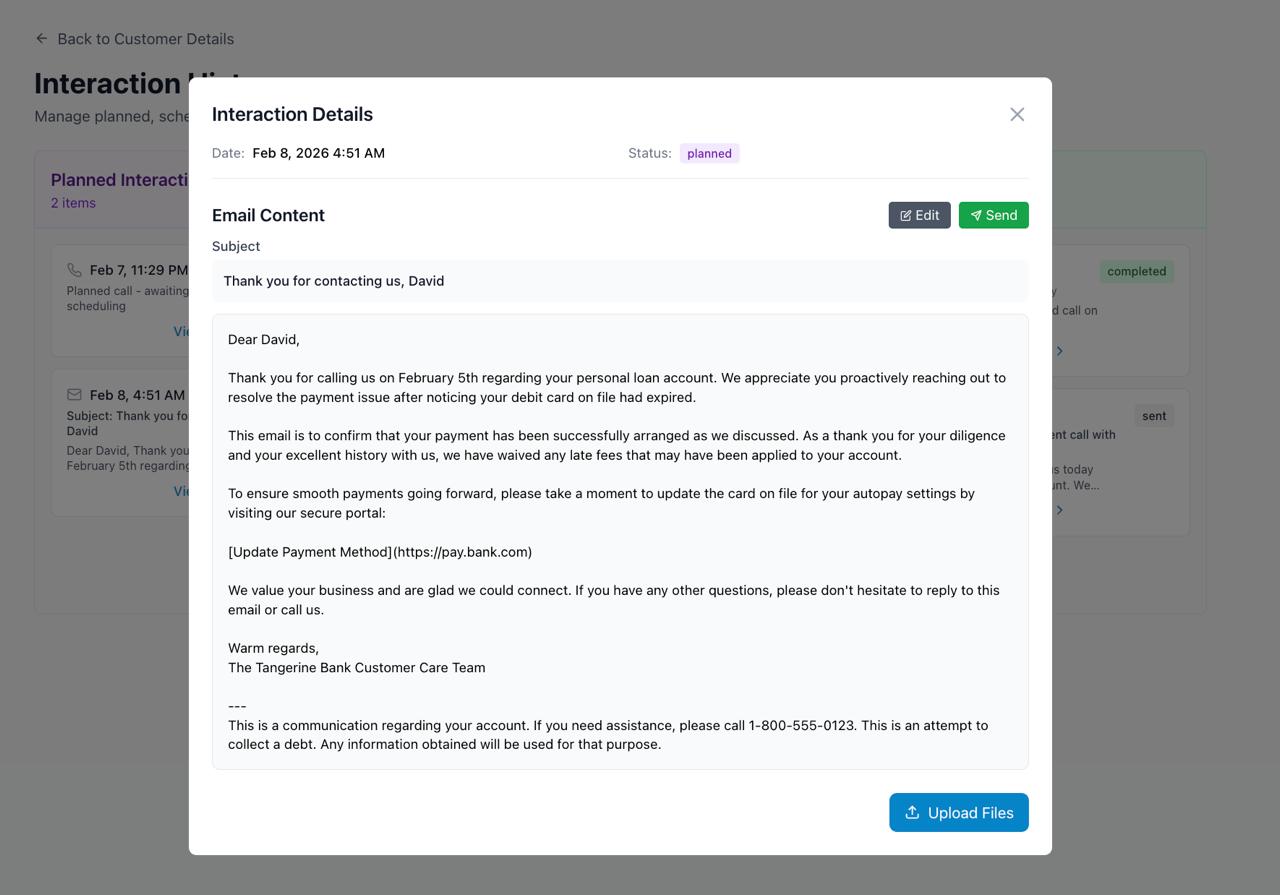
- Trigger fully AI-driven outreach using voice calls, email, or SMS
- Or conduct human-led calls supported by AI-prepared summaries and engagement strategies
The platform replaces generic cold calling with context-aware, well-timed, and empathetic communication, reducing internal workload while improving the quality of customer interactions.
How we built it
We designed Scrooge as a modular, end-to-end system that mirrors how real financial institutions operate.
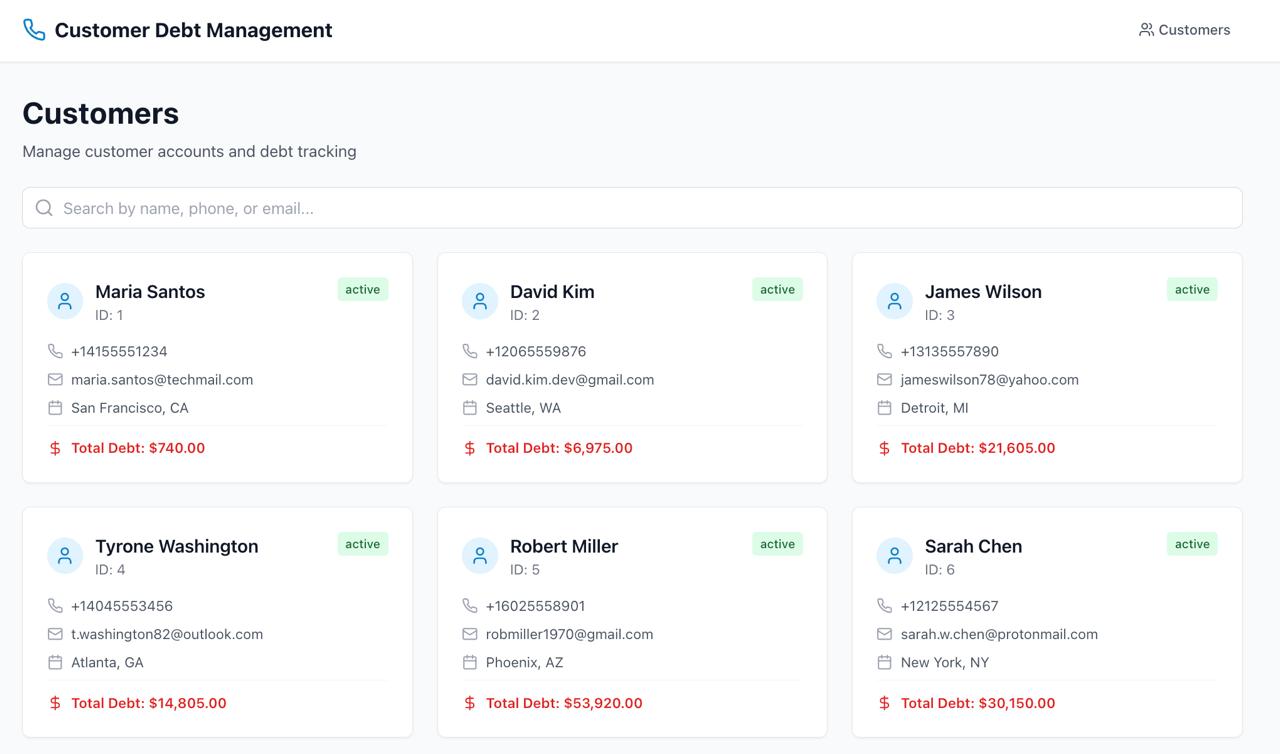
At the core is a structured data layer built with SQLite and SQLAlchemy, modeling customers, accounts, debts, payment history, and communication logs. This data feeds into a profiling and strategy layer powered by distributed AI components rather than a single monolithic model.
We implemented:
- A strategy generation pipeline that produces structured engagement plans
- Channel-specific prompts for voice and text communication
- AI voice outreach using ElevenLabs for natural speech generation
- Twilio for call orchestration, monitoring, and execution
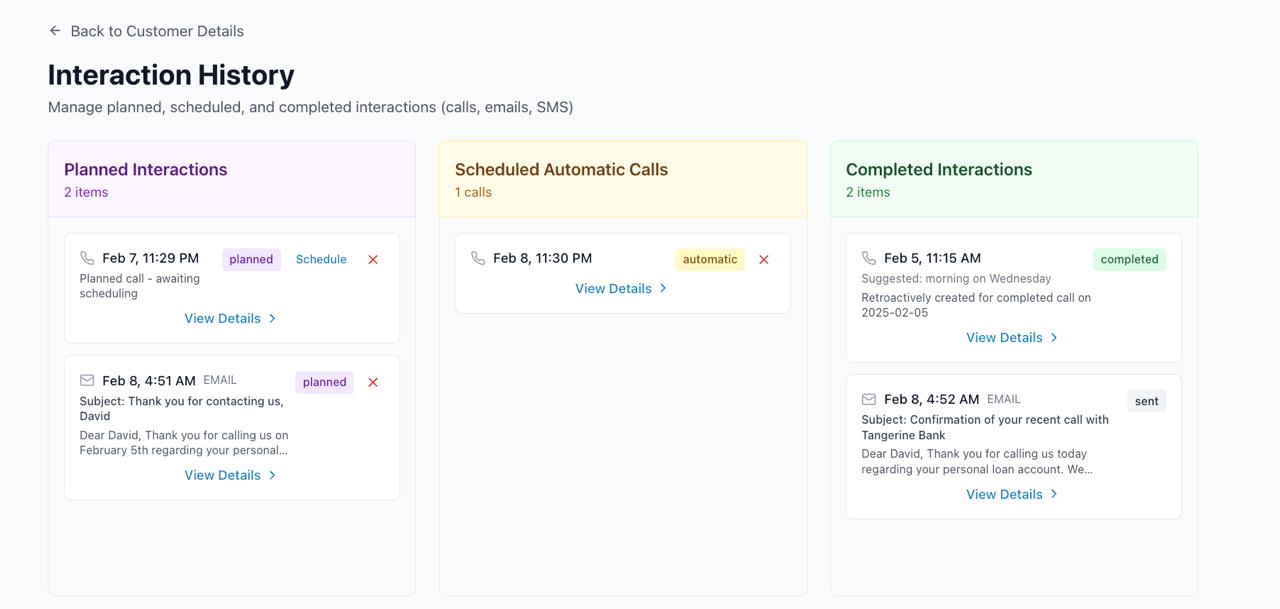
- A web-based operational dashboard that unifies data, strategy, execution, and analytics
The architecture was intentionally designed to be auditable, extensible, and aligned with enterprise workflows.
Challenges we ran into
One of the main challenges was avoiding over-automation. It was tempting to build a system that fully replaces human agents, but that approach quickly breaks down in sensitive or high-value customer scenarios.
Another challenge was balancing technical ambition with realism. We wanted advanced AI-driven strategy generation, but we also needed predictable, explainable outputs that banks could trust.
Finally, designing a dashboard that supports both AI-led and human-led engagement required careful thought. The system needed to enhance agent decision-making, not overwhelm it.
Accomplishments that we're proud of
We are particularly proud that the project goes beyond a demo and reflects real operational needs.
During internal benchmarking and simulated workflows, the system demonstrated:
- Around 30% reduction in agent preparation time
- Approximately 25% improvement in outreach efficiency
- More consistent communication quality across customer segments
We also successfully implemented a distributed AI architecture, integrated real telephony infrastructure, and built a dashboard that feels like an internal bank tool rather than a hackathon prototype.
What we learned
This project reinforced that AI is most effective when it supports human decision-making rather than replacing it.
We learned the importance of grounding AI outputs in structured data and clear constraints, especially in regulated environments. We also gained a deeper appreciation for how much operational inefficiency comes from context switching, fragmented systems, and manual preparation rather than from the calls themselves.
Most importantly, we learned that customer satisfaction improves naturally when internal workflows are designed around clarity, timing, and empathy.
What's next for this project
The next steps focus on moving from prototype to production-ready platform.
Planned improvements include:
- Deeper integration with live banking systems
- More advanced timing and prioritization logic
- Expanded analytics and performance dashboards
- Compliance and audit tooling for enterprise deployment
- Continuous learning loops to refine engagement strategies over time
The architecture already supports these extensions, making Scrooge a strong foundation for long-term development.
Built With
AI & Machine Learning
- Google Gemini (via OpenRouter) – Engagement strategy generation and transcript analysis
- ElevenLabs – High-quality AI voice synthesis for outbound calls
Communication
- Twilio – Outbound phone calls and SMS delivery, call orchestration, and monitoring
Database
- SQLite – Lightweight relational database for customer, account, and communication data
- SQLAlchemy – ORM for schema definition, data access, and query management
Backend
- Python
- FastAPI – REST API server
- Uvicorn – ASGI server for high-performance async execution
Frontend
- React 18 – User interface framework
- Vite – Frontend build tool
- Tailwind CSS – Styling and layout
- Axios – HTTP client for API communication
Tooling & Infrastructure
- uv – Python package manager
- Git & GitHub – Version control and collaboration
Built With
- axios
- elevenlabs
- fastapi
- gemini
- python
- react-18
- sqlalchemy
- sqlite
- tailwind-css
- twilio
- uv
- uvicorn
- vite


Log in or sign up for Devpost to join the conversation.