-
-
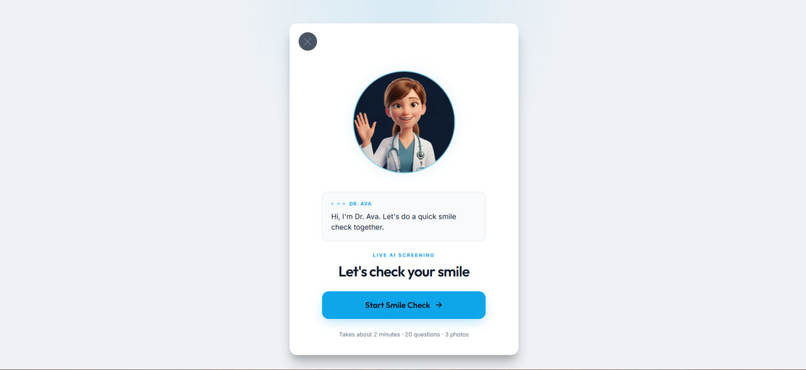
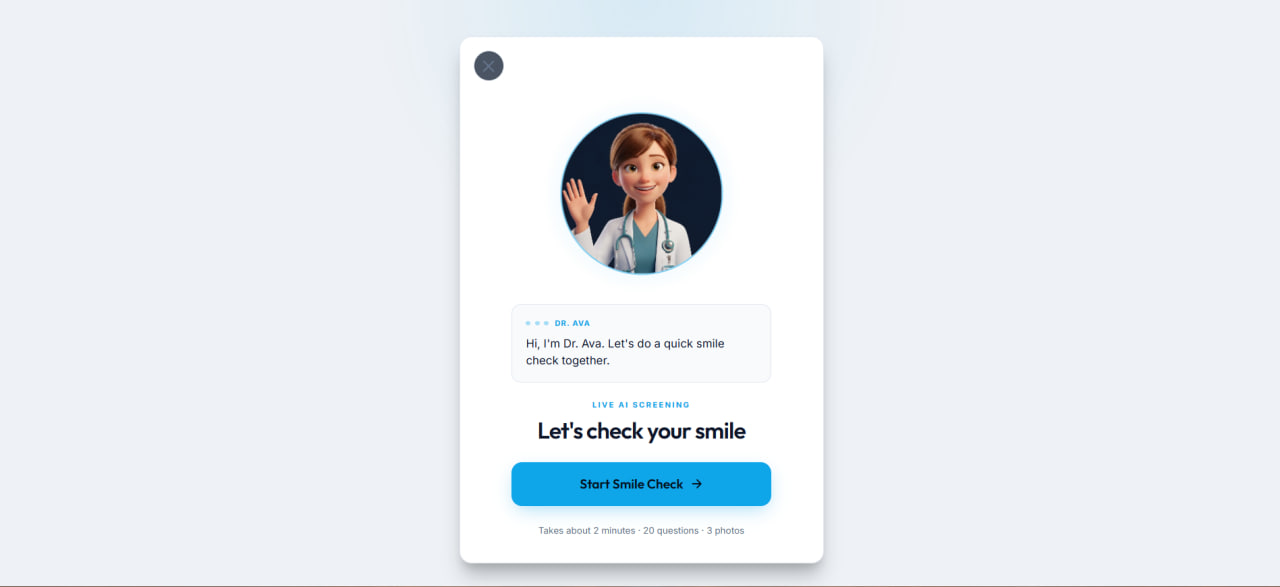
live ai screening
-
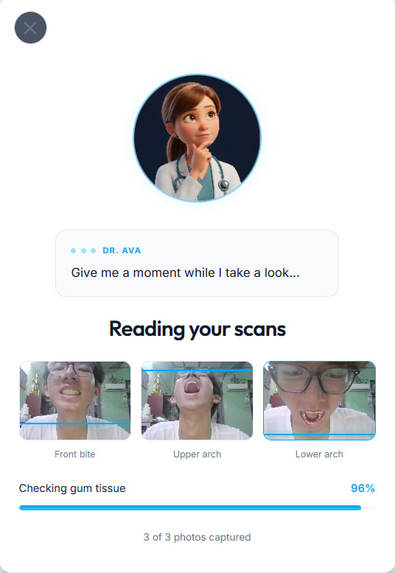
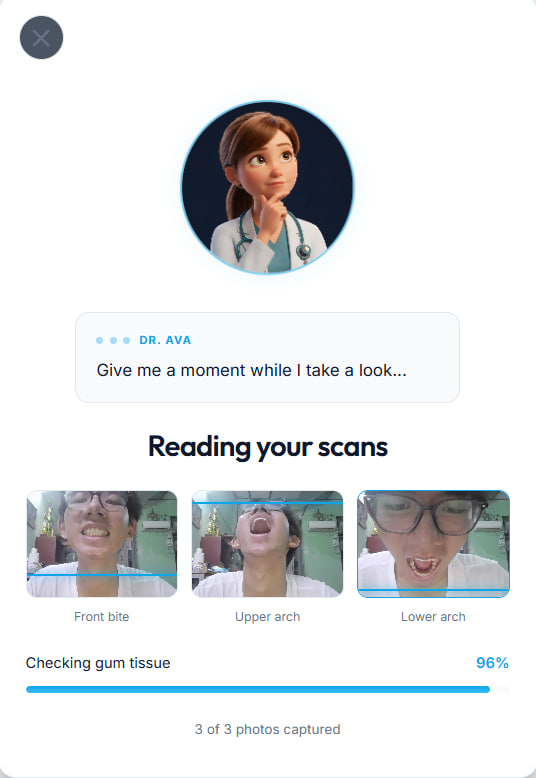
ai doctor analyzing screen
-
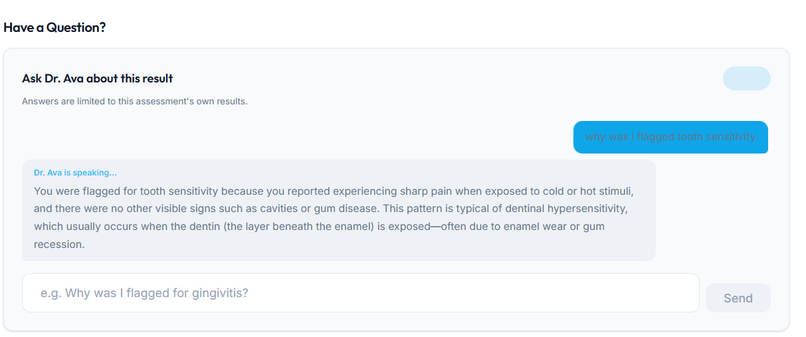
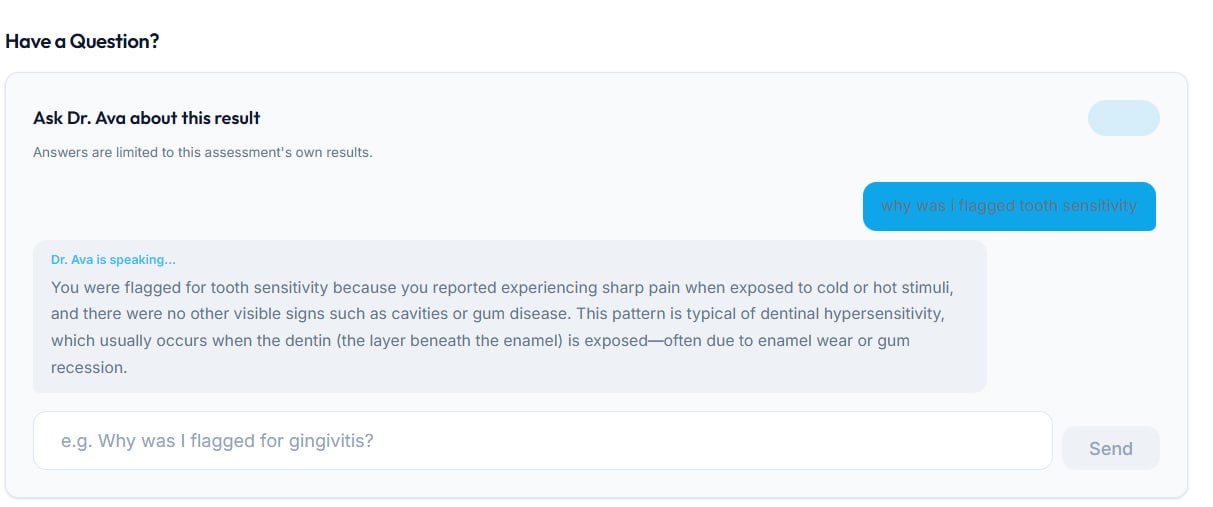
ai chatbot
-
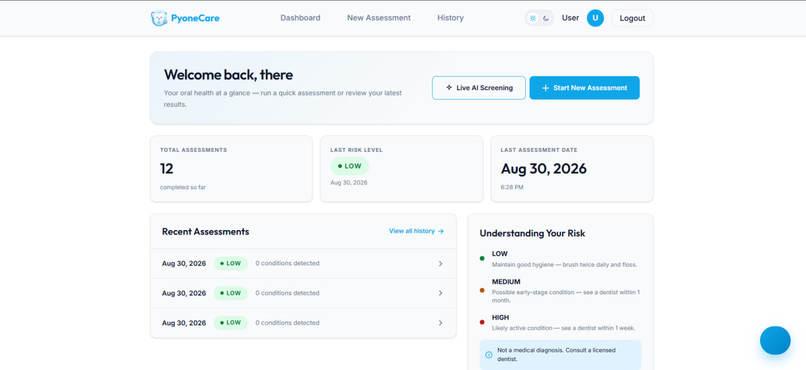
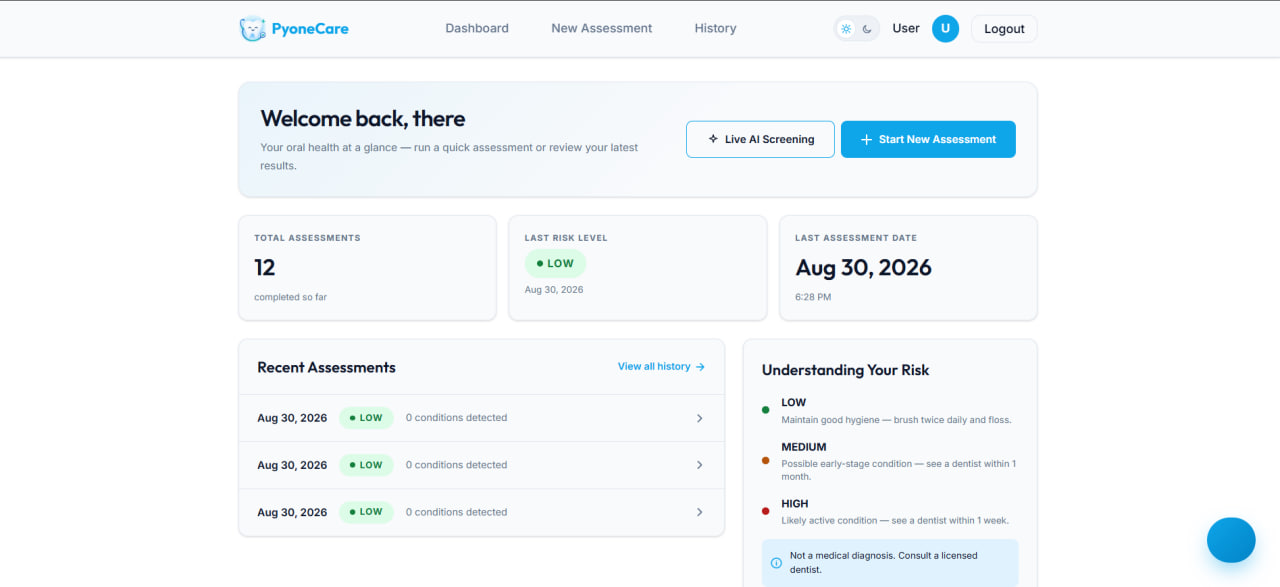
dashboard
Inspiration
Many people ignore oral health problems until they become painful or serious. For some people, visiting a dentist can also be expensive or inconvenient. We wanted to build a simple tool that helps people answer an important question: "How serious might my symptoms be, and what should I do next?" This inspired us to create PyoneCare, an AI-powered oral health advisory and triage tool designed to improve early awareness and access to basic oral-health guidance. Our project supports SDG 3: Good Health and Well-Being by promoting preventive health awareness and encouraging people to seek professional care when needed.
What it does
PyoneCare provides a first-level oral health assessment using both symptoms and oral images. Users can:
- Answer questions about their oral symptoms and habits
- Upload or capture photos of their mouth from different angles
- Receive possible oral health conditions and a Low, Medium, or High risk level
- See explanations and recommendations based on their symptoms
- Ask an AI assistant questions about their assessment
- Find nearby dental clinics
- View their previous assessments and monitor their oral health over time
The current version covers 6 common oral conditions and is designed as a triage and awareness tool, not a replacement for a dentist.
How we built it
PyoneCare combines traditional AI techniques with modern generative AI.
- React + TypeScript — interactive frontend
- FastAPI + Python — backend API and application logic
- PostgreSQL — user and assessment data
- CLIP Computer Vision — analyzes oral images using zero-shot classification
- SWI-Prolog — rule-based reasoning for possible conditions and risk levels
- LLM — explains assessment results and helps users understand their symptoms
- Google Places API — finds nearby dental clinics
- JWT + bcrypt — secure authentication
The core assessment combines two sources of information: what the user reports and what the image analysis detects. These symptoms are passed to our Prolog knowledge base, which applies predefined rules to generate possible conditions, risk levels, and recommendations. This combination gives us a more explainable approach instead of relying entirely on a black-box AI model.
Challenges we ran into
One of our biggest challenges was combining different AI approaches into one reliable system. We had to solve several problems:
- Connecting computer vision results with symbolic Prolog reasoning
- Making the Prolog engine safe for concurrent requests
- Handling cases where external AI services are unavailable
- Preventing the LLM from generating information beyond the assessment results
- Making camera access work reliably on mobile devices
- Designing a simple health-assessment experience without making users feel overwhelmed
For example, instead of sharing a single Prolog engine between requests, we use an isolated Prolog subprocess for each assessment. We also designed the LLM to explain the results already produced by our assessment system rather than independently generating a diagnosis.
Accomplishments that we're proud of
We are proud that we turned a university AI project into a working full-stack health technology prototype. Some of our key accomplishments are:
- Built a complete end-to-end oral health assessment workflow
- Combined computer vision + symbolic AI + generative AI
- Created a Prolog knowledge base covering 6 oral conditions
- Implemented risk levels and explainable recommendations
- Added image-based and questionnaire-based symptom analysis
- Built an AI-guided screening experience with camera capture
- Added nearby dental clinic discovery
- Implemented secure user authentication and assessment history
Most importantly, we focused on making the system useful and understandable for normal users, rather than building AI only for demonstration.
What we learned
This project taught us that building an AI healthcare application is not just about using a powerful model. We learned the importance of:
- Combining different AI techniques for different tasks
- Making AI decisions more transparent and explainable
- Designing for failure when external AI services are unavailable
- Grounding LLM responses in trusted application data
- Thinking about privacy, security, and responsible AI in healthcare
- Designing technology around the user's actual problem instead of the technology itself
We also learned that a good healthcare AI system should support human decision-making, not replace healthcare professionals.
What's next for PyoneCare
We want to take PyoneCare from a prototype toward a more useful oral health platform. Our next steps include:
- Multi-language support for greater accessibility
- Expanded condition coverage beyond the current 6 conditions
- A custom-trained oral image model instead of relying on general-purpose zero-shot classification
- Native mobile application
- Real-time dental appointment and clinic booking
- Long-term assessment tracking to visualize changes in oral health
- Exportable assessment reports that users can share with dentists
Our long-term vision is simple: Make early oral-health awareness more accessible, understandable, and actionable — especially for people who may have difficulty accessing traditional dental care. This supports SDG 3: Good Health and Well-Being by encouraging preventive care, early awareness, and appropriate access to professional healthcare.


Log in or sign up for Devpost to join the conversation.