-
-
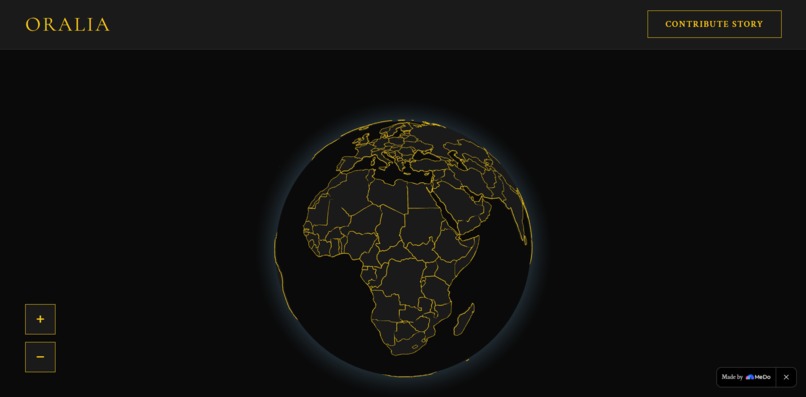
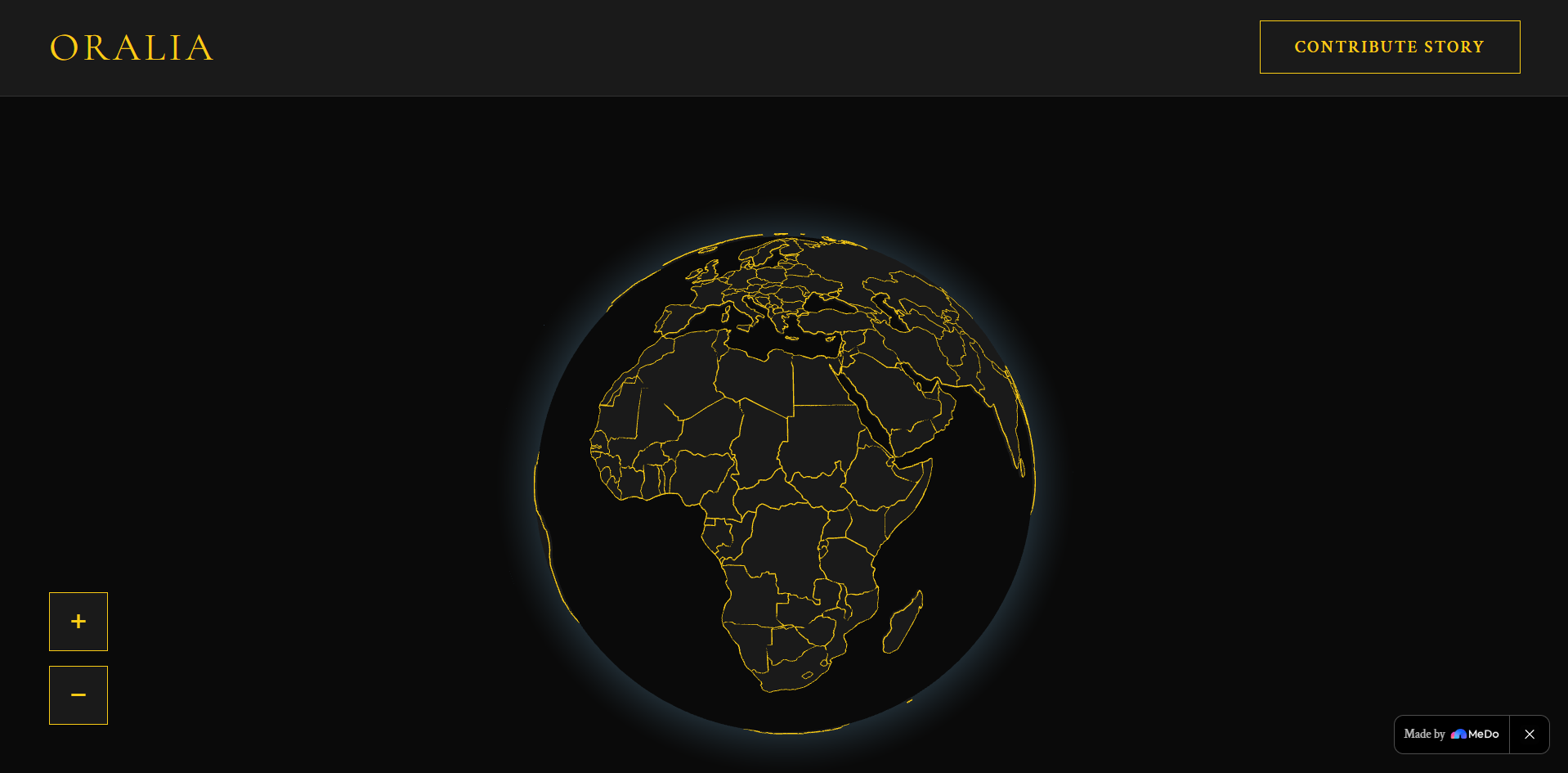
Main page of Oralia
-
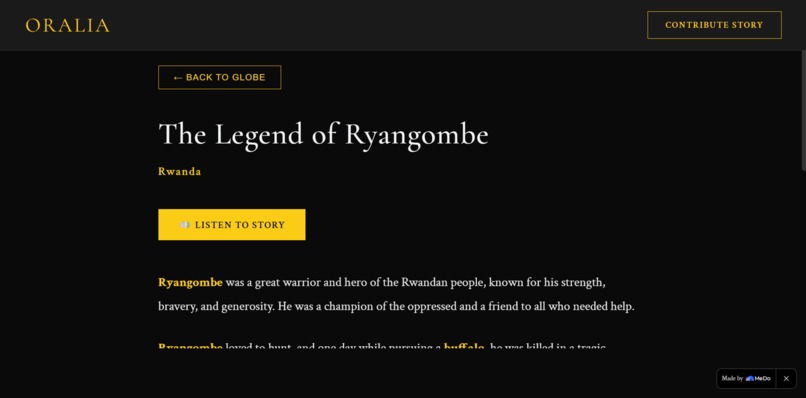
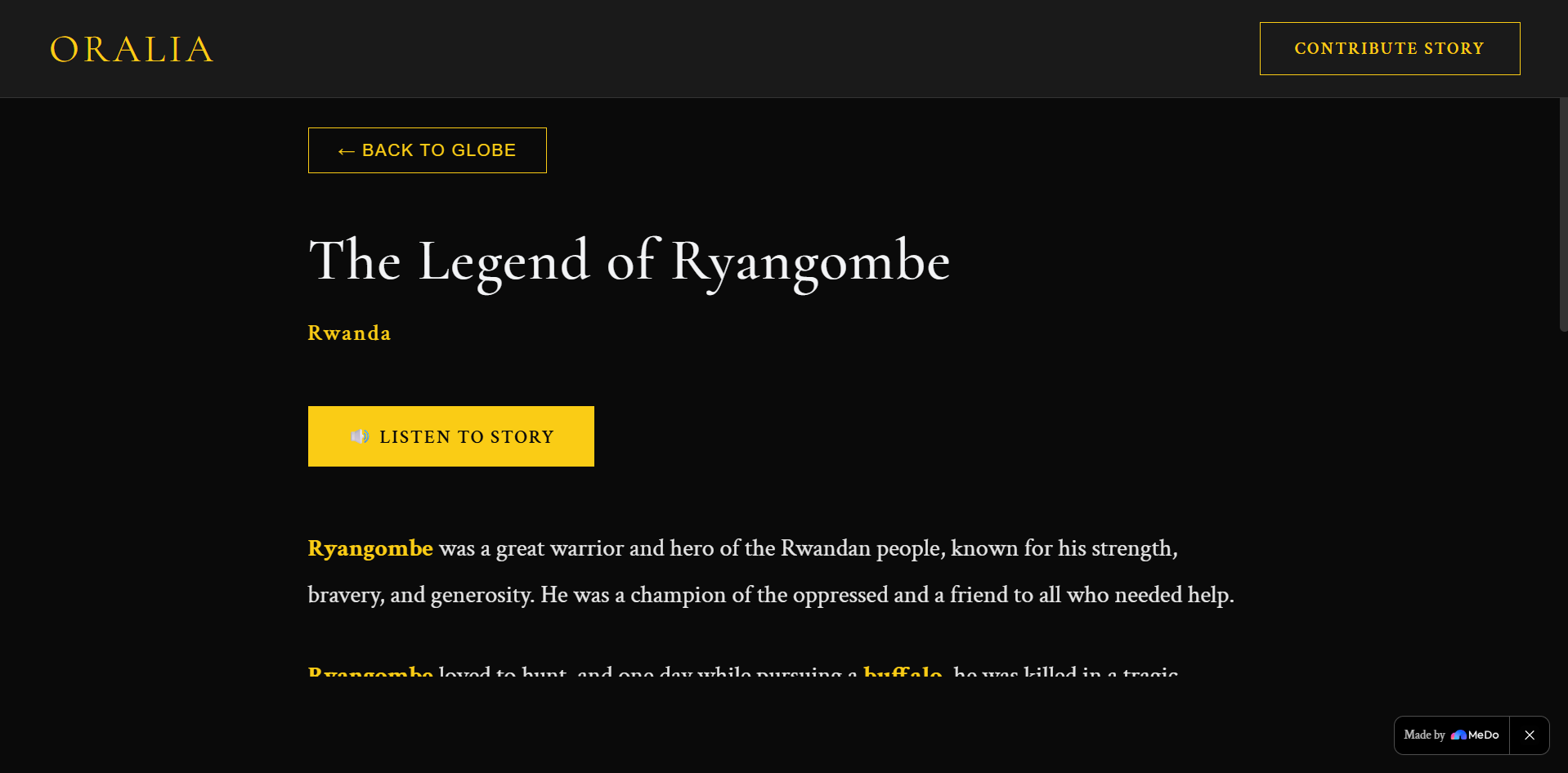
Full story from Rwanda
-
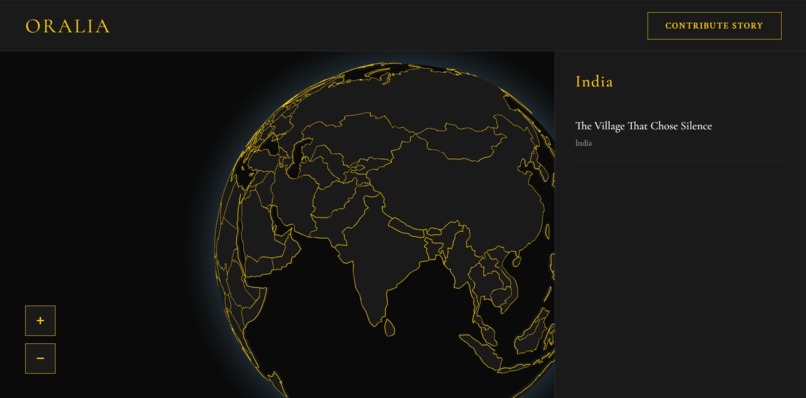
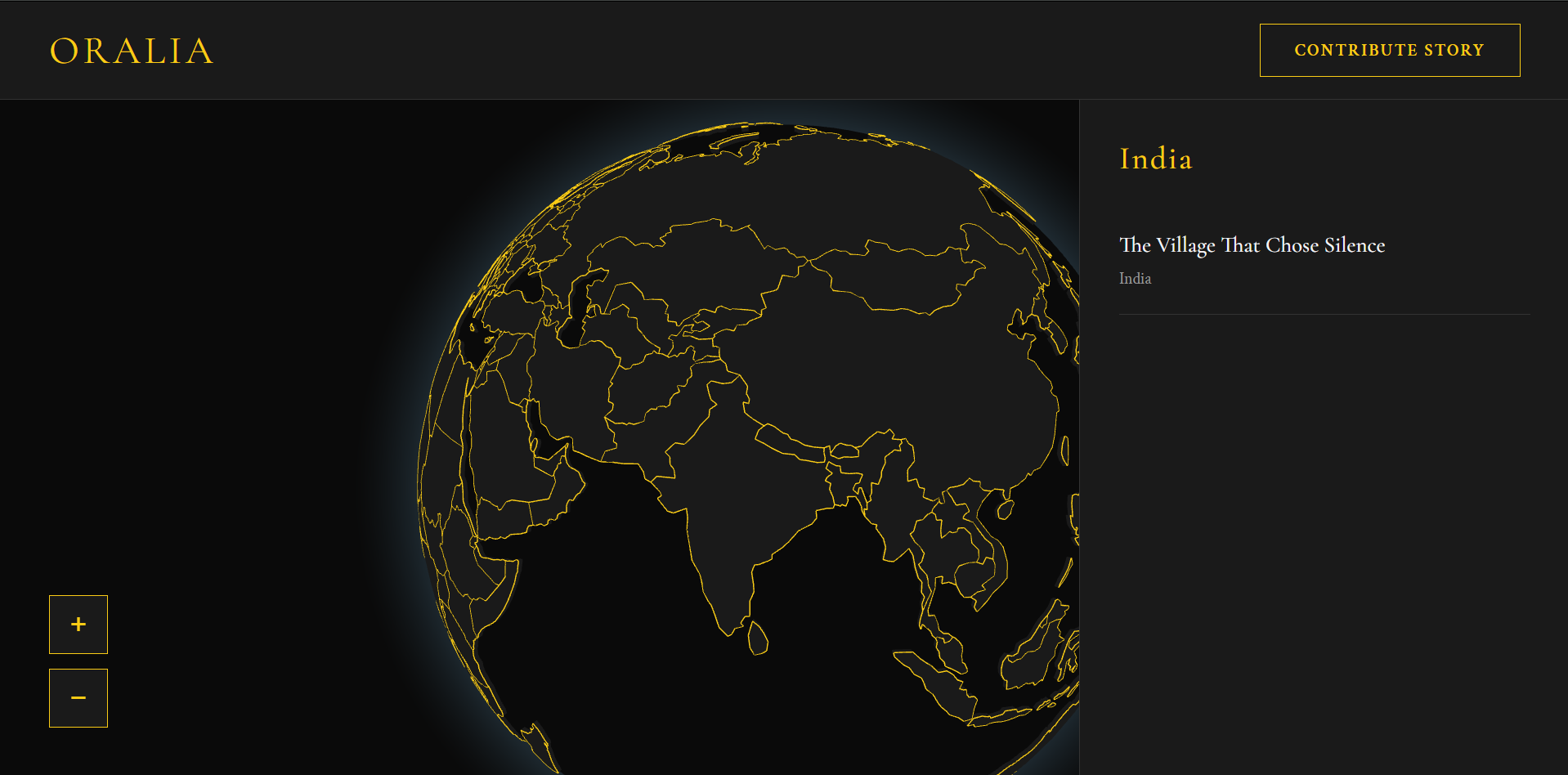
List of stories from India
Inspiration
I was inspired by the idea that while technology is advancing rapidly, many cultures, oral traditions, and local legends are slowly disappearing. I wanted to build something that uses AI not just for productivity, but for preserving human identity and storytelling.
What it does
Oralia is an AI-powered interactive 3D globe that lets users explore cultures and oral traditions from around the world.
Users click on countries to discover myths, folklore, and historical traditions enhanced with AI-generated narration and visuals.
Users can contribute their own cultural stories, which AI refines, and transforms into immersive experiences.
How I built it
I built Oralia by using MeDo AI to generate and assemble the application through iterative prompting and refinement. Instead of writing everything manually, I guided the AI to build the interface and structure the experience. I then integrated the Grok API to power story enhancement and narration features.
Challenges I ran into
The main challenge was translating a complex vision into something an AI builder could reliably generate while keeping the experience coherent and usable. Refining prompts to get consistent design quality and balancing scope within the hackathon timeline required careful control.
What I learned
I learned how powerful AI-assisted development can be when used with clear direction. I also learned that building a good product is not only about coding, but about iteration, design decisions, and shaping the user experience.
What's next for Oralia
I plan to expand Oralia into a global archive with more regional traditions and multilingual storytelling support. My long-term vision is to create a living digital memory of human culture.


Log in or sign up for Devpost to join the conversation.