Inspiration
Person 1: Oral cancer remains a major global health challenge, and late-stage diagnosis significantly reduces survival rates. We wanted to explore how technology could make preliminary screening more accessible.
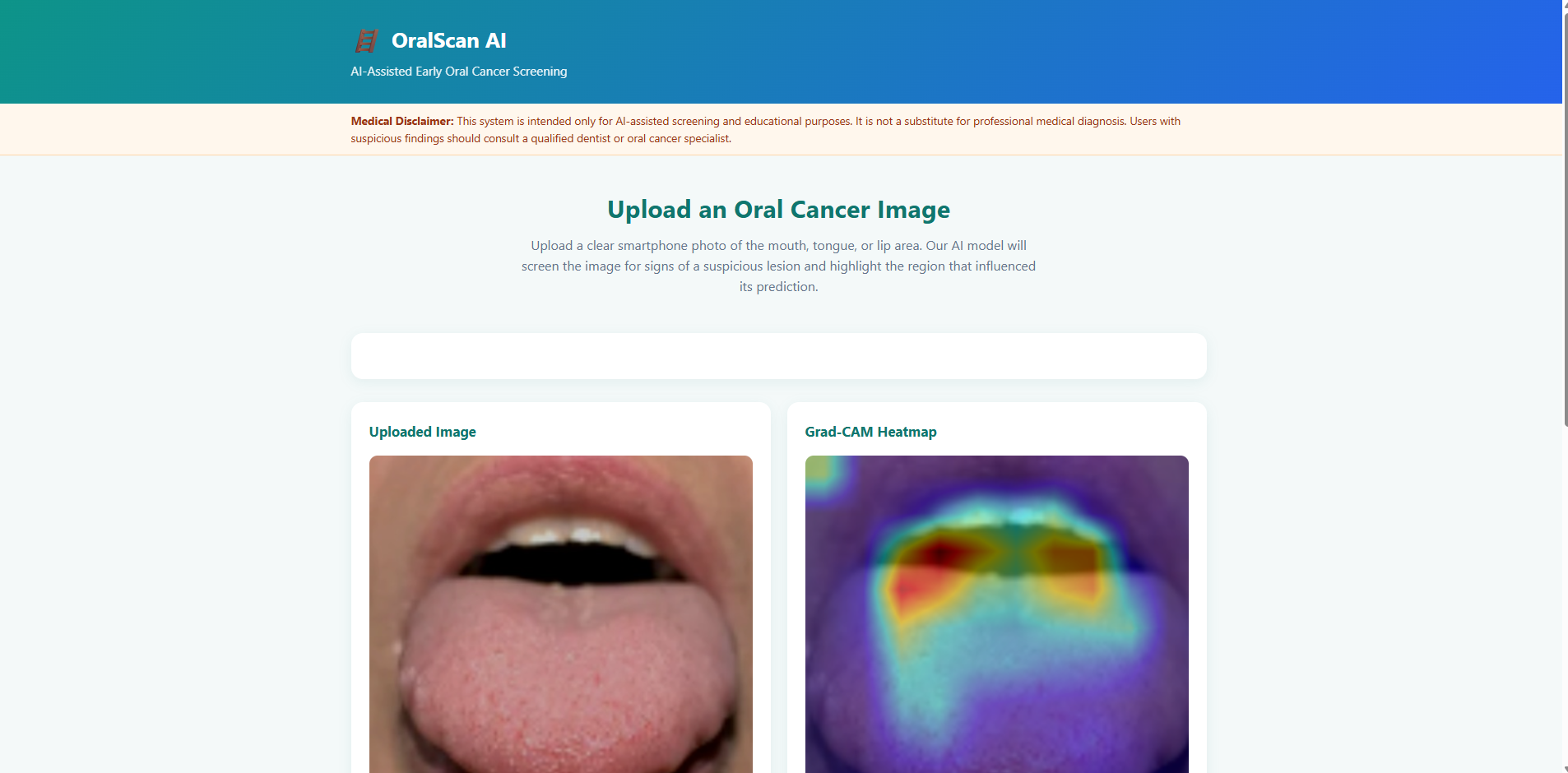
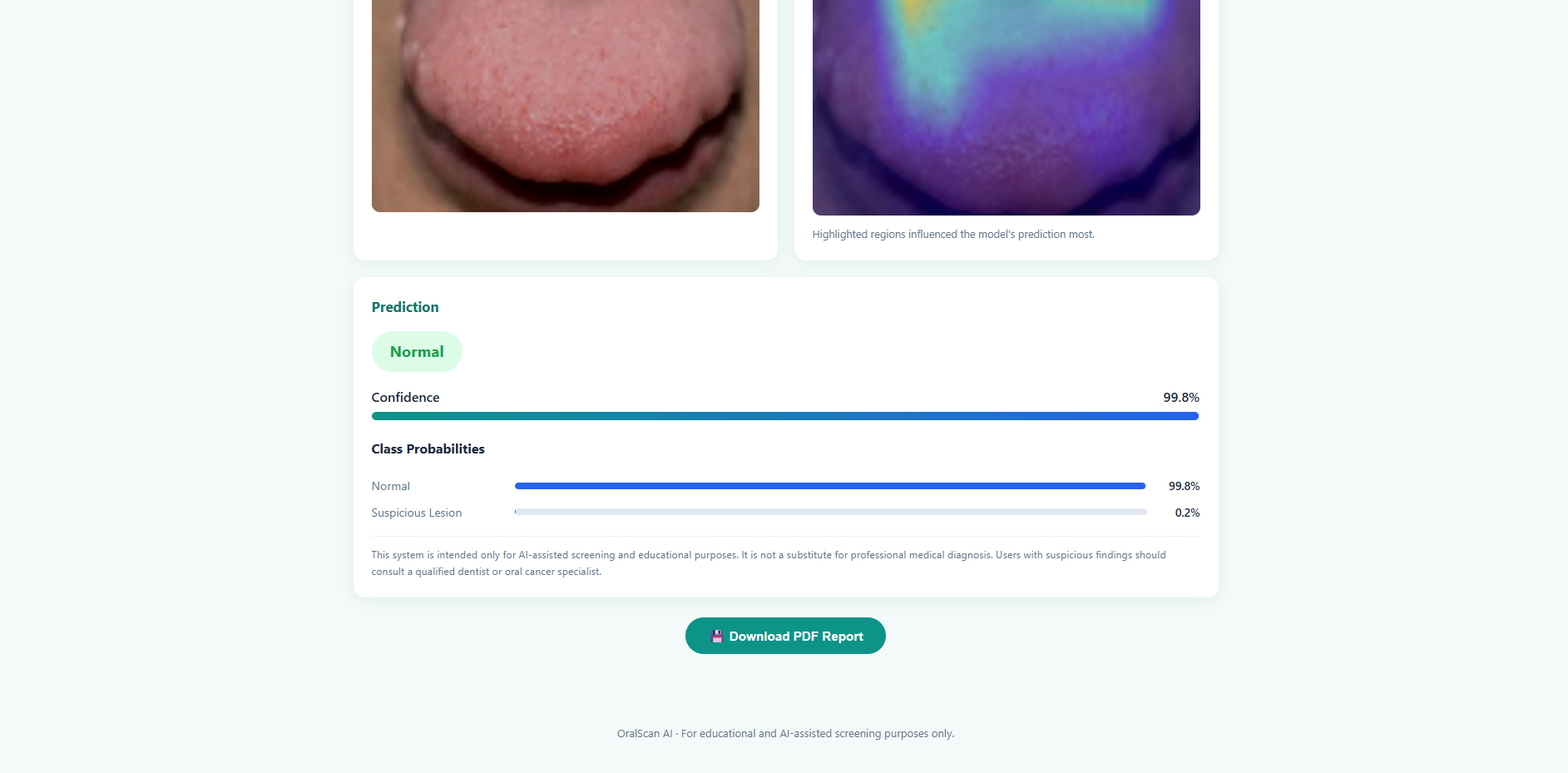
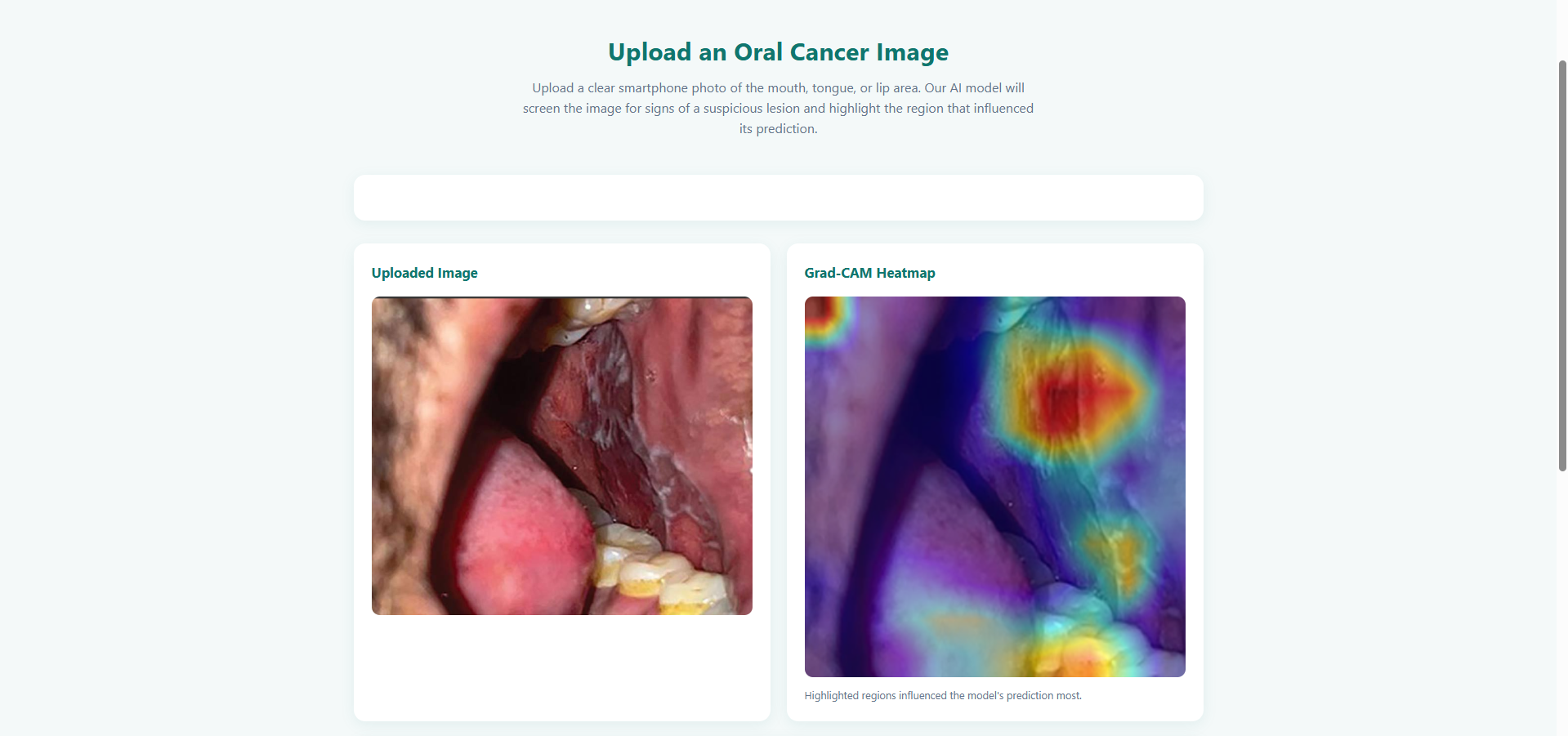
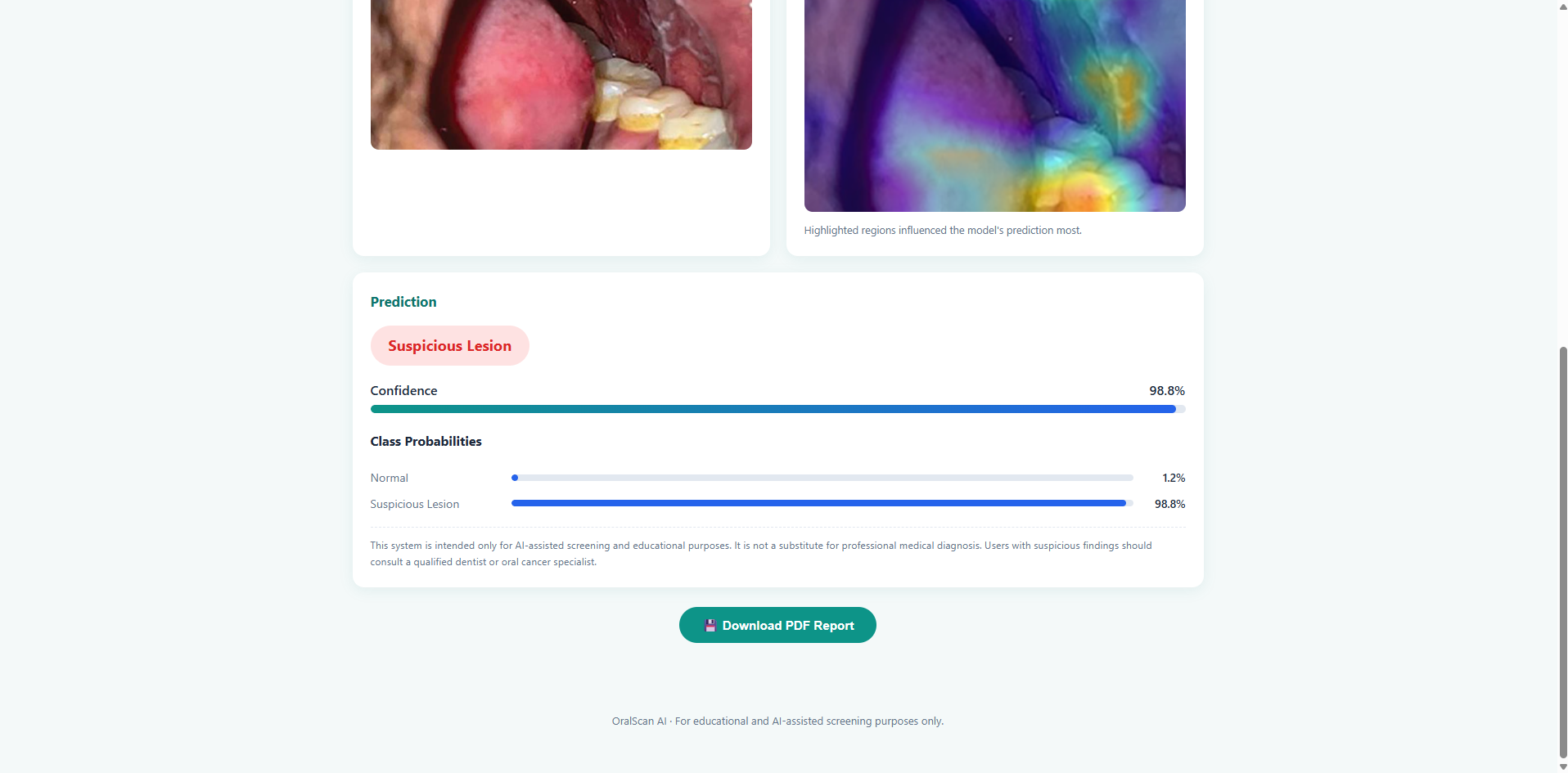
Person 2: Since smartphones provide high-resolution cameras that are widely available, we developed OralScan AI to analyze standard smartphone images of the oral cavity and identify cases that may require professional clinical attention.
How We Built It
Person 1: For the core deep learning architecture, we selected an ImageNet-pretrained EfficientNet-B3 model. We fine-tuned it using selective layer freezing and a cosine annealing learning-rate schedule.
Person 2: To make the predictions more interpretable, we implemented a custom Grad-CAM pipeline. It generates visual heatmaps showing the regions of the image that influenced the model's prediction, making the system more transparent.
Person 1: For deployment, we integrated the complete inference pipeline into a lightweight Flask web application. The system was designed to process uploaded images efficiently and provide preliminary screening results.
Challenges Faced
Person 2: One of our biggest challenges was domain shift and image artifacts. Smartphone images can vary significantly because of lighting conditions, flash glare, focus, camera quality, and background regions such as lips and teeth.
Person 1: To address this, we developed a robust image preprocessing and augmentation pipeline. We also used stratified data splitting to maintain class balance and improve the reliability of evaluation across different image conditions.
What We Learned
Person 2: This project taught us that medical AI cannot focus only on achieving high accuracy. The system also needs to be transparent and carefully evaluated.
Person 1: Implementing Grad-CAM helped us understand how to inspect model attention and identify whether the model was focusing on meaningful regions rather than irrelevant image artifacts.
Person 2: Overall, OralScan AI showed us the importance of combining deep learning, explainability, and responsible deployment when developing AI systems for healthcare screening.
Built With
- computer-vision
- css3
- deep-learning
- efficientnet-b3
- explainable-ai
- flask
- grad-cam
- html5
- javascript
- pytorch

Log in or sign up for Devpost to join the conversation.