-
-
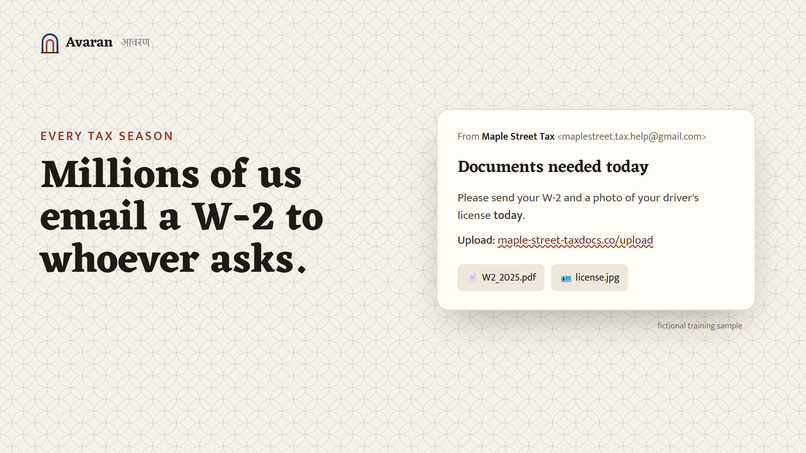
Problem Statement
-
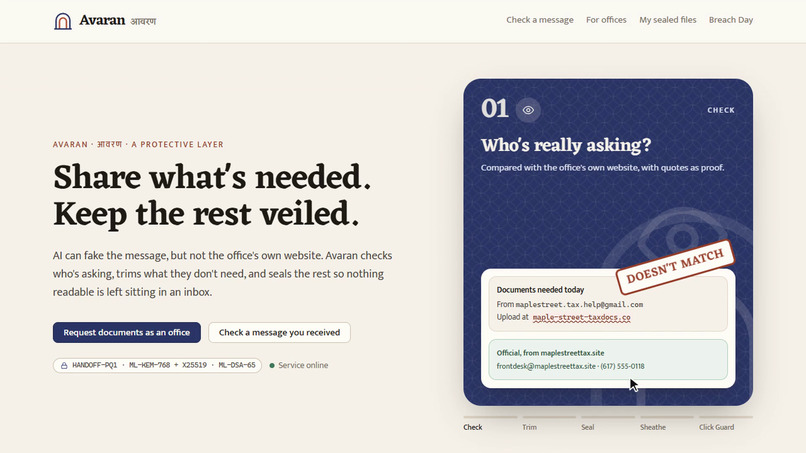
Home Page
-
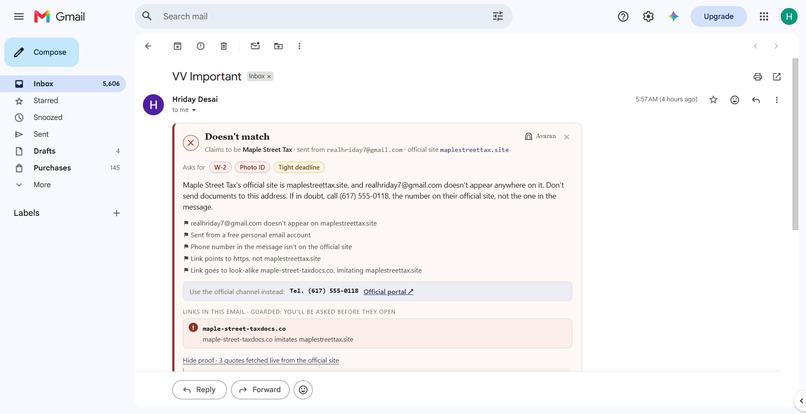
Email fact checker and threat identification
-
-
-
-
-
-
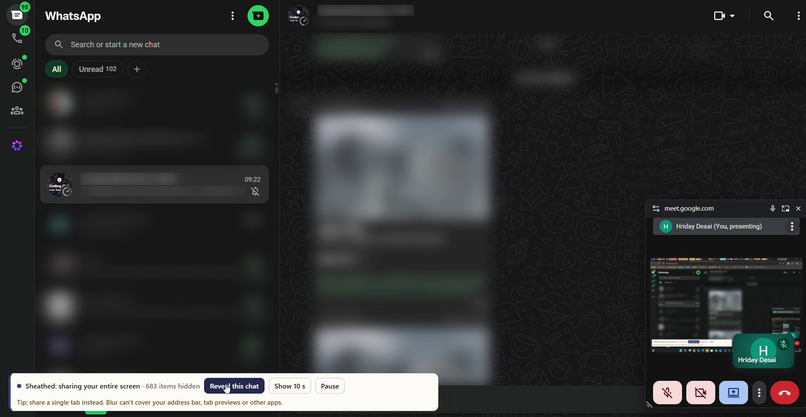
In meet - private data blurring
-
-
-
-
-
-
-
Inspiration
The problem: the browser is where we spend most of time. Surfing movie sites, submitting pdfs, attending zoom calls. But how secure has your experience been on the internet? Are you always sure if an email is legit or fake?, while sharing your screen how secure are your private mails and chats? or where a click really goes to?.
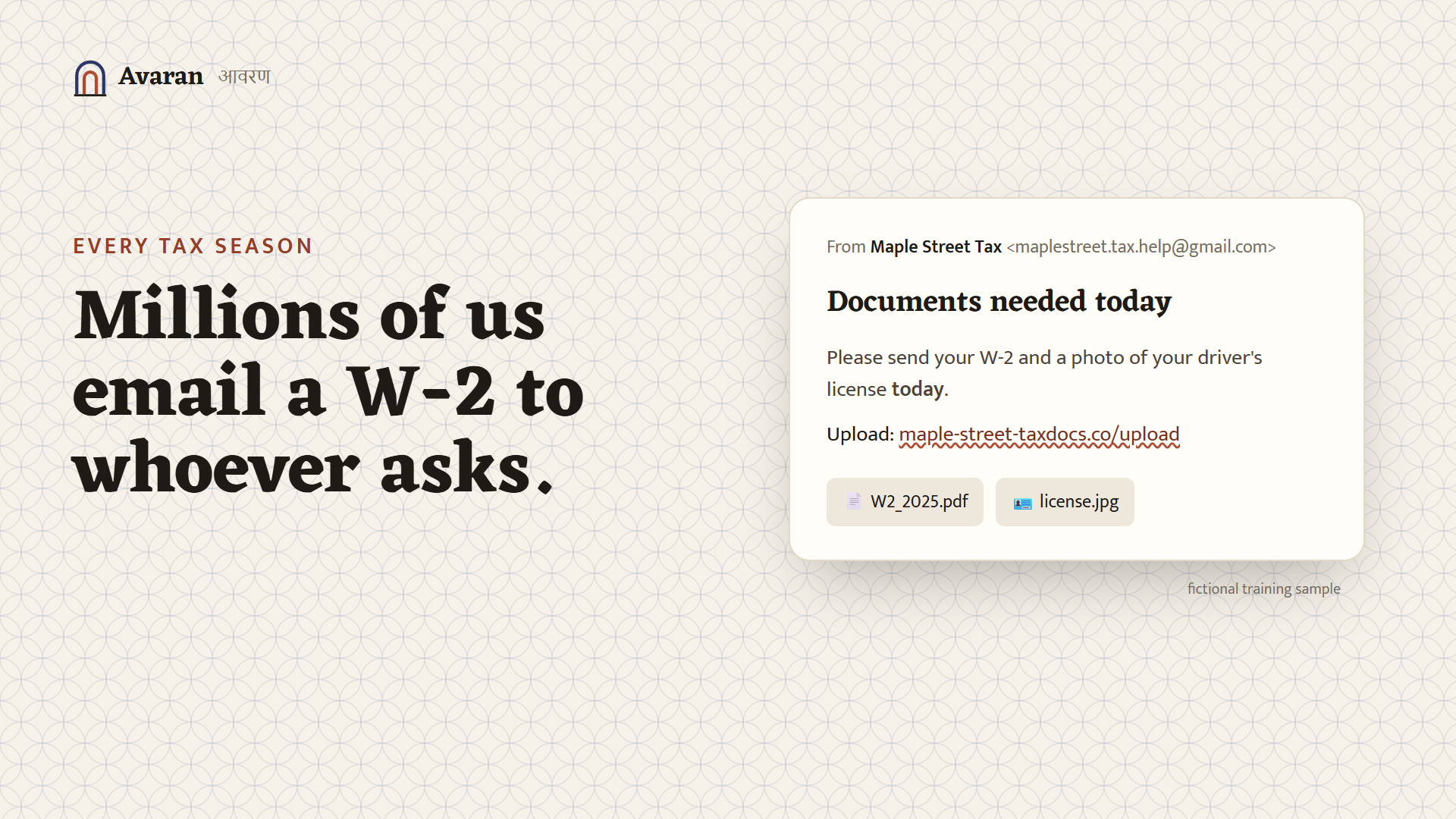
Meet Dana, from Boston. She is a middle-aged woman who isn't as tech savy as her kids are. Every February she gets an email: "Hi, this is Maple Street Tax. Please send your W-2 and a photo of your license today." Real or fake? In 2025 the FBI logged \$893M in losses from complaints that mentioned AI. Fake requests are cheap now. And even when the request is real, the attachment sits readable in two inboxes for years, waiting for that office's bad day.
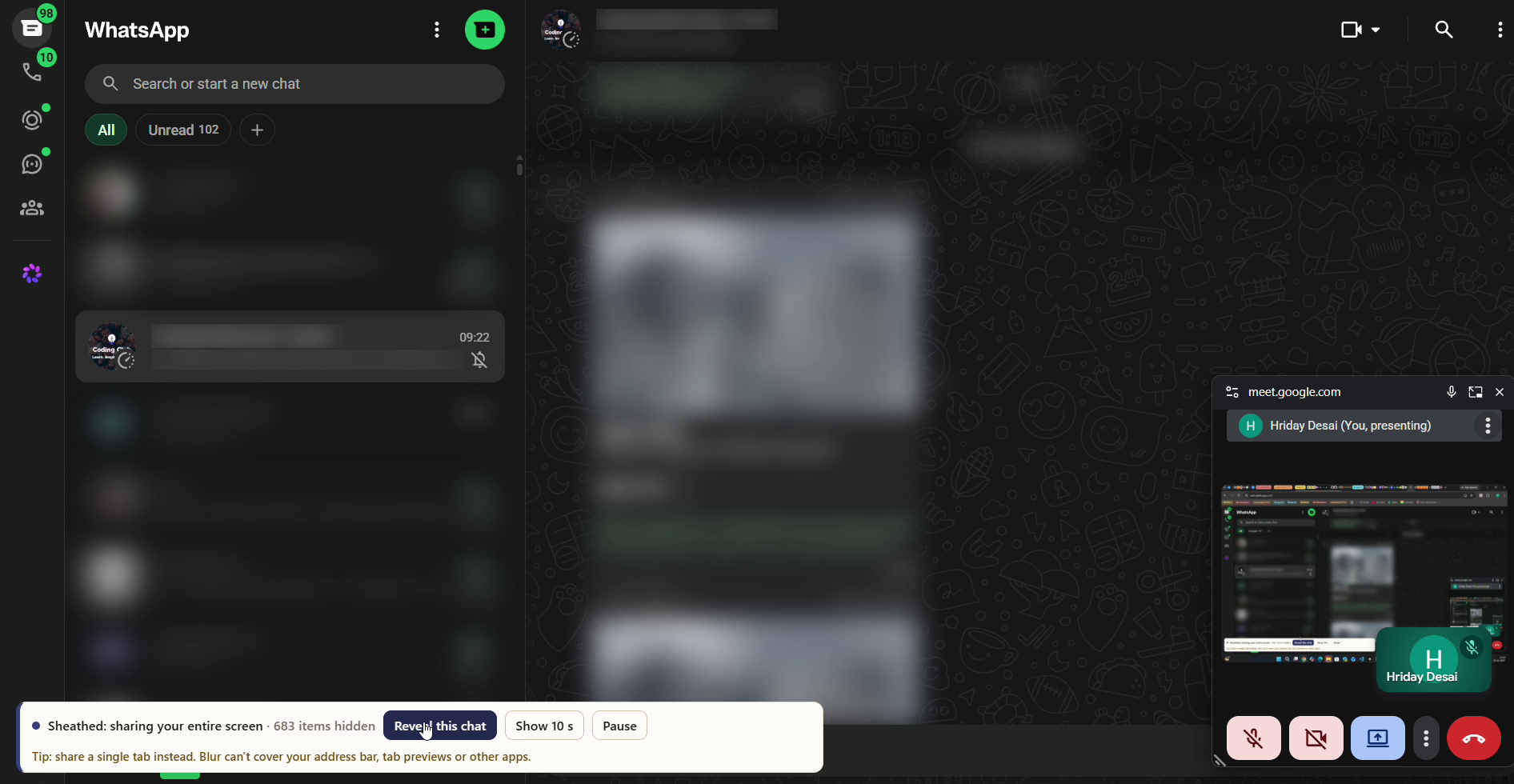
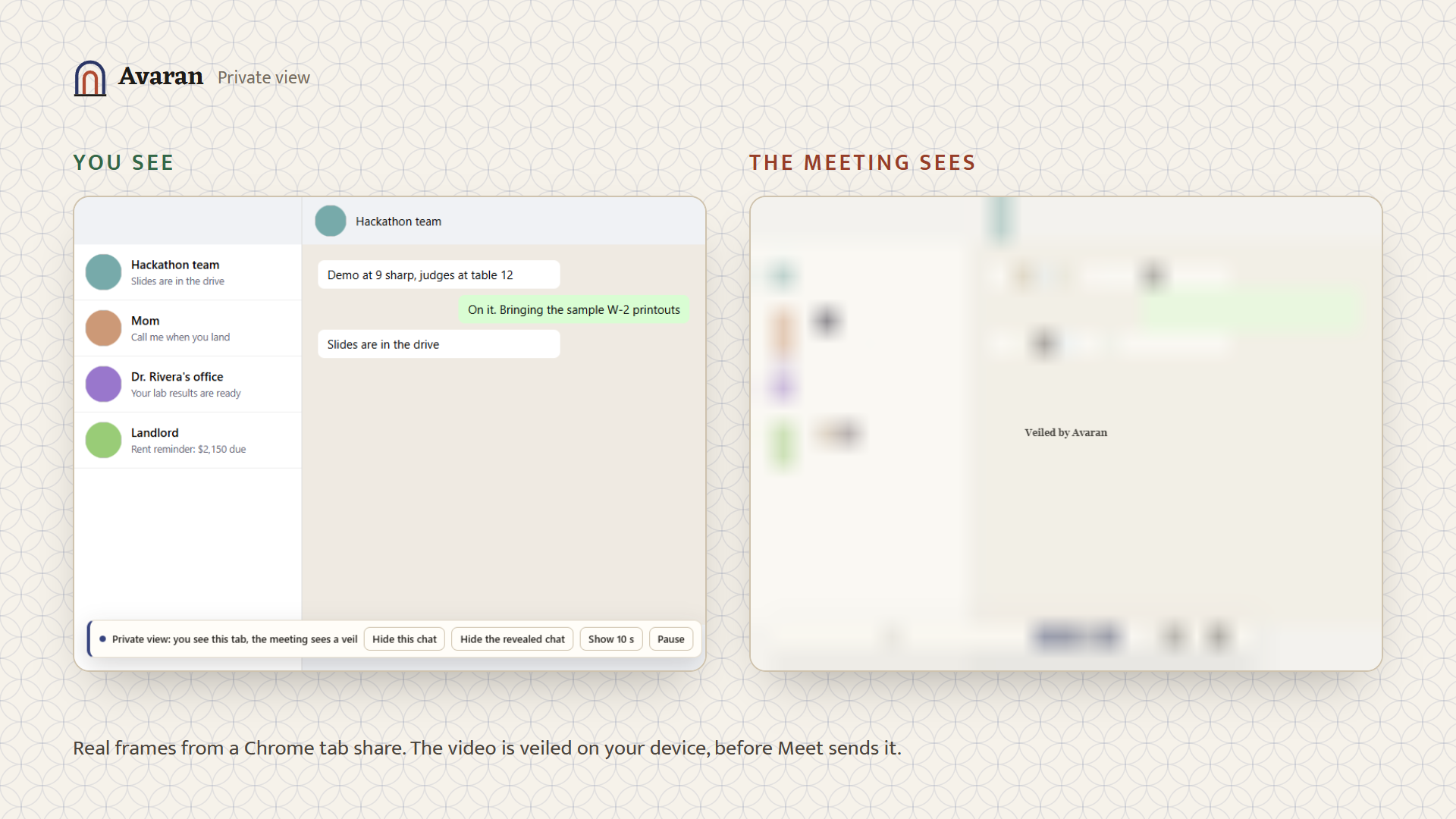
Then Dana joins a Teams call and shares her screen. While she shuffles tabs, WhatsApp cheerfully tells twelve coworkers "Dr. Rivera's office: your lab results are ready." Embarrassing at best; at worst, private health details just reached strangers.
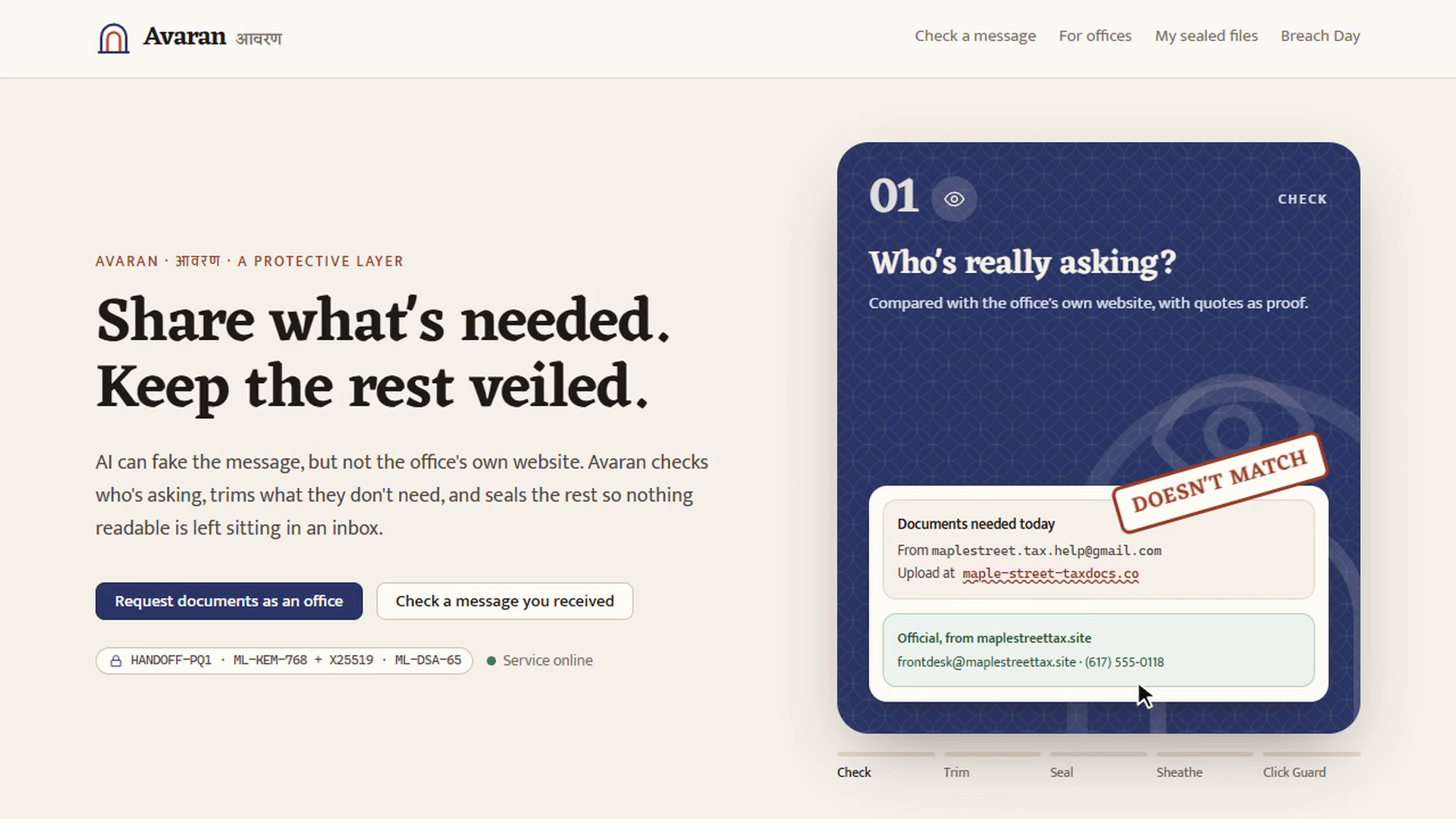
That's three leaks in one browser: who you send confidential data to, what you show an audience, and what you click while reading mail or browsing. We built Avaran (आवरण, Sanskrit for a protective layer) to cover all three. Think of a jaali screen: light gets in, prying eyes don't.
What it is
For patients, tax filers and anyone who shares their screen at work, who can't tell a real document request from an AI-written fake (and can't un-send an attachment), Avaran is a privacy layer for the browser. It checks who's asking, sends only what's needed (sealed), and veils private chats during screen shares. Unlike email attachments, which live forever, spam filters, which judge the message instead of the sender, and cloud AI tools, which have to read your data to protect it.
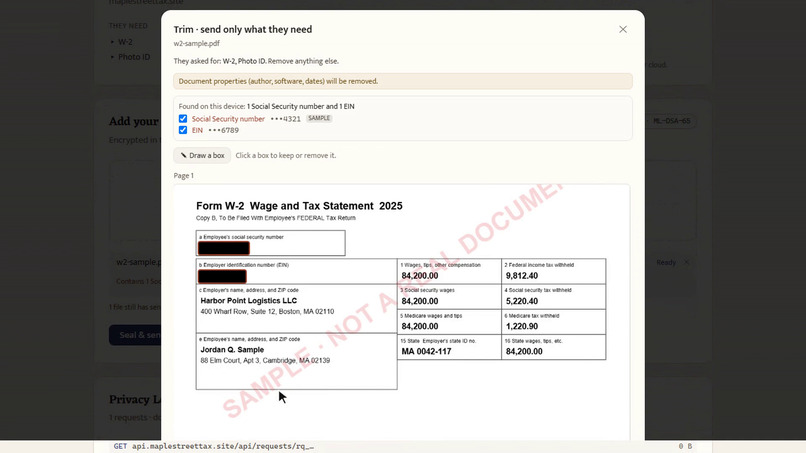
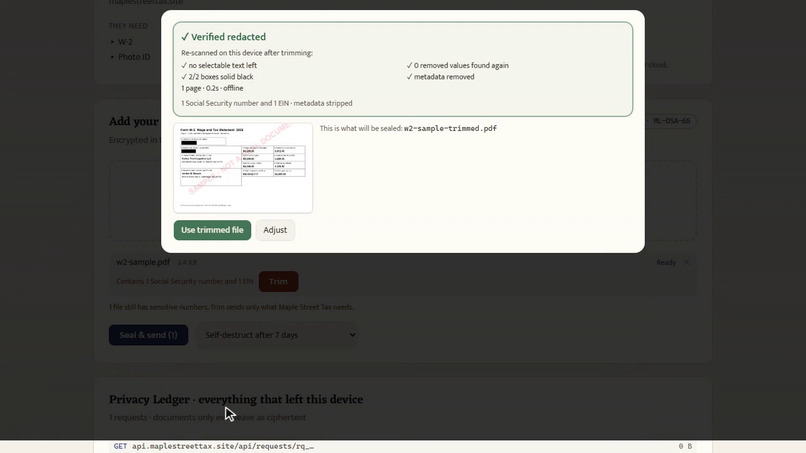
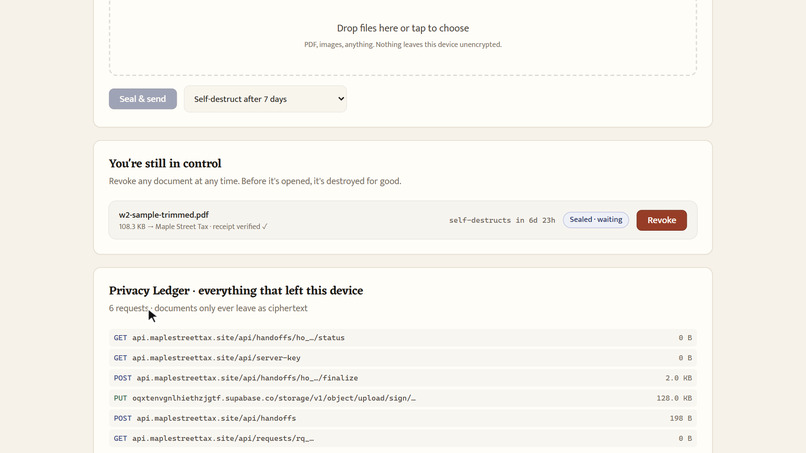
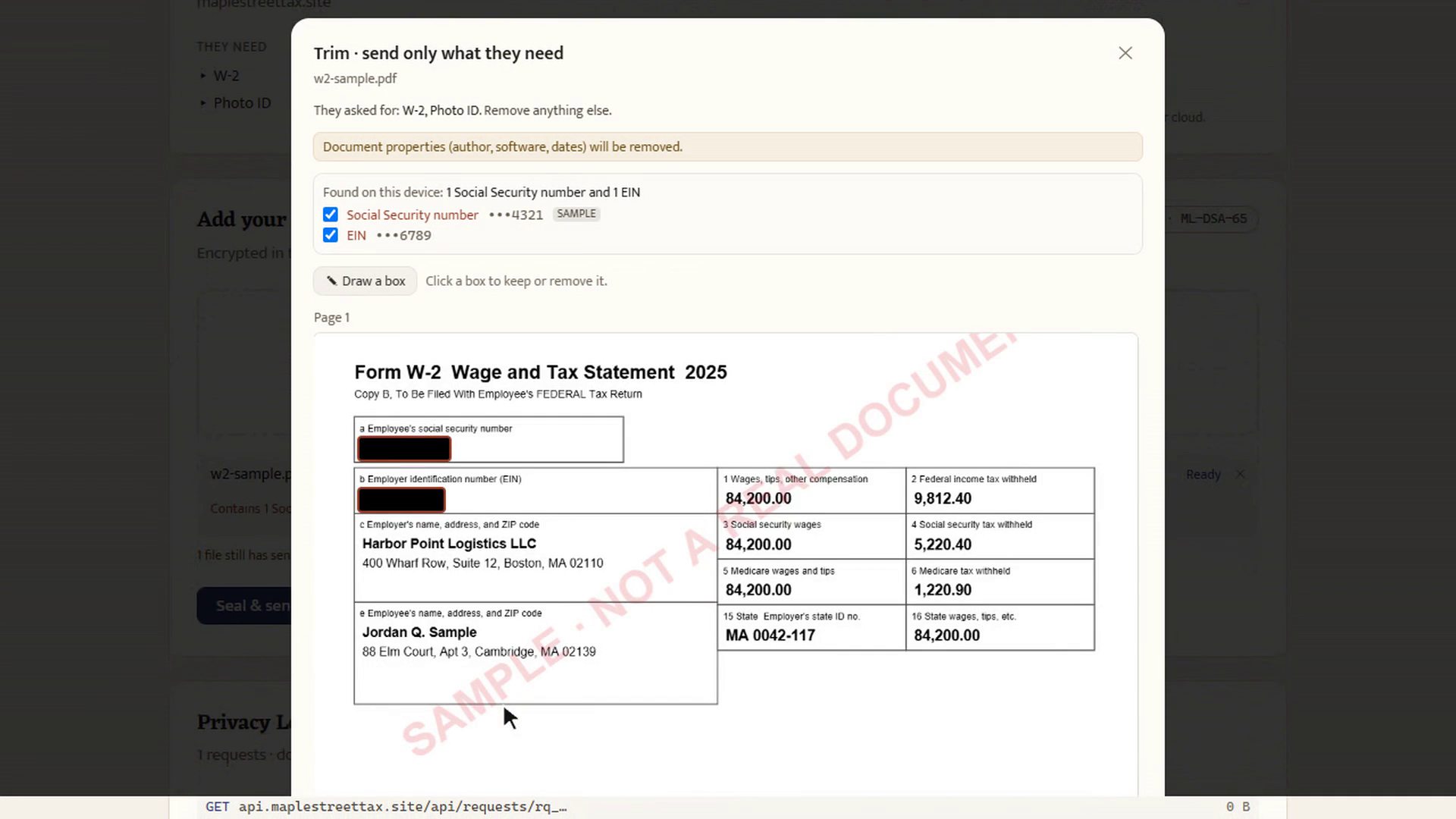
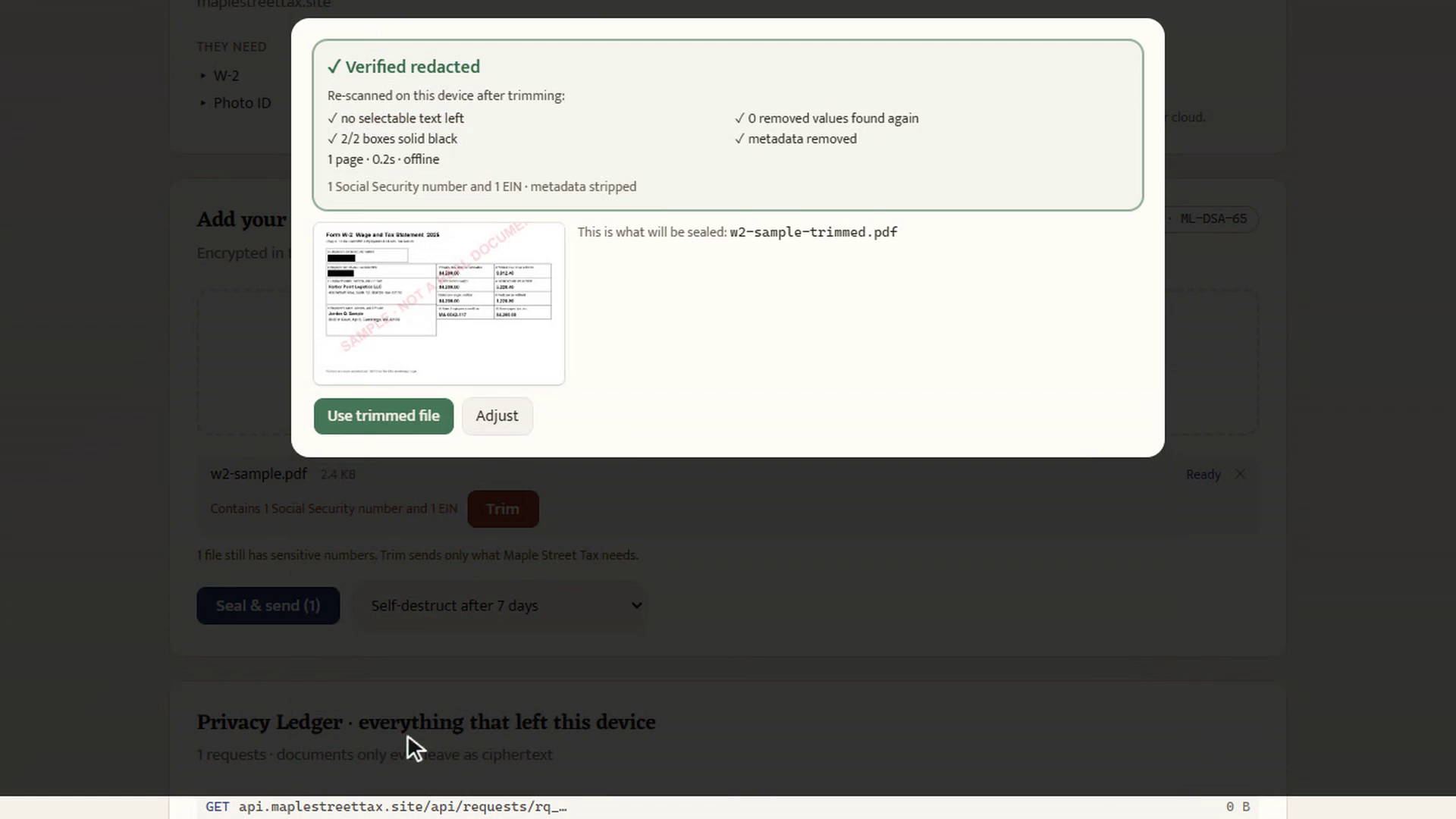
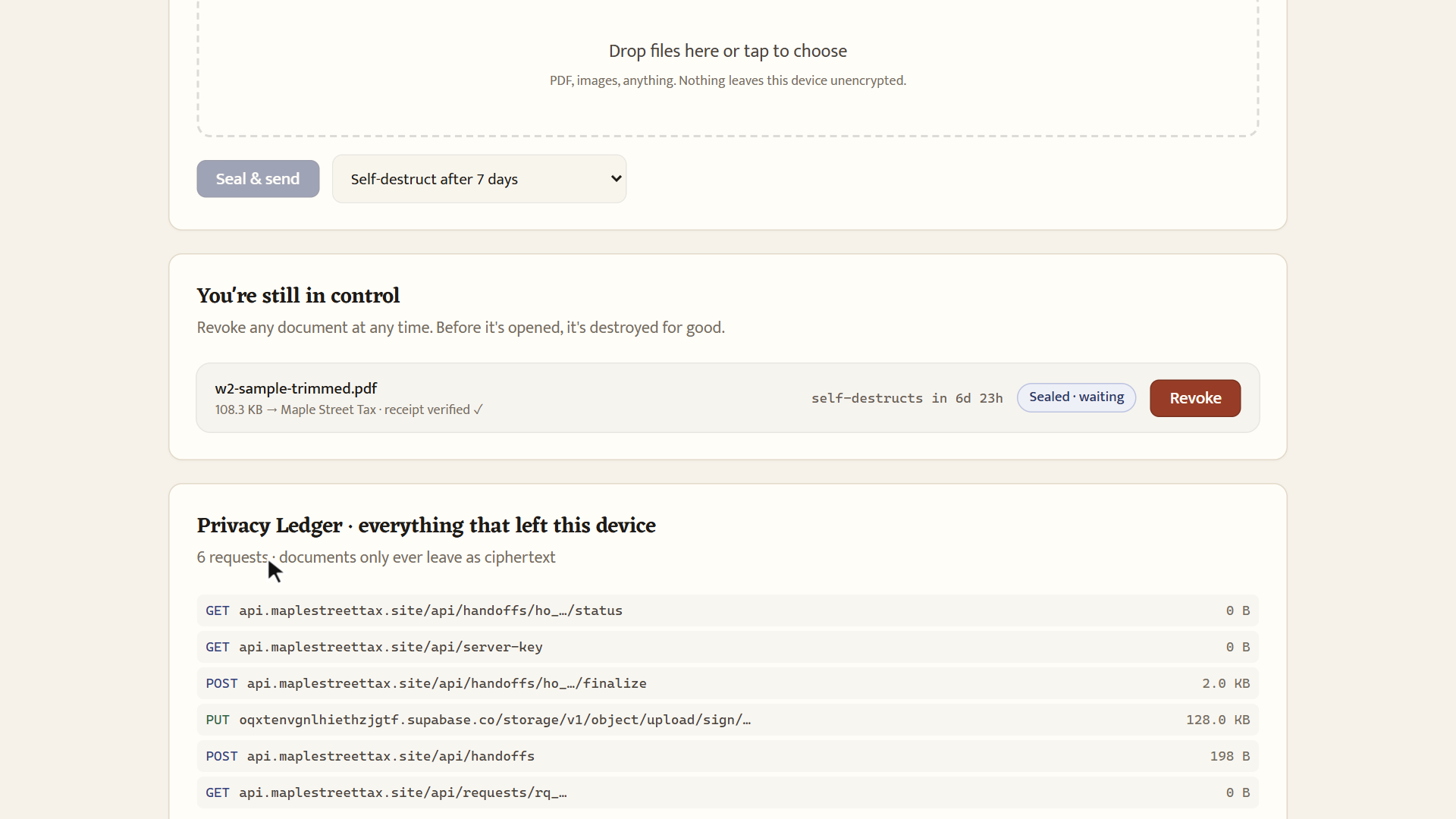
Flagship: Seal & Attach, inside Gmail. One click verifies the requester against their own website and DNS. Then it blacks out the SSNs they didn't ask for and seals the file for that one office with post-quantum encryption. The email carries a link, not your life story. You can revoke it any time. Your W-2 shouldn't outlive your lease.
The same layer, everywhere else in your browser:
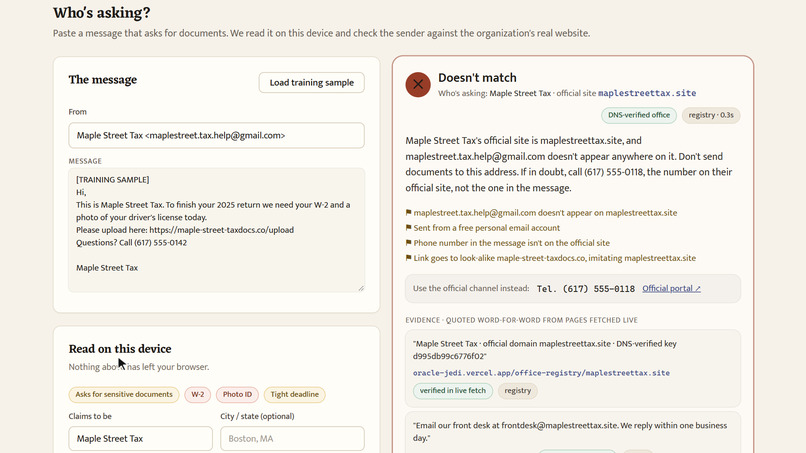
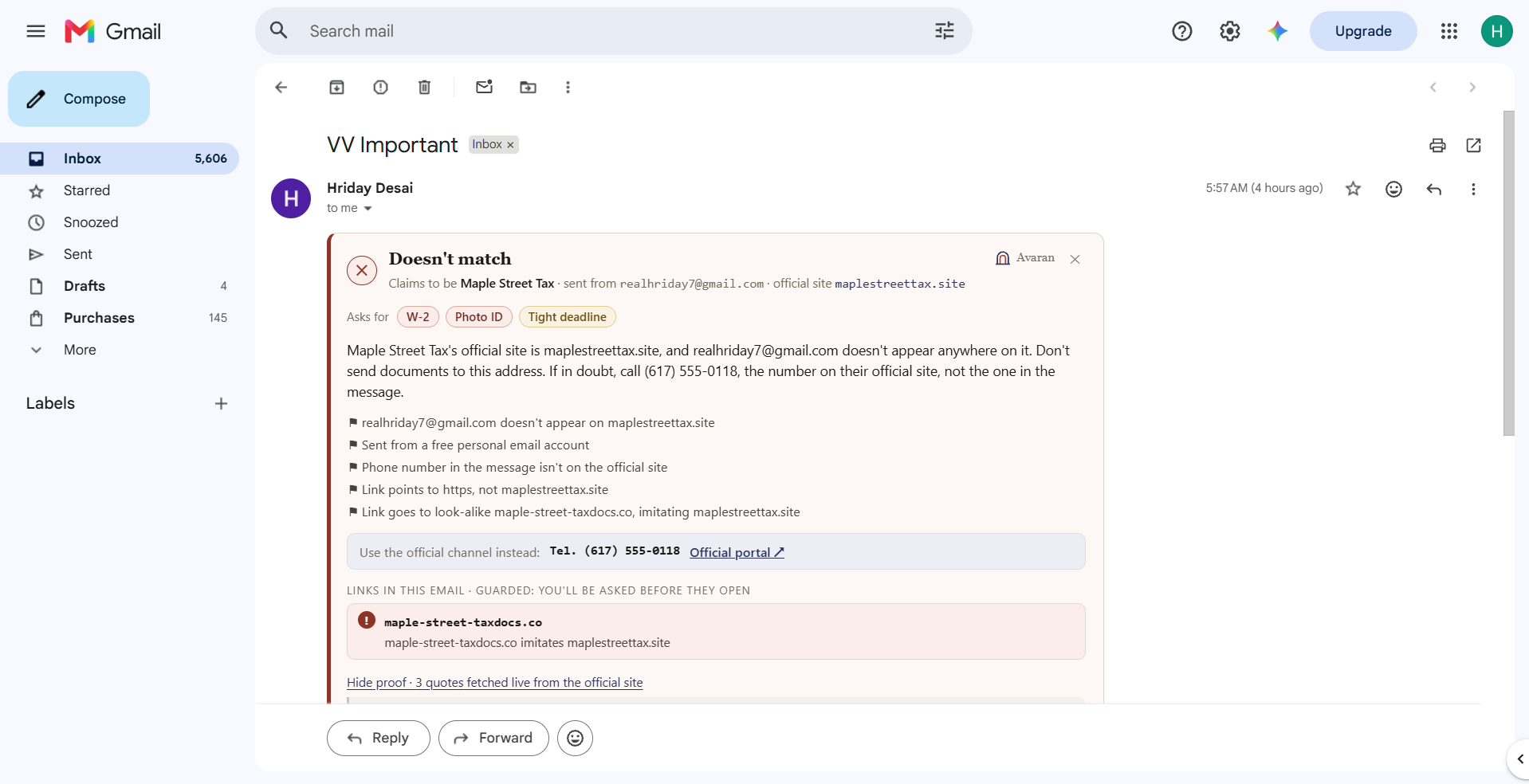
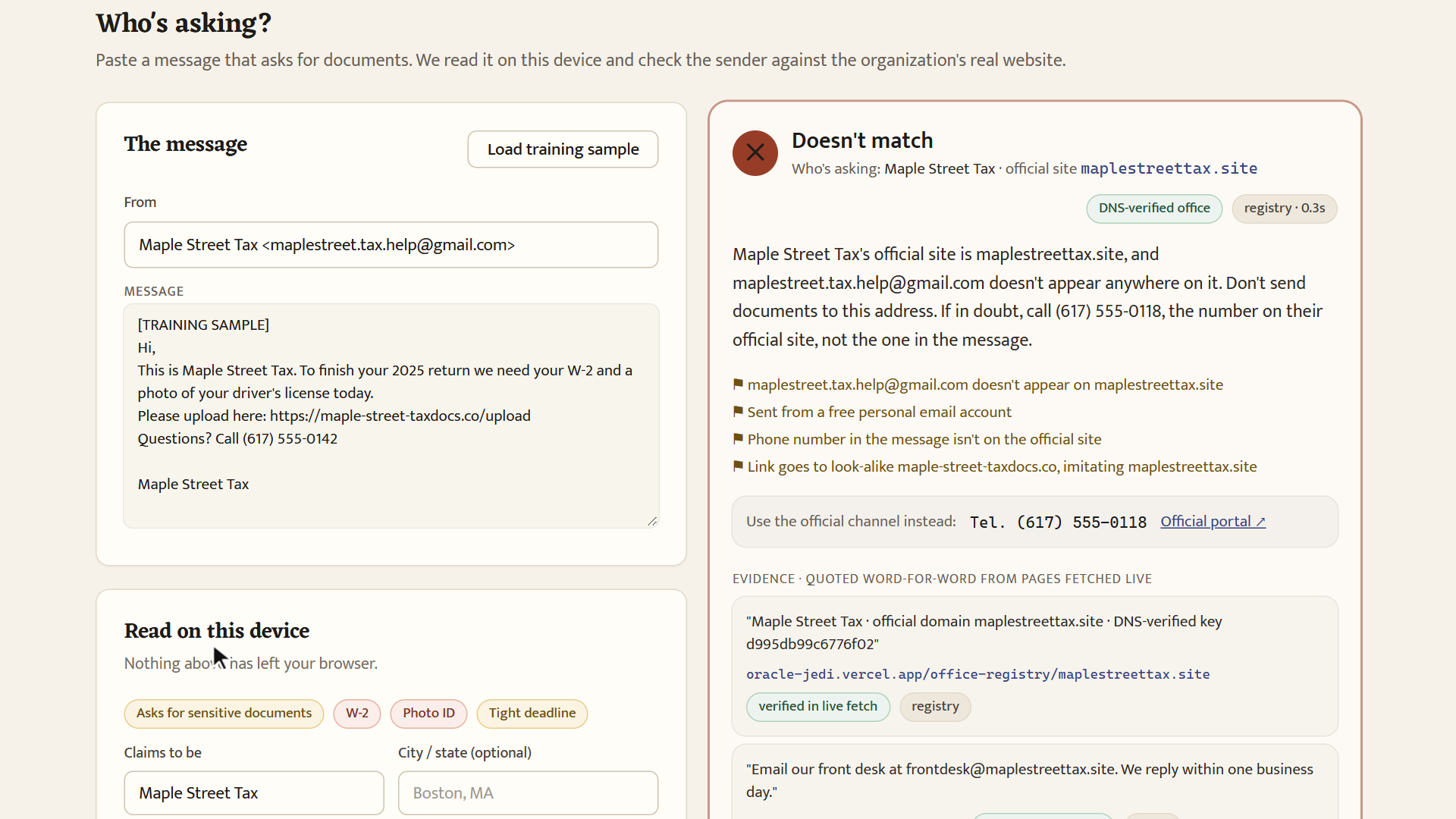
- Check who's asking. Gmail checks whether a message is spam. Avaran checks whether the sender is real, and shows its receipts (literal quotes from the office's site).
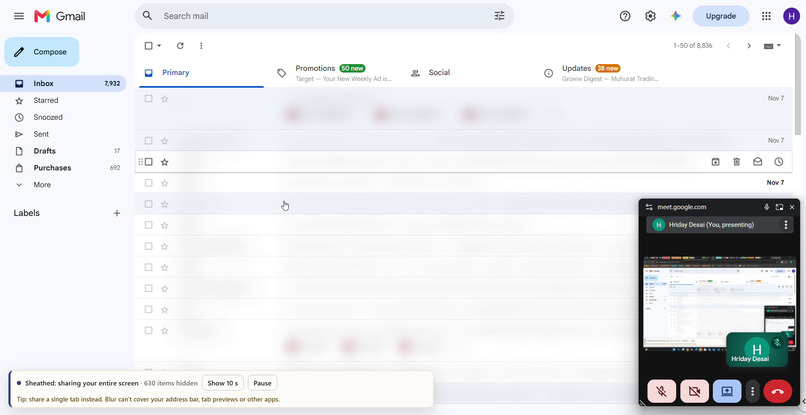
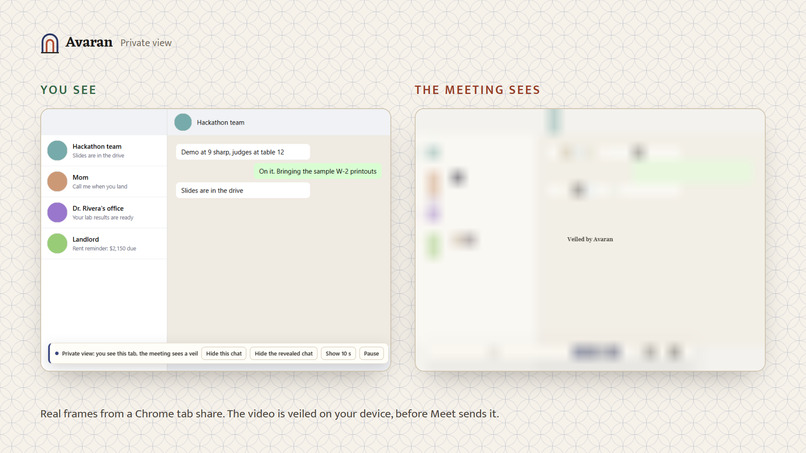
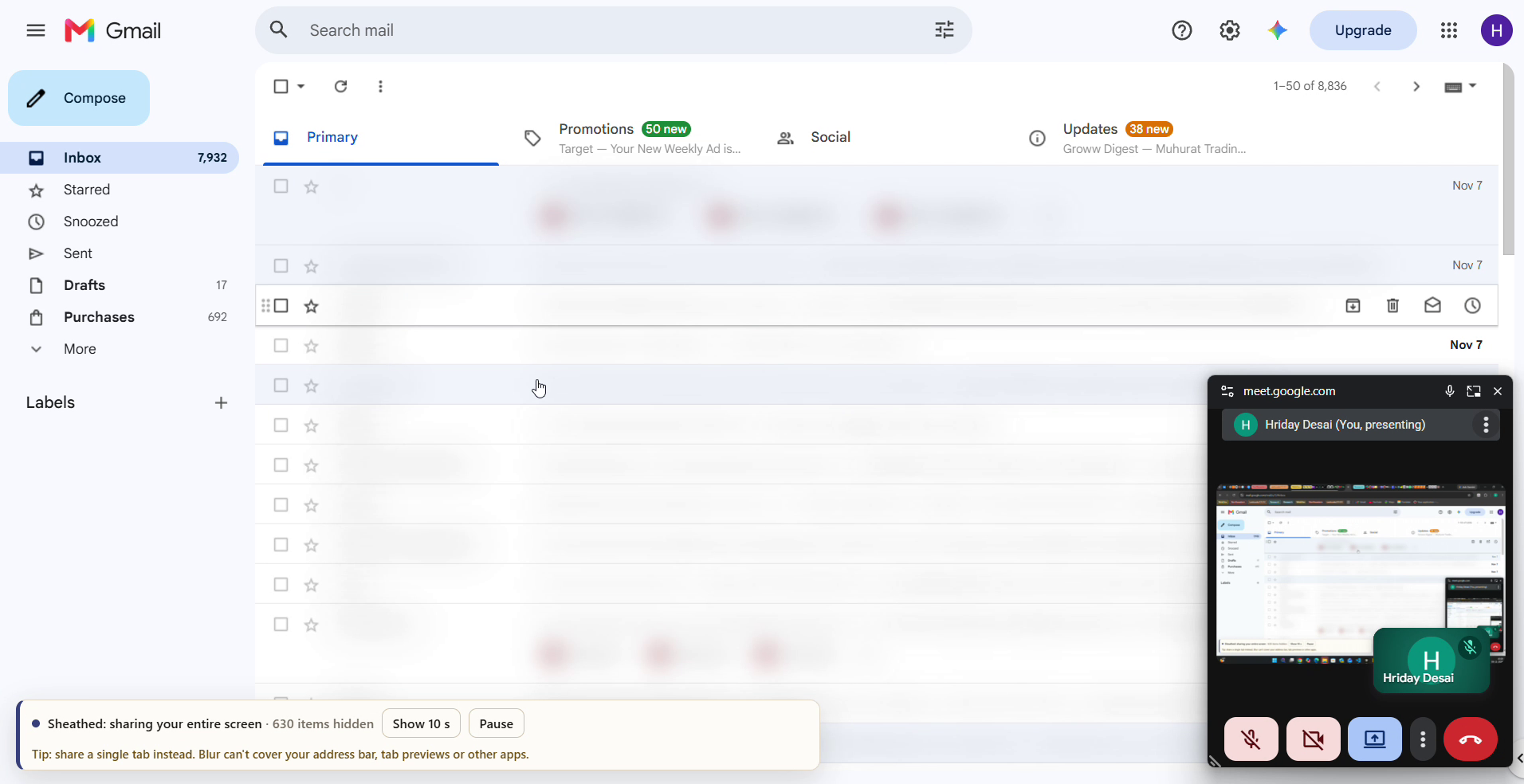
- Sheathe. Start a screen share and WhatsApp and Gmail veil themselves in 16 ms. With Private view, you still see your chats; the meeting sees a veil.
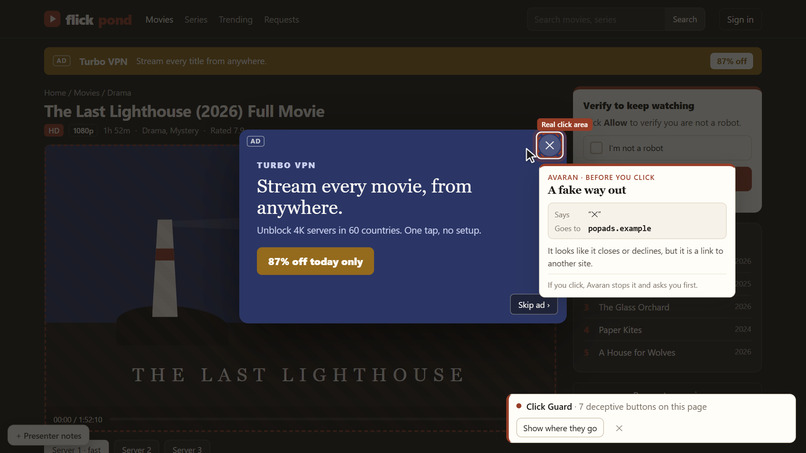
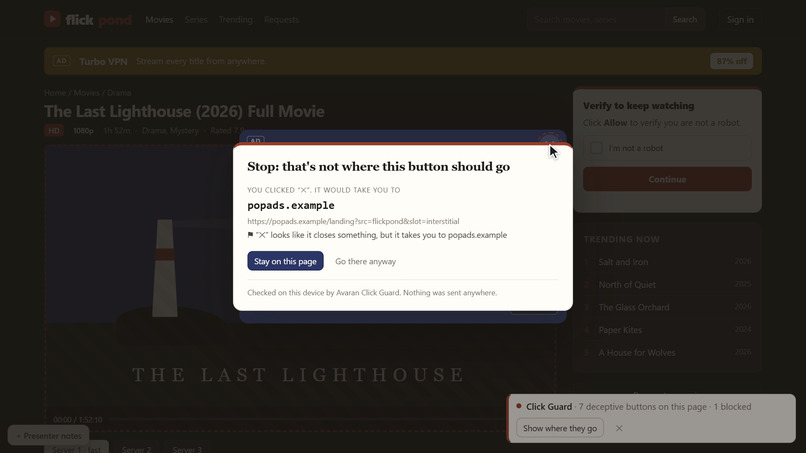
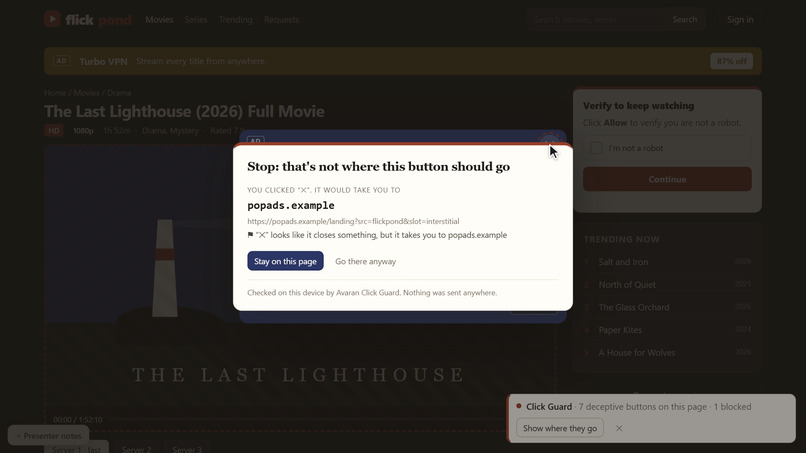
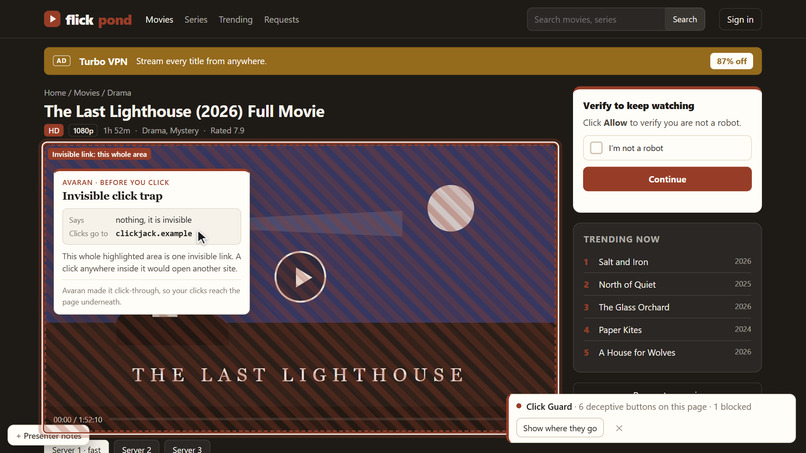
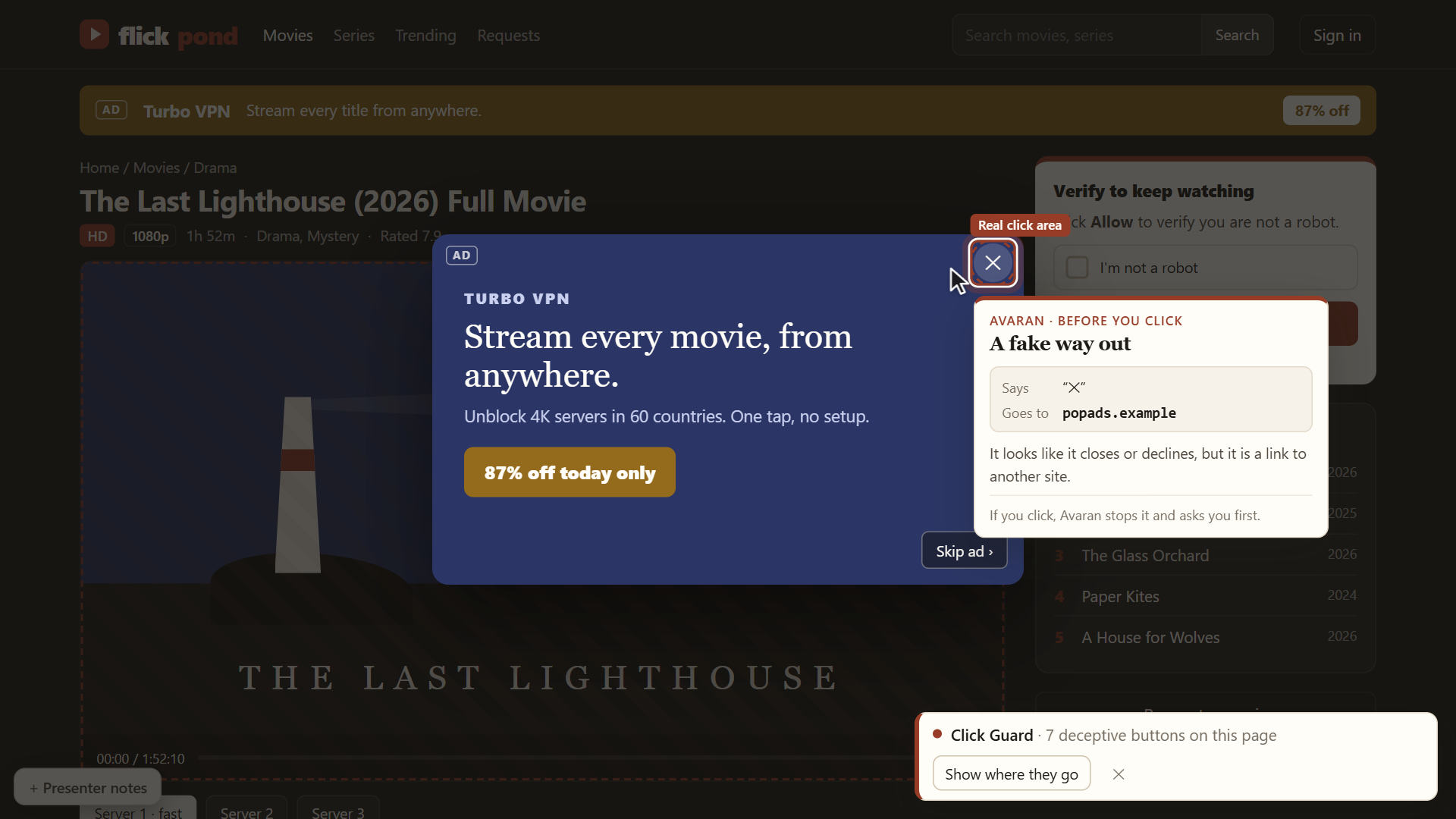
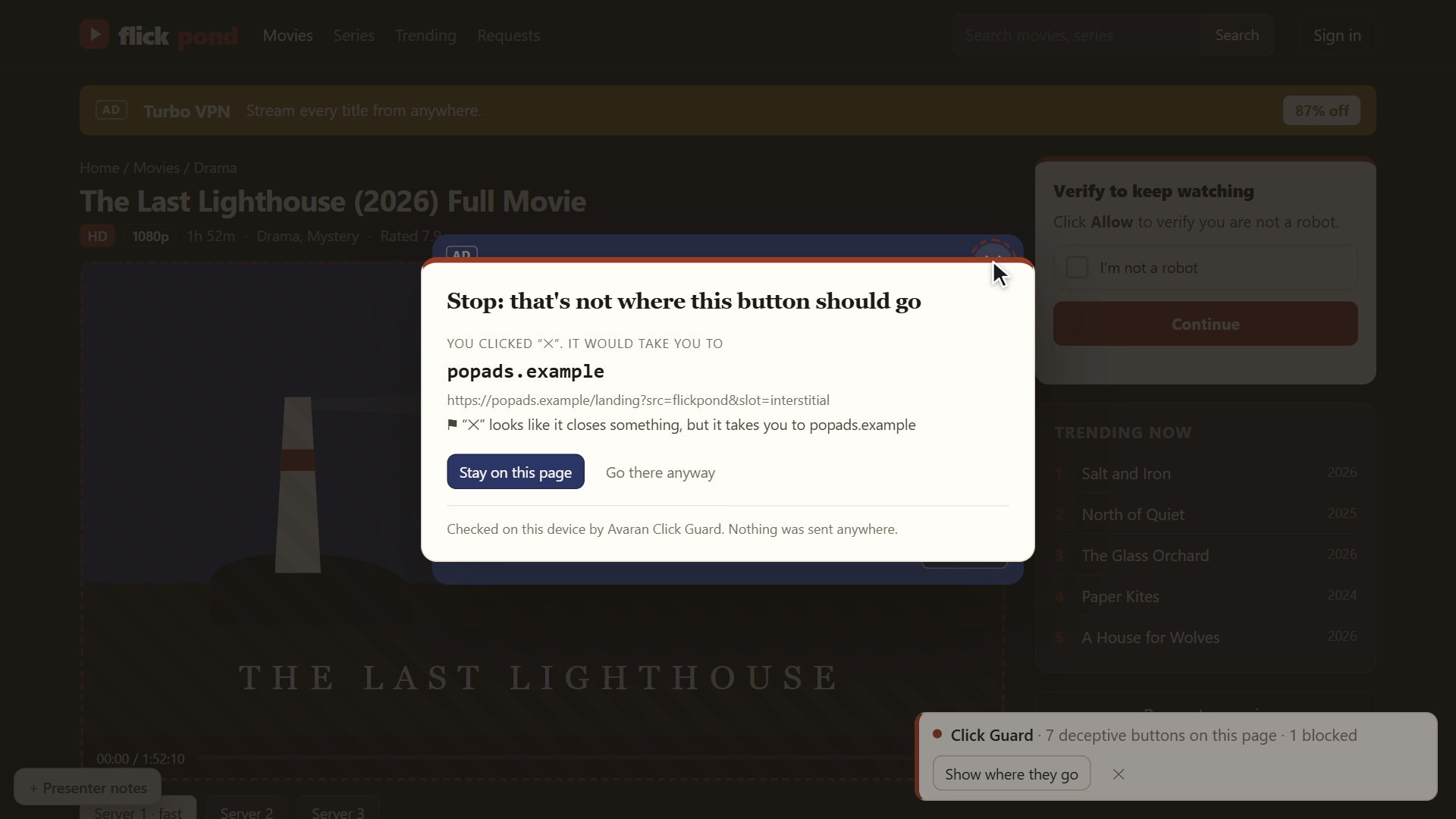
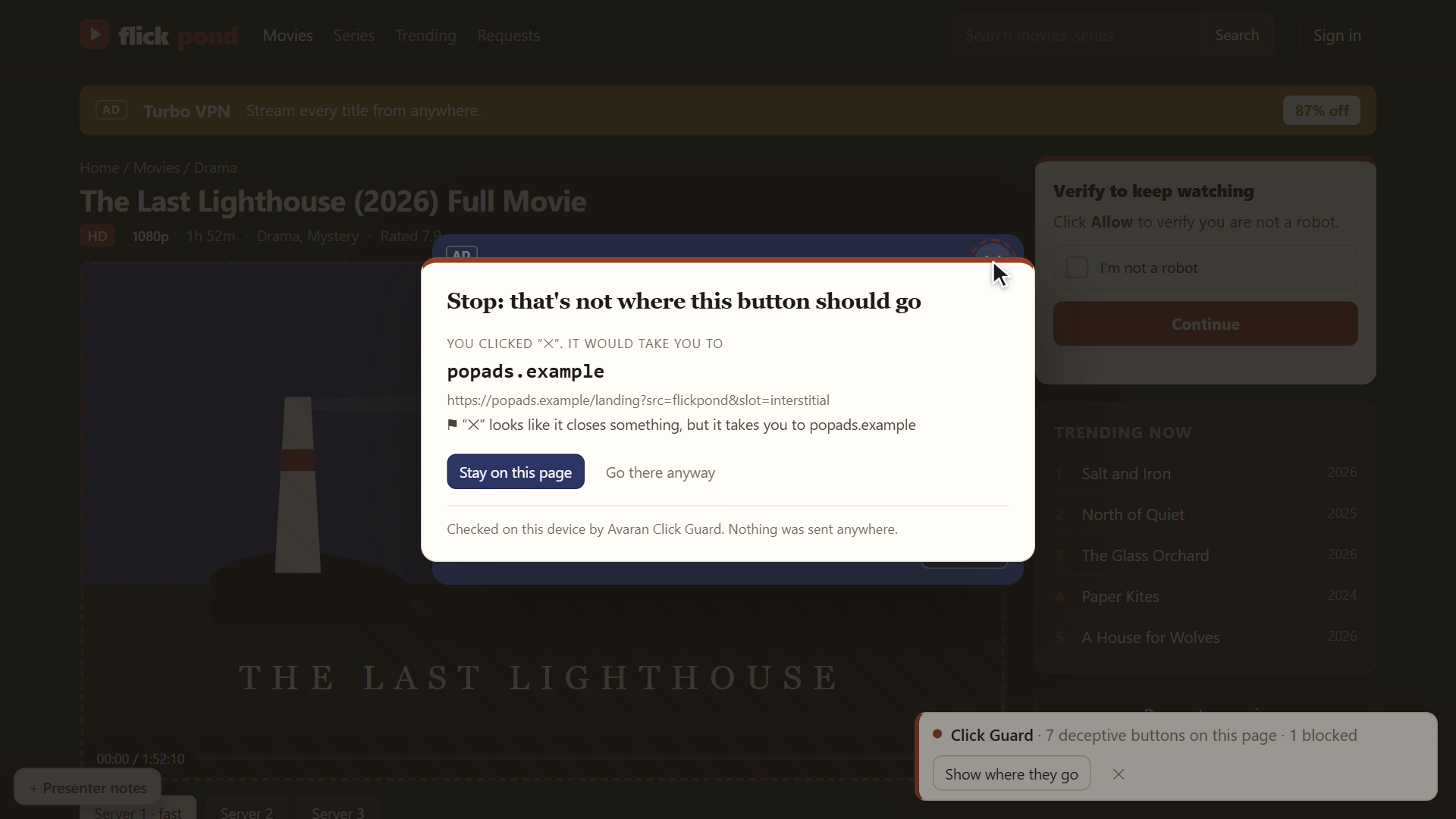
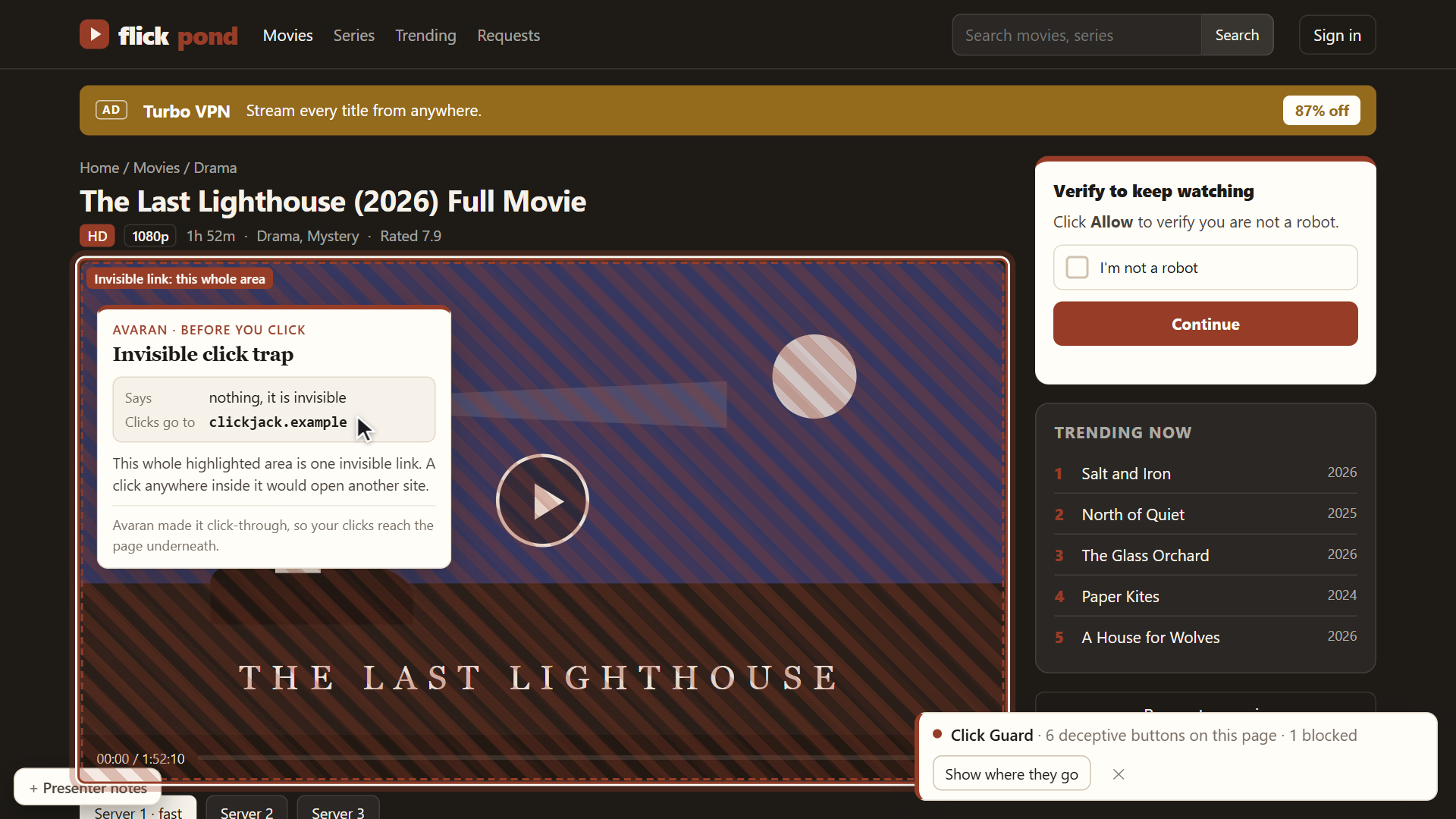
- Click Guard. A Close button should close. Wild concept, we know. As your cursor gets close, Avaran outlines fake ✕ buttons and invisible links and tells you where they really go.
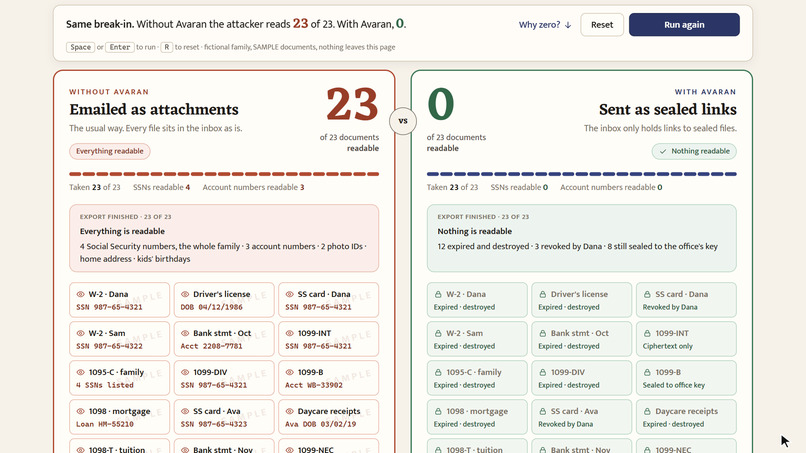
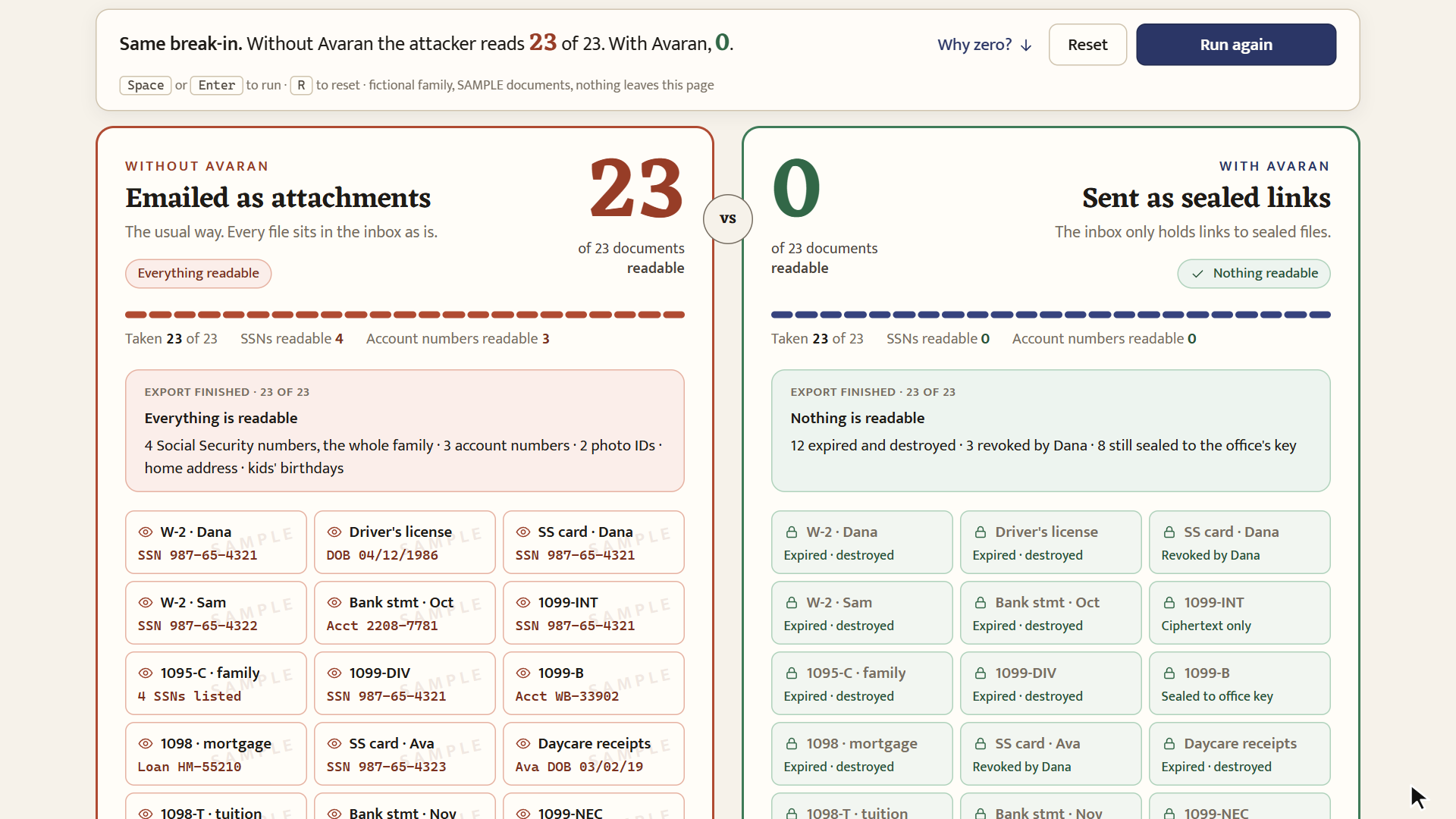
- Breach Day. Same break-in, two offices, and one equation:
$$\text{readable documents after a breach:}\quad 23 \;\longrightarrow\; 0$$
Who pays: people use it free. Offices pay per seat for the verified badge and the sealed inbox: tax preparers first, clinics' new-patient intake next. We never sell data. The whole business model is not having it.
How we built it
- Stack:
- A Chrome extension (MV3, built with WXT)
- A React site on Vercel
- A Hono API in Docker on AWS EC2
- Supabase, which only ever stores ciphertext
- Post-quantum by default. Files are sealed with X-Wing (ML-KEM-768 + X25519), and office keys are signed with ML-DSA-65. An office proves who it is with a DNS record that your browser checks, not our server.
- "AI finds, code decides." Exa and Tavily find the office's real website; a deterministic matcher makes the call. If it isn't sure, it says Unknown. It never guesses.
- Cheap to run. Detection, trimming, encryption, Sheathe and Click Guard all run on your device. A user costs us about two search calls per new sender, and nothing for anything else.
Trust boundary in one line: plaintext never leaves your browser. Our server is a bouncer with terrible eyesight. It holds your file and can't read a byte of it:
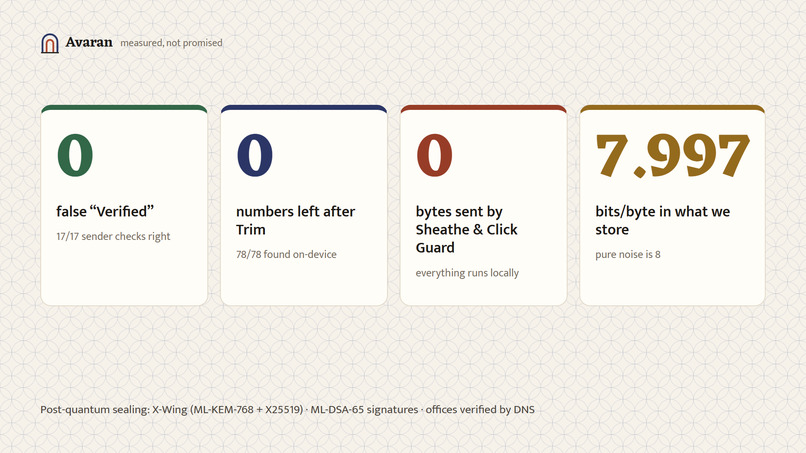
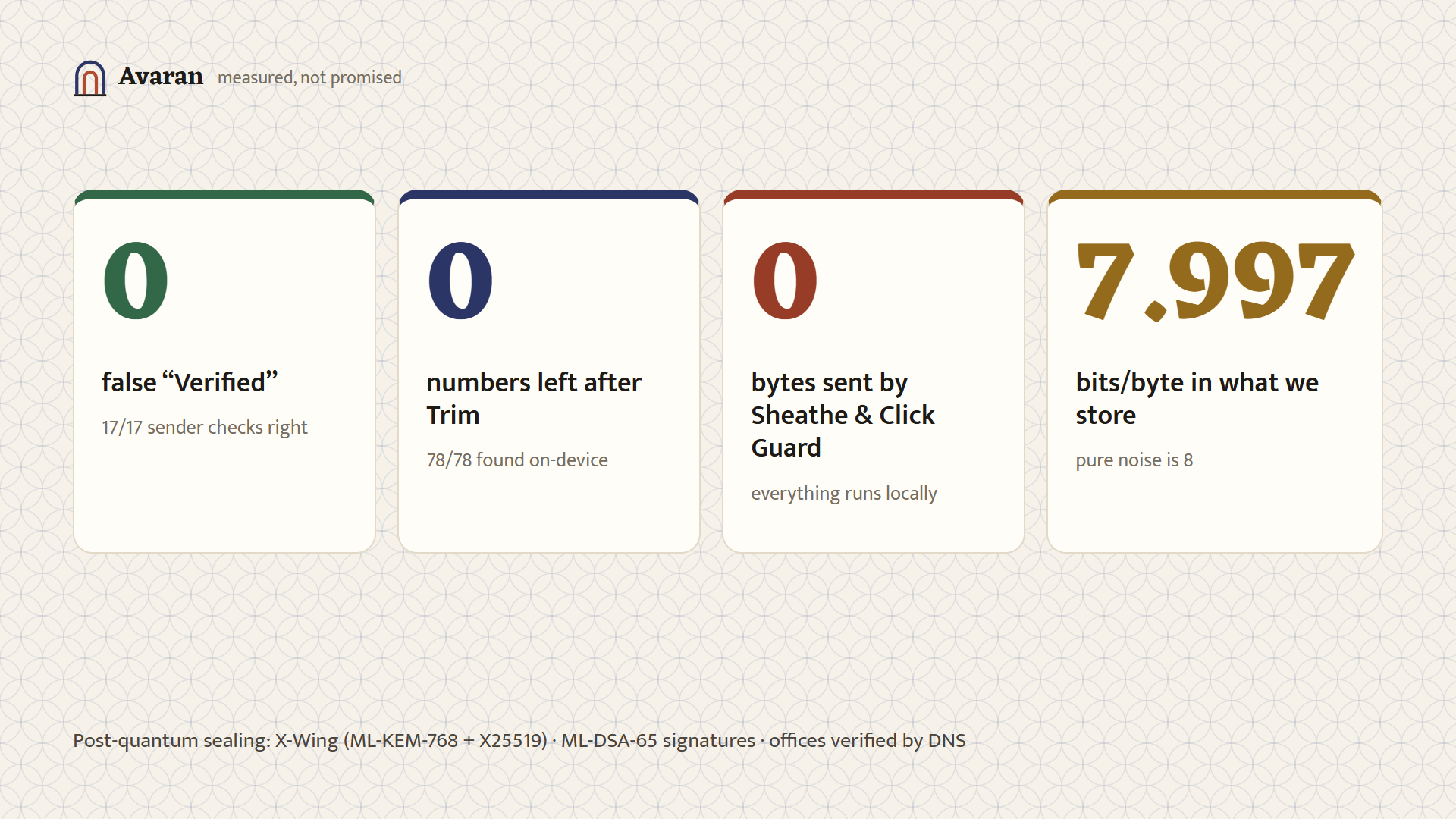
$$H(\text{what we store}) \approx 7.997 \ \text{bits/byte} \qquad (\text{pure noise} = 8)$$
| We measured | Result |
|---|---|
| Sender checks: right verdict / false "Verified" | 17/17 / 0 |
| Sensitive values Trim found / left behind | 78/78 / 0 |
| Bytes Sheathe and Click Guard send anywhere | 0 |
| Traps Click Guard flags before you click / normal buttons flagged by mistake | 6/6 / 0/6 |
Challenges we ran into
- A black box on a PDF isn't redaction. The text underneath stays copyable. So we flatten every page and then re-scan our own output as if we didn't trust ourselves. (We don't.)
- WhatsApp hides names behind invisible Unicode characters, and switching chats flashed messages for a split second. Now the blur lands before the next frame is painted.
- Chrome only sends screen-share frames when pixels change, so Private view kept showing an old veil. We re-send the last frame with the current veil, several times a second.
- Our AWS account's guardrails blocked every region but one. We found Ohio. Ohio was very welcoming.
What we learned
- A privacy claim without a number is just marketing. Every promise above has an eval behind it.
- Fail closed. An unknown page layout gets blurred whole. An unknown sender stays Unknown.
- Post-quantum crypto runs in a browser tab today. No excuses left.
- Next: I feel the cybersecurity world has got a wake up call from the advent of strong AI models and with the power of quantum computing coming ever closer, we need to secure our privacy and cryptography systems well before they reach the wrong hands
Why us
I have interned at Microsoft, working on getting insights from redacted search logs: real user data, where privacy wasn't a feature bolted on at the end but the rule everything started from. Avaran brings that discipline to the browser: use only what's needed, prove it, and keep the rest veiled.
Thank you
A big thank-you to the HACK1984 organizers for a weekend that put privacy front and center, to the judges for your time and sharp questions, and to the sponsors and mentors. We'd love for you to try Avaran: https://oracle-jedi.vercel.app
Built With
- amazon-web-services
- chrome
- exa
- node.js
- react
- supabase
- tailwind
- taxily
- typescript
- vercel
- vite
