-
-
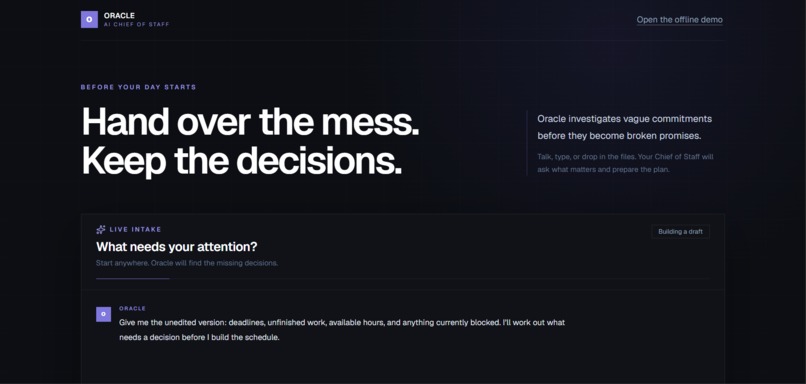
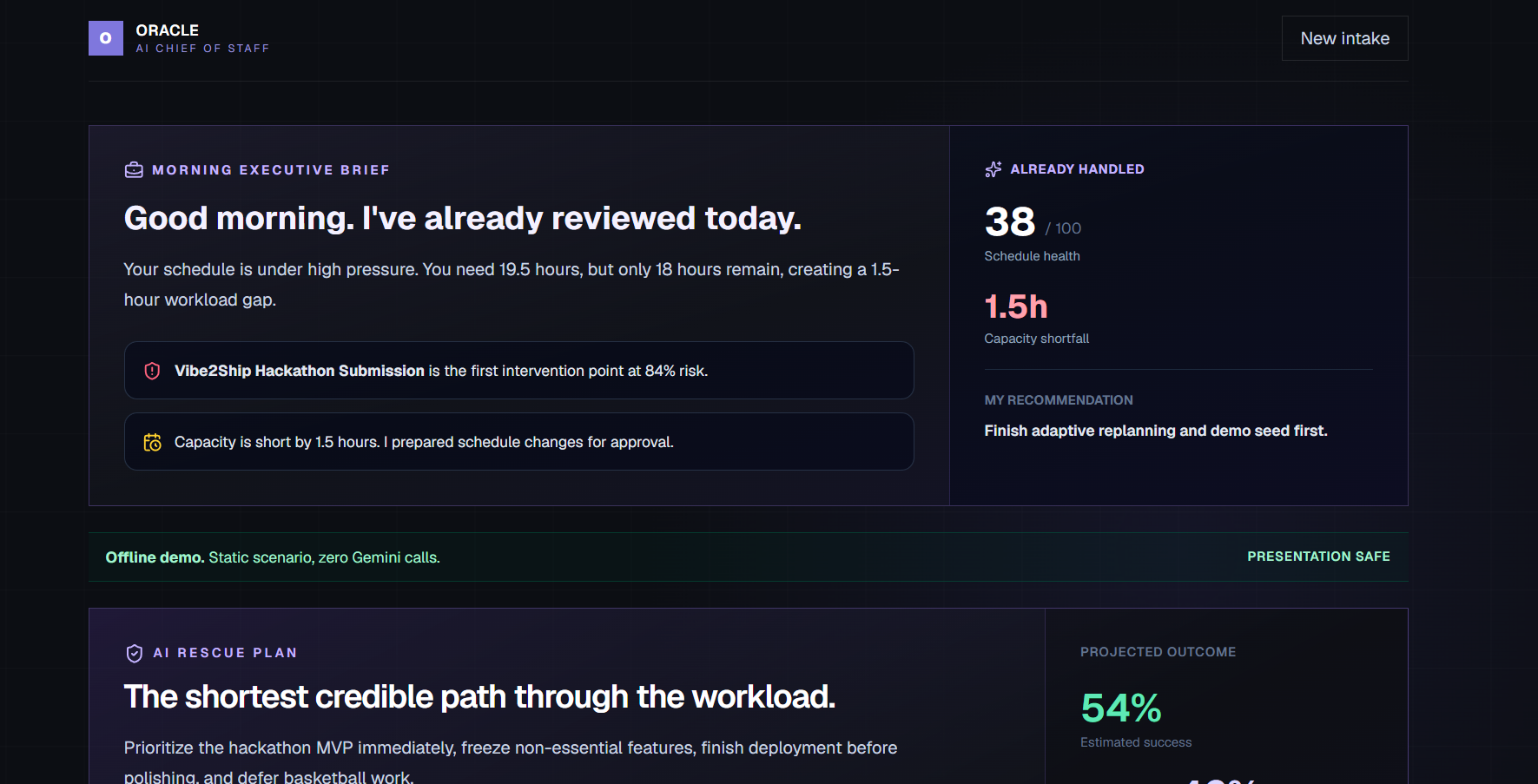
Landing page
-
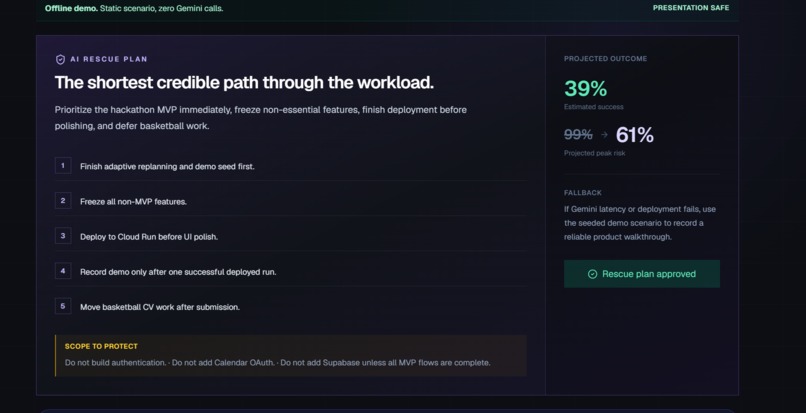
AI Agent reviews schedule, handles tasks that it can and generates automated summary every morning
-
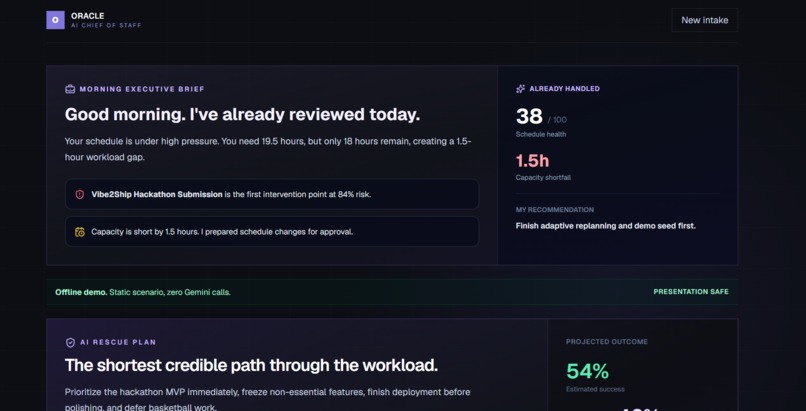
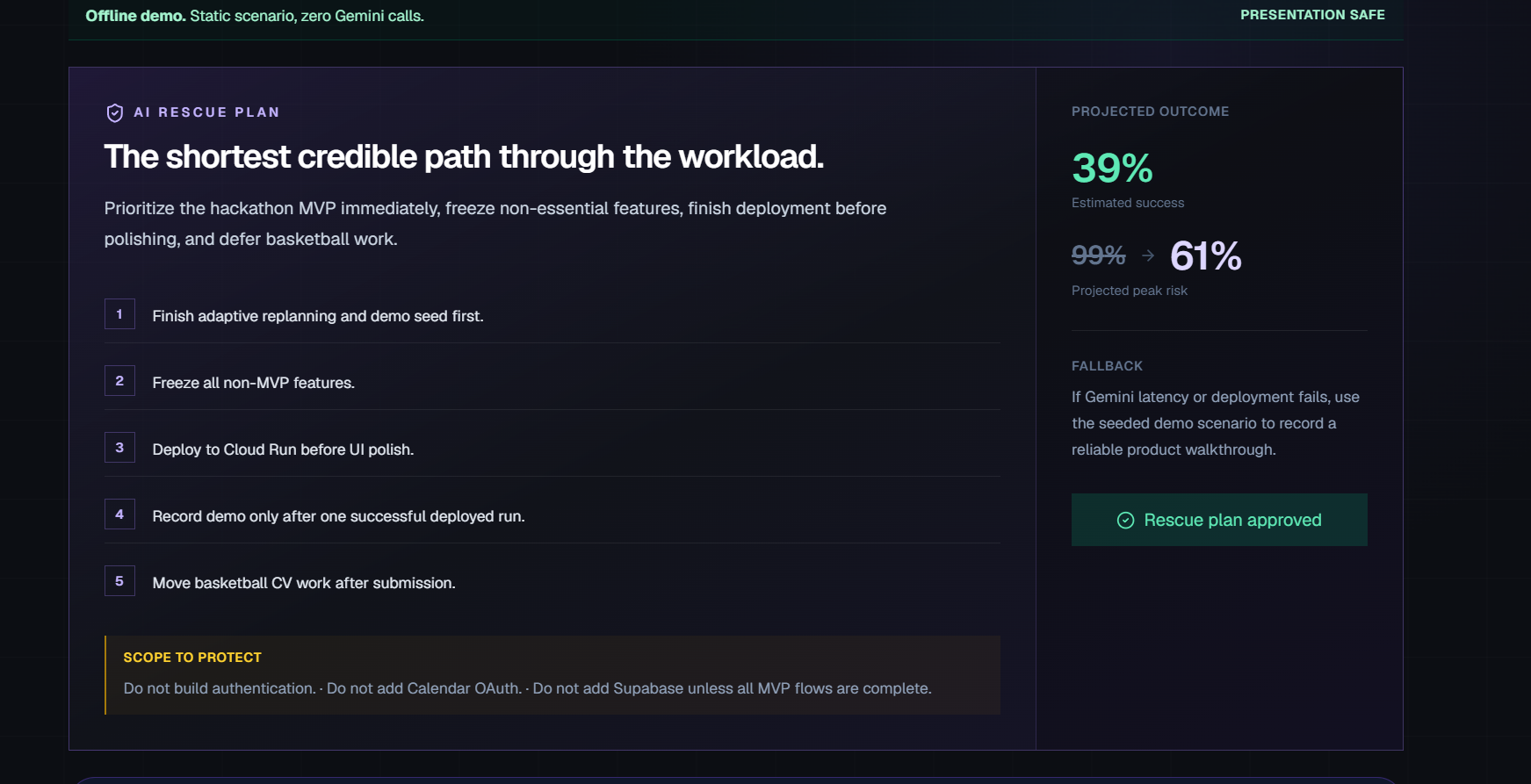
AI rescue plan provides ready plan of action with actionable insights
-
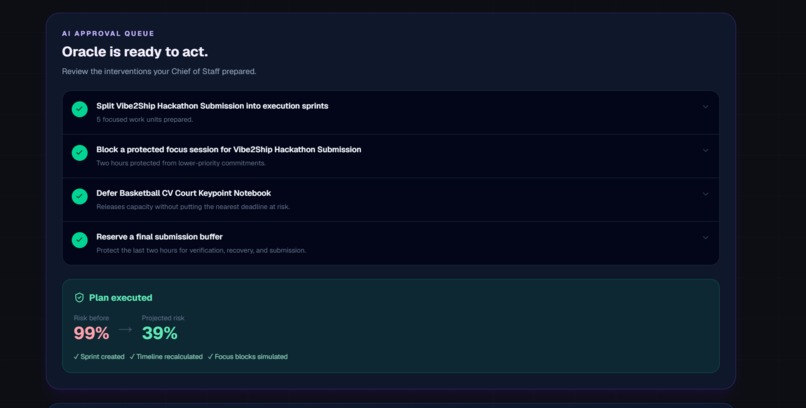
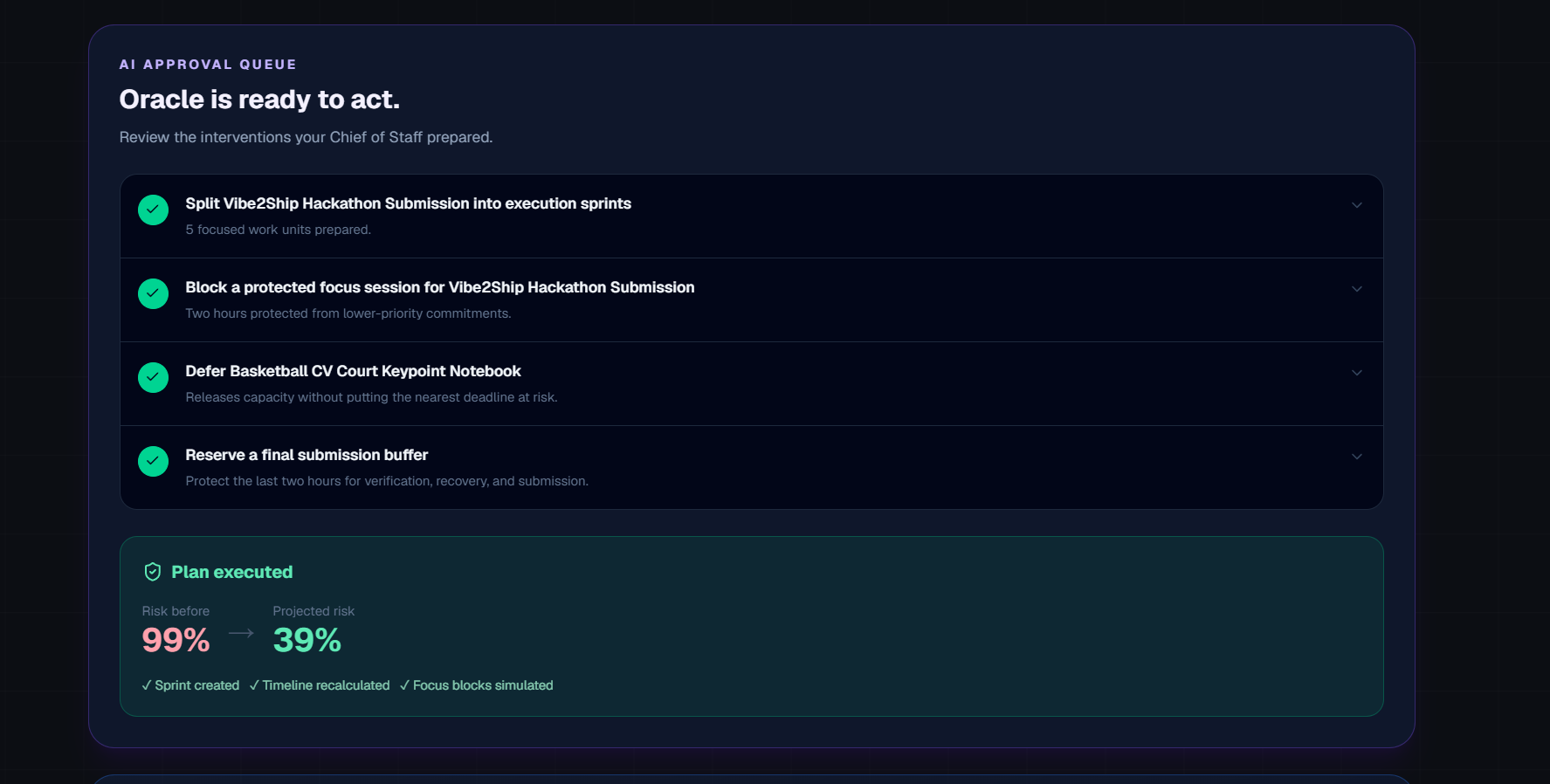
AI approval queue performs your tasks for you to save time and increase efficiency
-
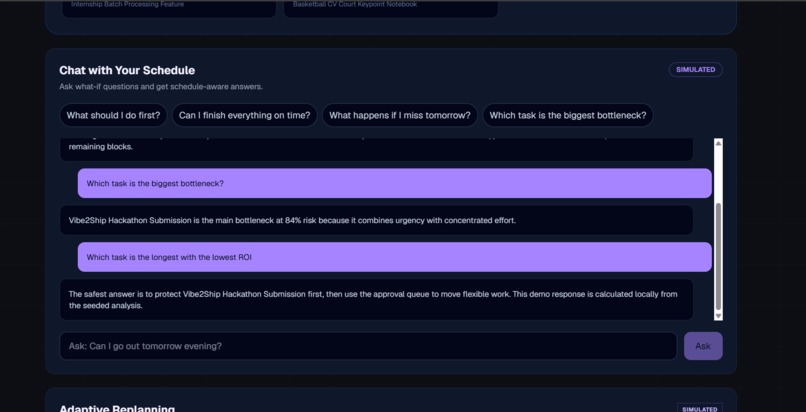
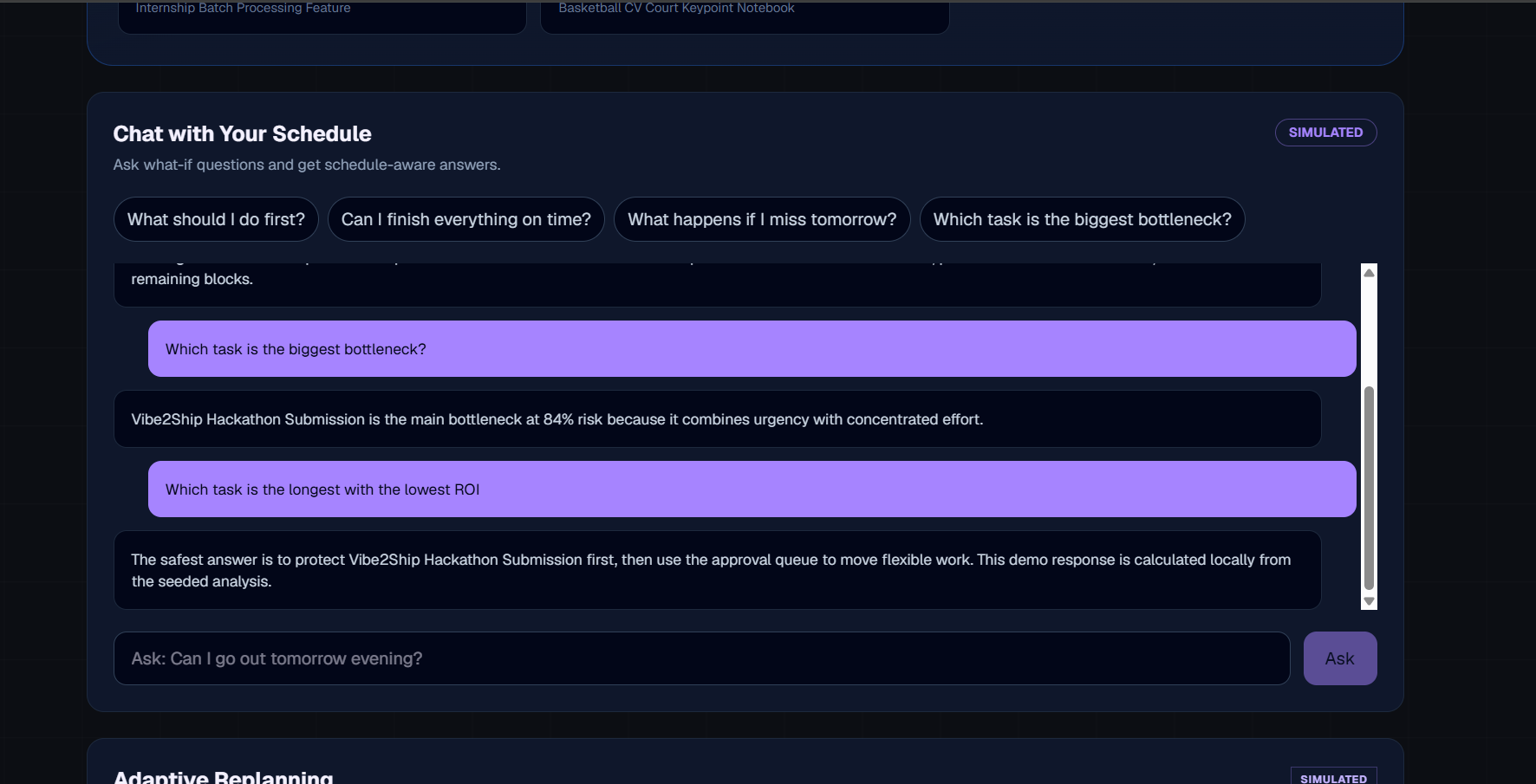
Integrated AI chatbot - now you can chat with your schedule, ask questions and make changes
-
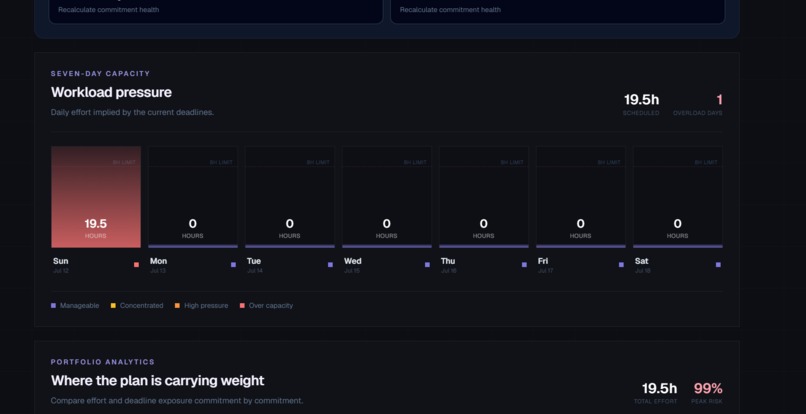
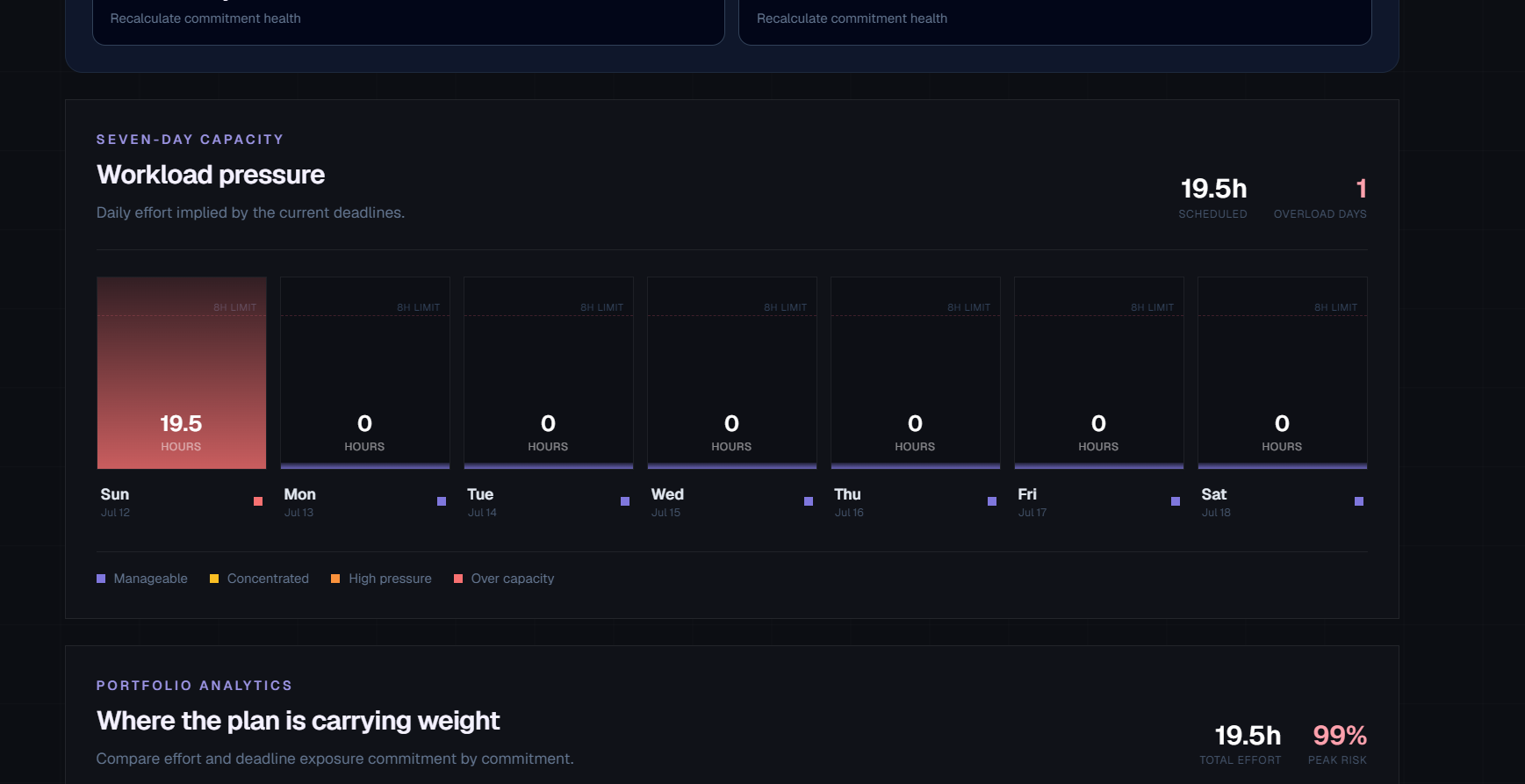
7 day mapped AI workload
-
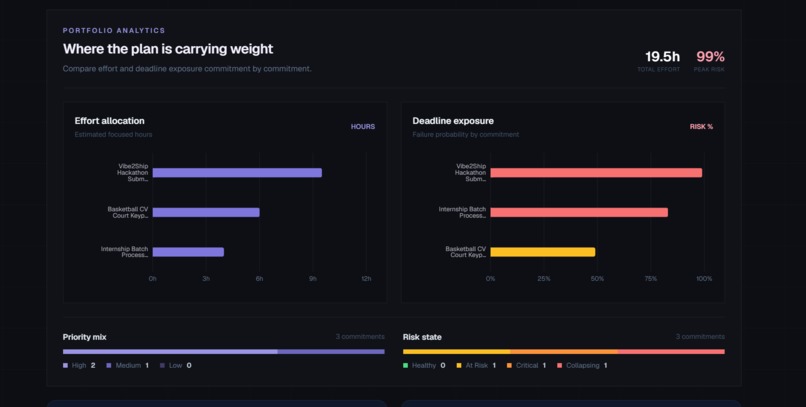
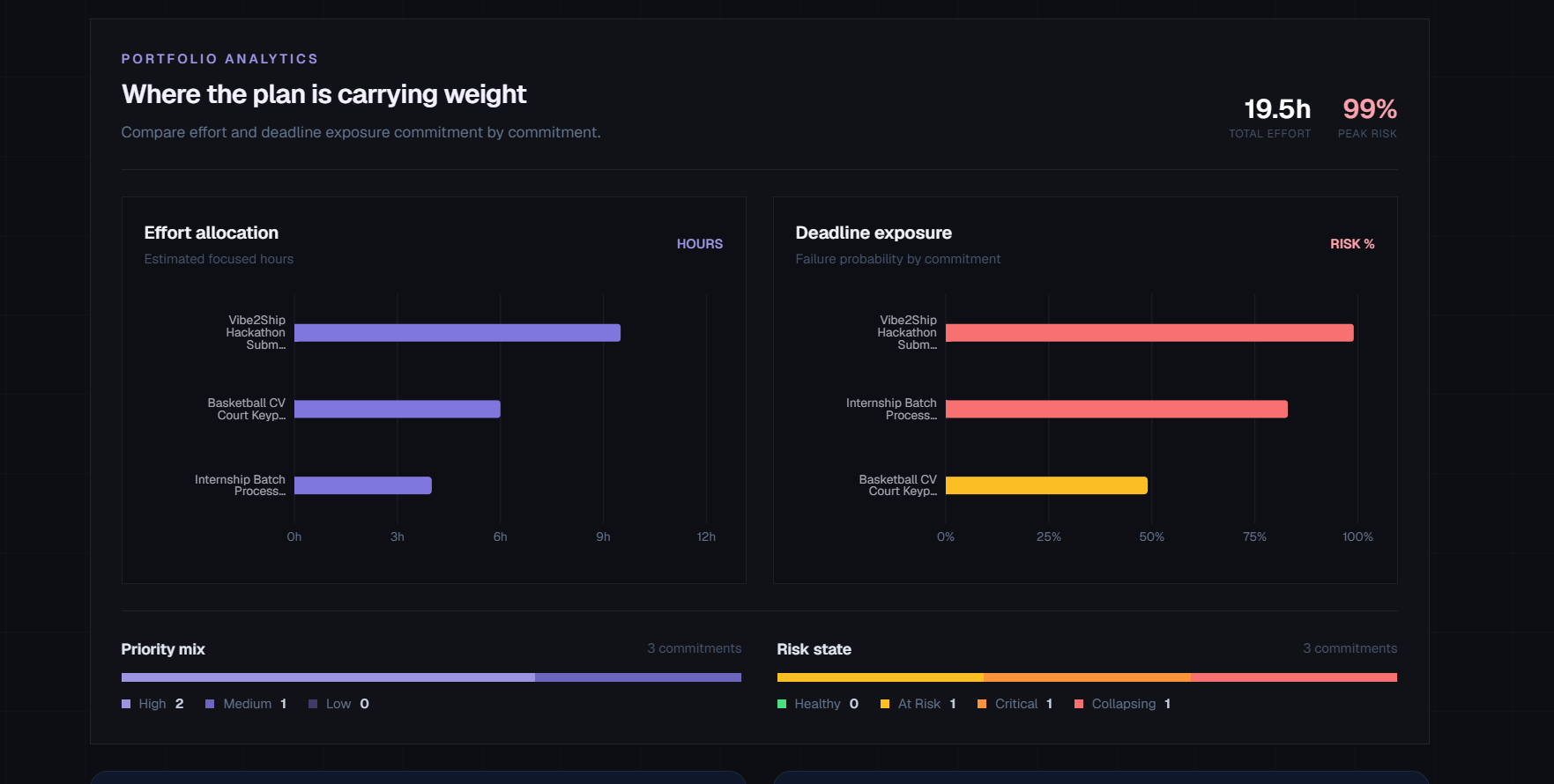
Risk vs hours plotting for every single task
Inspiration
Like many students, I often found myself procrastinating until deadlines were dangerously close. The problem wasn't that I didn't know what I had to do—it was that I underestimated how much work everything would take, failed to see deadline collisions early enough, and only realized I was in trouble when it was already too late.
Existing productivity tools simply store tasks. They don't think. They don't tell you which commitment is most likely to fail, how your workload compares to your actual capacity, or what decisions you should make to rescue your schedule.
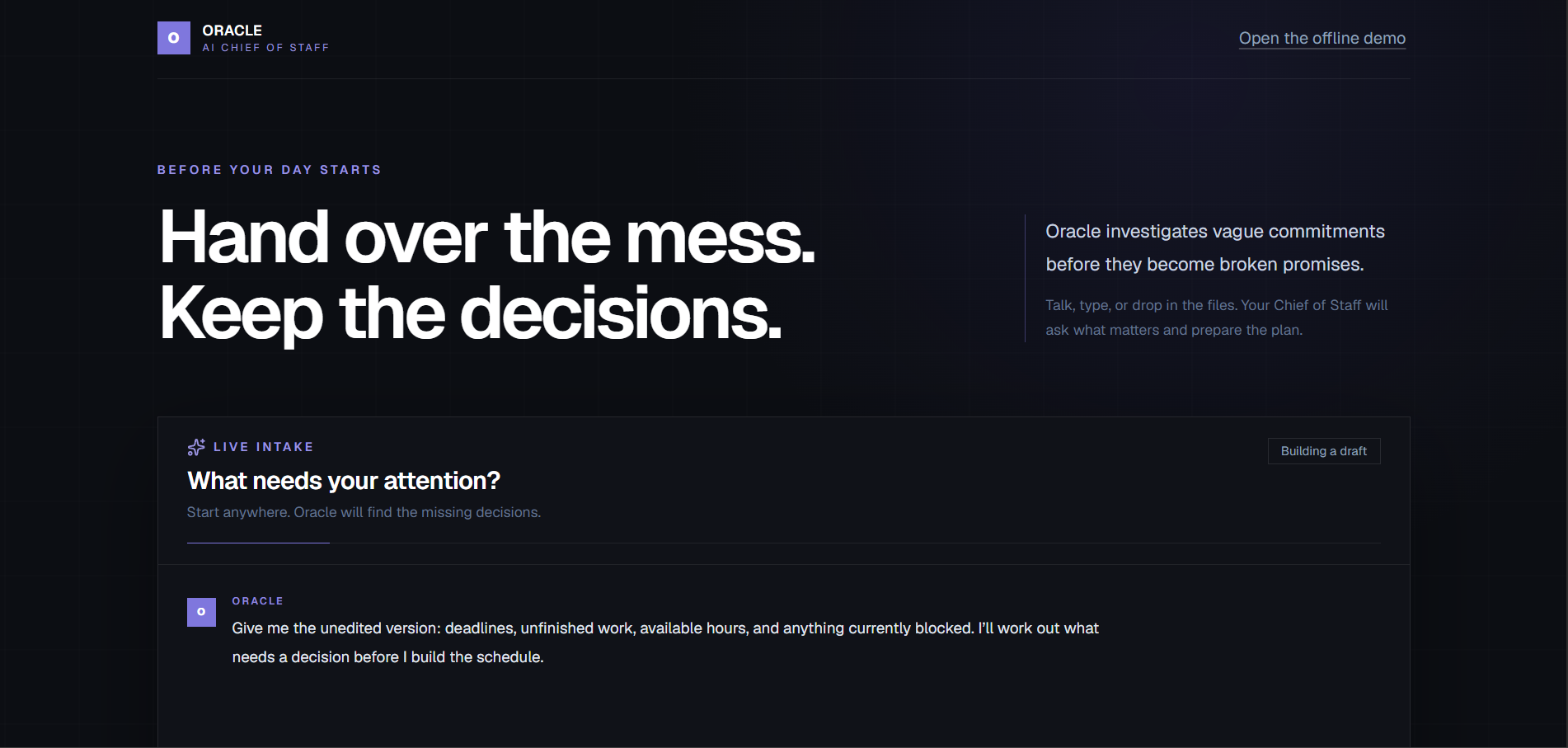
We wanted to build an AI Chief of Staff rather than another to-do list—an intelligent system that understands vague commitments, predicts future deadline failures, negotiates trade-offs, and actively helps users recover before they fall behind.
What it does
Oracle Deadline AI is an AI-powered executive planning system that transforms messy, unstructured commitments into an actionable execution strategy.
Users can simply dump deadlines, assignments, voice notes, screenshots, or documents into Oracle. The system extracts commitments, estimates effort, predicts deadline risk, detects workload collisions, and generates an optimized rescue plan tailored to the user's available time.
Key capabilities include:
AI conversational intake that converts vague task dumps into structured commitments Automatic task decomposition into executable work units Deadline risk prediction and workload health scoring Capacity planning and seven-day workload forecasting Collision detection between overlapping commitments AI-generated rescue plans with prioritization and scope reduction suggestions Multi-agent decision making (Parser, Triage, Risk, Collision, Rescue, Replanning) Approval queue before any schedule changes are made Google Calendar schedule generation Adaptive replanning whenever priorities or circumstances change Interactive schedule-aware chatbot for "what-if" scenarios
Instead of merely organizing tasks, Oracle actively helps users make better decisions before deadlines become crises.
How we built it
Oracle was built as a full-stack AI-native web application using modern Google AI technologies.
Our frontend was developed using Next.js, React, TypeScript, Tailwind CSS, and Framer Motion to create an executive-style dashboard focused on decision making rather than task management.
The backend leverages Google Gemini as the reasoning engine responsible for:
extracting commitments from natural language estimating task effort determining confidence scores identifying ambiguities generating subtasks recommending recovery strategies
The system then processes this information through a custom planning pipeline consisting of specialized agents:
Parser Agent Triage Agent Risk Agent Collision Agent Rescue Agent Replanning Agent
Each agent contributes a specific part of the planning process before Oracle synthesizes everything into a unified execution strategy.
Additional integrations include:
Google Calendar planning Voice-based task intake File upload support Interactive risk simulation Portfolio and workload analytics Adaptive schedule replanning
The application is deployed on Google Cloud Run, enabling a production-ready deployment on Google Cloud.
Challenges we ran into
The biggest challenge wasn't building another planner—it was deciding how much information Oracle actually needs before it can generate a reliable plan.
Initially, our AI asked far too many follow-up questions. While this improved planning accuracy, it also created friction and caused users to lose interest before the analysis even began.
We redesigned the entire intake process to identify only the minimum set of information required for high-confidence planning while intelligently inferring everything else.
Other challenges included:
Estimating effort from incomplete user descriptions Predicting deadline failures despite uncertain information Balancing AI assumptions with user-provided facts Designing an interface that presents complex planning insights without overwhelming the user Creating a multi-agent workflow that feels explainable rather than opaque
Accomplishments that we're proud of
We're especially proud that Oracle feels fundamentally different from traditional productivity tools.
Rather than simply organizing tasks, Oracle actively reasons about commitments and recommends executive decisions.
Highlights include:
Built a complete AI Chief of Staff experience instead of a conventional planner Developed a multi-agent reasoning pipeline that explains why recommendations are made Implemented predictive deadline risk analysis rather than reactive task tracking Created adaptive replanning that recalculates schedules whenever circumstances change Combined conversational AI, workload forecasting, rescue planning, calendar generation, and schedule simulation into a single workflow Successfully deployed the application on Google Cloud with an end-to-end production workflow
What we learned
This project reinforced an important lesson:
People don't need another productivity app—they need better decisions.
We learned that AI creates the most value not by replacing calendars or task lists, but by acting as a reasoning partner that helps users make difficult prioritization decisions.
We also learned the importance of balancing intelligence with user experience. A highly accurate AI isn't useful if users abandon it halfway through the conversation. Designing concise conversational flows became just as important as designing the underlying AI system.
Finally, building Oracle taught us how to orchestrate multiple AI reasoning stages into a coherent, explainable planning experience rather than relying on a single prompt.
What's next for Oracle Deadline AI
Our vision is to evolve Oracle into a true autonomous Chief of Staff.
Future plans include:
Full Google Calendar write integration with live schedule synchronization Gmail integration for automatically extracting commitments from emails Google Drive and Docs integration for assignment and project understanding Continuous background monitoring that proactively detects new risks Smarter adaptive replanning based on completed or delayed work Team and collaborative planning with shared workload balancing Personalized effort estimation models that learn from each user's working style Long-term productivity analytics that identify recurring bottlenecks and procrastination patterns Mobile application with proactive notifications and AI coaching
Ultimately, we want Oracle to move beyond deadline management and become an intelligent executive assistant that continuously helps people make better decisions about their time before problems ever arise.
Built With
- framer
- gemini
- google-ai-studio
- google-calendar
- html5
- javascript
- next.js
- node.js
- npm
- react
- tailwind-css
- typescript

Log in or sign up for Devpost to join the conversation.