Inspiration
My inspiration for Oracle Buddies comes from the early internet era (i.e., webcore, desktop pets like Tamagotchis, Neko Cats, Clippy, etc... and that unique aesthetic that made technology feel personal). I’ve always been fascinated by early internet culture and I wanted to play around with the idea of merging old aesthetics with modern technologies.
I sought to blend modern AI tools with the nostalgia of these old-school design patterns, exploring how personification, embodiment and interaction modality can impact trust and emotional response toward AI.
At its core, this is a thought experiment:
- Does giving AI a “body” change how we relate to it?
- Does nostalgia soften skepticism?
- Does removing the modern chatbox reduce perceived authority?
- Is making the user interact with it make you more attached and humanize the AI?
- etc... For me, this is a live research experiment, testing how these design choices influence human-AI relationships.
What it does
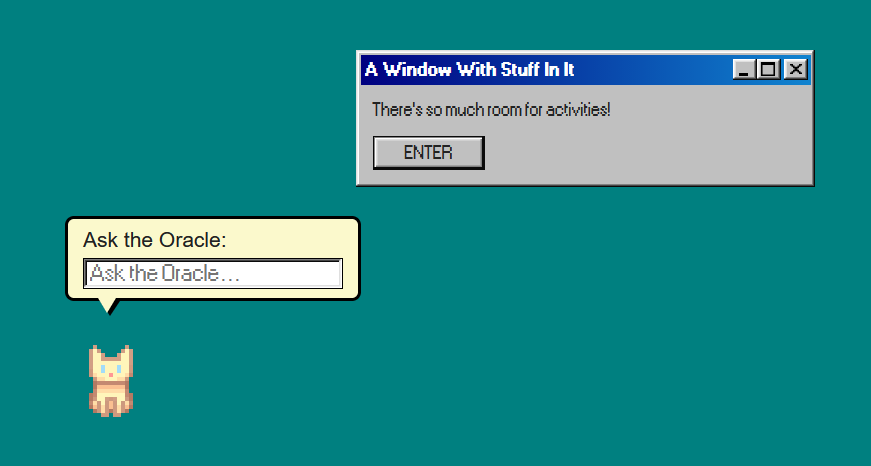
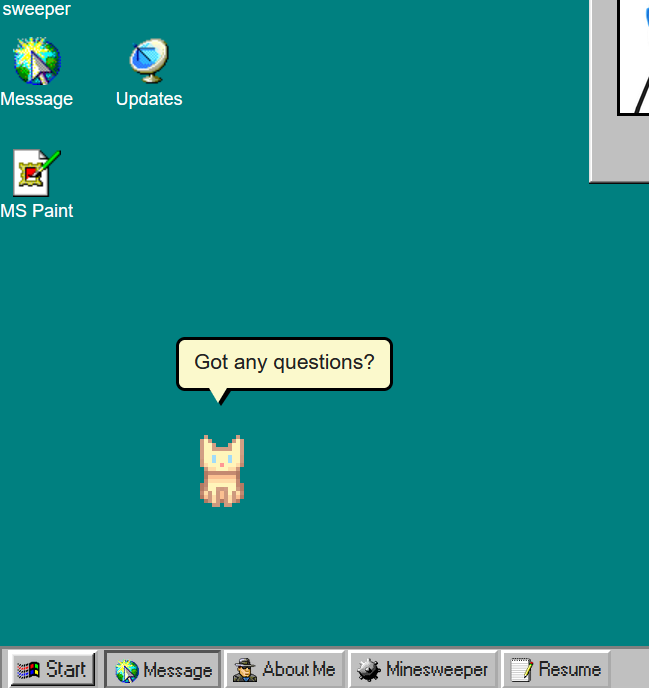
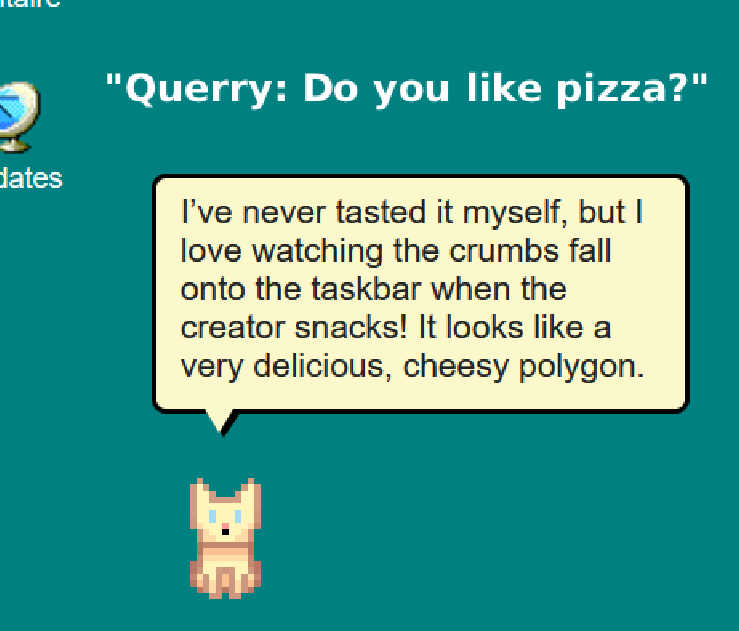
Oracle Buddies brings the charm of late-90s desktop assistants into the modern era. The project features an interactive AI assistant, presented not through a traditional chat interface but as a character that moves, reacts, and speaks in a playful, endearing way.
The assistant mimics the tone of early internet helpers like Clippy, but with a twist: it’s powered by modern LLMs and text-to-speech technology, allowing for richer, more dynamic interactions. This is less of a productivity tool and more of a testbed for exploring how visual style, motion, and voice affect trust and emotional connection with AI.
How we built it
The project is built using HTML, CSS, and JavaScript, with custom sprite artwork and animation logic to give the character personality and movement.
- Google Gemini API powers the language generation, making the AI conversational and responsive.
- ElevenLabs handles the text-to-speech conversion, giving the assistant a voice that makes the interactions feel more human. The system is hosted on Vercel and used .Tech domain.
Challenges we ran into
One of the biggest challenges was working with APIs for the first time. I faced some initial hurdles in connecting the services, especially within the tight time constraints of the project. This forced me to simplify my original vision and focus on delivering a minimum viable product (MVP), but it was a valuable learning experience.
Balancing the nostalgic design with modern AI functionality was another challenge. Too much nostalgia could undermine the assistant’s trustworthiness, while too little could make it feel disconnected from its playful roots.
Accomplishments that we're proud of
- Built a full AI-powered interactive experience solo in 24 hours
- Successfully combined retro UI design with modern LLMs and real-time TTS to create a unique user experience.
- Custom movement and animation added personality to the AI character, enhancing the emotional connection with users. (Thanks https://pop-shop-packs.itch.io/cats-pixel-asset-pack)
- Transitioned from a conceptual idea to a working MVP, making it a functional, engaging experience.
What we learned
This project reinforced just how much interface design affects how we perceive AI. Even with the same underlying intelligence, the way it’s presented (through visual design, voice, and movement) dramatically influences how capable, reliable, and trustworthy users find it.
What's next for Oracle Buddies
Going forward, there’s a lot of room for improvement and iteration. I plan to:
- Add multiple personalities to the AI, allowing for different modes of interaction.
- Experiment with different visual metaphors to test how design affects the emotional impact—ranging from friendly helpers to more unsettling assistants.
- Incorporate more expression, emotion, and features, enhancing the overall experience.
- Make the project open-source, allowing others to use it for their own websites and further explore human-AI relationships. This is just the beginning, and I’m excited to see how it evolves!
Built With
- css
- elevanlabs
- gemini
- html
- javascript
- vercel


Log in or sign up for Devpost to join the conversation.