Inspiration
Underground mines already collect a lot of sensor data: air quality, equipment activity, ventilation, worker presence, and environmental conditions. The problem is that this data often appears as raw numbers on dashboards, leaving operators to interpret risk under pressure.
OreAcle AI was inspired by a simple question: what if a mine safety dashboard could not only show data, but explain what is wrong, why it matters, and what action should be taken next?
What it does
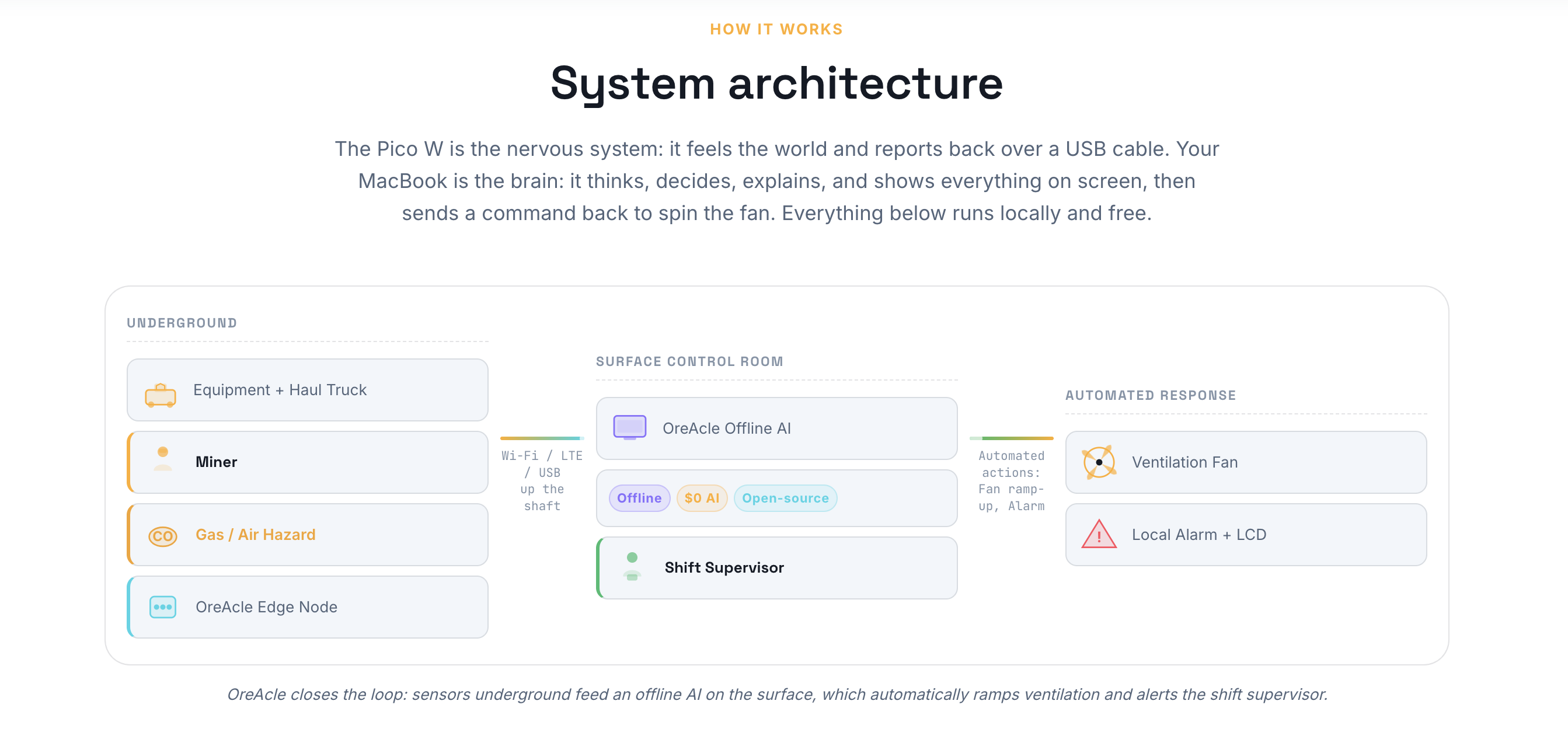
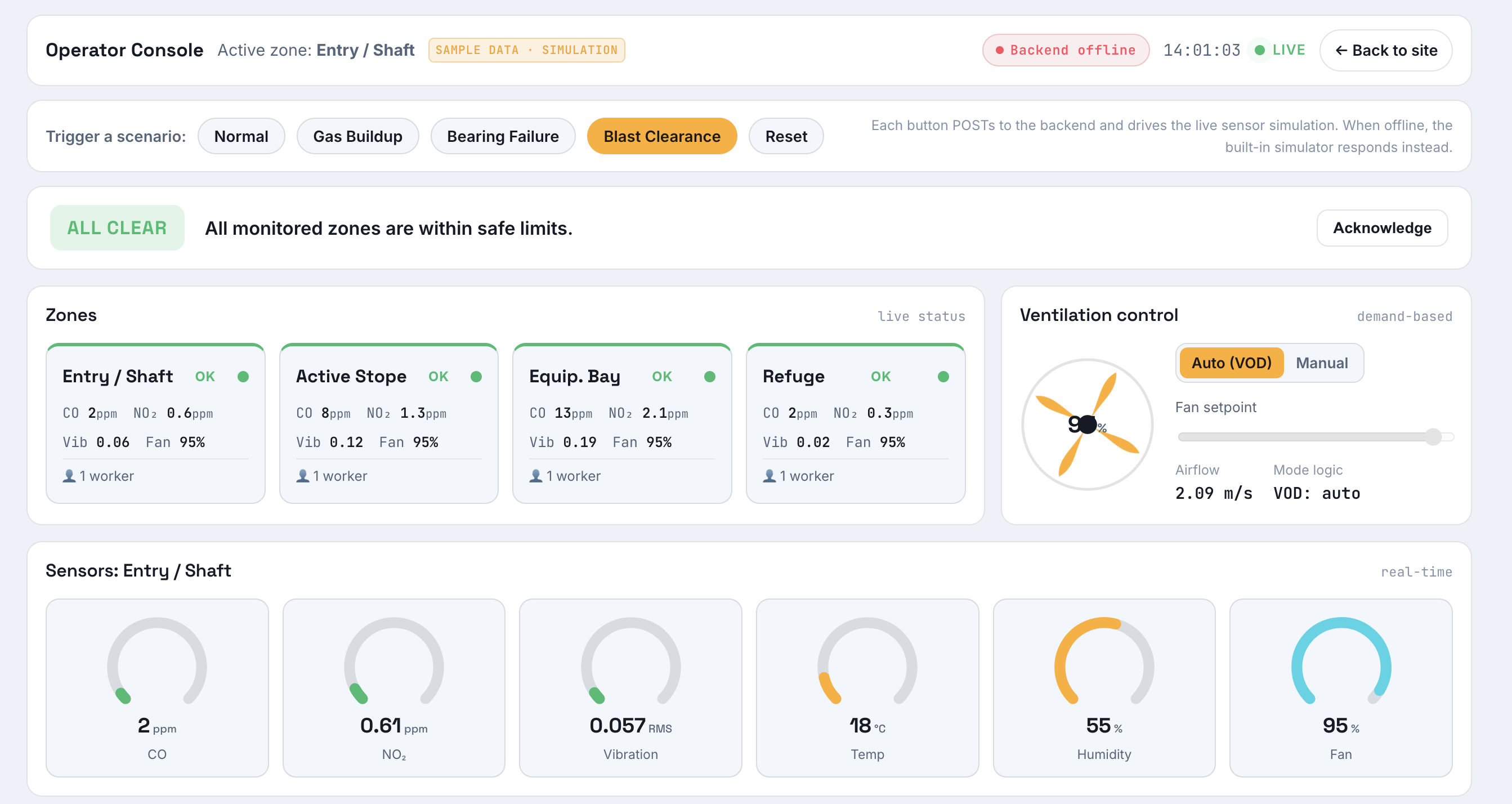
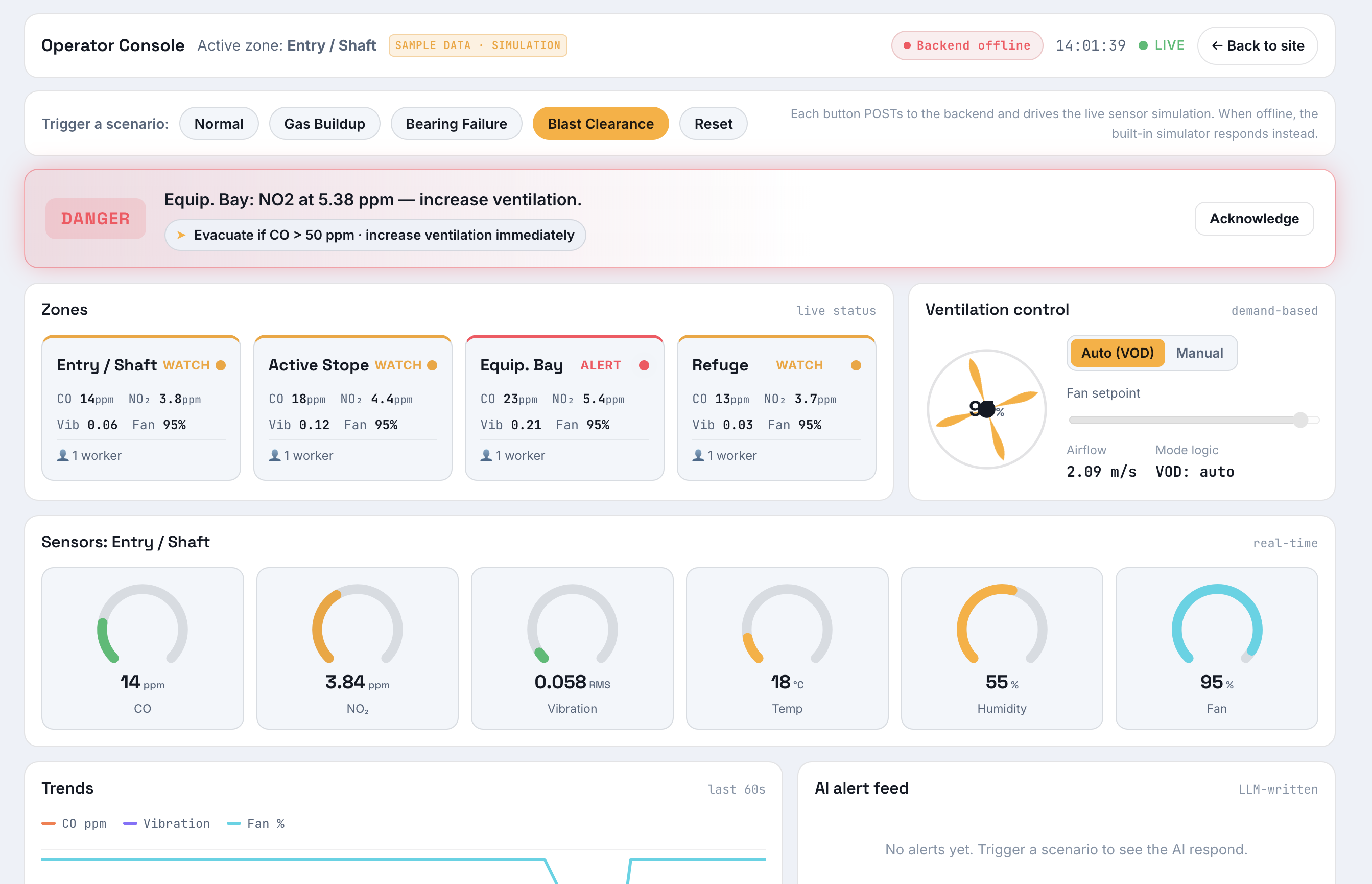
OreAcle AI is a local-first AI safety co-pilot for underground mines. It monitors simulated mine-zone telemetry such as CO, NO2, airflow, vibration, temperature, humidity, occupancy, and fan percentage. When risk increases, the system escalates the zone status from OK to WATCH or ALERT, increases ventilation recommendations, and generates plain-English safety guidance for an operator.
The demo includes:
- A real-time Live Console for multiple underground mine zones
- Scenario triggers such as gas buildup, bearing failure, and blast clearance
- Safety-rule and anomaly-style detection logic
- Ventilation-on-Demand fan percentage recommendations
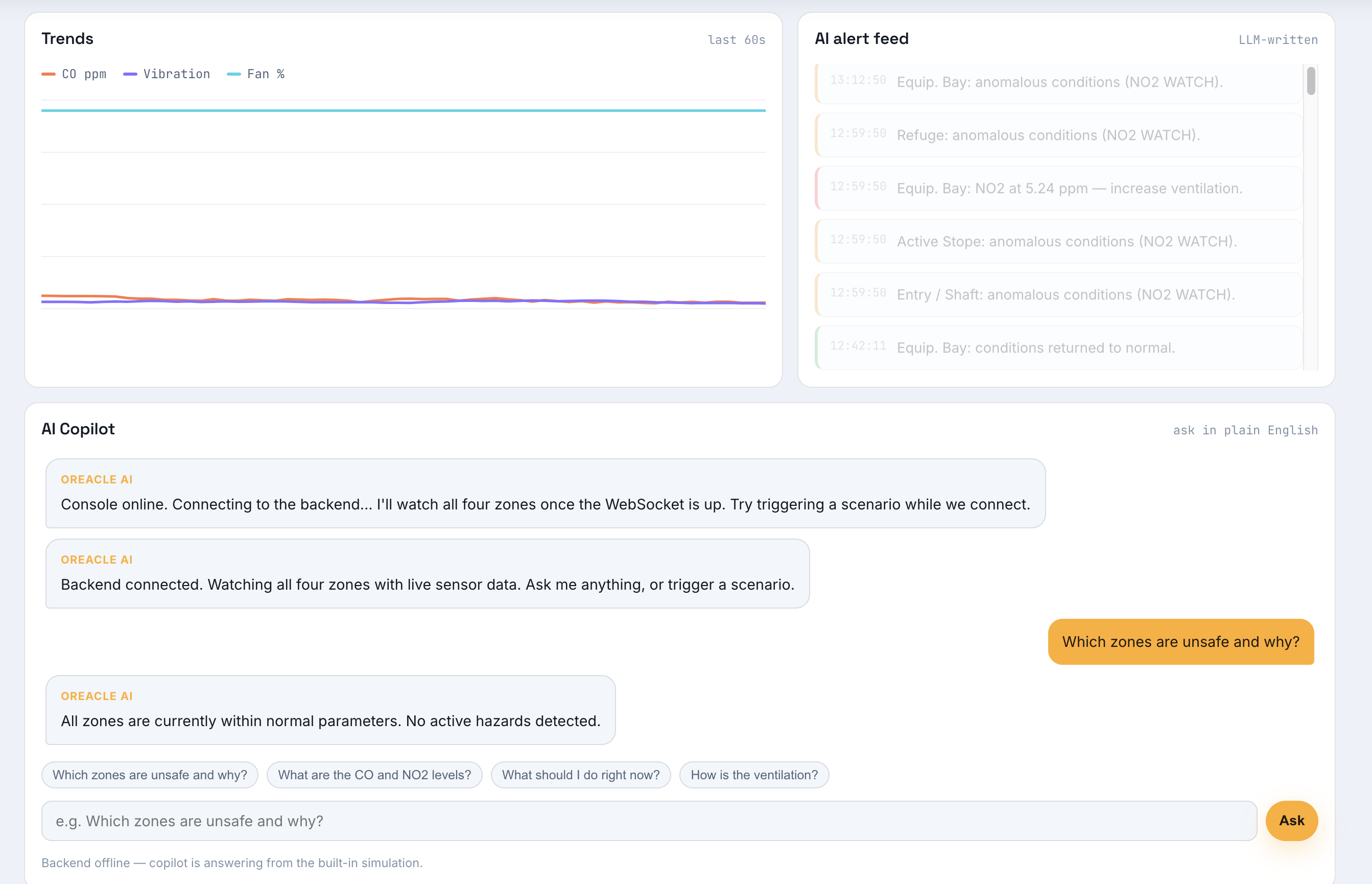
- An AI copilot that answers questions like “Which zones are unsafe and why?”
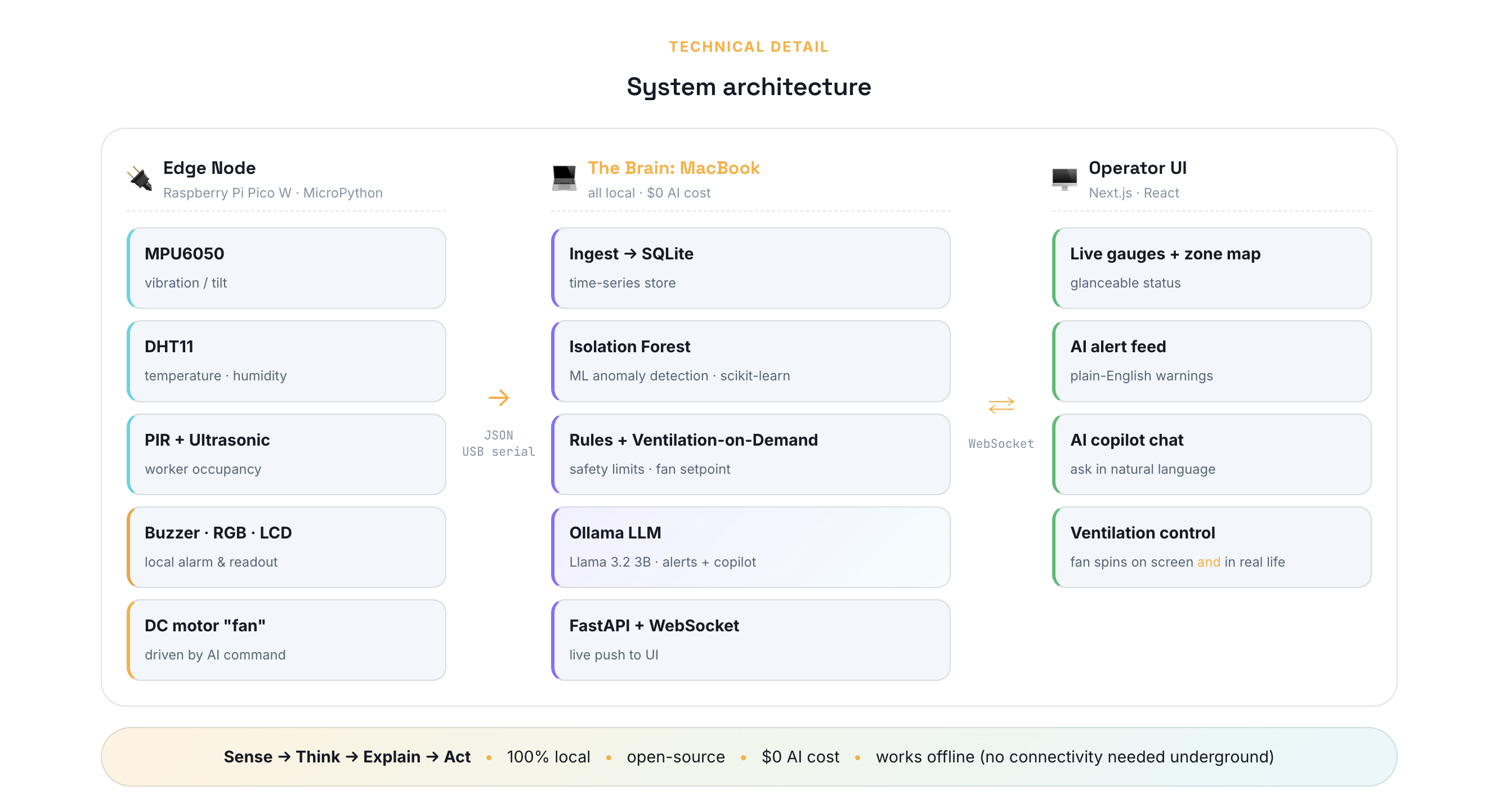
- A hardware proof-of-concept using a Raspberry Pi Pico W streaming OreAcle-compatible telemetry over USB
How we built it
OreAcle AI was built as a local web application with a Python backend and a browser-based frontend.
The backend uses FastAPI, WebSocket streaming, SQLite logging, safety assessment logic, and local AI response handling. The frontend shows the mine-zone dashboard, live alert feed, fan response, scenario controls, and copilot interaction.
For hardware validation, I used a Raspberry Pi Pico W as a physical edge node. The Pico runs MicroPython and streams JSON telemetry over USB using the same data contract as the software simulator. This proves that the simulator can be replaced by real mine sensors without redesigning the dashboard.
Challenges we faced
The biggest challenge was balancing ambition with reliability. A full mine safety system could include many sensors, physical fan control, gas sensors, LCDs, buzzers, and cloud integrations, but the hackathon timeline required a focused proof-of-concept.
To keep the demo reliable, I built the software simulator first so the safety scenarios are repeatable during judging. Then I added the Pico W hardware proof separately to show that the architecture is ready for real sensor input.
Another challenge was making the AI useful without overcomplicating the workflow. Instead of producing long generic responses, OreAcle focuses on short, operator-friendly explanations and clear recommended actions.
What we learned
I learned that the most important part of an industrial AI system is not just the model, but the full decision loop: sense, detect, explain, and act.
This project also reinforced that mining technology does not need another complicated dashboard. Operators need a system that is fast, understandable, and trustworthy under pressure.
What’s next
Next, I would integrate the Pico W hardware stream directly into the main Live Console, add real gas and airflow sensors, connect physical fan control, and expand the system into a multi-node edge network. In production, OreAcle AI could sit on top of existing mine sensor infrastructure and provide a vendor-neutral interpretation layer for safety, ventilation, and equipment-health decisions.

Log in or sign up for Devpost to join the conversation.