-
-
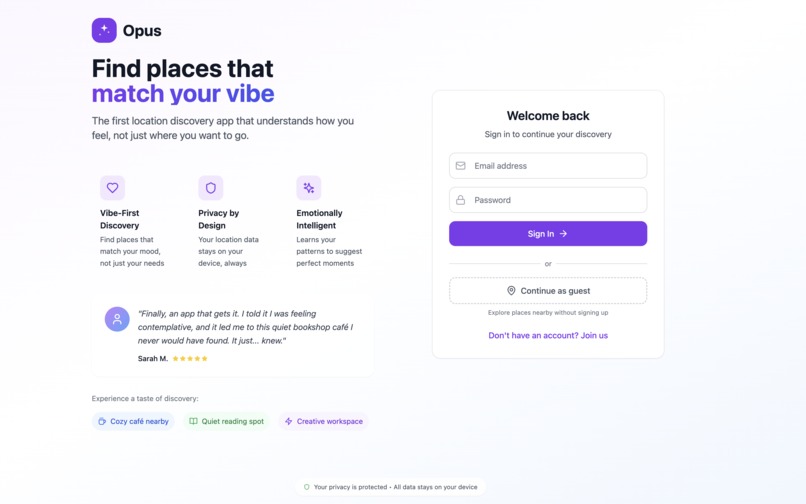
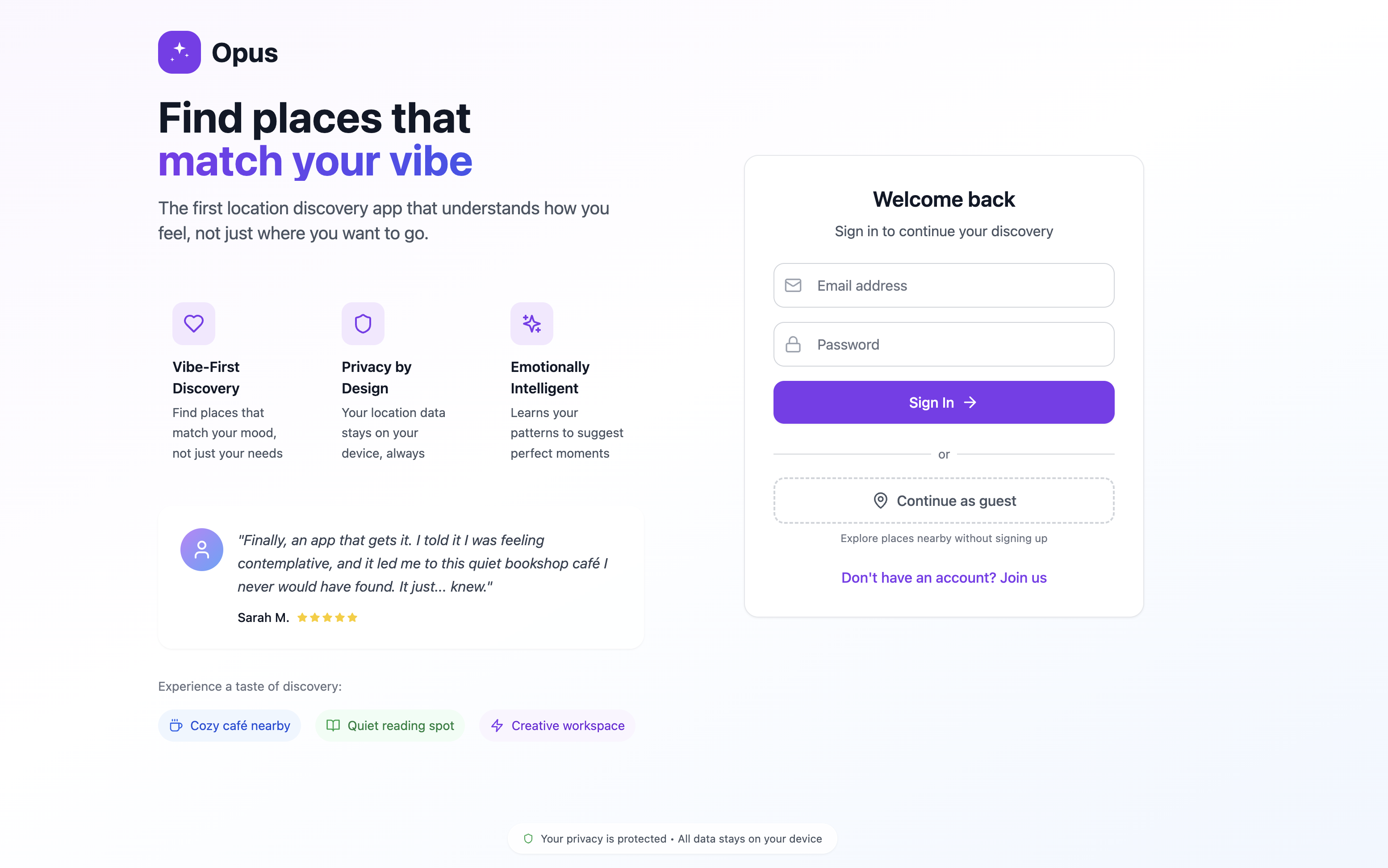
Landing Page + Sign In + Sign Up
-
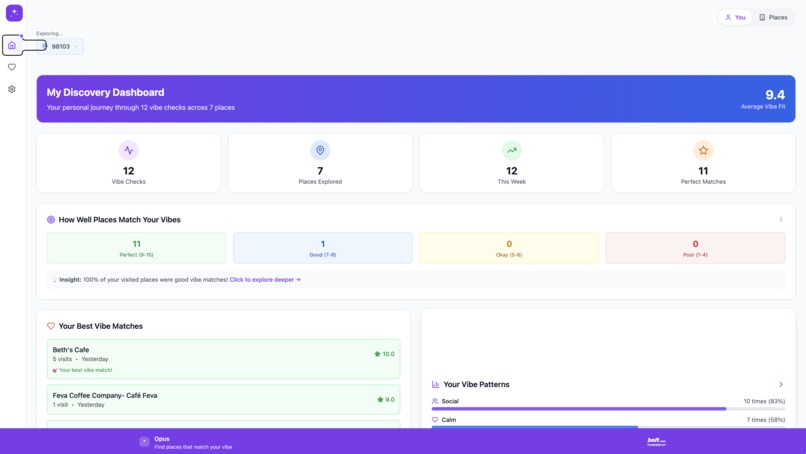
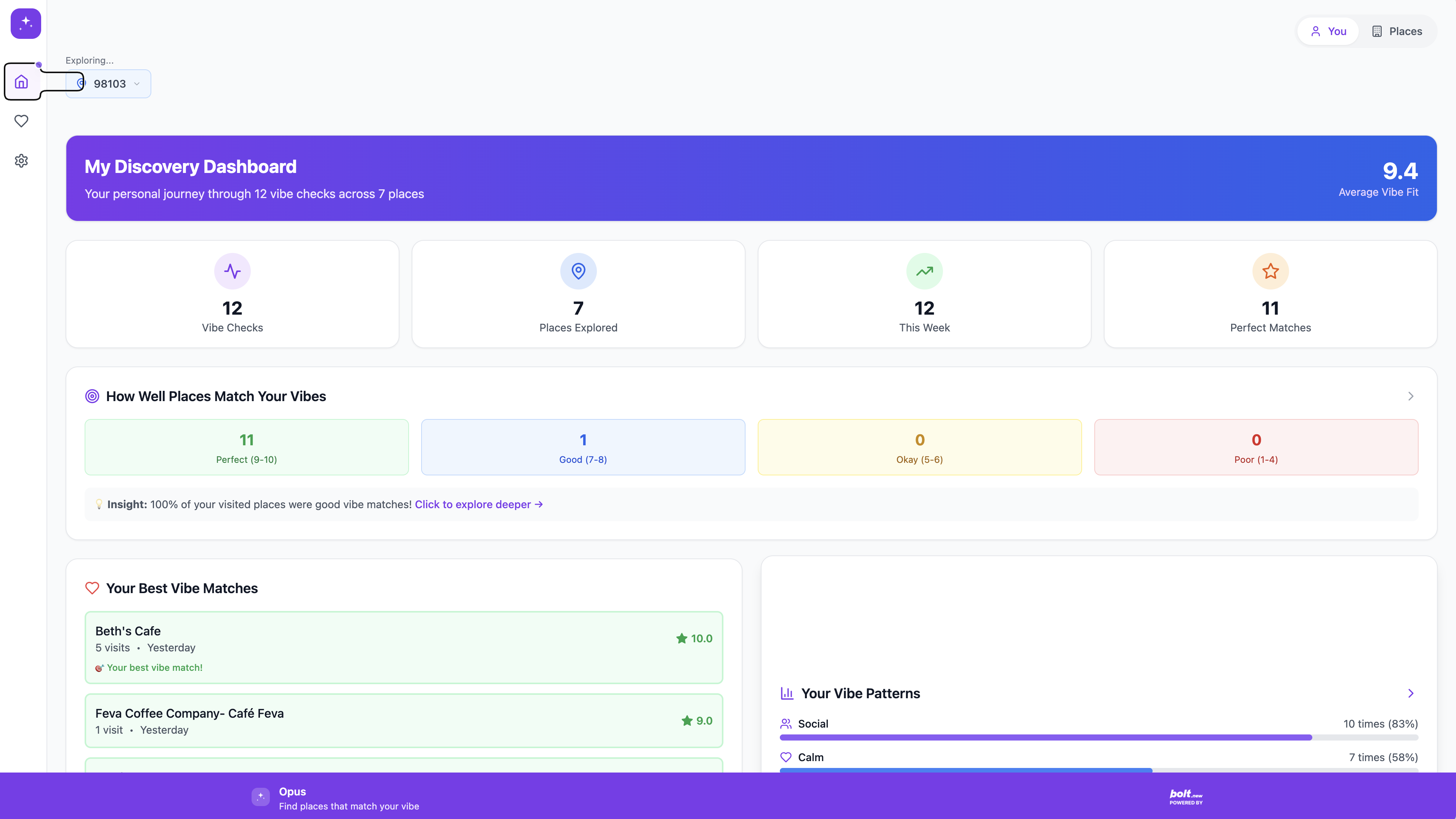
"My Places" Personal Vibe-Check Summary
-
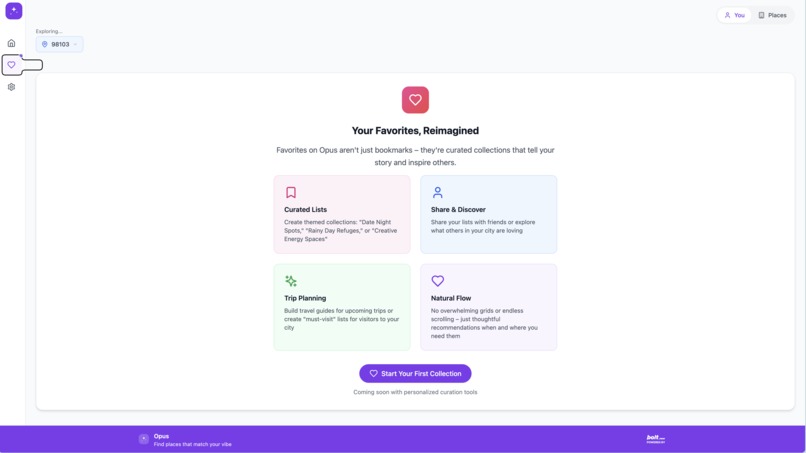
"Favorites" Concept coming soon

Inspiration
I built Opus for the part of me that's not just hungry or bored or caffeinated, but tuned into the spaces I go. The part of me that asks, "Where is the right place for today’s vibe?"
I've spent over 20 years in the hospitality industry in almost every role imaginable. I've had various versions of this idea for years — the hackathon gave me the excitement, courage, and tools to finally build it.
In cities overflowing with data but starved for resonance, I imagined a different kind of discovery tool. One that meets you where you're at. A guide that doesn't extract, but attunes. A soft-touch interface that invites you to calibrate your local journey based on how you actually feel — not what's trending.
Opus began as a question: What if presence could be mapped? Not just places, but patterns. Not just ratings, but relational fit.
What it does
Opus lets you share your current vibe. Maybe you're feeling calm, social, relaxed — and then it helps you discover places nearby that align with that energy.
You can vibe check any place, any time. Did the space support your mood? Was your vibe aligned with the place? This creates a map of vibe-matched experiences, built entirely from emotionally intelligent signals — not star ratings, not reviews, but human feeling.
Over time, Opus begins to reflect back something profound: Not just what's out there — but how it feels to you, specifically.
How we built it
I used a combination of:
• Bolt (with React + Tailwind) for the frontend • Client-side state management that prioritizes responsiveness • Plans for a lightweight backend to support vibe maps across devices • I wrote and recorded a tone-matched walkthrough using ElevenLabs to demonstrate what the app feels like in motion.
Challenges we ran into
• Creating a UI that doesn't feel “survey-like” or data-harvesty • Building something that learns without overreaching
Accomplishments that we're proud of
• Designing a vibe-check interface that feels intuitive, playful, and emotionally honest • Capturing the feeling of presence and resonance in a digital interaction • Creating a frictionless feedback loop between how you feel and where you go • Building solo, start to finish, in less than a month • Honoring both functionality and feeling — without compromising either
What we learned
After working on a dozen or more projects during the month, I know even more now than I did at the beginning that I’m just scratching the surface of what I’m learning.
What's next for Opus - Local Discovery Meets Presence
• Launching a private beta to test the vibe engine in real-world local spots • This is just the beginning. Presence isn't a trend. It's the missing layer. Opus is here to map it.
Built With
- bolt
- chatgpt
- customstack
- elevenlabs
- google-places
- javascript
- localstorage-(client-side)
- react
- tailwind-css
- vite

Log in or sign up for Devpost to join the conversation.