-
-
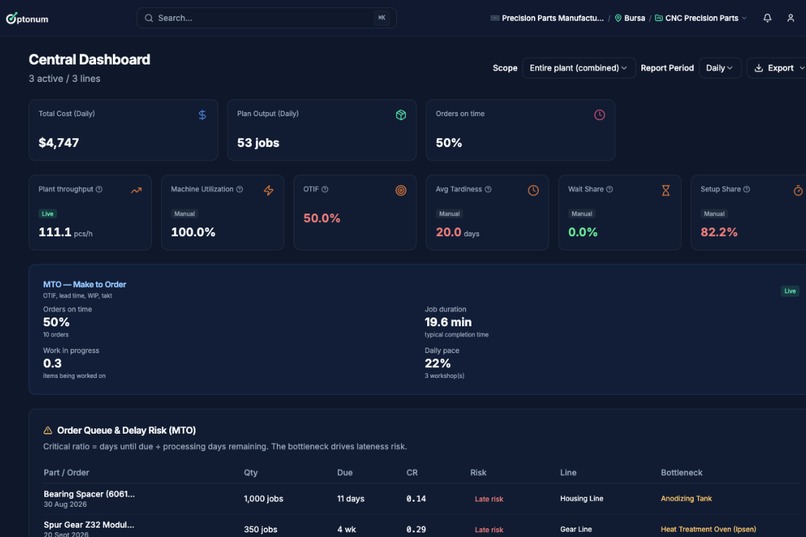
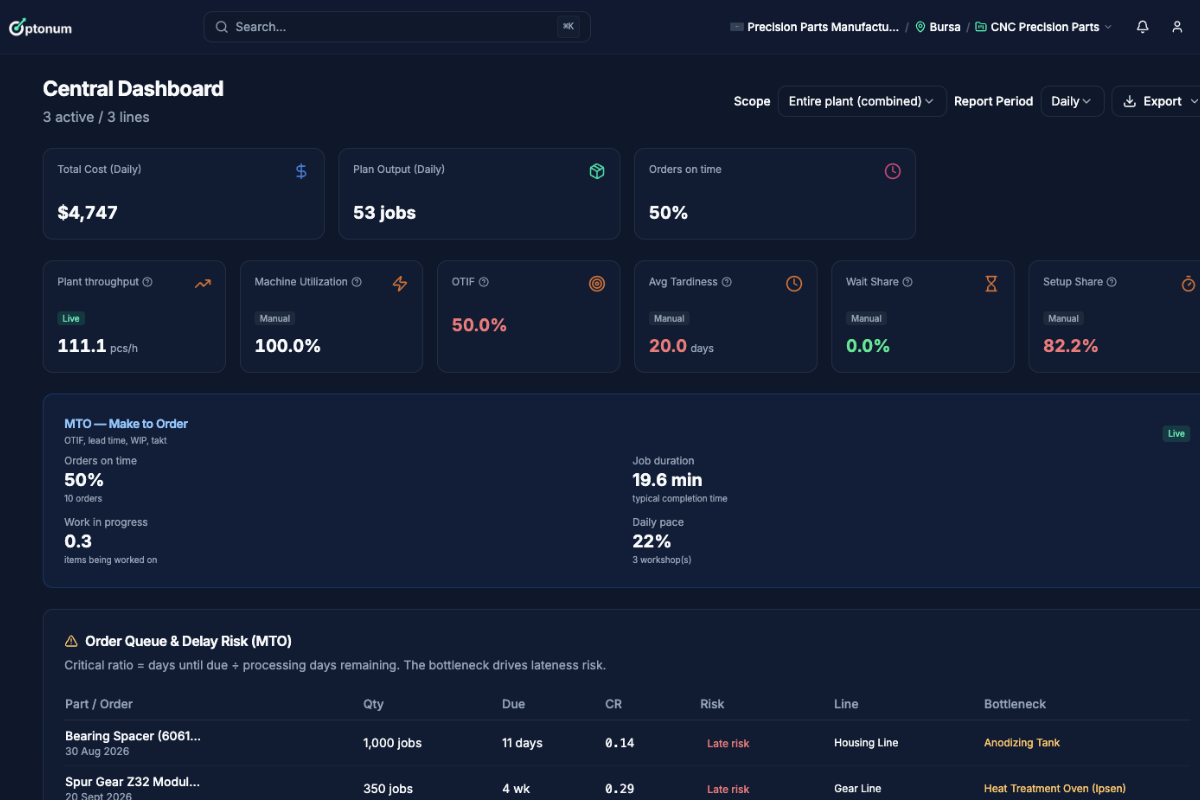
Central dashboard
-
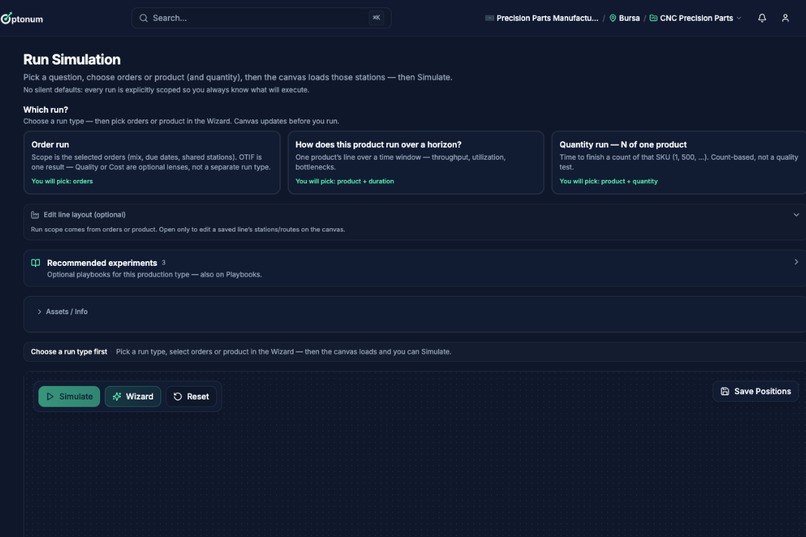
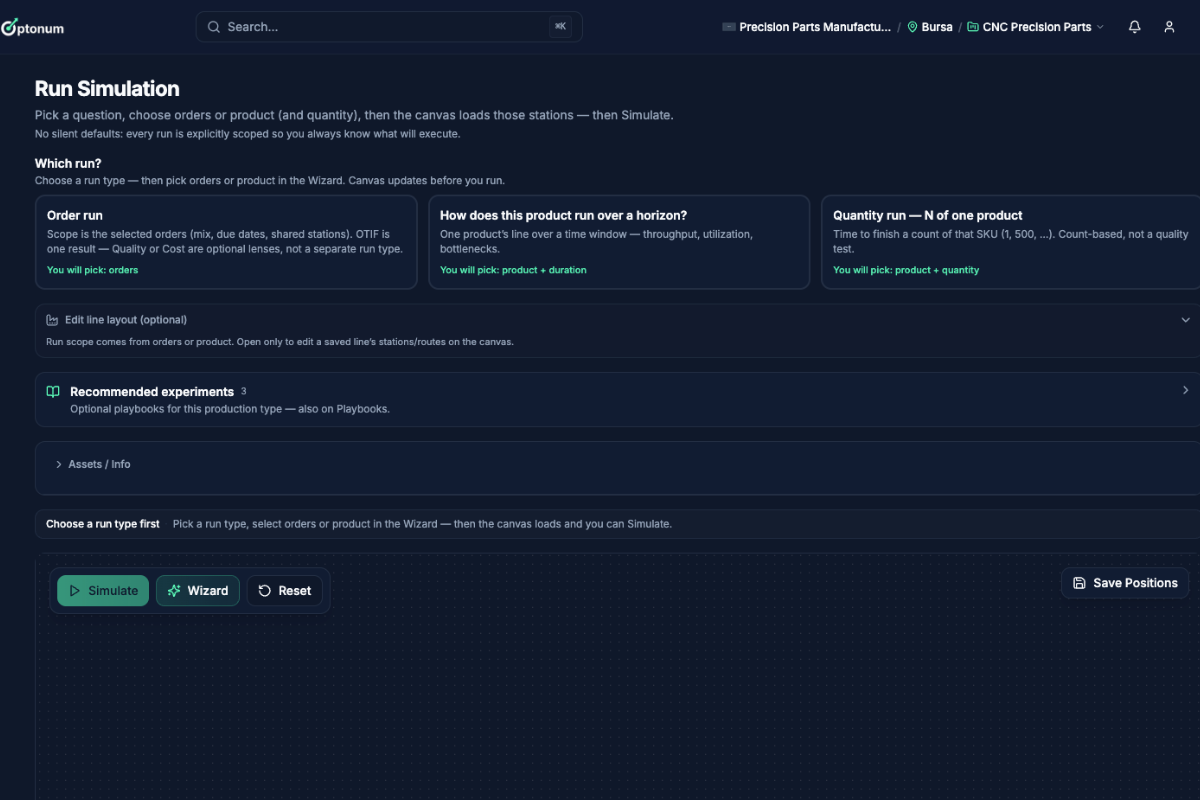
simulation page
-
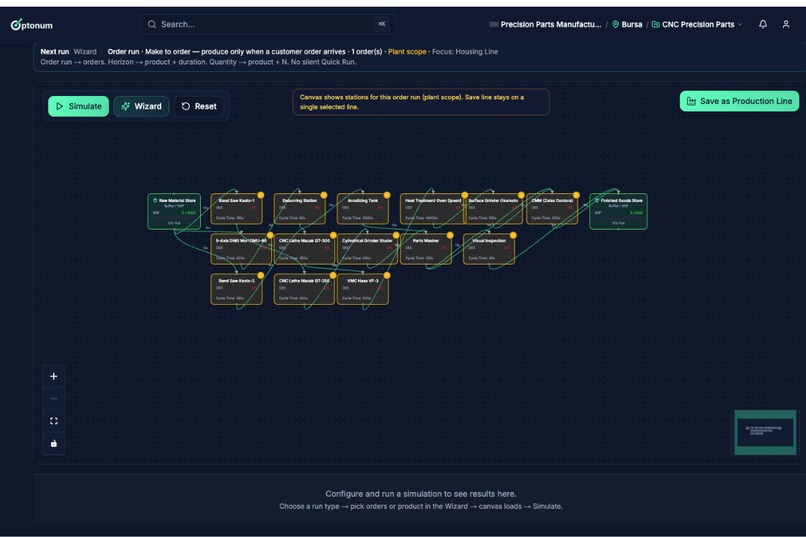
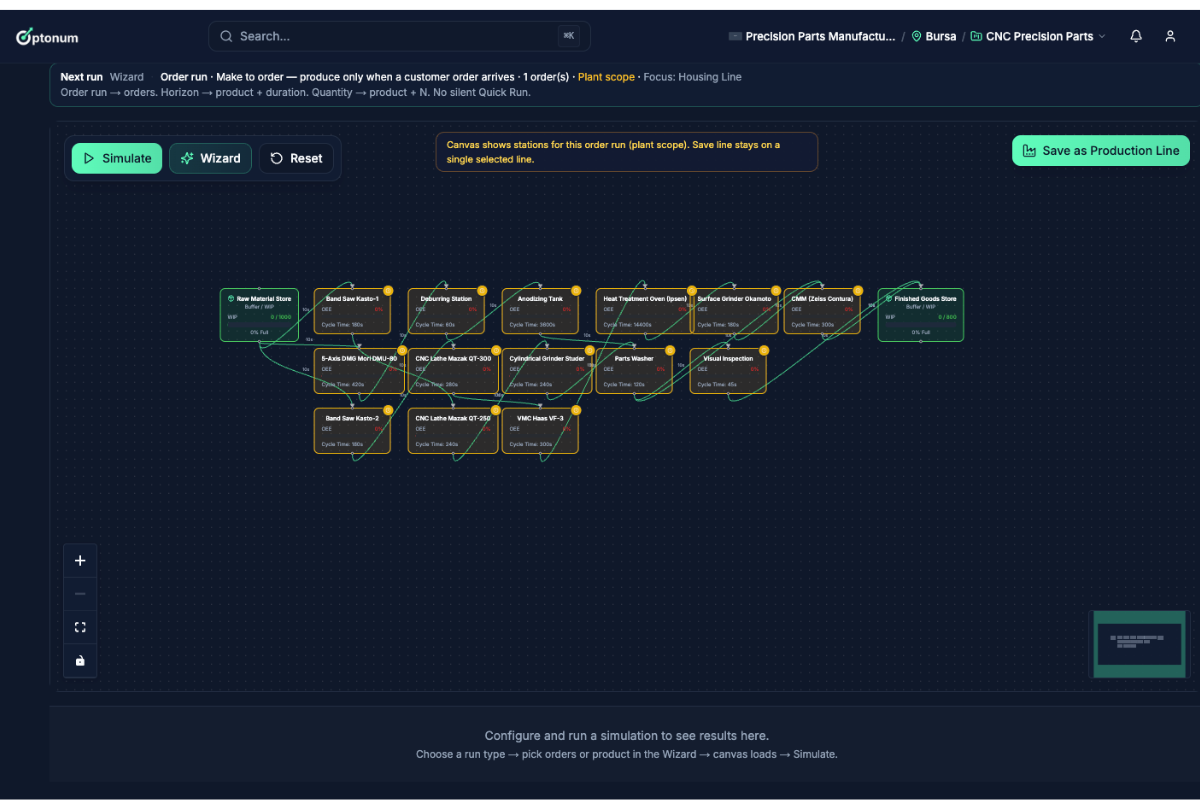
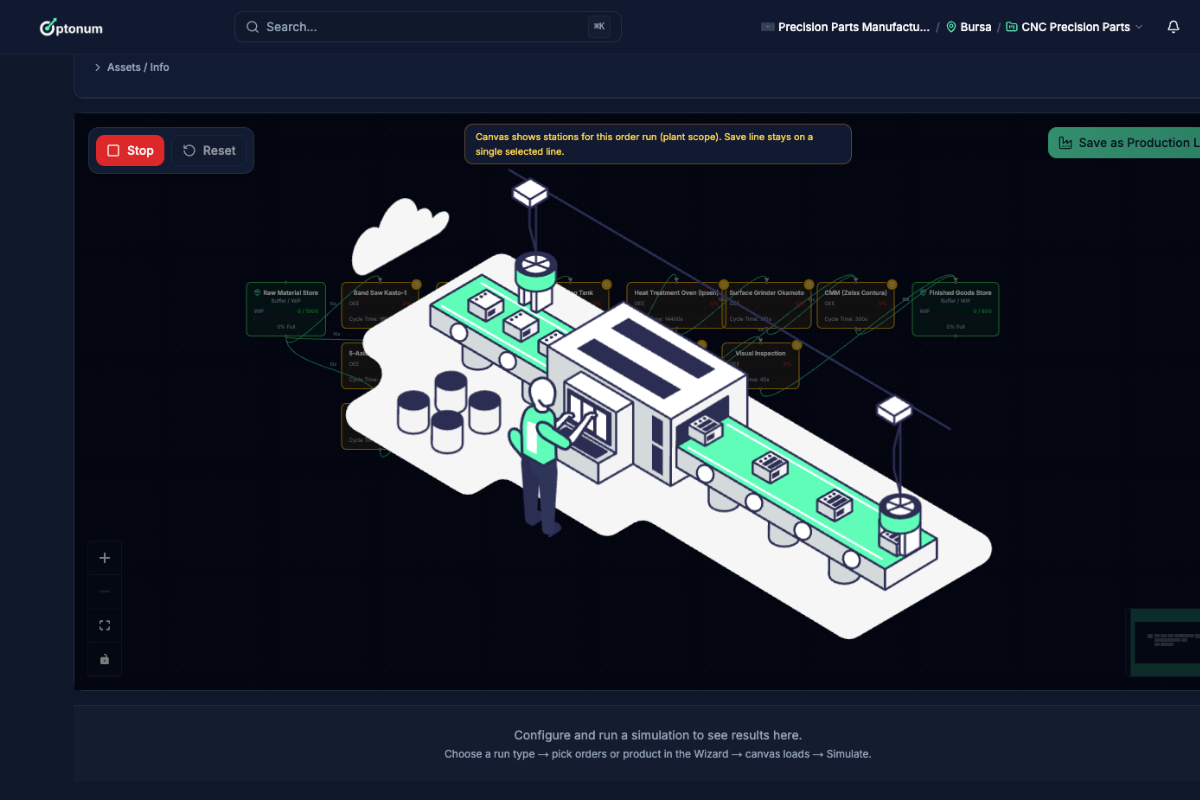
simulation canvas
-
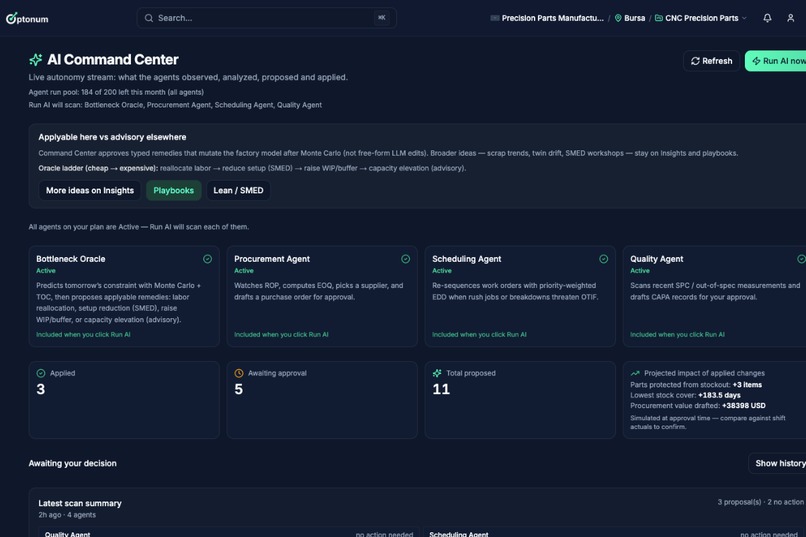
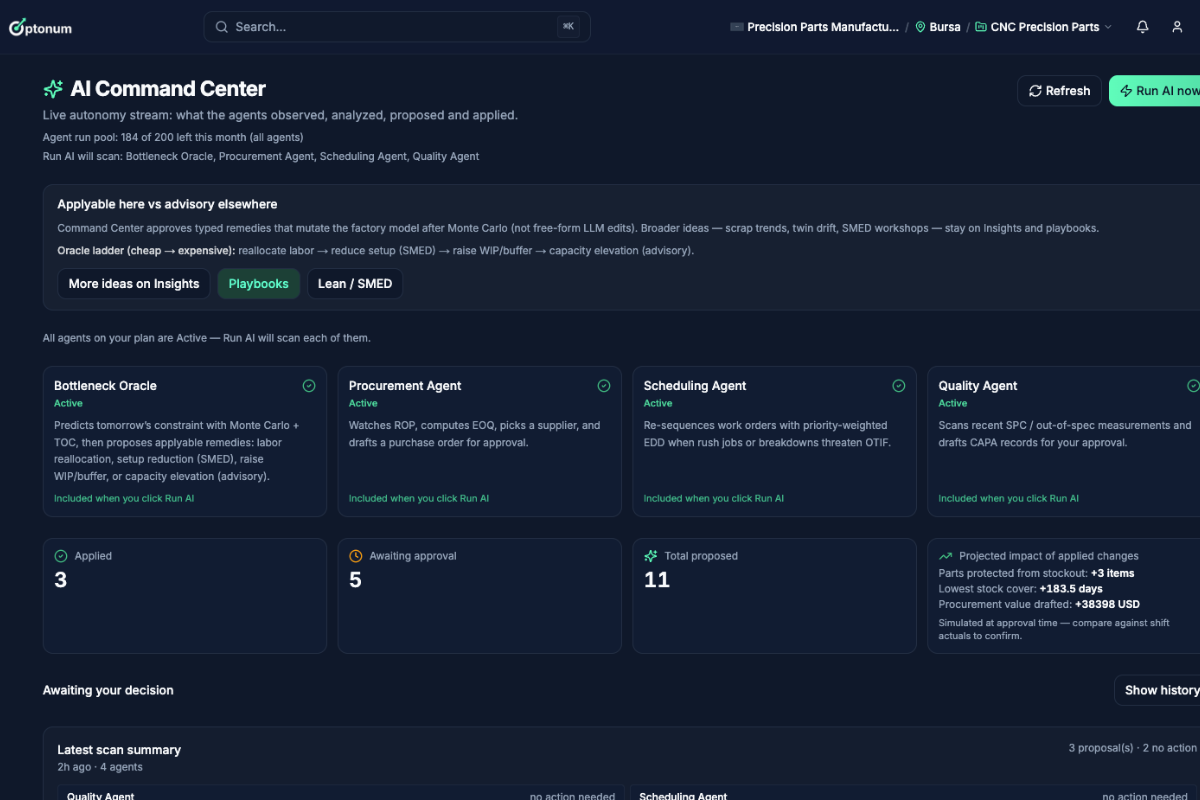
Ai command center with 4 agents
-
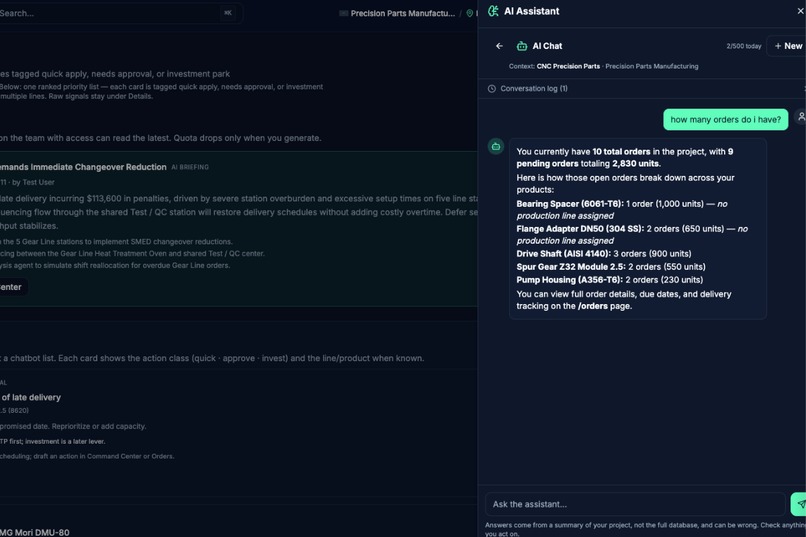
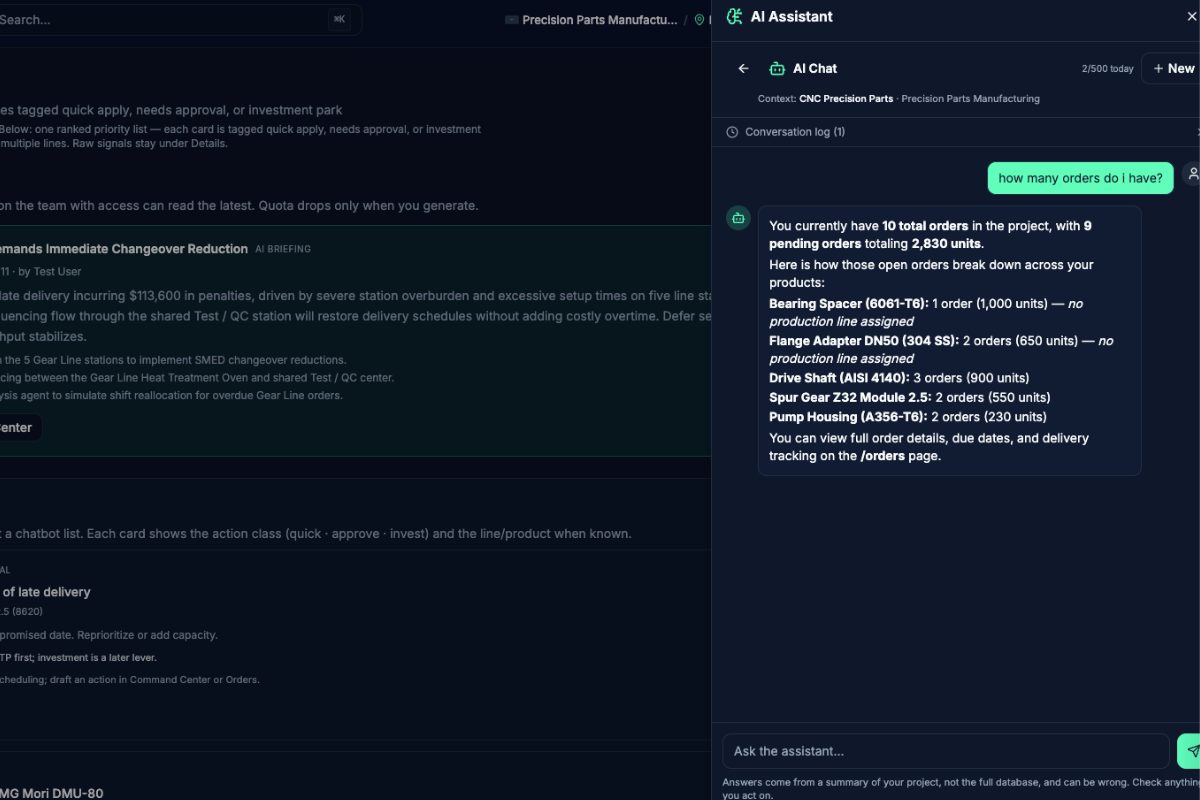
Ai chat
-
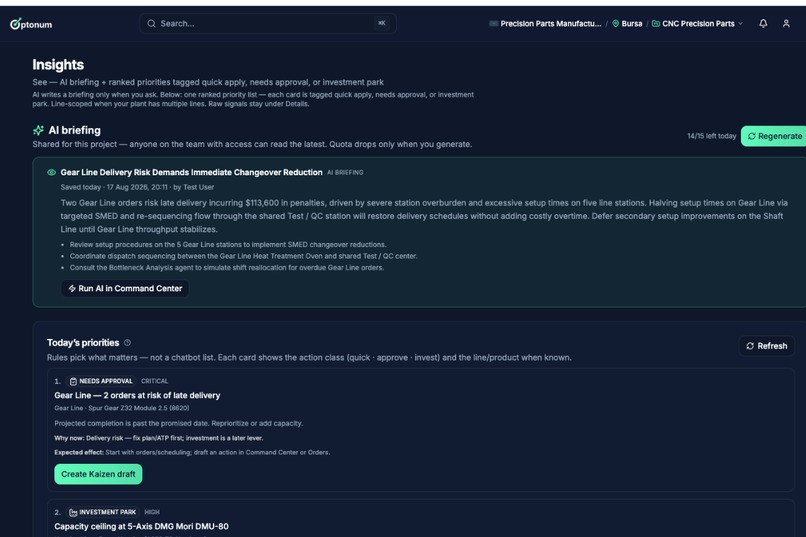
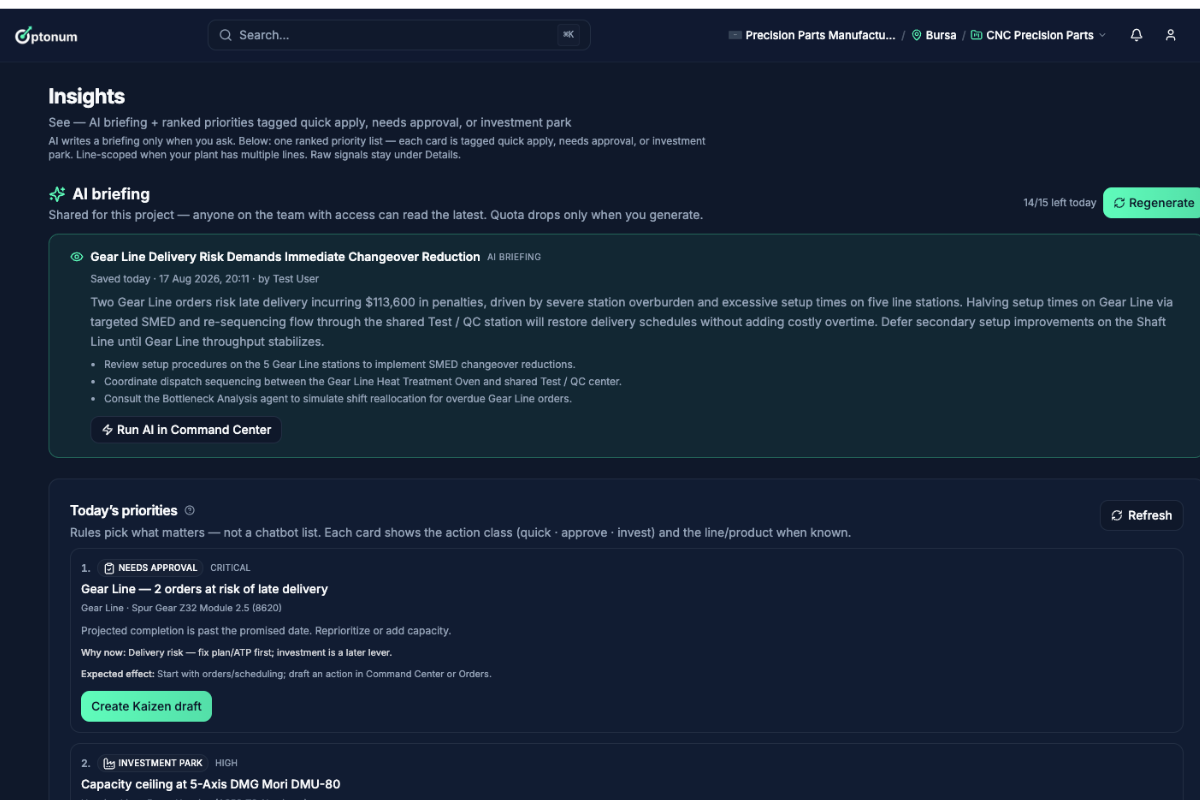
Ai insight that summarize the manufacturing
-
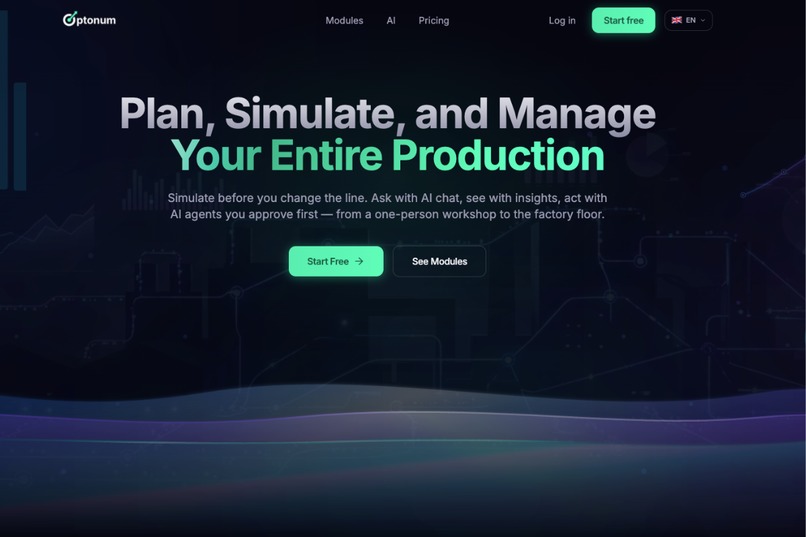
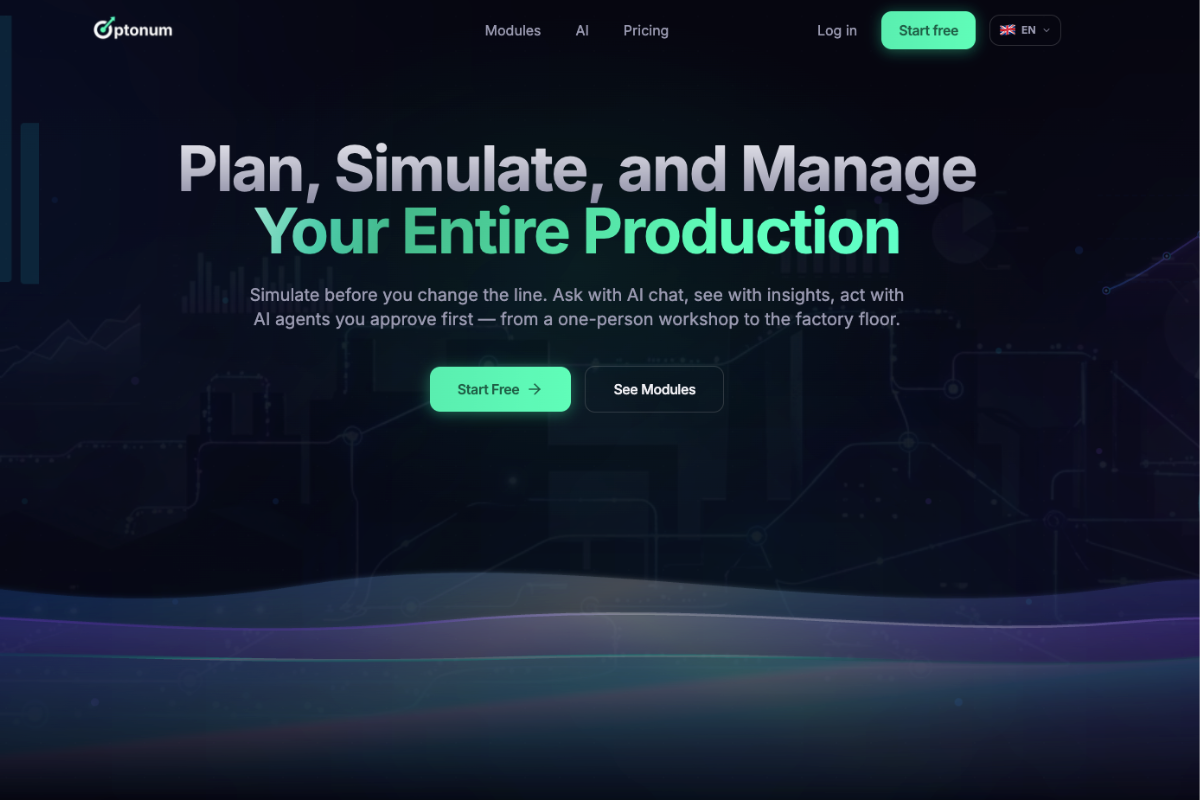
landing page
-
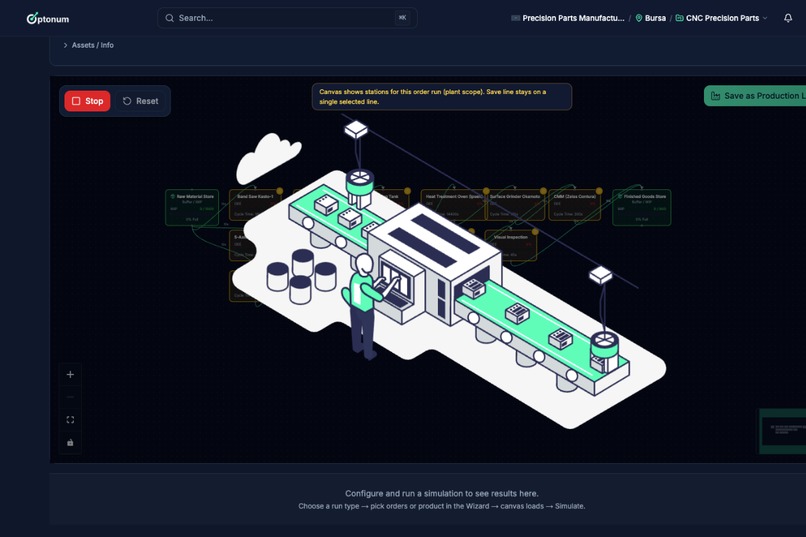
simualtion running animation
Inspiration
Most manufacturers we meet are not close to Industry 4.0. A lot of work still runs on paper, tribal knowledge, and spreadsheets. Measuring cycle time, calculating capacity, planning materials, and spotting bottlenecks before they hurt delivery is hard. The problem is usually the tools, not the people. Most software assumes a mature MES stack that these teams do not have.
We wanted something that meets manufacturers where they are, from a one-person workshop to a multi-line plant. Setup should be easy to start, not a six-month integration project. The goal was simple: support producers who do not already have “smart factory” systems, help them model their reality, and improve step by step.
That is why we built Optonum. You plan, simulate, and improve in one place, then Ask, See, and Act: ask with AI chat, see with insights, and act with AI agents that need human approval before anything changes on the plant model.
This competition pushed us to make that loop AI-native. Gemini powers briefings and agent reasoning, while the factory of record stays auditable.
What it does
Optonum is B2B software for manufacturers, from a one-person workshop to multi-plant operations. Each company keeps its own plants, projects, and data.
- Digital factory: plants, assets, work centers, BOM, routing, orders, inventory, and planning
- Discrete-event simulation in the browser (Rust WASM): bottlenecks and what-if runs before you change the line
- Lean and quality tools: shop-floor calculators, SPC-style analysis, and continuous improvement workflows
- AI layer: chat, insights, and agents for bottleneck, procurement, and scheduling that draft proposals
- Approval gate: agents do not rewrite the factory on their own. People approve, then apply.
Live product: optonum.com
How we built it
- Frontend: Next.js (App Router), React, TypeScript, Tailwind
- Backend and data: Node.js with TypeScript (Next.js API routes), Prisma, Postgres (Supabase)
- Simulation: Rust compiled to WASM for the discrete-event engine
- AI surfaces on Gemini: in-app AI chat (assistant), Insights daily briefing grounded in factory context, and autonomous agents for bottleneck, procurement, and scheduling
- Autonomy UI: Command Center for agent runs, proposals, change requests, and activity feed (optional Firestore for live streaming)
- Shared LLM layer with structured JSON outputs so agents and briefings stay tied to simulation and domain data
- Multi-tenant product: Organization, Plant, and Project, with plan-gated modules and org-level AI usage caps
Challenges we ran into
- Manufacturers will not trust AI that silently rewrites the plant. Building proposal, review, and apply (change requests plus audit) took more product work than simply calling a model.
- Chat and agent text have to stay honest. Throughput, OTIF, inventory, and bottleneck signals come from simulation and domain services. Gemini explains and drafts. It does not invent the numbers.
- Real shop-floor work is complex: time study, capacity, line balance, lean and quality toolkits, planning math, and discrete-event simulation with many levers. Building those modules correctly was hard. Making setup approachable for teams far from Industry 4.0 was harder.
- One product has to serve many production types (discrete, batch, job shop, continuous, craft). Each needs different flows, KPIs, and defaults. Making dashboards and setup adapt without forking the whole app took many iterations.
- We entered the competition late, so we focused on strengthening Optonum itself: AI agents, AI chat, simulation-engine logic, and end-to-end testing. We hardened what was already there instead of jumping into a long sales cycle before the deadline.
Accomplishments that we're proud of
- A working end-to-end path: model, simulate, AI propose, human approve, then apply
- A real manufacturing ops stack: plant model, planning, lean and quality tools used on the shop floor, and a Rust WASM discrete-event simulator. Not a thin chat wrapper around buzzwords.
- Guided setup and archetype-aware defaults, so manufacturers can start without being simulation experts
- Gemini wired into chat, insights, and agents as the primary model across the product
- A real SaaS product with orgs, billing plans, and modules, not a contest-only prototype
What we learned
- Manufacturers trust AI more when it is explainable and reversible than when it is maximally autonomous.
- Simulation plus AI beats chat-only copilots. Numbers come from the engine. Language comes from Gemini.
- There is no single typical factory. Understanding each manufacturer’s production type, maturity, and constraints, then staying flexible with archetypes, defaults, and guided setup, matters more than shipping one rigid happy path.
What's next for Optonum
- Go deeper with real manufacturers: walk our prospect list through live demos, learn from each production type, and tighten onboarding from those conversations
- Keep growing paid access today via Gumroad, then move checkout to Stripe as our US entity tooling comes online
- Expand the agent layer beyond today’s bottleneck, procurement, and scheduling agents. Add specialist roles such as a strategy planner, quality manager, lean coach, and digital-transformation advisor that propose plans in their domain, still with human approval.
- Stronger inventory and warehouse posting for inter-plant moves
- Broader live operations (shift log and IoT) where it earns trust
Built With
- gemini
- next.js
- node.js
- postgresql
- prisma
- react
- rust
- supabase
- tailwindcss
- typescript


Log in or sign up for Devpost to join the conversation.