-
-
-
-
-
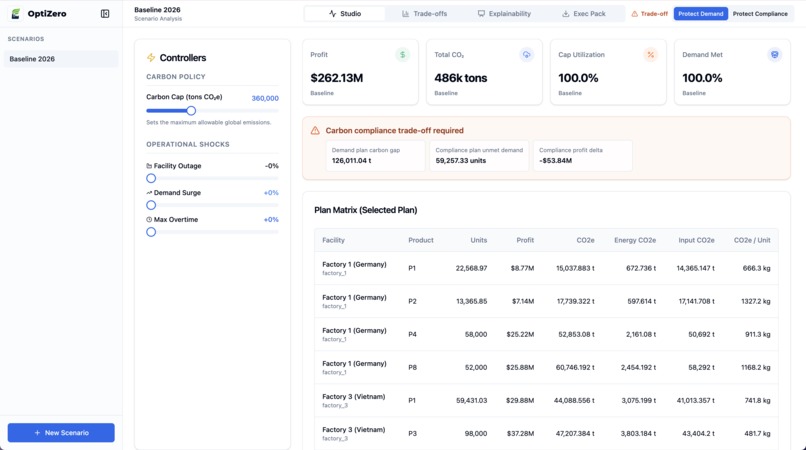
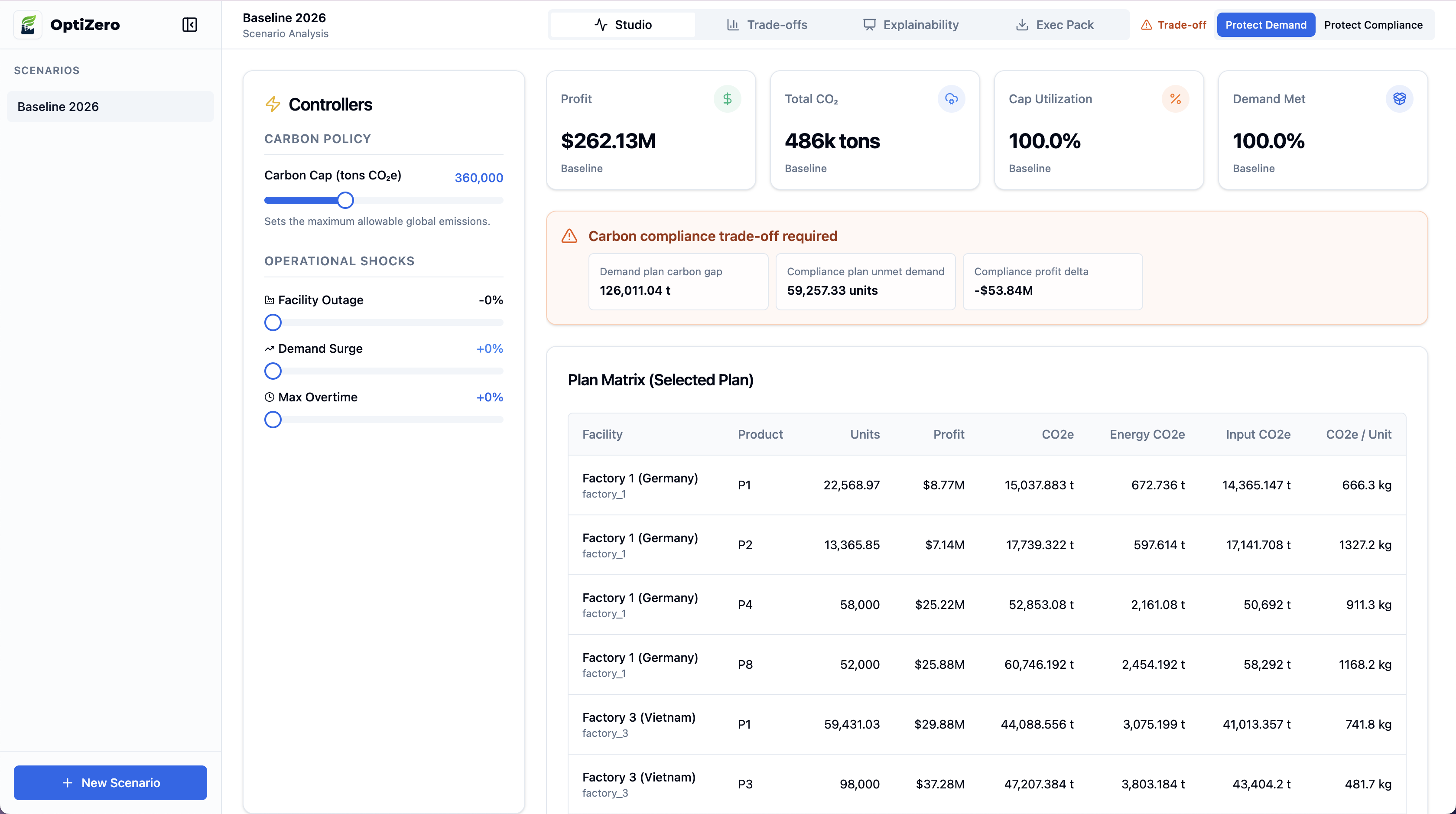
Scenario Studio
-
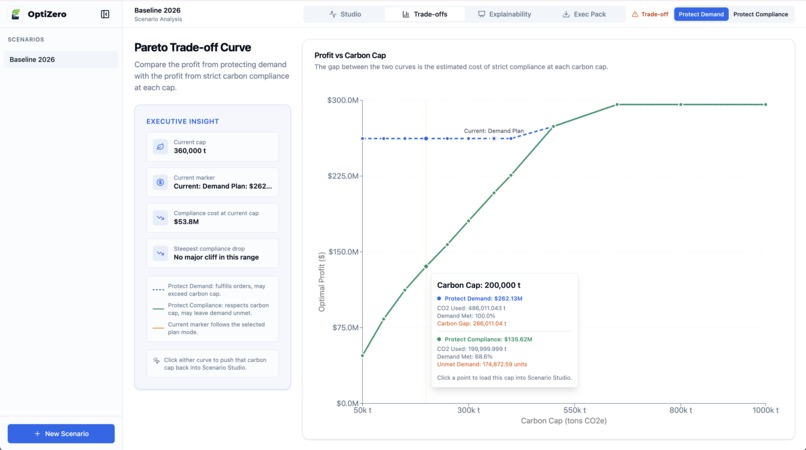
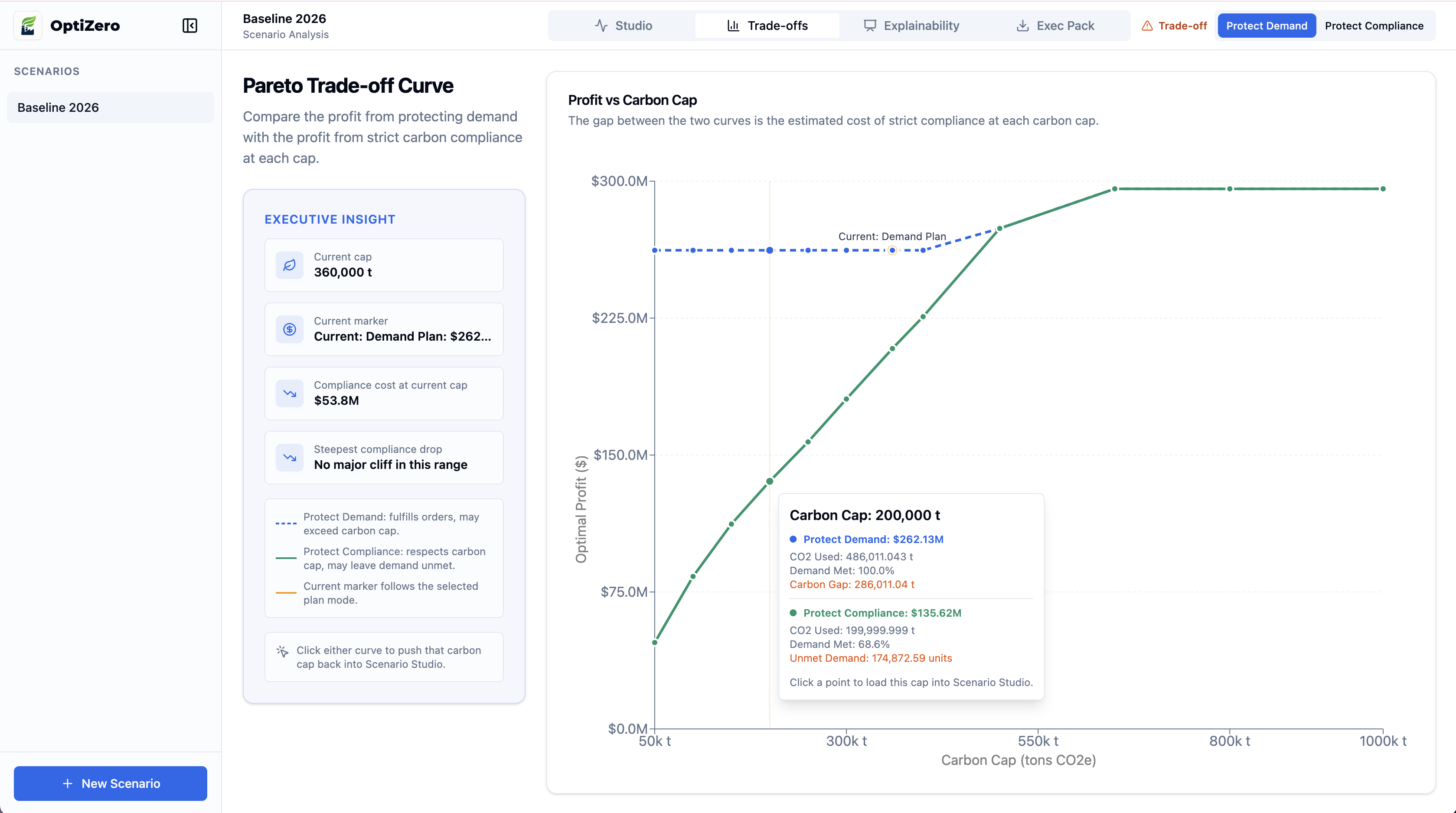
Pareto Trade-off Curve
-
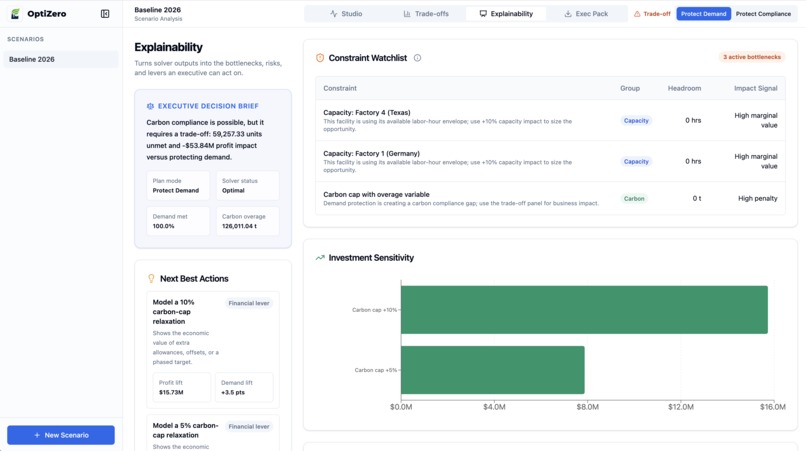
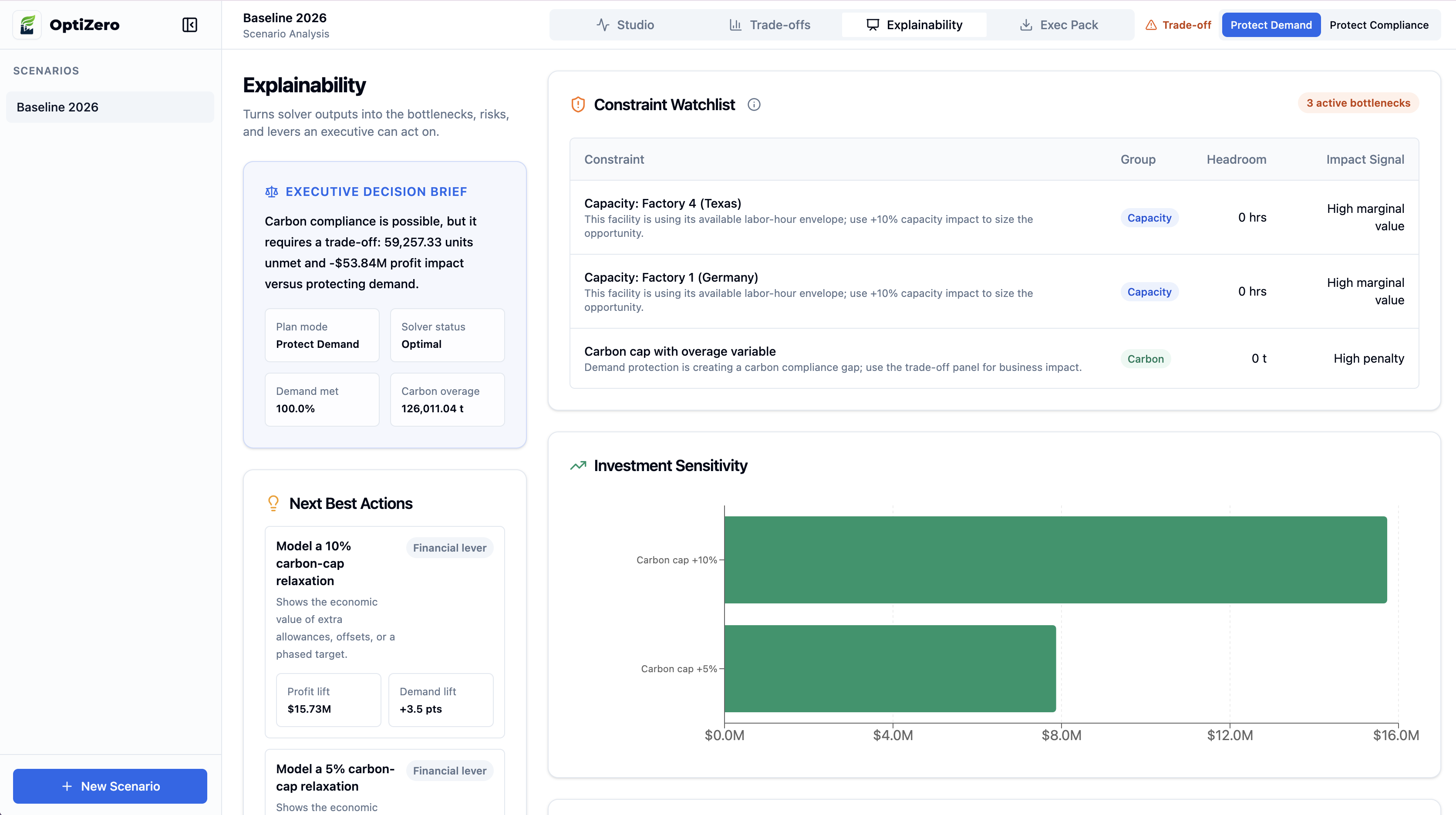
Explainability Tab
-
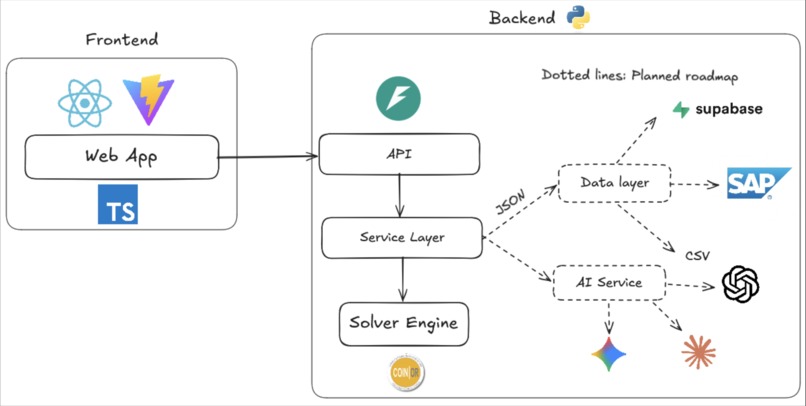
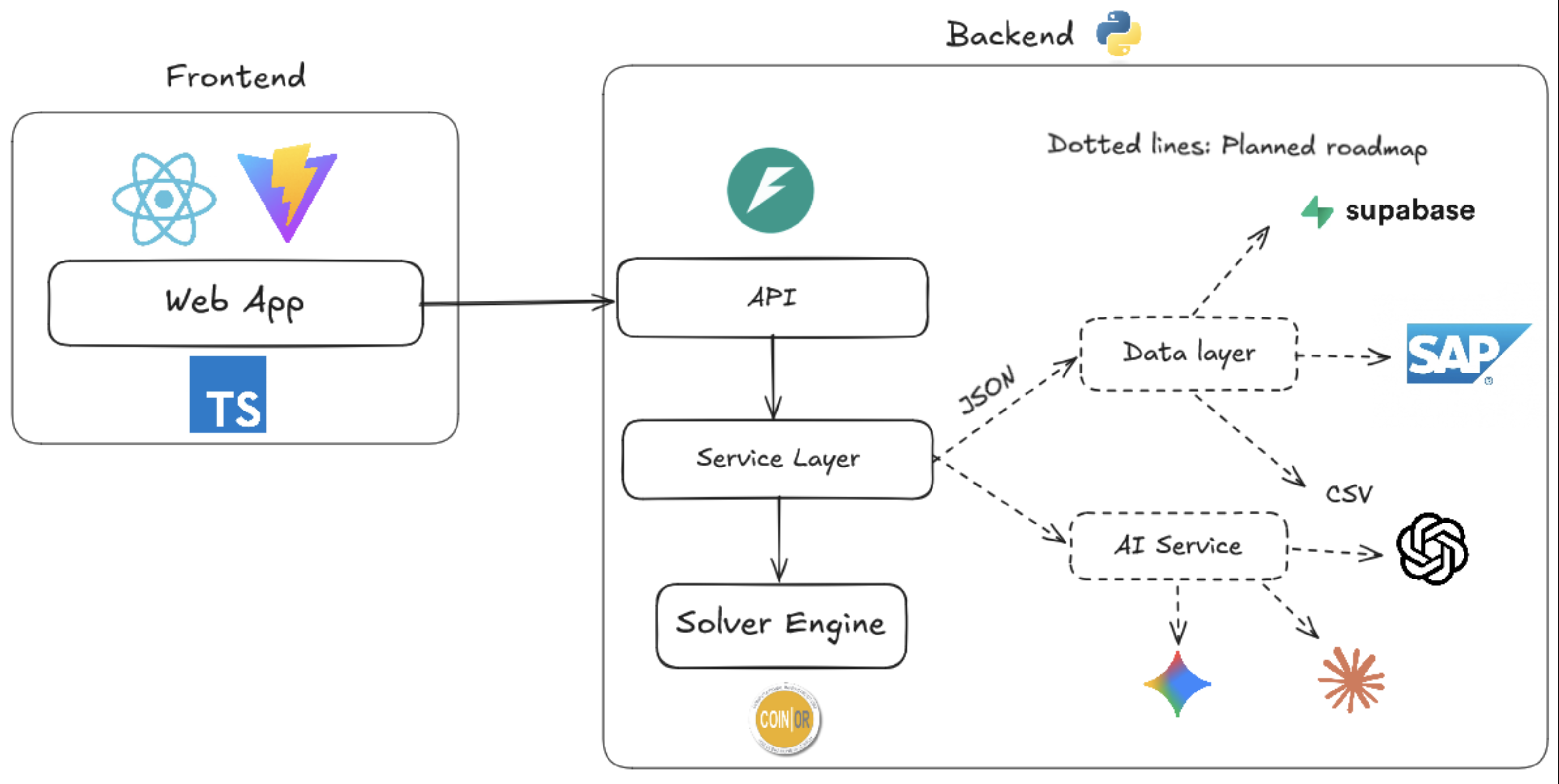
OptiZero - System Architecture Diagram
Inspiration
Most carbon tools stop at measurement. They can tell manufacturers how much they emitted last year, but not what to do when carbon limits tighten, customer demand shifts, or a factory goes offline.
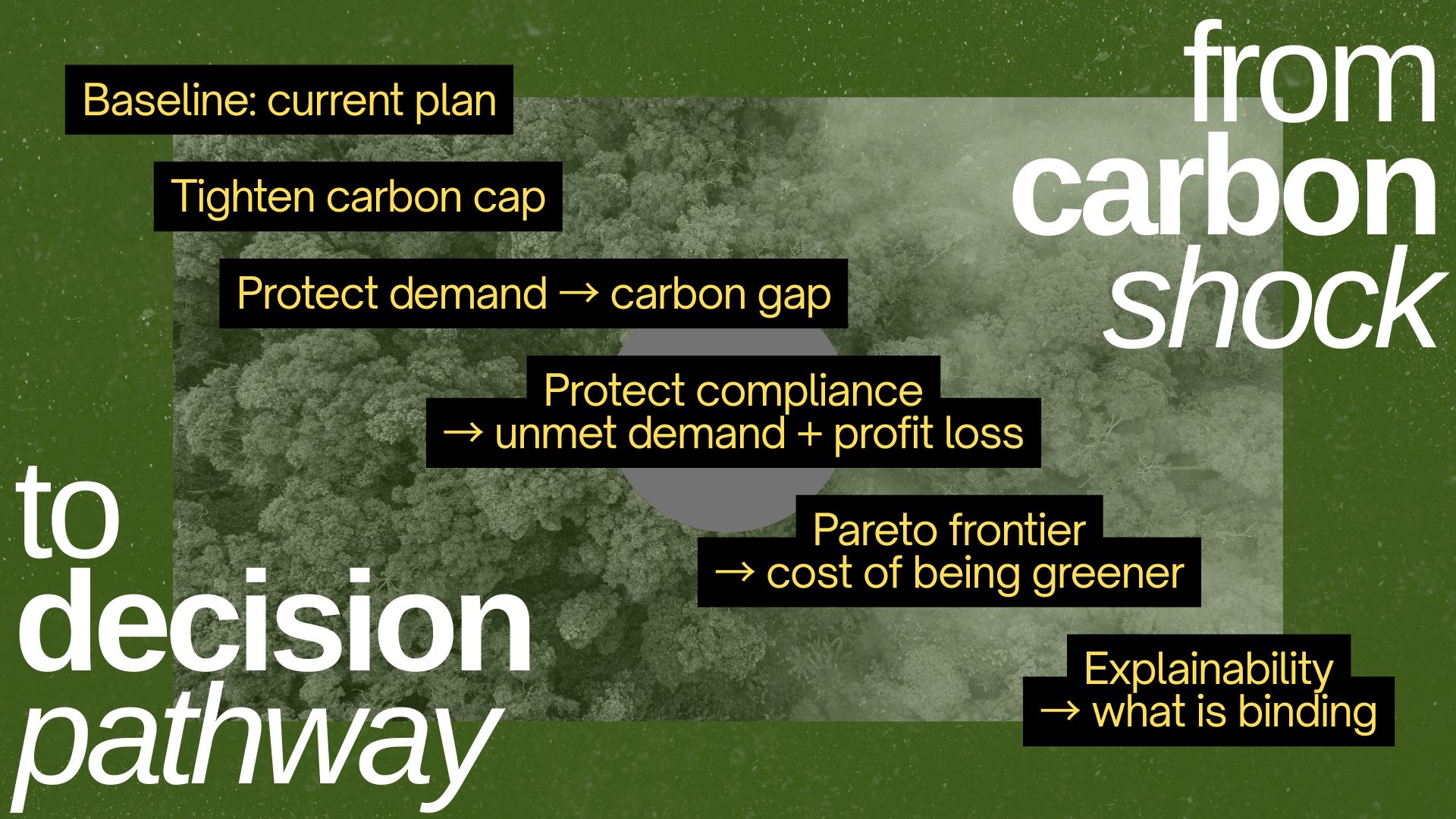
We built OptiZero around a simple gap: manufacturers do not just have a reporting problem, they have a decision problem. If a carbon cap becomes binding, they need to know which factory should absorb the load, which products are still worth making, and whether to prioritise compliance, demand, or carbon credits.
What it does
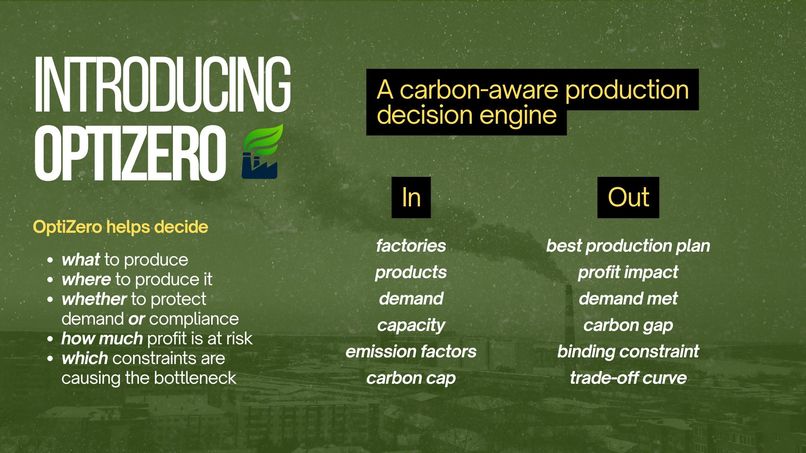
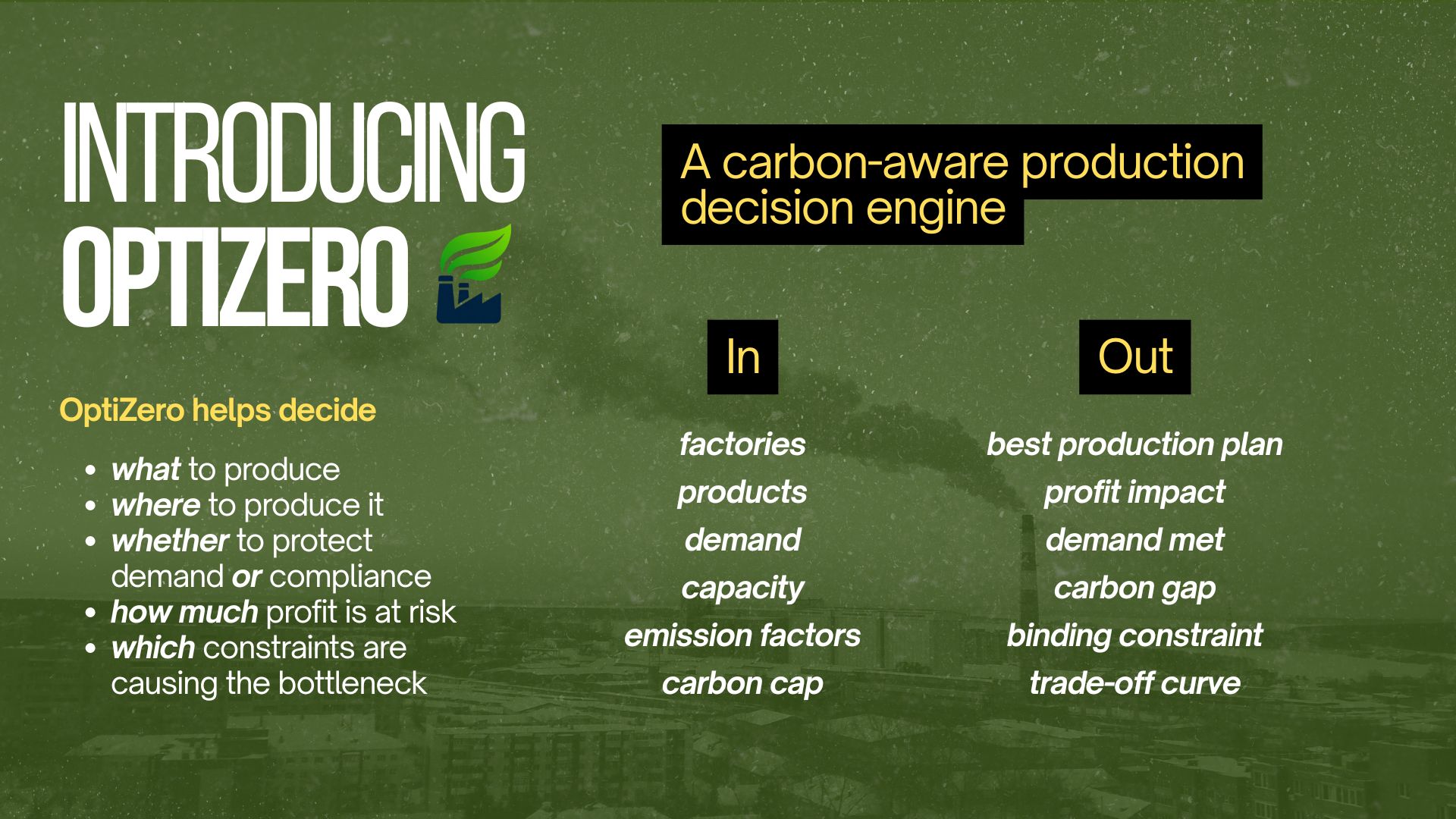
OptiZero is a carbon-aware, multi-site product mix optimiser for manufacturers.
Users input factories, products, demand, capacity, profit data, a carbon cap, and route-level emissions from production energy and purchased inputs. OptiZero then generates an executable production plan showing what to produce, where to produce it, total emissions, profit impact, demand met, carbon compliance gap, and the trade-off between protecting demand and protecting compliance.
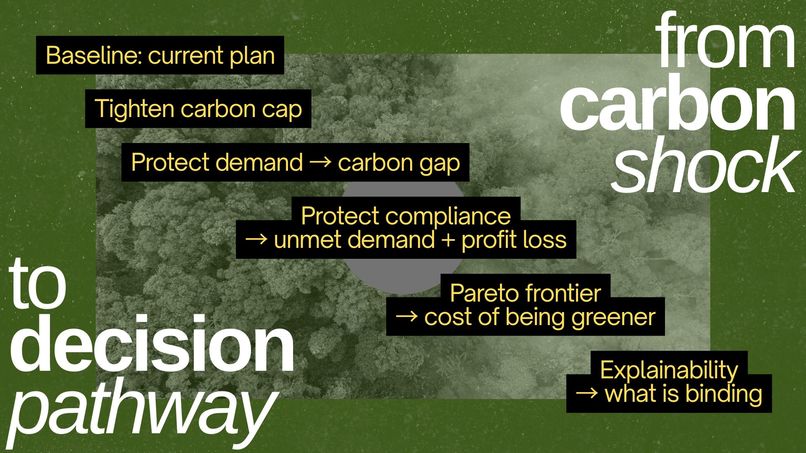
Instead of failing when constraints conflict, OptiZero uses soft constraints to quantify the closest feasible trade-off. It also includes a Pareto trade-off curve, an Explainability tab showing bottlenecks, headroom, marginal values, investment sensitivity, and next-best actions, plus scenario analysis for tighter carbon caps and operational shocks.
How we built it
We built OptiZero as a web-based analytics tool with a React/TypeScript/Vite frontend, Python/FastAPI backend, and a PuLP linear programming optimisation engine. The project is deployed through Vercel and managed on GitHub.
The user adjusts inputs such as carbon cap, capacity shocks, overtime, demand changes, or operating mode. The frontend sends those inputs to the backend API, which solves for the best facility-product allocation and returns results in real time.
A key design choice was using deterministic optimisation rather than AI guesswork, making the tool more transparent, auditable, and easier to justify in enterprise settings.
Challenges we ran into
One major challenge was making the tool feel like more than a calculator. We wanted to output not only the optimal plan, but also why that plan was optimal and which constraints were driving the result.
Another challenge was balancing realism with hackathon time constraints. Carbon decision-making can involve Scope 3 emissions, carbon credits, and multi-jurisdiction regulations, so we narrowed the scope to what was decision-relevant and feasible for a weekend build.
Accomplishments that we're proud of
We are proud that OptiZero goes beyond carbon measurement and delivers operational guidance.
Our favourite outcomes include:
- a working end-to-end prototype
- a dual-mode framework comparing Protect Demand versus Protect Compliance
- a Pareto frontier showing the profit-carbon trade-off
- an Explainability layer that surfaces bottlenecks, slack, headroom, marginal values, and next-best actions
Most importantly, we built something that feels relevant to real industrial decision-making, not just a theoretical model.
What we learned
We learned that optimisation becomes much more powerful when paired with explanation. A mathematically correct answer is not enough. Decision-makers also need to know what is binding, what trade-off they are making, and what could improve the outcome.
We also learned that product framing matters. OptiZero is not just a carbon tool; it is a decision support tool for manufacturers operating under carbon constraints.
What's next for OptiZero
Next, we would like to add:
- enterprise data ingestion from ERP/SAP-style systems
- deeper Scope 3 modelling
- carbon credit and penalty cost integration
- scenario saving
- supplier switching optimisation
- executive summaries and exportable board-ready reports
- AI-generated memos that translate deterministic solver results into executive language
In the future, we see OptiZero becoming a stronger decision layer for manufacturers, sustainability teams, and consulting firms moving from carbon reporting to carbon action.
Built With
- fastapi
- github
- linear-programming
- pandas
- pulp
- pydantic
- python
- react
- recharts
- tailwind-css
- typescript
- vercel
- vite
- zustand

Log in or sign up for Devpost to join the conversation.