Inspiration
This project was inspired by a simple but urgent reality: when crises hit - whether in hospitals, disaster zones, or crowded wards - people don't suffer because help isn't available, they suffer because help isn't coordinated. We saw doctors and responders losing precious minutes to confusion, miscommunication, and scattered resources. That made us ask: what if there was a single command hub that could cut through the chaos? OptiWard Al was born from that question to turn panic into clarityd and to give responders the power to act faster, smarter, and with confidence.
What it does
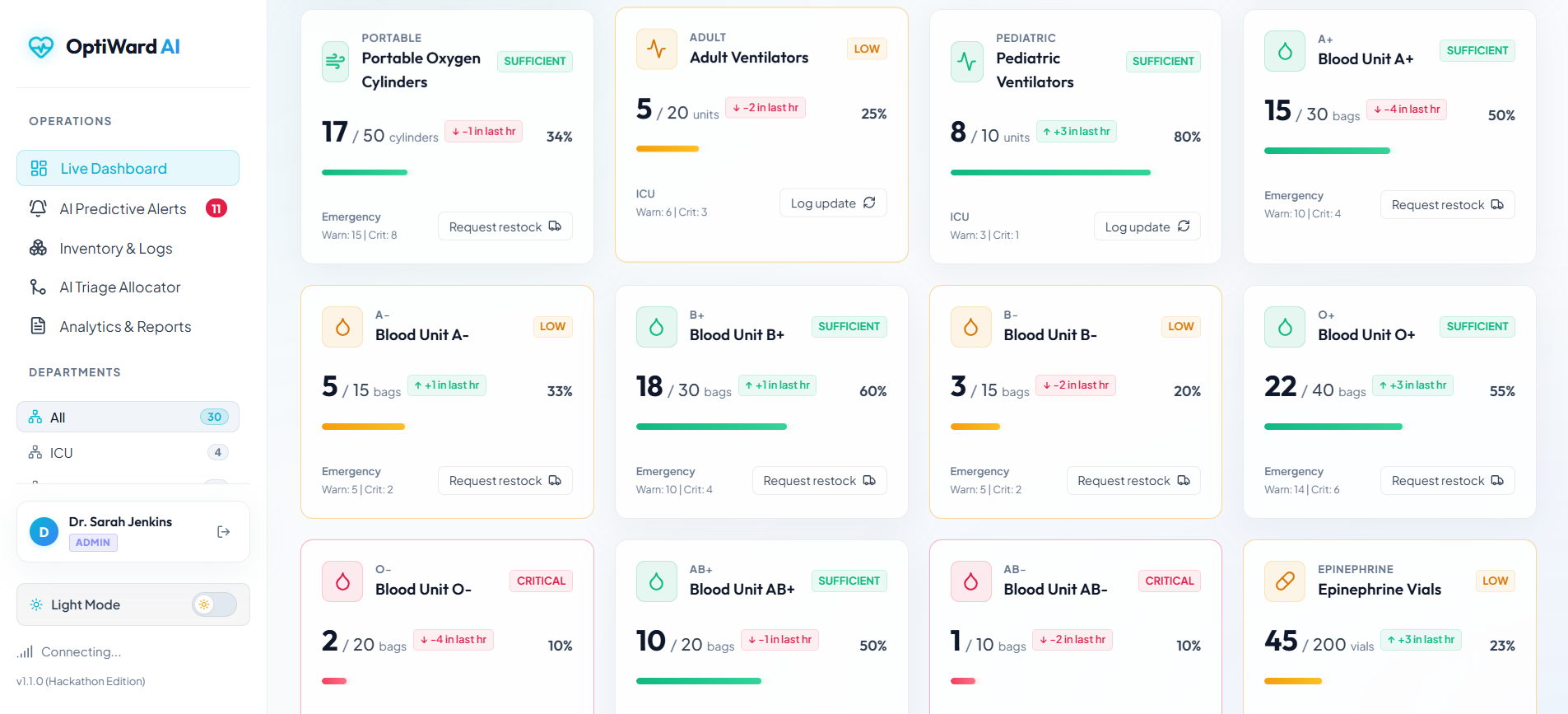
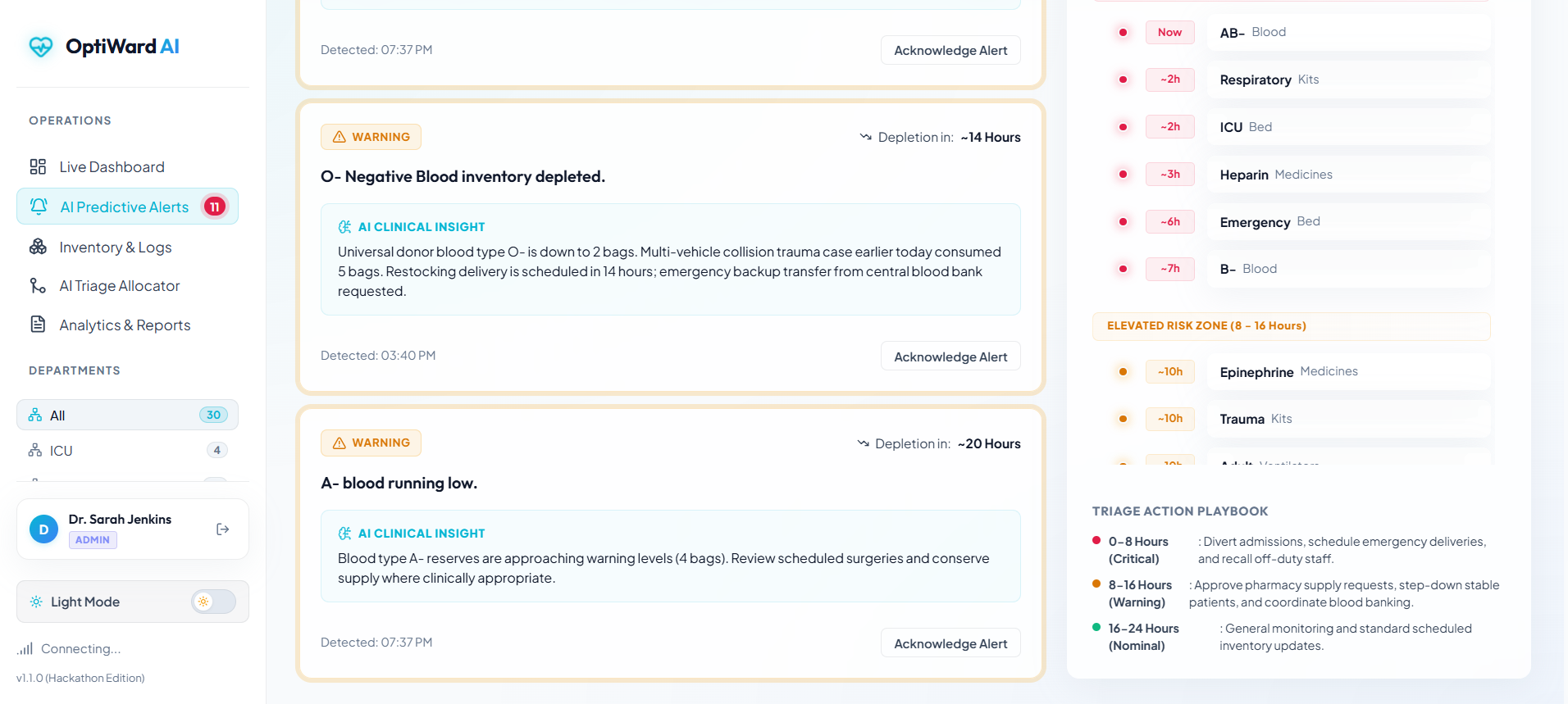
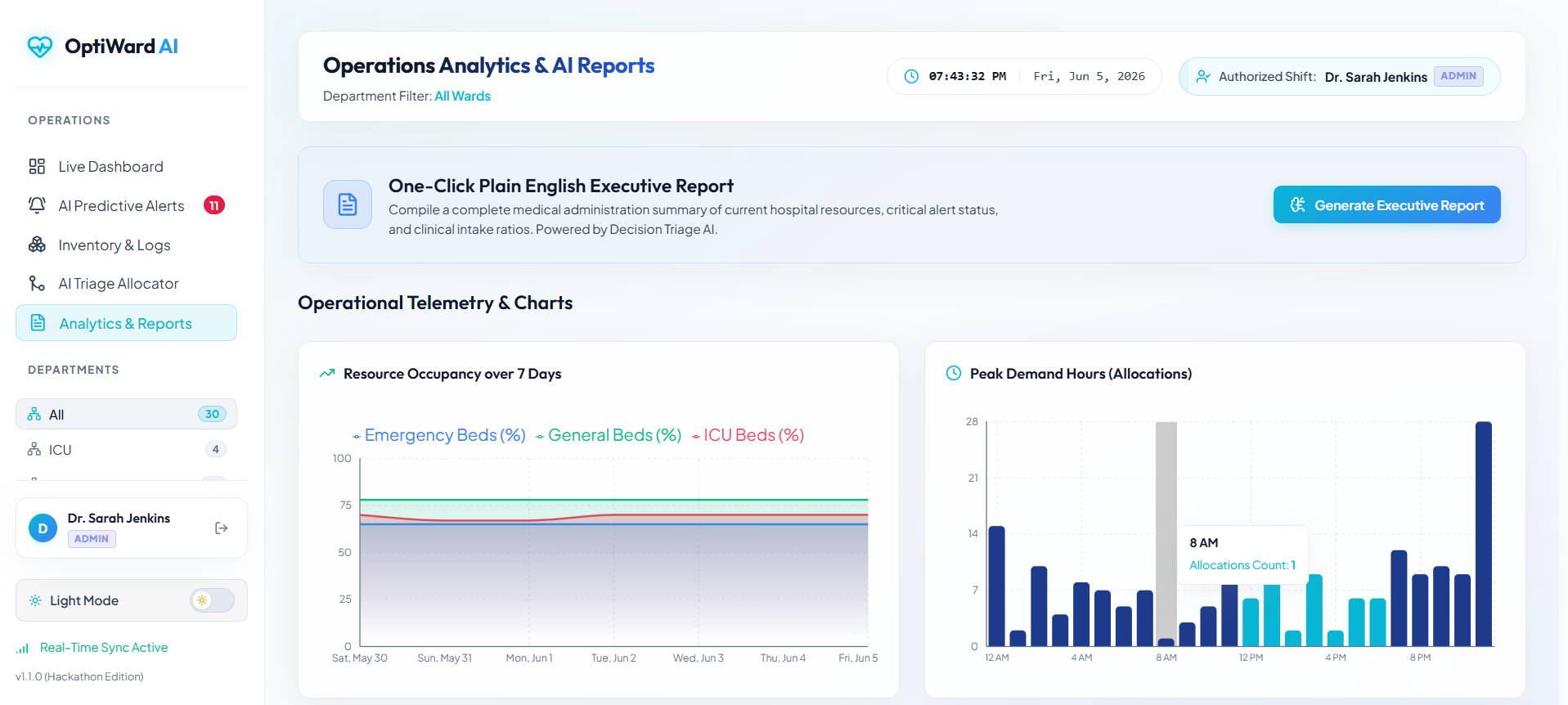
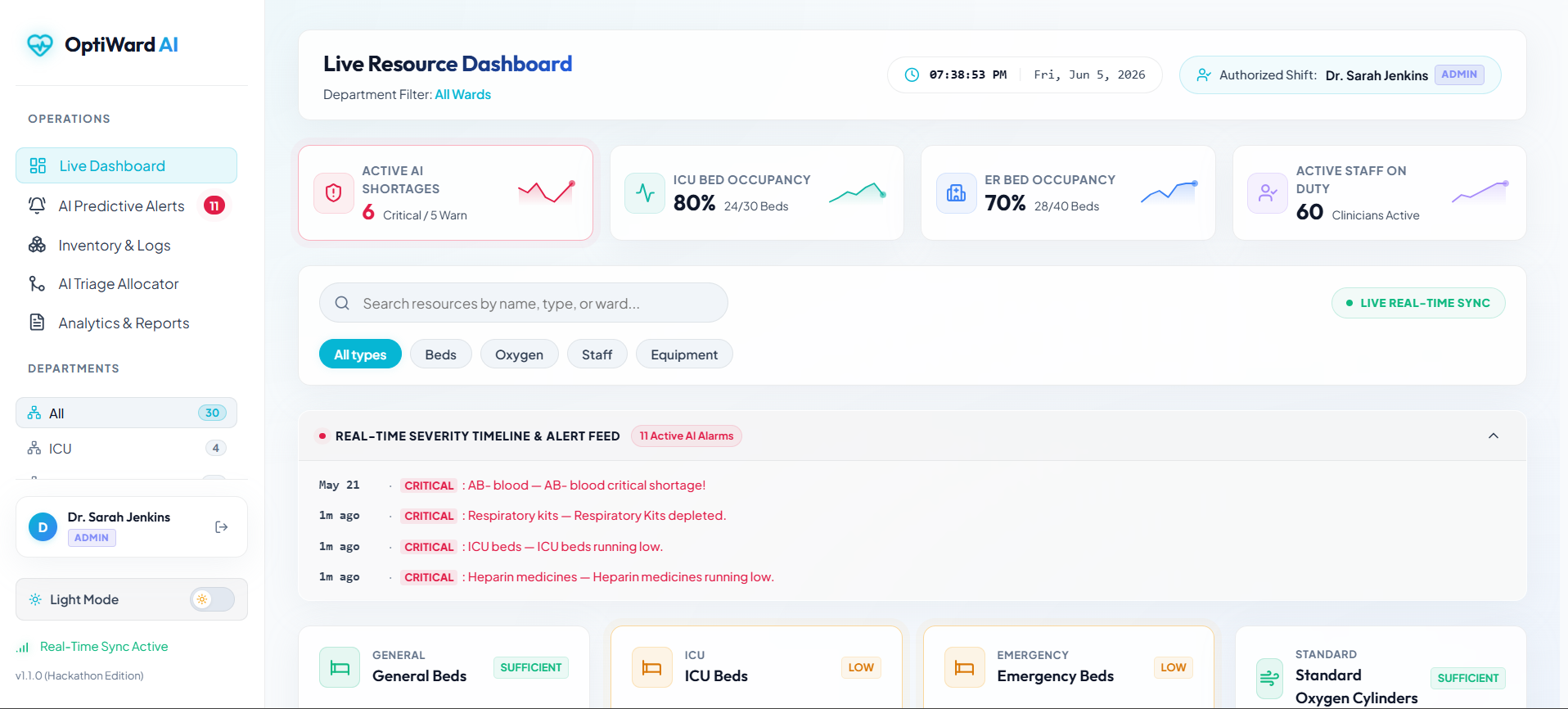
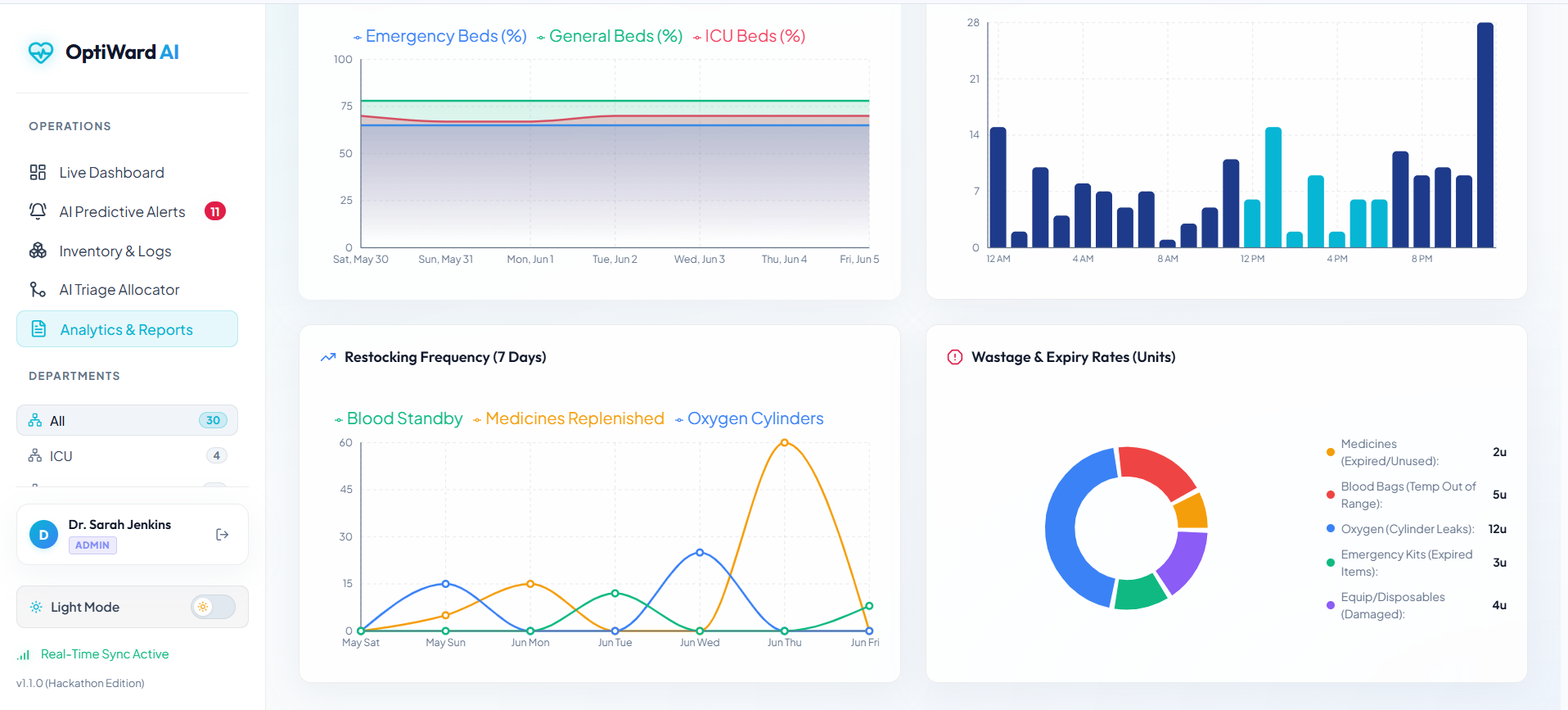
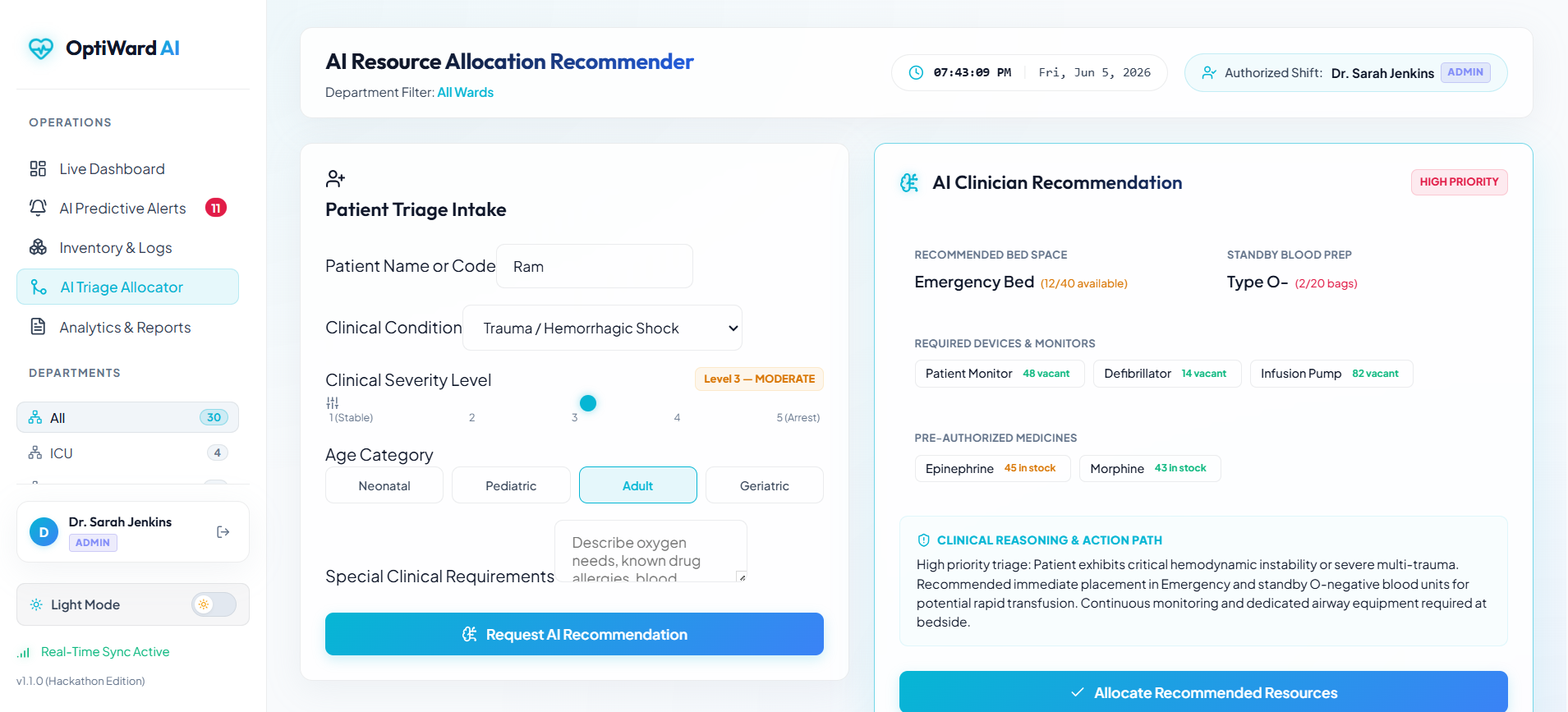
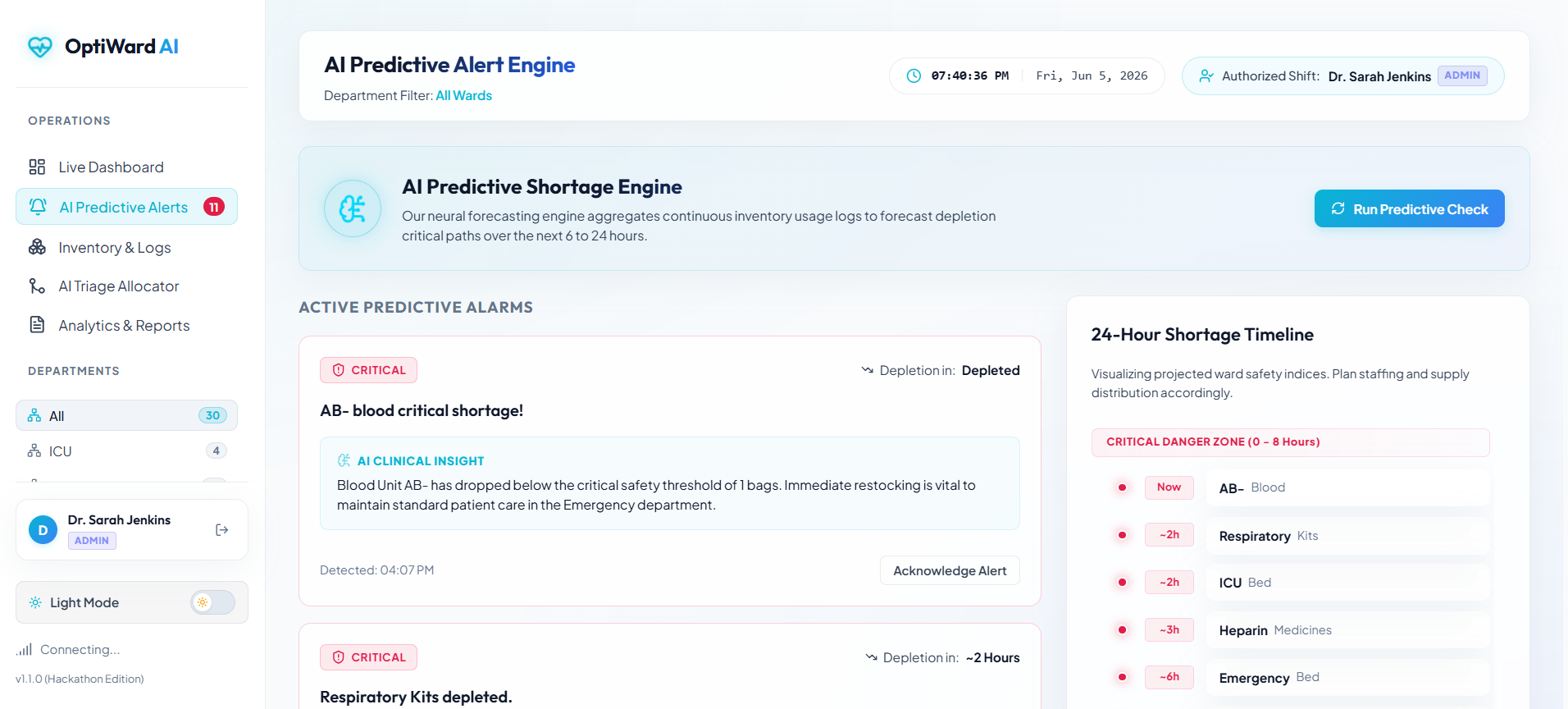
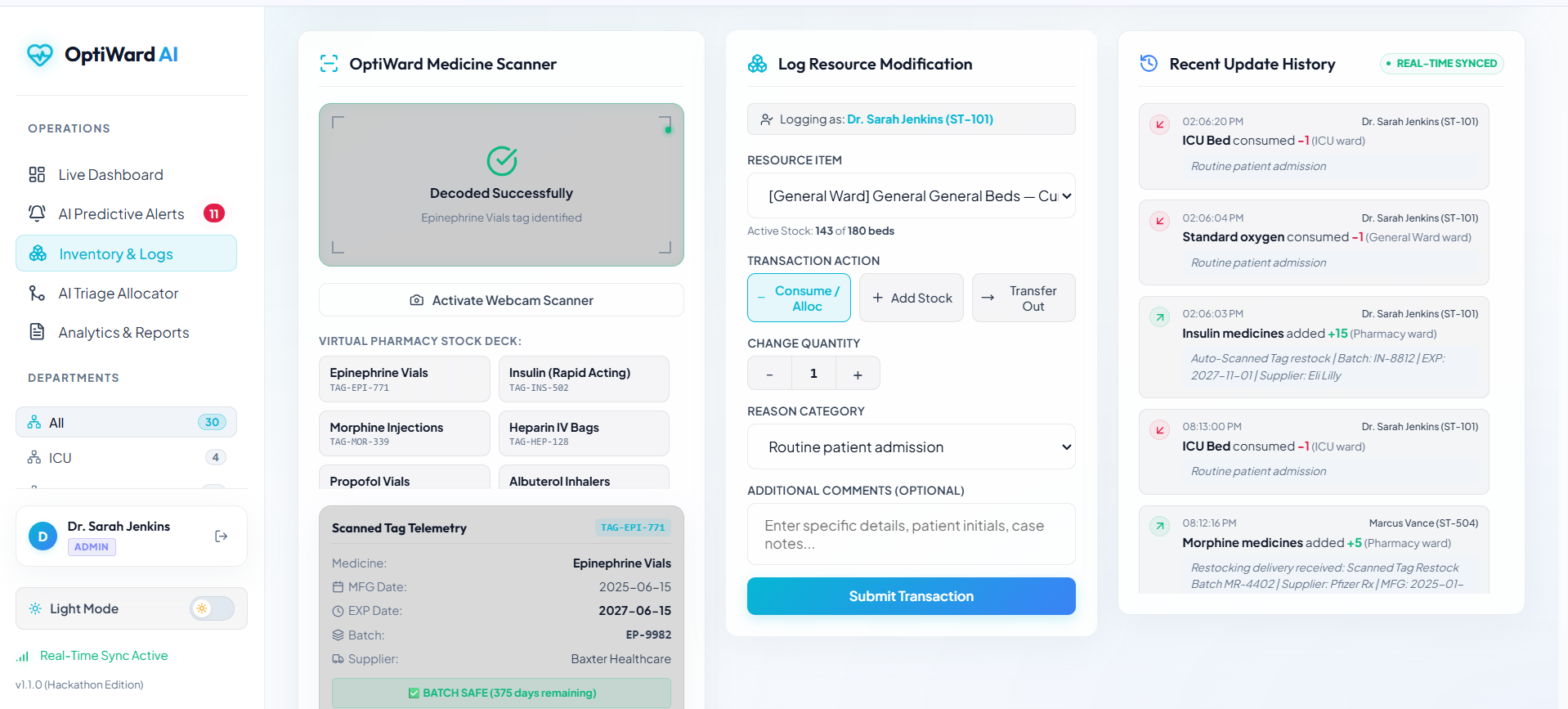
It centralizes communication, tracks available resources, and provides instant coordination tools so responders can cut through confusion and act quickly. By turning scattered information into a single, intelligent dashboard, OptiWard Al transforms chaos into clarity and empowers teams to save critical minutes when they matter most.
How we built it
We built OptiWard AI as a high-performance monorepo using React with Vite for a premium, glassmorphic frontend styled with custom HSL CSS. The backend is powered by Node.js and Express, backed by an auto-seeded JSON database. WebSockets via Socket.io enable real-time synchronization of ID-card login events, medicine tag scans, and inventory operations across all active clients.
Challenges we ran into
We realized the hardest part wasn't just building features it was understanding people. Doctors wanted speed, administrators wanted detail, and our team had to balance both under hackathon pressure. Miscommunication, time crunch, and resource limits tested us, but those human struggles shaped OptiWard Al into a tool that truly works in real crises.
Accomplishments that we're proud of
Our team built and tested features under simulated emergency pressure, proving the system works when seconds matter.
What we learned
Through building OptiWard AI, we learned that technology alone doesn’t solve crises — empathy and clarity do. We discovered how hard it is to translate human stress and miscommunication into a simple, usable interface. We also learned the value of teamwork under pressure: aligning ideas, cutting through disagreements, and prioritizing what truly matters. Most importantly, we realized that even a hackathon project can spark real‑world impact when it’s built with people, not just code, in mind.
What's next for OptiWard
Wearable & IoT Integration → Linking patient vitals from wearables and smart hospital devices directly into the command hub. Multi‑Hospital Network Mode → Expanding from single‑hospital dashboards to regional crisis coordination across multiple facilities. Voice‑Assisted Commands → Allowing responders to interact hands‑free with the system during emergencies. Global Crisis Simulation → Building training modules where hospitals can simulate disaster scenarios and test response strategies.
Built With
- axios
- css3
- express.js
- html5
- javascript
- node.js
- react.js
- recharts
- socket.io
- vite

Log in or sign up for Devpost to join the conversation.