-
-
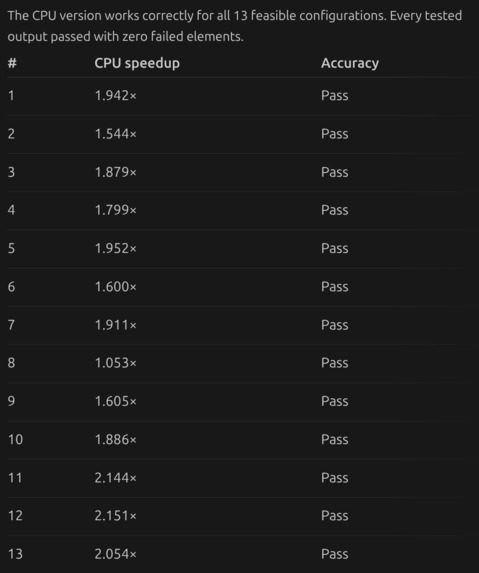
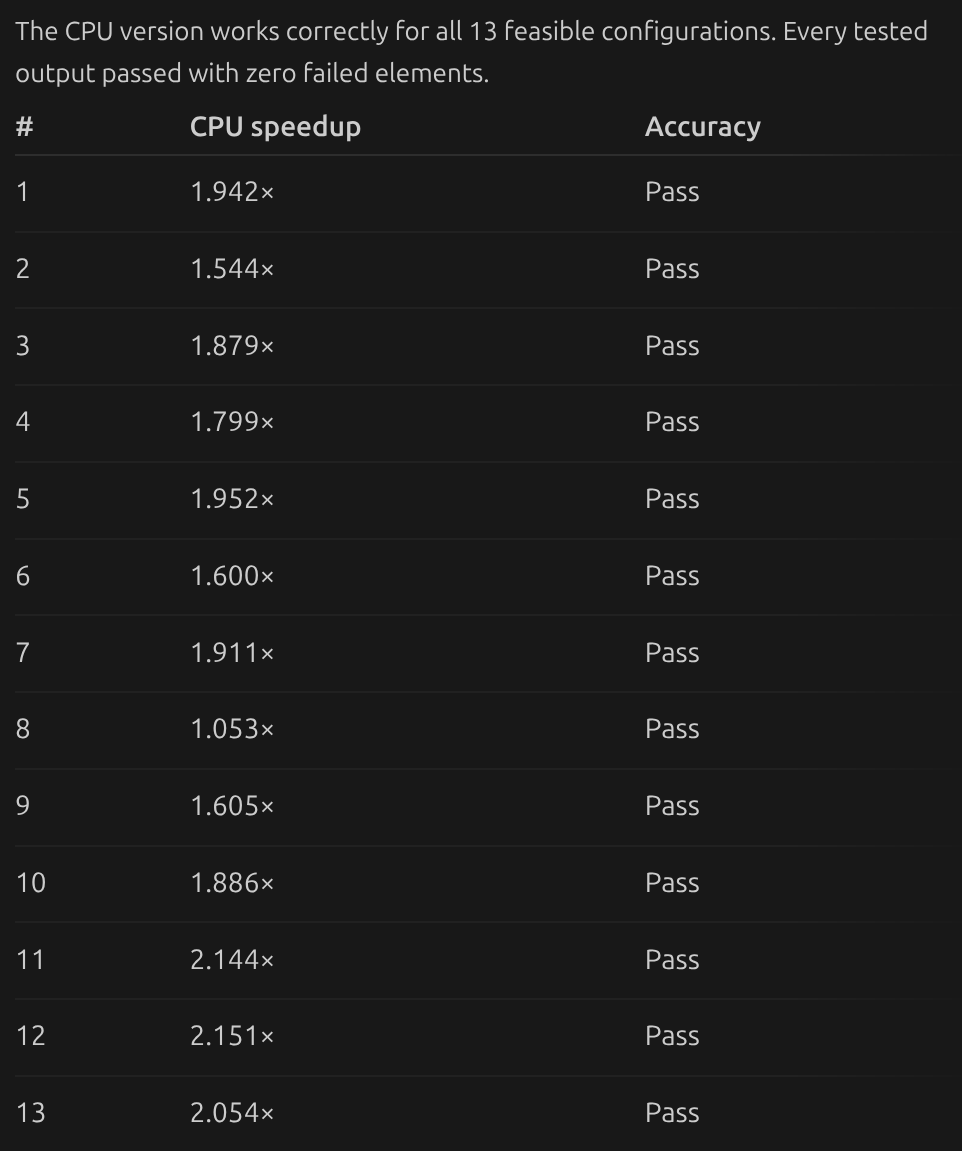
CPU speedups
-
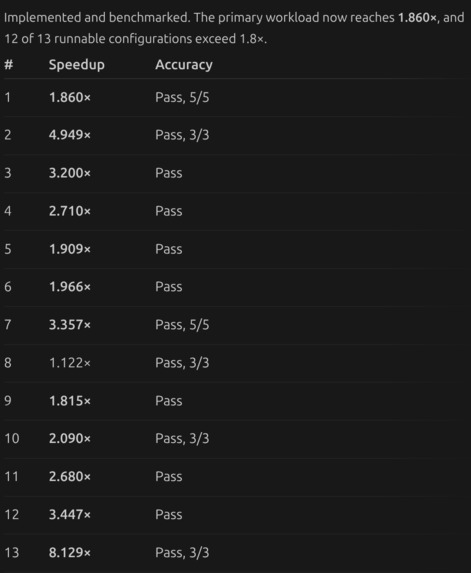
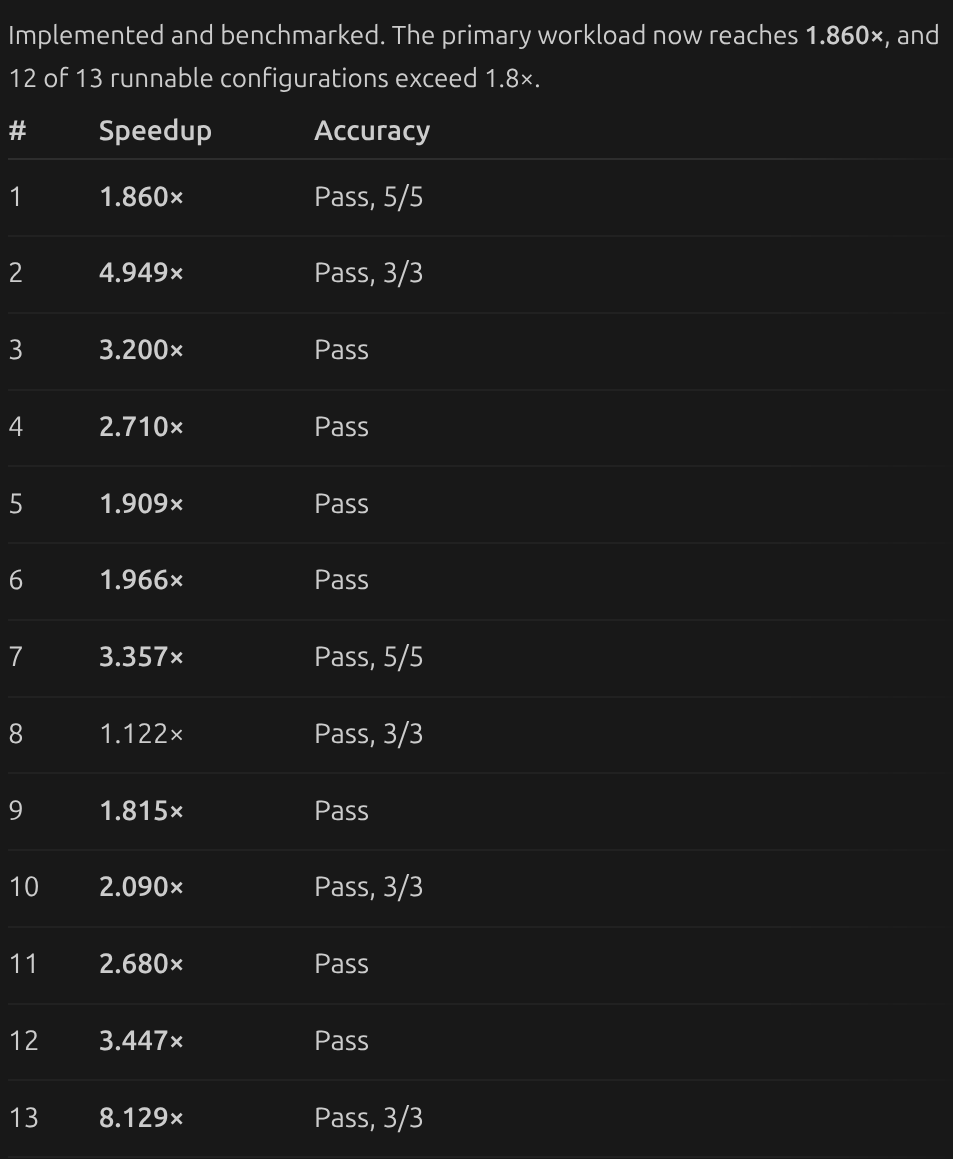
GPU speedups
-
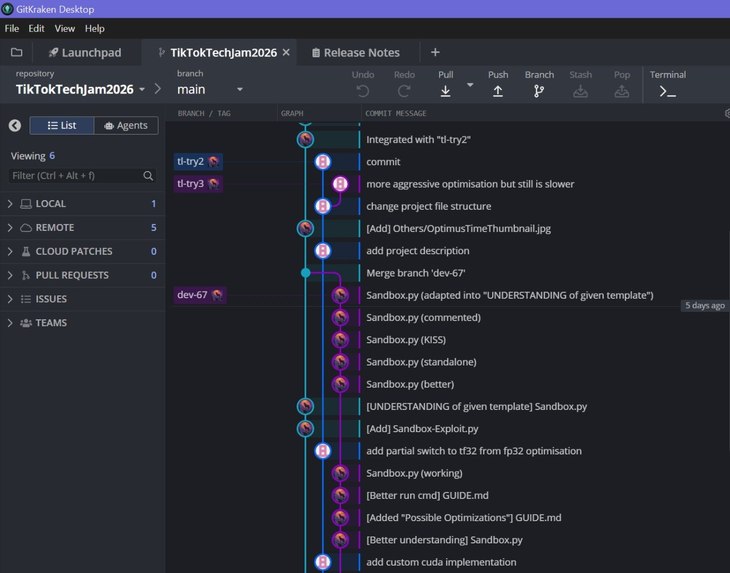
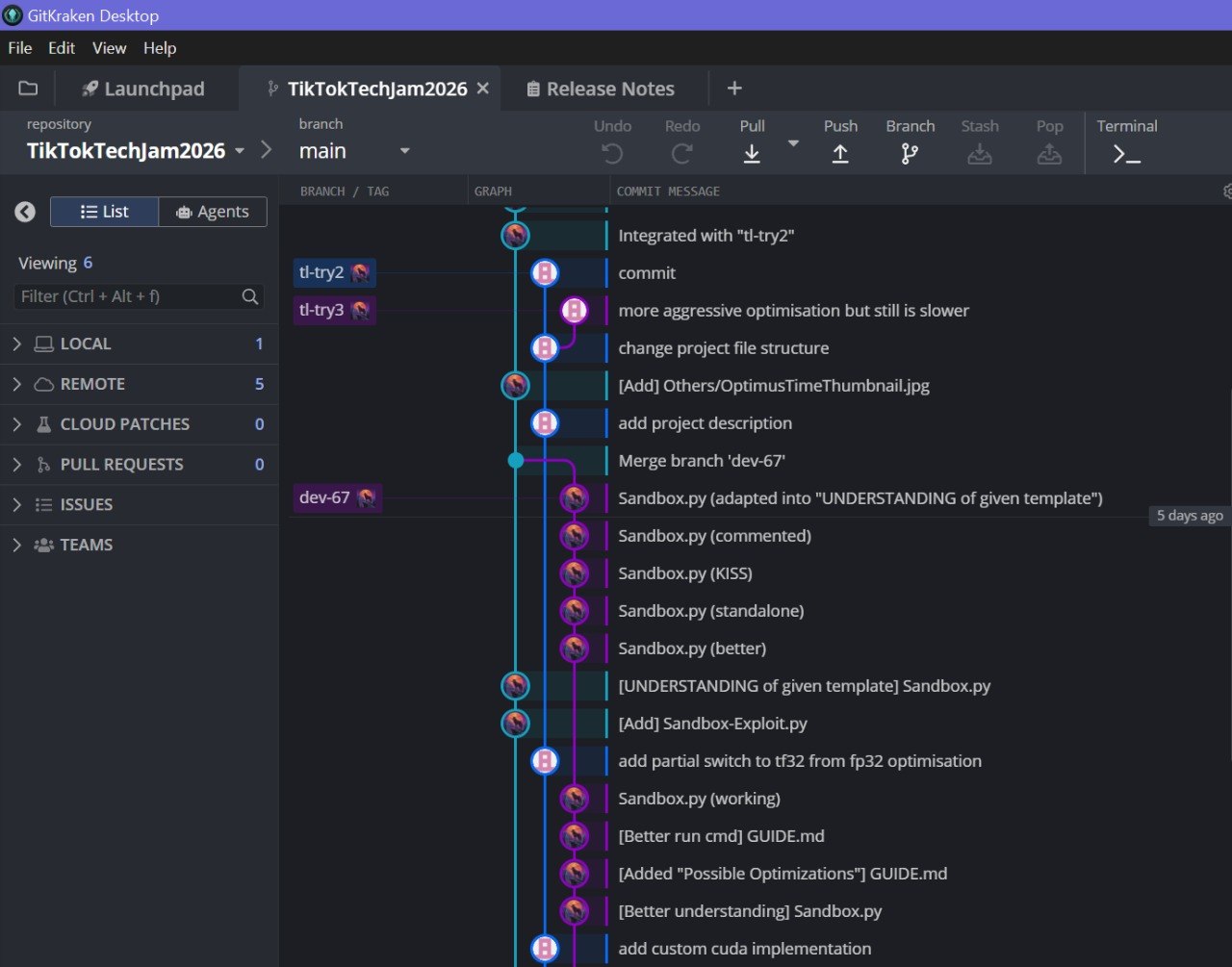
GitKraken workflow
-
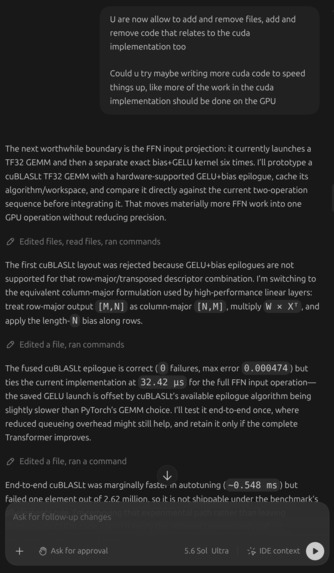
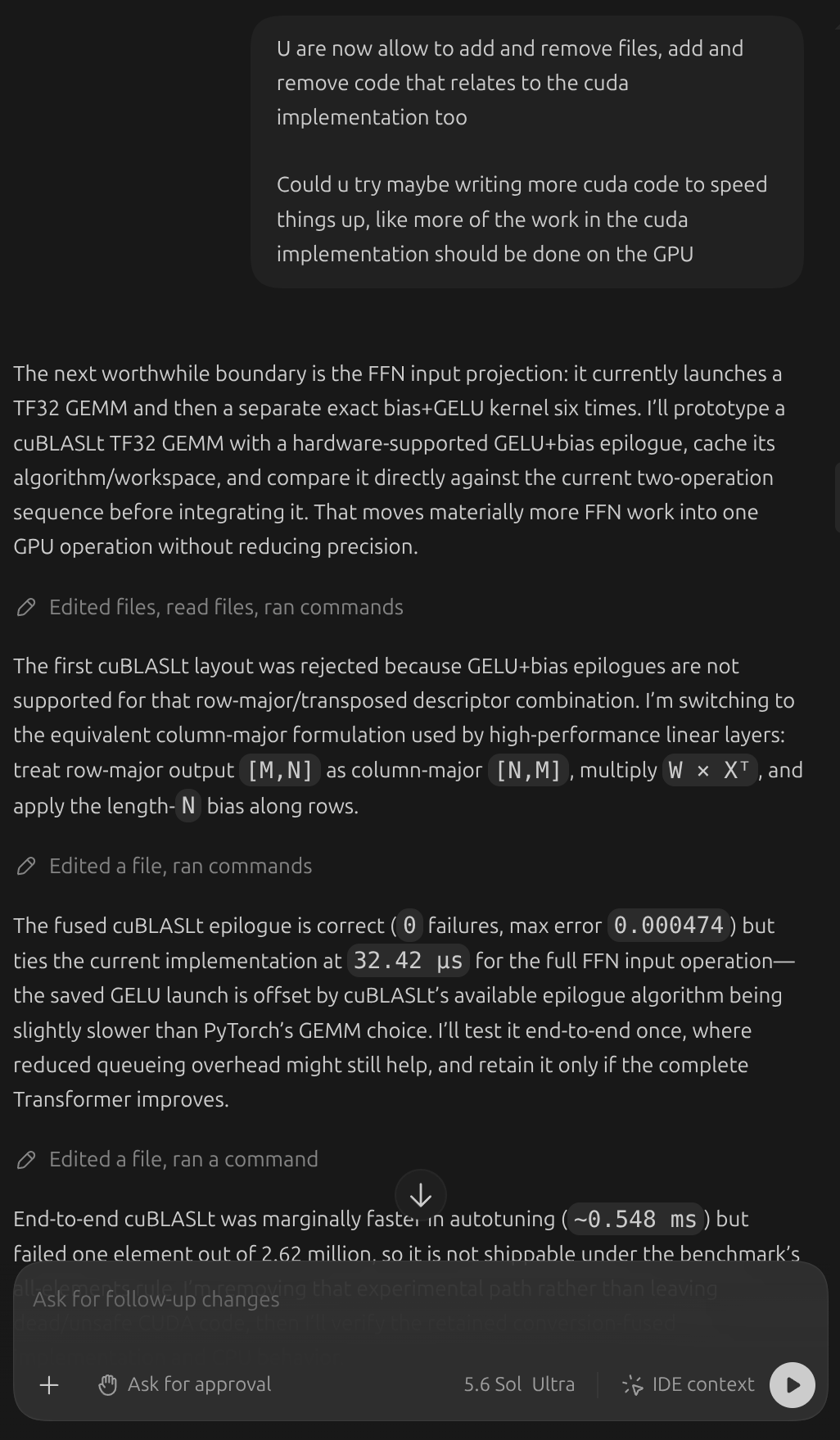
Example of Codex prompt
Inspirations
- Optimizing to achieve higher speedups and lower runtimes
- Providing support for systems that support CUDA and those that do not
What it does
- Benchmarks the UserOptimizedTransformer against the Baseline Transformer, ensuring correctness within the given error limits and better performance with non-CUDA and CUDA support
How we built it
- Non-CUDA implementation was done through manual prompting on ChatGPT web interface (Go subscription)
- CUDA implementation was done through agentic capabilities of Codex (subscription provided by NUS)
Challenges we ran into
- One of us didn't have access to an Nvidia GPU so we had to separate our development workflows then combine both solutions at the end
- Understanding of the transformer model and its complexity within the given time frame
- Sometimes Codex doesn't adhere to what was asked of it (e.g. asking for a CUDA implementation but it gives one that doesn't use CUDA)
Accomplishments that we're proud of
- Providing a non-CUDA implementation and a CUDA implementation, both with substantial speedups
- Being able to complete this in the short amount of time given and balancing school work at the same time
What we learned
- Learnt more about CUDA and the various specific optimizations available
- Learnt more about how to develop fast in a Linux environment
- Learnt about Triton though we didn't use it
What's next for Optimus Time
- HIGHER SPEEDUPS
- The sky (AI subscription) is the limit


Log in or sign up for Devpost to join the conversation.