-
-
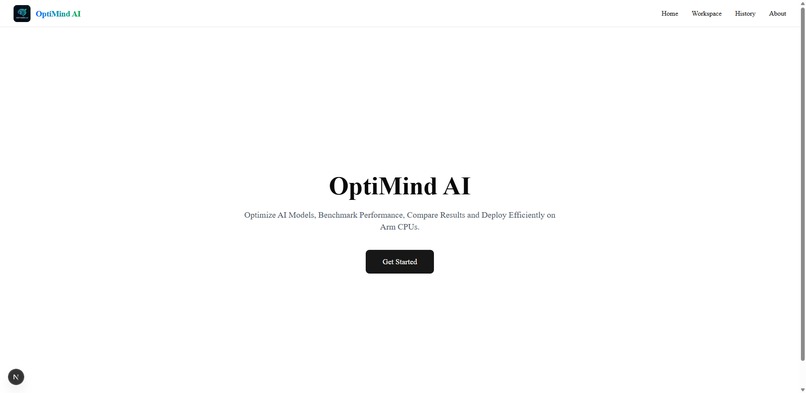
Landing Page
-
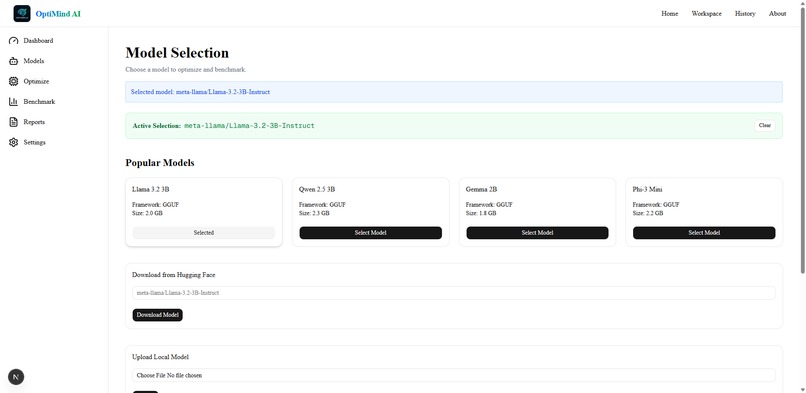
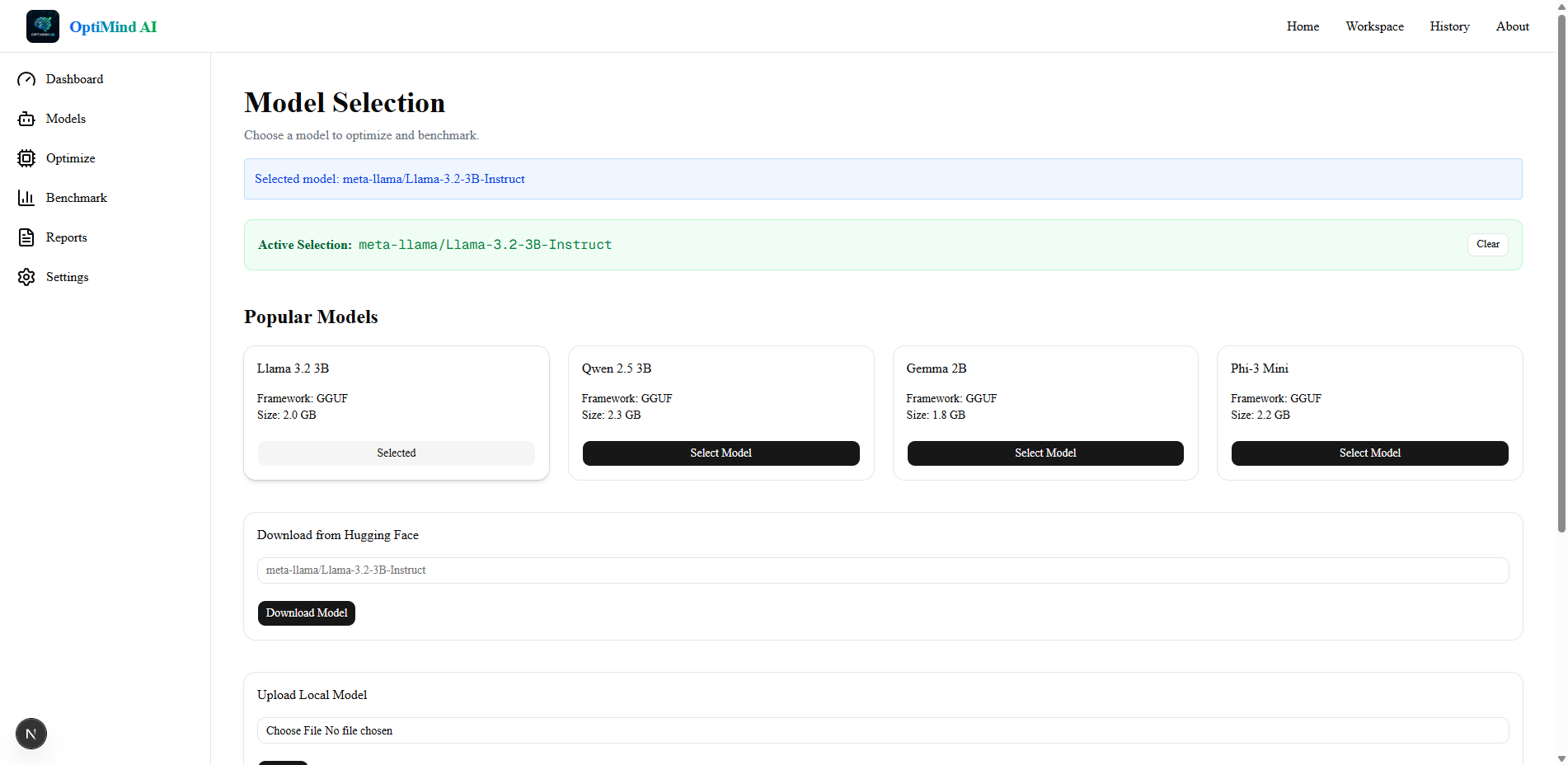
Model Selection
-
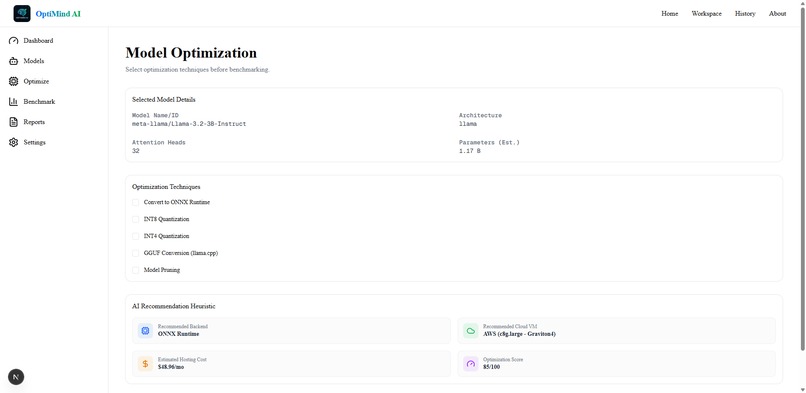
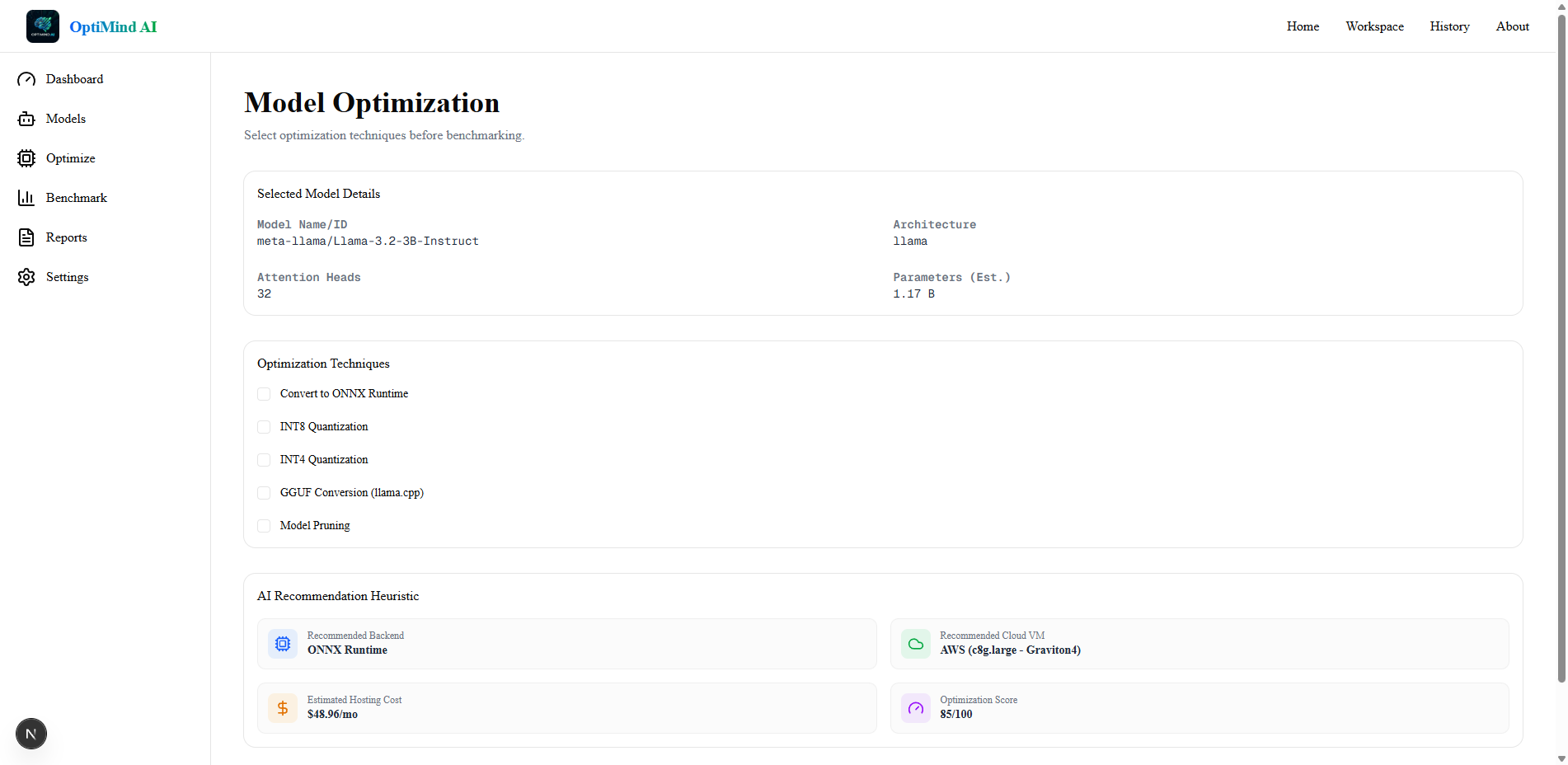
Optimisation Page
-
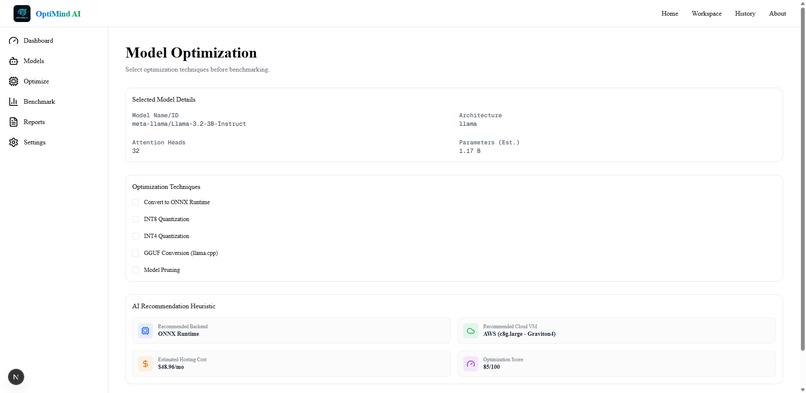
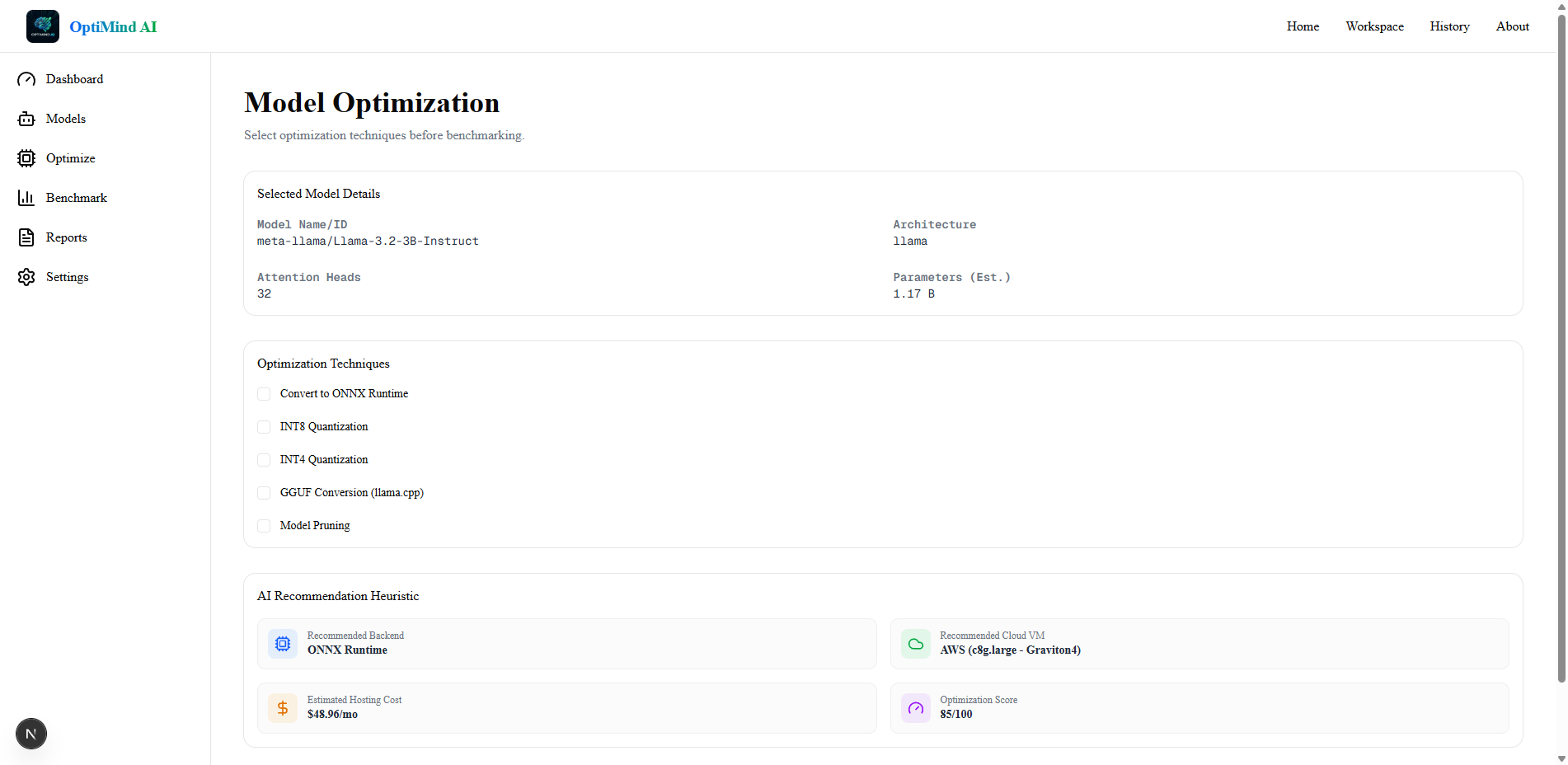
AI recommendation
-
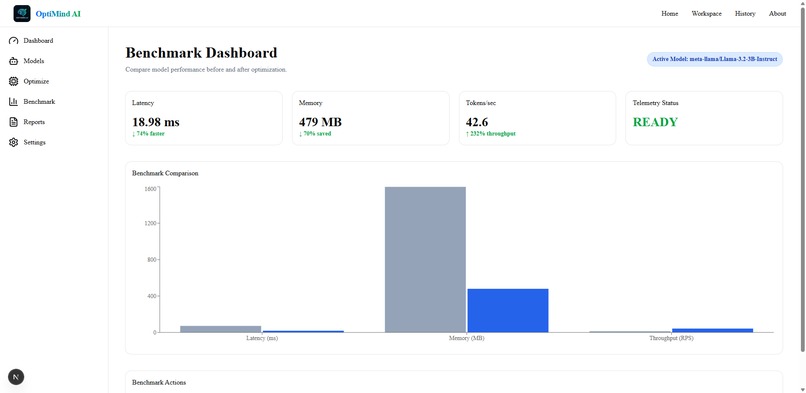
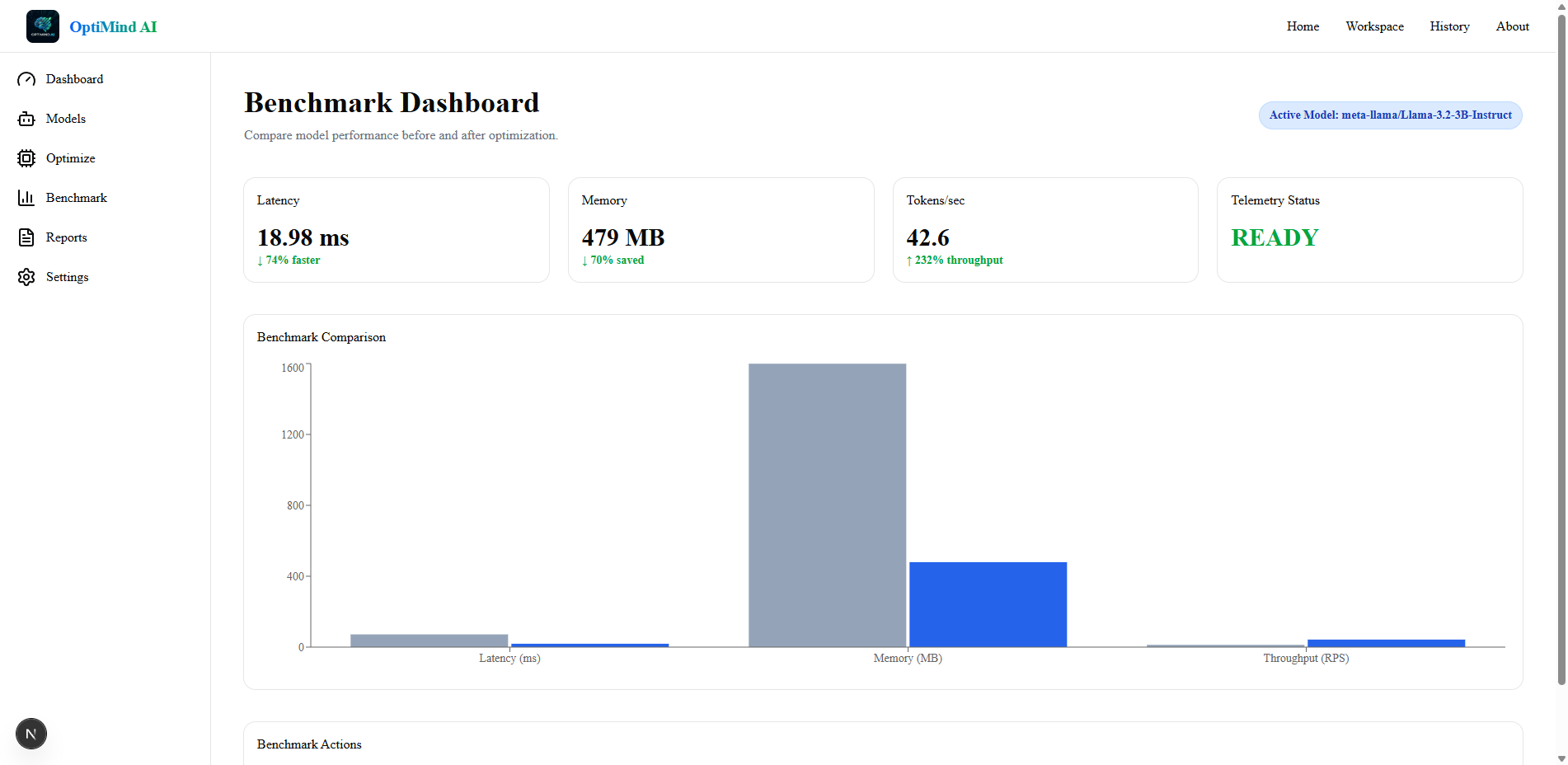
Benchmark Dashboard
-
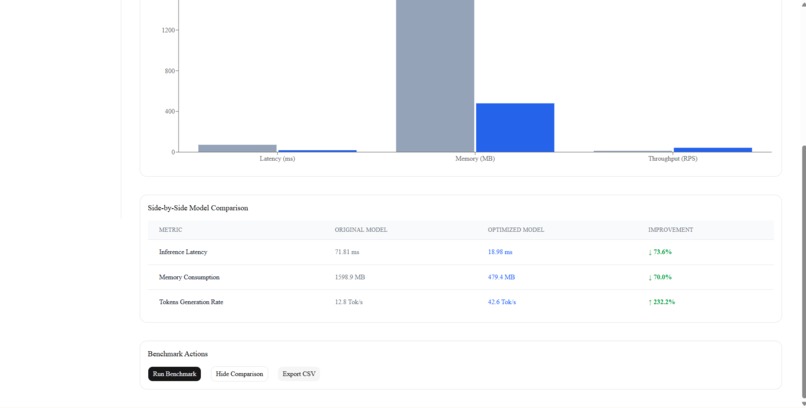
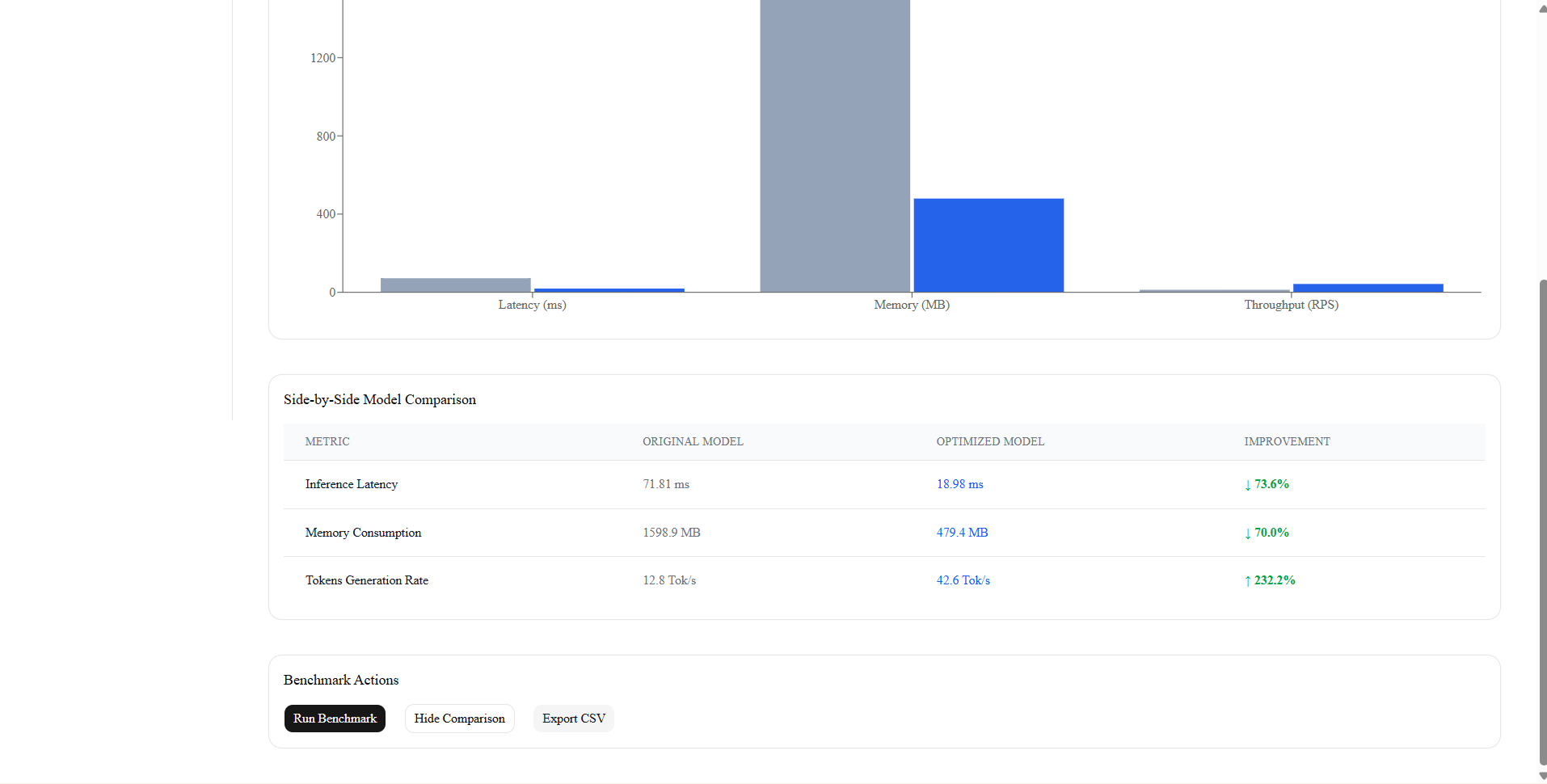
Benchmark Comparison
-
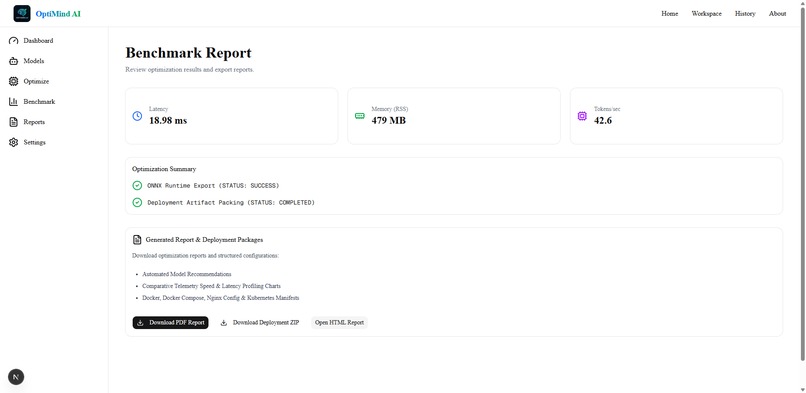
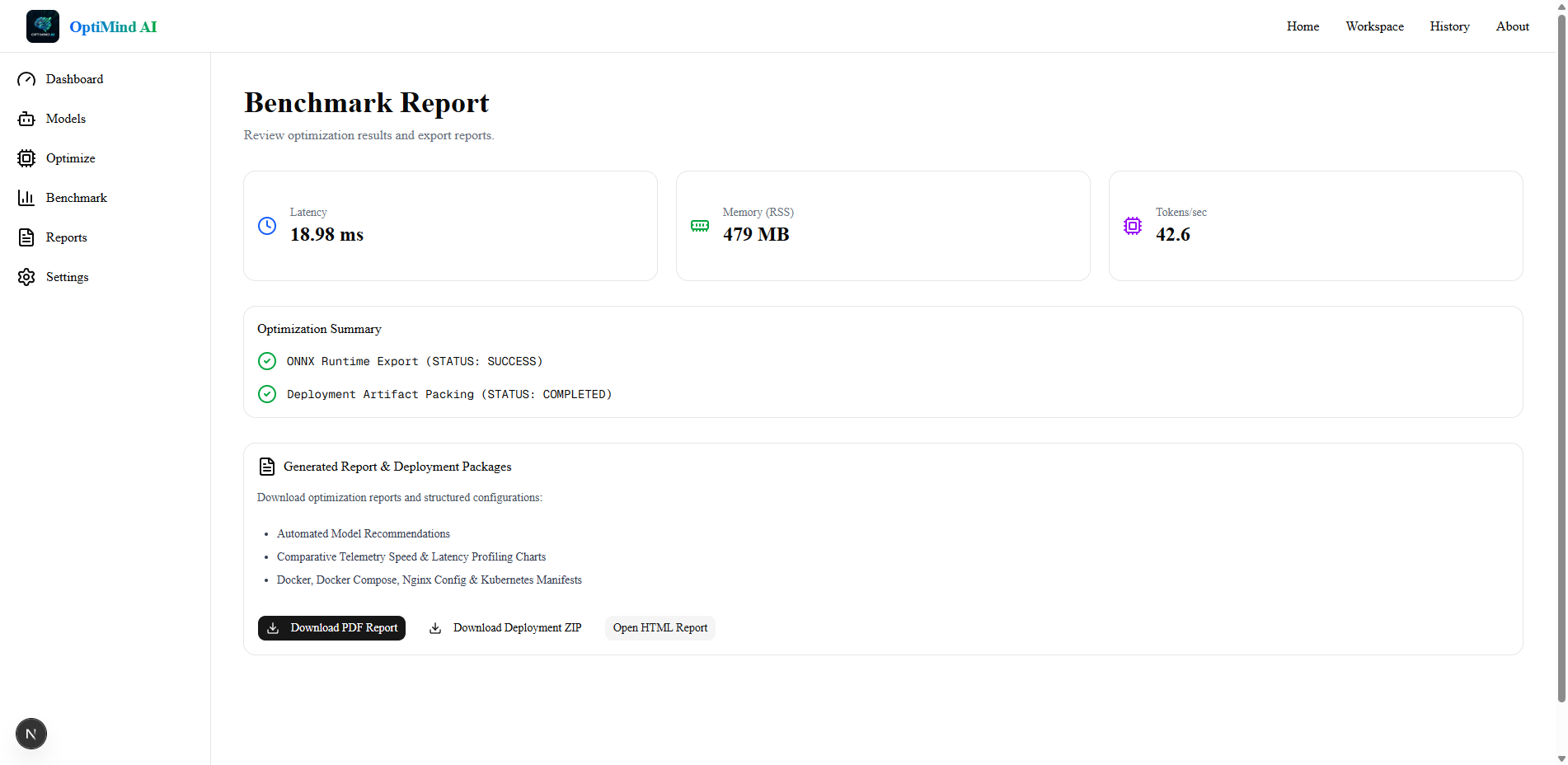
Reports Page
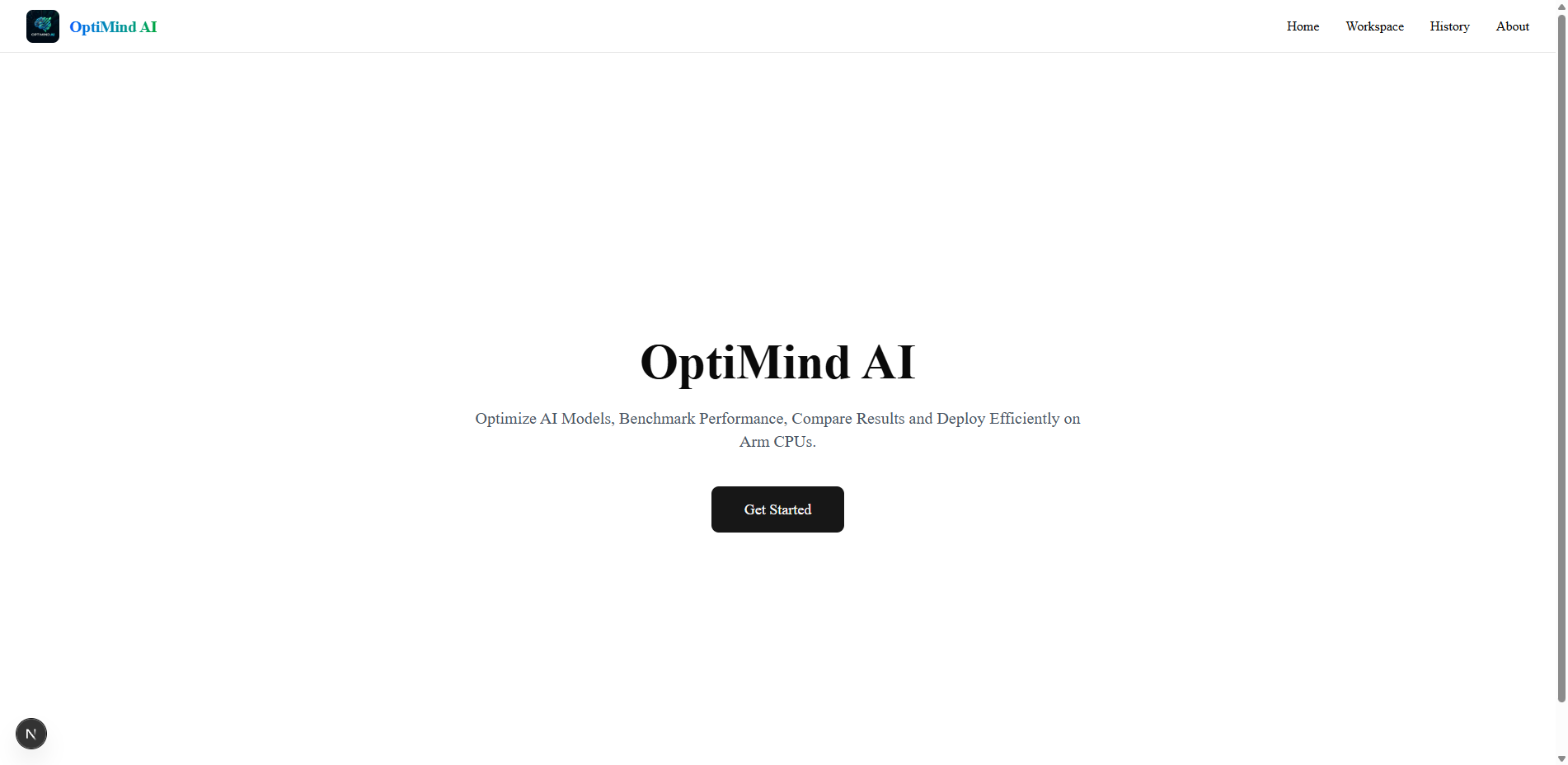
OptiMind AI
OptiMind AI is an intelligent AI model optimization platform that helps developers analyze, optimize, benchmark, and prepare AI models for deployment on modern Arm-based cloud infrastructure.
The platform automatically inspects AI models, recommends the most suitable inference backend, estimates cloud deployment costs, performs optimization, benchmarks performance improvements, and generates deployment-ready artifacts including Docker and Kubernetes configurations.
Inspiration
Deploying AI models efficiently on Arm-powered cloud infrastructure can be challenging due to differences in model architectures, inference runtimes, optimization techniques, and hardware requirements.
We wanted to build a unified platform that simplifies this entire workflow. Instead of manually selecting runtimes, benchmarking models, estimating infrastructure costs, and preparing deployment configurations, developers can perform the complete optimization pipeline from a single interface.
What it Does
OptiMind AI provides an end-to-end workflow for AI model optimization.
Model Inspection
- Analyze Hugging Face models
- Inspect architecture and model metadata
- Estimate parameter count and memory requirements
Intelligent Recommendations
- Recommend the best inference backend
- Recommend suitable Arm cloud instances
- Estimate deployment cost
Optimization
- ONNX Runtime conversion
- Dynamic INT8 Quantization
- INT4 Quantization
- GGUF conversion for llama.cpp
Benchmarking
- Compare latency
- Measure memory consumption
- Analyze throughput
- Visual benchmark dashboard
Report Generation
- PDF optimization reports
- HTML reports
- Deployment package generation
Deployment Package
Automatically generates:
- Dockerfile
- Docker Compose
- Kubernetes manifests
- Nginx configuration
How We Built It
Frontend
- Next.js
- React
- TypeScript
- Tailwind CSS
Backend
- FastAPI
- Python
Optimization
- Hugging Face Hub
- ONNX Runtime
- Optimum
- Transformers
Deployment
- Docker
- Kubernetes
The application follows a modular architecture where each optimization stage is handled independently, making the pipeline scalable and easy to extend.
Challenges We Ran Into
One of the biggest challenges was supporting different AI model architectures while keeping the optimization pipeline flexible.
We also needed to:
- Build an architecture-aware recommendation engine.
- Generate realistic benchmark reports.
- Handle Hugging Face gated models gracefully.
- Create deployment artifacts automatically.
- Design an interface that presents technical information in a simple and intuitive way.
Accomplishments We're Proud Of
- Built a complete AI optimization workflow.
- Automated backend and cloud recommendations.
- Implemented dynamic benchmark reporting.
- Generated production-ready deployment packages.
- Created a clean and intuitive developer experience.
What We Learned
Through this project, we gained practical experience with:
- AI model optimization workflows
- ONNX Runtime
- Quantization techniques
- Arm cloud deployment strategies
- Hugging Face model inspection
- FastAPI backend development
- Next.js frontend development
- Performance benchmarking
What's Next
Future improvements include:
- Real hardware benchmarking on Arm servers
- Additional optimization techniques
- GPU and NPU backend support
- Model compression strategies
- Multi-cloud deployment automation
- MLOps pipeline integration
- User authentication and project management
- Historical benchmark comparison dashboards
OptiMind AI demonstrates how AI model optimization, benchmarking, and deployment preparation can be unified into a single intelligent platform for modern Arm-powered cloud environments.
Built With
- arm
- aws-graviton
- benchmarking
- fastapi
- hugging-face
- kubernetes
- next.js
- onnx
- python
- quantization
- react
- transformers

Log in or sign up for Devpost to join the conversation.