-
-
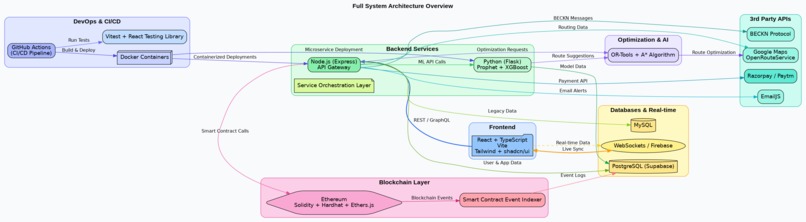
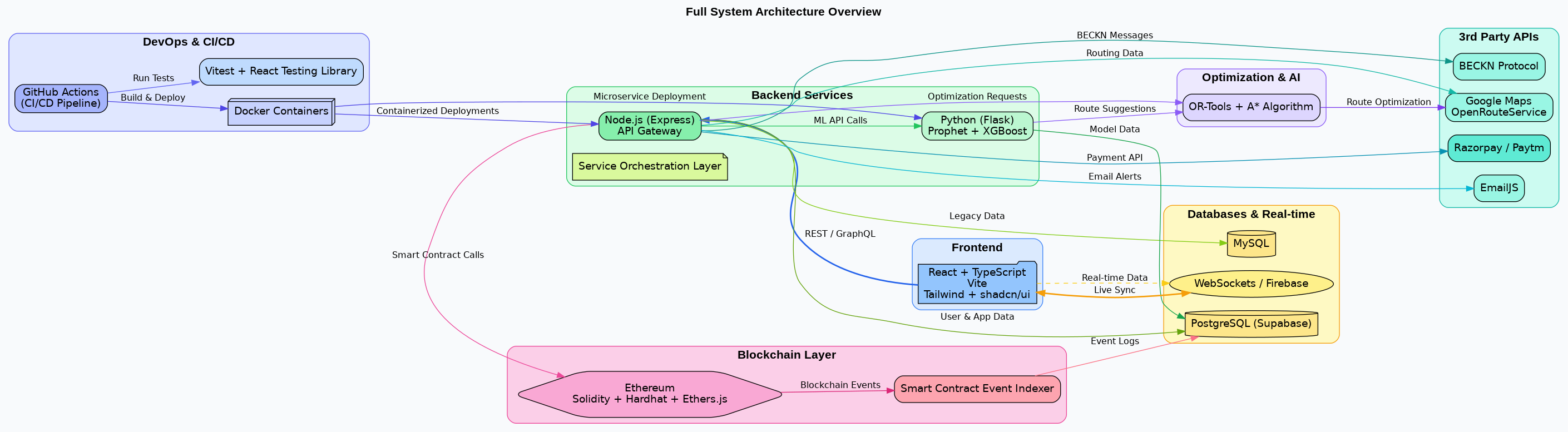
Flow Diagram
-
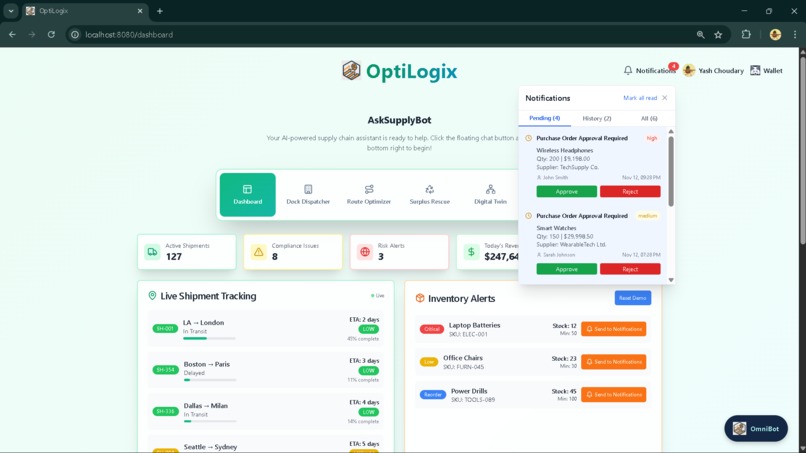
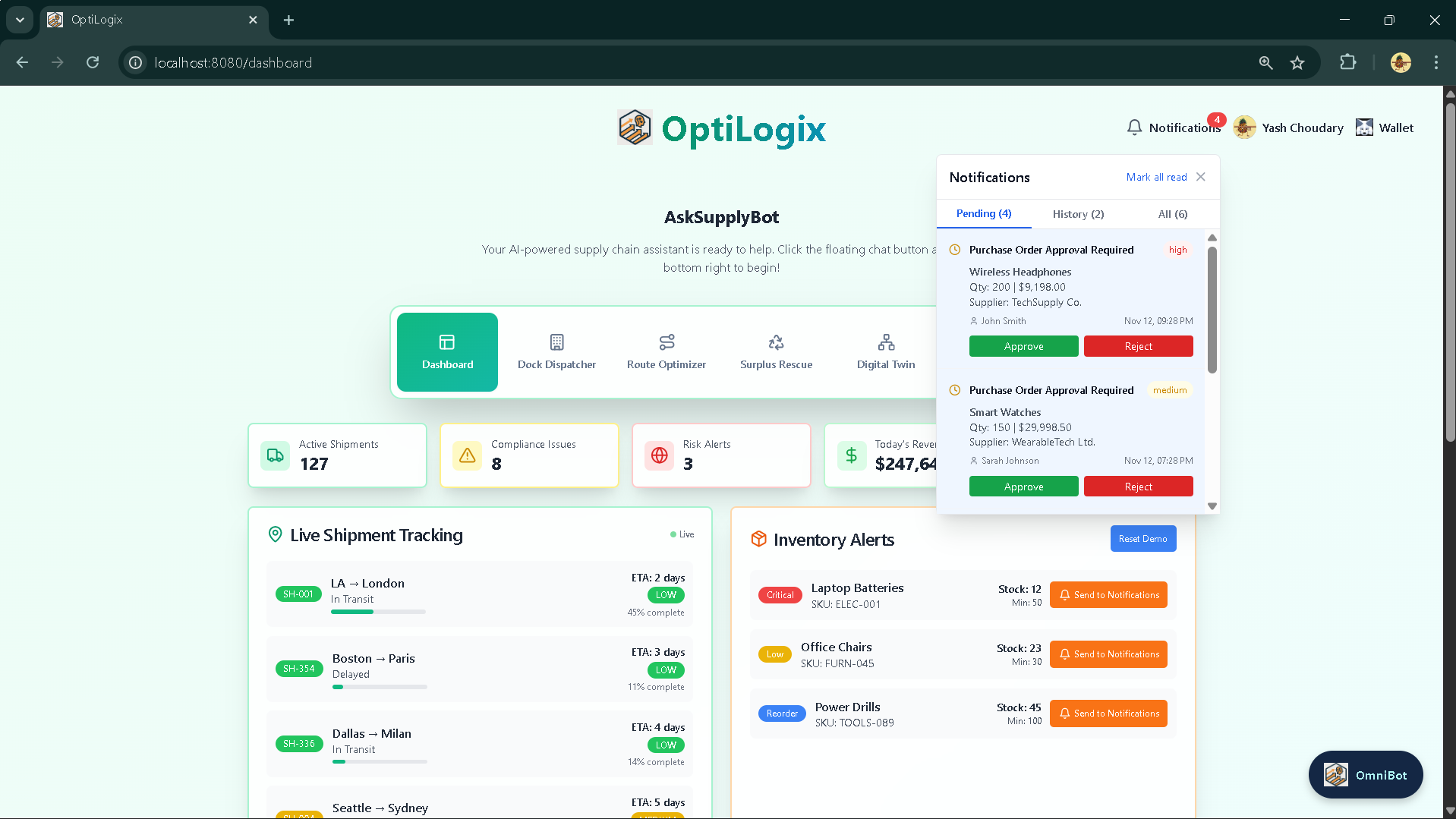
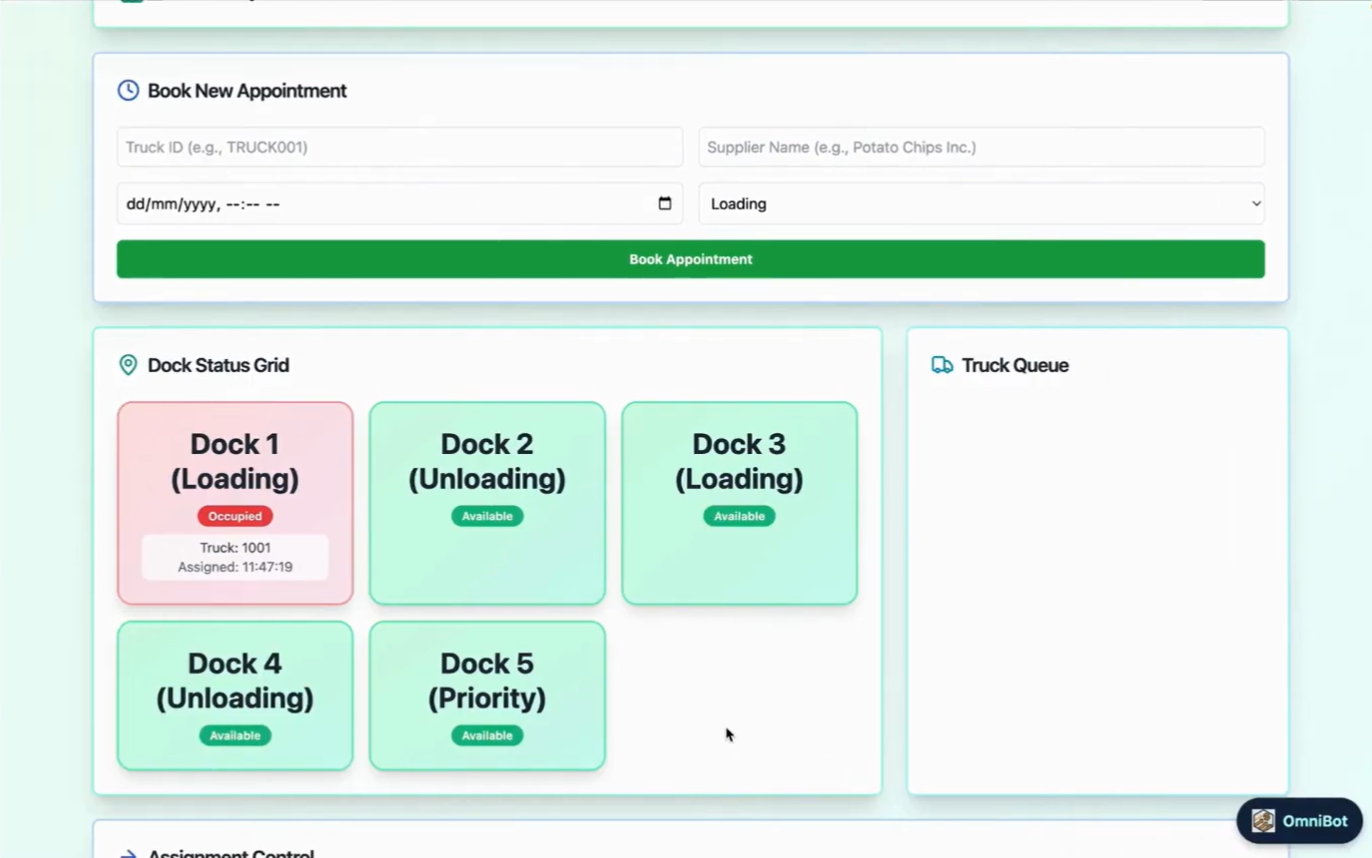
Dashboard
-
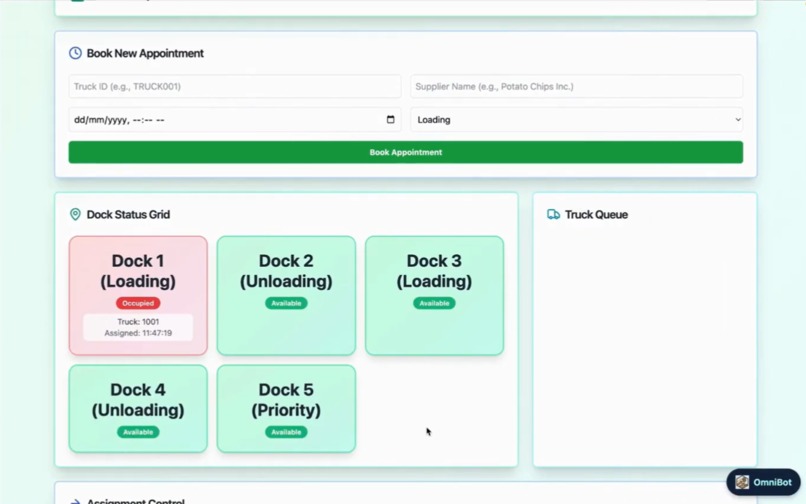
Dock dispatcher
-
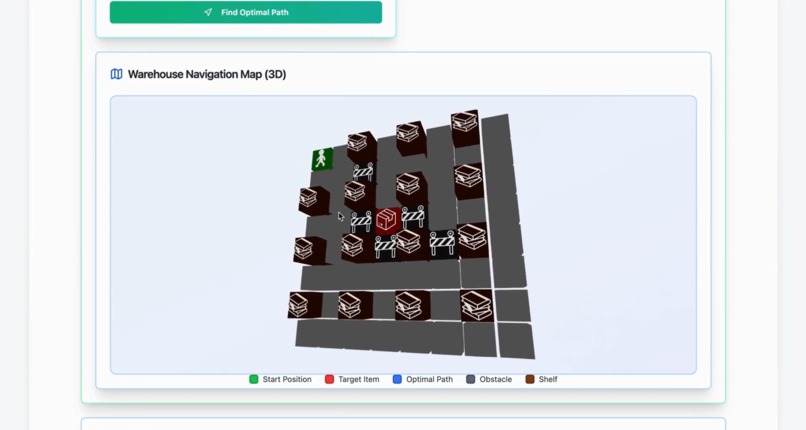
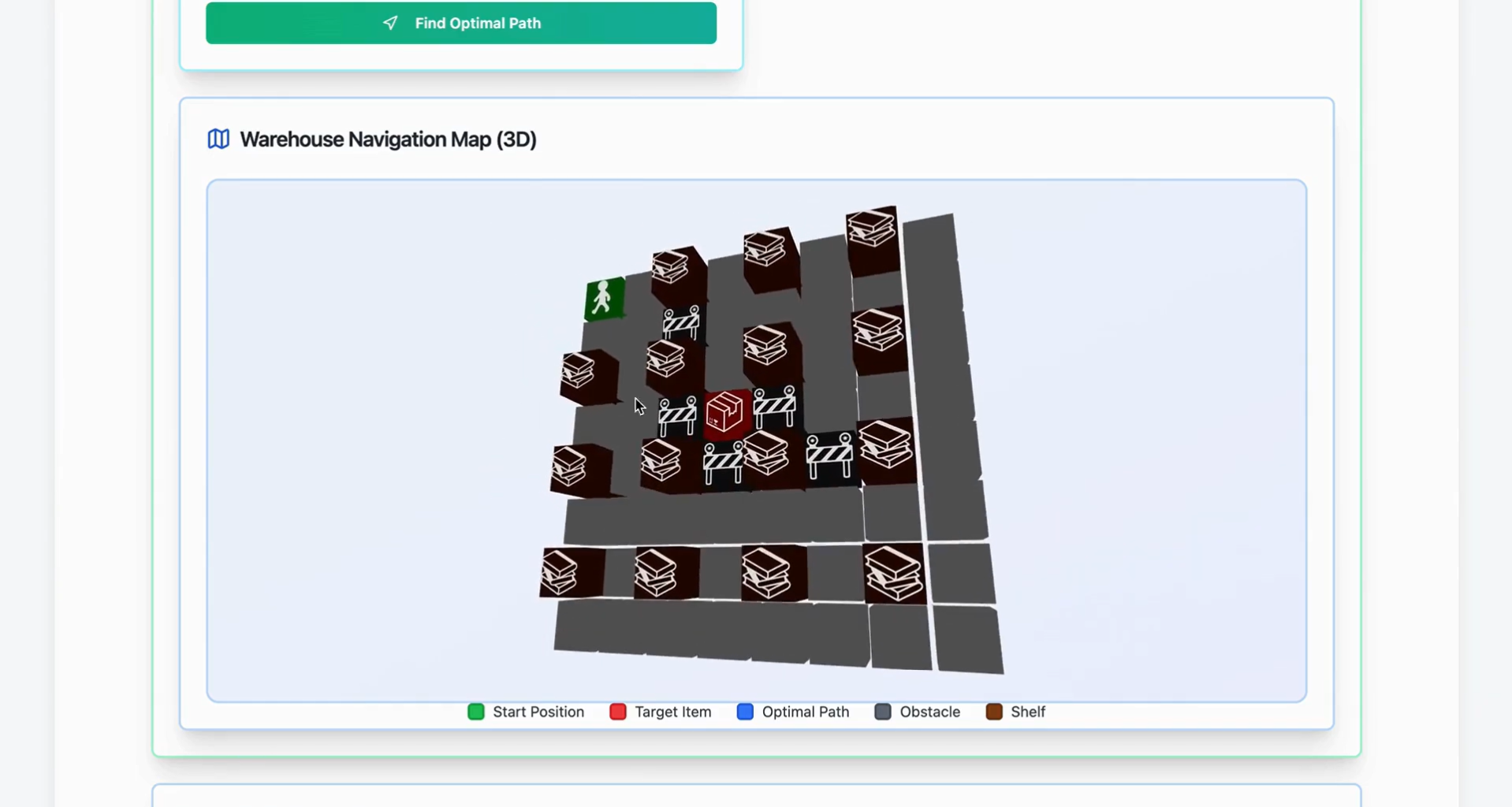
3D Warehouse Navigation Map
-
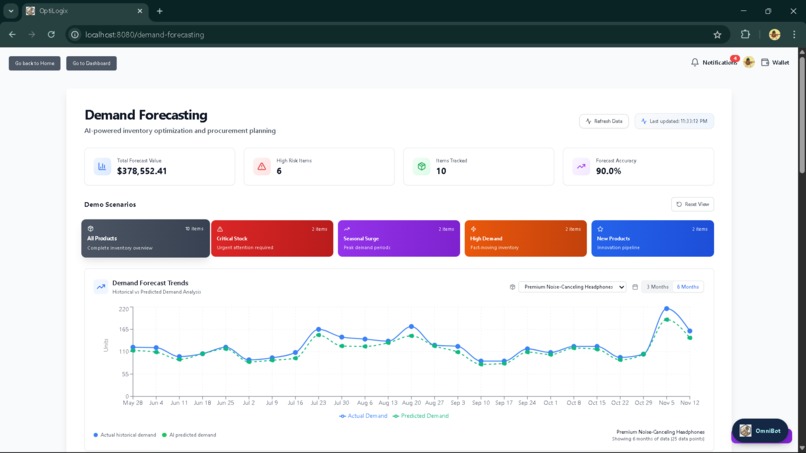
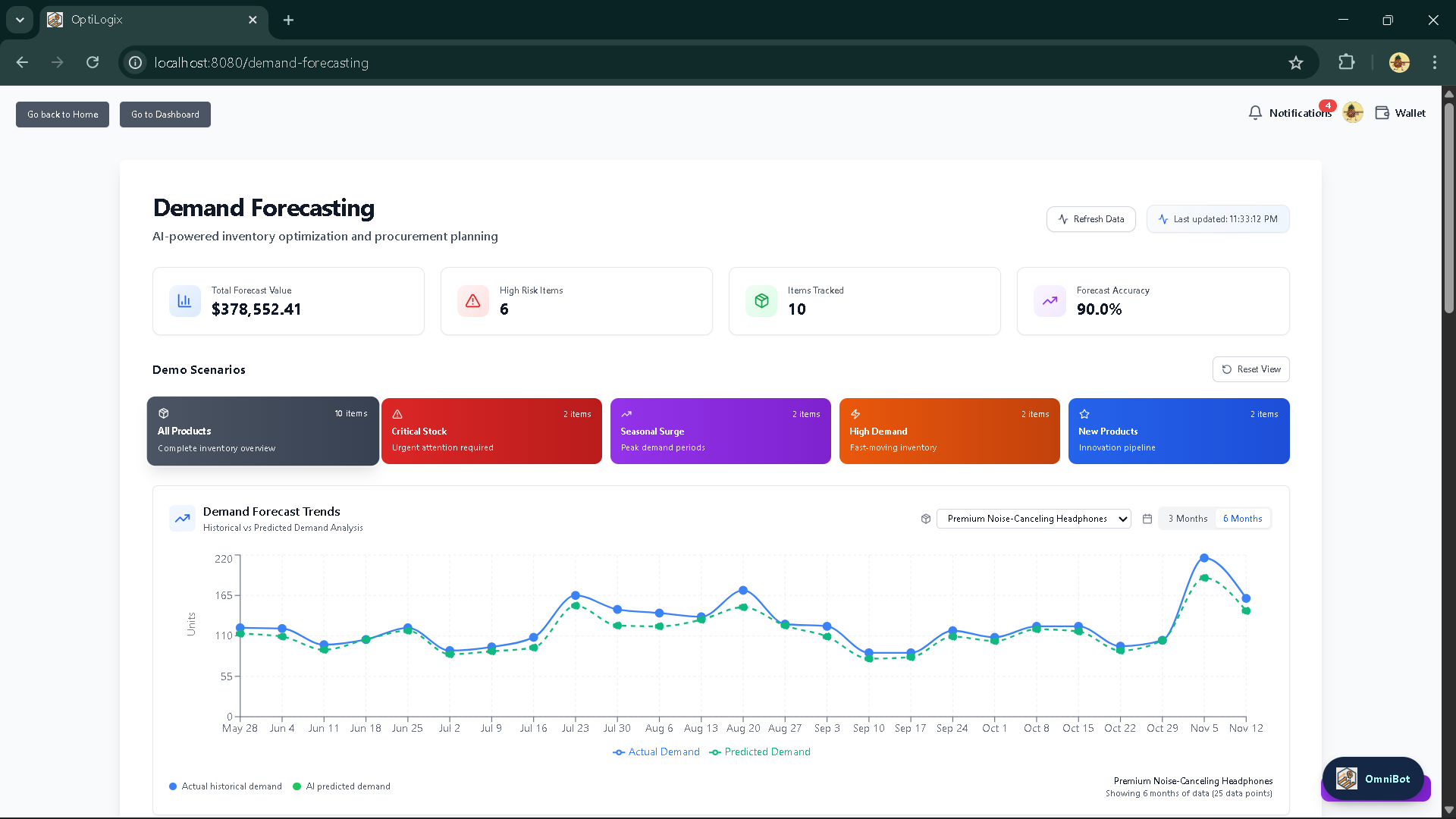
Demand Forecasting
-
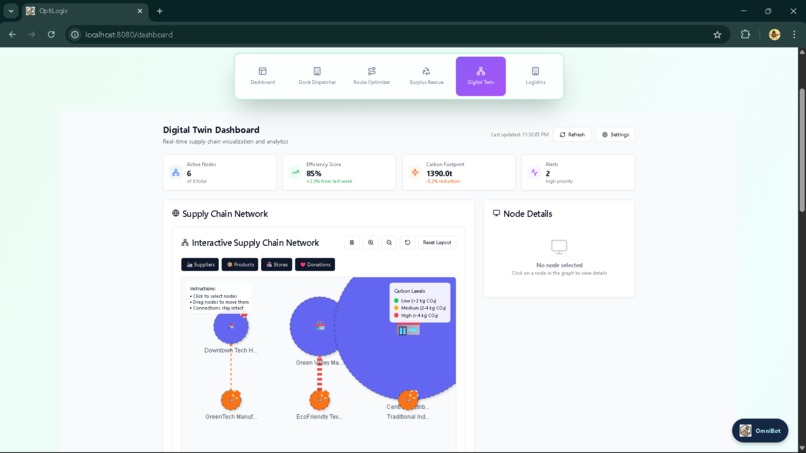
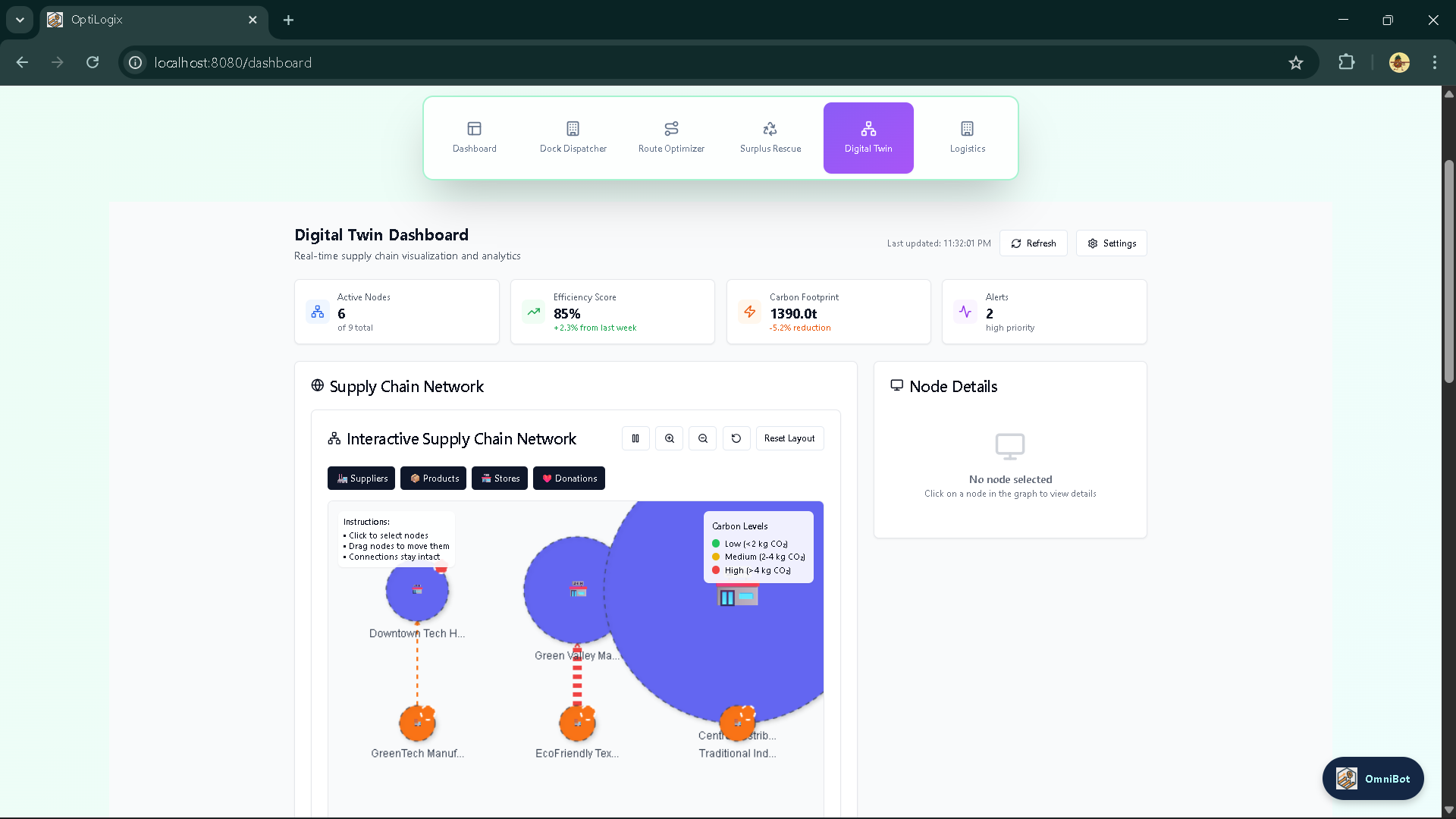
Digital Twin
-
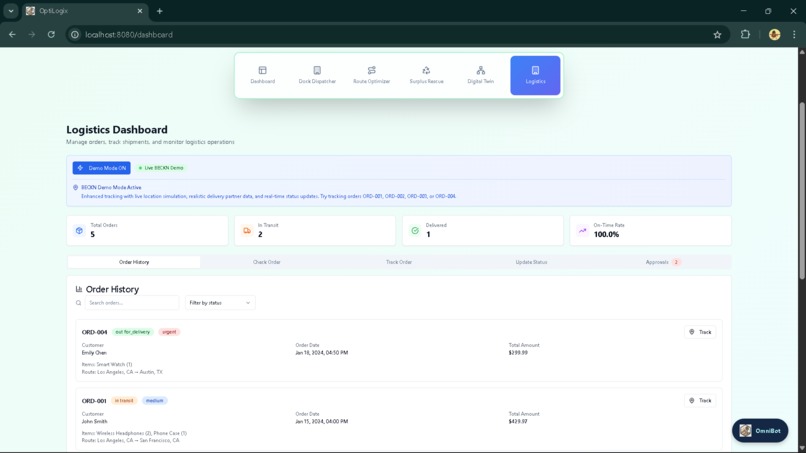
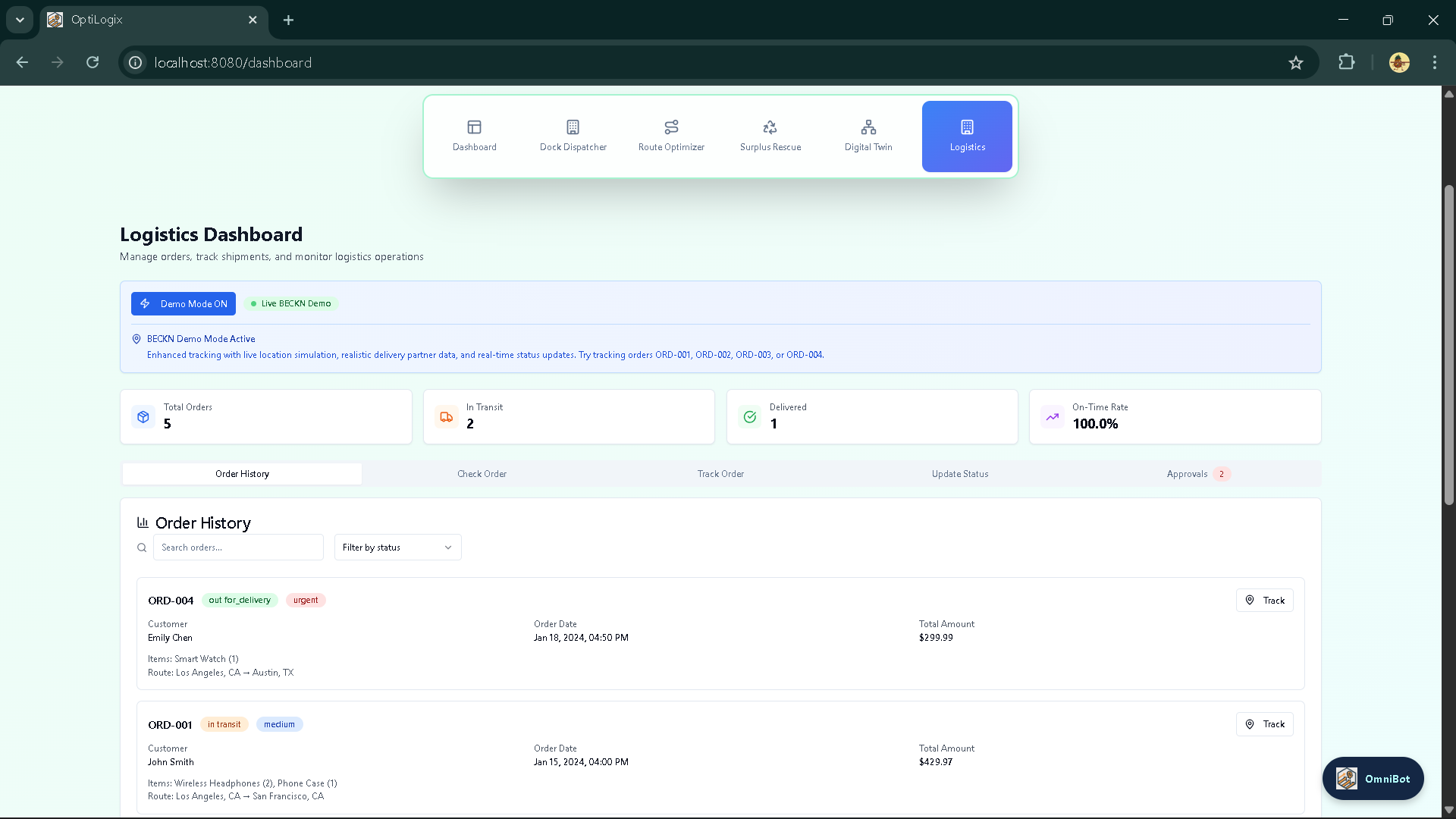
Logistics Dashboard with Beckn Protocol
-
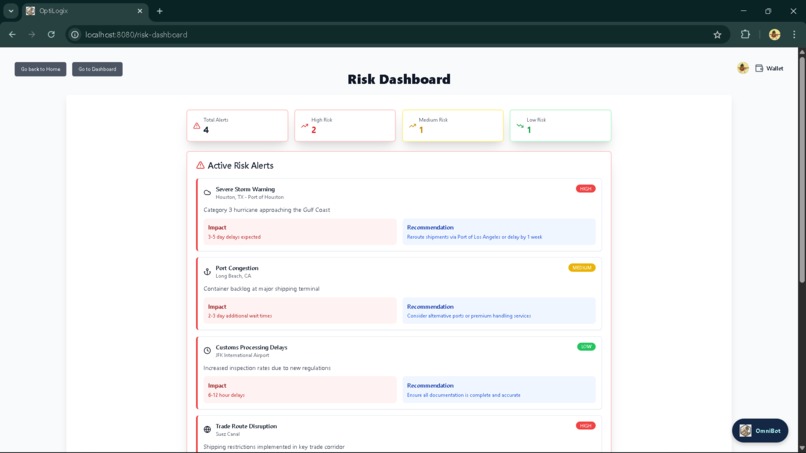
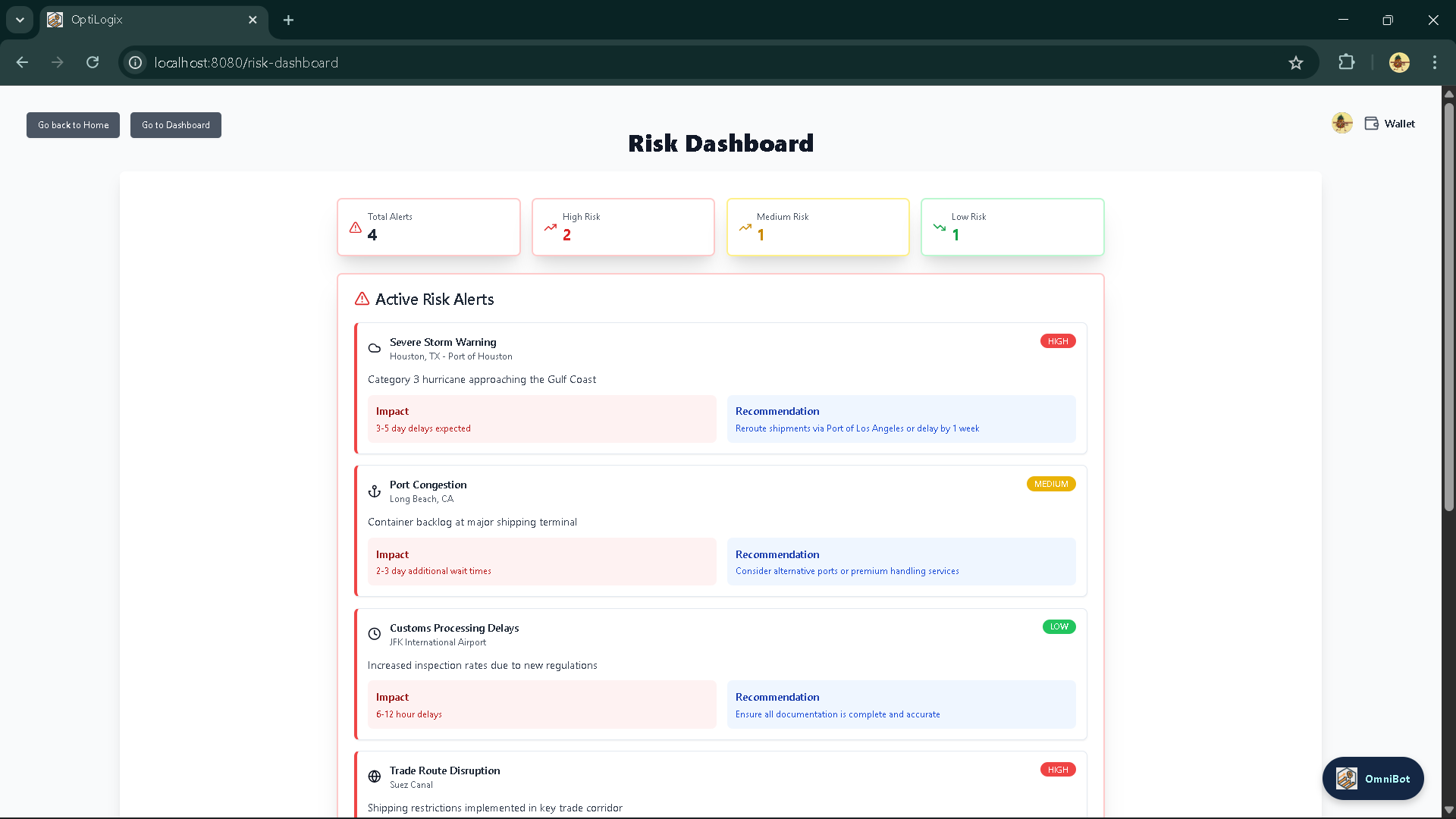
Risk Dashboard
-
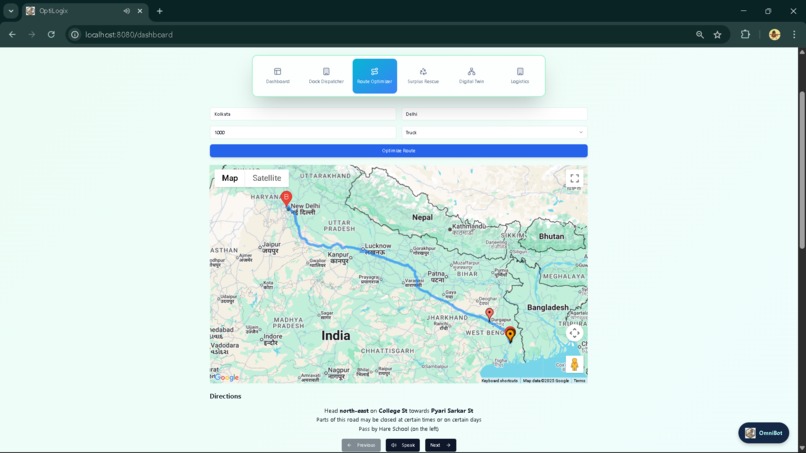
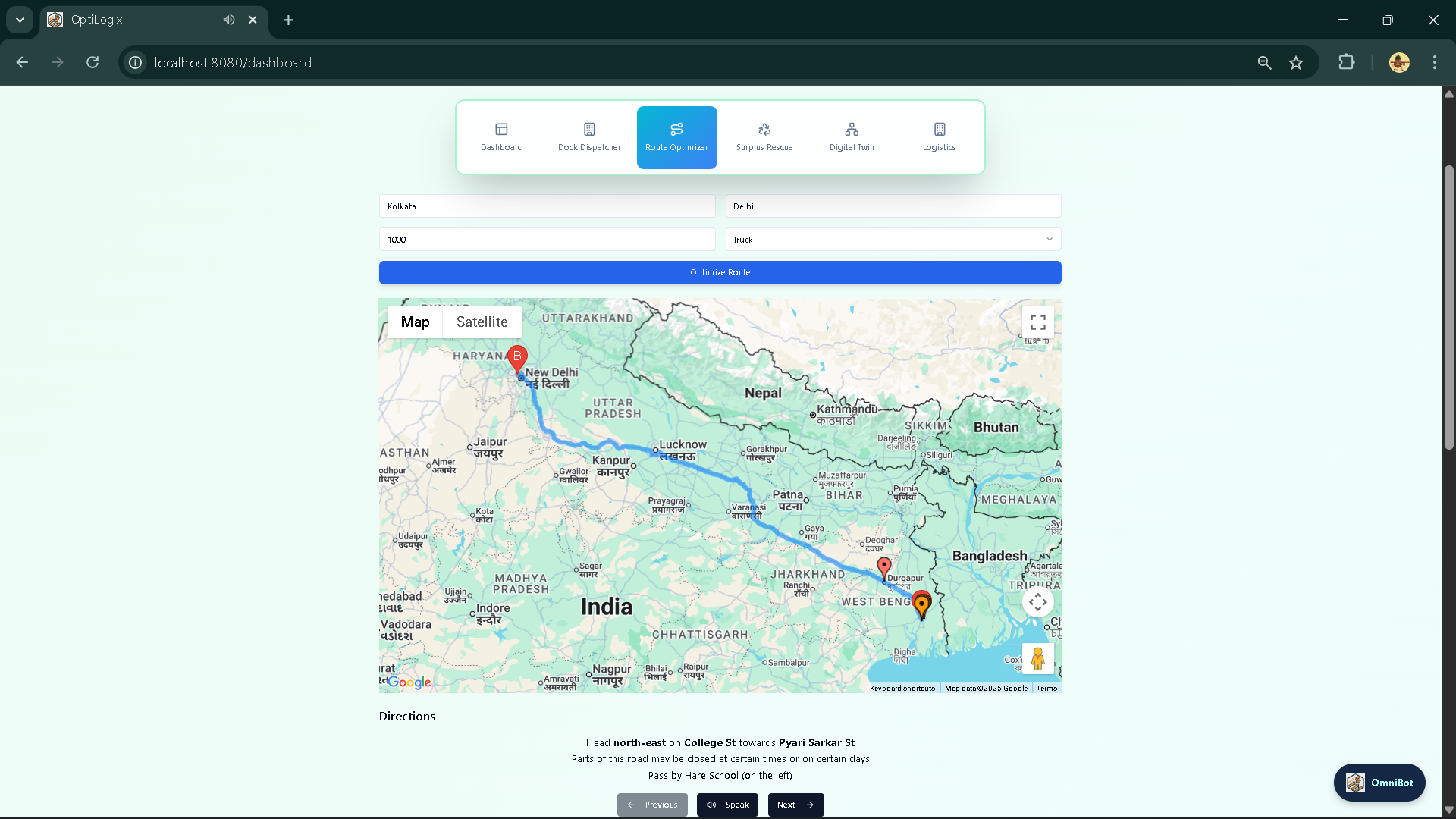
Route Optimizer
-
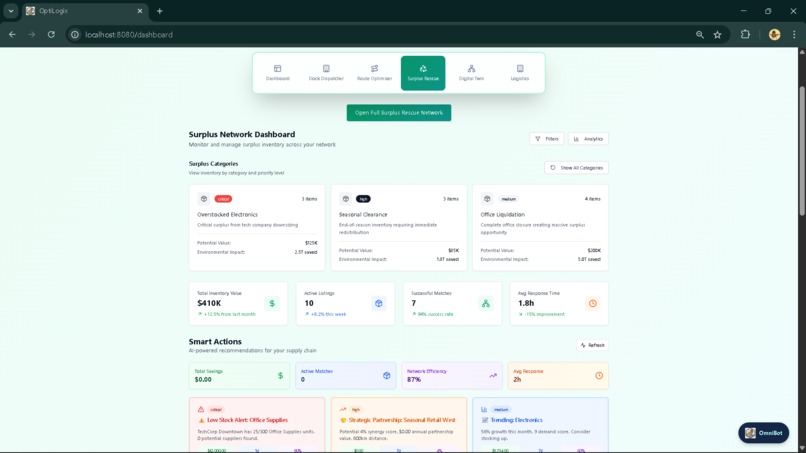
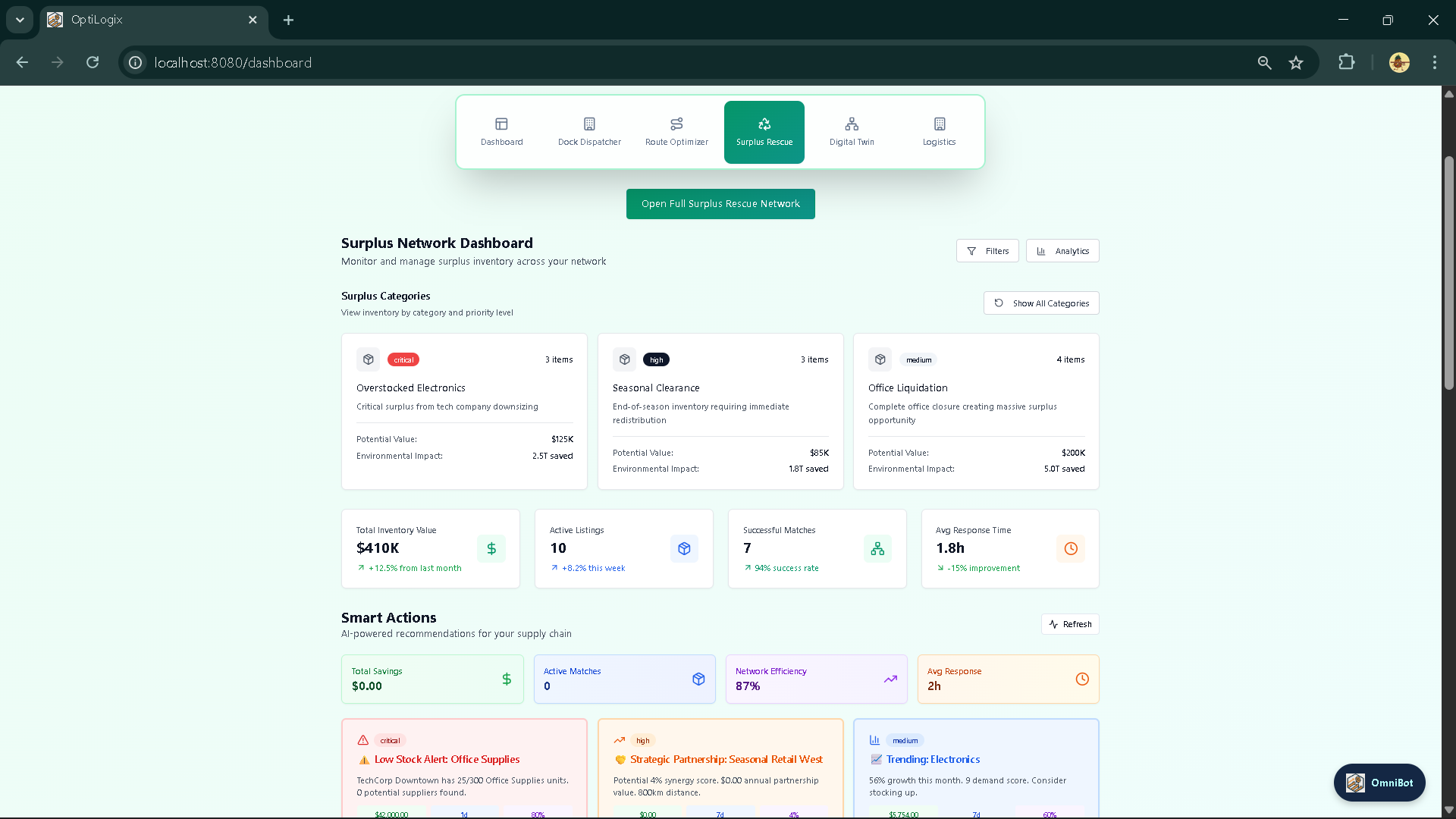
Surplus Network Dashboard
What We Built
OptiLogiX is a full-stack logistics orchestration platform that brings AI-driven intelligence to every critical touchpoint in the supply chain. We built a system that doesn't just track shipments , it actively optimizes operations, predicts bottlenecks, and automates decision-making across warehousing, transportation, and compliance workflows.
The platform consists of nine integrated modules working in concert: a Priority Slot Algorithm for dock management, AI-enhanced route optimization, A* pathfinding for warehouse navigation, real-time compliance monitoring, driver-facing mobile interfaces, instant freight comparison, predictive demand forecasting, risk analytics, and a unified command dashboard. Everything runs on a modern tech stack with React/TypeScript frontend, Node.js/Python backends, blockchain provenance tracking via Ethereum smart contracts, and real-time collaboration through WebSockets.
The Inspiration
The idea came from watching how fragmented modern logistics operations really are. Warehouse managers use one system, dispatchers use another, drivers rely on outdated paper manifests, and compliance teams work in silos. When a truck arrives late or inventory runs low, there's no single source of truth just a cascade of phone calls and manual checks.
We saw an opportunity to build something different: a platform where AI agents handle the repetitive decision-making, where data flows seamlessly between stakeholders, and where problems get flagged before they become crises. The goal wasn't just digitization ,it was intelligent automation that scales with business growth.
How We Built It
We started with the core pain points and worked outward. The Dock Dispatcher uses reinforcement learning to assign incoming trucks to optimal slots based on real-time load, urgency, and dock availability , cutting idle time by prioritizing high-value shipments. The Route Optimizer combines A* pathfinding with OR-Tools to calculate fuel-efficient routes that adapt to live traffic and weather data.
Inside the warehouse, the Inventory Spotter guides pickers along the shortest path to items using real-time mapping and barcode scanning (QuaggaJS), reducing pick times by up to 40%. The Compliance Checker runs a rules-based engine with anomaly detection to flag violations like overloading or tampered seals before they become legal issues.
For drivers, we built a progressive web app that delivers real-time dock assignments, route updates, and weather alerts via WebSocket push notifications. The Freight Quotes module integrates with third-party logistics APIs (Delhivery, DHL) to compare carrier rates instantly. The Risk Dashboard consolidates operational, regulatory, and delivery risks into heatmaps and alerts, while Demand Forecasting uses Prophet and XGBoost models to predict SKU demand 7-28 days out.
Everything feeds into the Smart Dashboard , a unified control center where stakeholders monitor KPIs, control AI agents, and make data-driven decisions in real time. We also integrated blockchain provenance using Ethereum smart contracts to ensure transparent, tamper-proof tracking of goods through the supply chain.
On the technical side, we used React with TypeScript and Vite for the frontend, shadcn/ui for components, and Tailwind for styling. The backend runs on Express.js with Supabase for data persistence, Python services for AI/ML workloads, and Firebase for authentication. We integrated Razorpay for payments, EmailJS for notifications, and Google Maps API for geospatial features. The BECKN protocol integration enables interoperability with external logistics networks.
Challenges We Faced
The biggest challenge was orchestrating real-time data flows across multiple subsystems without creating bottlenecks. When a truck's ETA changes, that needs to cascade through dock scheduling, inventory prep, and driver notifications ,all within seconds. We solved this with event-driven architecture and WebSocket channels, but tuning the message queues to avoid race conditions took significant iteration.
Integrating the A* pathfinding algorithm for warehouse navigation was trickier than expected. Real warehouses aren't perfect grids they have irregular layouts, dynamic obstacles, and constantly changing inventory positions. We had to build a flexible graph representation that updates in real time as items move and aisles get blocked.
The demand forecasting models initially struggled with sparse historical data. Many SKUs had irregular order patterns that confused the time-series algorithms. We addressed this by incorporating external signals (seasonality, promotions, market trends) and using ensemble methods to blend Prophet's trend detection with XGBoost's feature learning.
Getting the blockchain integration right was another hurdle. Writing to Ethereum is expensive and slow, so we had to be strategic about what gets recorded on-chain versus what stays in traditional databases. We settled on storing only critical provenance events (origin verification, custody transfers, quality checkpoints) as immutable records.
Finally, building a unified dashboard that's both powerful and intuitive required constant user feedback. Early versions overwhelmed users with data. We learned to surface insights, not raw metrics, showing "3 high-risk shipments need attention" instead of "47 data points across 12 categories."
What We Learned
We learned that AI in logistics isn't about replacing humans, it's about giving them superpowers. The dock dispatcher doesn't eliminate the need for warehouse managers; it handles the routine 80% so they can focus on the complex 20%. The route optimizer doesn't replace drivers; it gives them better information to make better decisions.
We also learned the importance of interoperability. The BECKN protocol integration taught us that modern logistics platforms can't be walled gardens, they need to speak common languages and share data with partners, carriers, and regulatory systems.
From a technical perspective, we learned that real-time systems require obsessive attention to latency and failure modes. A 2-second delay in a notification can mean a missed dock slot. A dropped WebSocket connection can leave a driver without route updates. Building resilience into every layer, retries, fallbacks, graceful degradation was essential.
The Impact
In testing scenarios, OptiLogiX delivered measurable improvements: 30-40% faster warehouse operations through optimized picking paths, 15-20% cost savings on routing and fuel, and 99.5% SLA compliance through proactive risk management. But the real impact is in how it changes daily operations, fewer panicked calls, fewer missed deadlines, fewer costly mistakes.
The platform scales with business growth because the AI agents get smarter as they process more data. The demand forecasting improves with every order cycle. The route optimizer learns which roads to avoid at which times. The risk dashboard gets better at predicting which shipments will have problems.
We built OptiLogiX to prove that logistics doesn't have to be chaotic. With the right combination of AI, real-time data, and thoughtful design, supply chains can be predictable, efficient, and resilient, even as they scale.
Built With
- ai
- css
- fastapi
- hardhat
- html
- javascript
- mongodb
- n8n
- omnidimensional
- python
- react
- solidity
- supabase
- tailwind
- typescript
- vite
- xgboost


Log in or sign up for Devpost to join the conversation.