-
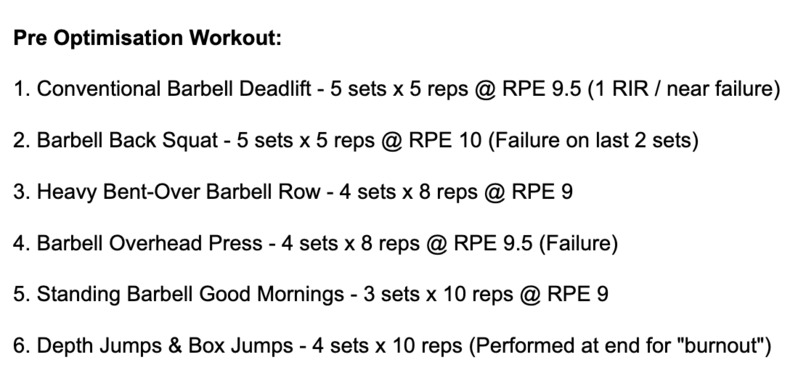
Workout Input By User
-
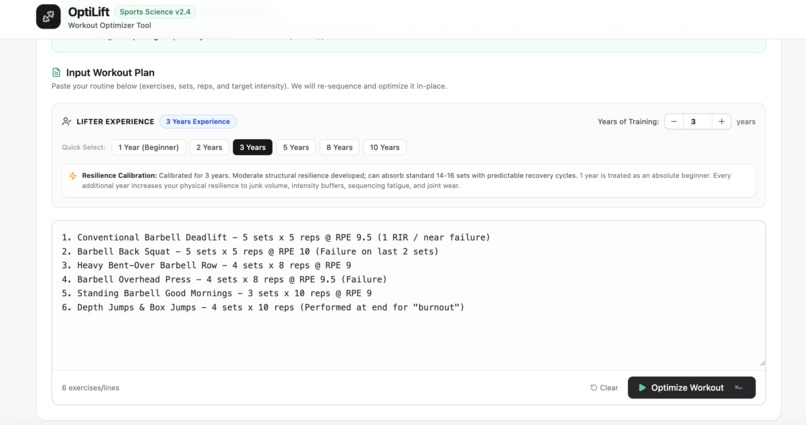
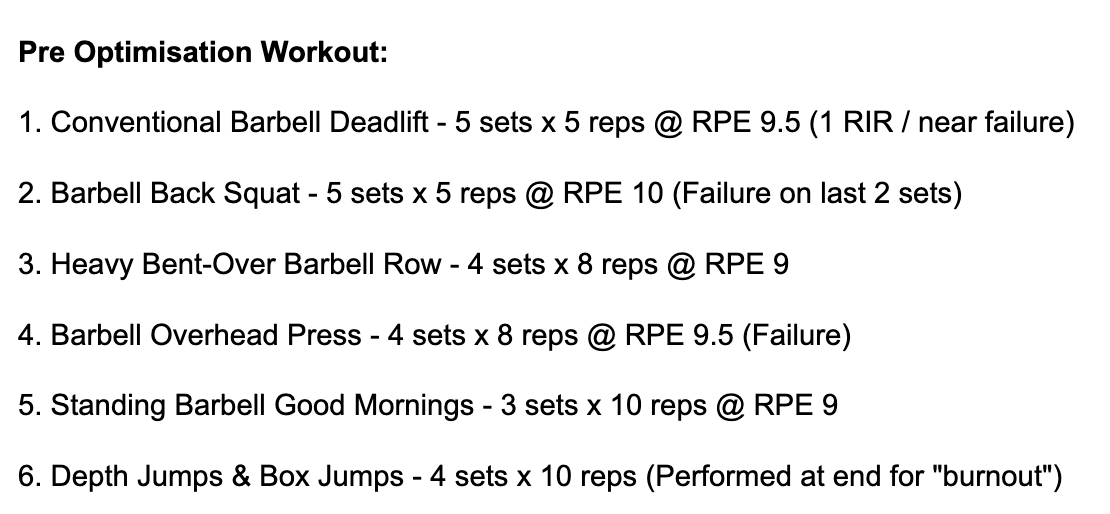
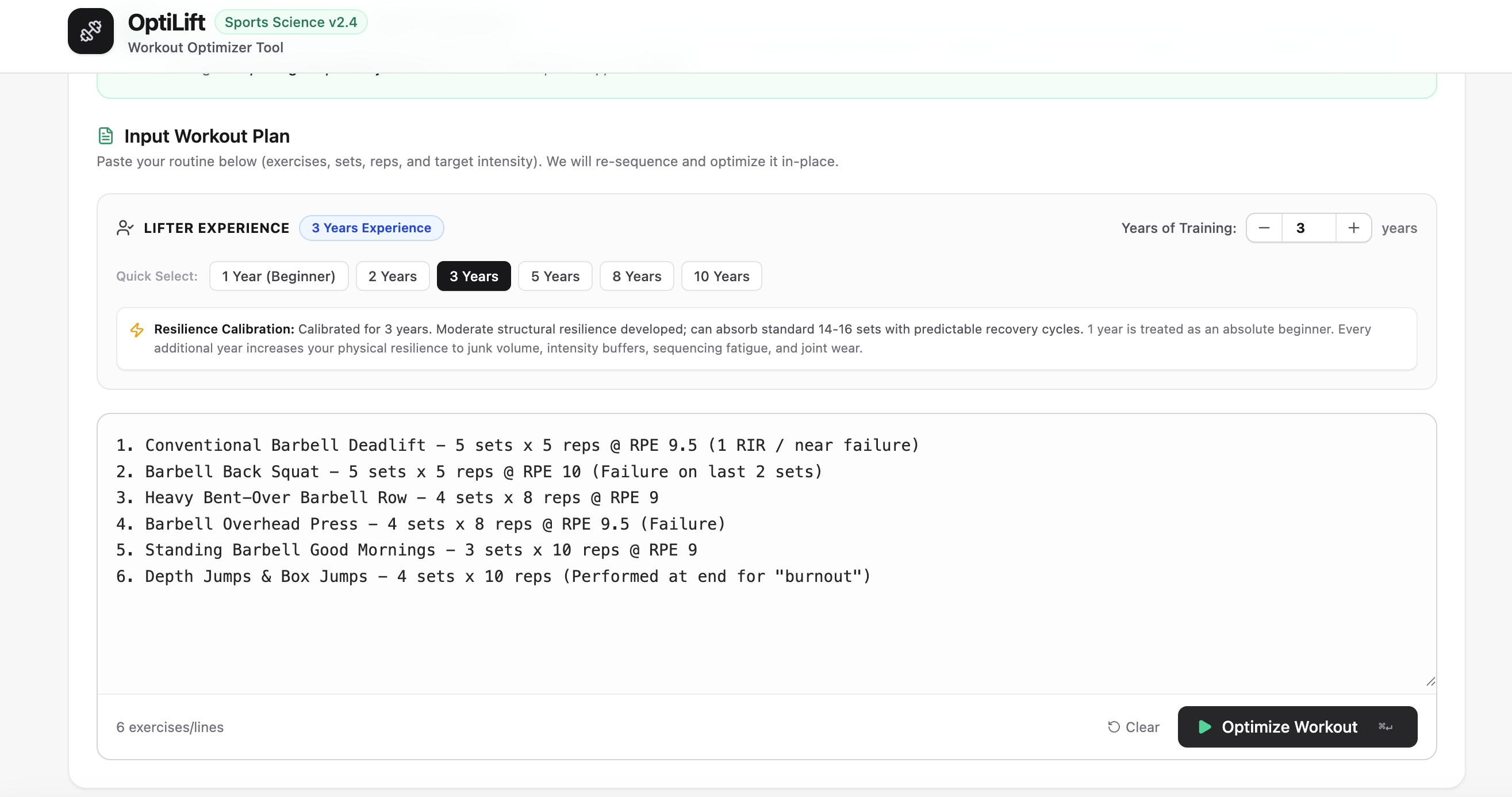
Input Workout and choose Years of Experience
-
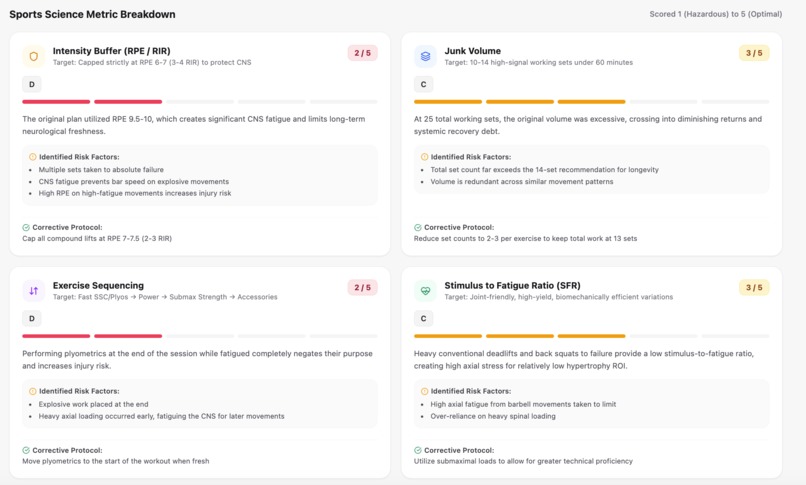
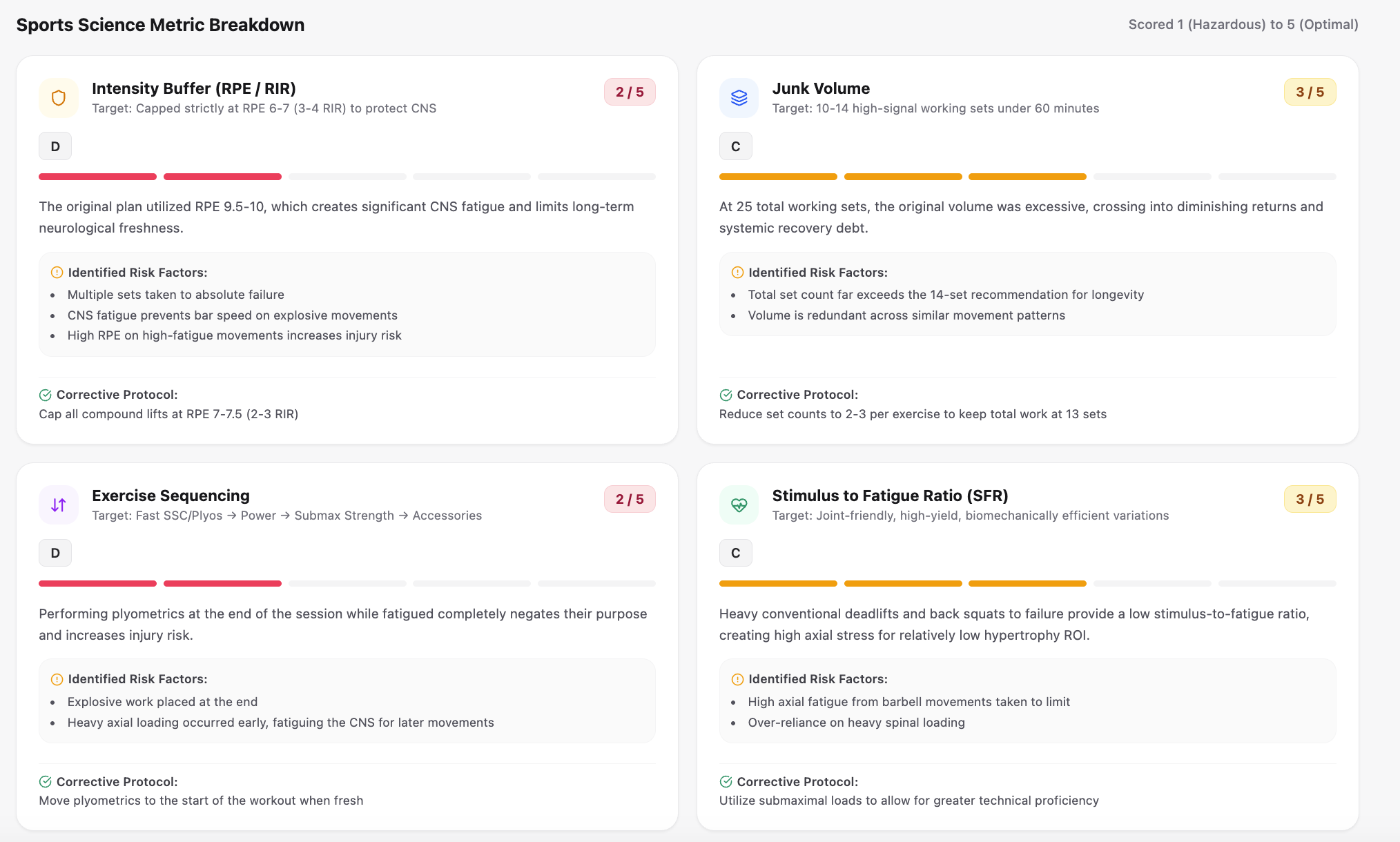
App Scores User's Workout Based on Sports Science Metrics
-
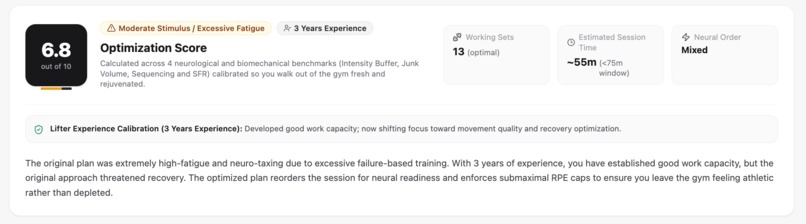
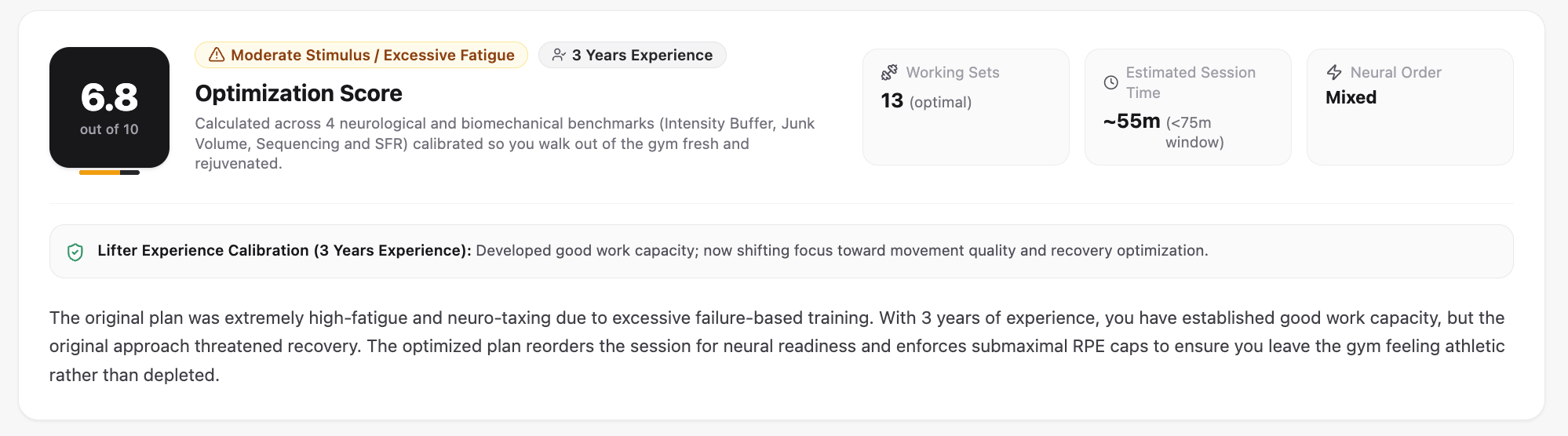
App Assigns an Overall Score
-
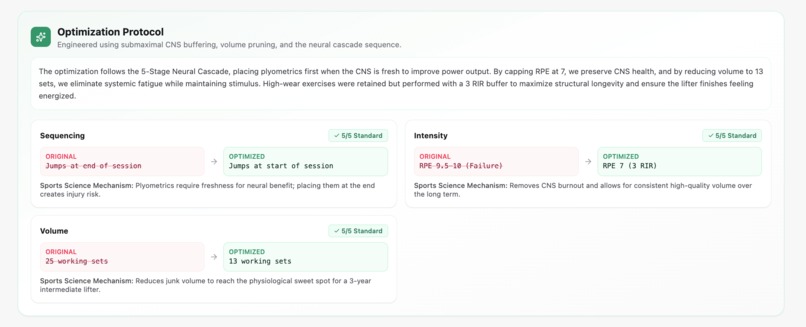
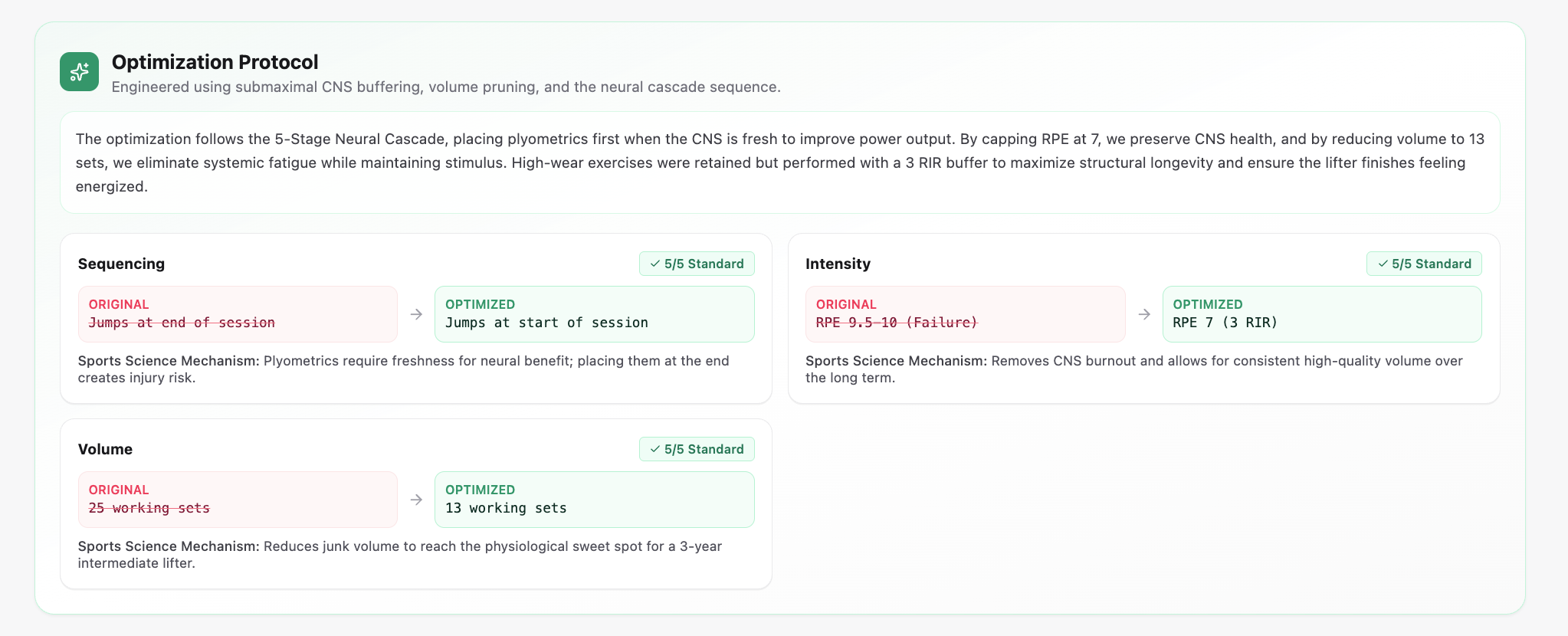
App gives the user a Protocol to modify workout themselves
-
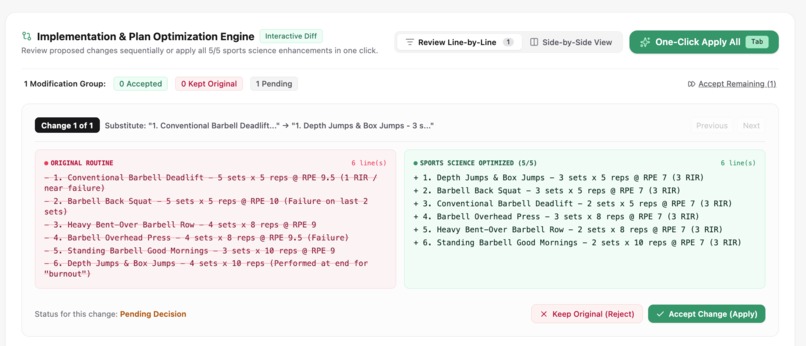
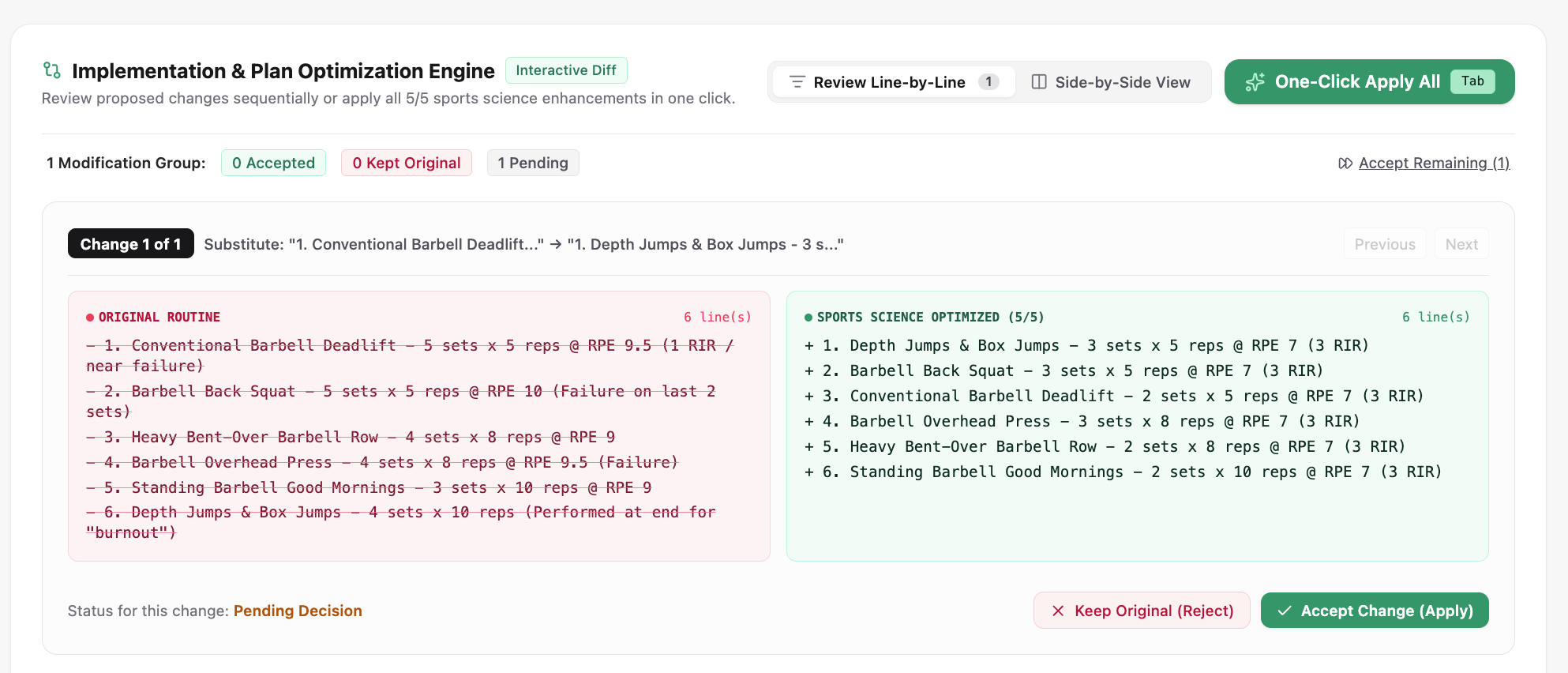
with a click of Tab button, you can employ the app's optimised workout if you're feeling lazy
Inspiration
After twelve years of lifting without a personal trainer, I built every workout through self-education and trial. Yet, despite more than a decade under the bar, I kept running into chronic systemic exhaustion and joint strain. I was unknowingly flooding my workouts with junk volume, exceeding intensity buffers and burning out my central nervous system with poor exercise sequencing. That was my lightbulb moment: if an experienced lifter was still falling into these sports science traps, millions of dedicated gym-goers were likely making the exact same mistakes without realising it.
What it does
OptiLift is an AI-powered sports science copilot that audits and optimizes workout routines. Users paste their raw workout text into the app, and the evaluation engine scores the plan out of 10 across four critical metrics:
Intensity Buffer (RPE / RIR): Prevents premature central nervous system exhaustion by capping compound lift intensity.
Junk Volume: Trims redundant sets to deliver a high-signal workout completed in under 60 minutes. Exercise Sequencing: Reorders exercises into a true neural cascade (Fast SSC/Plyos → Power → Submaximal Strength → Mobility).
Stimulus-to-Fatigue Ratio (SFR): Swaps high-wear spinal loads for biomechanically efficient, joint-friendly variations.
How we built it
OptiLift was built in a 24-hour hackathon using Google AI Studio. Using AI Studio's Build mode, natural language prompts were used to generate the full-stack React frontend and Node.js backend infrastructure. The underlying Gemini API was configured with strict prompt parameters to parse raw workout text into structured biomechanical scores, detailed exercise feedback, and optimized routine alternatives.
Challenges we ran into
Building a functional app as an absolute beginner in JavaScript and React presented a steep learning curve. The biggest hurdle was collaborating with AI under a 24-hour time constraint. When AI-generated UI components failed to sync or line-by-line text parsing logic broke edge cases, re-prompting wasn't enough. It was necessary to dive directly into the code tab, learn JavaScript state management patterns on the fly, and debug keyboard shortcut listeners (such as capturing e.preventDefault() for the Tab replacement feature).
Accomplishments that we're proud of
- Transforming complex exercise science principles into an instant, intuitive one-click software utility.
- Going from zero JavaScript/React knowledge to a deployed, functional full-stack application in under 24 hours.
- Successfully engineering dual implementation modes: instant full-workout substitution and an interactive line-by-line change viewer
What we learned
Building OptiLift provided a masterclass in human-AI collaborative development. It demonstrated how to leverage AI tools for rapid architectural prototyping while reinforcing the necessity of understanding key underlying logic to debug syntax and state errors manually under pressure.
What's next for OptiLift
Exercise Substitution Library: Recommending specific equipment alternatives based on user gym access (e.g., swapping barbell rows for chest-supported T-bar rows).
Multi-Week Fatigue Tracking: Allowing users to save weekly workouts to track cumulative volume and central nervous system recovery over time.
Mobile Integration: Building native mobile app exports so lifters can audit workouts directly on their phones at the gym.

Log in or sign up for Devpost to join the conversation.