-
-
HOME VIEW
-
LOGO
-
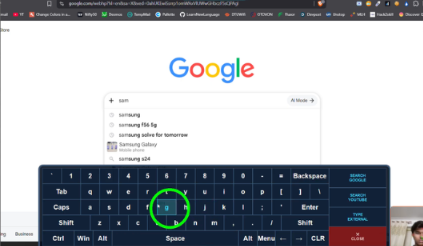
VIRTUAL KEYBOARD
Inspiration
We built OptiKinesis around a simple belief: technology should empower people, not limit them. Everyday digital activities like typing a message, navigating a computer, or contacting someone can be difficult for people with mobility limitations. We wanted to make these interactions more accessible while also helping people who simply prefer hands-free computing. Our goal is to give users greater independence, confidence, and freedom to connect with others.
What it does
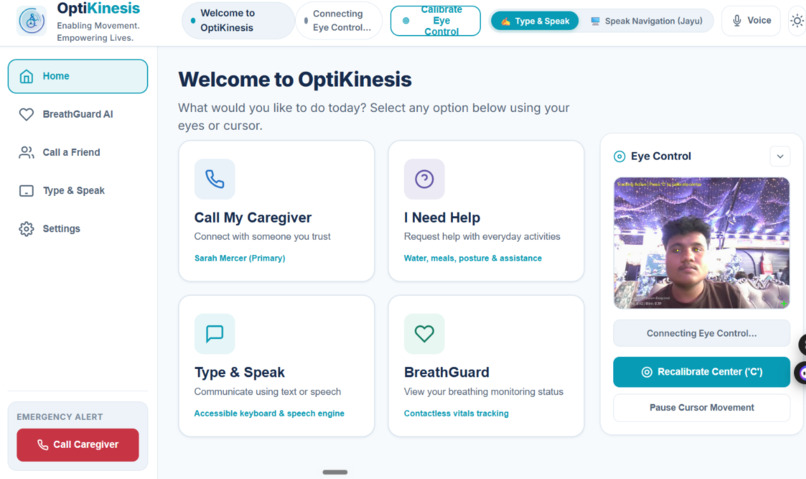
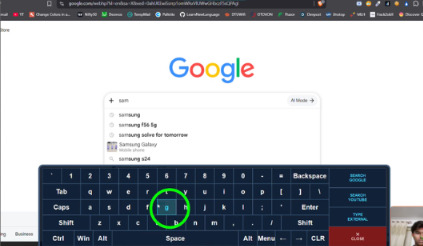
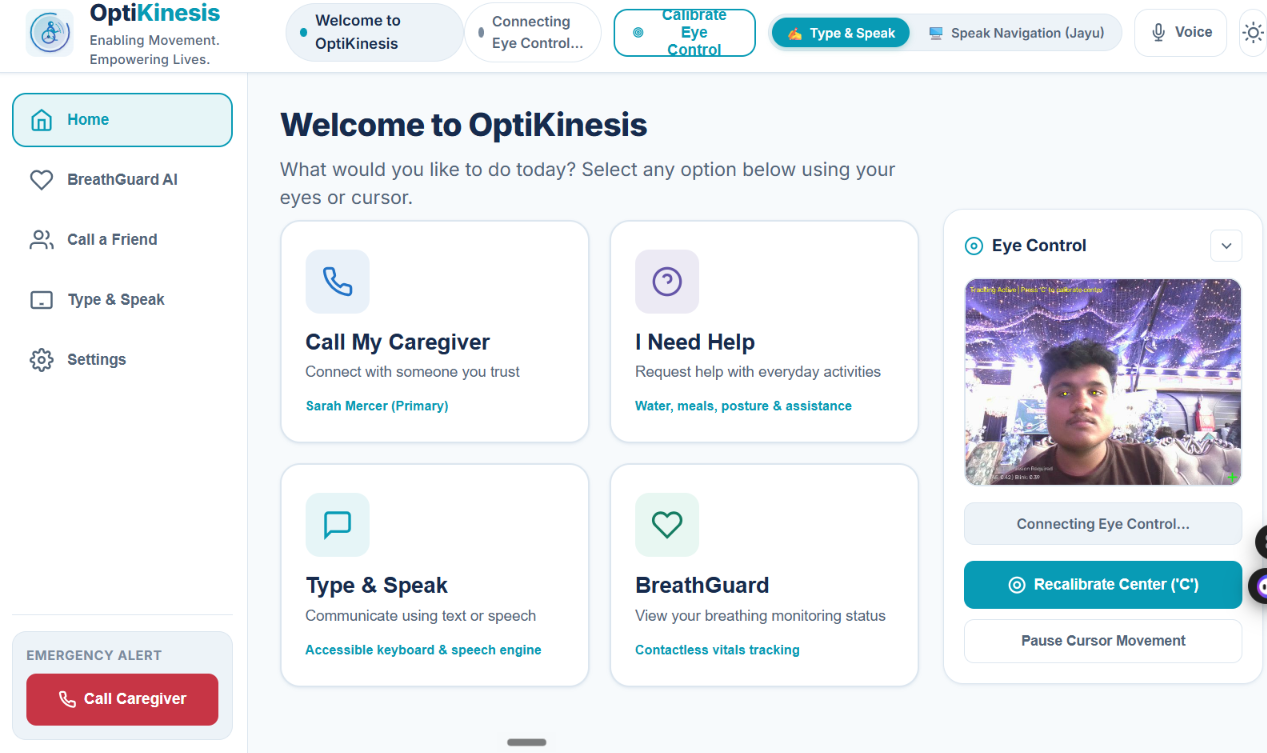
OptiKinesis is an accessibility-focused platform that enables users to interact with their devices through alternative input methods, including eye control, voice commands, and an accessible virtual keyboard. Users can navigate the interface, communicate through text and speech, request assistance with everyday activities, and contact trusted people when they need help.
Its BreathGuard AI module adds a safety-oriented layer by monitoring supported breathing measurements and helping trigger alerts when configured conditions are detected. Together, these features aim to make digital interaction more accessible, personalized, and reassuring.
How we built it
We combined computer vision, assistive interaction techniques, and AI-powered communication into a unified platform. The eye-control interface enables hands-free navigation, while voice-based interaction and text-to-speech capabilities provide alternative ways to communicate. We integrated external services for communication and AI assistance, with BreathGuard designed to connect supported respiratory measurements to an alert workflow. The platform is being developed around a personalized experience, allowing users to configure features according to their needs and preferences.
Challenges we ran into
One of our biggest challenges was designing for users with very different needs without making assumptions about their abilities. An interface that works for someone using eye control may not be ideal for someone relying on voice commands. We also had to consider the reliability of hands-free interactions, the complexity of integrating external SDKs and APIs, and the challenge of making automated alerts dependable. Balancing accessibility, functionality, and a straightforward user experience required us to think beyond simply building features.
Accomplishments that we're proud of
We are proud to bring multiple assistive capabilities together under one platform rather than treating accessibility as a single feature. Seeing eye-based navigation work in practice was an important milestone. We are also proud of our broader vision: creating a platform that supports not only people with disabilities but anyone who can benefit from hands-free interaction. Most importantly, OptiKinesis is built around independence and human connection, not just automation.
What we learned
We learned that meaningful accessibility begins with understanding users and giving them choices. There is no single interaction method that works for everyone, so flexibility and personalization are essential. We also learned how challenging it can be to integrate different technologies into one cohesive product, especially when reliability matters. Finally, we realized that technology can create a positive impact not only by helping people complete tasks but also by giving them greater control over their daily lives.
What's next for OptiKinesis
Our next steps are to improve onboarding and personalization, make eye and voice interactions more reliable, and expand the accessible communication experience. We plan to develop a more seamless virtual keyboard experience, improve trusted-contact management, and strengthen BreathGuard's monitoring and alert workflows. We also want to test the platform with users who have different accessibility needs and use their feedback to guide development. Our long-term vision is to make OptiKinesis a dependable assistive platform that helps people interact with technology and the world around them with greater independence.
Built With
- accessibility
- ai
- assistive-technology
- computer-vision
- elevenlabs
- eye-tracking
- gemma
- generative-ai
- healthcare-technology
- human-computer-interaction
- inclusive-design
- llm
- machine-learning
- mediapipe
- node.js
- presage
- python
- react
- real-time-processing
- social
- speech-to-text
- text-to-speech
- twilio
- voice-recognition
- web-development

Log in or sign up for Devpost to join the conversation.