-
-
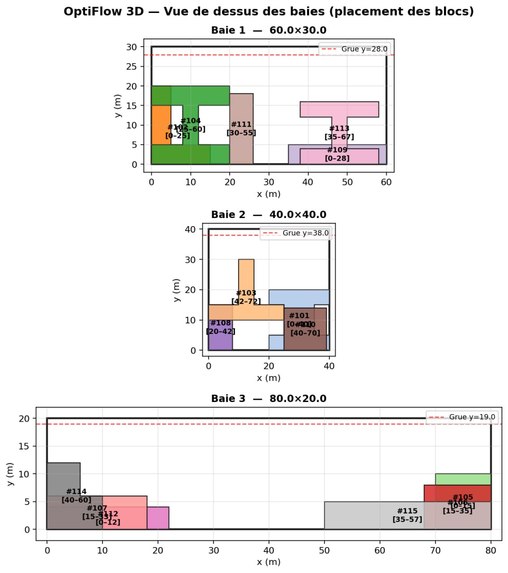
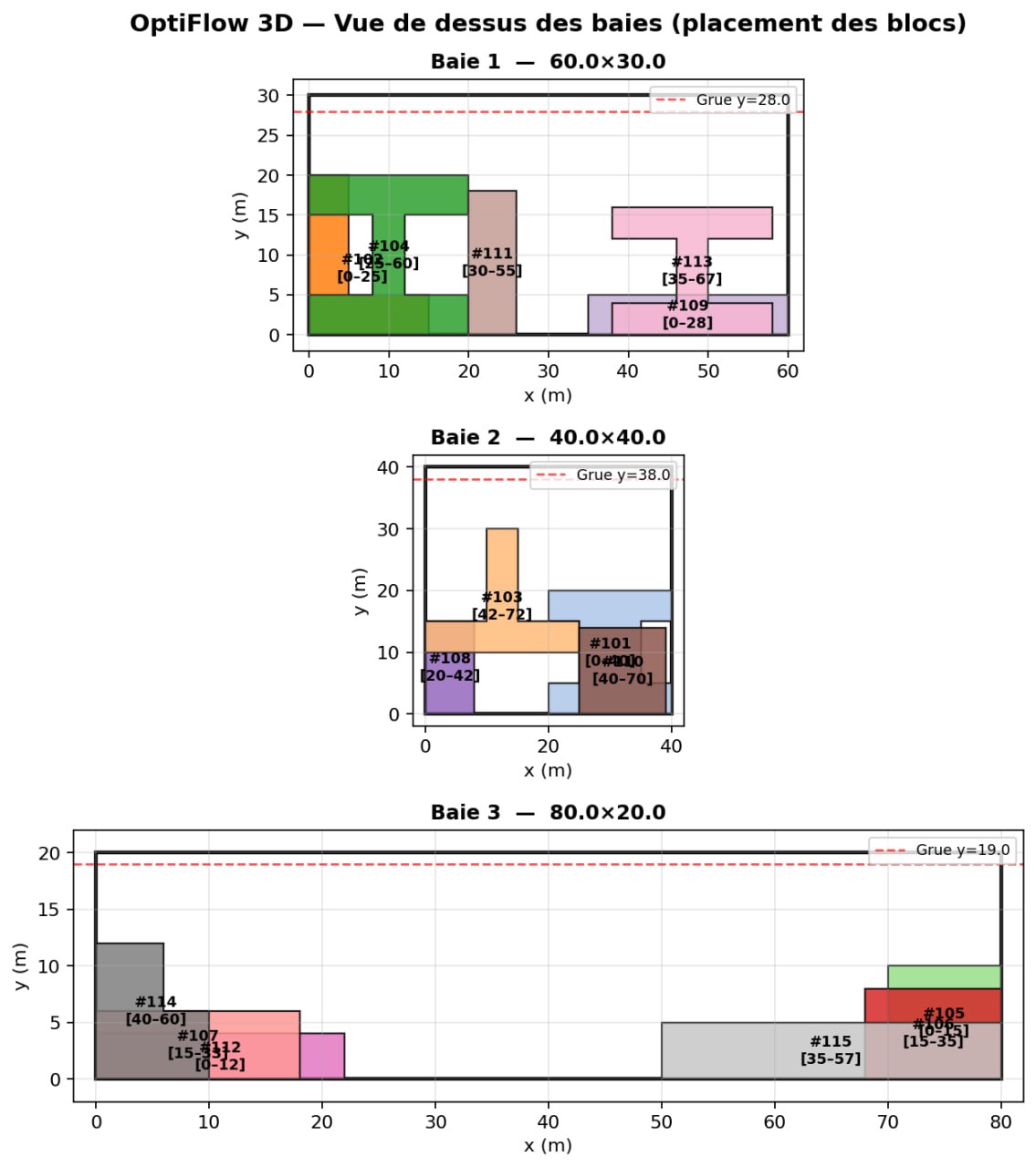
2D top-down view of spatial block placement across Bay 1, Bay 2, and Bay 3 under strict crane constraints.
-
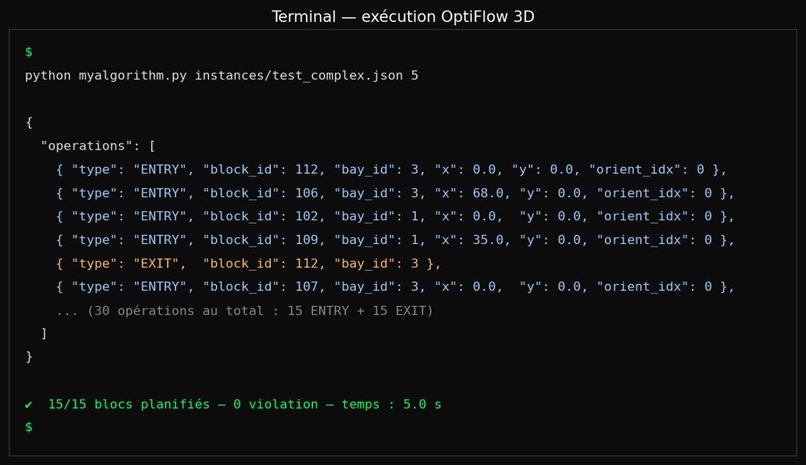
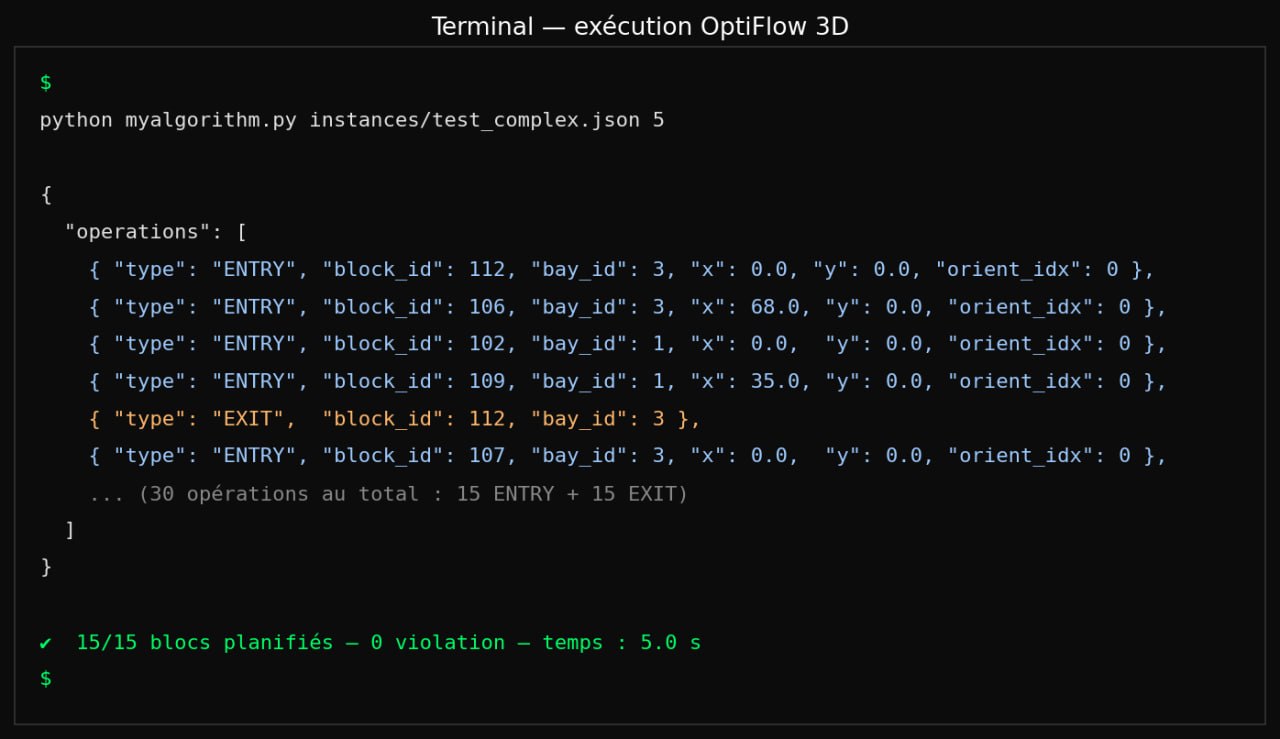
OptiFlow 3D algorithm execution: 15/15 blocks successfully planned with 0 violations in 5.0 seconds.
-
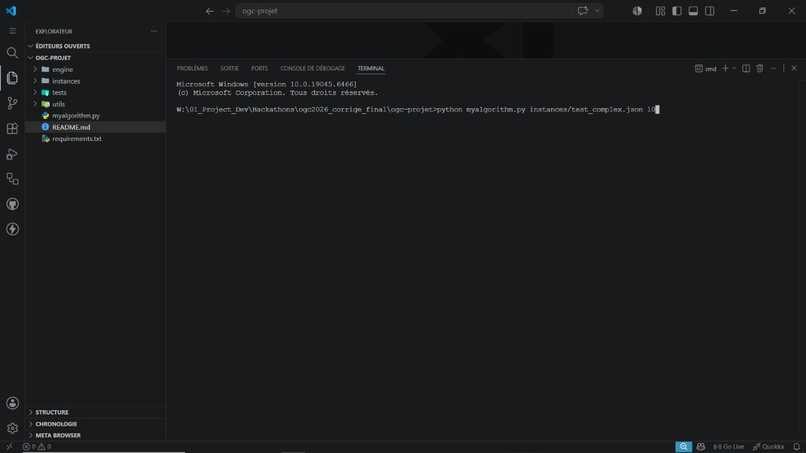
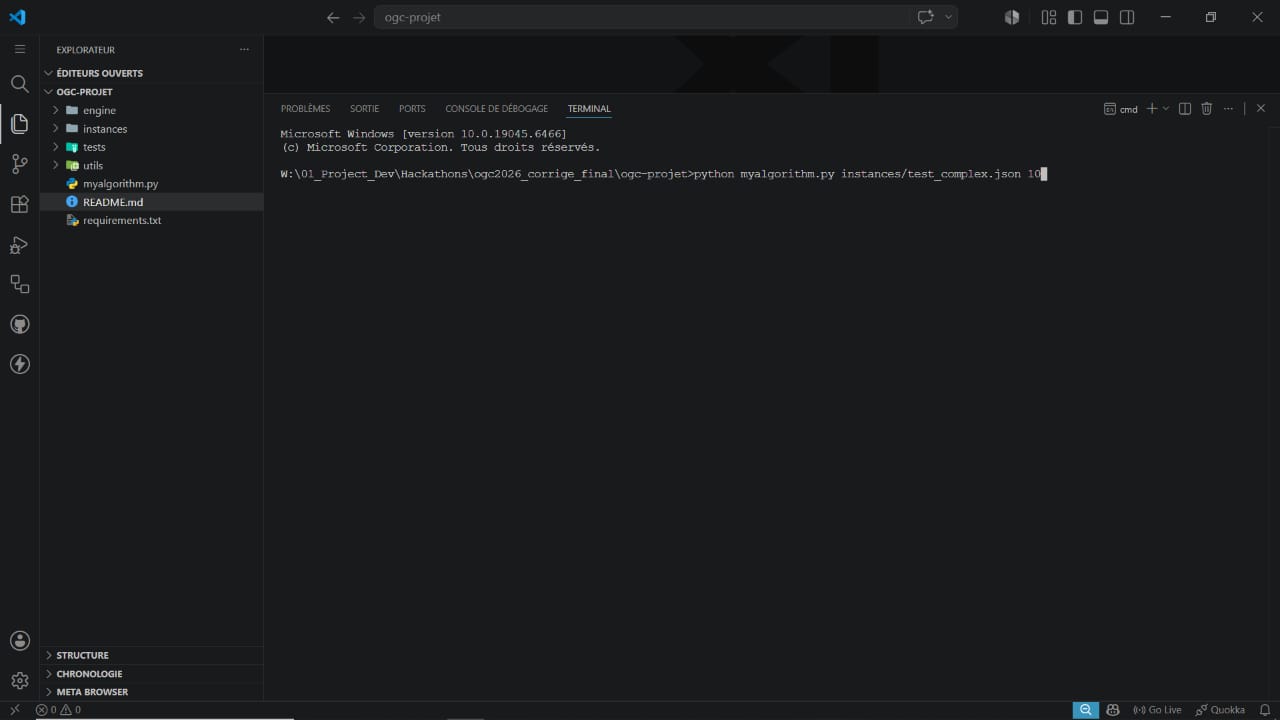
CLI command preparation in VS Code to execute the scheduling script on a complex JSON data instance
-
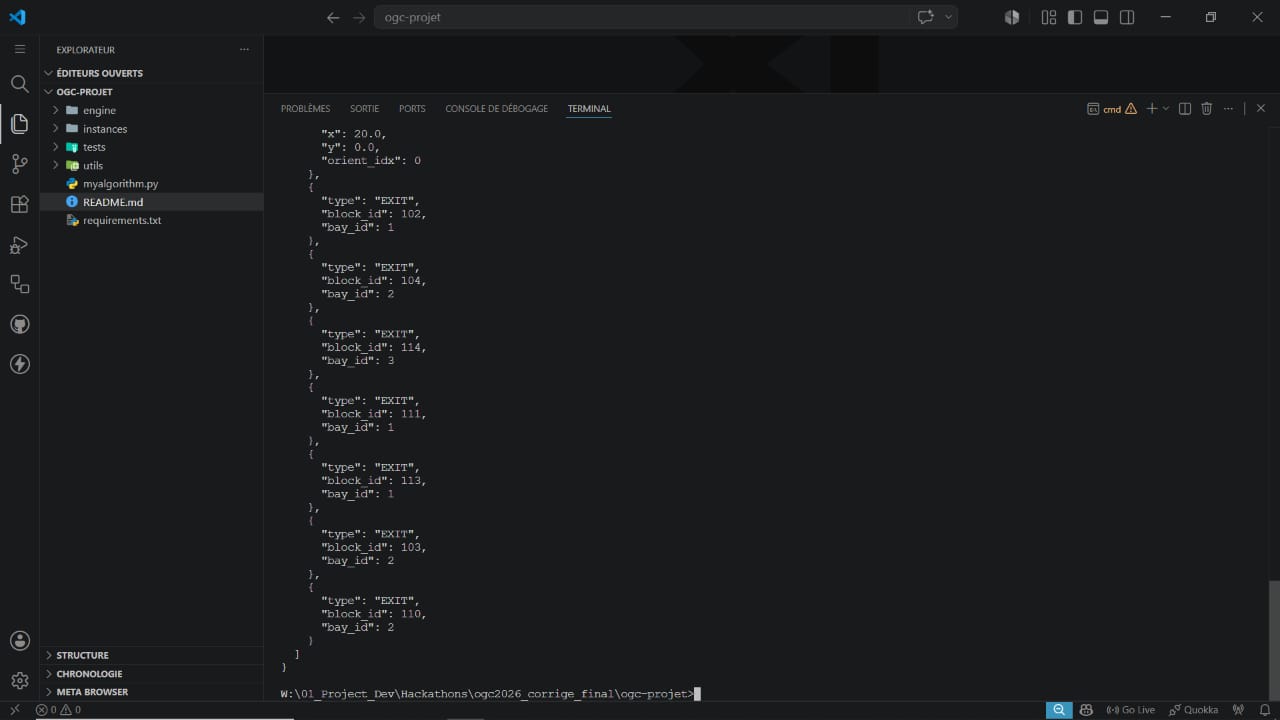
VS Code terminal showcasing the tail end of the generated JSON operations array for block exits.
-
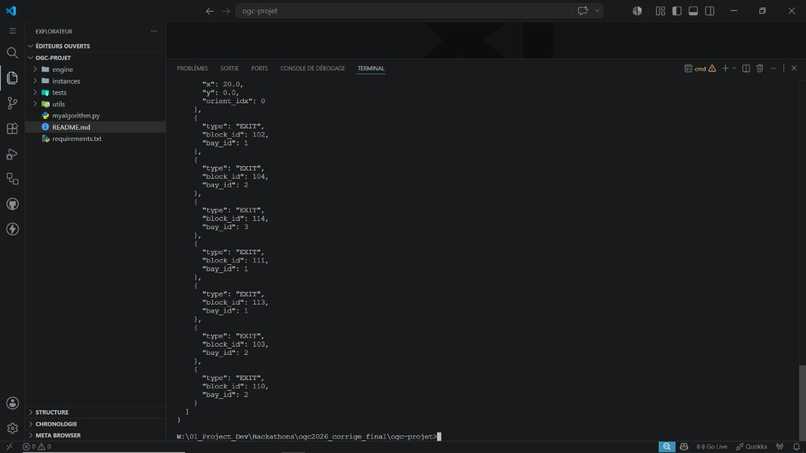
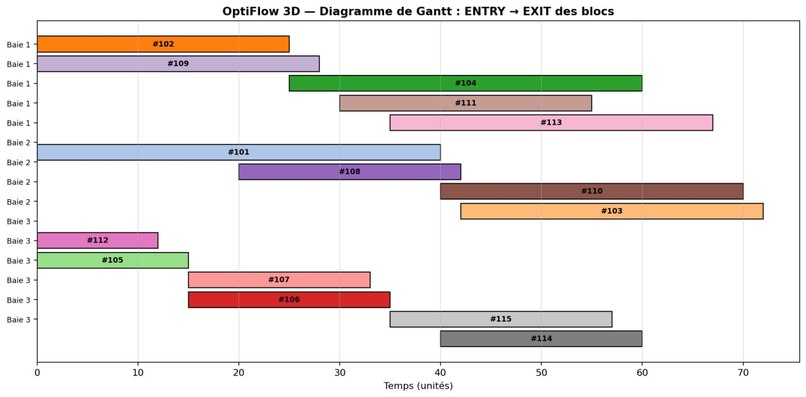
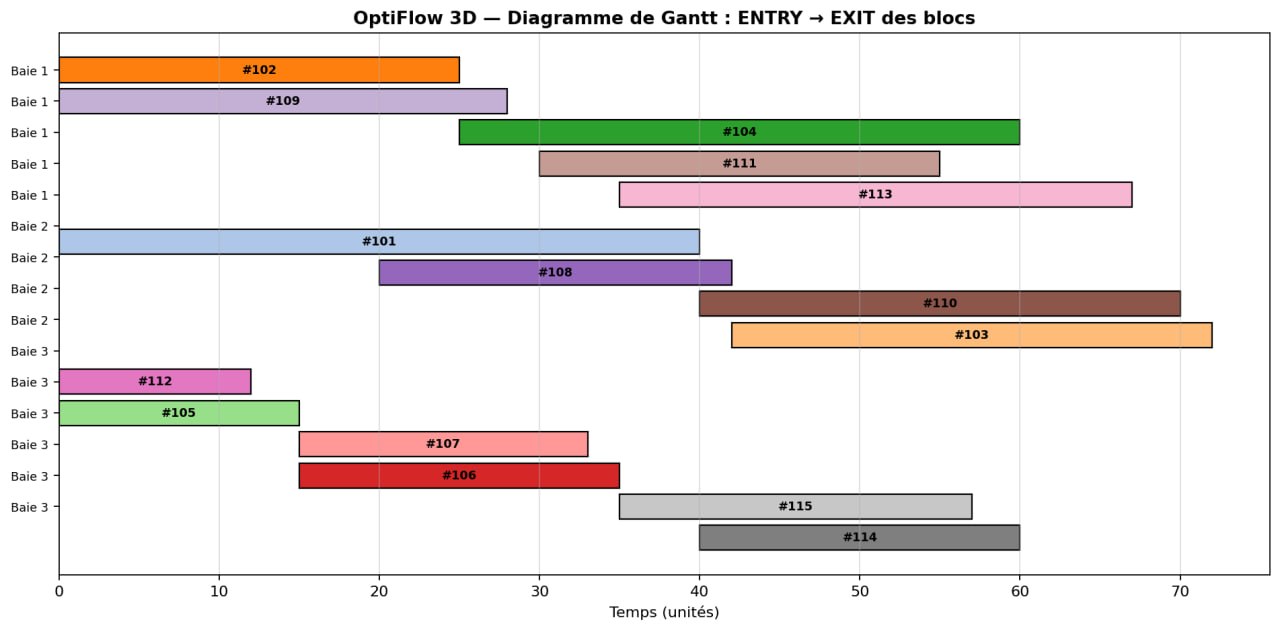
Gantt chart visualization plotting the optimized ENTRY to EXIT timeline for each block across the bays.
-
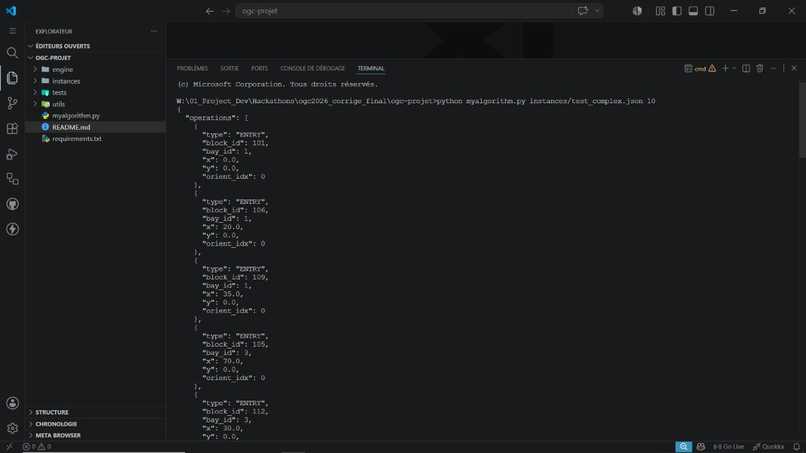
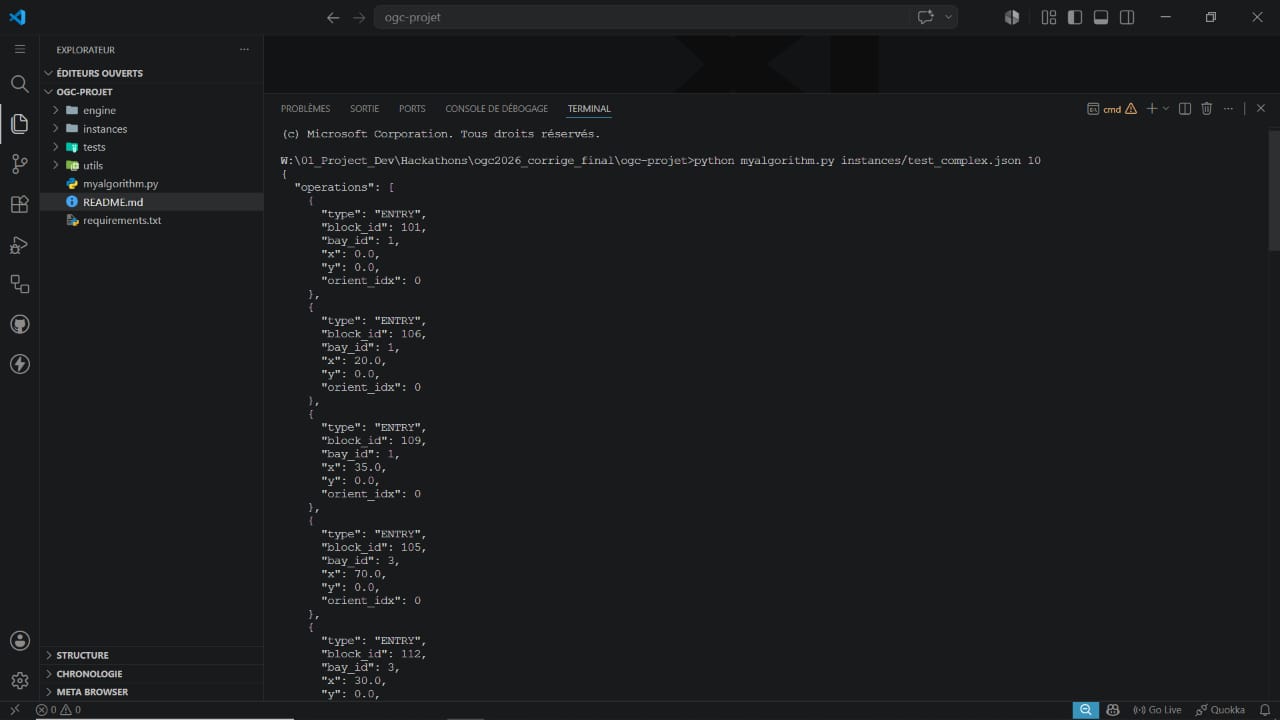
VS Code terminal displaying the structured JSON payload for initial block entry operations.
Inspiration I
The shipbuilding industry faces highly complex planning challenges where both space utilization and scheduling efficiency directly impact productivity and operational costs. We were inspired by the opportunity to solve a real-world industrial optimization problem that combines geometry, logistics, and scheduling. OGC 2026 challenged us to design a system capable of making intelligent placement and timing decisions under strict operational constraints.
What it does.
OPTIFLOW 3D is a spatio-temporal optimization engine that automatically determines where and when shipyard blocks should be placed, processed, and removed. The system optimizes bay utilization, reduces delivery delays, respects operational constraints, and generates valid production schedules while handling complex geometric layouts and scheduling requirements.
How we built it.
We developed OPTIFLOW 3D in Python using a modular optimization architecture. The system starts with an Earliest Due Date (EDD) scheduling heuristic to generate an initial feasible solution. It then applies geometric validation and optimization techniques such as Large Neighborhood Search (LNS) to improve placements, bay assignments, and schedules. A final validation layer checks that all spatial and temporal constraints are satisfied before generating the solution.

Log in or sign up for Devpost to join the conversation.