Inspiration
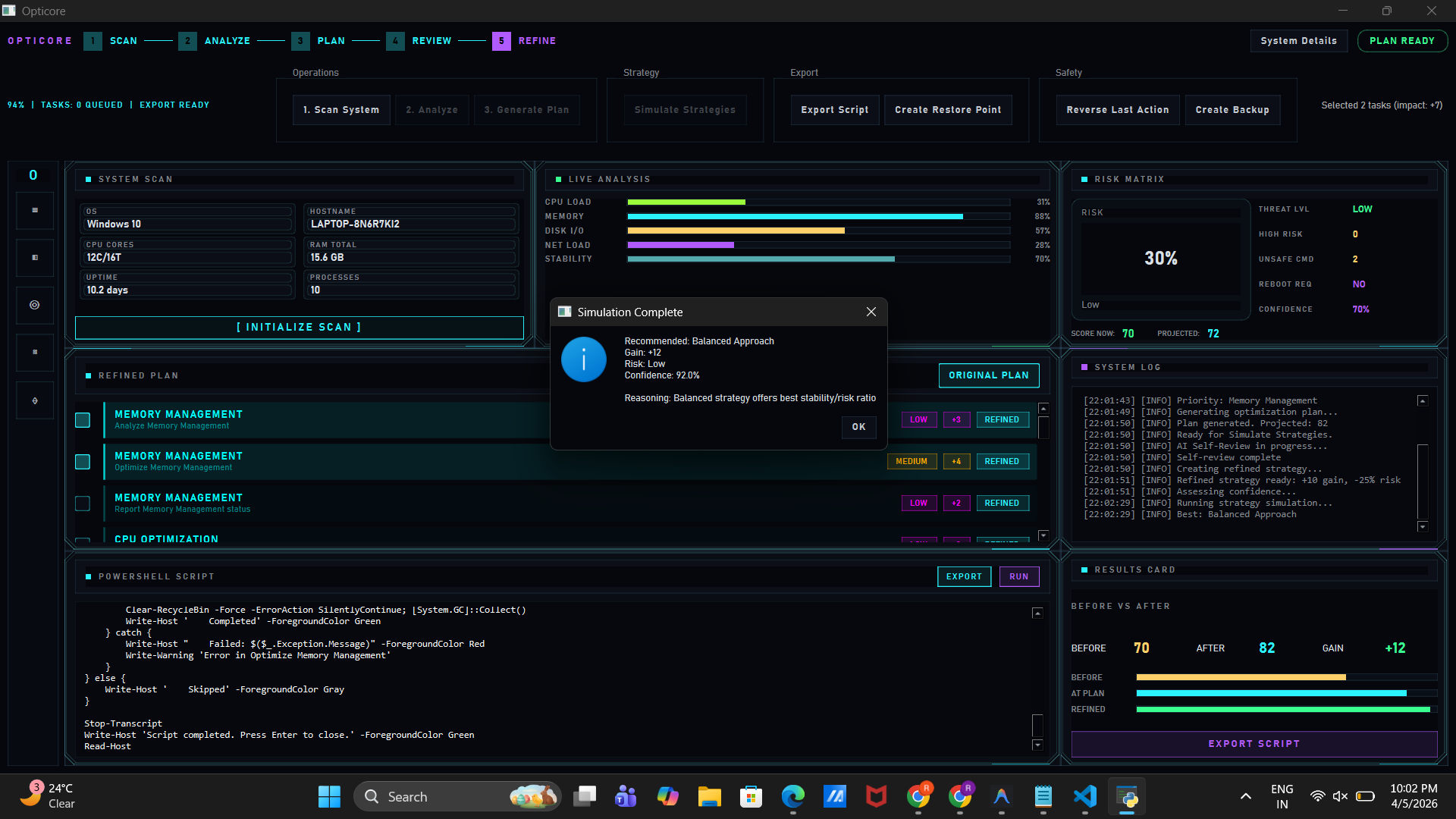
Like many students, I frequently faced laptop performance issues—slowdowns, lag during multitasking, and unexplained resource usage—especially while coding or running multiple tools. Most existing solutions either provided too much raw data or required manual technical intervention, making them impractical for everyday users. This inspired me to build OptiCore — a system that not only identifies performance issues but also explains and optimizes them intelligently, acting like a smart assistant for system health.
What it does
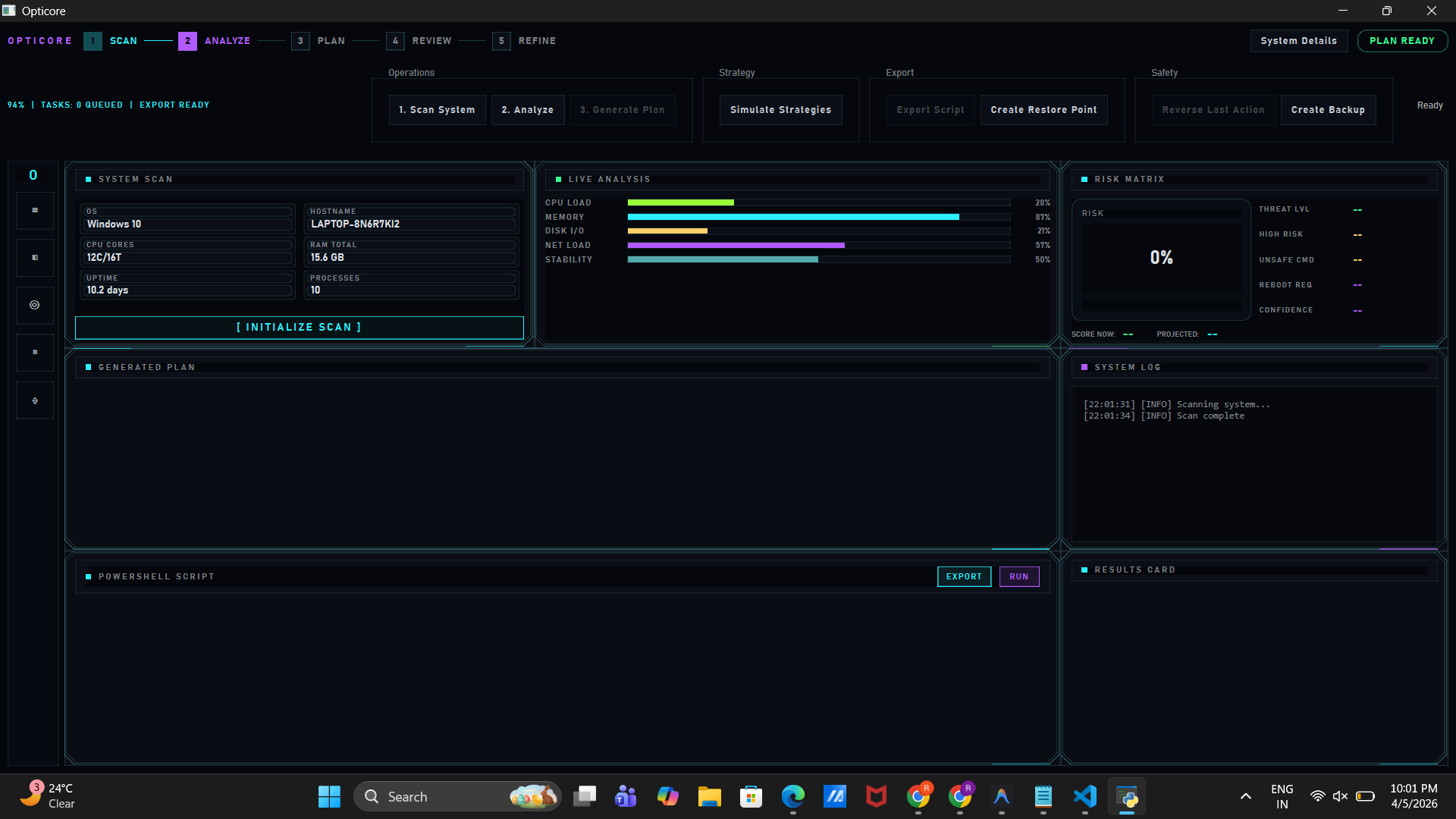
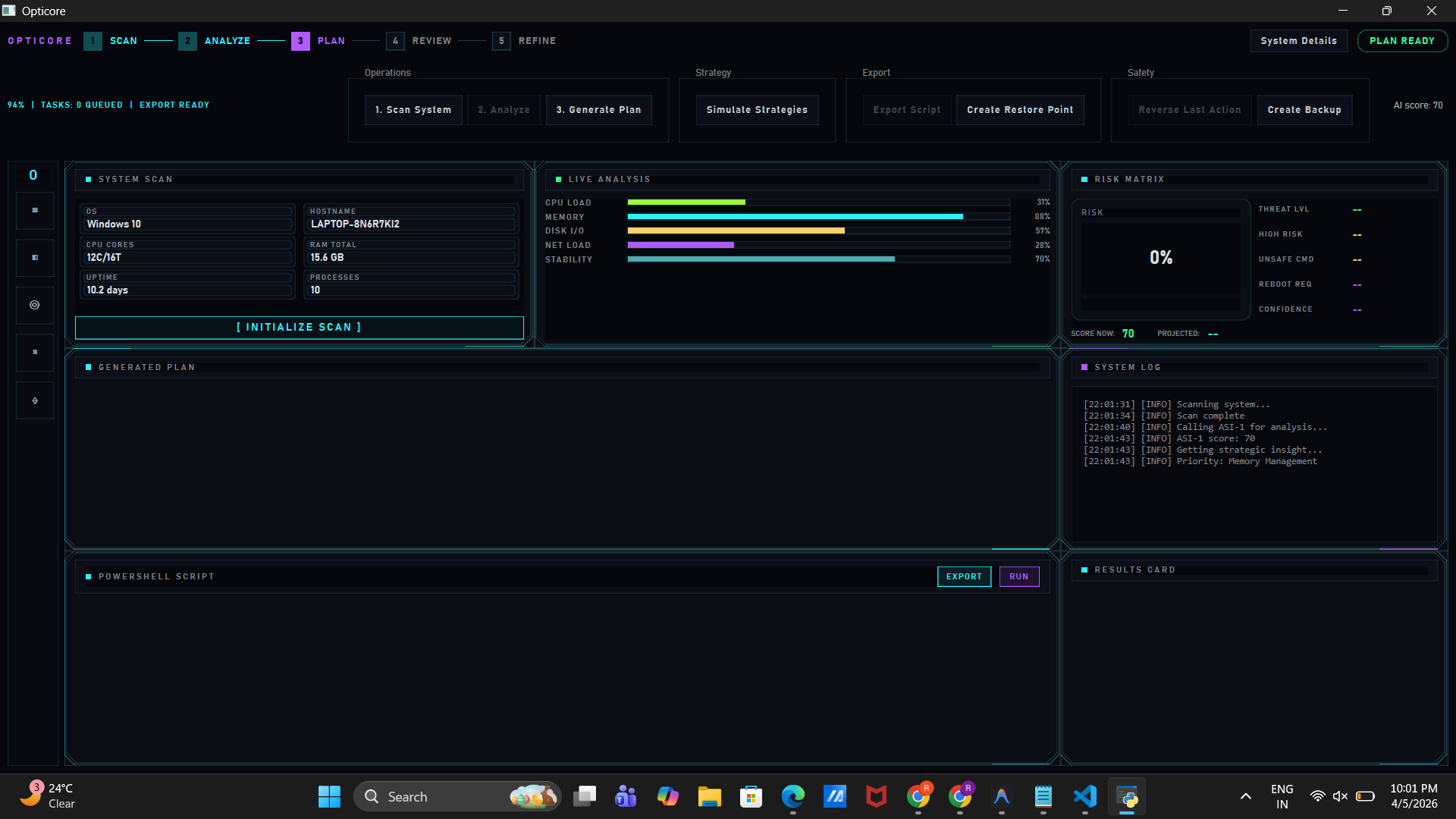
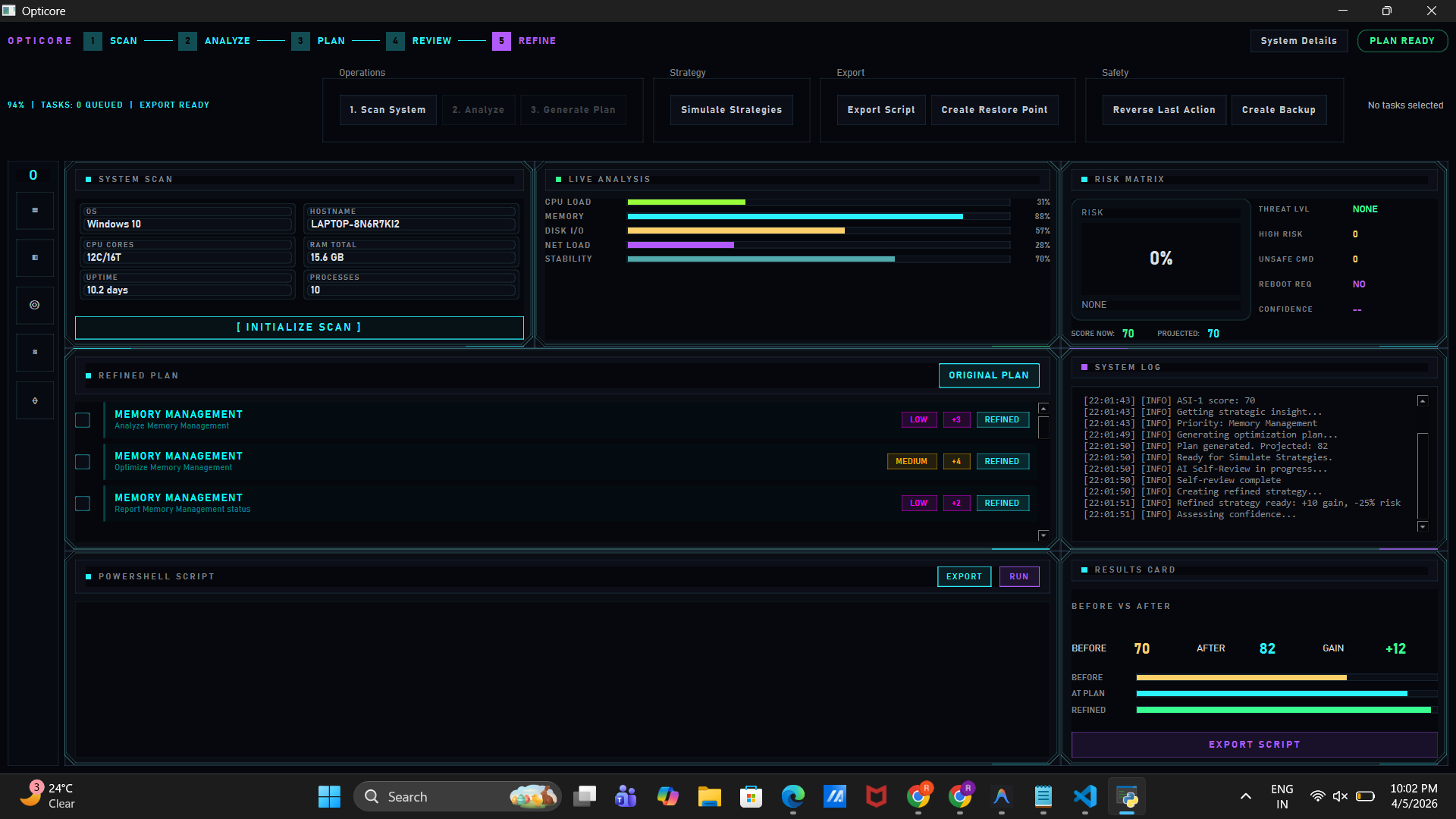
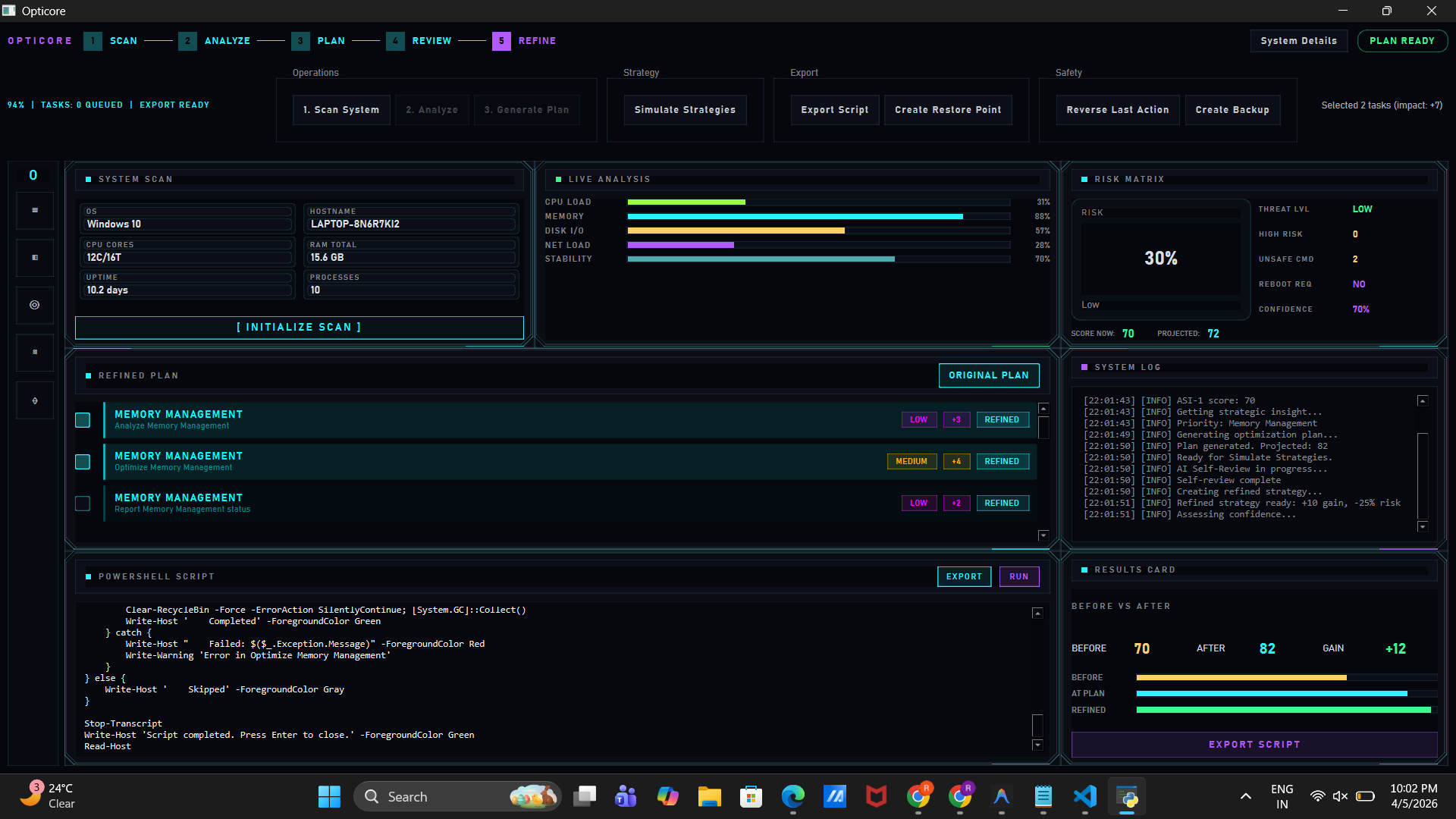
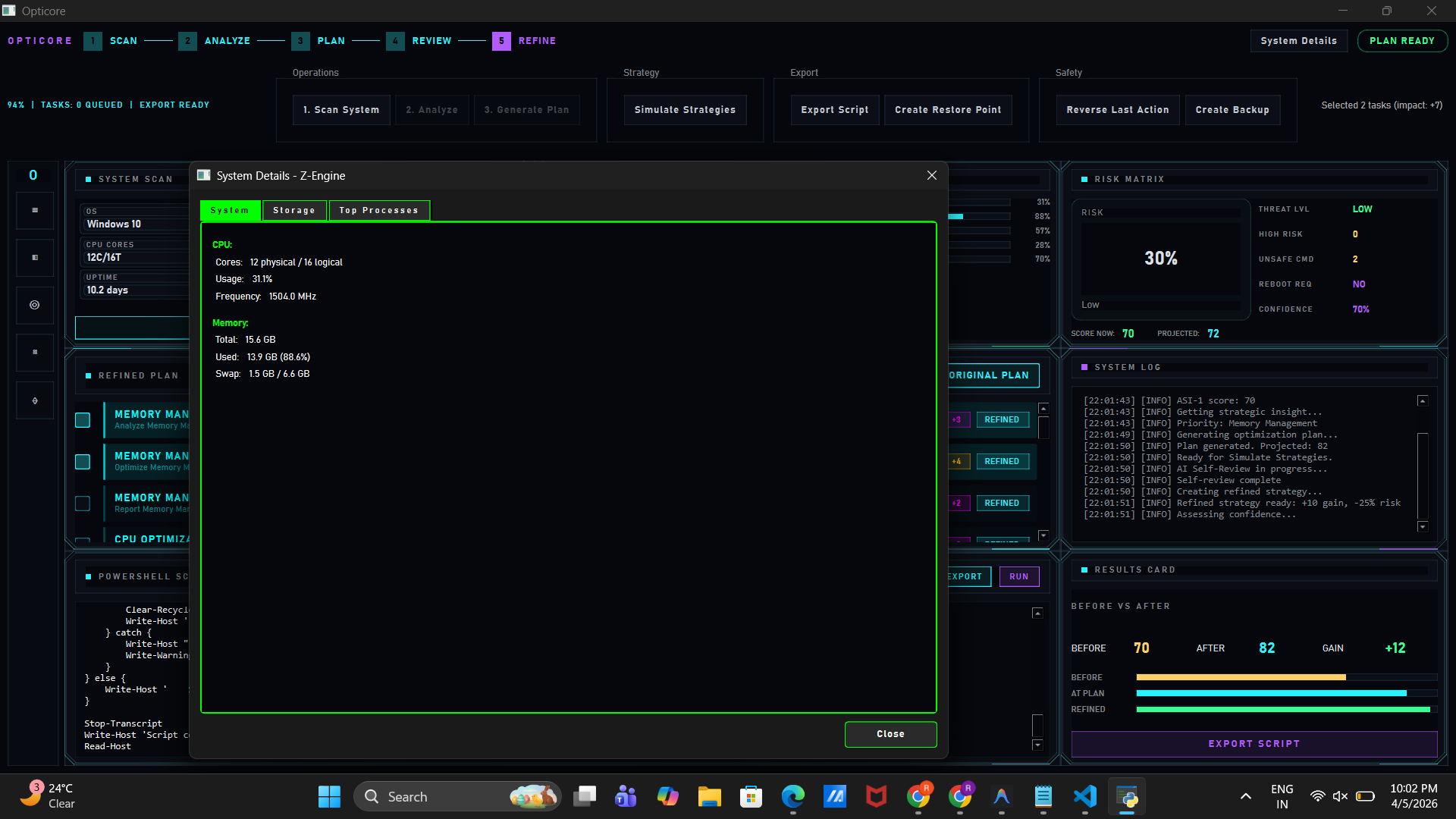
Scans your system to monitor CPU, memory, disk, and running processes in real time Analyzes system health and generates performance and stability scores Identifies key bottlenecks and provides targeted optimization insights Generates a structured optimization plan across multiple system areas Ensures safety with risk classification and user confirmation for critical actions Automatically creates and executes safe optimization scripts Maintains backups and restore points to safely revert changes if needed
How I built it
Built a Python-based core engine to collect and analyze system data Designed a modular architecture with multiple scripts handling different optimization tasks Created a desktop UI using PySide6 for real-time visualization Implemented AI-based analysis for intelligent recommendations
Challenges I ran into
Adding fallbacks if AI fails Managing real-time CPU and memory analysis without causing additional system lag Ensuring that continuous monitoring remained lightweight and efficient Designing a UI that is both aesthetic and information-dense Handling API integrations and environment variables securely Ensing that unsafe or critical system commands were properly handled and restricted to prevent unintended damage
Accomplishments that I'm proud of
Successfully built a fully functional optimization engine Designed a modern, cyberpunk-style UI with smooth workflows Implemented AI-driven insights instead of just raw data display
What I learned
Gained in-depth understanding of system-level concepts like CPU utilization, memory (RAM) management, disk I/O, and how these impact real-world performance. Explored ASI (AI) integration to convert raw system data into meaningful insights and actionable recommendations Understood how automated system healing works — identifying bottlenecks and applying fixes like process management and resource optimization Learned to design scalable and modular architectures for complex systems Learned to implement more tech focused UI.
What's next for OptiCore
Add predictive optimization using machine learning models Deploy as a cloud-based dashboard + web app Improve AI to provide personalized optimization strategies Make it available for Mac and Linux
Built With
- asi-1
- disk-i/o-tracking)
- express.js-(backend)-technologies:-system-monitoring-tools-(cpu
- javascript-frameworks/libraries:-pyside6-(ui)
- languages:-python
- pyside6
- ram

Log in or sign up for Devpost to join the conversation.