-
-
OptiChain - Revolutionizing SupplyChain
-
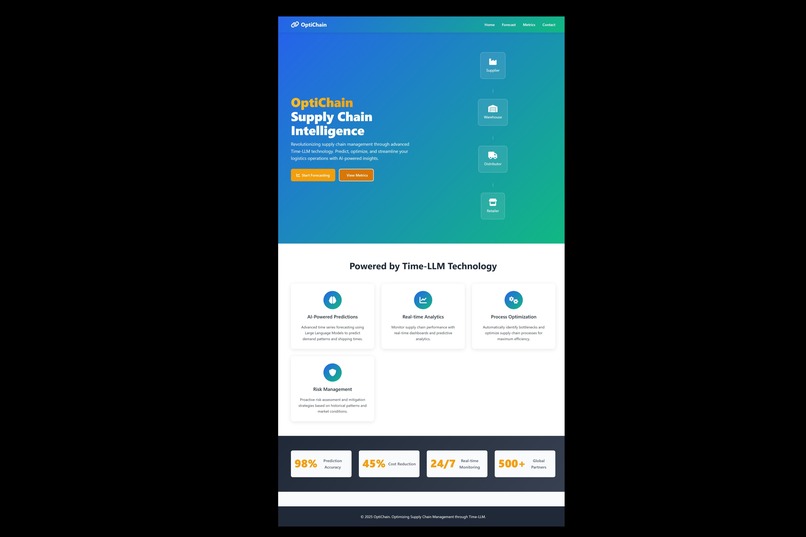
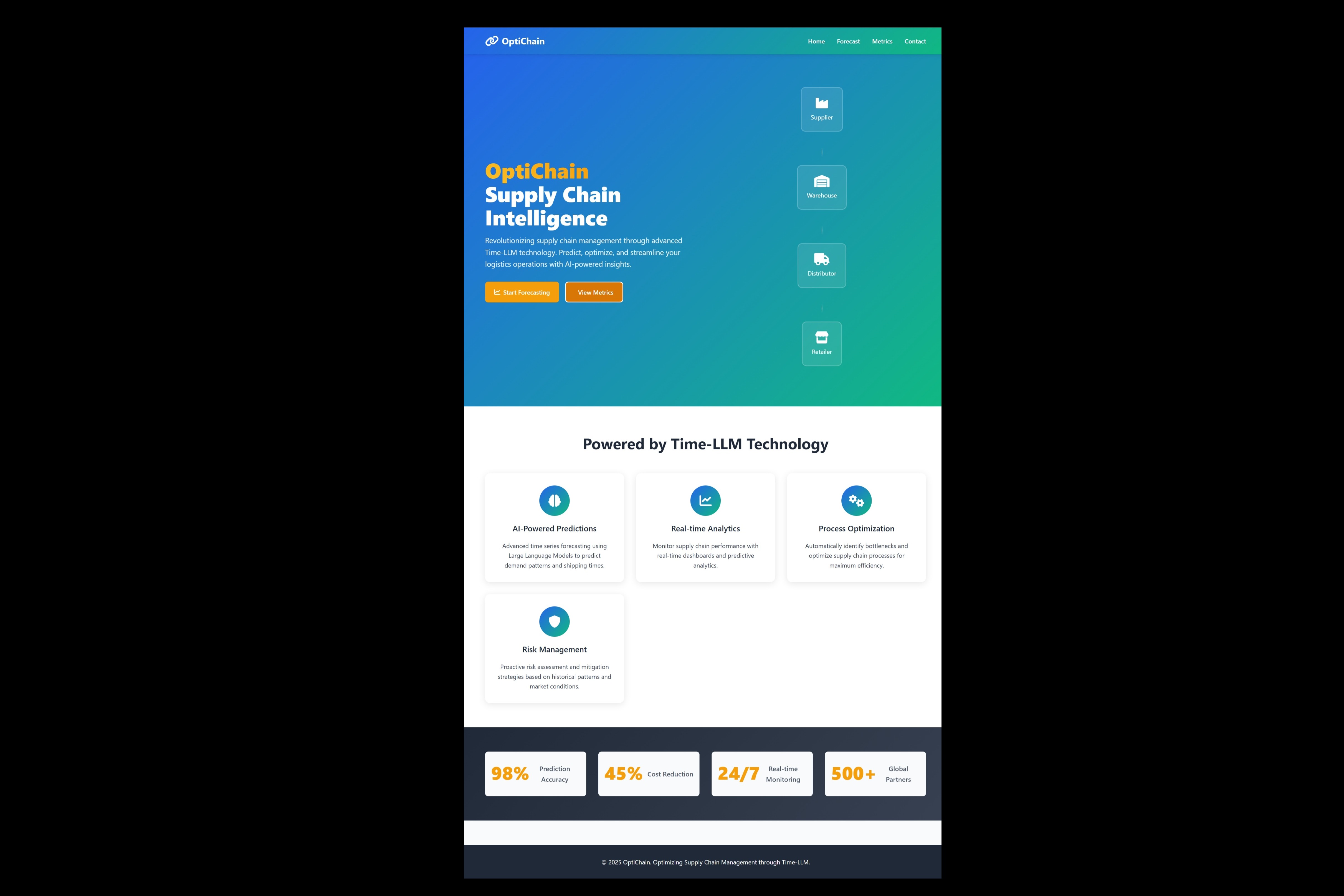
OptiChain Welcome Window
-
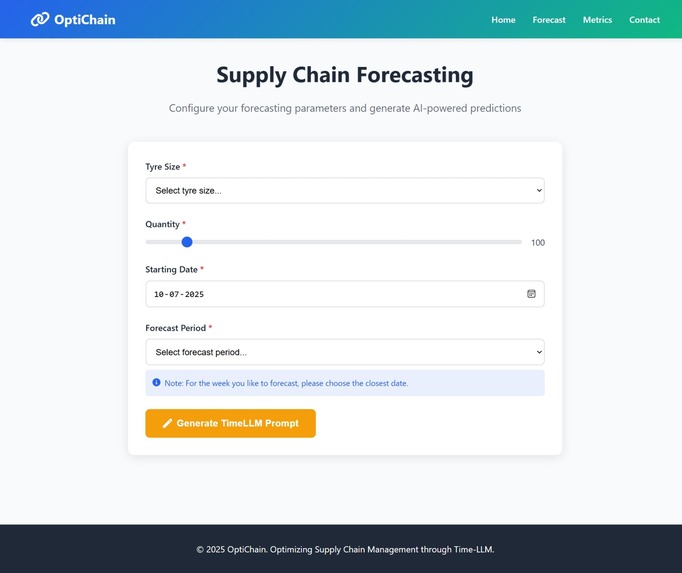
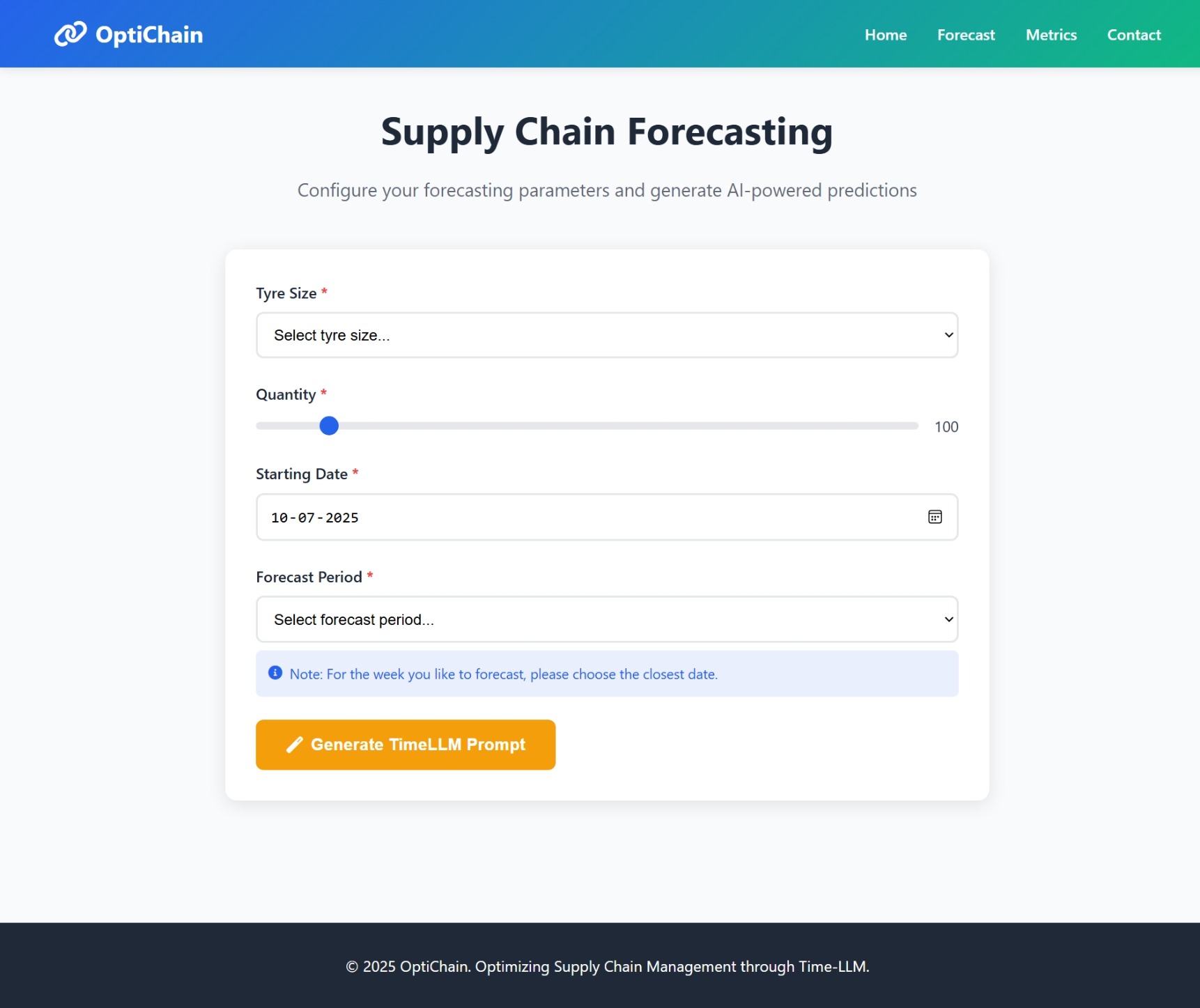
OptiChain Forecast Window
-
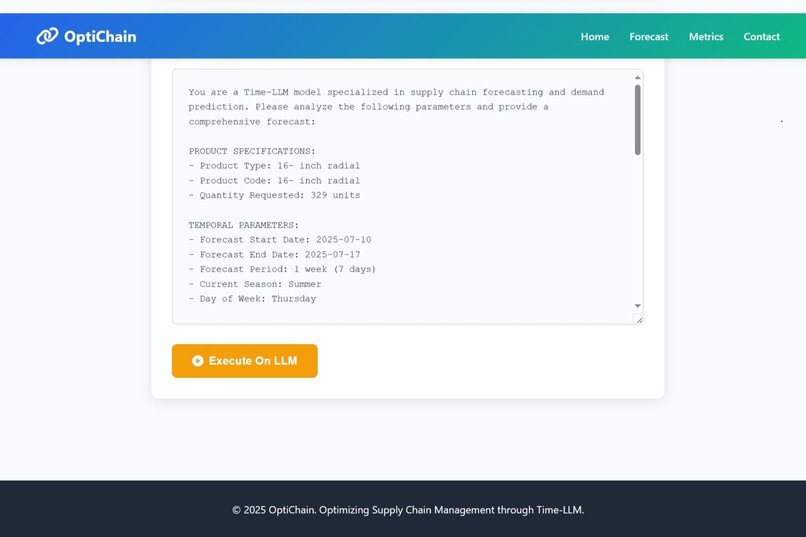
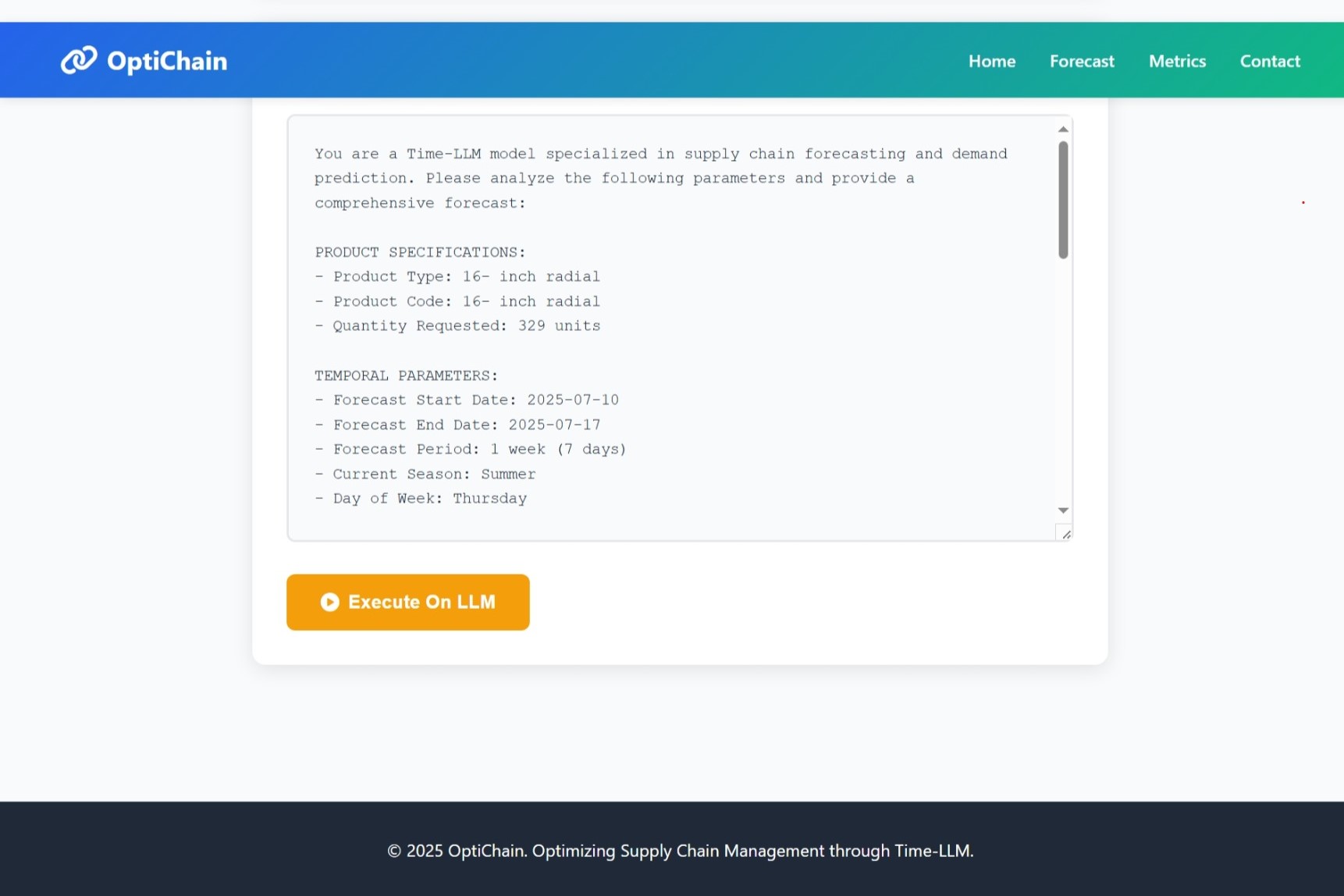
OptiChain Prompt Formation
-
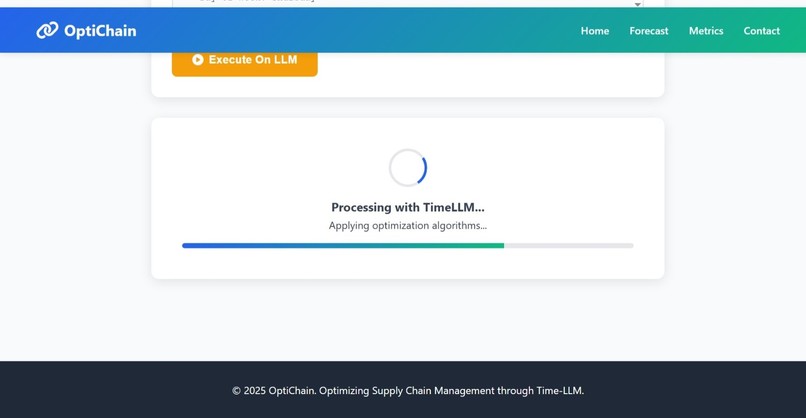
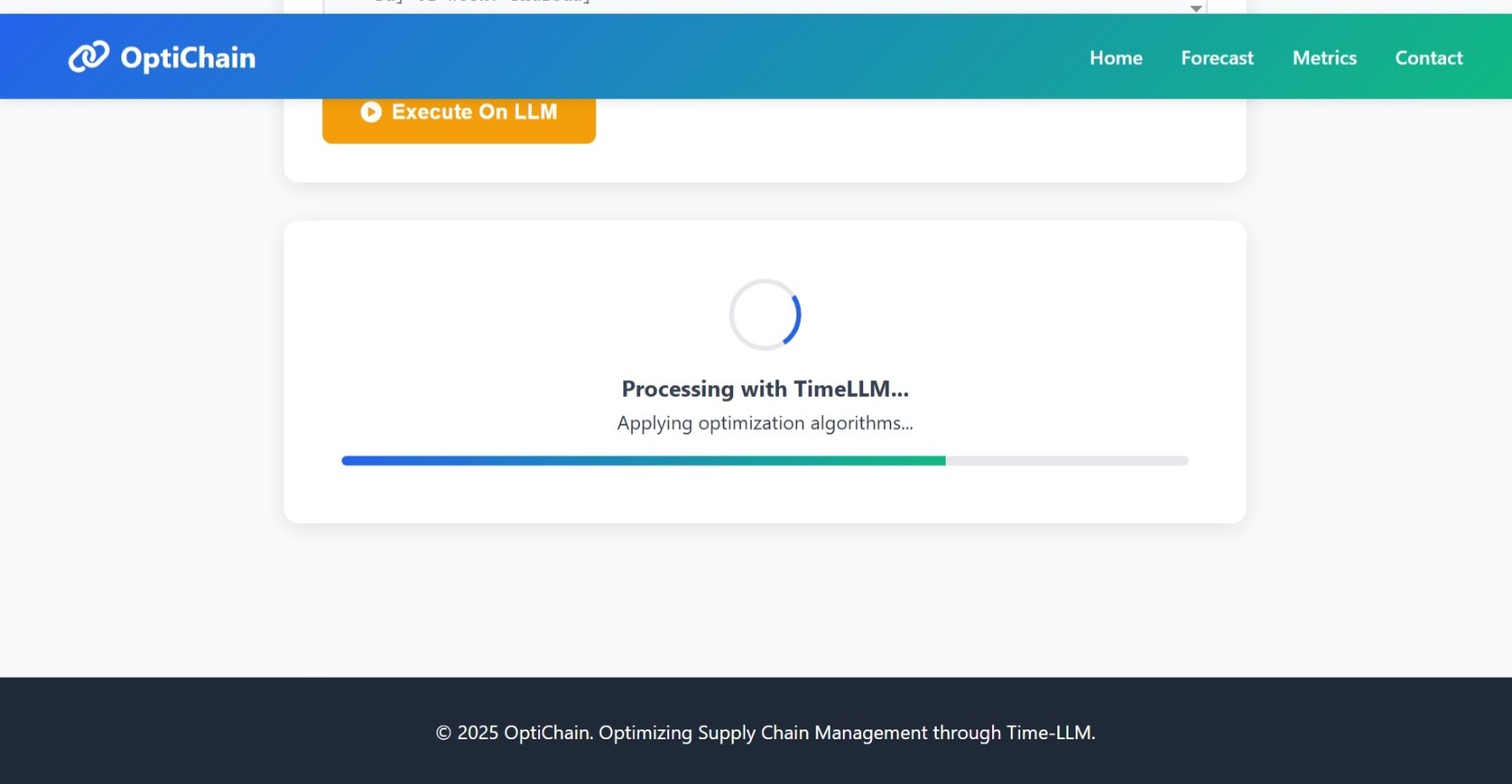
OptiChain Forecast Processing Window
-
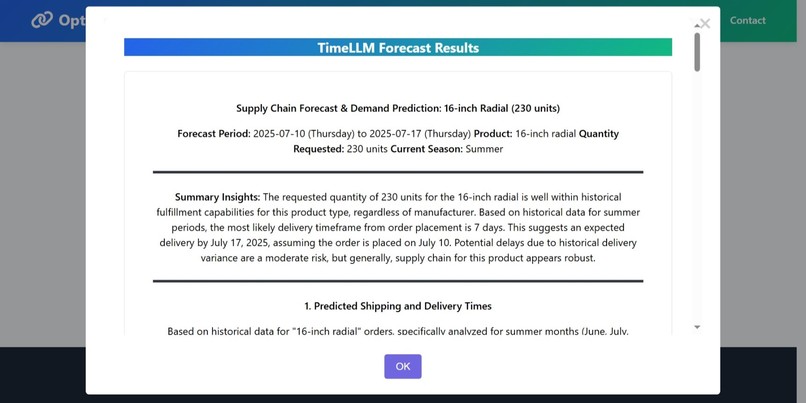
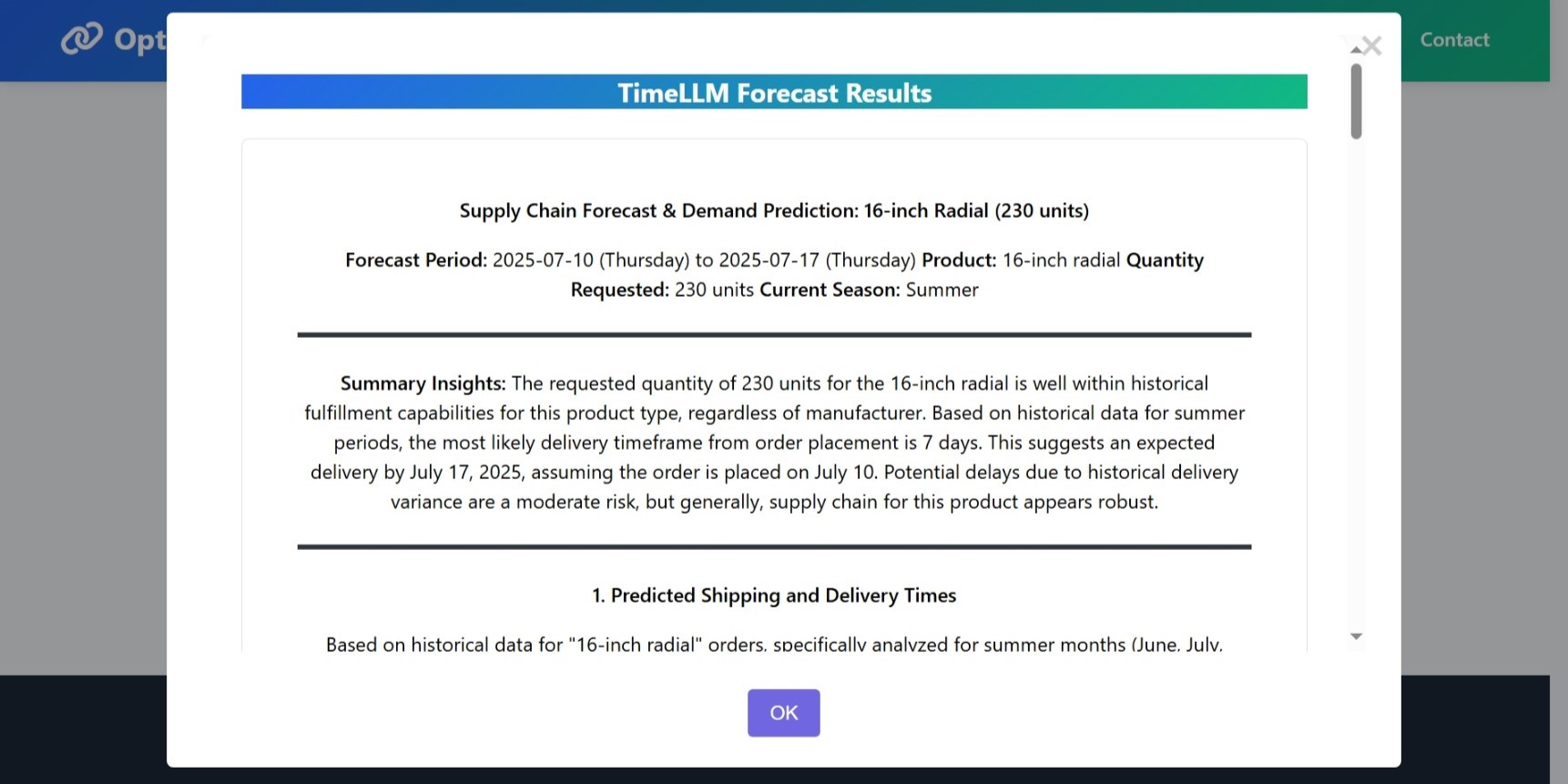
OptiChain Forecast Result & Summary
-
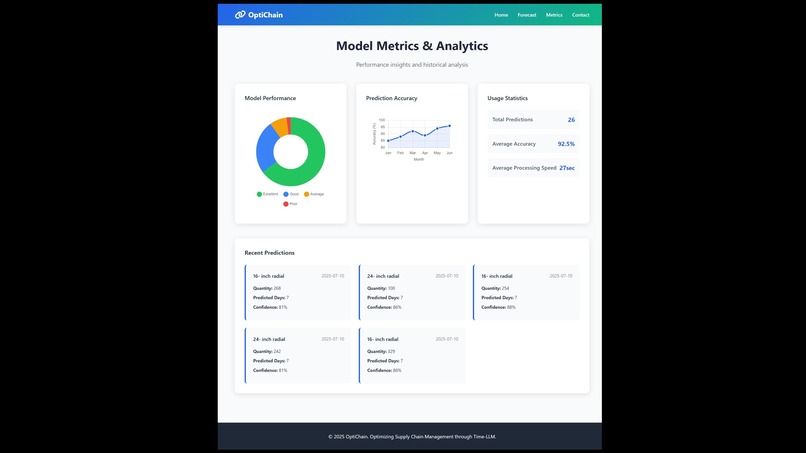
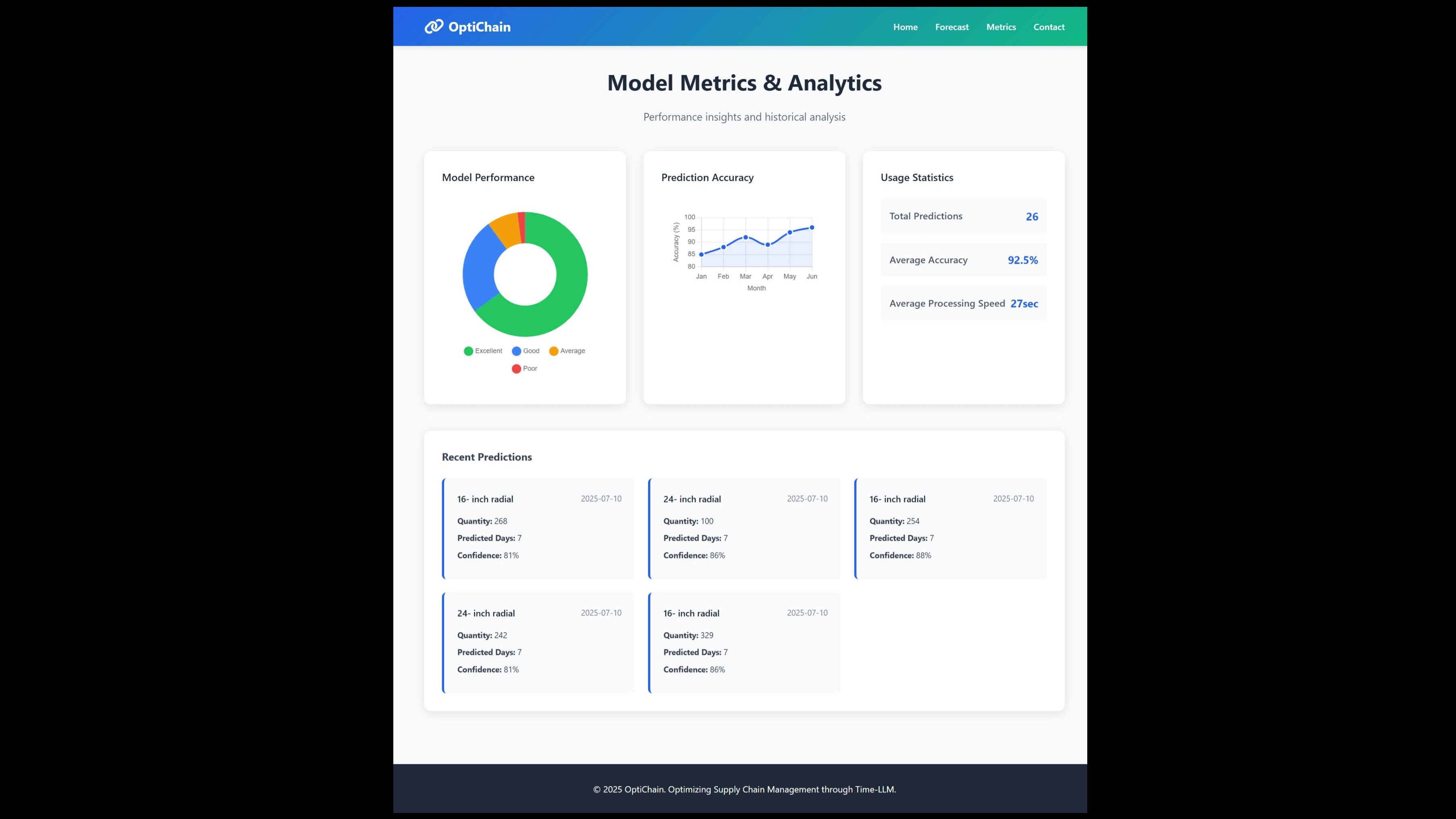
OptiChain Metrics Window
-
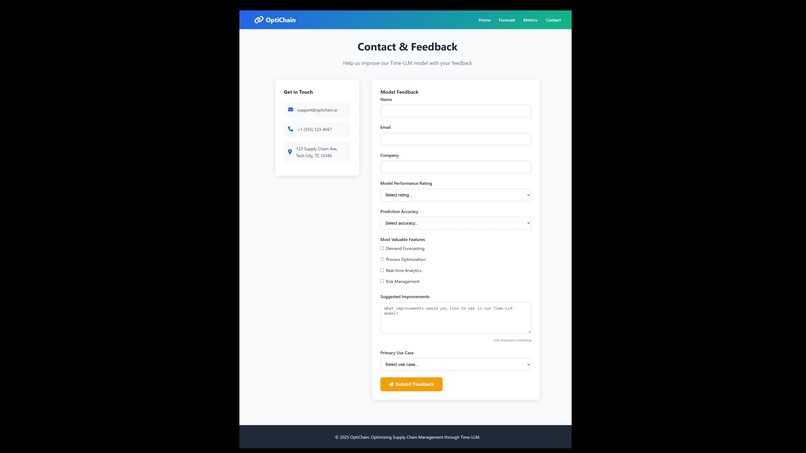
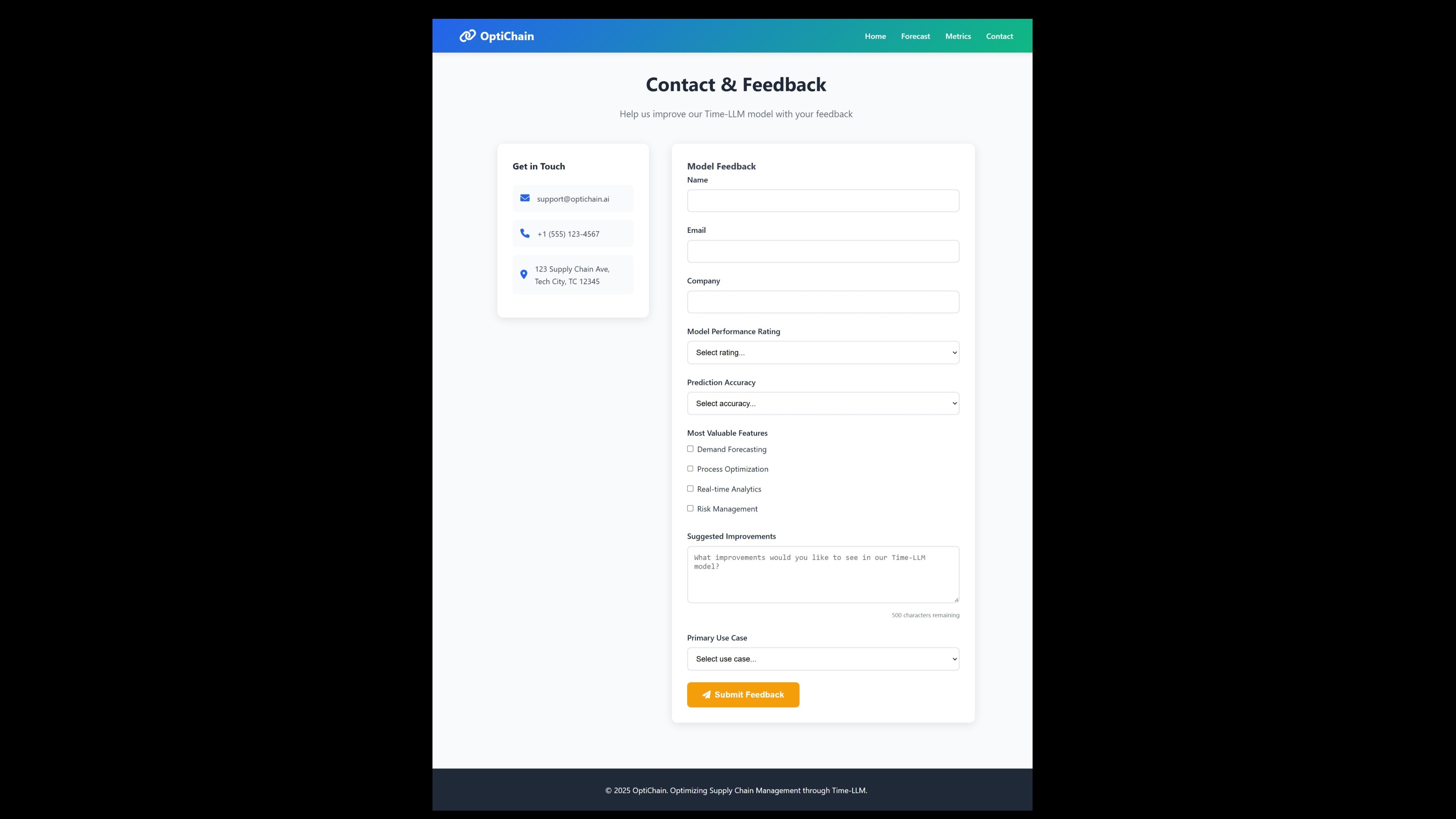
OptiChain Model Feedback & Contact
Project Story: OptiChain TimeLLM
About the Project
Our "OptiChain TimeLLM" project is designed to fundamentally change how businesses manage their supply chains. At its core, it's about making demand forecasting and inventory optimization smarter, more proactive, and more adaptable than ever before. We're building a TimeLLM-powered tool that can predict demand with unprecedented accuracy and then intelligently optimize inventory levels, minimizing both stockouts and excess holding costs. This solution achieves efficiency by analyzing not just historical sales data, but also incorporating a rich tapestry of market trends and even unstructured textual information, thanks to the unique capabilities of Large Language Models (LLMs). The project spans critical supply chain functions, from intelligent data ingestion and real-time monitoring to advanced reporting and analytics, aiming to transform supply chains from cost centers into strategic assets.
The Inspiration
The inspiration for TimeLLM SupplyChain AI stemmed from a common pain point observed across various industries: the inherent fragility and reactive nature of traditional supply chains. We consistently saw businesses grappling with the ripple effects of inaccurate forecasts — from lost sales due to stockouts, to spiraling costs from overstocked warehouses, and the constant scramble to react to unforeseen market shifts or supplier delays.
Traditional forecasting methods, while effective to a degree, often fall short when confronted with the sheer complexity and dynamism of modern markets. They struggle to incorporate qualitative factors, real-time market sentiment, or the nuances embedded in unstructured data like news articles or social media chatter. The emergence of powerful Large Language Models, particularly their ability to understand and process complex sequential data (which time series essentially is), sparked an "aha!" moment. What if we could reframe time-series forecasting not just as a numerical problem, but as a language comprehension task? This paradigm shift, where historical data tells a story that an LLM can "read" and predict its next chapters, became the core inspiration. We envisioned a system that could not only forecast numbers but also provide context and explanations, offering true "intelligent forecasting."
What We Learned
Building TimeLLM SupplyChain AI has been a journey of significant learning:
- The Power of Multimodal Data: We learned that truly robust forecasting isn't just about sales numbers. Incorporating external factors like social media sentiment, economic indicators, and news events through LLMs dramatically improves predictive accuracy and contextual understanding. It's about building a richer, more comprehensive narrative for the model to learn from.
- LLMs as Time Series Interpreters: The most profound learning was how effectively LLMs, when properly "reprogrammed" through techniques like patching and tokenization, can interpret temporal dependencies. They excel at recognizing subtle patterns and long-range correlations that traditional models might miss, essentially "understanding" the flow of time-series data like a language.
- The Importance of Granularity and Aggregation: While LLMs can handle complexity, managing token limits with massive datasets requires sophisticated data preparation. We learned the critical balance between retaining enough detail for accurate forecasts (e.g., product-level data) and aggregating effectively (e.g., daily or weekly summaries, quantity banding) to make the data digestible and performant for the LLM.
- Prompt Engineering for Forecasting: Crafting effective prompts for specific forecasting queries is an art. We learned how to guide the LLM to focus on particular aspects, incorporate specific conditions (like "upcoming holiday season"), and elicit the precise type of output needed for optimization.
- Integration is Key: A powerful forecast is only as useful as its integration into actionable systems. We gained insights into how seamlessly the TimeLLM's outputs need to feed into existing inventory optimization models (like ROP, EOQ, safety stock calculations) and real-time alert systems.
How We Built Our Project
Our project development followed a phased approach:
- Data Foundation: We started by consolidating diverse data sources. This involved ingesting historical sales data, along with exploring avenues to integrate external data like supplier lead times, product master data, and simulated market trend indicators. The initial focus was on cleaning, normalizing, and structuring this data.
- Data Transformation for TimeLLM: This was a crucial, innovative step. We implemented routines to "reprogram" the numerical time-series data into a tokenized format suitable for an LLM. This involved techniques like splitting time series into overlapping patches and representing numerical values and categorical features as tokens, allowing the LLM to perceive them as a sequential "language."
- TimeLLM Model Adaptation: We leveraged the architecture of existing powerful LLMs and adapted them for time-series forecasting tasks. This involved fine-tuning the models on our prepared dataset, focusing on their ability to learn temporal patterns and dependencies.
- Forecasting Engine Development: We built the core forecasting engine, enabling multi-horizon demand predictions (e.g., 2, 3, 5 weeks out) at different granularities (e.g., by product, by supplier). This engine takes the preprocessed data and user-defined prompts as input to generate forecasts.
- Optimization Layer Integration: The forecasted demand is then fed into an optimization layer. This layer incorporates traditional inventory management principles (like calculating safety stock, reorder points, considering MOQs) to translate raw demand predictions into actionable inventory recommendations.
- Real-time Monitoring & Alert System (Conceptualization & Design): We designed the architecture for the real-time monitoring system, outlining how continuous forecasts would be generated, compared against thresholds, and trigger proactive alerts for potential stockouts or delays.
- Reporting & Analytics Interface (Conceptualization): We planned for the creation of intuitive dashboards and automated narrative reports. This involves translating TimeLLM's numerical outputs and its inherent understanding into human-readable summaries and explanations, facilitating better decision-making and collaboration.
Challenges Faced
The journey was not without its challenges:
- Data Volume and Token Limits: Our initial challenge was the sheer volume of 1 Million records. Feeding such a dataset directly to an LLM is impractical due to token limits and computational costs. This led us to extensively experiment with data reduction techniques like smart filtering, aggregation (daily/weekly), and especially quantity banding, to strike the right balance between data fidelity and LLM processability.
- "Reprogramming" Numerical Data for LLMs: Converting numerical time-series data into a format that LLMs can effectively interpret as "language" was a significant technical hurdle. Developing the patching and tokenization strategies that preserved temporal information and allowed the LLM to learn complex patterns was a core innovation and required iterative refinement.
- Interpretability and Explainability: While LLMs are powerful, their "black box" nature can be a concern in critical applications like supply chain. We focused on strategies to enhance interpretability, such as having the LLM generate natural language explanations for its forecasts and alerts, rather than just providing numbers.
- Balancing Accuracy and Responsiveness: Achieving high forecasting accuracy while maintaining real-time responsiveness for monitoring and alerts required careful architectural design and optimization of data pipelines.
- Incorporating Supply Chain Specific Constraints: Integrating complex supply chain realities like "make-to-order" (MTO), Minimum Order Quantities (MOQ), and the proportionality of lead time to quantity into the LLM's learning or the subsequent optimization layer required careful modeling and rule-setting.
- Defining "Best Vendor" Metrics: For the "best vendor" query, defining "best" comprehensively (fastest, cheapest, most reliable) and ensuring the LLM or subsequent logic could weigh these factors based on historical performance was a nuanced task.
Despite these challenges, each one pushed us to innovate and refine our approach, leading to a more robust and intelligent supply chain optimization solution powered by TimeLLM.


Log in or sign up for Devpost to join the conversation.