-
-
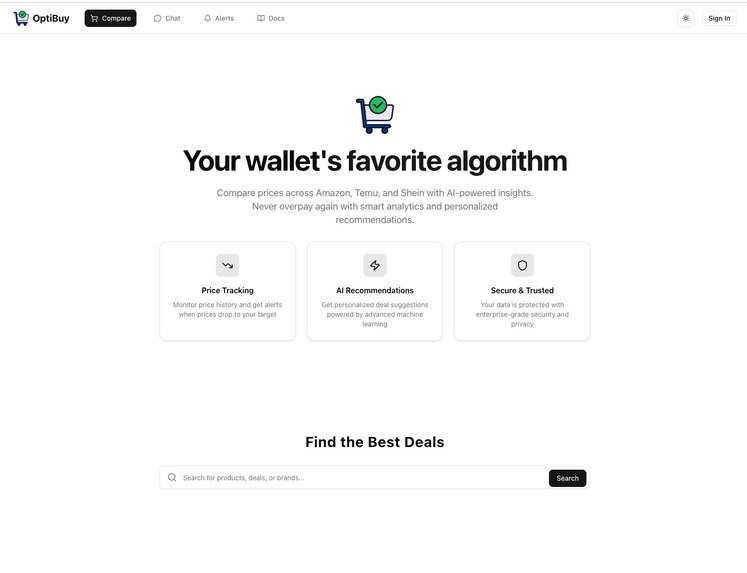
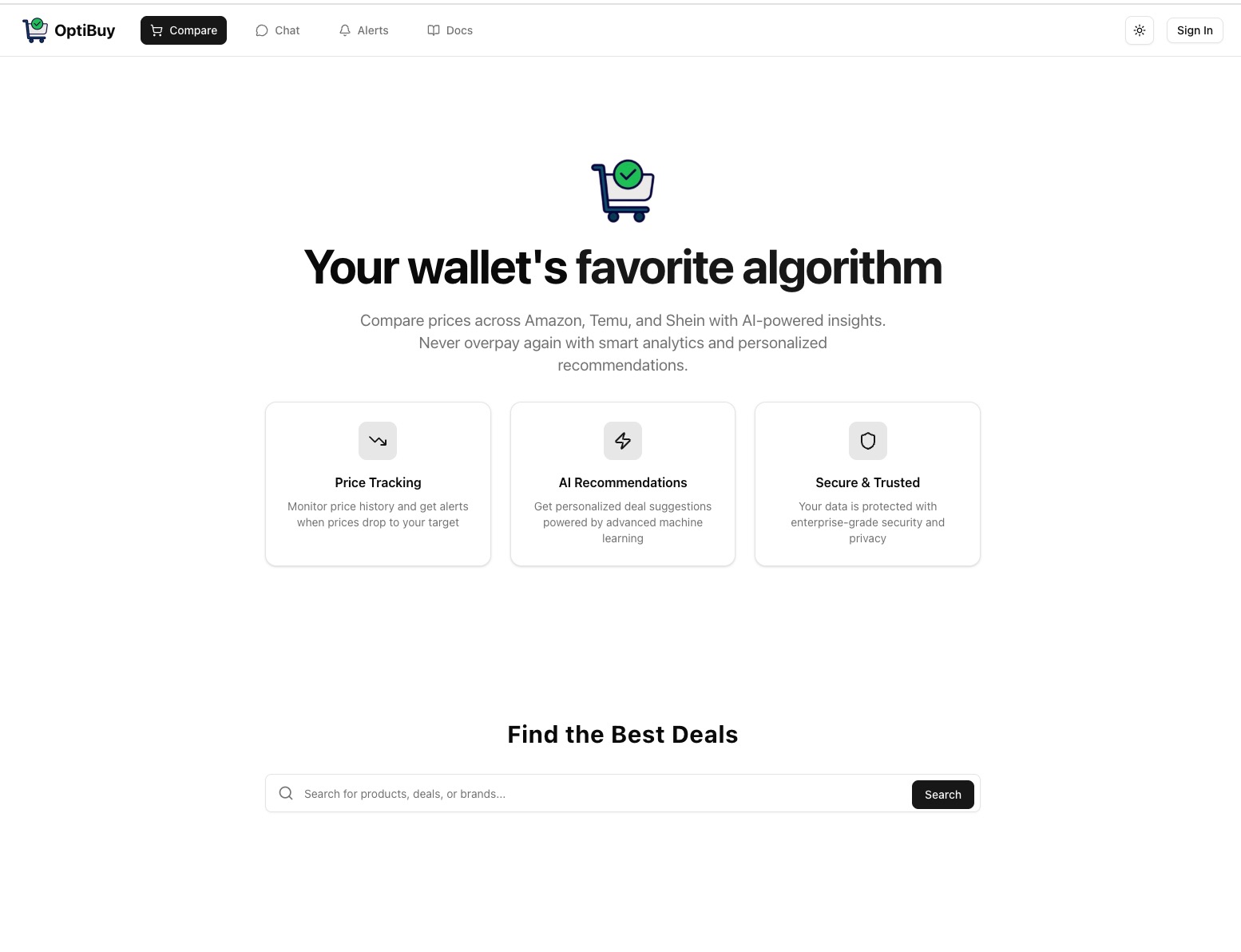
Landing page
-
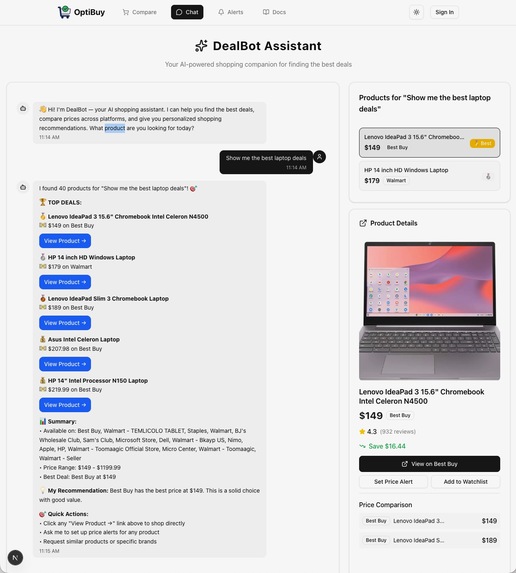
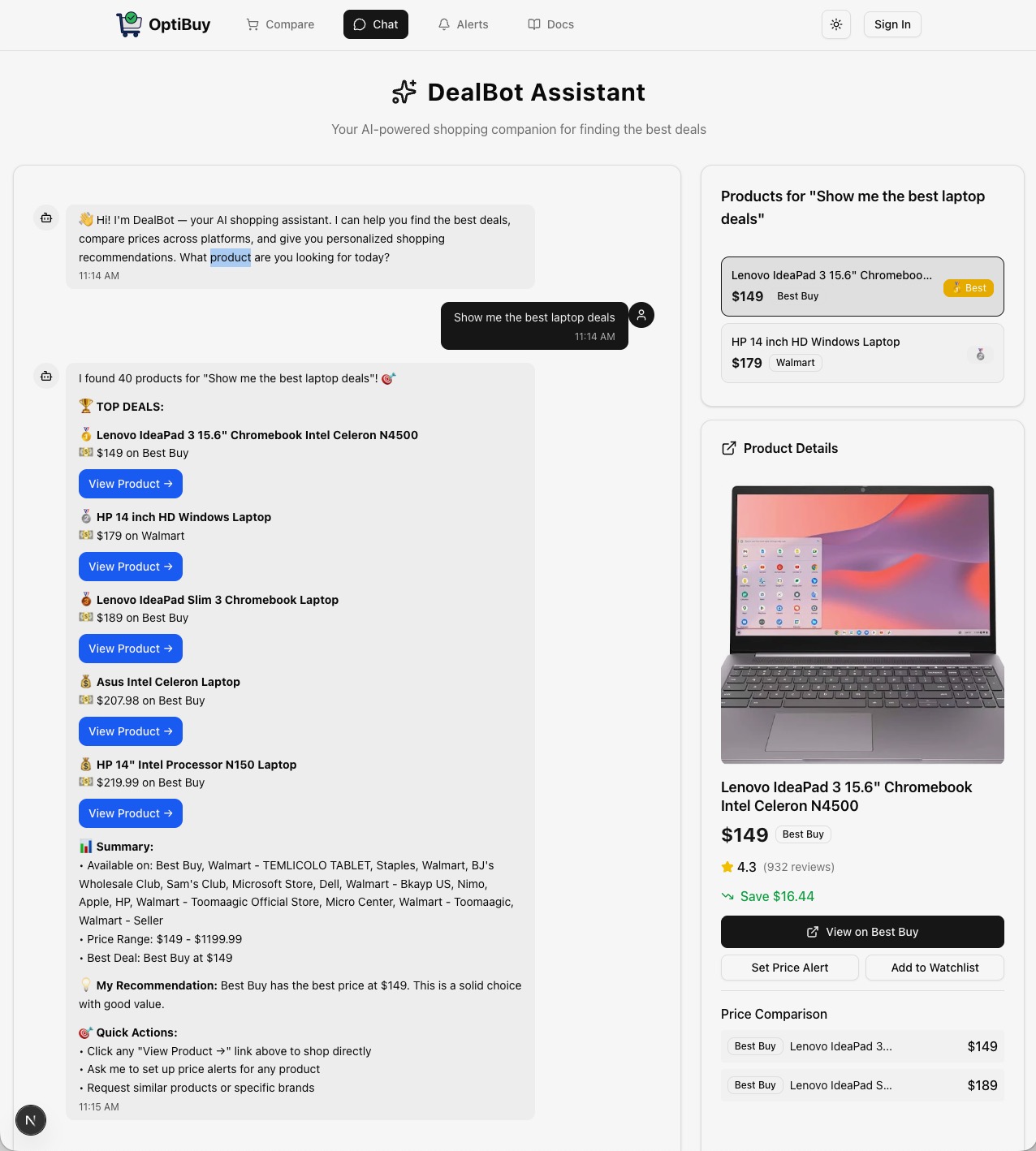
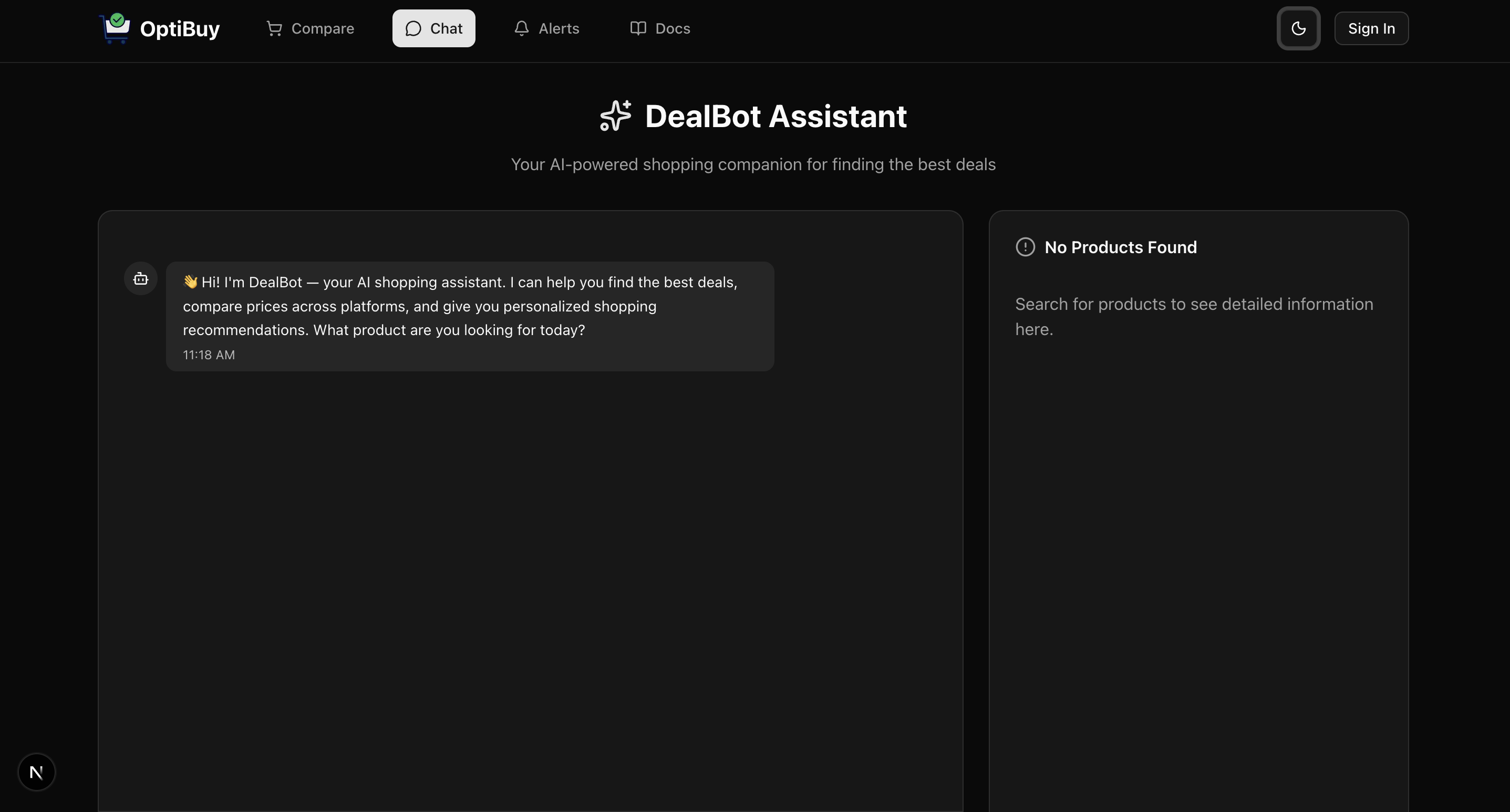
DealBot Assistant
-
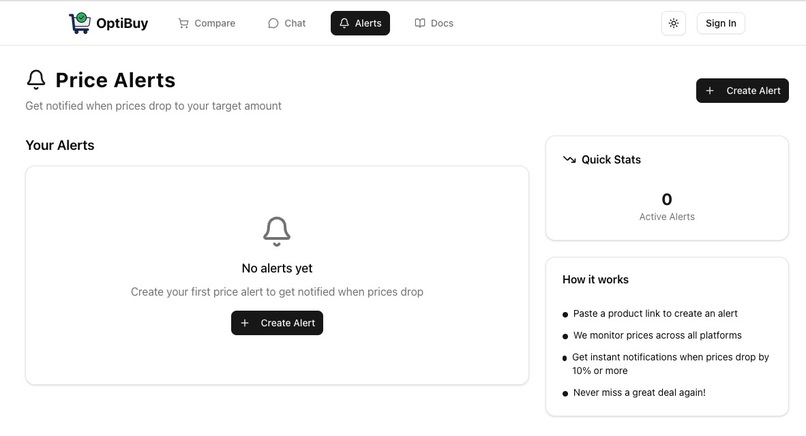
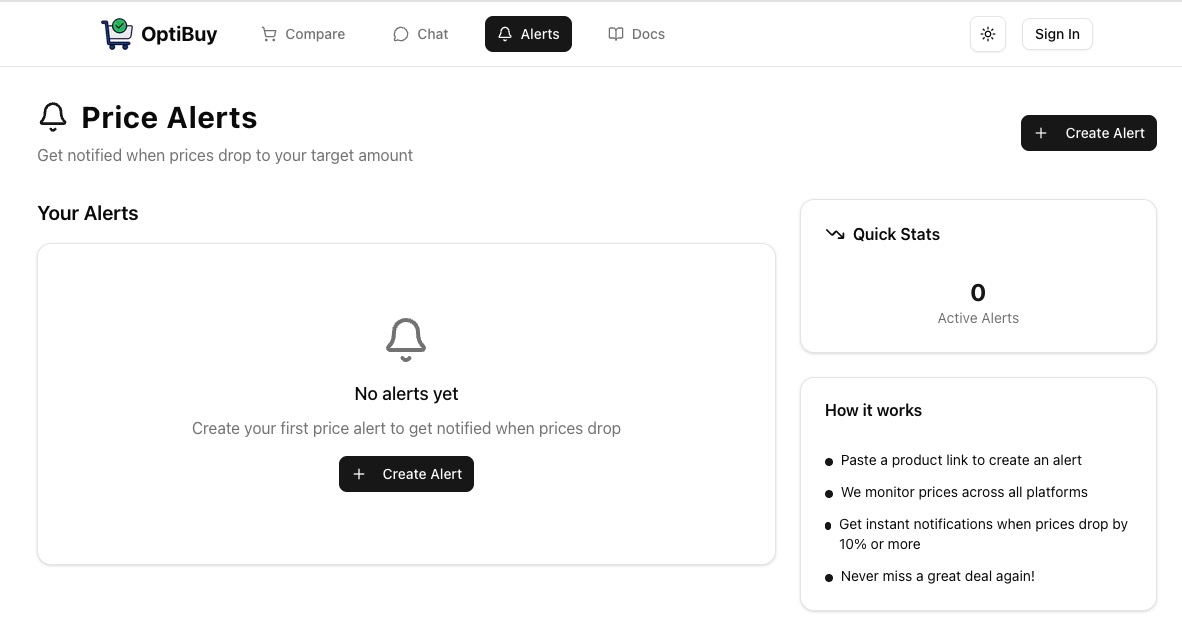
Price alerts
-
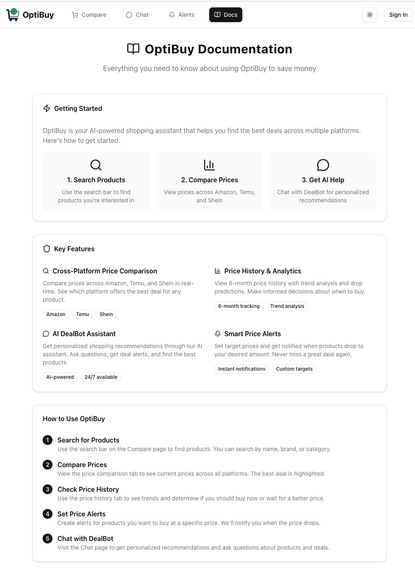
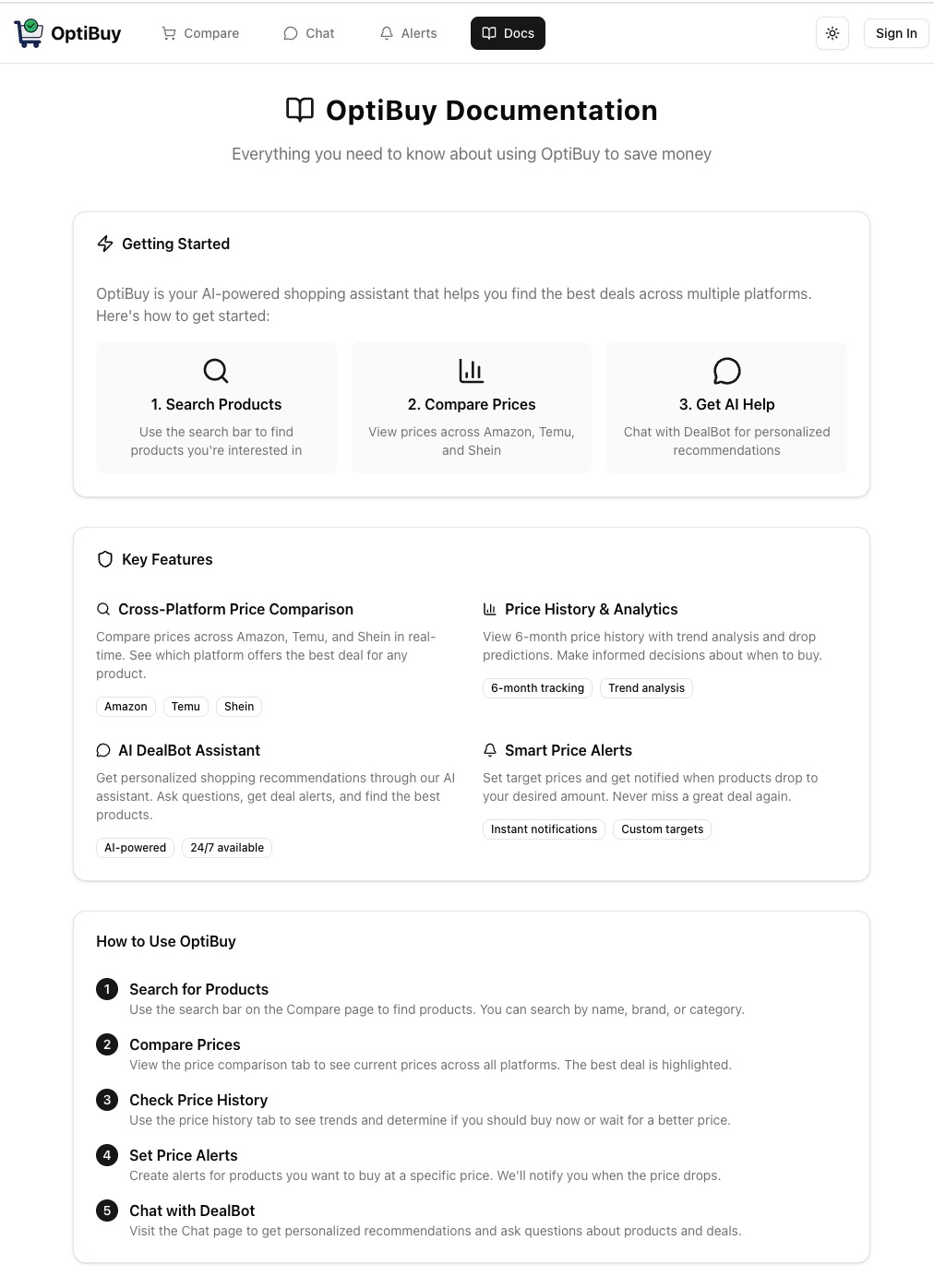
Documentation
-
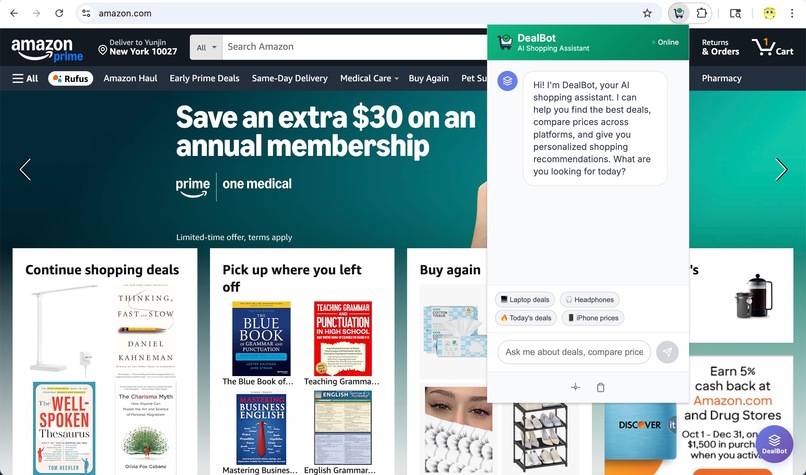
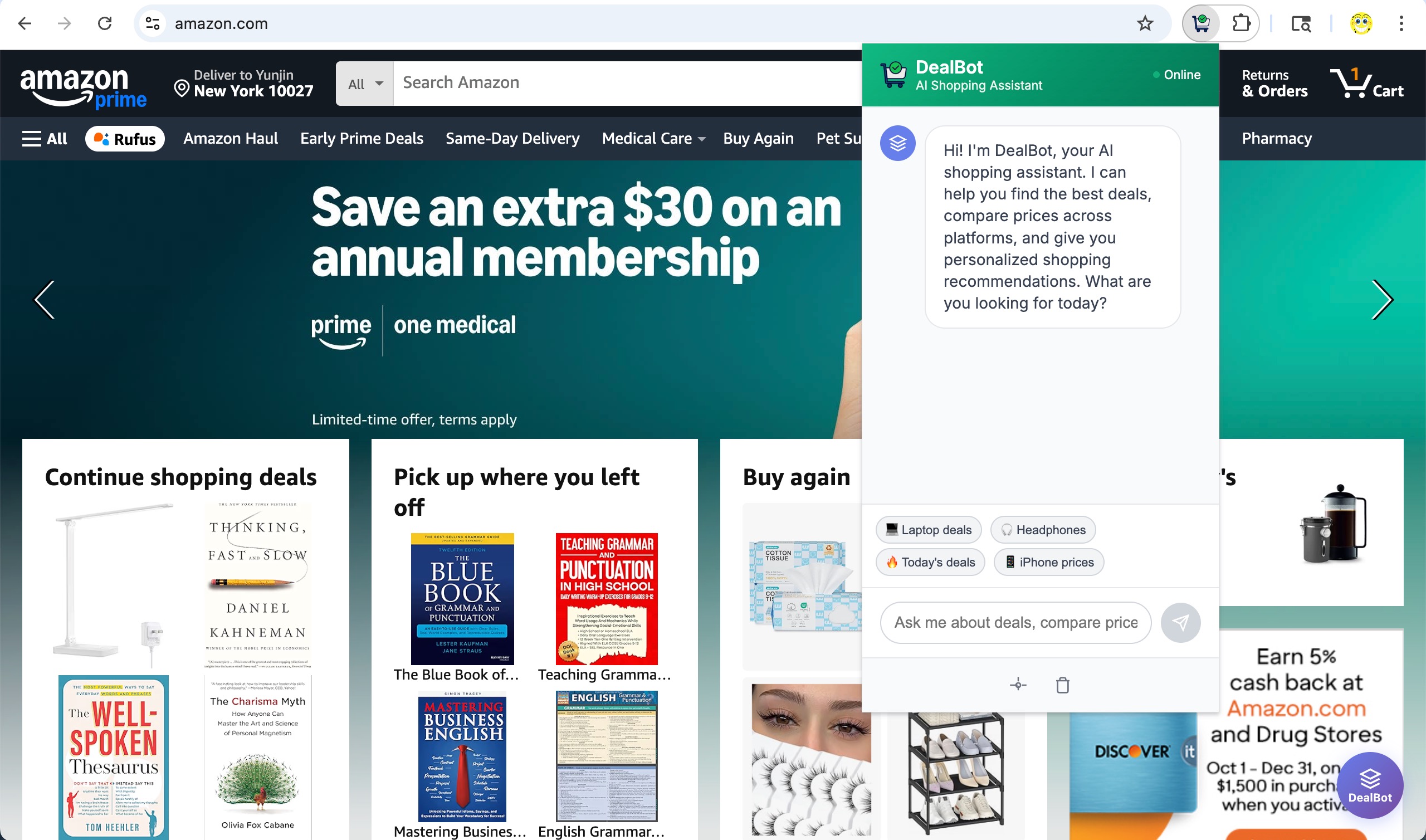
Chrome extension
-
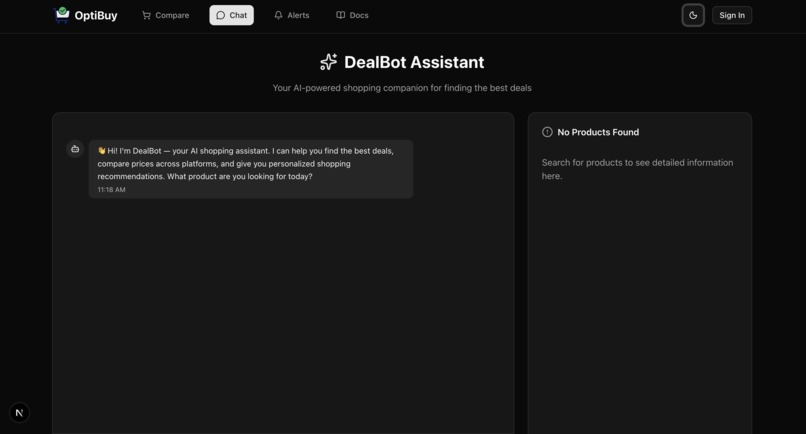
Dark Mode UI
Inspiration
OptiBuy began with a simple frustration: spending hours comparing prices across sites and still wondering if the deal was fair. We noticed that while tools like Keepa tracked individual sites like Amazon, none gave users a unified, intelligent view across multiple platforms. That insight inspired us to build an AI-powered solution that not only compares prices but also understands when and where to buy.
What It Does
OptiBuy is a website and Chrome extension that aggregates prices from hundreds of e-commerce platforms such as Amazon, Walmart, Temu, eBay, Target, and Best Buy. It displays a six-month price history chart and concludes the best product to purchase. Users can interact with an AI chatbot to search for products, and receive data-driven recommendations based on affordability trends and recent price drops.
OptiBuy stands out from existing price trackers by offering true cross-platform intelligence powered by AI. Unlike Keepa, which is limited to Amazon and lacks predictive insights or a modern interface, OptiBuy compares products across hundreds of platforms in one unified dashboard. Unlike Price Tracker, users do not need to manually select price elements, as OptiBuy automatically identifies and matches the same product across sites. Other competing tools like Daraz Price Tracker are confined to the Ali ecosystem and provide no personalized recommendations, while Google Shopping supports only select platforms (often with promotions) and no visual price histories.
How We Built It
We developed OptiBuy using JavaScript, HTML, CSS, and Next.js. The AI features run through LangChain (to analyze text input from the user) , as well as the Google Gemini API and SerpAPI (to conduct web scrapping and generate text responses for the user). We also use MongoDB and SupaBase to control the number of API calls, and to store results. Our codebase was managed on GitHub.
Challenges We Ran Into
Our main technical challenge was merging multiple development branches as we integrated frontend, backend, and AI components with different frameworks and dependencies. We also faced difficulties standardizing APIs across platforms like Amazon and Walmart, each of which structured pricing data differently. Generally, achieving a unified schema for accurate comparisons required lots of parsing, data cleaning, and testing.
Accomplishments That We’re Proud Of
We’re proud that our MVP successfully tracks prices across hundreds of e-commerce platforms and presents clear visual insights. The chatbot interface exceeded expectations by accurately interpreting user input and linking it to real product data. Within the short hackathon timeframe, we achieved seamless integration between AI reasoning, data visualization, and browser functionality.
What We Learned
We learned how to integrate diverse APIs into a cohesive system, handle data normalization at scale, all through collaborating effectively under rapid development cycles. We also deepened our understanding of AI prompt engineering and browser extension architecture. Additionally, we learned how to design interfaces that translate complex analytics into clear, intuitive experiences for everyday users.
What’s Next for OptiBuy
Our next step is to expand OptiBuy’s reach beyond Chrome and support mobile integration with a mobile app. We also plan to refine our AI model to better predict seasonal pricing patterns, add user accounts with customizable personalized alerts (email, push, text message notifications). Ultimately, we envision OptiBuy as a complete AI-driven shopping assistant that empowers users to make smarter, faster, and more confident purchasing decisions.


Log in or sign up for Devpost to join the conversation.