-
-
Landing Page
-
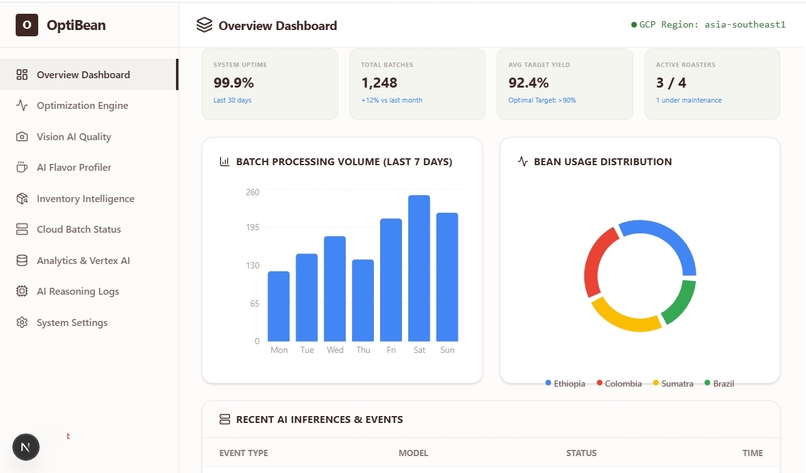
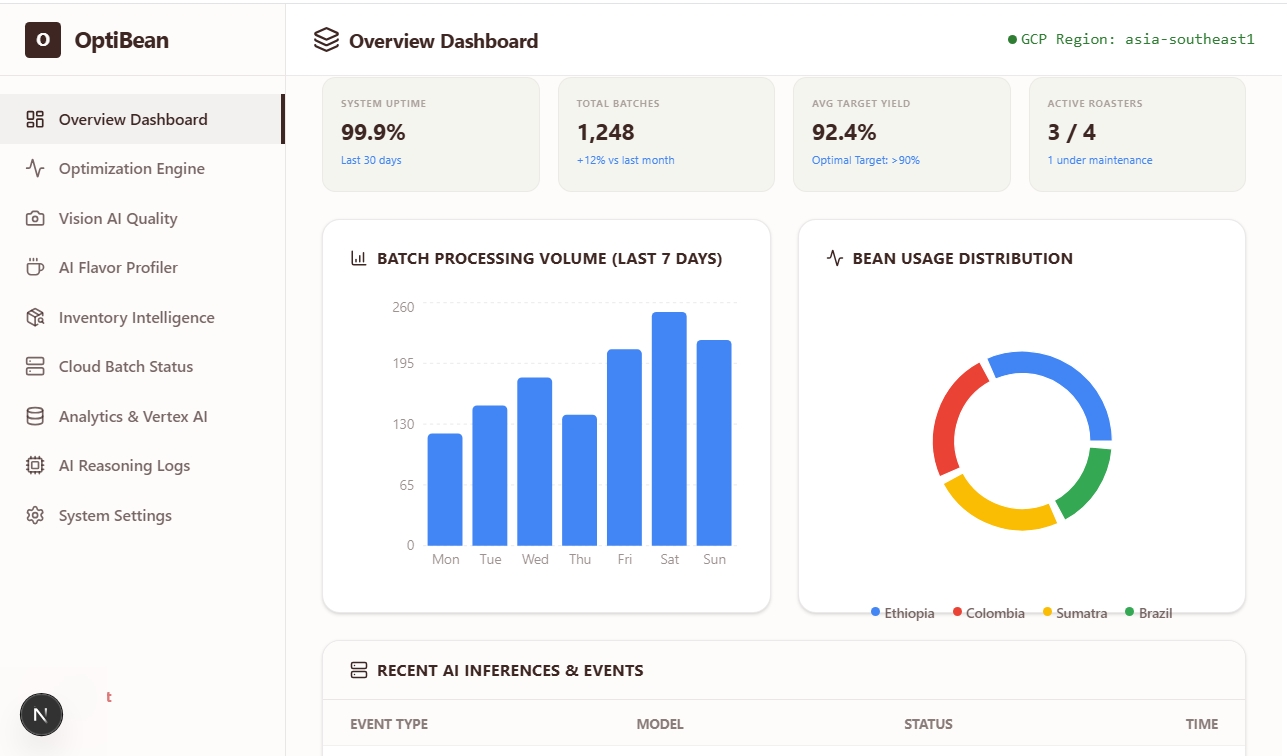
Dashboard
-
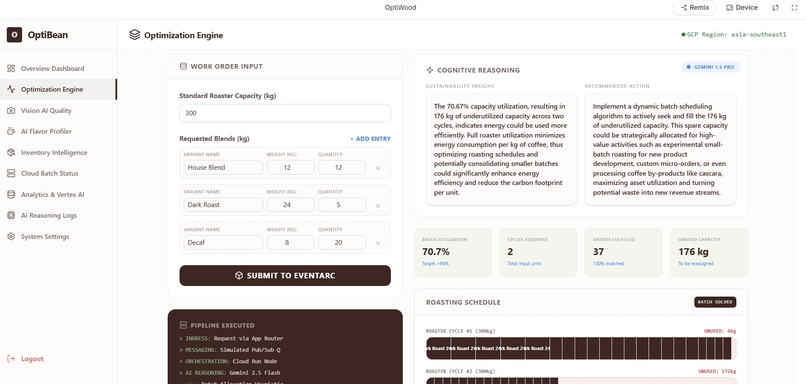
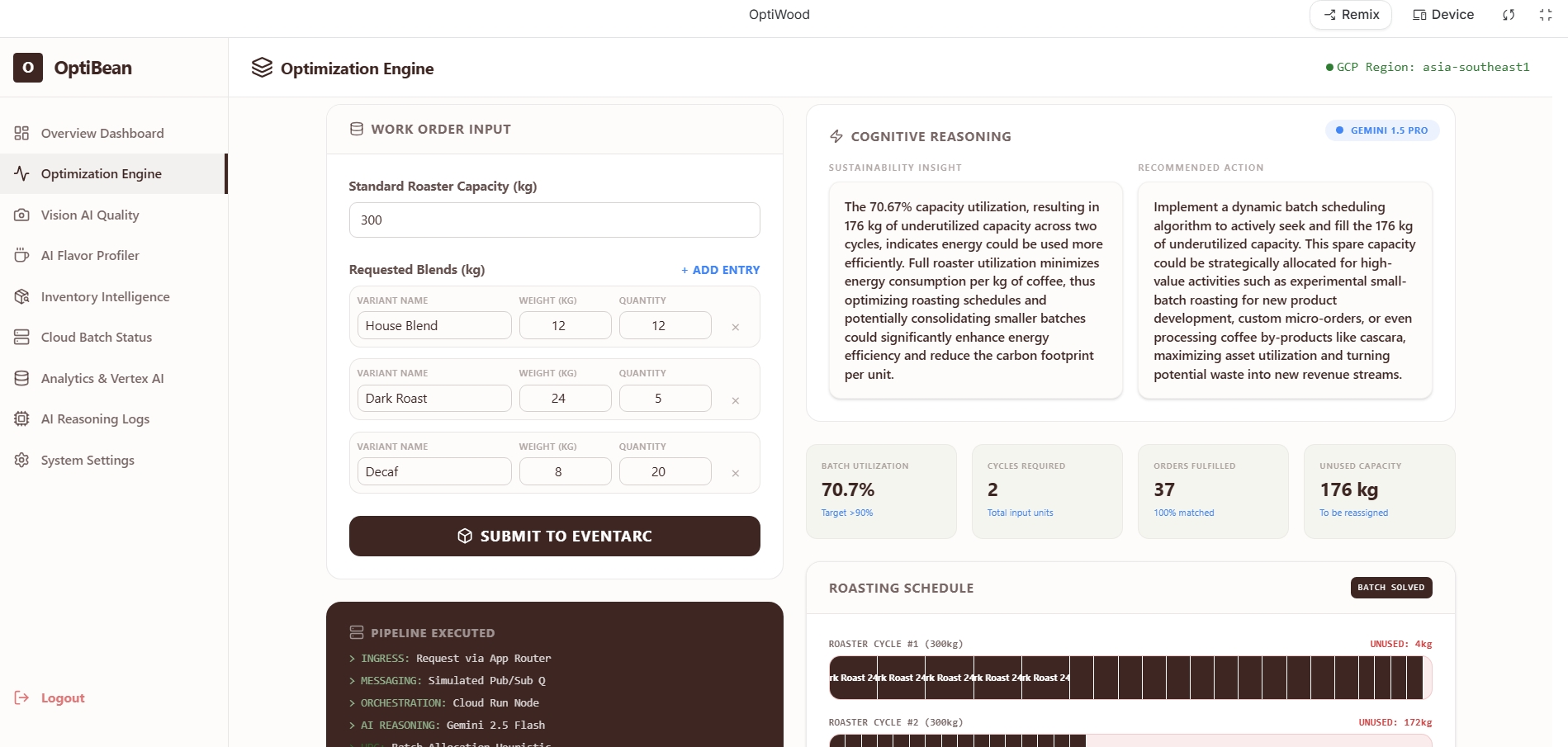
Optimization Engine
-
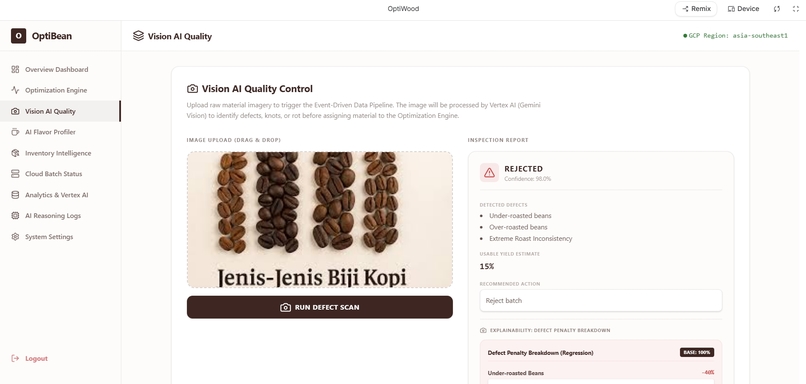
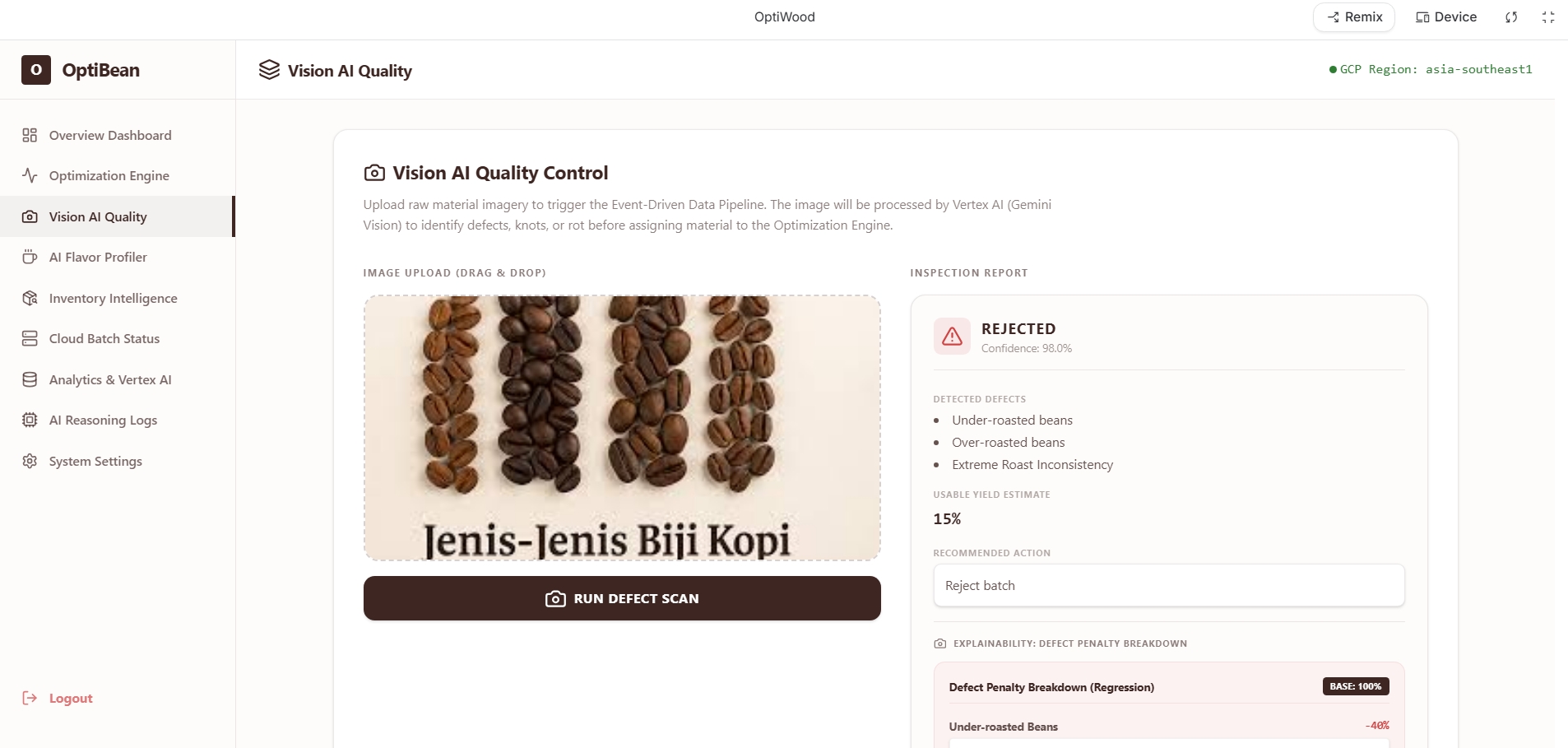
Vision AI Quality Control
-
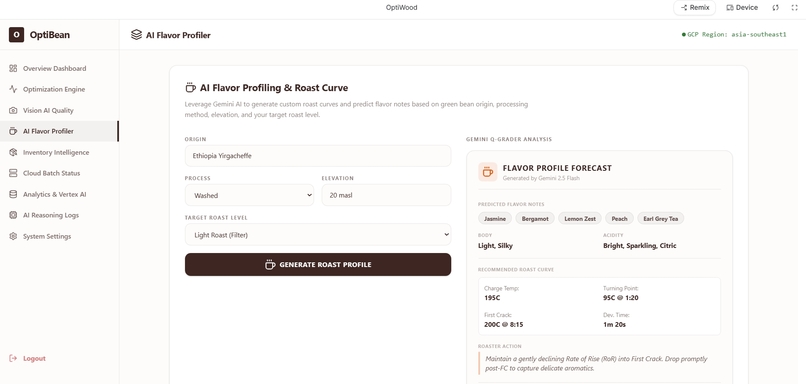
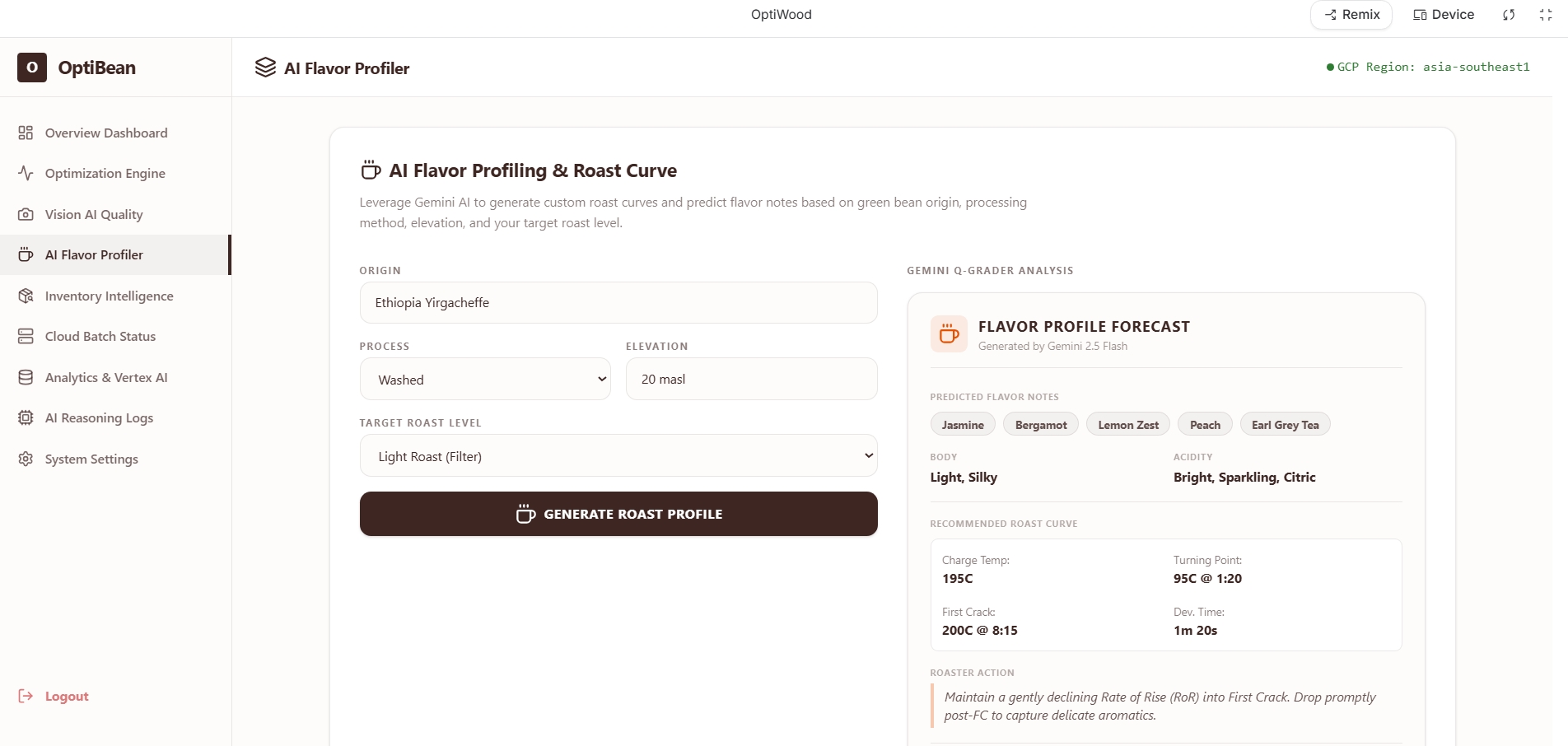
AI Flavor Profiling
-
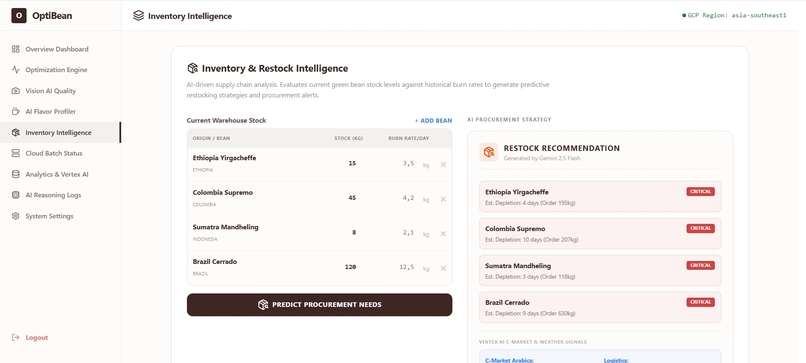
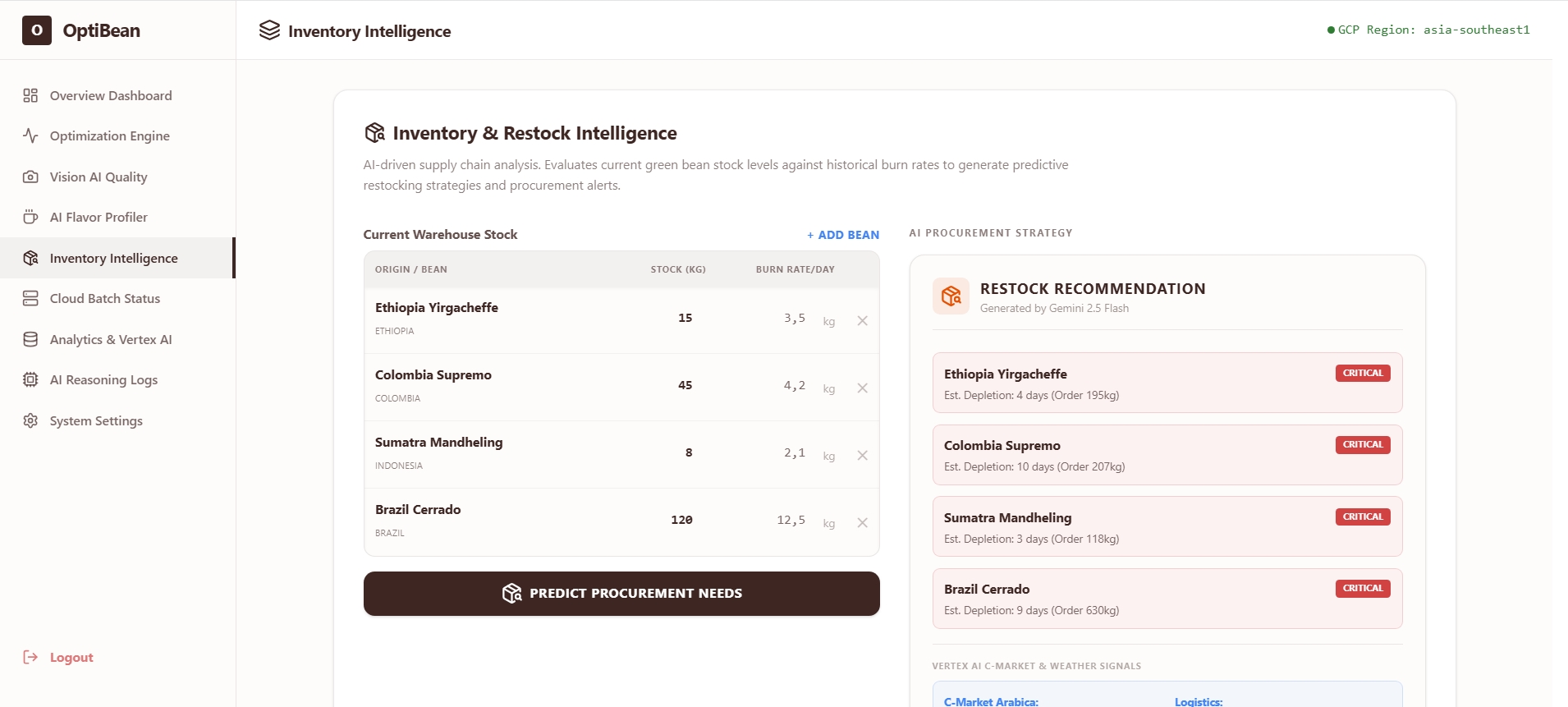
Inventory & Predict Intelligence
-
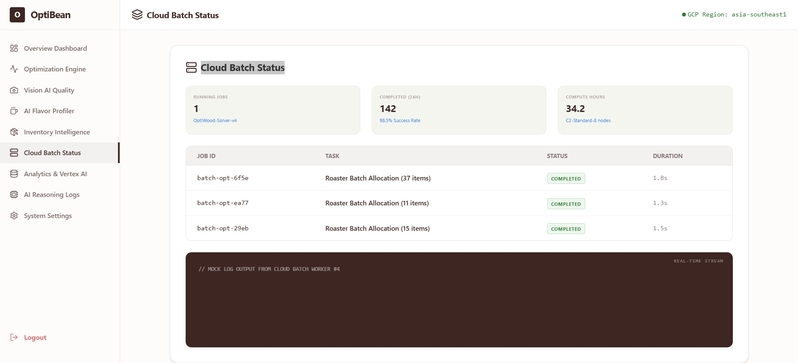
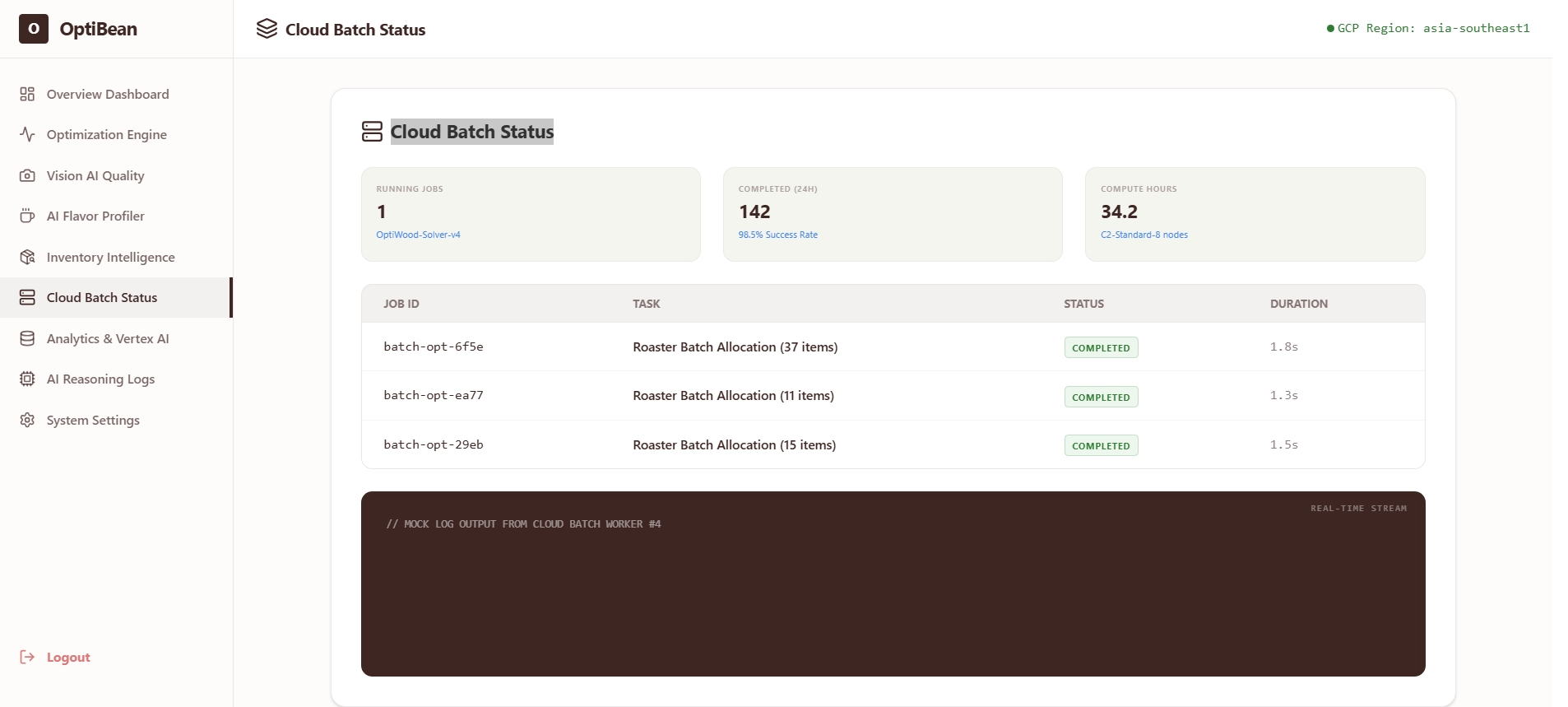
Batch Status
-
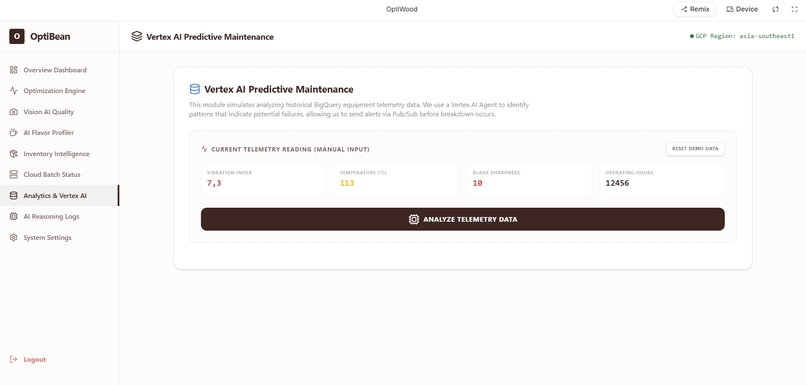
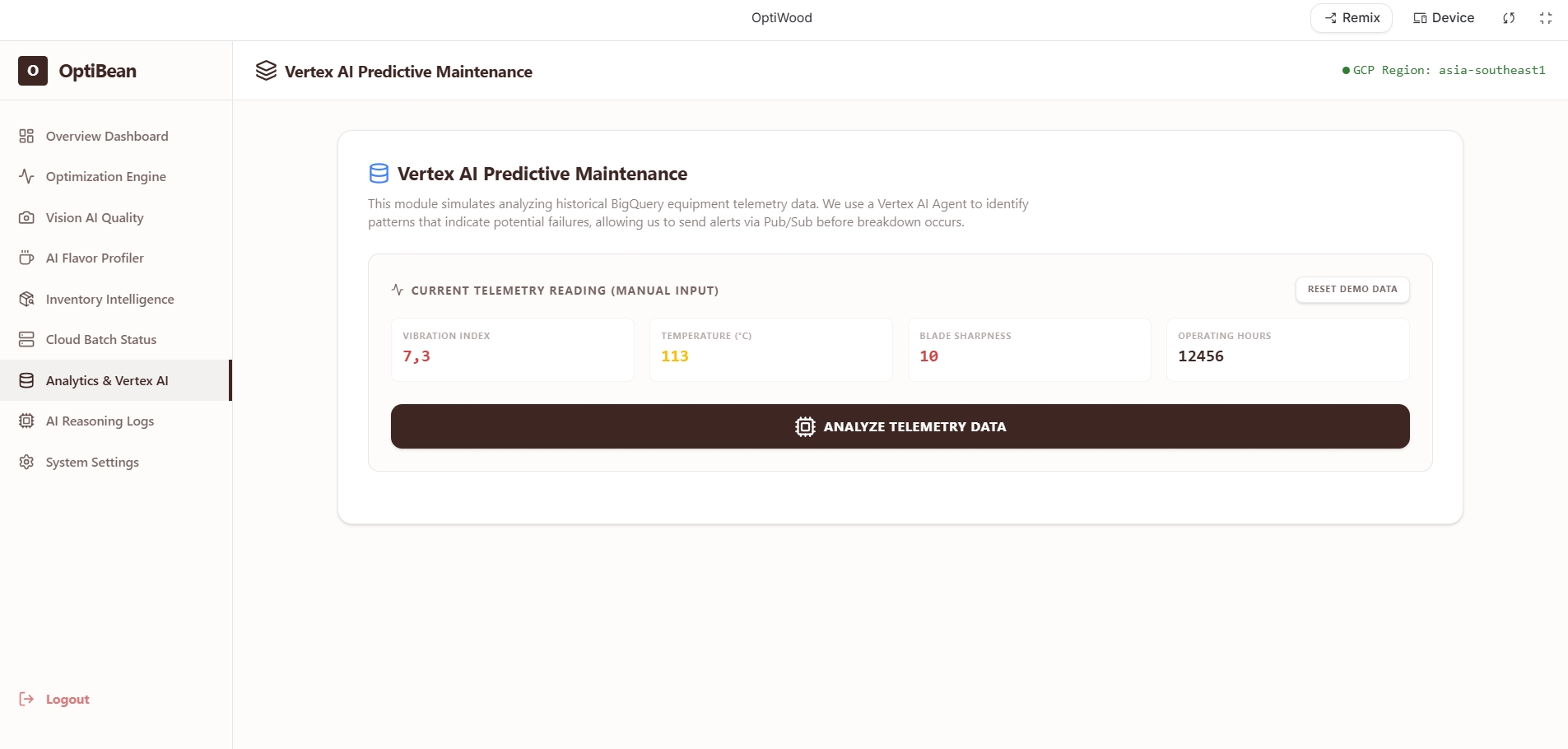
Predictive Maintenance
-
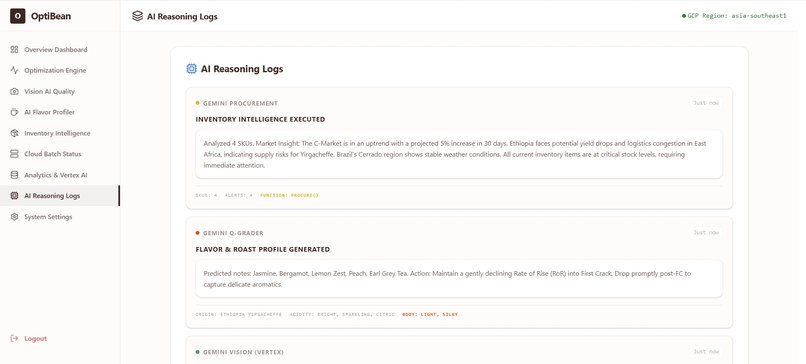
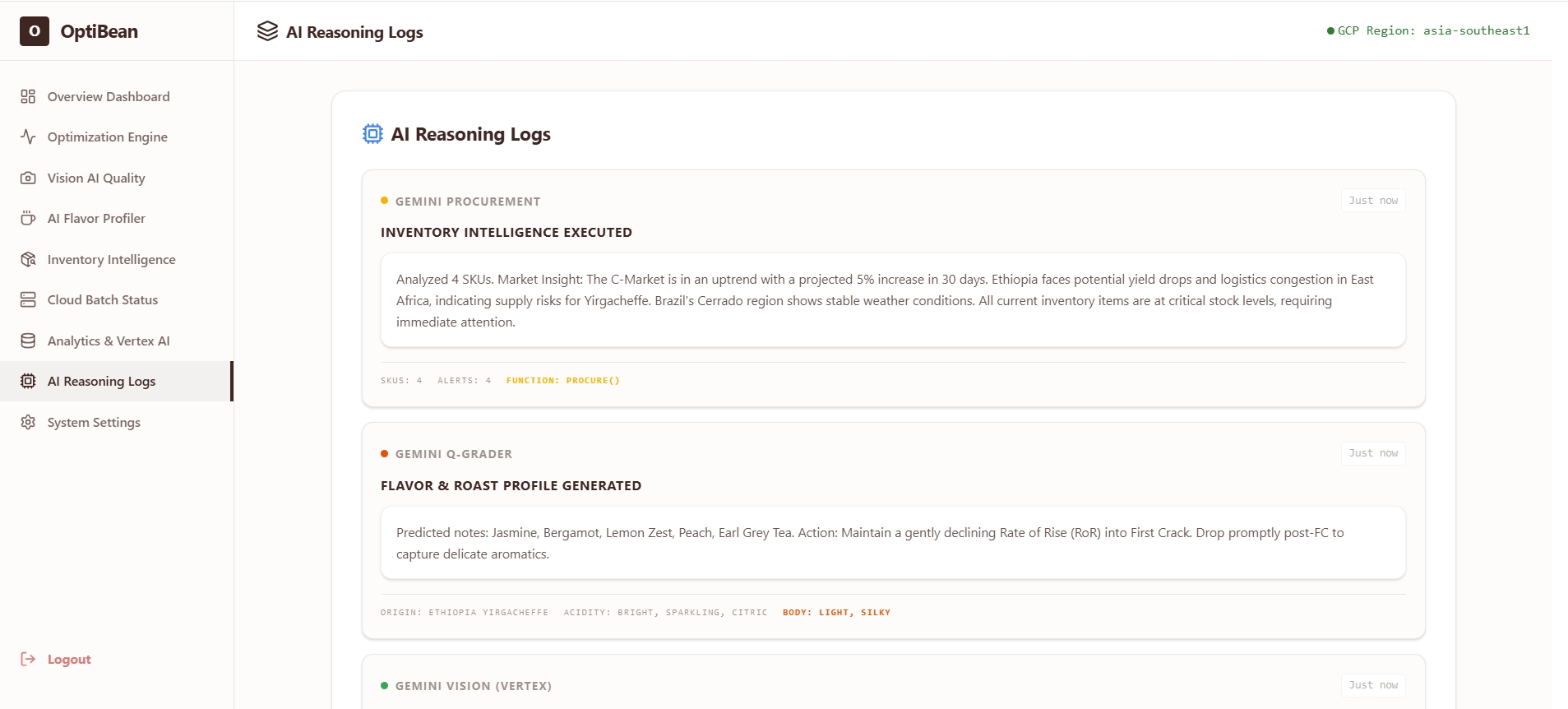
Reasoning Logs
Inspiration
The coffee roasting industry relies heavily on intuition and manual processes, often leading to inconsistent yields, suboptimal machine utilization, and unpredicted downtimes. We wanted to bridge traditional coffee craftsmanship with cutting-edge Agentic AI to create a smart, data-driven ecosystem. Our goal was to support roasters in maximizing their production capabilities and maintaining high quality effortlessly.
What it does
OptiBean is an enterprise-grade AI dashboard that acts as a cognitive assistant for modern coffee roastery operations. It features: Optimization Engine: Uses bin-packing algorithms coupled with AI insights to maximize roasting machine utilization by allocating custom batch cuts efficiently. Vision AI Quality: Analyzes raw coffee beans for physical defects via image uploads to predict net yield estimates and suggest manual sorting actions. AI Flavor Profiler: Acts as a master roaster and Q-grader, formulating optimal roast curves and flavor profiles based on bean origin, elevation, and process. Inventory Intelligence: Serves as a procurement advisor, managing stock and utilizing external signals to suggest pre-purchase guidelines. Predictive Analytics: Analyzes telemetry logs from roasters to predict wear and tear before critical hardware failures occur. Overview Dashboard: Provides a centralized, real-time visual representation of system uptime, batch volumes, bean distribution, and recent AI inference events.
How we built it
We developed OptiBean as a cloud-native Next.js web application utilizing TypeScript. We integrated the Google GenAI SDK to empower multiple "Agentic" personas across the app (Master Roaster, Q-Grader, QC Inspector) using models like Gemini 1.5 Pro and Gemini 1.5 Flash. For the frontend, we strictly applied Clean Architecture principles, utilizing Tailwind CSS for an elegant "Natural Tones" aesthetic and Recharts for interactive analytics. User authentication and secure cloud rules were provisioned using Firebase Auth and Firestore.
Challenges we ran into
One of the most complex challenges was engineering the exact prompts so that the AI models acted strictly within their assigned personas, ensuring they consistently provided deterministic, structured JSON outputs instead of conversational text. Additionally, balancing optimal mathematical algorithms (First Fit Decreasing for batch allocation) alongside asynchronous AI insights required careful state management and React hook optimizations to prevent rendering bottlenecks.
Accomplishments that we're proud of
We are incredibly proud of seamlessly blending deterministic mathematical algorithms (bin-packing for roasters) with non-deterministic AI capabilities (flavor profiling and visual defect detection) into a single, cohesive user interface. The professional, distraction-free aesthetic makes the application accessible and highly functional for operations managers and coffee professionals alike.
What we learned
We learned that carefully orchestrating System Instructions and constraining standard LLM outputs into structured formats drastically improves their viability in enterprise software. We also discovered how powerful and accurate Vision AI can be when applied to analog, visual-heavy tasks like raw bean sorting and quality control.
What's next for OptiBean
We plan to integrate actual physical IoT sensors directly into the dashboard for real-time telemetry ingress (moving away from simulated logs). We also aim to expand the predictive maintenance module with deeper, custom-trained Vertex AI forecasting models and introduce a mobile-friendly companion application for warehouse and roastery floor operators.

Log in or sign up for Devpost to join the conversation.