Inspiration
Procurement errors can quietly cost businesses thousands through incorrect invoices, overbilling, missing deliveries and undetected discrepancies. Yet, many organizations still rely on manual document reviews to establish whether what they ordered, received and are being charged for actually matches.
I wanted to address this gap by building something beyond a conventional document automation tool. My vision was to create a system that doesn't just extract information but investigates inconsistencies, quantifies financial risks and provides verifiable evidence before decisions are made. That vision became OpsWarden.
What it does
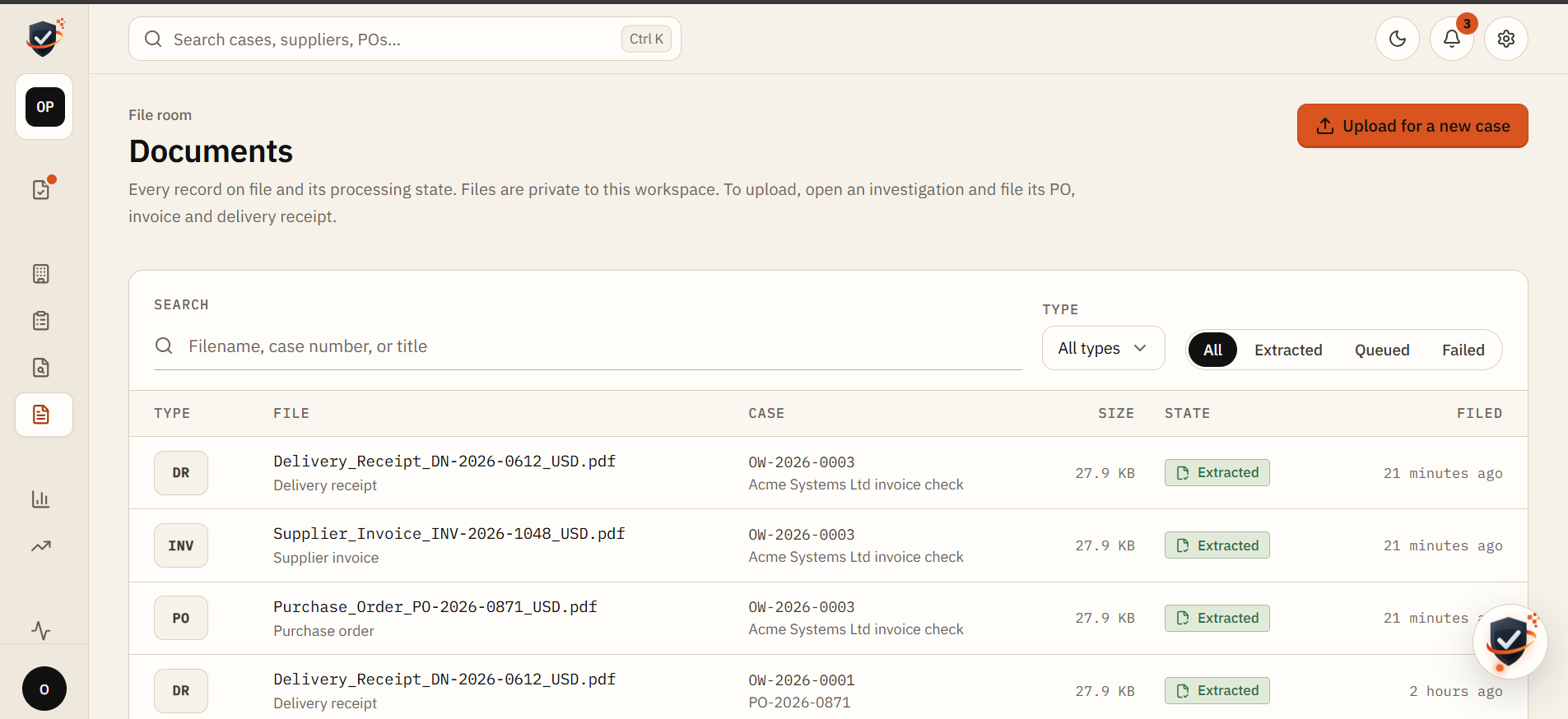
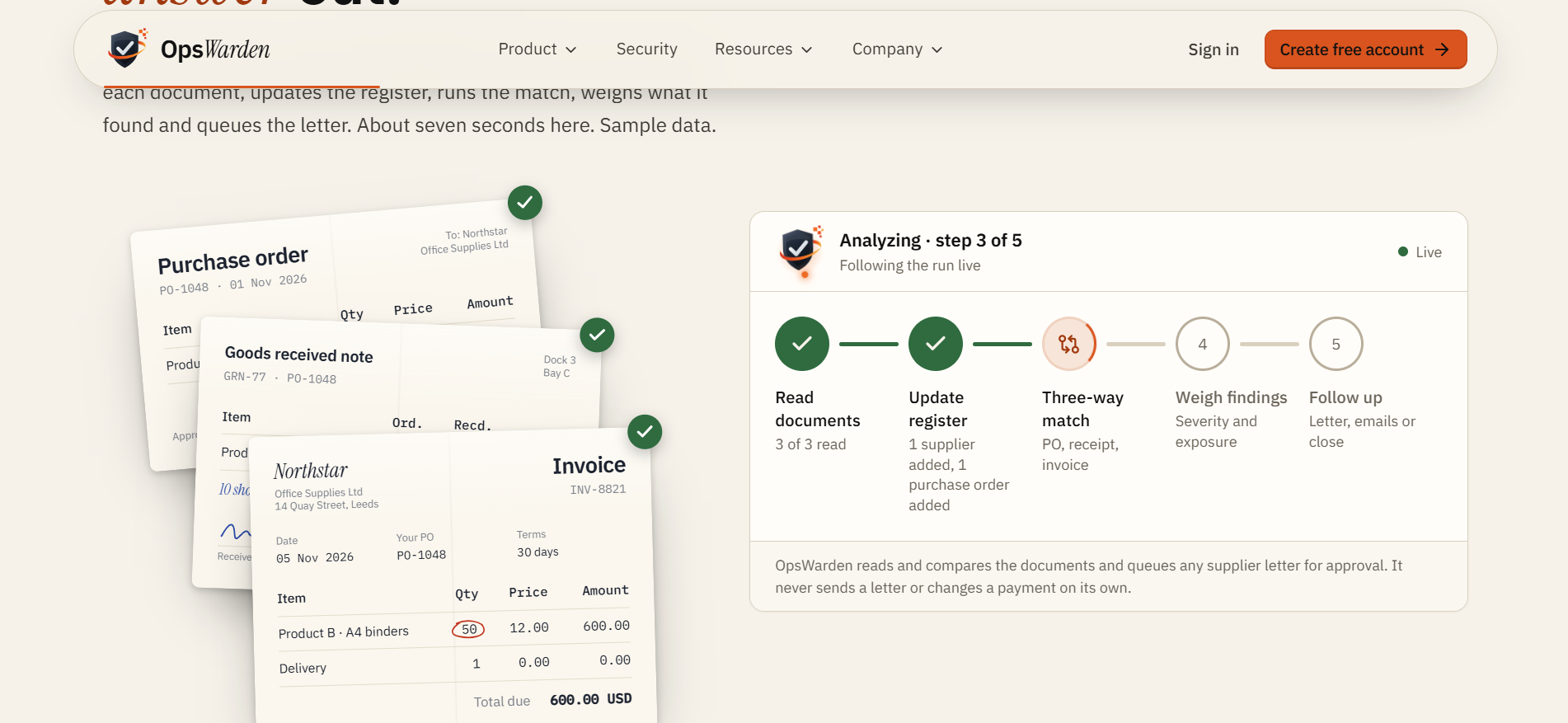
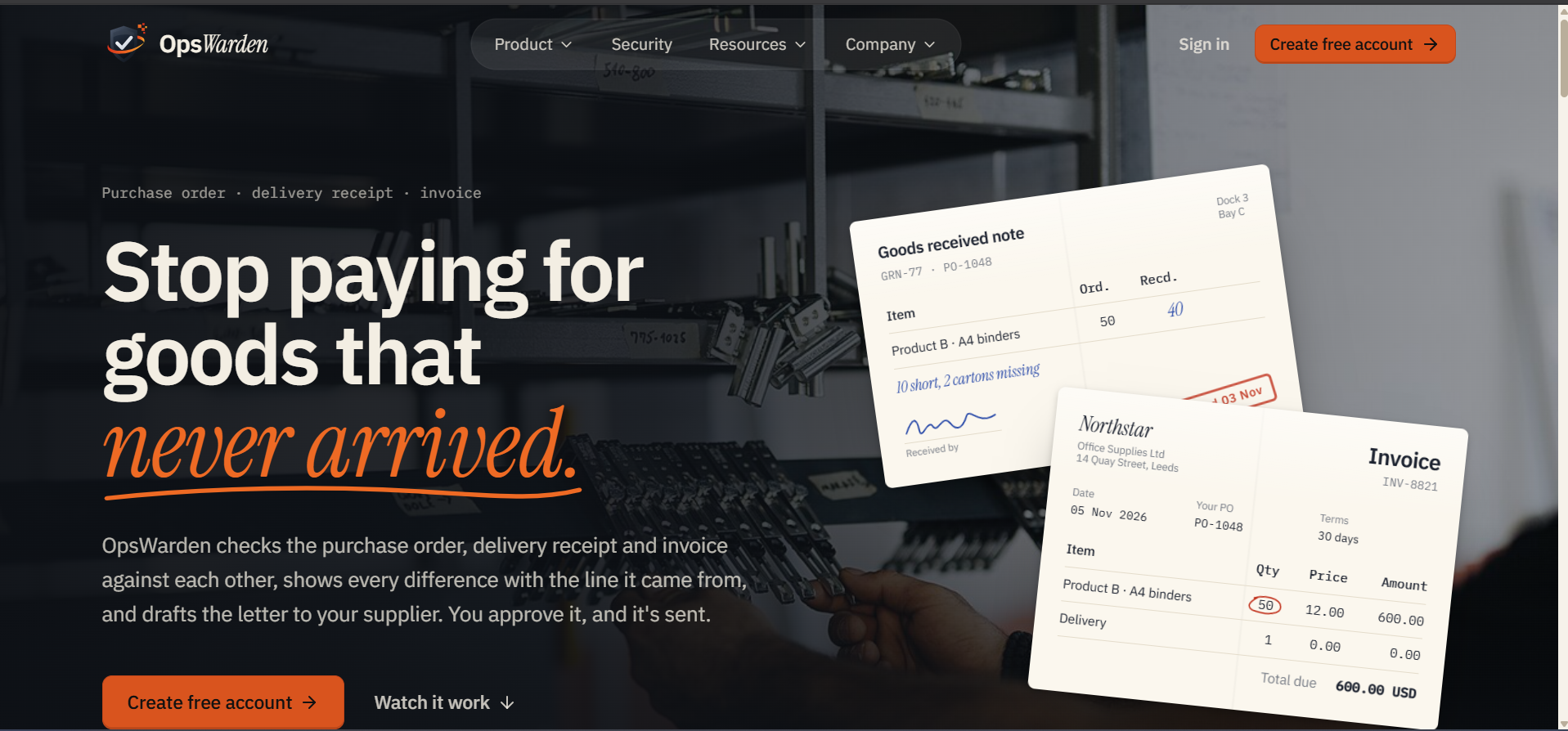
OpsWarden is a procurement intelligence and invoice verification platform that automates three-way matching between purchase orders, delivery receipts and supplier invoices.
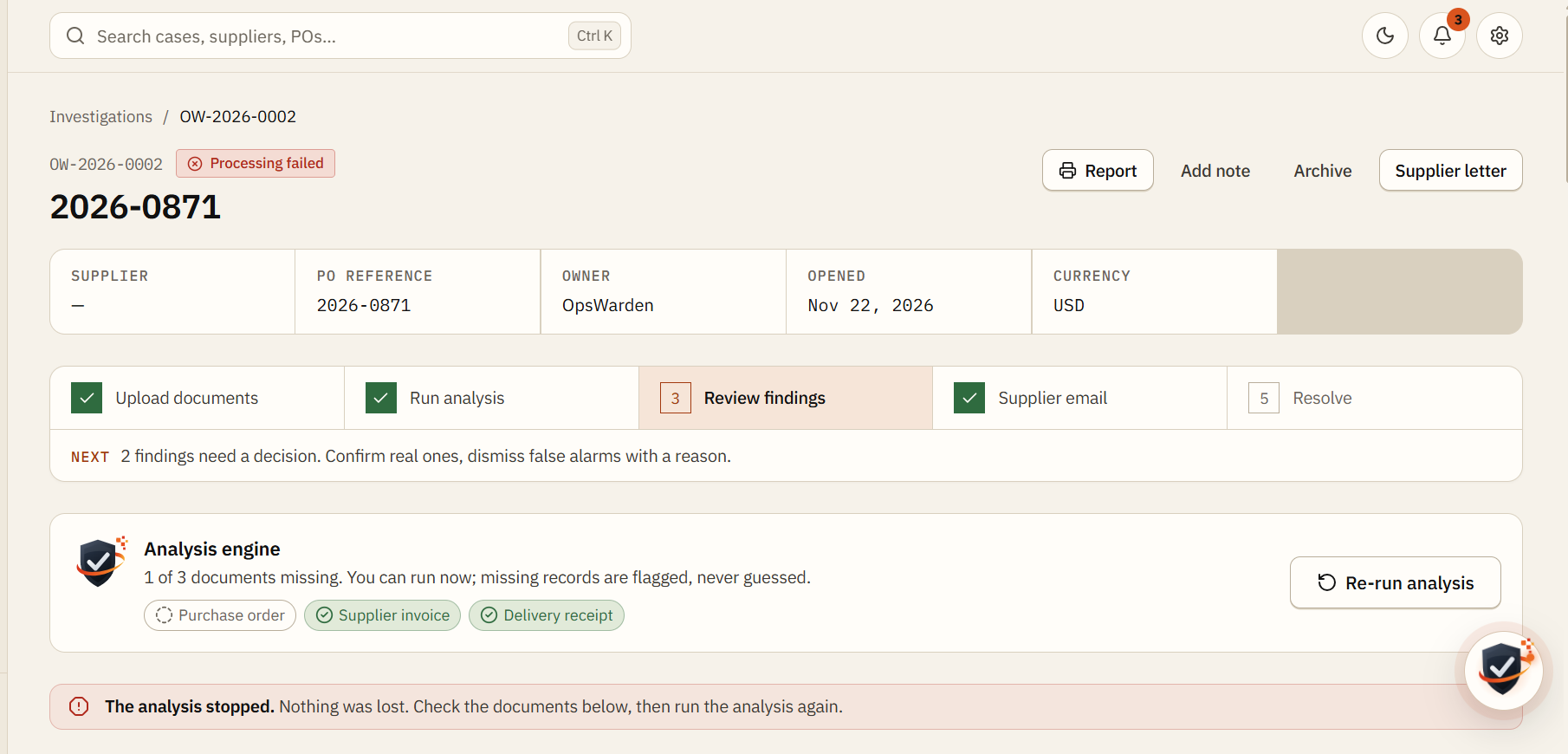
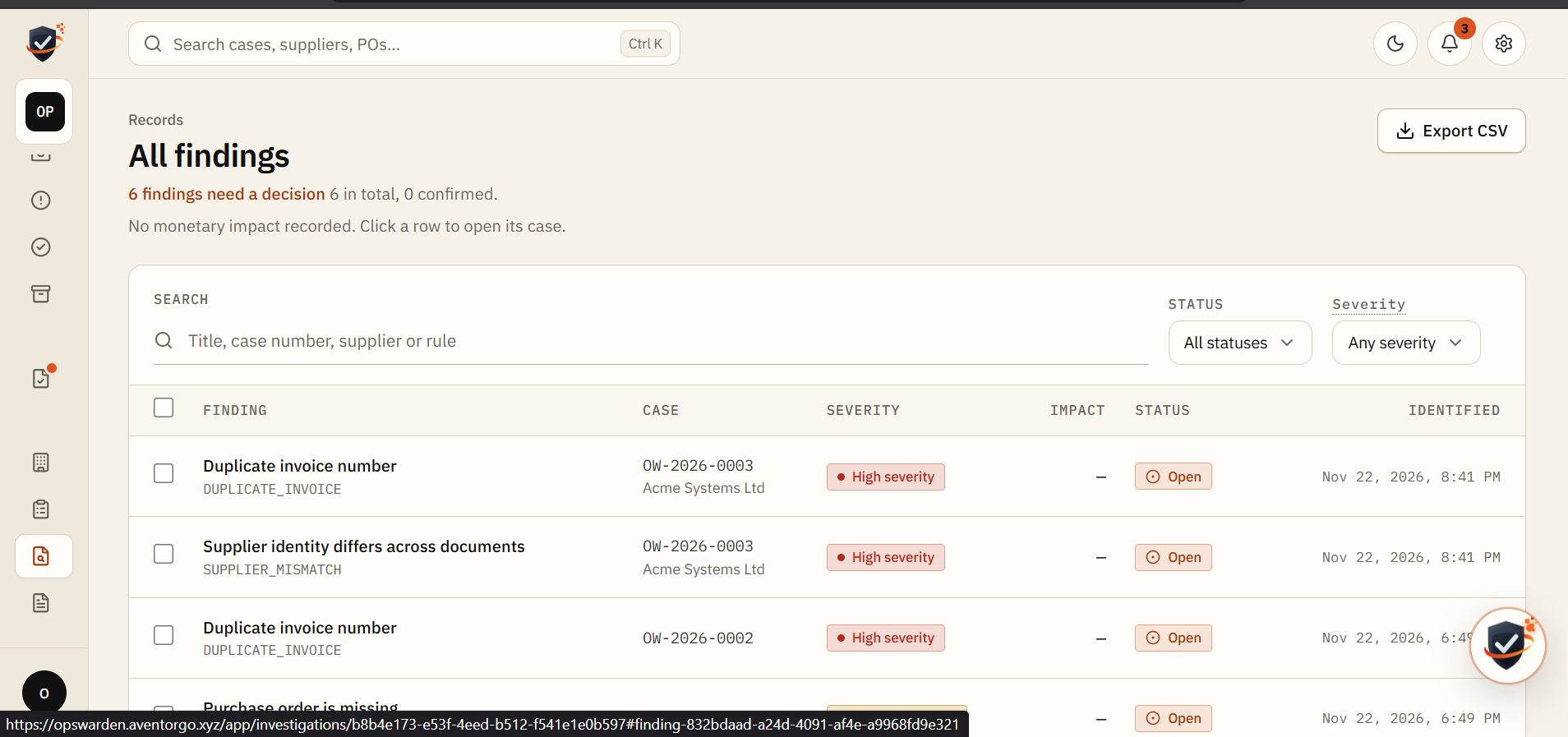
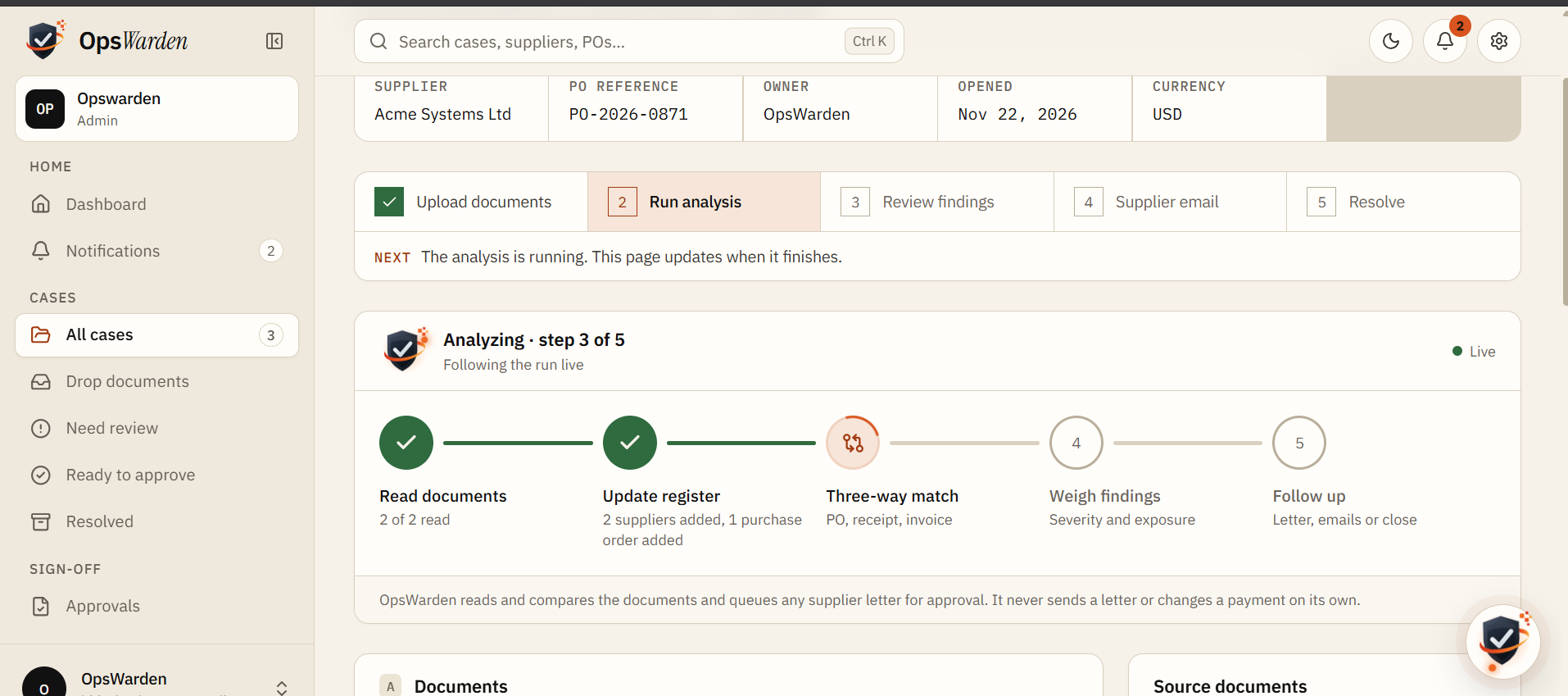
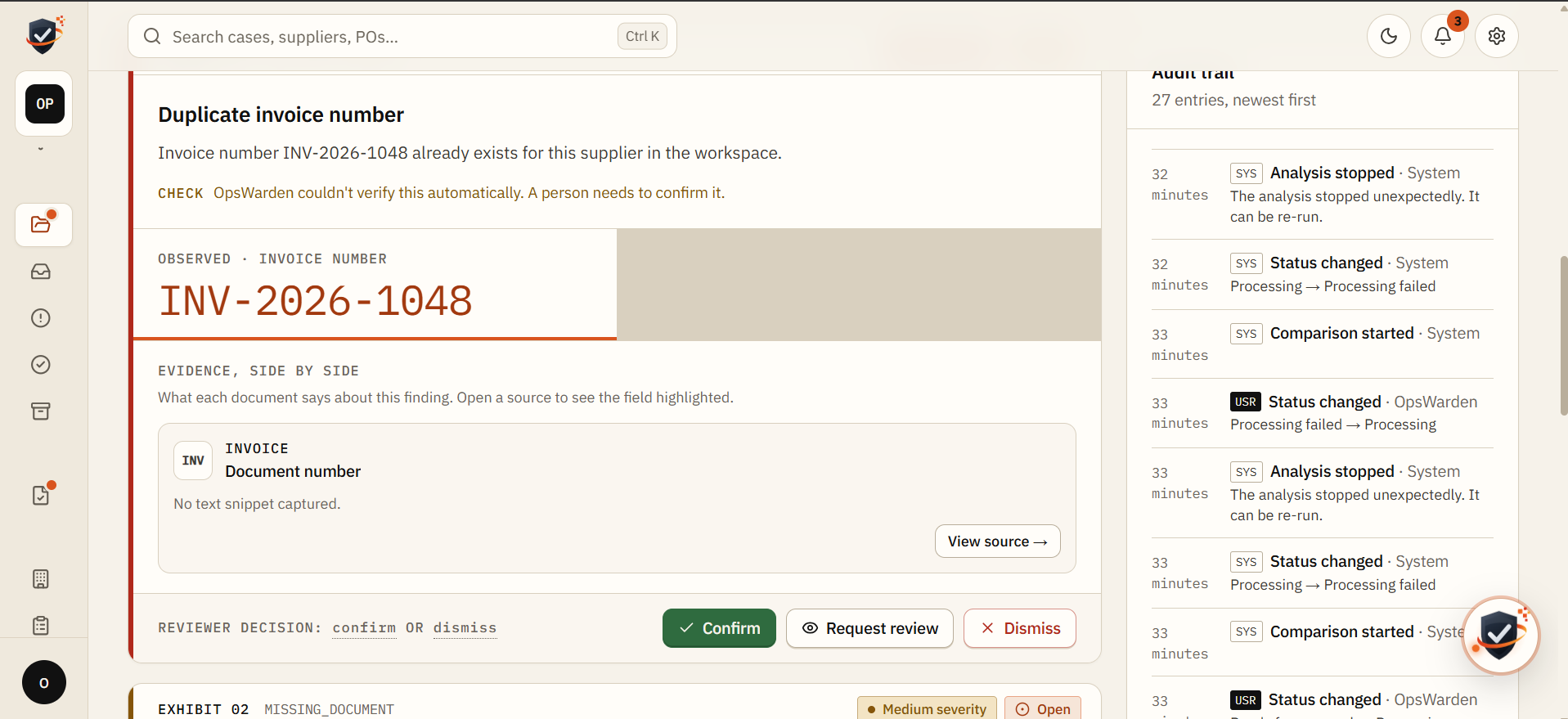
It extracts relevant information, compares quantities, prices, supplier details and totals, and identifies discrepancies using deterministic validation rules. Each finding includes its severity, financial impact, expected versus observed values and references to the original document evidence.
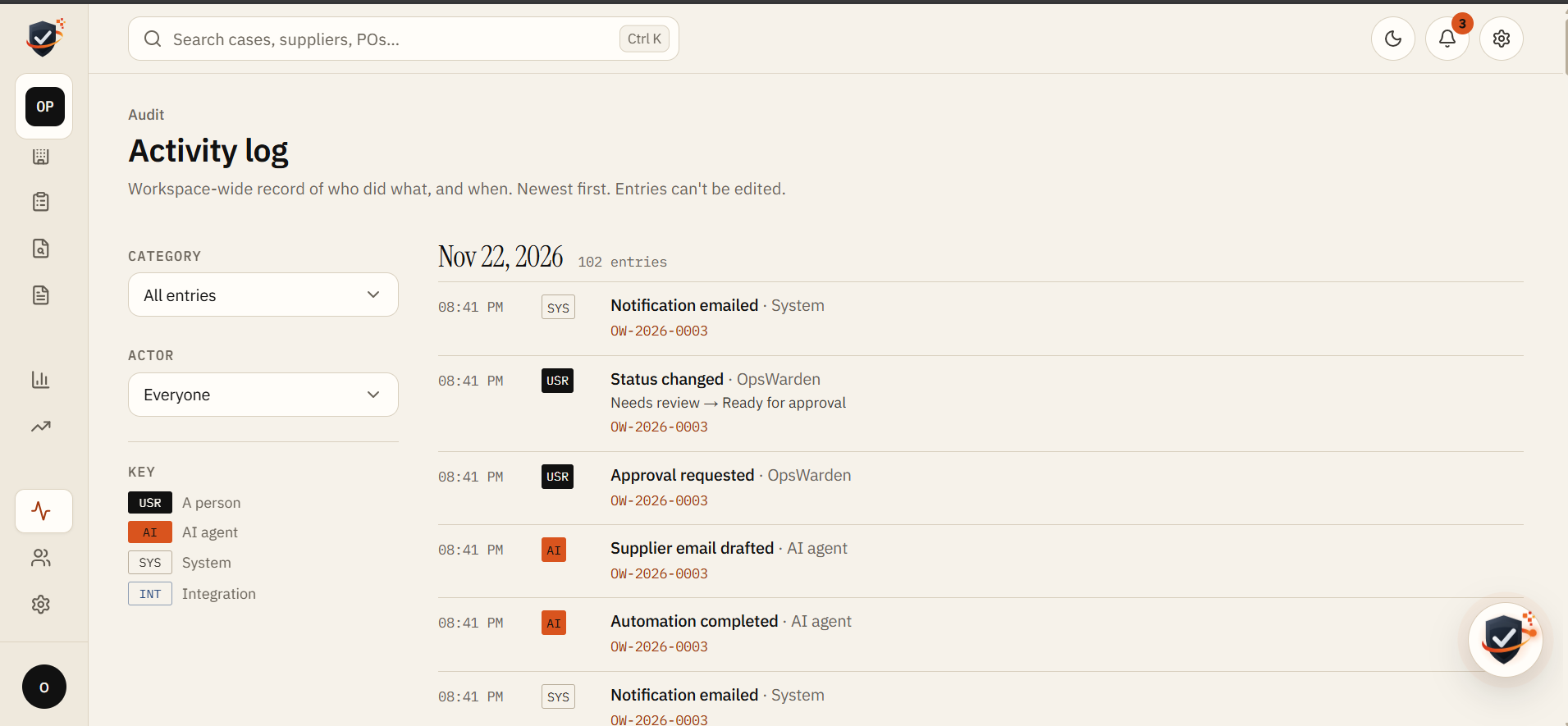
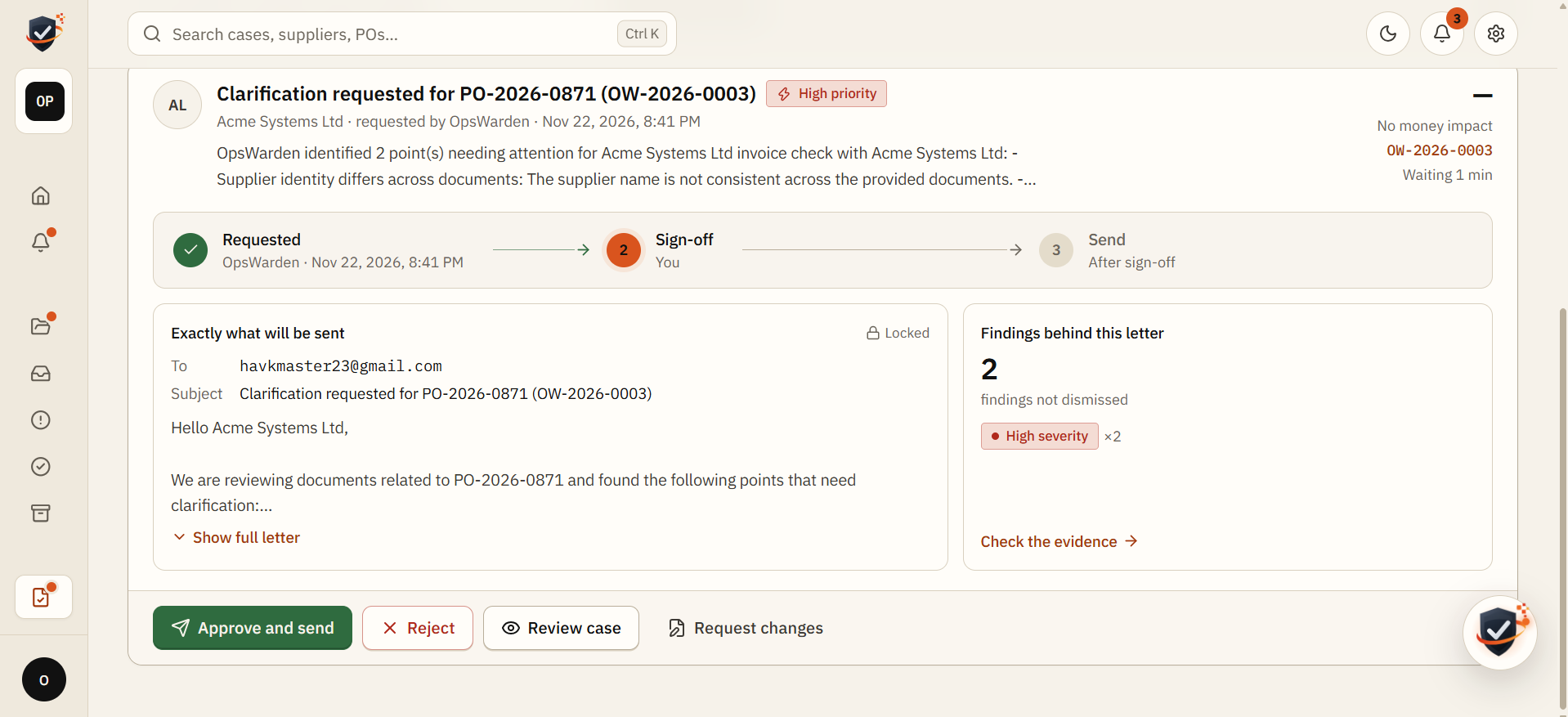
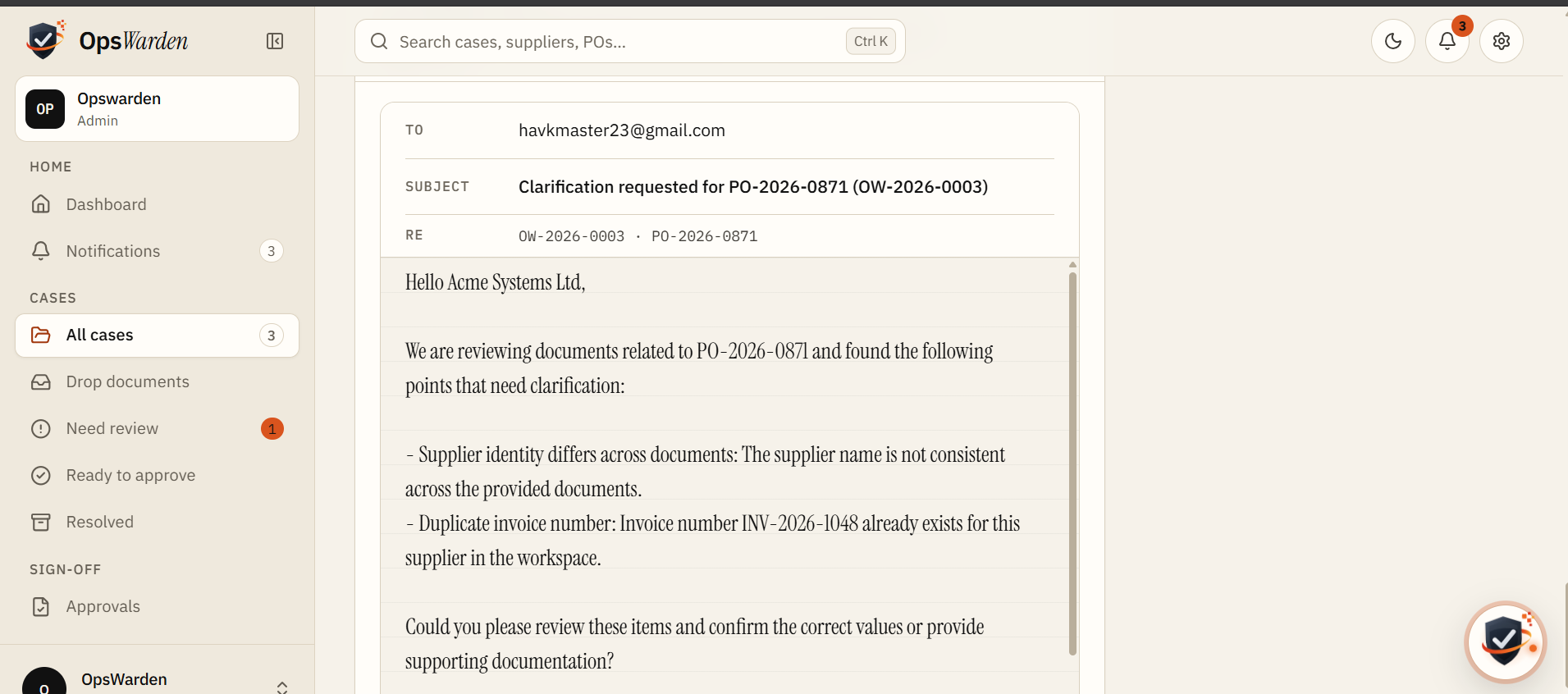
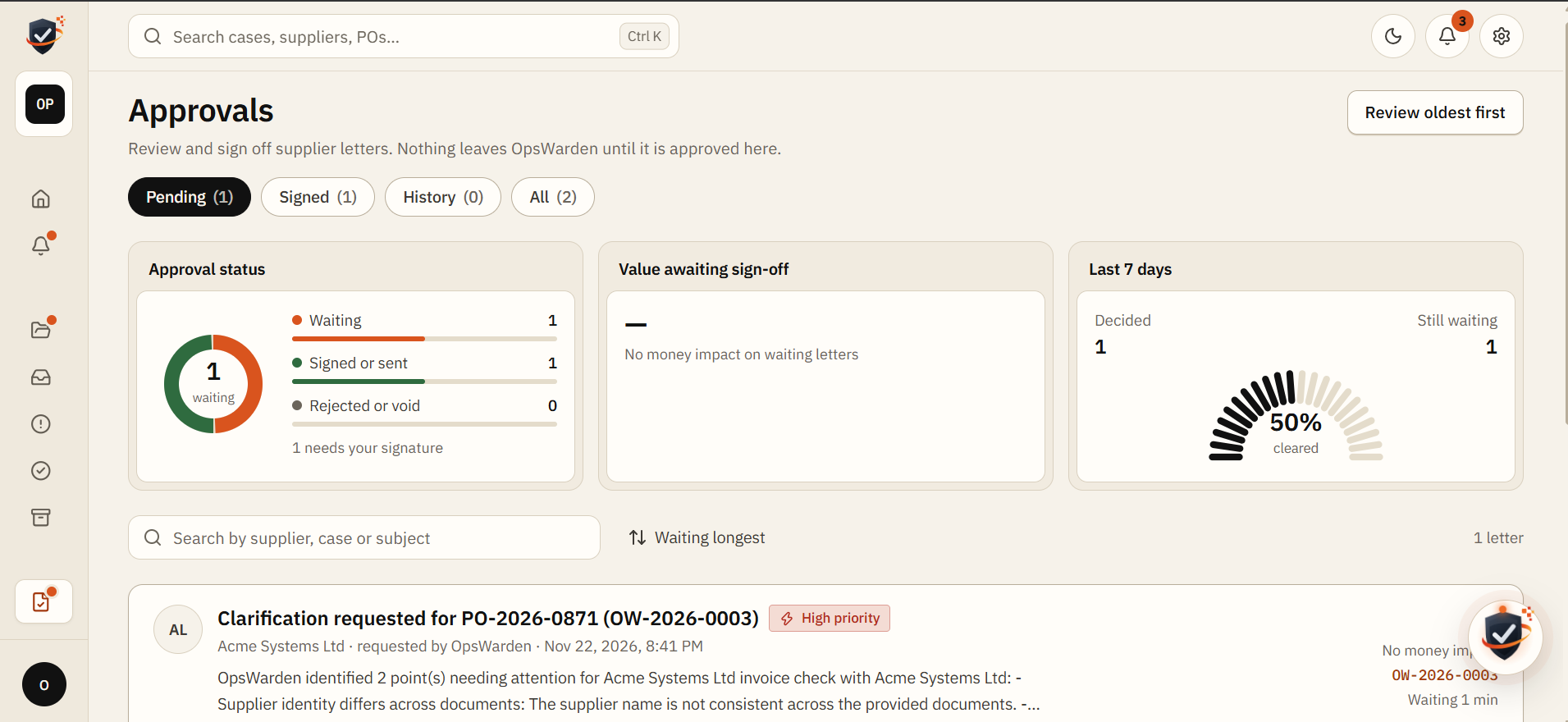
Beyond verification, OpsWarden includes Warden, an in-app assistant that helps users understand findings and prepare supplier correspondence. It also provides controlled approval workflows, audit trails and role-based access. AI assists with interpretation, but financial verification and consequential decisions remain governed by deterministic logic and human authorization.
How we built it
I approached OpsWarden as an engineering problem first, rather than simply building a frontend around an AI API.
I used Kiro as a central part of my development workflow, helping me translate the product vision into technical requirements, reason through architectural decisions, implement interconnected components and iteratively refine the application.
The architecture separates document intelligence, financial verification, workflow orchestration and user interaction so that each component has a clearly defined responsibility.
Application layer - Next.js
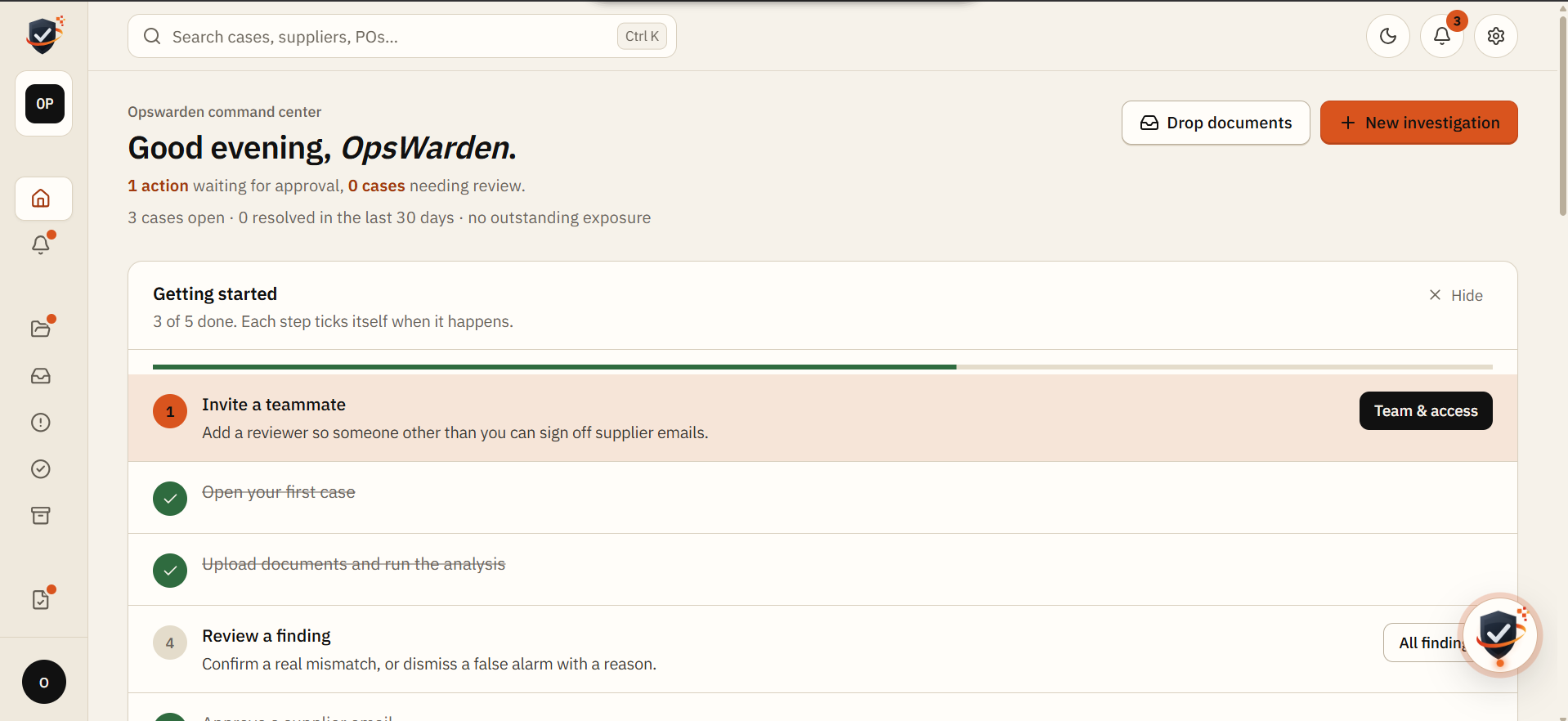
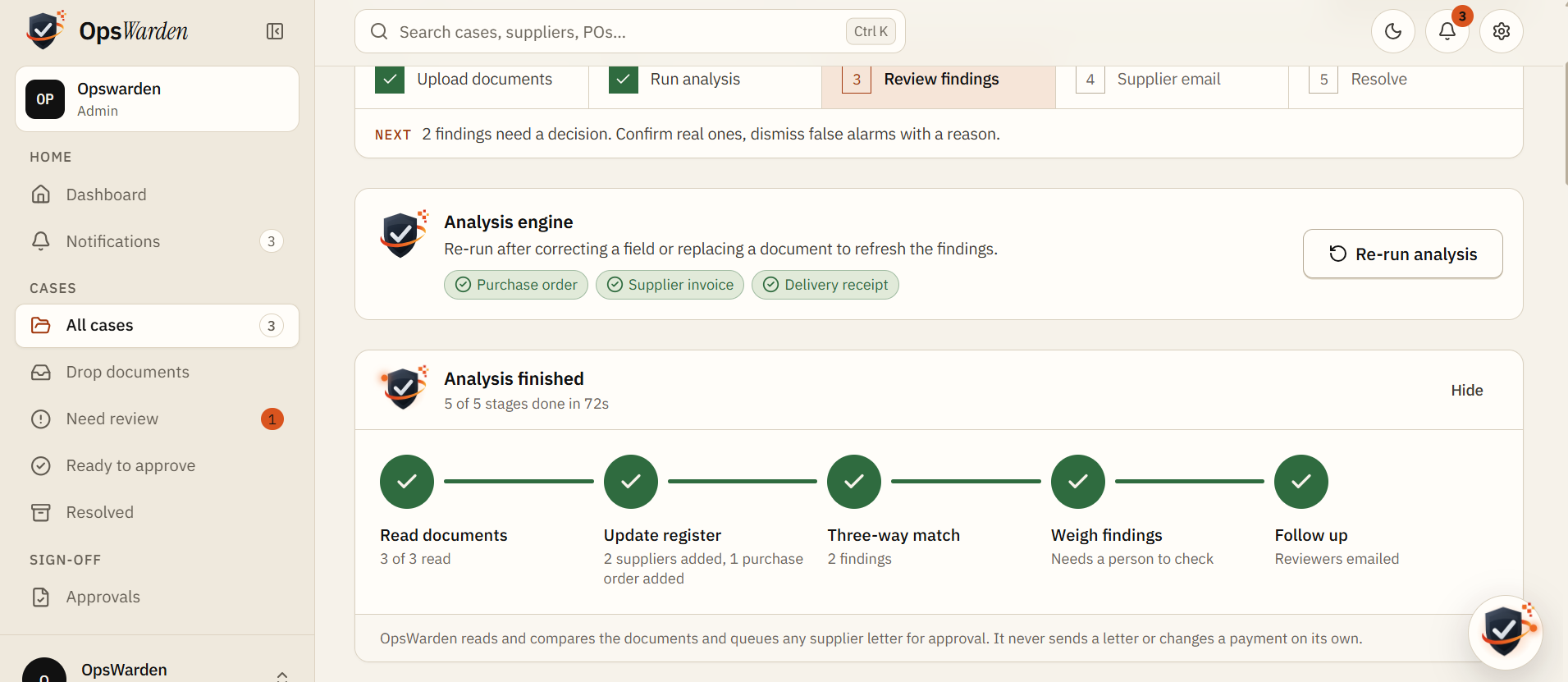
I built the frontend using Next.js to provide an interface for managing procurement cases, reviewing evidence, tracking investigations and handling approvals.
Backend and orchestration - Python and FastAPI
FastAPI powers the REST API, authentication, document-processing pipeline, analysis orchestration, comparison engine and approval workflows.
Data and storage - Supabase and Cloudflare R2
Supabase PostgreSQL manages structured records, workspace isolation and row-level security. Cloudflare R2 provides private document storage.
AI infrastructure - Gemini and Groq
I integrated Google Gemini for OCR on scanned documents and text-to-speech, while Groq powers the Warden assistant and assists with supplier correspondence.
Communication - Brevo SMTP
Supplier correspondence is integrated into a controlled workflow rather than being sent automatically without authorization.
The engineering behind the intelligence
Some of the implementation decisions I consider particularly important include:
- Python Decimal arithmetic for precise financial calculations.
- Deterministic comparison rules rather than probabilistic financial decisions.
- Background analysis jobs and live progress updates.
- SHA-256 approval payload locking to protect approved correspondence from silent modification.
- Idempotent email delivery to prevent duplicate external actions.
- Workspace isolation, role-based permissions and comprehensive audit logging. The result is an architecture where AI, business rules and human authorization work together without confusing their responsibilities.
Challenges we ran into
One of the biggest challenges was making AI-assisted document processing reliable enough for financial operations. OCR can misinterpret figures, while language models can produce unreliable numerical conclusions. I addressed this by separating document extraction from financial verification.
Another challenge was ensuring that every discrepancy was explainable. I wanted users to see not just that something was wrong, but exactly where the inconsistency originated and what it meant financially.
I also had to address document variability, financial precision, secure multi-tenant access, approval integrity and reliable integration between multiple external services. These challenges pushed me to think beyond individual features and consider the security and reliability of the entire system.
Accomplishments that we're proud of
I am particularly proud of taking OpsWarden from a concept to a functional procurement intelligence platform as a solo developer, using Kiro as a central part of my engineering workflow.
Some of my key accomplishments include:
- Building an end-to-end procurement investigation workflow rather than an isolated document extraction application.
- Implementing deterministic three-way matching with financial discrepancy analysis.
- Developing evidence-backed findings that connect discrepancies to their original documents.
- Integrating multiple AI providers while maintaining clear boundaries between AI-assisted tasks and financial decisions.
- Implementing cryptographically locked approvals and controlled supplier correspondence.
- Establishing workspace isolation, role-based access control and comprehensive audit logging. What makes this particularly meaningful is how I leveraged Kiro to approach a complex engineering challenge systematically, from translating the product vision into requirements to implementing, debugging and refining the application. I wanted to demonstrate that AI-assisted development can help a solo developer build sophisticated, interconnected software systems without compromising engineering discipline. ## What we learned Building OpsWarden taught me that introducing AI into enterprise applications requires more than connecting an application to a language model. The real challenge is understanding where AI adds value and where deterministic systems are essential.
I learned to treat extracted information as data requiring verification rather than unquestionable truth. I also gained practical experience in financial computation, asynchronous processing, secure multi-tenant architecture, AI integrations and approval-controlled workflows.
Working with Kiro reinforced the importance of structured AI-assisted development, breaking complex requirements into manageable tasks and continuously validating implementation decisions.
My biggest takeaway is that an intelligent system should not just tell people what it thinks happened; it should show them the evidence behind that conclusion.
What's next for Opswarden
I envision OpsWarden evolving from a procurement verification platform into a broader operational intelligence layer for businesses.
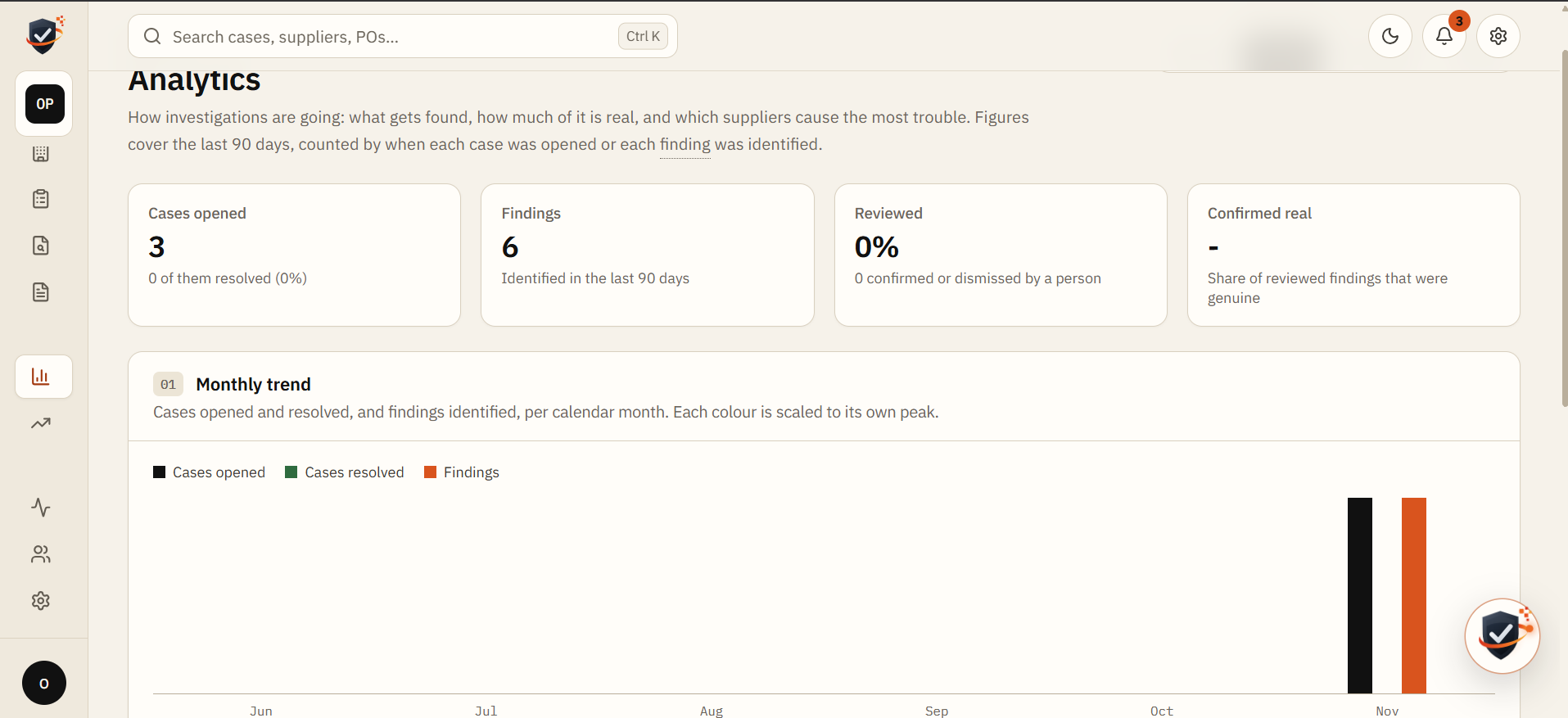
My next priorities include integrating with ERP and accounting systems, developing supplier performance intelligence, introducing advanced procurement analytics and identifying unusual transaction patterns before payments are processed.
I also want to expand configurable approval workflows, strengthen multi-currency support and make the platform suitable for organizations operating across different markets.
Ultimately, my ambition is to move OpsWarden beyond verifying individual transactions and make it a platform that helps businesses understand procurement risks, identify recurring problems and continuously improve financial accountability.
Built With
- brevo-smtp
- cloudflare-r2
- fastapi
- google-gemini
- groq
- kiro
- next.js
- python
- supabase-(postgresql)
- typescript
