-
-
OpsVoice
-
-
-
-
-
Inspiration
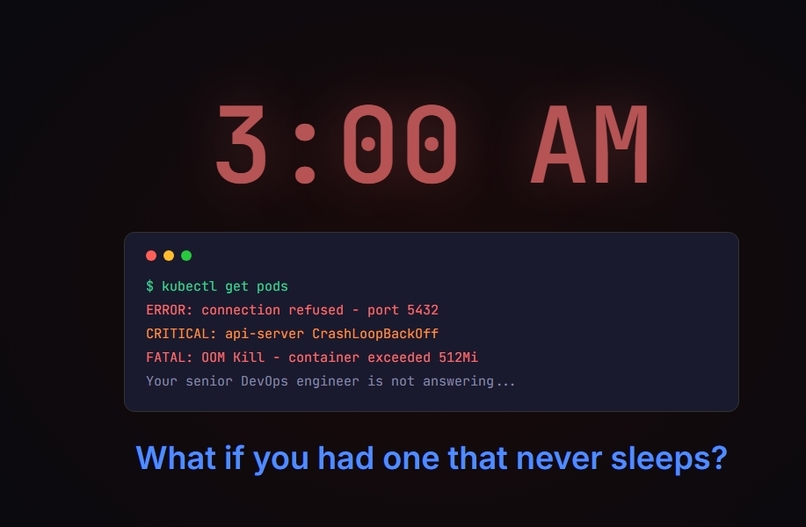
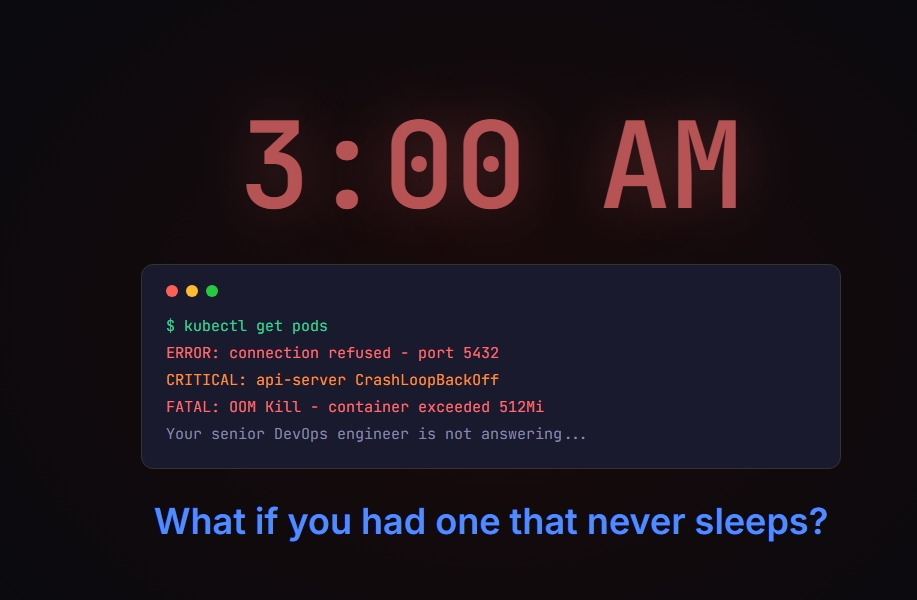
On-call incident response is one of the worst moments to rely on a text-only assistant. When a P1 fires at 3 AM, you're
juggling terminals, dashboards, Slack, and PagerDuty -- the last thing you want is to type detailed queries into a
chatbot. Engineers need their hands free. They need an assistant that can hear them, see their screens, and take action
-- not another text box.
What it does
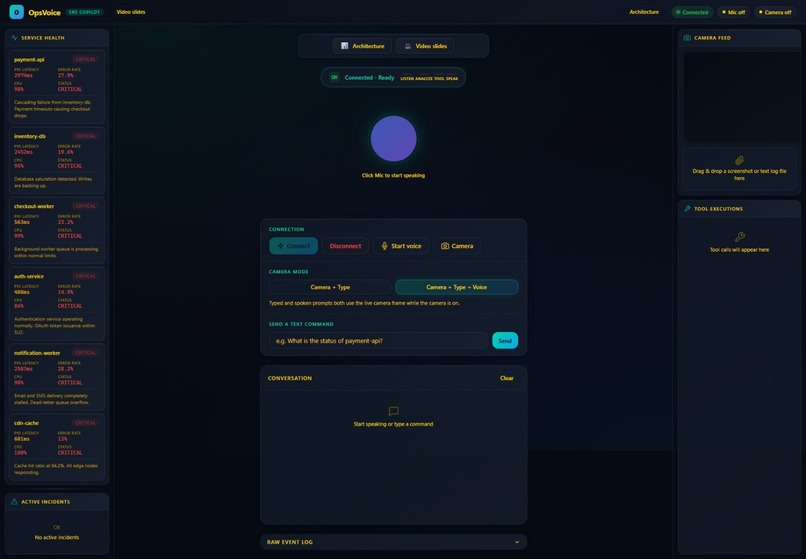
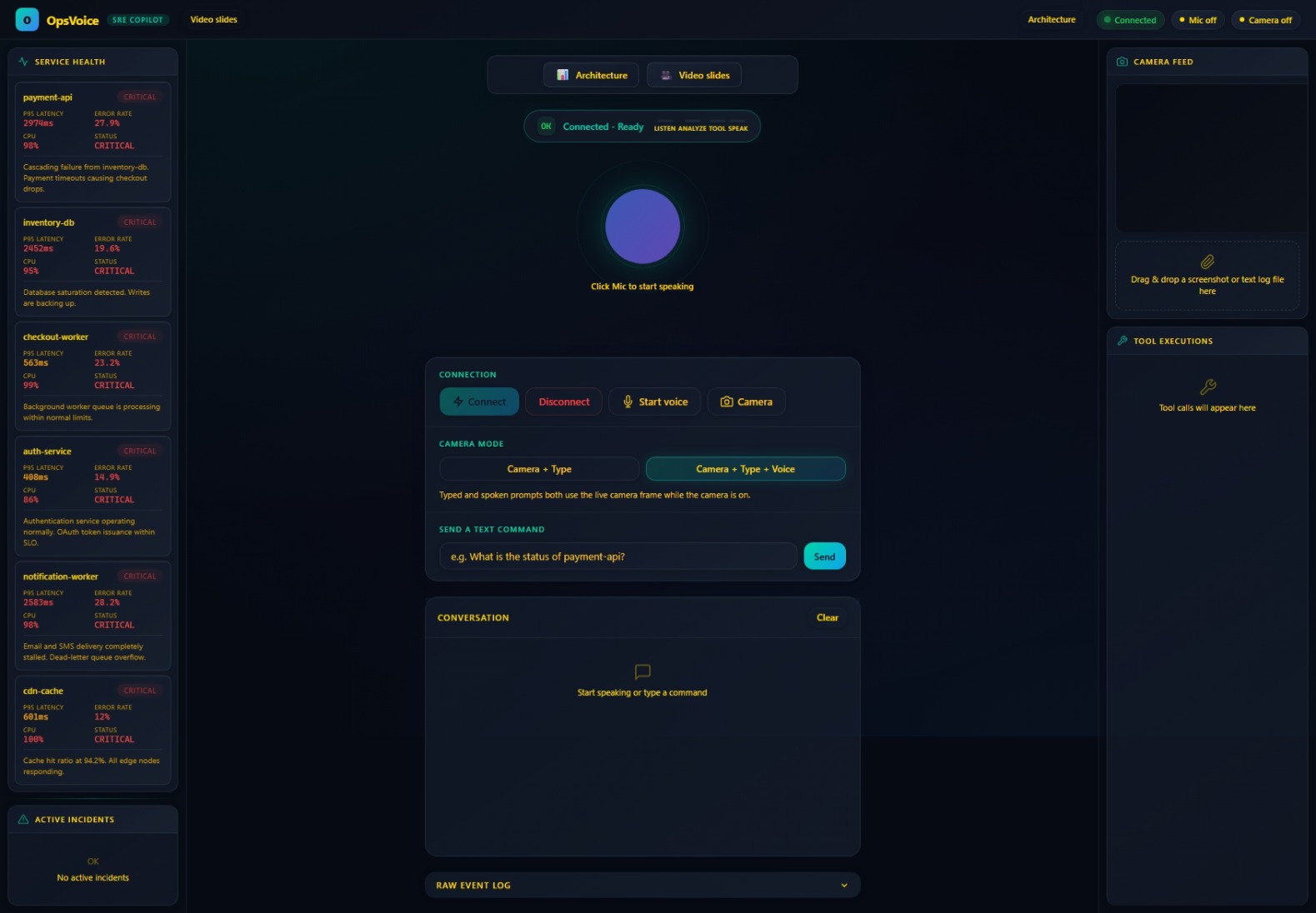
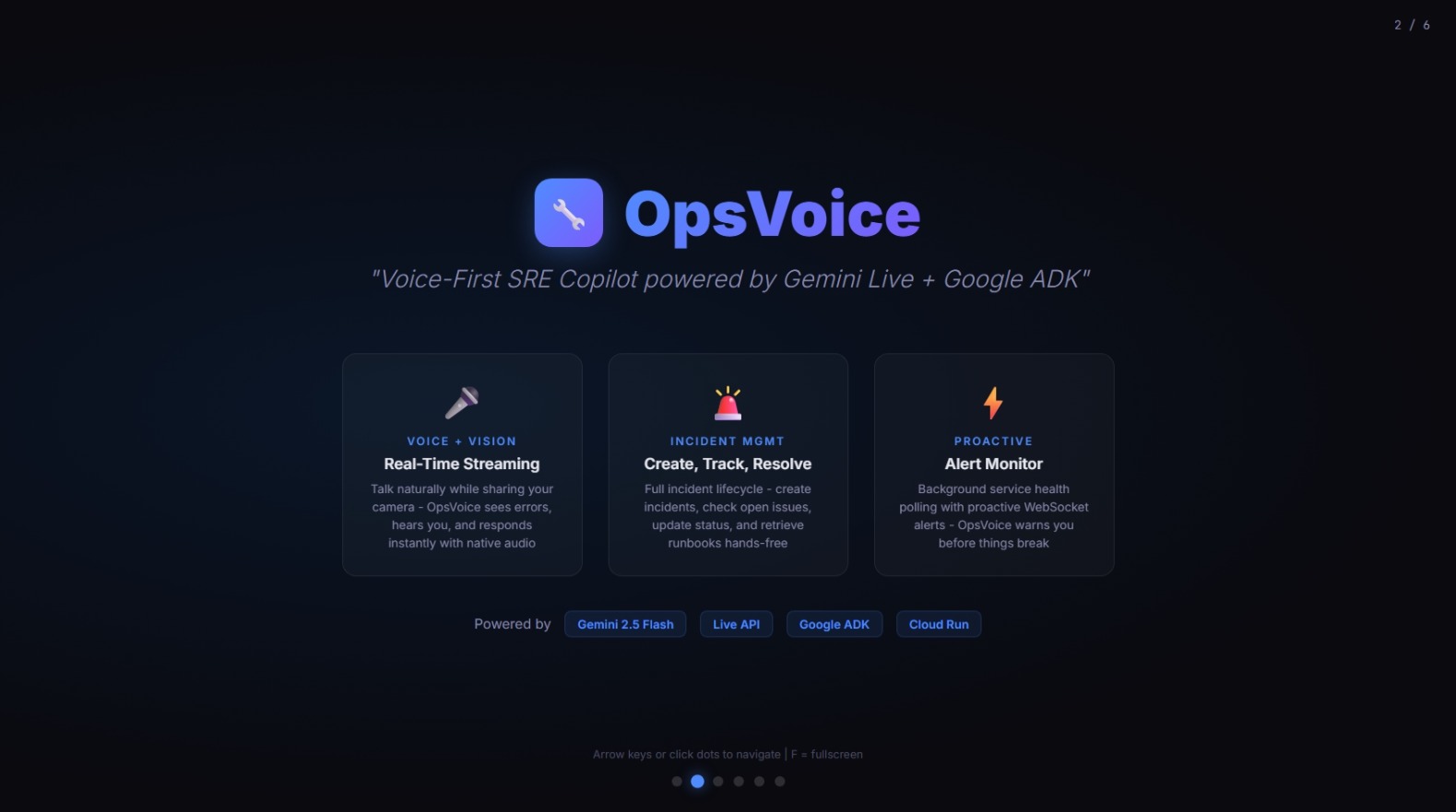
OpsVoice is a real-time, voice-first SRE command center that lets on-call engineers diagnose, triage, and respond to
production incidents using natural voice conversation, camera/screenshot vision, and text -- all without touching a
keyboard.
The agent has a distinct SRE persona: it speaks like a senior Site Reliability Engineer -- concise, direct, and
action-oriented. It always cites which tool provided the data.
Core capabilities:
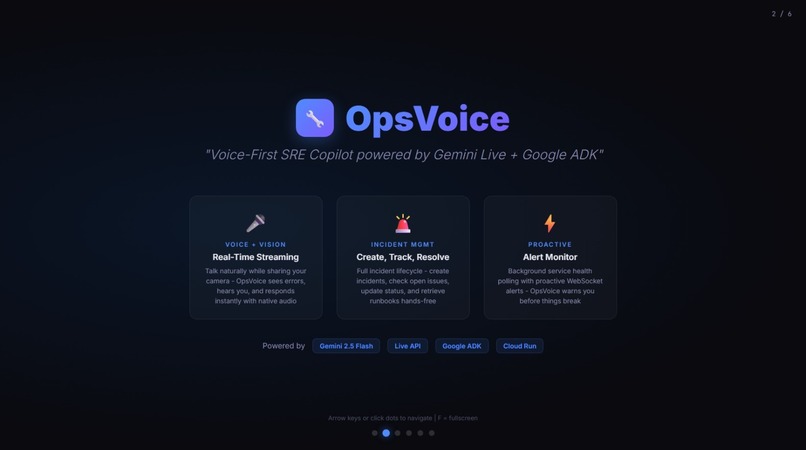
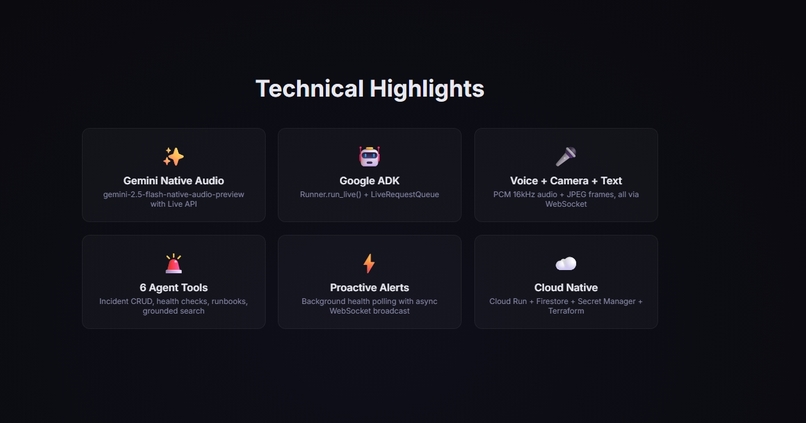
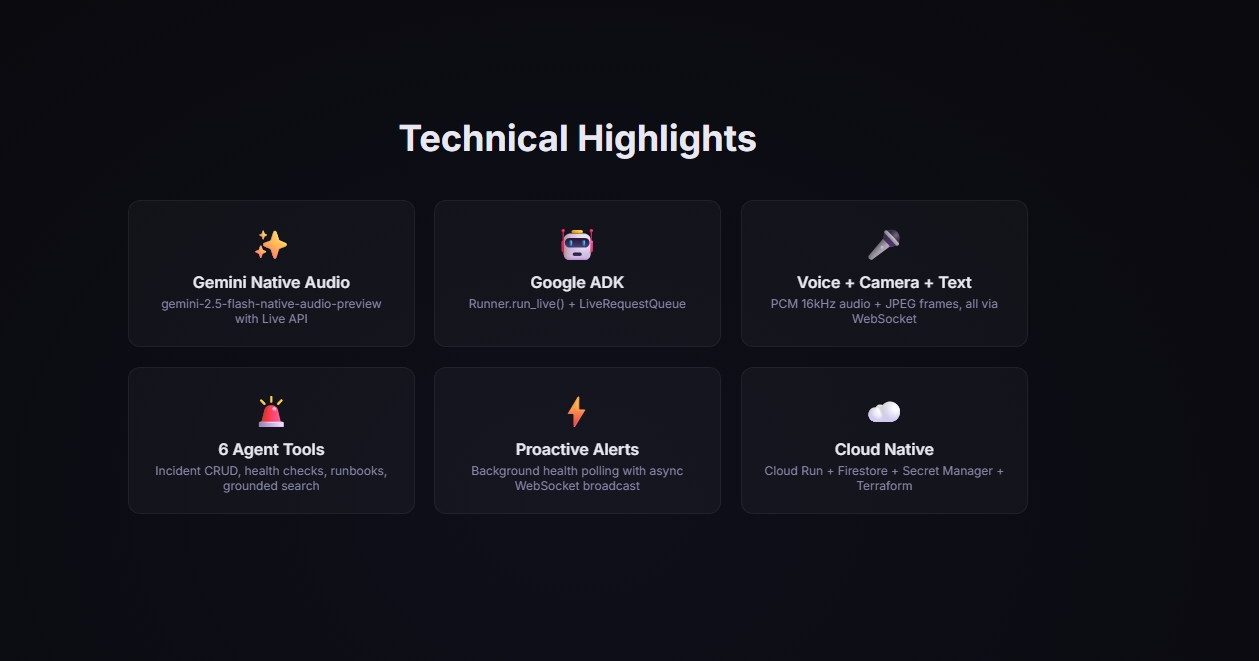
- Voice-first interaction: Bidirectional audio streaming with Gemini 2.5 Flash native audio -- sub-second latency,
no text-to-speech conversion - Natural interruption (barge-in): Speak while the agent is talking -- it stops, listens, and pivots immediately
- Proactive alerting: A background health monitor detects service degradation and broadcasts voice alerts via
WebSocket -- before you even ask - Incident lifecycle management: Create, track, update, and resolve incidents entirely via voice, persisted in
Firestore - Vision and screenshot analysis: Camera feed at 1fps + drag-and-drop screenshots for multimodal troubleshooting
- Runbook retrieval: Context-aware remediation steps with tool chaining
- Google Search grounding: Real-time search for unfamiliar errors and CVEs -- preventing hallucination
How I built it
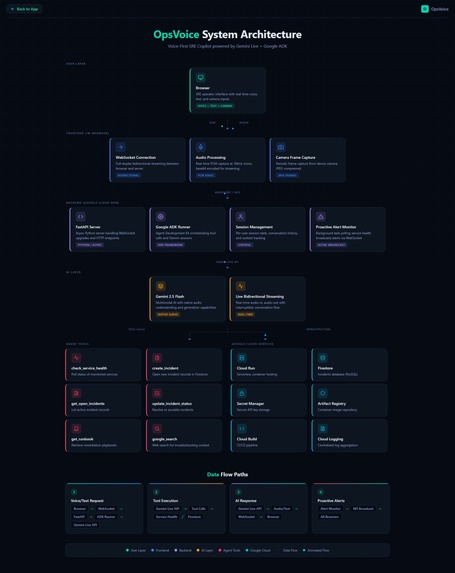
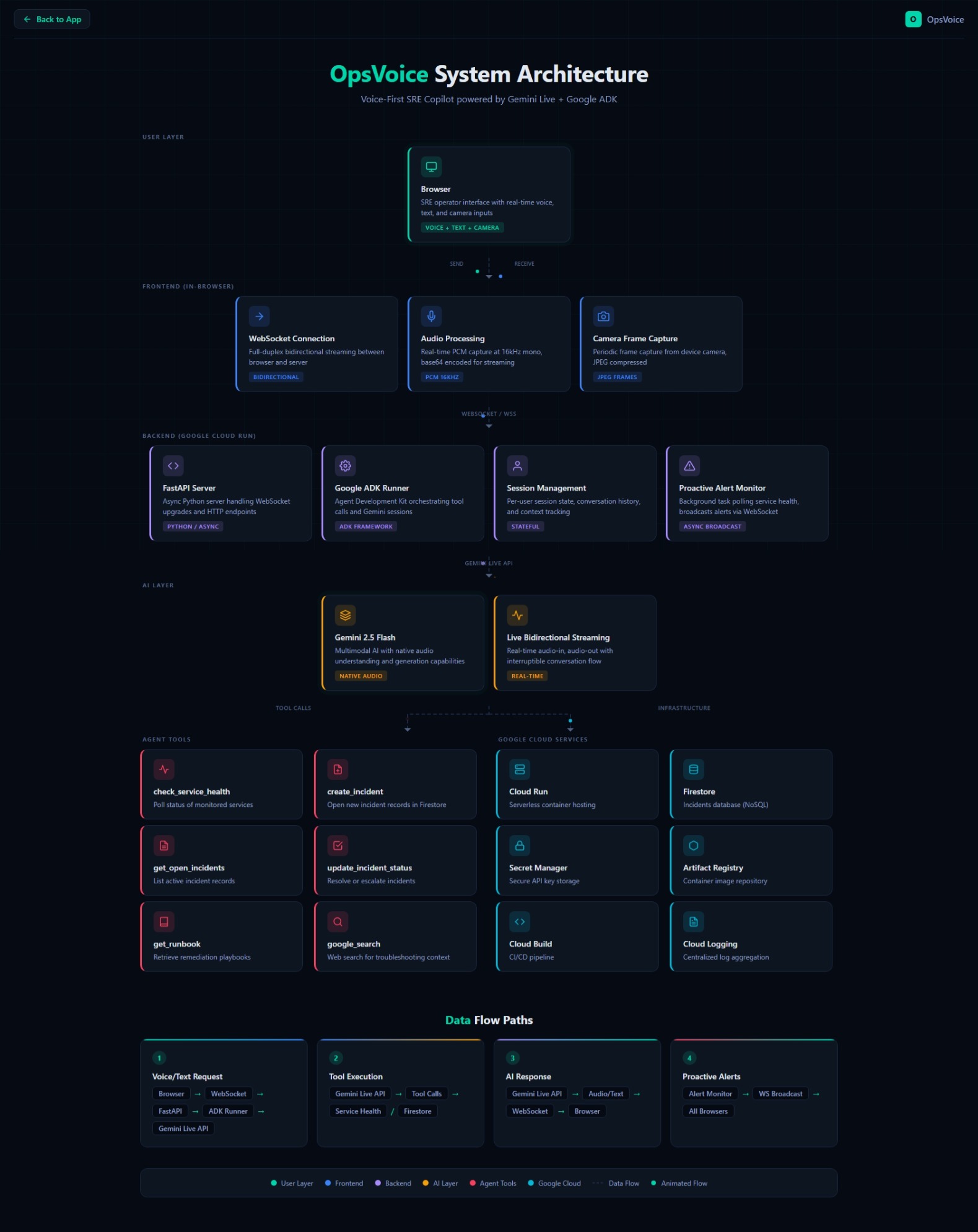
- Gemini 2.5 Flash Native Audio via the Live API for bidirectional audio streaming
- Google ADK with
Runner.run_live()andLiveRequestQueuefor real-time agent orchestration - FastAPI async WebSocket backend on Google Cloud Run (3600s timeout, 0-2 auto-scaling)
- Google Cloud Firestore for persistent incident storage
- Secret Manager for secure API key management
- Terraform + deploy-gcp.ps1 for fully automated infrastructure provisioning
- Vanilla JS browser client with Web Audio API, AudioWorklet, and adaptive Voice Activity Detection
Data sources
- Service health simulation: Built-in engine generating realistic metrics for 6 microservices with evolving degradation scenarios. Same tool interface works with real monitoring APIs (Datadog, Prometheus, PagerDuty).
- Incident records: Persisted in Google Cloud Firestore, managed via voice commands
- Runbooks: 5 predefined runbooks covering common SRE scenarios
- Google Search: Real-time grounding for unfamiliar errors and CVEs
- User input: Voice (16kHz PCM), text, camera frames (JPEG), drag-and-drop images -- streamed in real-time, never
persisted
Challenges I ran into
- Streaming audio reliably through browser AudioWorklet, WebSocket, and Cloud Run while maintaining sub-second latency
- Implementing adaptive Voice Activity Detection that works across different microphones and environments
- Designing the proactive alert system so the agent pushes warnings without interrupting ongoing conversation
- Coordinating barge-in handling across the WebSocket pipeline -- flushing audio playback and signaling the backend
simultaneously
What I learned
- Gemini's native audio model enables remarkably natural voice interactions -- it genuinely feels like talking to a
colleague - Google ADK with
Runner.run_live()dramatically reduces the complexity of building streaming agents with tool calling - Voice Activity Detection is crucial for voice UX -- adaptive thresholds beat fixed ones every time
- Proactive agent behavior fundamentally changes how useful the agent feels -- less like a tool, more like a teammate
- Streaming UX is unforgiving -- every millisecond of latency matters
What's next
- Replace the built-in health simulation with real monitoring APIs (Datadog, PagerDuty, Prometheus)
- Multi-region Cloud Run deployment with Firestore global distribution
- Multi-user incident channels so multiple on-call engineers can share the same voice session
- Audio playback buffering optimization for higher-latency networks
Automated deployment
Fully automated with Infrastructure-as-Code:
- Terraform provisions all GCP resources (Cloud Run, Firestore, Secret Manager, Artifact Registry, IAM)
- deploy-gcp.ps1 performs one-click build, deploy, and health check
- Templates (
.env.example,terraform.tfvars.example) included for easy reproduction
Built With
- artifact-registry
- docker
- fastapi
- gemini-2.5-flash
- google-adk
- google-cloud-build
- google-cloud-firestore
- google-cloud-run
- google-genai-sdk
- google-secret-manager
- javascript
- python
- terraform

Log in or sign up for Devpost to join the conversation.