-
-
Arclio
-
Arclio
Inspiration
The inspiration for Arclio came from something I kept seeing in organisations and experiencing myself: people were overwhelmed by the work around their actual work.
I’ve seen people struggle with organisation, forget important tasks, jump between different applications, and spend unnecessary time trying to keep everything connected. And honestly, sometimes you’re not disorganised — you’re just tired.
You have your calendar open, your emails somewhere else, deliveries in another system, procurement somewhere else, and a list of things you’re trying not to forget. By the time you’ve checked everything, you’ve already spent valuable time just managing the tools.
I also wanted something like this for myself. I wanted to spend more time with my family instead of constantly checking applications, remembering tasks, and coordinating things manually.
That led me to a simple idea: what if I could just tell my business what I need, and it could actually take care of it?
That became Arclio.
What it does
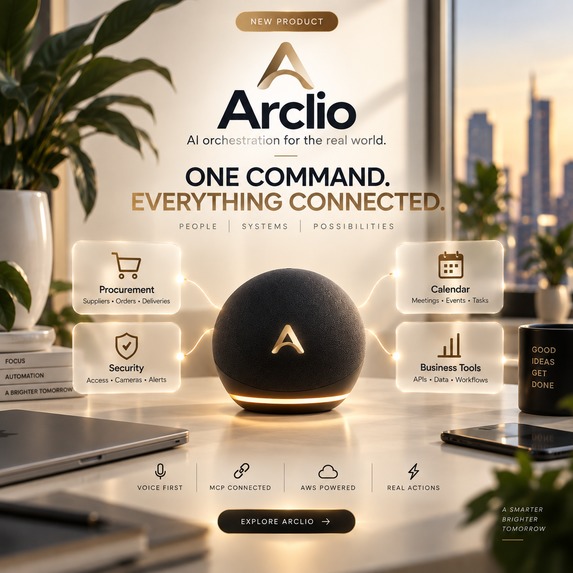
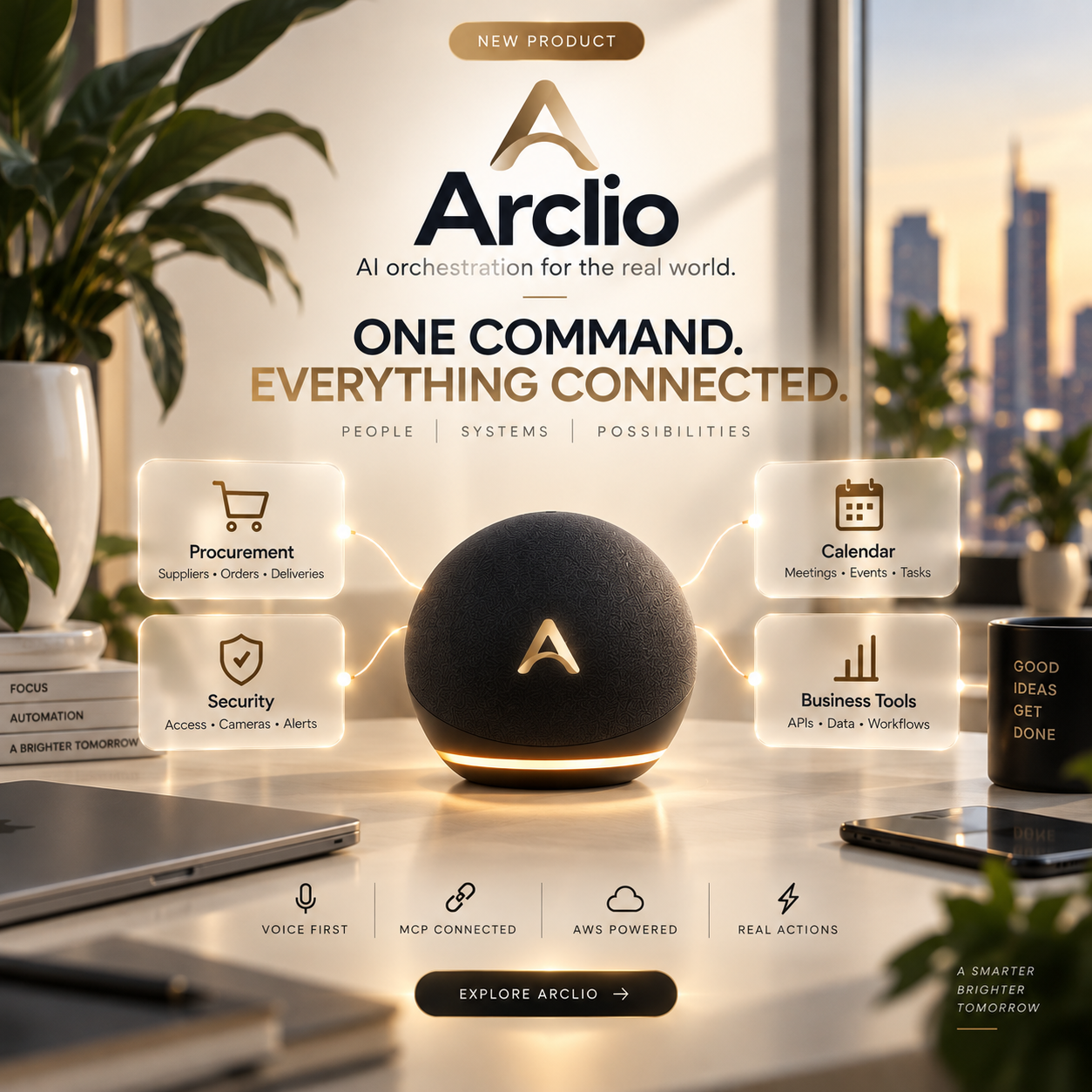
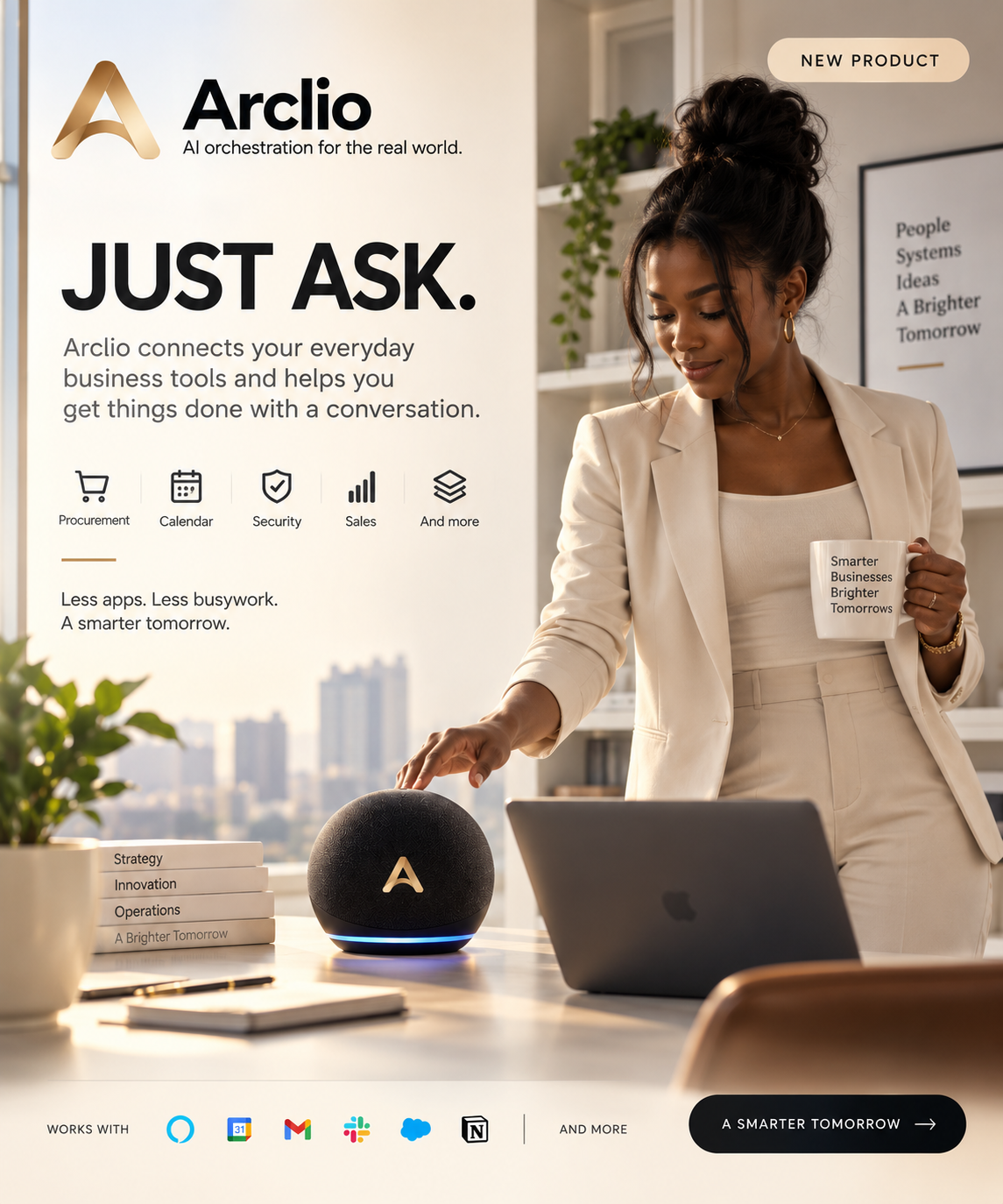
Arclio is an AI orchestration layer that lets people interact with connected business capabilities through natural language.
Instead of opening different applications and manually connecting information, a user can ask Arclio what they need. Arclio can understand the request, use the relevant tools and context, carry out authorized actions, and verify the result.
For example, a user can ask for a business briefing, find out what needs their attention, or ask Arclio to handle an incoming delivery.
The core idea is simple:
ASK → UNDERSTAND → PLAN → EXECUTE → VERIFY
How we built it
I built Arclio around an agentic architecture with an AI agent at the centre and MCP-powered capabilities behind it.
The system connects capabilities such as calendar, procurement, deliveries, security and communications. The agent determines which capabilities are relevant to a request and coordinates the appropriate actions.
The AI layer uses Amazon Bedrock, while the application is built with TypeScript and React. MCP provides the tool interface for the connected capabilities, and ElevenLabs provides the conversational voice experience.
For the Amazon hackathon, I also built a simulated Alexa+ experience so the conversational interaction could be demonstrated even though the official Alexa+ developer tools are not available to hackathon participants.
Challenges we ran into
One of the biggest challenges was making multiple capabilities feel like one coherent experience instead of a collection of separate tools.
I also had to think carefully about how an agent should move from understanding a request to actually taking an action. It isn't enough for an AI system to say that something was done — the system needs to know what action it is allowed to take and verify the result.
Another challenge was creating a conversational experience that felt natural while still keeping the underlying system structured and predictable.
Accomplishments that we're proud of
I'm proud that Arclio moved beyond being a simple chatbot.
It can take a natural-language request, reason about the relevant business context, coordinate tools, execute an authorized action, and verify the outcome.
I'm also proud of the simulated Alexa+ experience because it demonstrates how a conversational interface can sit on top of an orchestration layer and make multiple systems feel like one experience.
Most importantly, I built the project from the idea through the working product and deployment.
What we learned
Building Arclio taught me that the difficult part of an agentic system isn't simply getting an AI model to answer a question.
The real value comes from giving the agent useful context, reliable tools, controlled actions, and a way to verify what actually happened.
I also learned that good AI experiences should reduce cognitive load rather than create another interface that people have to manage.
Sometimes the best interface is simply being able to say what you need and letting the system handle the coordination behind the scenes.
What's next for Arclio
The next step for Arclio is to move beyond the hackathon demonstration and validate where this kind of orchestration creates the most value for real businesses and operators.
I want to explore deeper integrations, stronger authorization and governance, more business workflows, and better ways for people to connect the systems they already use.
The long-term vision is simple: give people back time by making their technology work together instead of making them work to keep their technology connected.
Built With
- amazon
- amazon-web-services
- bedrock
- elevenlabs
- mcp
- react
- typescript
- vercel

Log in or sign up for Devpost to join the conversation.