


Inspiration
Modern operations teams are overwhelmed by alert fatigue. Engineers often spend valuable time manually triaging alerts, investigating potential root causes, coordinating teams, and documenting incidents before they can even begin remediation.
We wanted to build an AI-powered Incident Command Center that helps SRE and DevOps teams move from an alert to an actionable resolution while keeping humans in control of every critical decision.
Our goal was not to replace engineers, but to give them an intelligent co-pilot that accelerates incident response with transparent reasoning and approval gates.
What it does
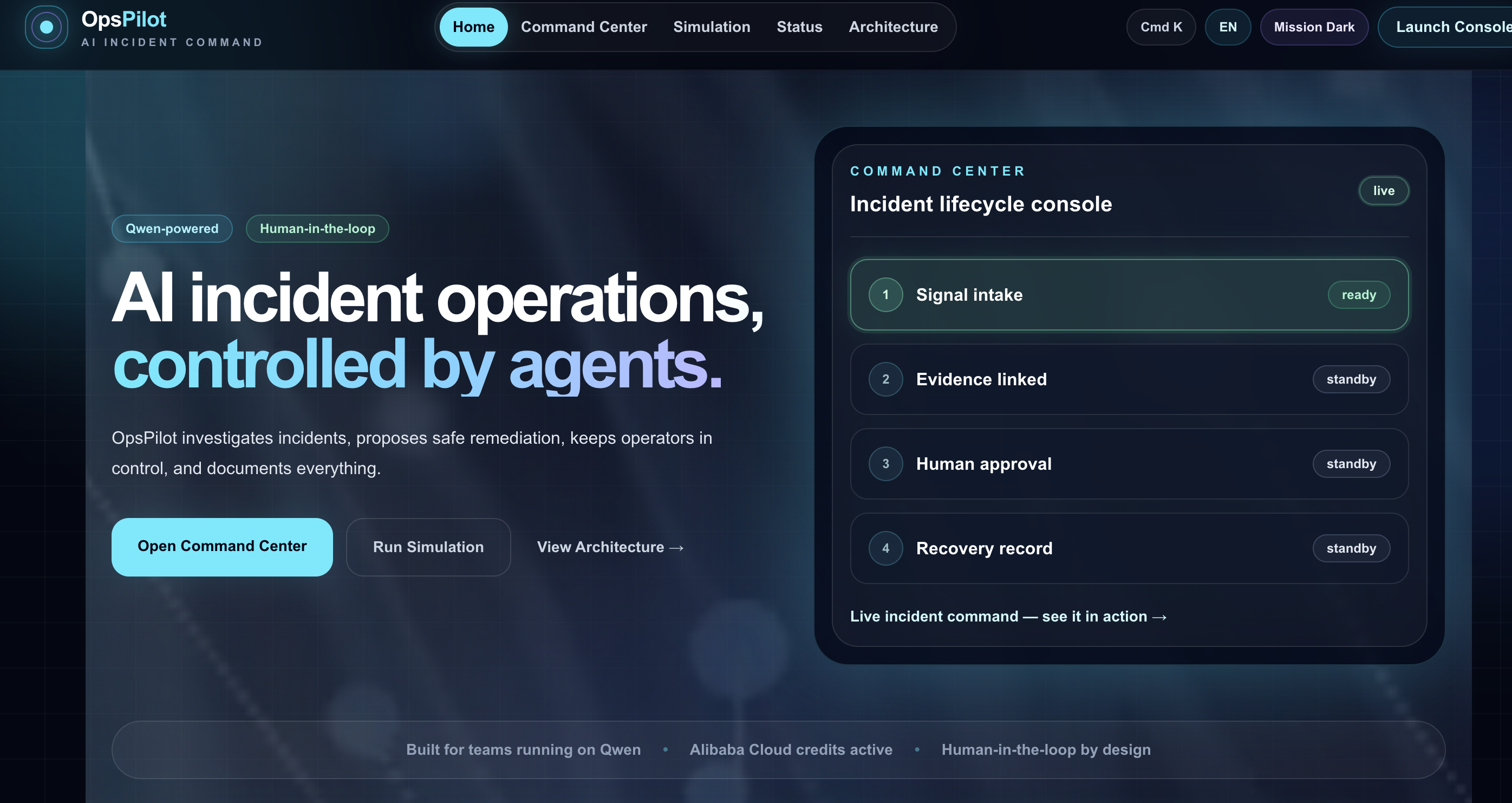
OpsPilot AI transforms operational alerts into structured incident response workflows.
The platform can:
- Detect and prioritize incidents
- Perform AI-assisted triage
- Analyze observability signals
- Generate ranked root-cause hypotheses
- Recommend remediation actions
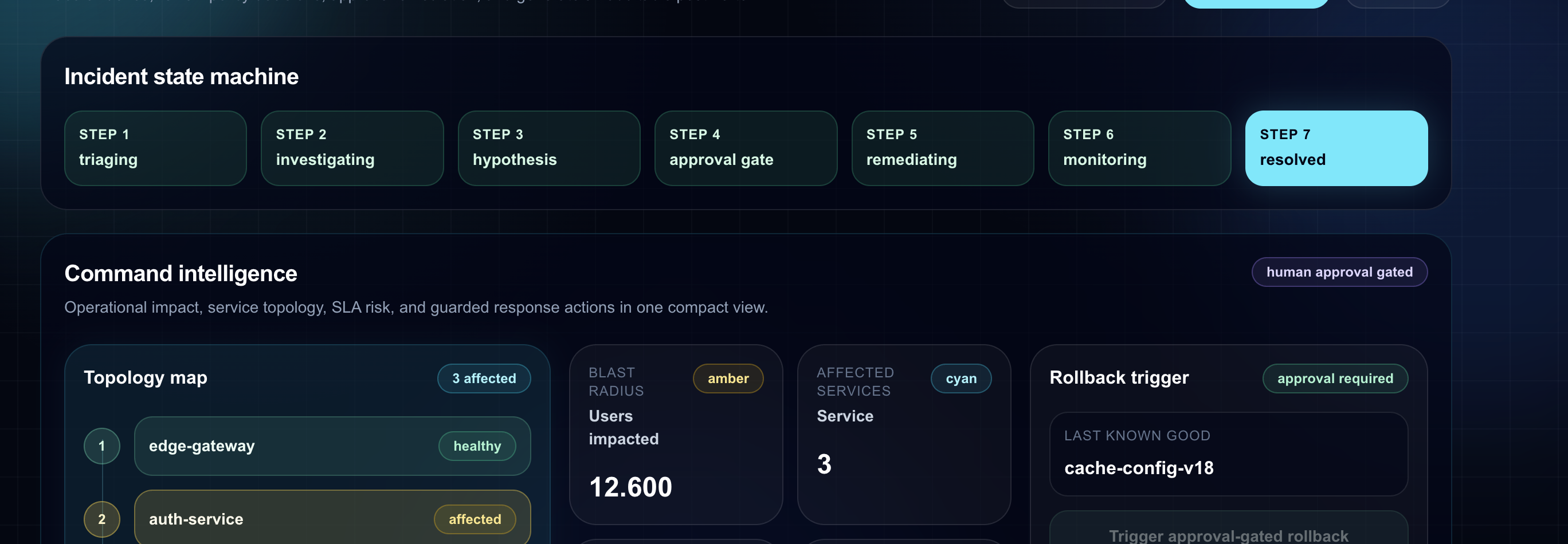
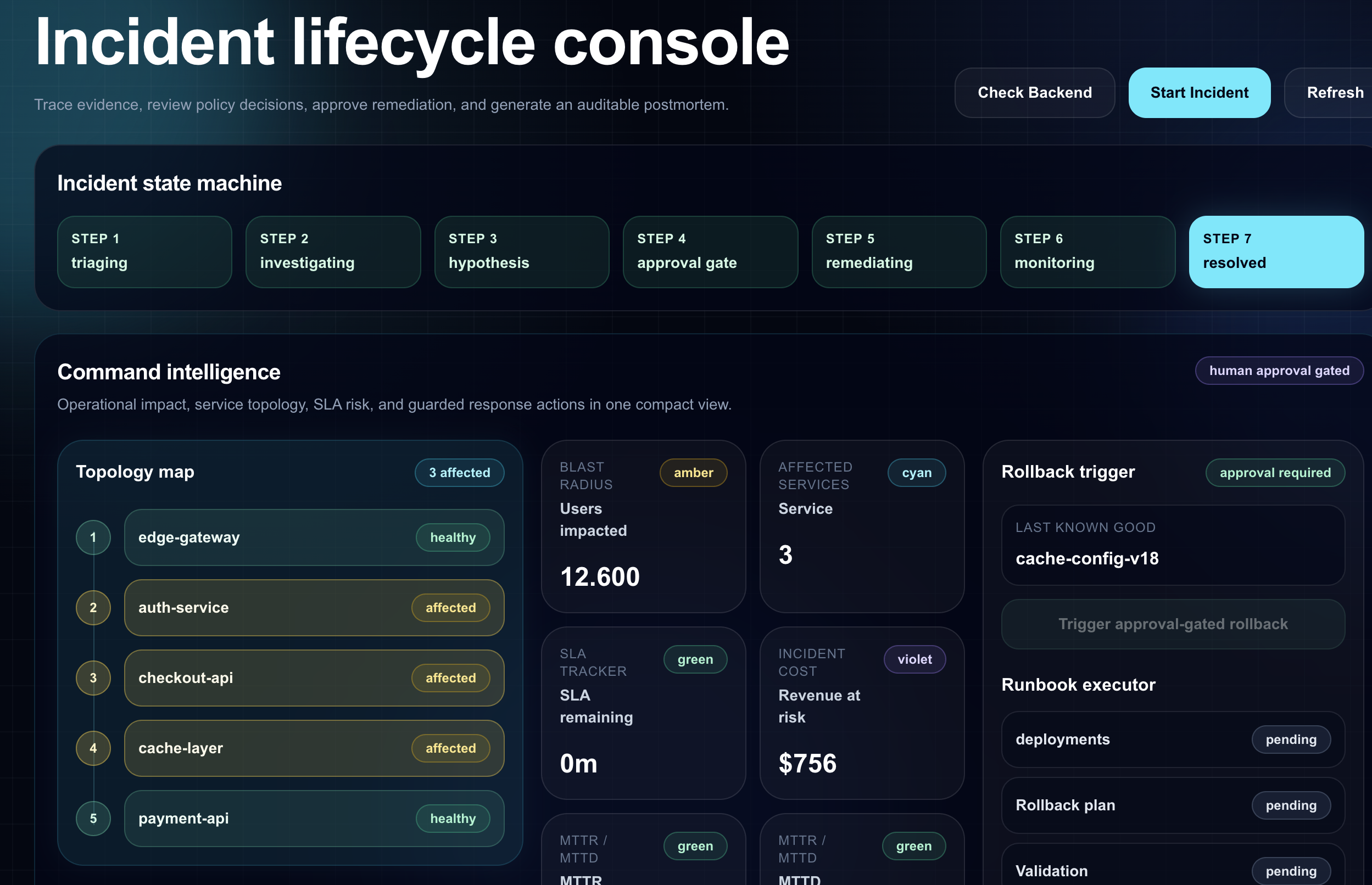
- Require human approval before execution
- Produce incident timelines
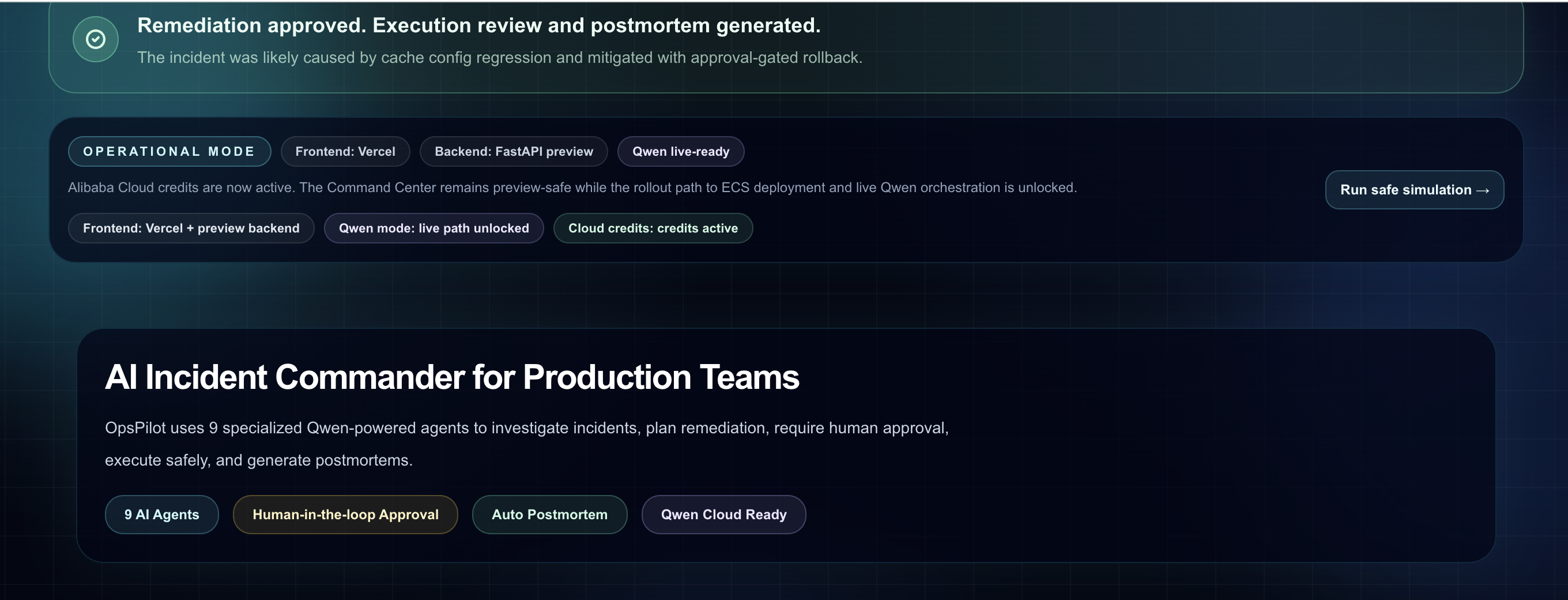
- Generate AI-assisted postmortems
The system combines deterministic workflows with Qwen-powered reasoning to help operators respond faster while maintaining operational safety.
How we built it
The frontend was built with Next.js, React, and TypeScript, providing a modern operations dashboard with real-time incident tracking.
The backend was developed using FastAPI (Python) and organized into multiple AI agents responsible for:
- Triage
- Observability analysis
- Hypothesis generation
- Runbook recommendation
- Risk assessment
- Approval workflow
- Postmortem generation
The application uses the Qwen API through Alibaba Cloud DashScope compatible APIs.
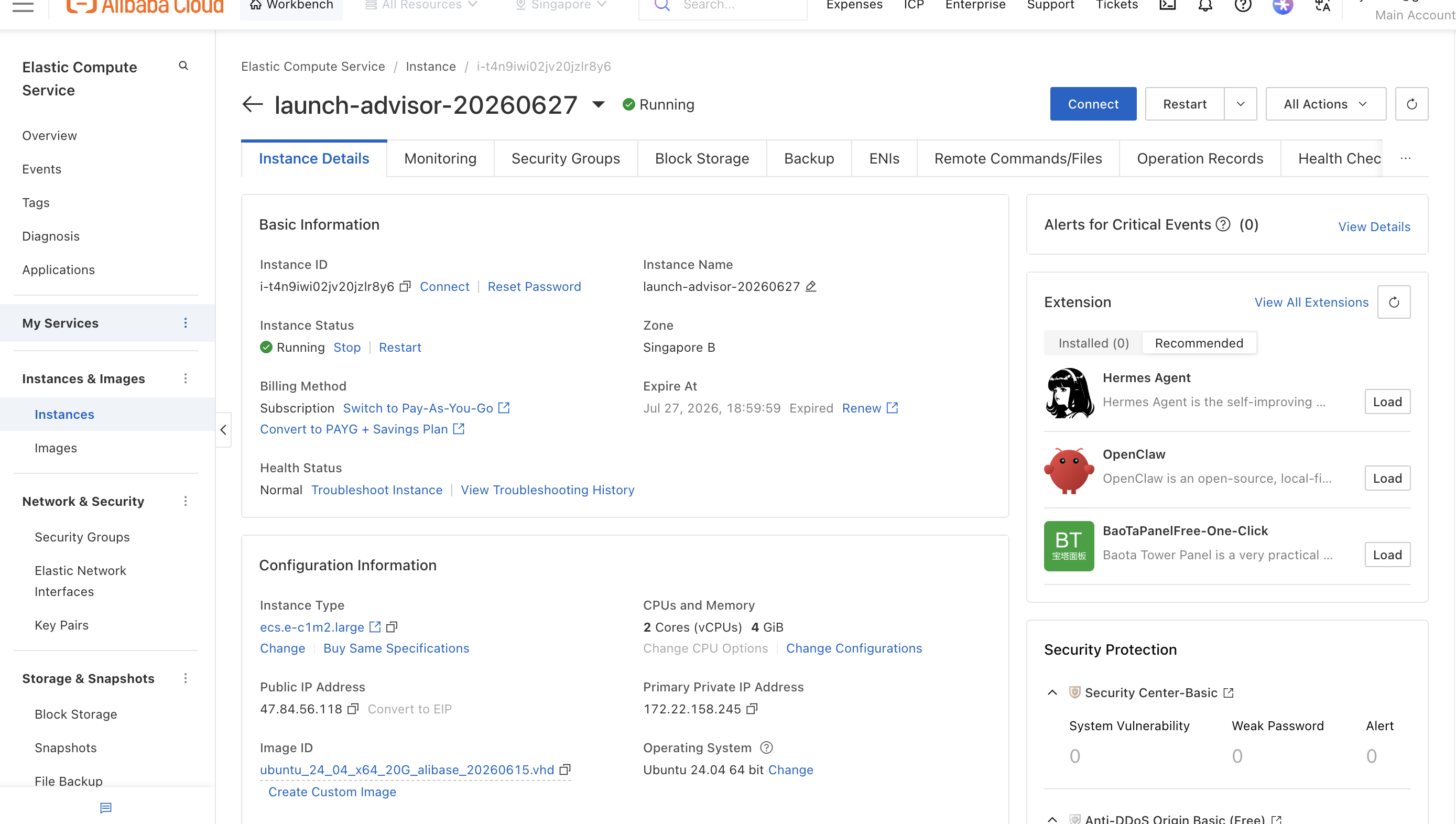
The backend is containerized with Docker and deployed on an Alibaba Cloud ECS instance behind Nginx with HTTPS (Let's Encrypt).
Challenges we ran into
One of the biggest challenges was balancing AI reasoning quality with response latency.
Generating detailed hypotheses introduced noticeable delays during the incident pipeline, so we optimized prompts, reduced unnecessary reasoning, and implemented a configurable Fast Demo Mode for live demonstrations while preserving the production workflow.
Another challenge was integrating deployment infrastructure, including Docker, Nginx reverse proxy, HTTPS certificates, DNS configuration, and Alibaba Cloud networking.
We also redesigned several API flows to ensure deterministic behavior during demonstrations while keeping the production orchestration available.
Accomplishments that we're proud of
- Built a complete AI-driven incident response workflow
- Successfully deployed the backend on Alibaba Cloud ECS
- Integrated Qwen through Alibaba Cloud DashScope
- Designed a multi-agent architecture with human approval gates
- Implemented live incident lifecycle visualization
- Created automated postmortem generation
- Reduced demo latency through optimized orchestration while maintaining production capabilities
What we learned
Building an AI-powered operations platform taught us that reliability is just as important as intelligence.
Good AI systems require structured orchestration, validation, deterministic fallbacks, and human oversight.
We also gained valuable experience deploying production-ready AI services using Docker, FastAPI, Nginx, HTTPS, and Alibaba Cloud infrastructure.
What's next for OpsPilot AI
Our roadmap includes:
- Multi-region incident correlation
- Retrieval-Augmented Generation (RAG) for runbooks
- Kubernetes and Prometheus integrations
- Slack, Microsoft Teams, and PagerDuty integrations
- Predictive incident detection
- Long-term operational memory
- Autonomous recommendation agents with configurable approval policies
- Support for larger enterprise environments and multi-team collaboration


Log in or sign up for Devpost to join the conversation.