-
-
-
-
-
-
-
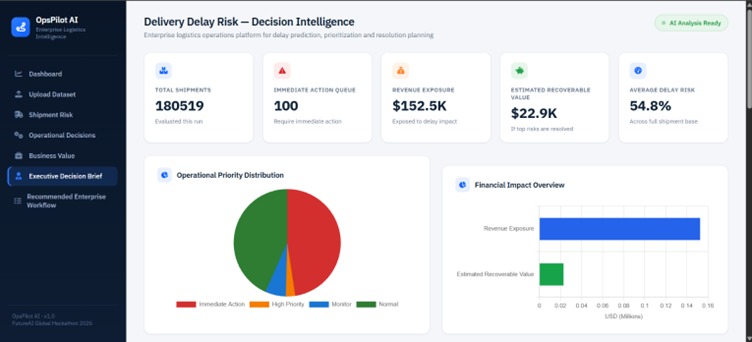
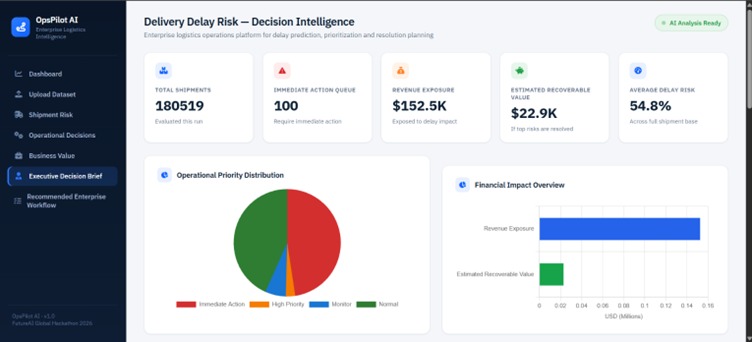
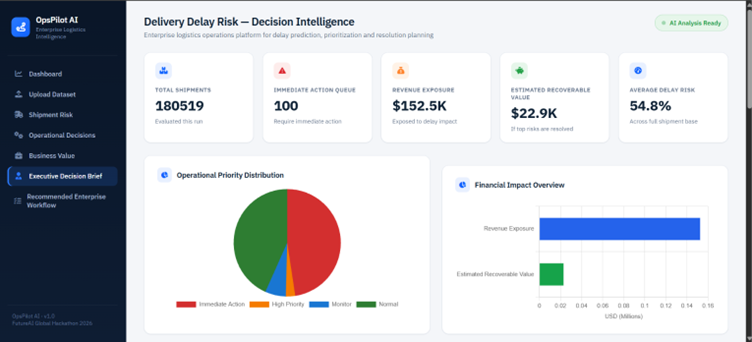
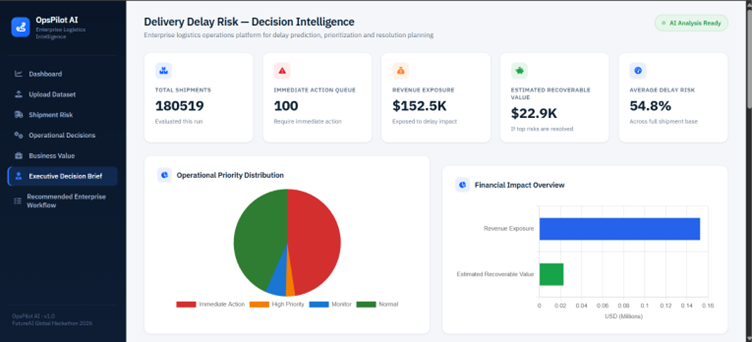
Enterprise Dashboard Real-time view of shipment risks, financial impact, AI insights, and operational priorities in one place.
-
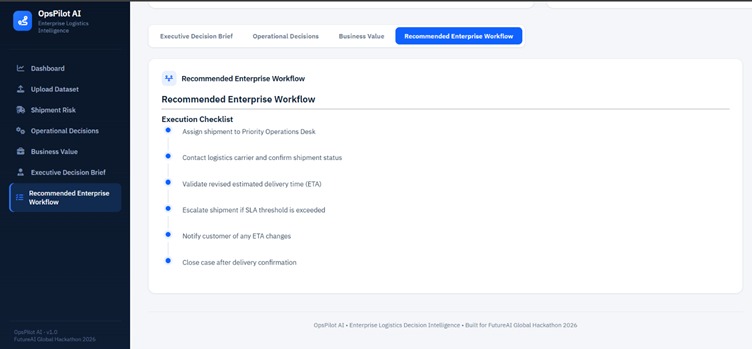
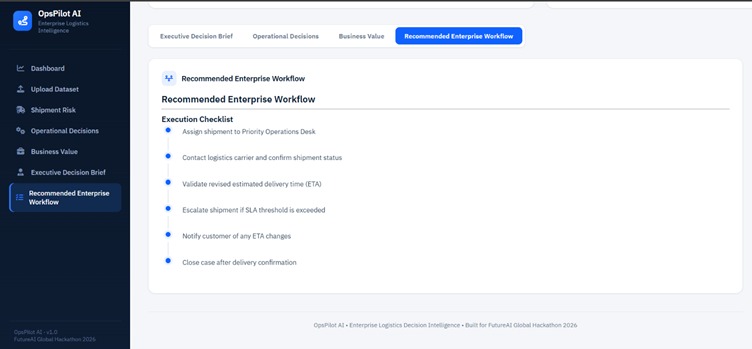
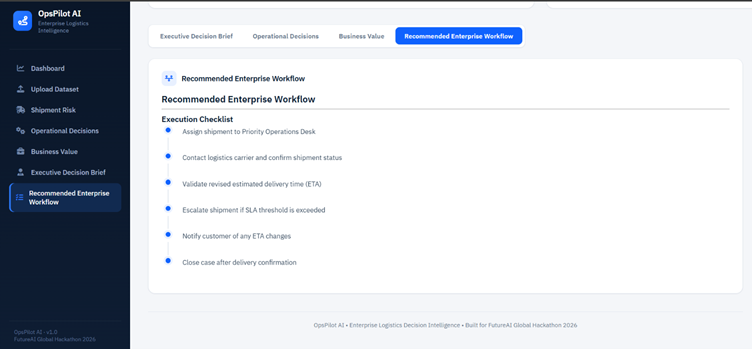
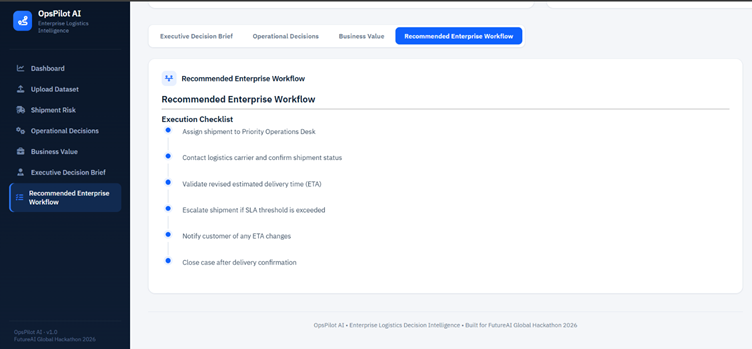
Recommended Enterprise Workflow AI-generated action plan with prioritized execution steps for faster decisions and operational response.
-
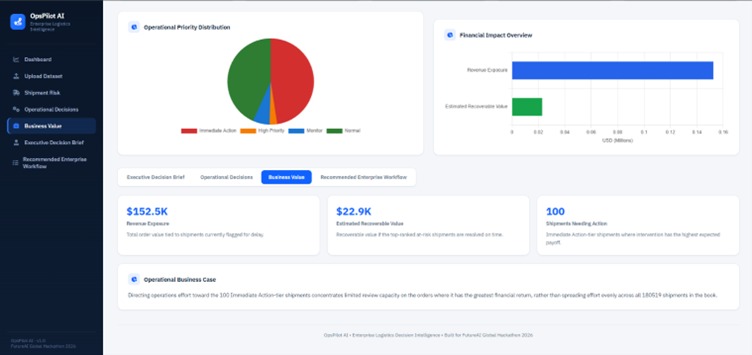
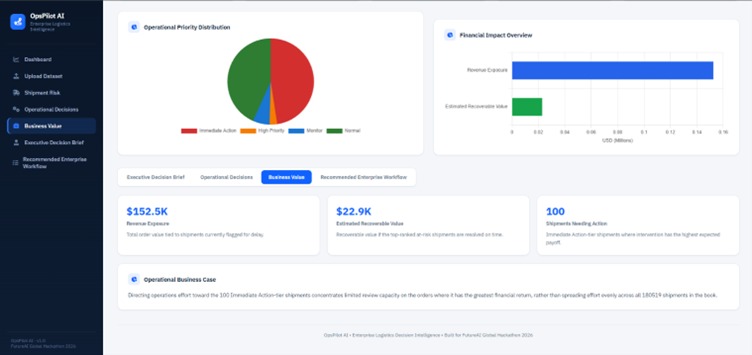
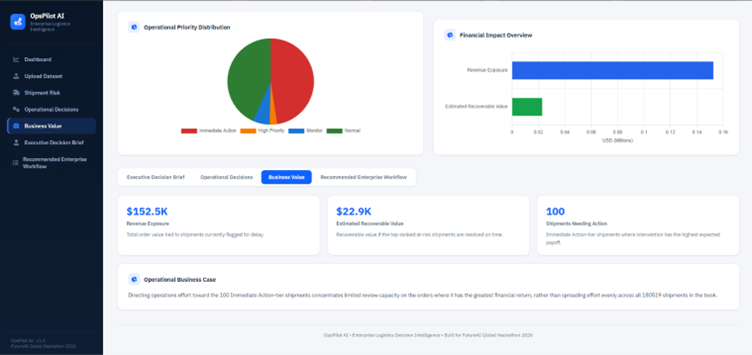
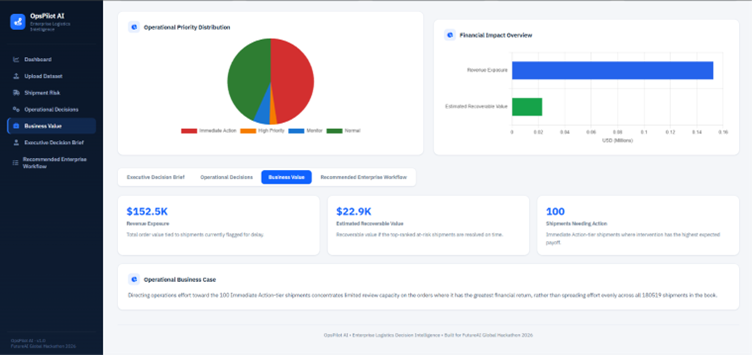
Business Value Analysis Converts operational risks into financial impact, recoverable value, and decision-ready business insights.
-
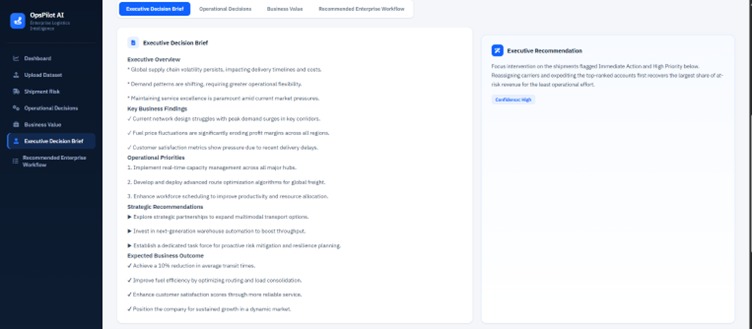
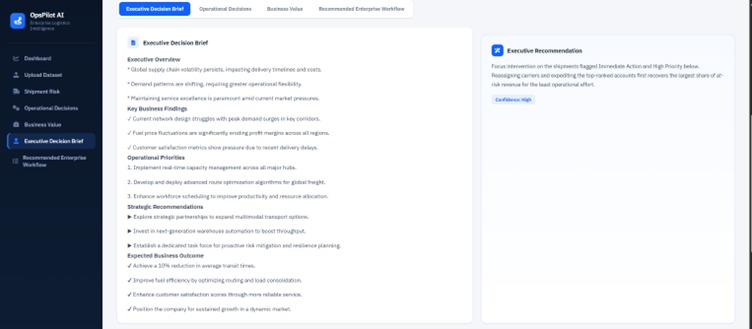
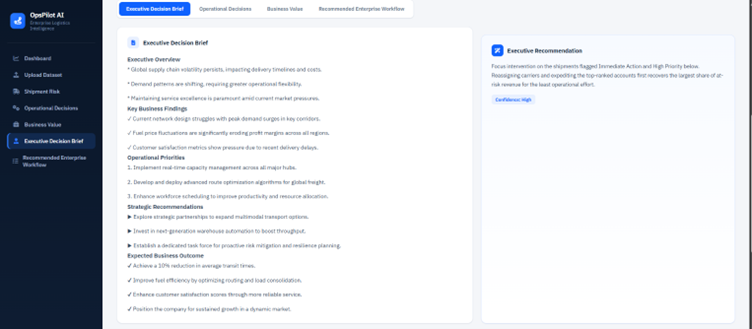
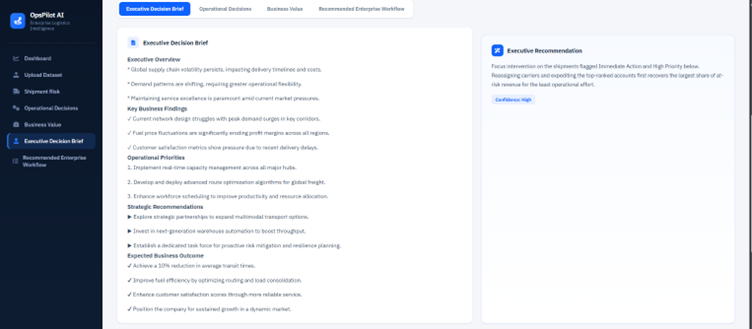
Executive Decision Brief AI-generated summary of key risks, business insights, strategic recommendations, and executive priorities.
-
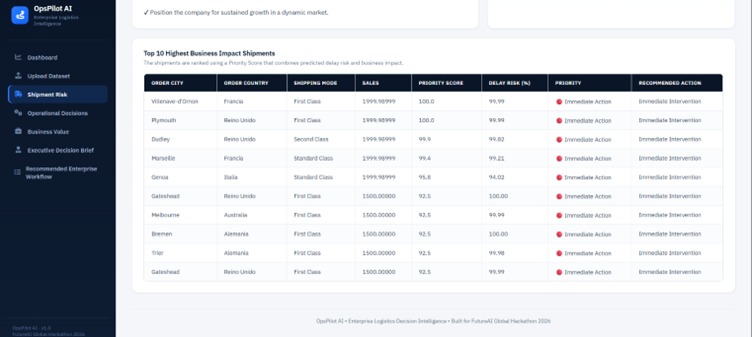
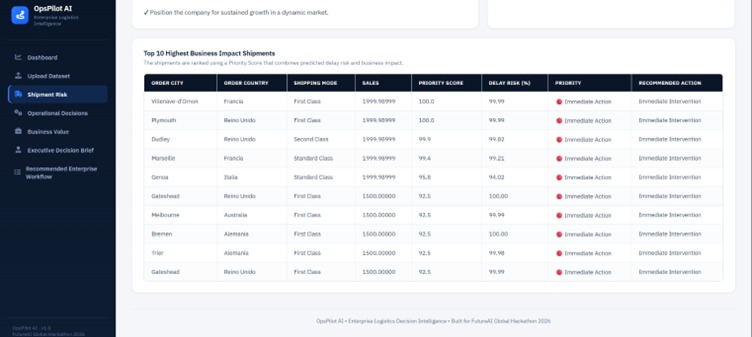
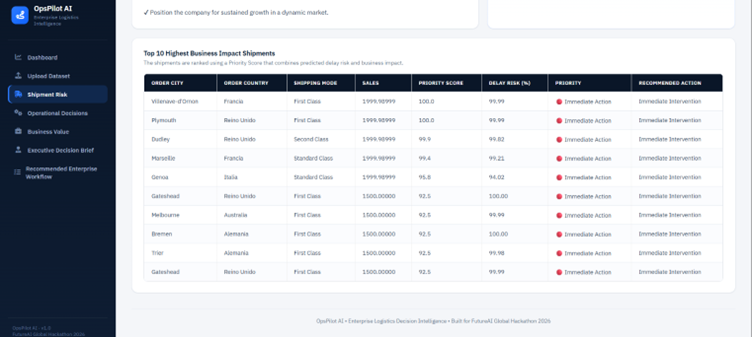
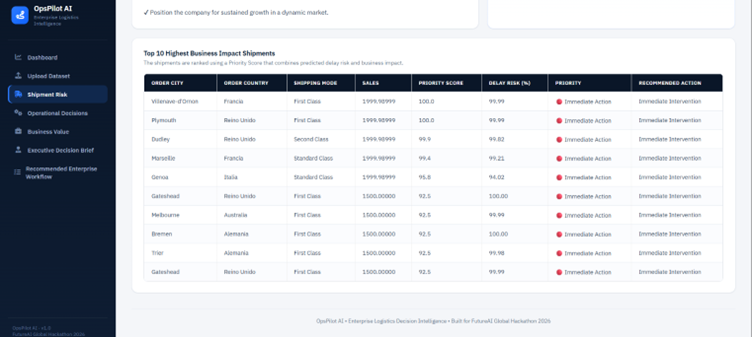
Shipment Risk Analysis Ranks high-risk shipments by delay probability, business impact, and recommended next actions.
Inspiration
Enterprise logistics teams already have dashboards that predict delays, but predictions alone don't tell teams what to do next. I wanted to build an AI system that goes beyond prediction by helping operations teams prioritize critical shipments, understand business impact, and take action faster.
What it does
OpsPilot AI is an agentic decision intelligence platform for enterprise logistics. A CatBoost machine learning model predicts shipment delay risk, after which five specialized AI agents collaborate to convert those predictions into operational priorities, business value assessments, executive summaries, and enterprise action plans.
The current prototype is demonstrated using the DataCo Smart Supply Chain dataset. However, the architecture is designed to be retrained on an organization's own shipment data while preserving the same AI decision workflow.
How I built it
I built OpsPilot AI using Python, Flask, CatBoost, Gemini API, HTML, CSS, and JavaScript.
The workflow combines machine learning with a five-agent architecture:
- Shipment Risk Agent – Predicts shipment delay risk.
- Decision Intelligence Agent – Prioritizes shipments requiring immediate attention.
- Business Value Agent – Evaluates operational and financial impact.
- Executive Summary Agent – Generates AI-powered executive insights.
- Resolution Planning Agent – Recommends enterprise action plans.
Challenges I ran into
The biggest challenge wasn't building the prediction model—it was designing a multi-agent workflow where each AI agent builds on the previous agent's output while keeping the final recommendations consistent, relevant, and useful for different business stakeholders.
Accomplishments that I'm proud of
- Built an end-to-end agentic AI platform, not just a prediction model.
- Combined machine learning with a five-agent decision intelligence workflow.
- Transformed shipment predictions into business insights and actionable recommendations.
- Designed an enterprise dashboard that transforms shipment predictions into business decisions.
What I learned
This project taught me that predictions alone don't create business value. The real impact comes from combining machine learning with AI agents that explain insights, prioritize actions, and support better decision-making.
What's next for OpsPilot AI
The current prototype demonstrates the workflow using the DataCo Smart Supply Chain dataset. Going forward, I plan to:
- Support schema mapping and model retraining, allowing organizations to use their own historical shipment data instead of a fixed dataset.
- Enable real-time shipment monitoring through live data streams instead of static CSV uploads.
- Integrate with enterprise ERP/WMS platforms to embed AI recommendations directly into existing operational workflows.
- Evolve the AI agents into event-driven autonomous agents that proactively respond to high-risk shipments.
My long-term vision is to evolve OpsPilot AI into an autonomous enterprise operations co-pilot that continuously learns, adapts, and supports smarter logistics decisions.
Built With
- catboost
- css3
- flask
- git
- github
- google-gemini-api
- html5
- javascript
- joblib
- numpy
- pandas
- python
- scikit-learn

Log in or sign up for Devpost to join the conversation.