Inspiration
What it does
How we built it
Inspiration
Businesses can detect that something is wrong through dashboards, but understanding why it happened often requires manually checking information across sales, customers, inventory, and finance.
We wanted to explore a different approach: what if an AI system could investigate an operational problem instead of simply reporting it?
What We Built
OpsPilot is an AI-native operations manager that detects important business anomalies, coordinates specialized AI agents to investigate them, identifies the likely root cause, and recommends a corrective action for a human manager to approve.
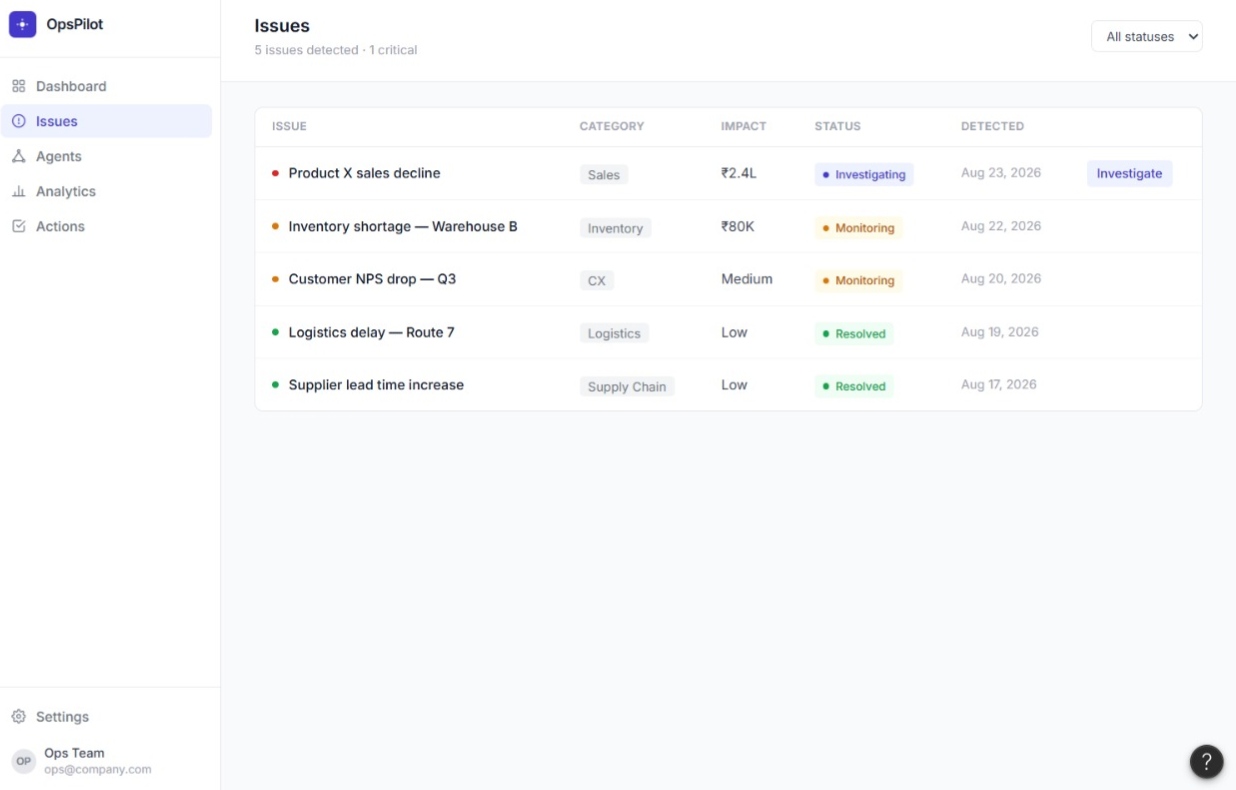
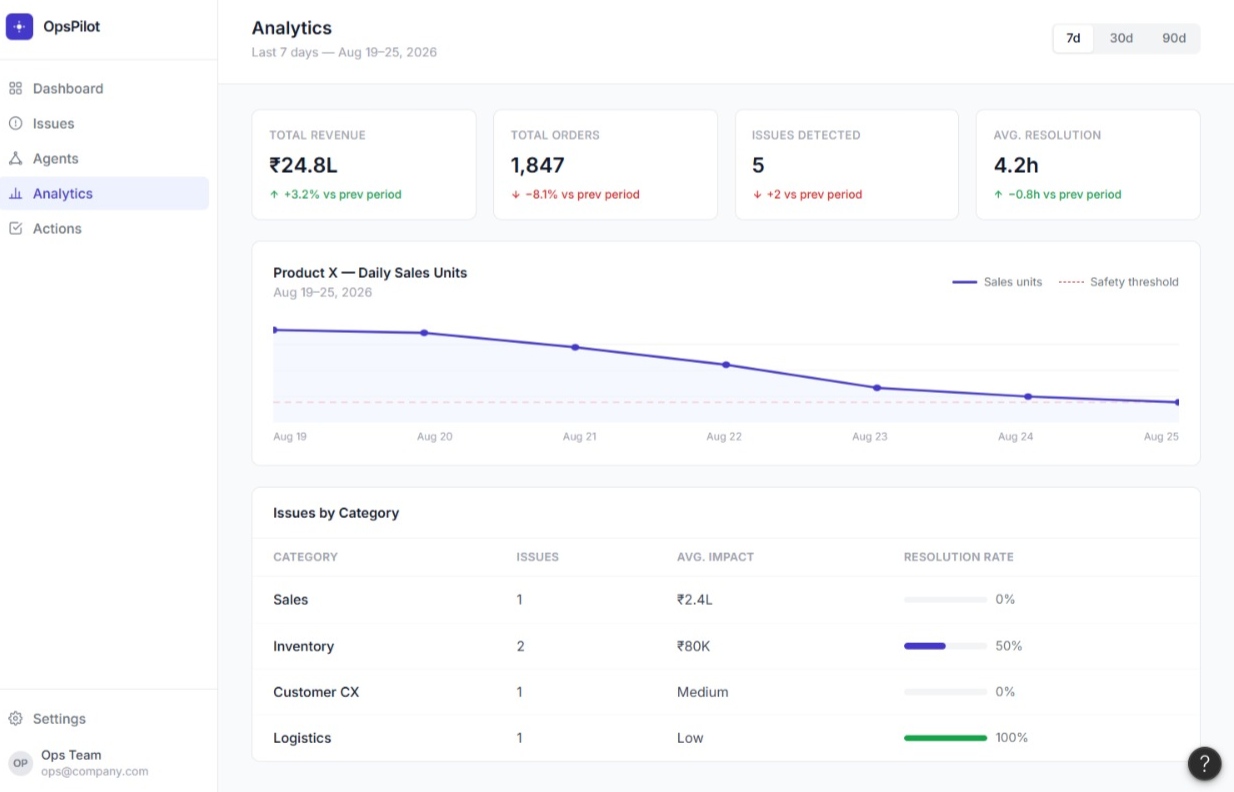
Our prototype demonstrates this workflow through a realistic enterprise operations interface.
How It Works
OpsPilot follows a simple workflow:
Detect → Investigate → Diagnose → Recommend → Act
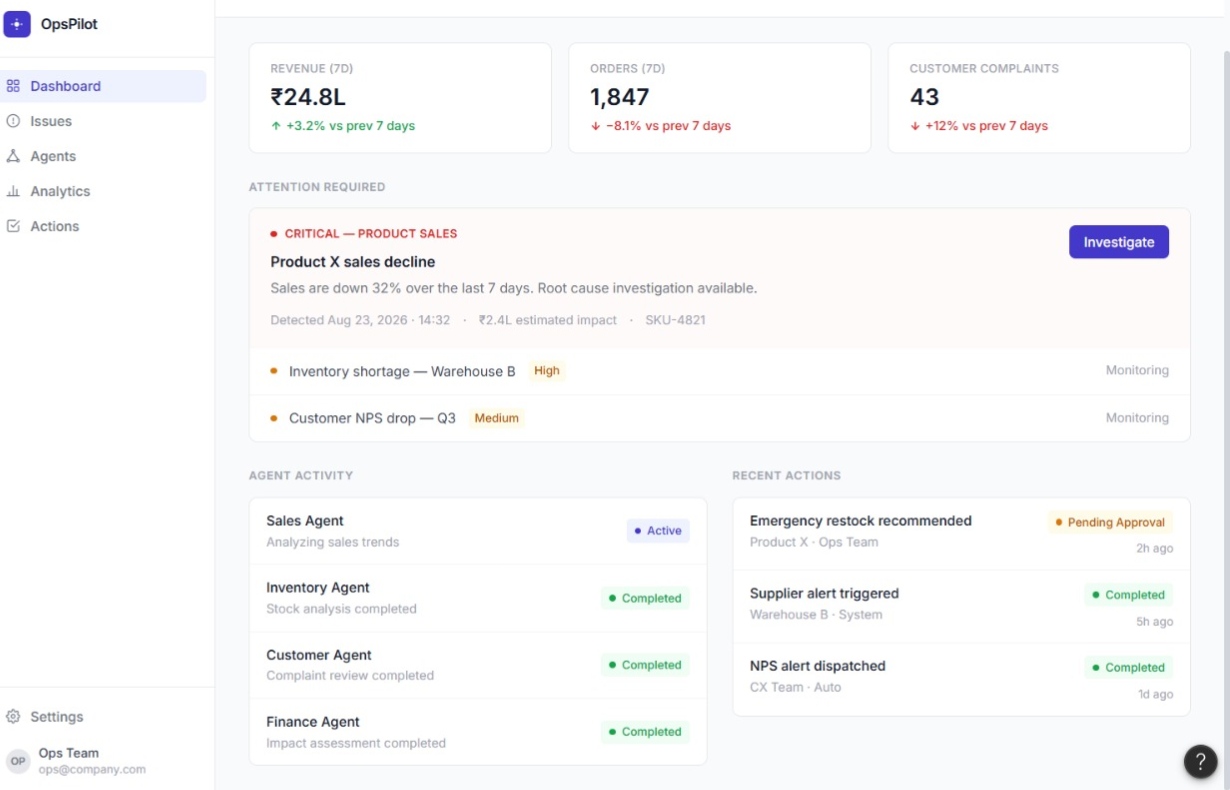
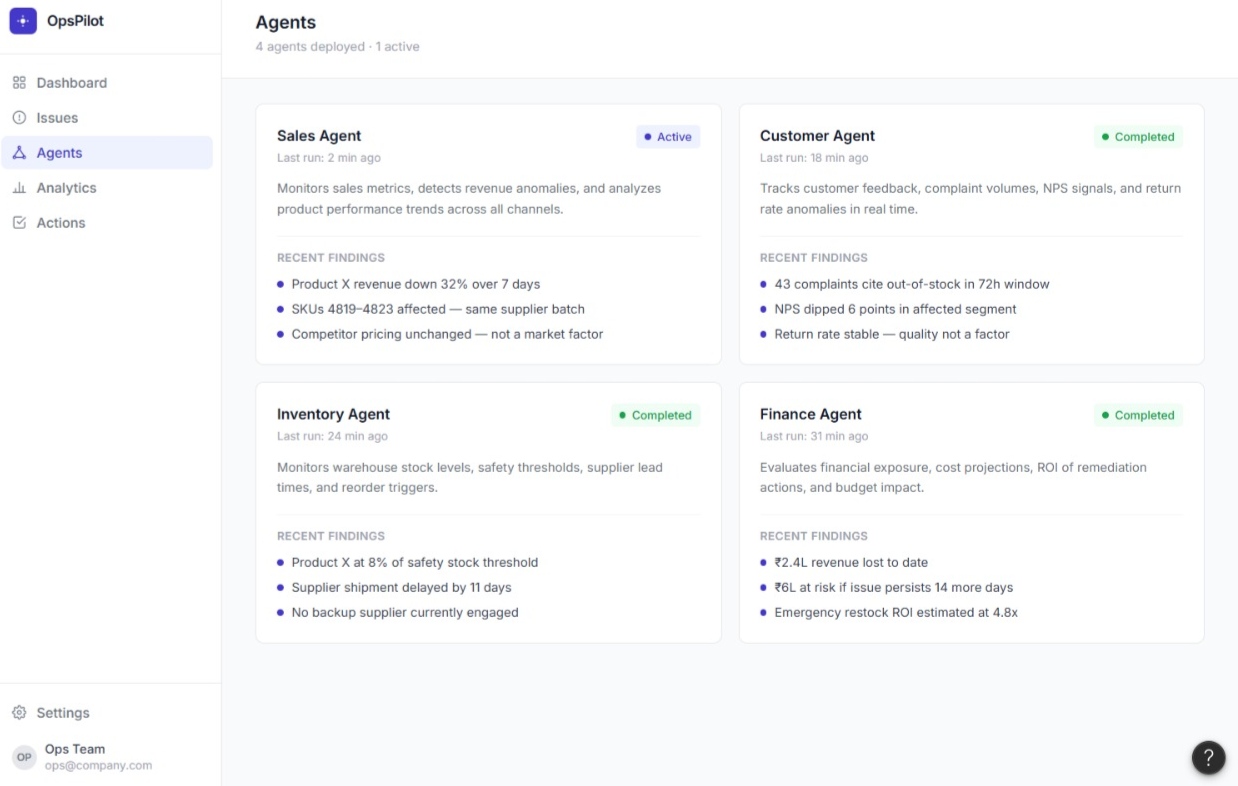
For example, when Product X sales decline by 32%, OpsPilot initiates an investigation.
Specialized agents examine the problem from different perspectives:
- Sales Agent analyzes sales trends.
- Customer Agent examines customer complaints.
- Inventory Agent checks stock availability.
- Finance Agent evaluates the financial impact.
The findings are brought together to identify the likely root cause. In our prototype scenario, the investigation points to an inventory shortage contributing to delivery delays, customer complaints, and declining sales.
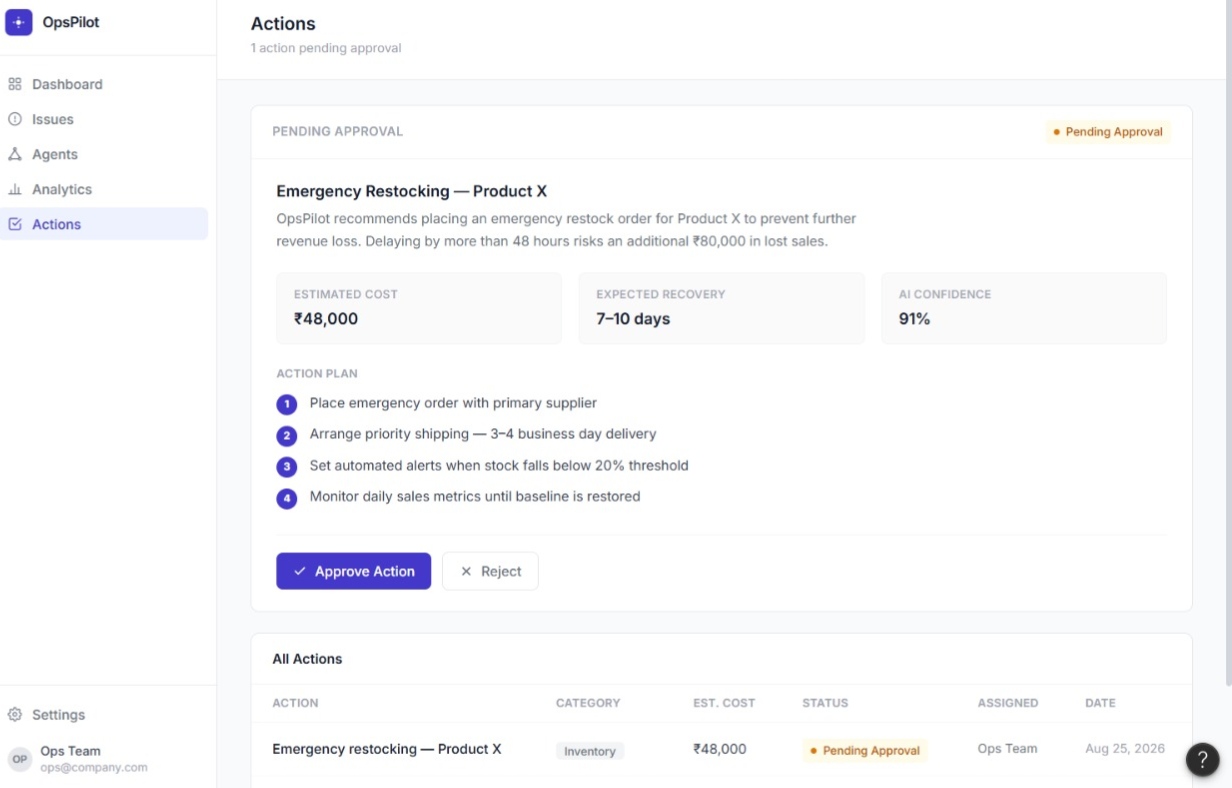
OpsPilot then recommends an action such as emergency restocking, along with estimated cost, expected recovery time, and confidence level. The manager can approve or reject the recommendation.
Why It Matters
Most business AI experiences focus on dashboards, alerts, summaries, or answering questions.
OpsPilot focuses on the step after detection: investigating the problem and helping coordinate a path toward resolution.
The concept can be extended across enterprise functions such as sales, finance, customer support, inventory, and operations.
What We Learned
Designing OpsPilot helped us think about how specialized AI agents can collaborate around a shared business problem rather than acting as isolated chatbots.
We also focused on keeping humans in control of consequential business actions while allowing AI to handle investigation and recommendation.
Challenges
The main challenge was designing an agentic workflow that remains understandable to a business user. We therefore focused the prototype on one clear scenario and made the investigation, root cause, and recommended action visible at each stage.
What's Next
Our next step would be to turn the prototype into a functional multi-agent system with real enterprise data sources, tool integrations, agent orchestration, and an end-to-end action workflow.
Built With
- design-system
- figma
- interaction-design
- multi-agent-architecture
- prototyping
- ui-ux-designing

Log in or sign up for Devpost to join the conversation.