-
-
-
-
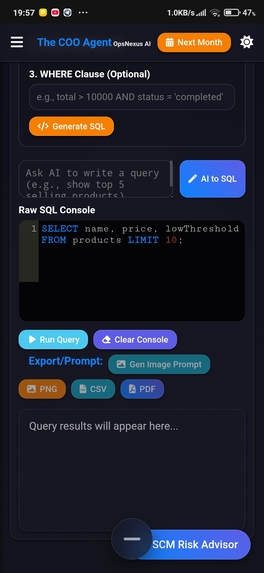
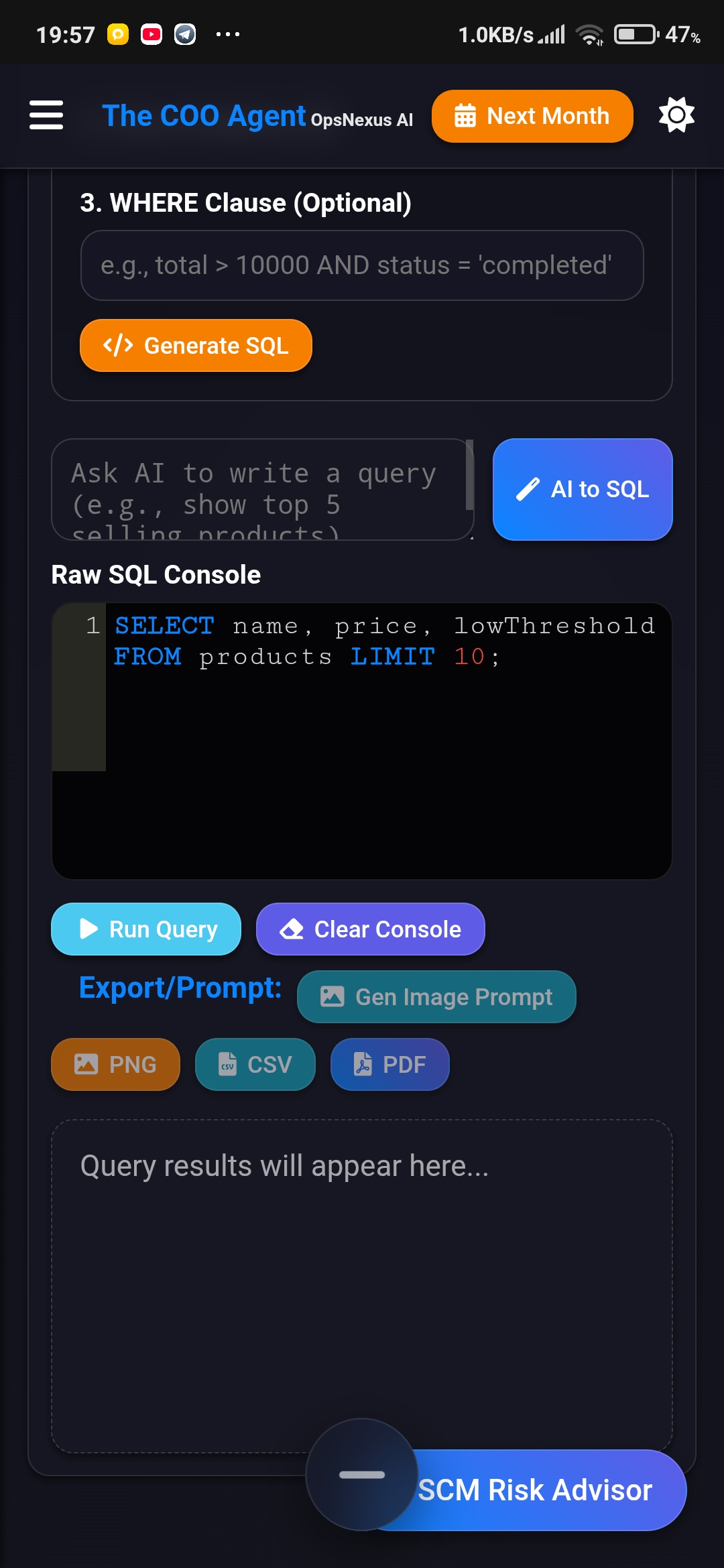
Generate SQL codes
-
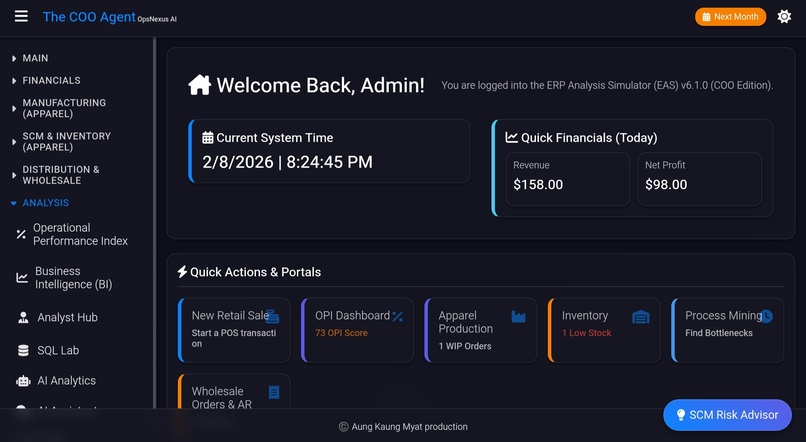
PC view
-
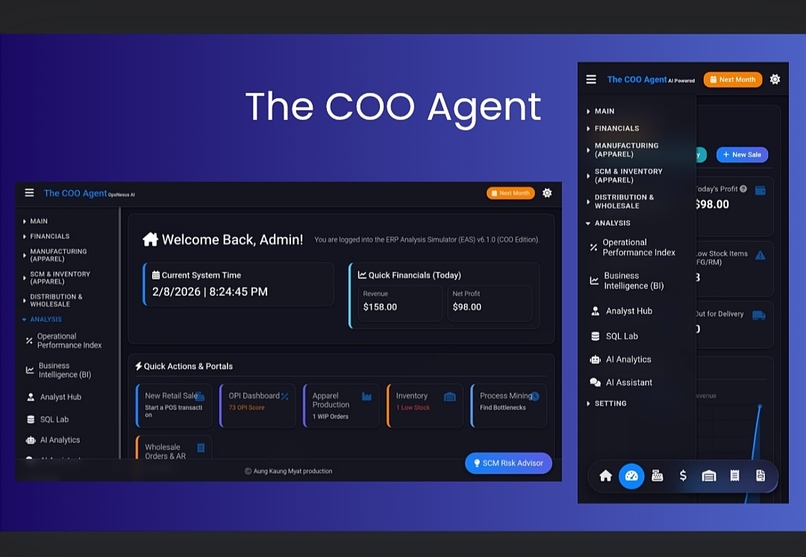
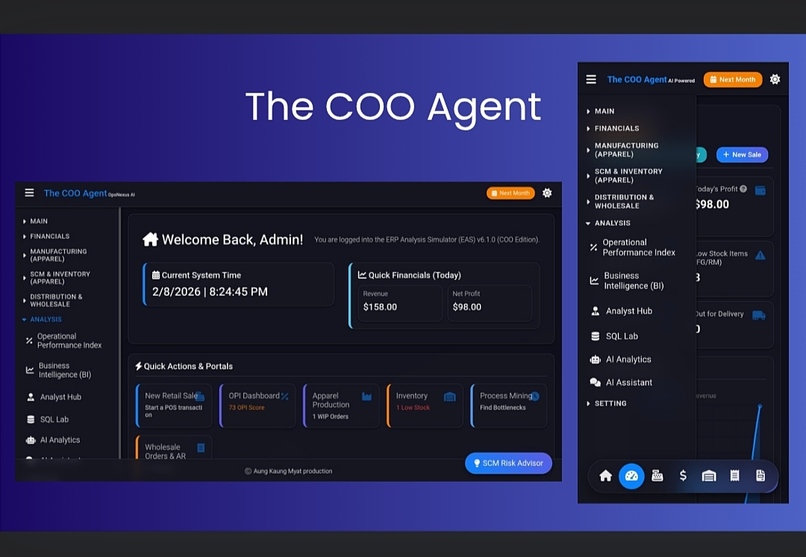
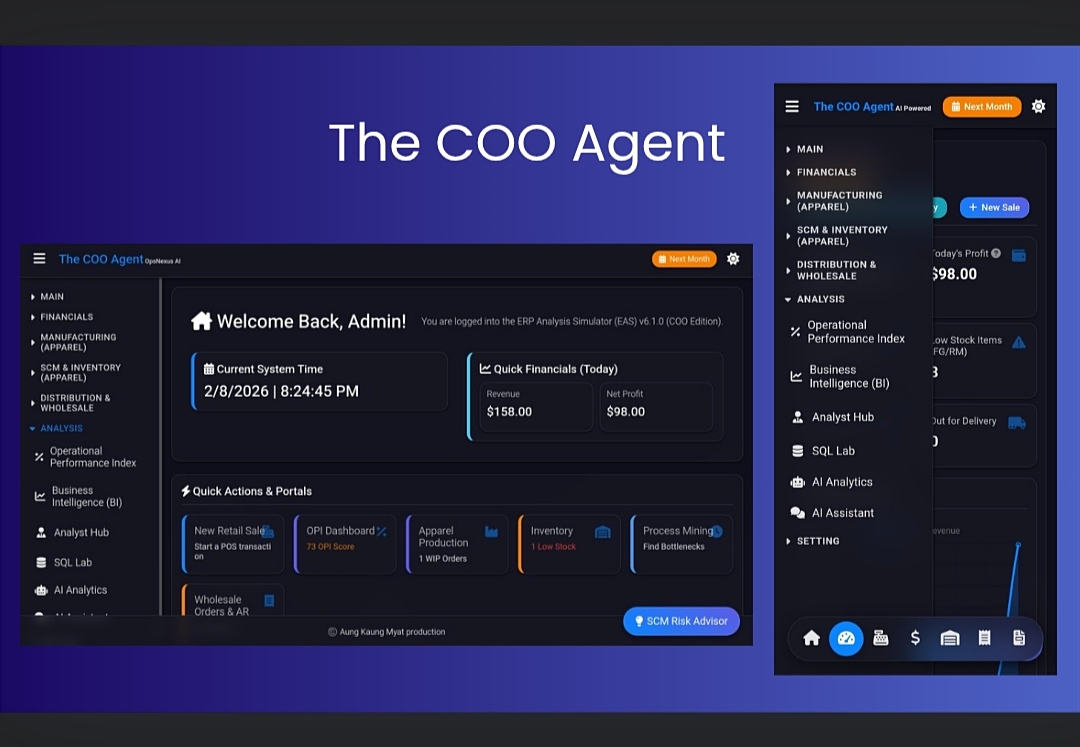
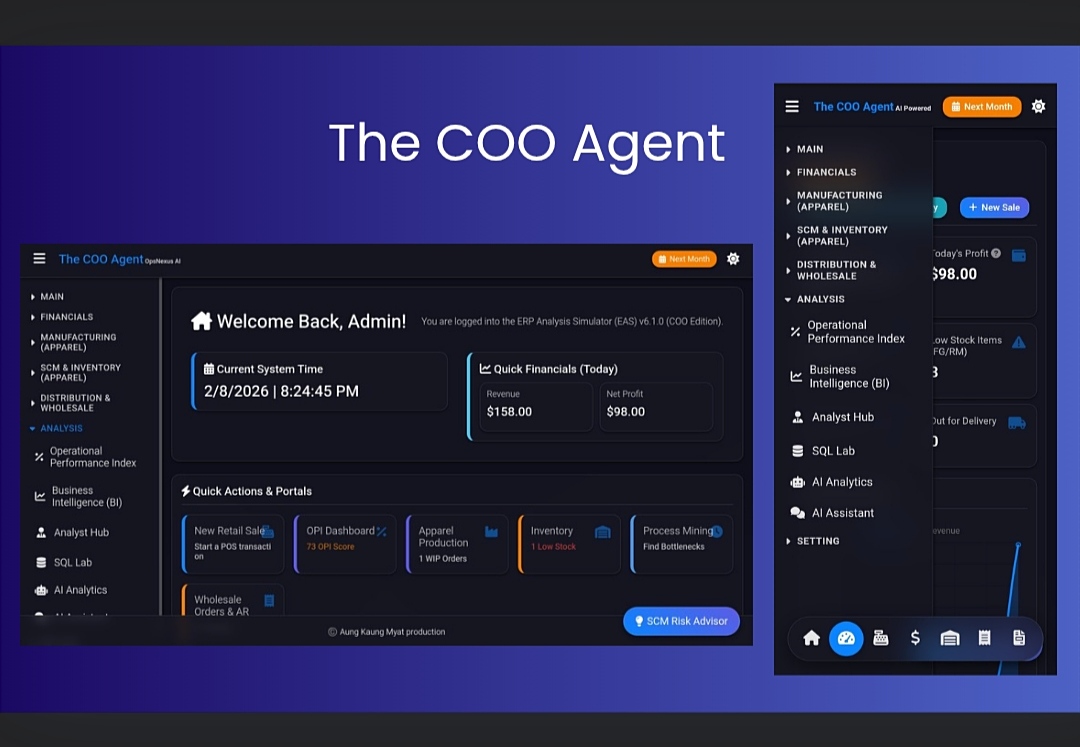
PC and Mobile view
Inspiration
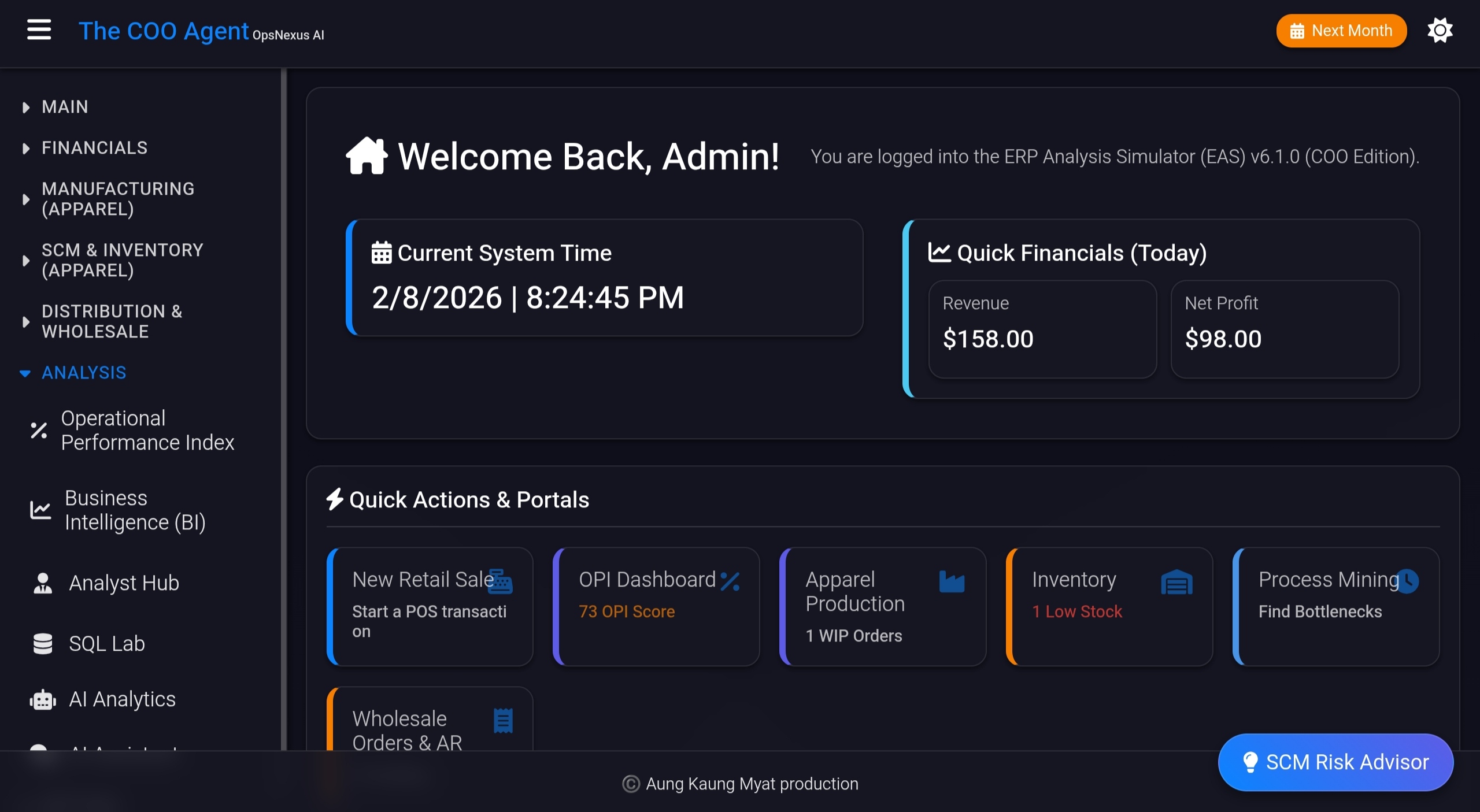
In the fast-paced apparel manufacturing industry, COOs are often overwhelmed by two things: Data Overload and Complex Interfaces. Traditional ERPs are static—drowning users in hundreds of irrelevant buttons. I wanted to build a system that solves both: An AI Co-Pilot that digests complex data into strategic advice. A Dynamic Interface that "thinks" with the user—showing only the tools needed for the current task (e.g., showing 'Cutting Logs' only when in the Manufacturing module) to reduce cognitive load.
What it does
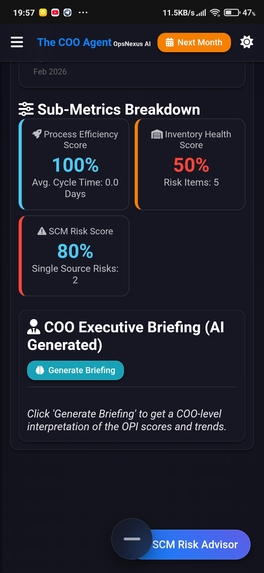
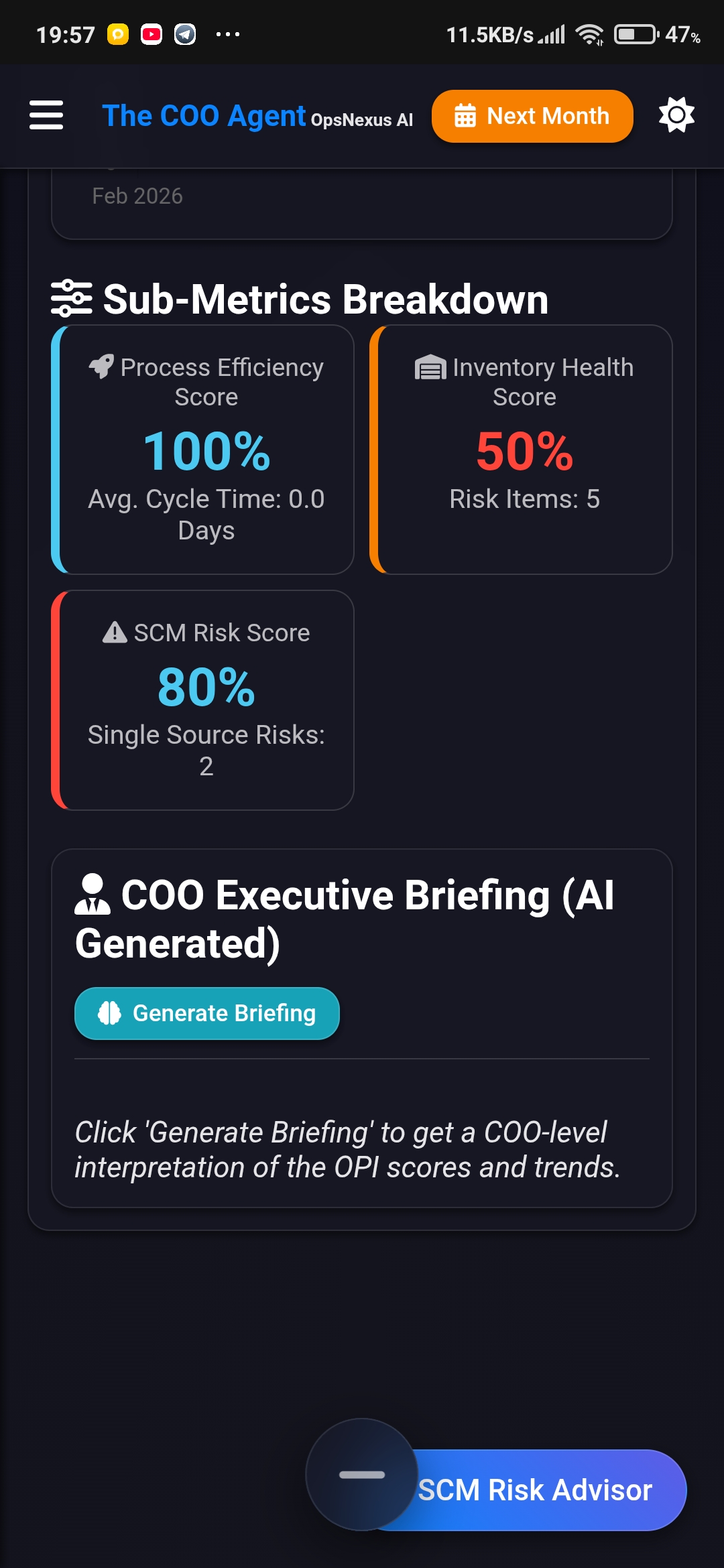
OpsNexus AI is an offline-first ERP Simulator powered by Gemini 3.0. It transforms raw operational data into strategic advice. Key capabilities include: Strategic Health Check: The AI analyzes 6 months of interconnected data (Sales, Production, Finance) to generate a COO-level executive briefing, identifying risks like 'Cash Flow bottlenecks' or 'Supply Chain delays'. Natural Language SQL Lab: Non-technical users can ask questions like "Show me top 5 items by profit" and Gemini instantly converts this into complex SQL queries to fetch data from the internal database. Process Mining Agent: It automatically detects inefficiencies in the production line (e.g., bottlenecks between Cutting and Sewing departments). Dynamic Context Navigation: A unique UI that morphs based on the user's current task to reduce screen clutter. Context-Aware Dynamic Navigation: To solve screen clutter, I built a unique navigation bar that morphs instantly based on the active module, ensuring the COO focuses only on what matters right now.
How I built it
I built OpsNexus with a 'Privacy-First, Offline-First' architecture. The Brain (AI): We used the Gemini 3.0 API for its massive context window. We feed it JSON snapshots of the entire factory state, allowing it to "see" the big picture. The Engine (Database): Instead of a traditional backend, we used sql.js (SQLite over WebAssembly). This allows the app to run complex SQL queries directly in the user's browser with zero latency. The Frontend: Pure Vanilla JavaScript and CSS3 for maximum performance, with Chart.js for real-time visualization and jsPDF for generating professional reports. The Integration: We built a custom callGemini module that handles prompt engineering, ensuring the AI adopts specific personas (Analyst, SQL Expert, Forecaster).
Challenges I ran into
Prompt Engineering for SQL Generation: One major challenge was getting Gemini to consistently generate valid SQL queries for our specific sql.js schema. Initially, the AI would hallucinate table names. We solved this by creating a robust 'System Instruction' that injects the exact database schema (tables: orders, inventory, finance) into the context before every query. Handling Large Contexts in the Browser: Feeding 6 months of operational data into the Gemini API initially caused latency. We optimized this by pre-processing the JSON data on the client side—summarizing daily logs into weekly aggregates—before sending them to the model.
Accomplishments that we're proud of
Seamless Offline-First Architecture: I'm proud that OpsNexus runs entirely in the browser using WebAssembly (sql.js). Even if the internet cuts out, the core ERP functions work perfectly. The 'Human-Like' Insight: Seeing Gemini 3.0 successfully detect a 'Cash Flow vs. Inventory' bottleneck during our testing felt like magic. It didn't just show a chart; it explained why the profit margin was dropping, acting like a real human consultant.
What I learned
I learned the power of Multimodal Context. By combining structured data (SQL results) with unstructured goals (user prompts), we realized that Gemini isn't just a chatbot—it's a reasoning engine that can drive complex business logic.
What's next for OpsNexus AI
Gemini Live Integration: We plan to add voice commands so factory floor managers can shout, "Hey OpsNexus, log 500 yards of fabric defect" without touching the screen. Vision Analysis: Using Gemini's vision capabilities to let QC (Quality Control) staff take photos of defective garments, with the AI automatically categorizing the defect type.
Built With
- chart.js
- css3
- google-gemini
- html5
- indexeddb
- javascript
- sqlite
- webassembly

Log in or sign up for Devpost to join the conversation.