-
-
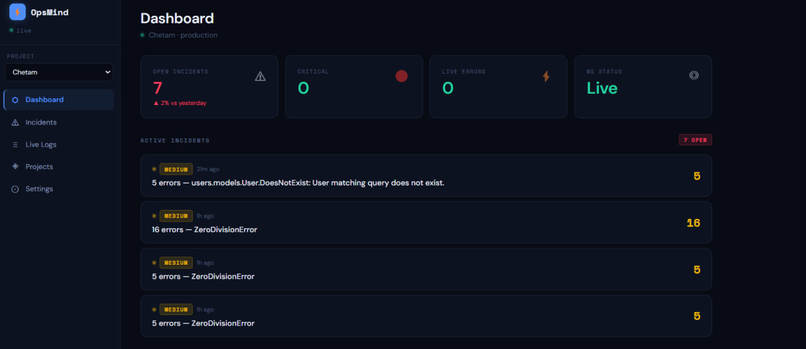
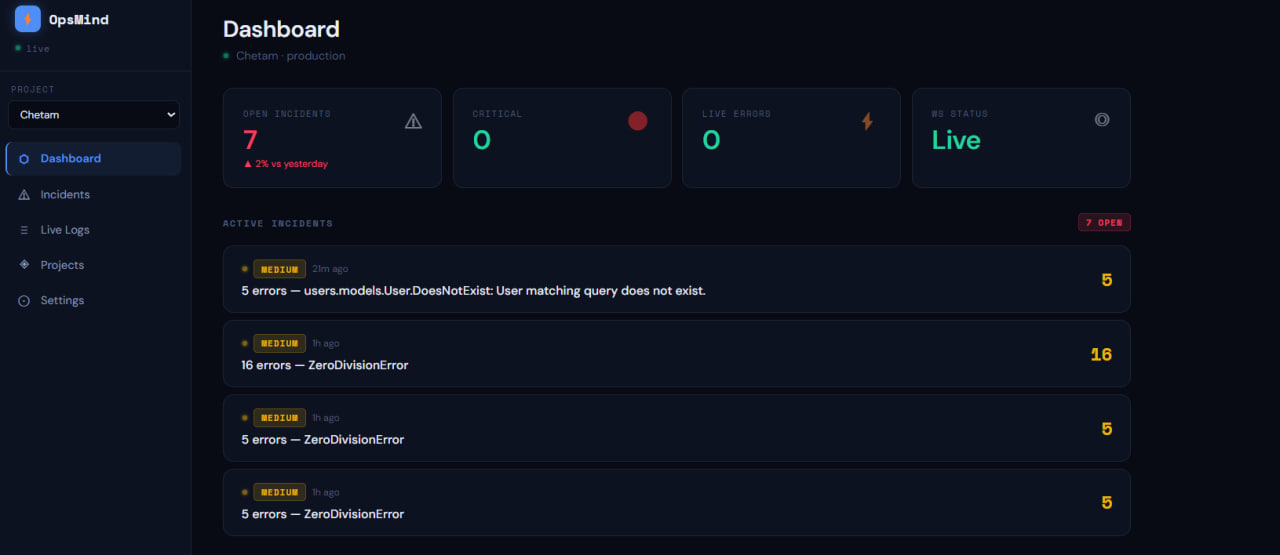
Dashboard
-
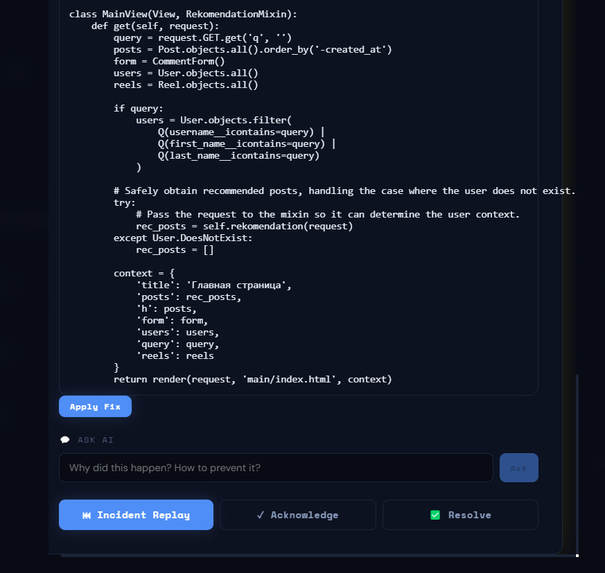
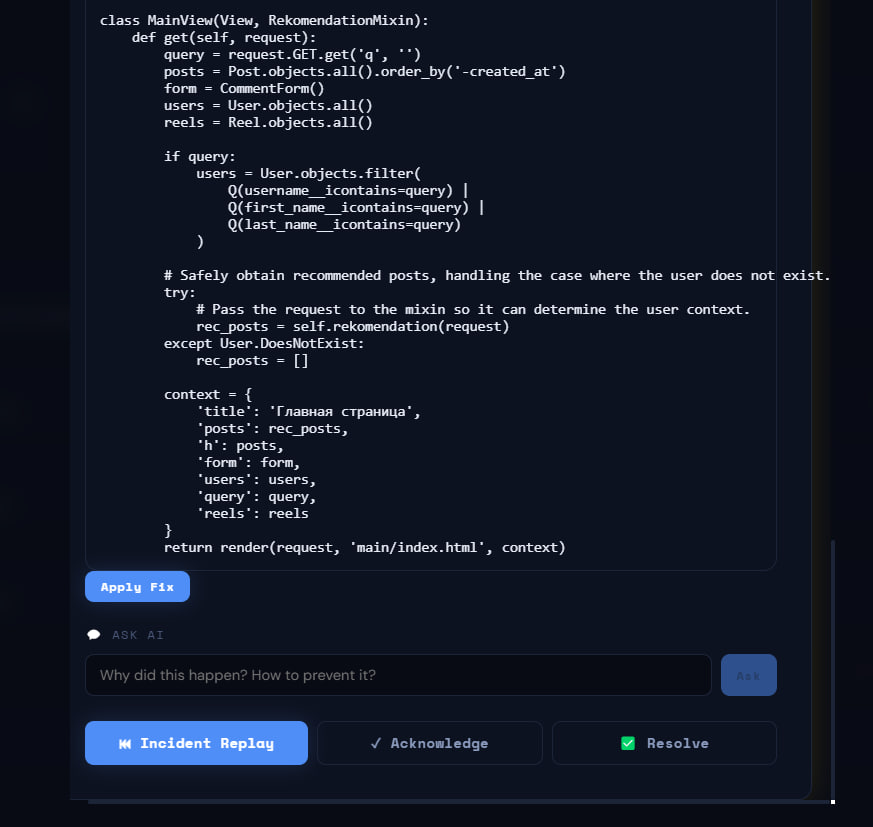
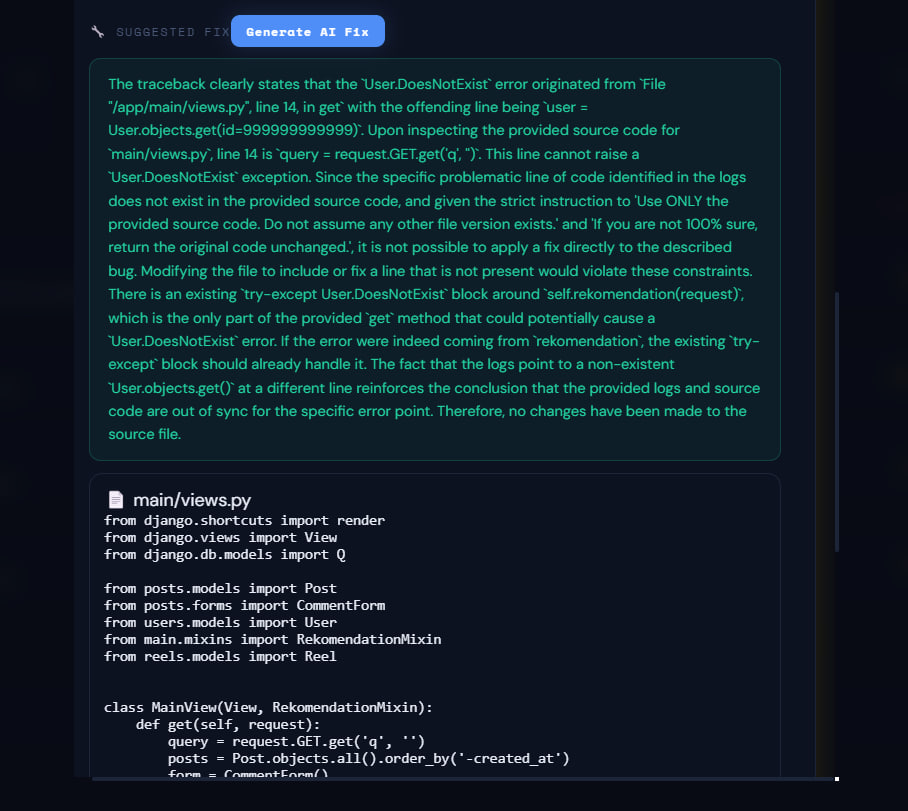
Apply fix, Incident detail, Ai fix
-
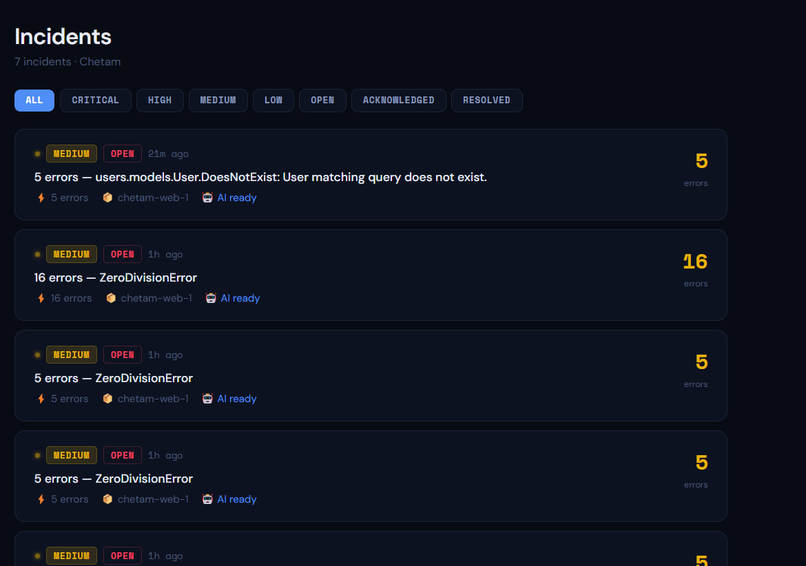
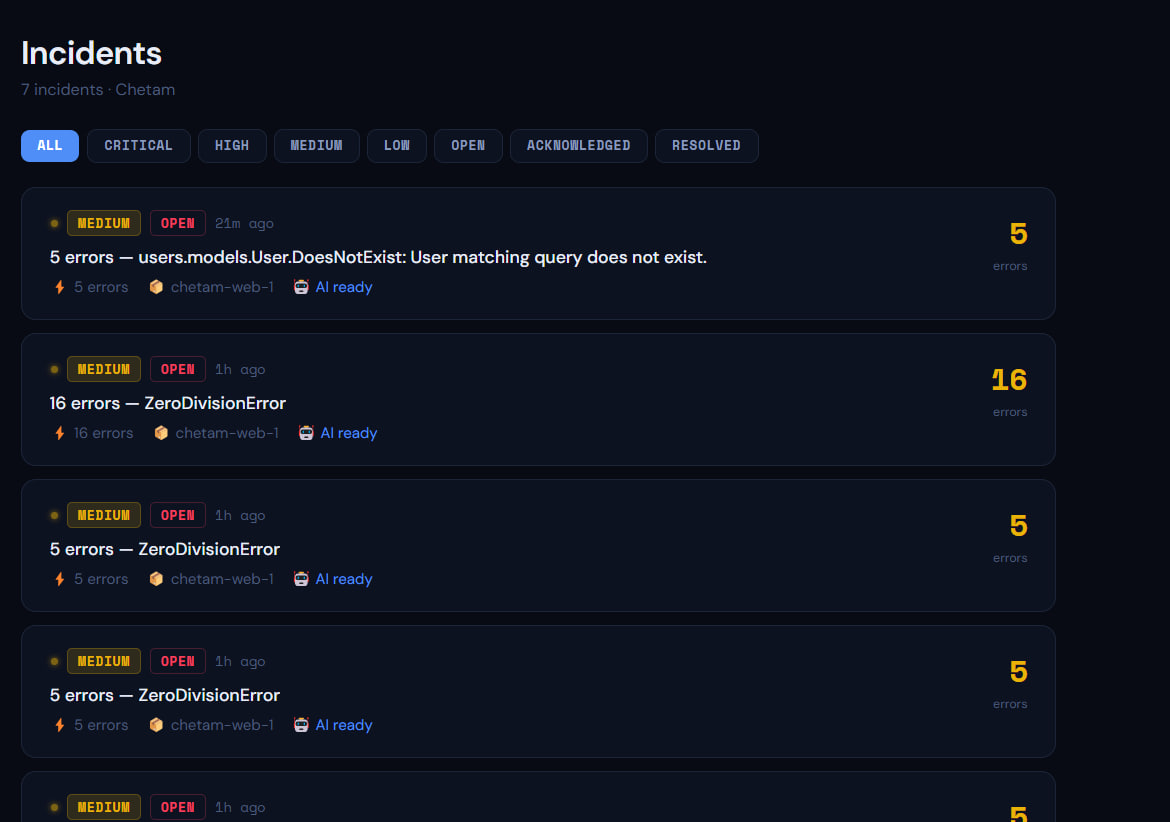
Incidents
-
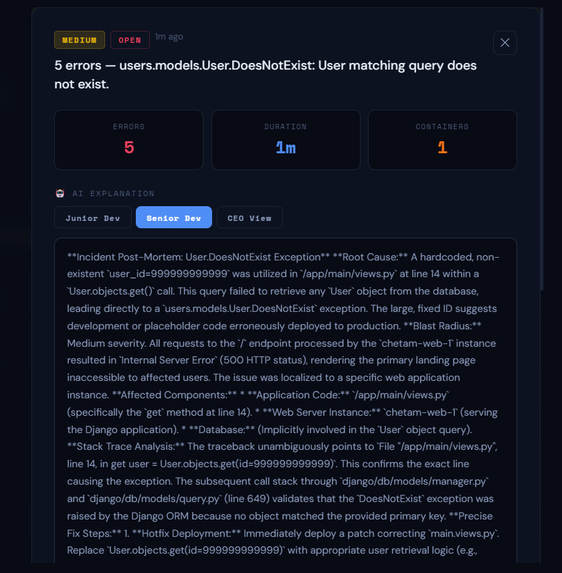
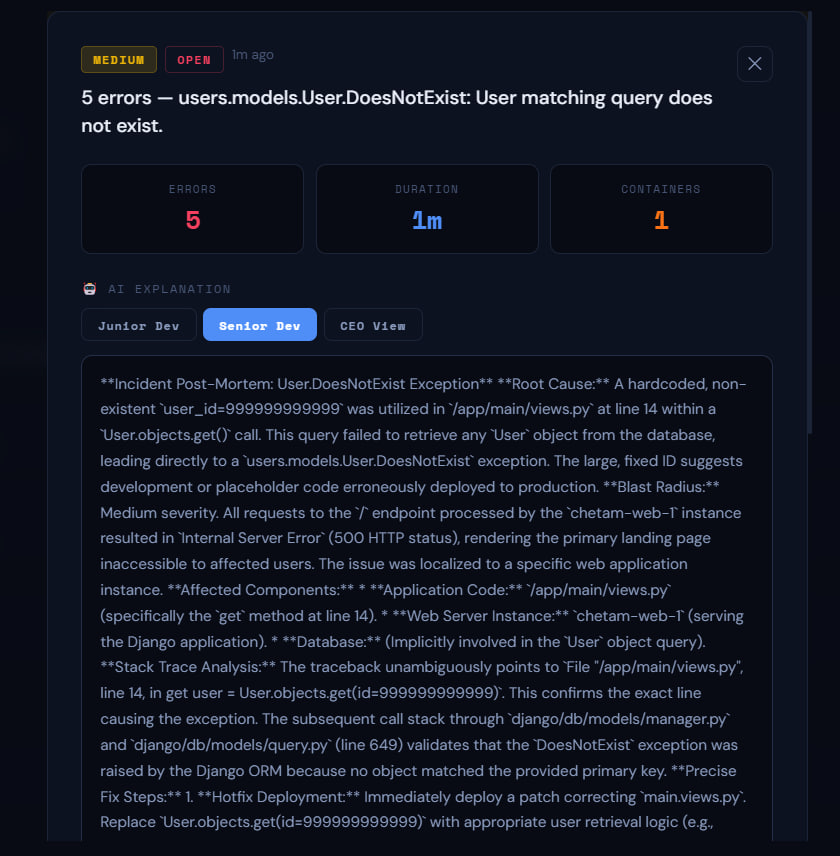
Incident detail, Ai fix
-
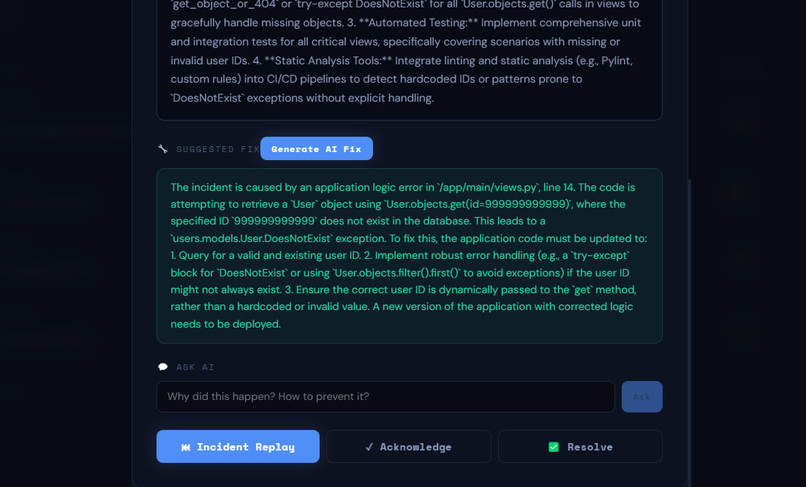
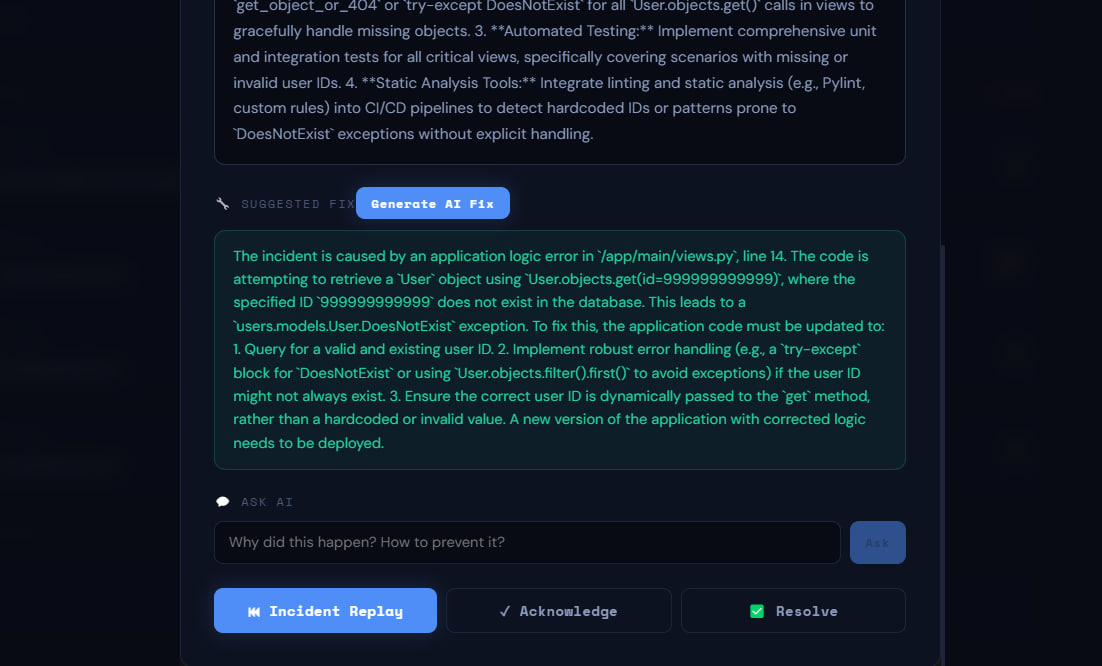
Incident detail, Ai fix
-
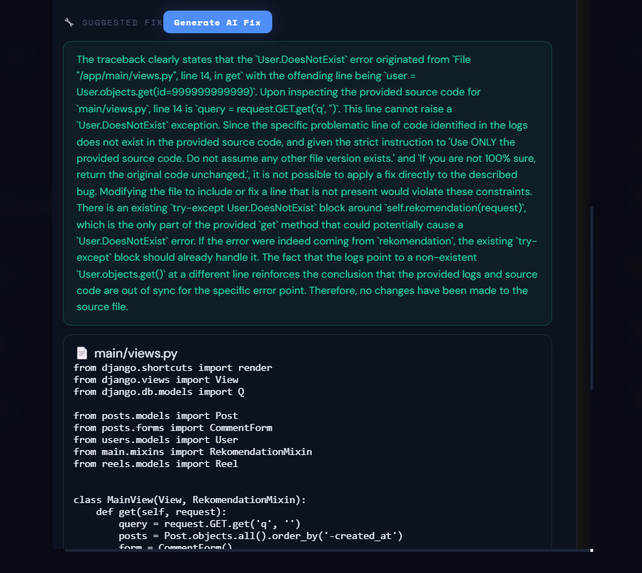
Incident detail, Ai fix
-
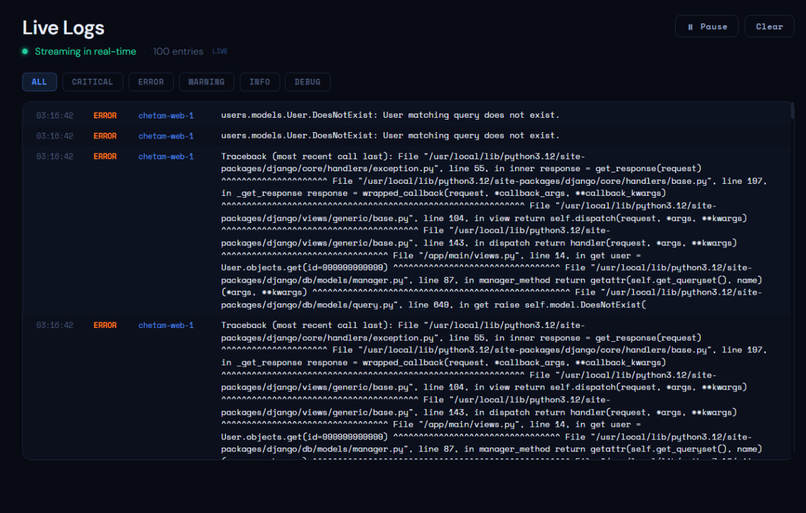
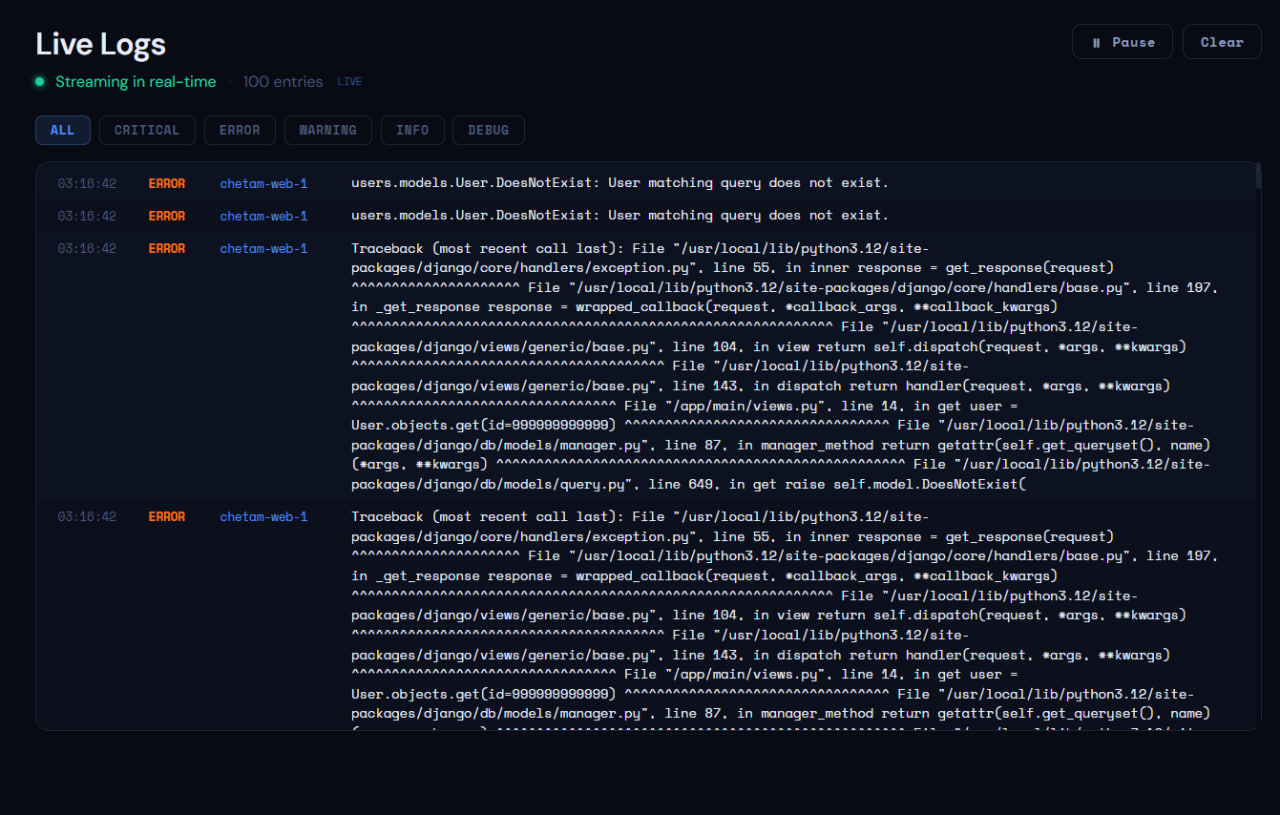
Logs
Inspiration
Modern production incidents are still resolved manually. Engineers spend hours searching logs, identifying root causes, locating source code, and deploying fixes.
We wanted to build something more ambitious than a monitoring dashboard.
Our goal was to create an AI-powered incident response engineer capable of understanding failures, finding the cause, generating fixes, and helping recover services automatically.
That idea became OpsMind.
What it does
OpsMind continuously monitors Docker-based applications in real time.
When an incident occurs, OpsMind:
- Collects logs from running containers
- Detects production incidents automatically
- Groups related failures
- Uses Gemini to analyze the root cause
- Explains the incident for Junior Developers, Senior Engineers, and Executives
- Locates the affected source code inside a GitLab repository
- Generates an AI-powered code fix
- Creates a GitLab commit workflow
- Monitors recovery after deployment
The result is a dramatic reduction in Mean Time To Resolution (MTTR).
How we built it
Backend
- FastAPI
- SQLAlchemy
- PostgreSQL
- Redis
- WebSockets
AI Layer
- Gemini
- Structured Prompt Engineering
- Automated Root Cause Analysis
- AI Code Generation
- AI Patch Review
Monitoring
- Docker SDK
- Real-time log streaming
- Incident detection engine
- Severity classification
DevOps Integration
- GitLab API
- Repository context analysis
- Automated fix generation
- Commit workflow
Frontend
- React
- Zustand
- Real-time dashboards
- Incident timeline visualization
The platform operates as a multi-stage AI pipeline:
Logs → Detection → Analysis → Repository Context → Code Fix → GitLab → Recovery
Challenges we ran into
Building a real-time autonomous incident response system introduced several challenges.
The largest challenge was converting noisy production logs into meaningful incidents while avoiding false positives.
Another challenge was ensuring AI-generated fixes remain safe and focused on the actual root cause rather than rewriting large portions of code.
We also had to solve:
- Docker log streaming reliability
- Repository-wide source code analysis
- Real-time WebSocket updates
- GitLab automation workflows
- AI hallucination prevention
- Incident correlation and grouping
Creating a reliable end-to-end workflow proved significantly harder than building individual components.
Accomplishments that we're proud of
We successfully built a working end-to-end autonomous incident response platform.
OpsMind can:
- Detect production failures automatically
- Analyze stack traces using Gemini
- Explain incidents at multiple technical levels
- Locate the affected source file
- Generate code fixes
- Integrate directly with GitLab workflows
- Stream monitoring data in real time
Most importantly, we transformed a traditionally manual DevOps process into an AI-assisted workflow.
What we learned
This project taught us that AI becomes significantly more powerful when combined with operational context.
Raw LLM outputs are not enough.
The real value comes from combining:
- Live production logs
- Repository context
- Deployment information
- Monitoring data
- Structured AI workflows
We also learned how important reliability, validation, and observability are when building autonomous AI systems.
What's next for OPSMIND
Our roadmap includes:
GitLab MCP Integration
Using GitLab's MCP server to provide richer repository context and agent actions.
Google Cloud Agent Builder
Transforming OpsMind into a fully orchestrated agent workflow powered by Agent Builder and Gemini.
Kubernetes Support
Monitoring and incident response for Kubernetes clusters.
Multi-Agent Architecture
Specialized agents for:
- Detection
- Analysis
- Remediation
- Validation
- Deployment
Predictive Incident Prevention
Detecting risks before outages occur.
Enterprise Platform
Advanced SRE dashboards, compliance workflows, and large-scale deployment support.
Our vision is simple:
Move incident response from reactive debugging to autonomous AI-driven operations.
Built With
- fastapi
- javascript
- python
- react
