

OpsMind — AI Investigation Engine
Inspiration
Every production incident starts the same way: engineers jump between monitoring dashboards, log platforms, tickets, documentation, and runbooks before they can even begin identifying the root cause.
While Large Language Models are excellent at answering questions, we realized they don't actually investigate enterprise systems. They don't know what evidence to collect, how to validate hypotheses, or when enough evidence has been gathered to support a conclusion.
That observation inspired OpsMind.
Instead of building another AI chatbot, we wanted to build an AI Investigation Engine that combines AI planning with deterministic, evidence-backed execution.
What it does
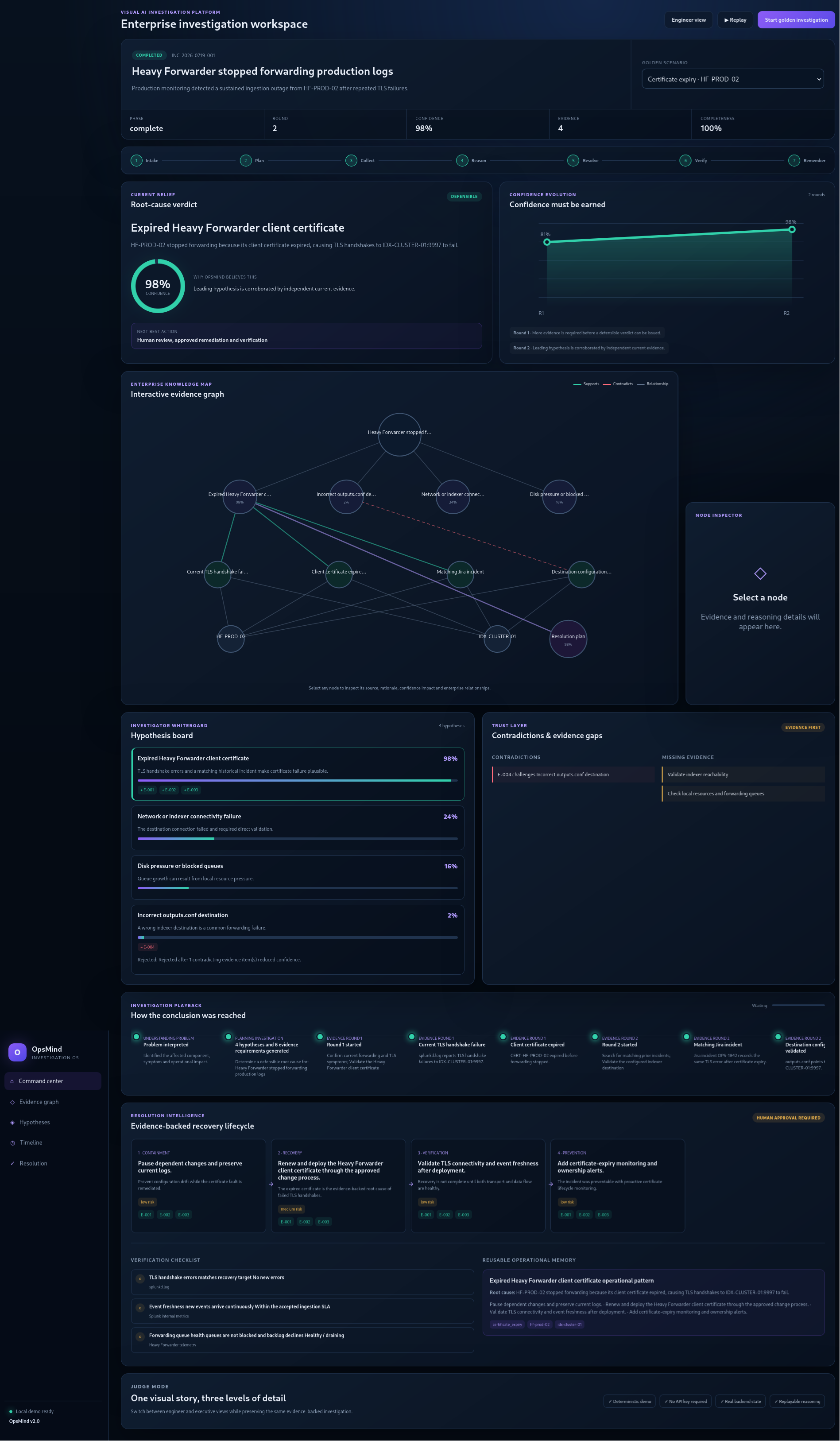
OpsMind transforms a simple incident description into a structured investigation.
The workflow is intentionally divided into two stages:
1. AI Planning
OpenAI analyzes the incident and generates a structured investigation plan by:
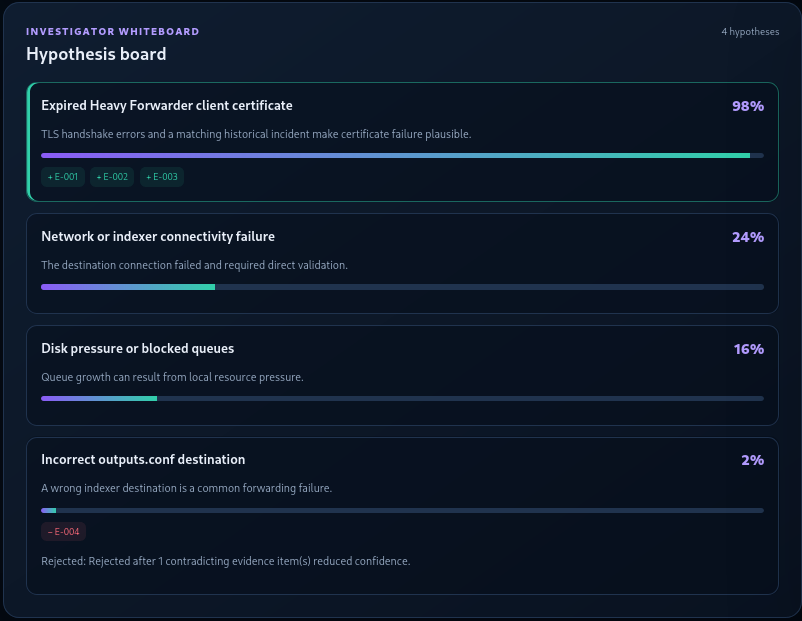
- Identifying possible hypotheses
- Determining what evidence should be collected
- Creating an investigation strategy
2. Deterministic Investigation
OpsMind then executes that plan by:
- Collecting evidence
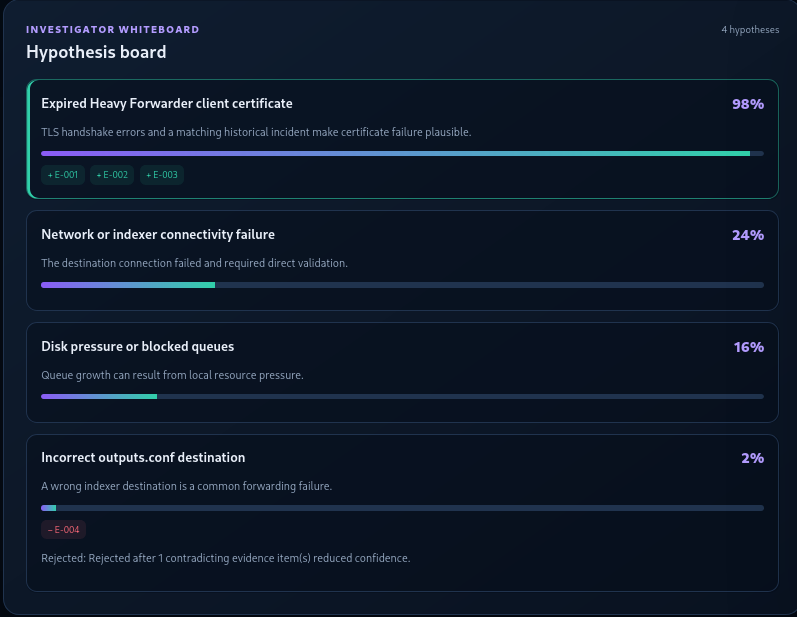
- Evaluating hypotheses
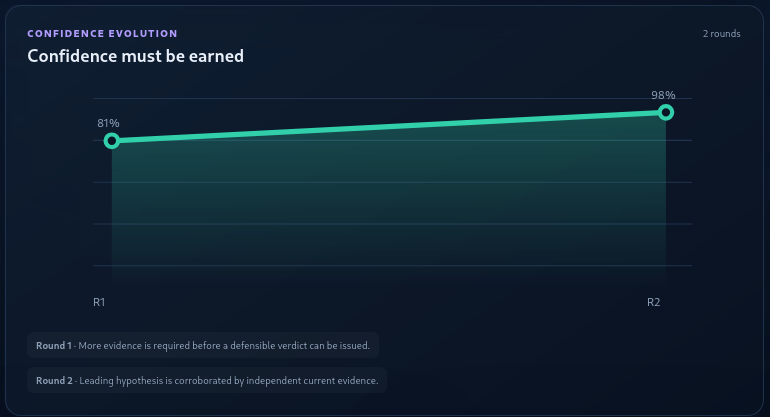
- Tracking investigation confidence
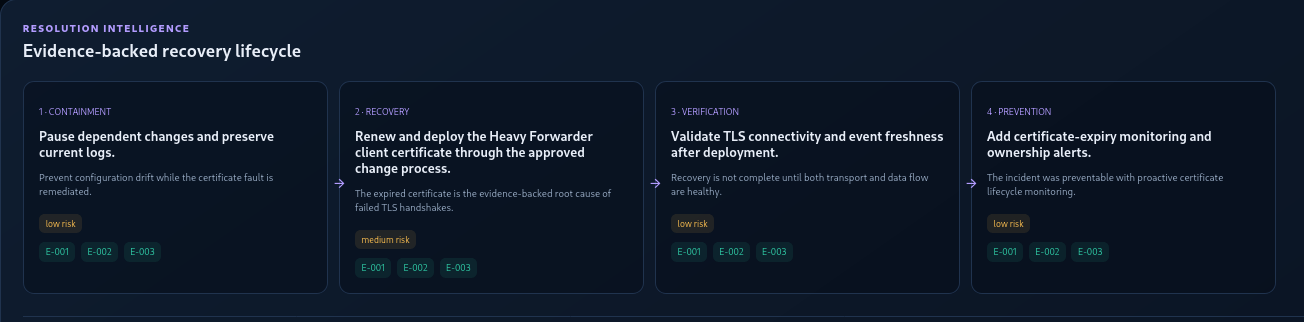
- Producing an evidence-backed investigation report
Instead of generating an answer immediately, OpsMind investigates first and concludes only after collecting sufficient evidence.
How we built it
OpsMind is built as a modular Python application with a deterministic investigation engine.
Technologies
- Python
- FastAPI
- OpenAI API
- Modular Investigation Engine
- Structured Investigation Reports
- Configurable Investigation Workflow
The architecture intentionally separates AI planning from investigation execution, making every investigation explainable and reproducible.
Investigation Philosophy
Rather than maximizing the number of retrieved documents, our goal is to maximize confidence supported by evidence.
Conceptually,
$$ Confidence = f(Evidence,\ Corroboration,\ Consistency) $$
where
- Evidence represents collected operational facts
- Corroboration measures agreement across multiple sources
- Consistency verifies whether new observations support existing findings
The investigation stops when sufficient trustworthy evidence has been collected rather than after retrieving a fixed number of documents.
Challenges we ran into
One of the biggest challenges was deciding how much responsibility should belong to the LLM.
Our initial design allowed the language model to reason throughout the investigation.
While this was flexible, it reduced transparency and made it difficult to explain why particular conclusions were reached.
We redesigned the architecture so that:
- OpenAI plans the investigation.
- OpsMind performs deterministic evidence collection.
- Confidence is derived from collected evidence instead of generated opinions.
Another challenge was designing the system so that future enterprise integrations can be added without changing the investigation engine itself.
What we learned
This project reinforced an important lesson:
Enterprise AI is not just about generating answers—it is about building trustworthy systems around AI.
Throughout the project we learned:
- How to separate planning from execution
- Why explainability matters in enterprise software
- The importance of deterministic workflows
- How structured evidence improves trust
- How modular architectures simplify future expansion
Perhaps the biggest lesson was that engineers trust evidence much more than they trust generated text.
What's next for OpsMind
Our long-term vision is to evolve OpsMind into an enterprise investigation platform capable of integrating with operational tools across an organization.
Future work includes:
- Native SIEM integrations
- Observability platform support
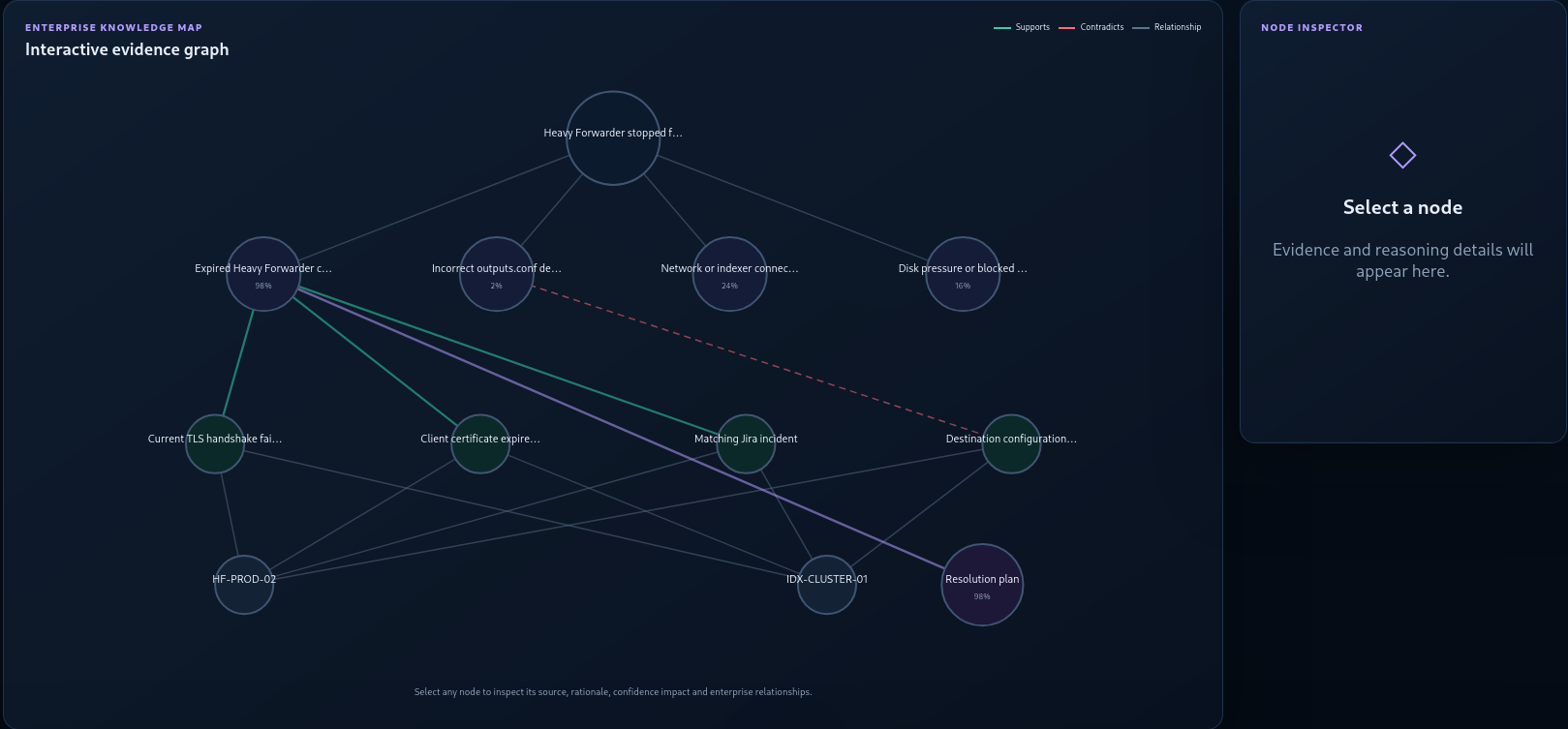
- Knowledge Graph powered investigations
- Multi-agent investigation workflows
- Historical incident correlation
- Human-approved automated remediation
- Investigation memory across incidents
Ultimately, we envision OpsMind becoming an AI teammate that investigates operational incidents using an organization's own knowledge while keeping engineers in control of every decision.
Why we're excited
We believe the next generation of enterprise AI won't simply answer questions.
It will investigate.
That is the future we hope to build with OpsMind.

Log in or sign up for Devpost to join the conversation.