Inspiration
Modern development teams spend too much time reacting to incidents instead of preventing them. When a production error happens, engineers often need to search through logs, trace stack traces, identify the root cause, and manually create fixes. We wanted to build an AI-powered SRE teammate that can perform these tasks automatically and reduce incident response time from hours to minutes.
What it does
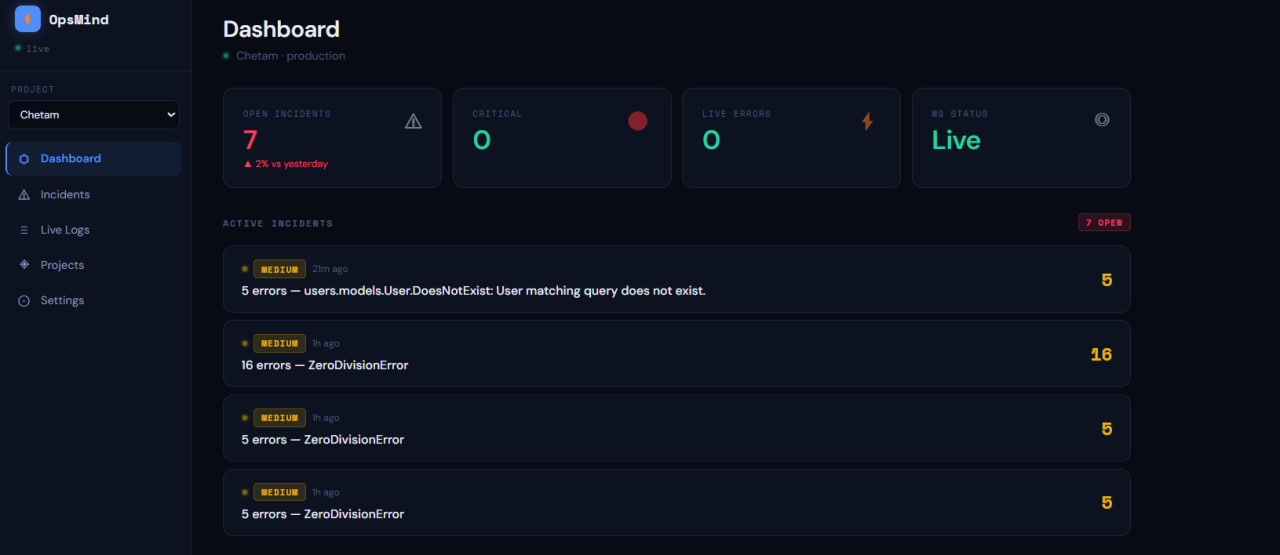
OPSMIND is an AI-powered incident response platform that continuously monitors applications and infrastructure.
When an error occurs, OPSMIND:
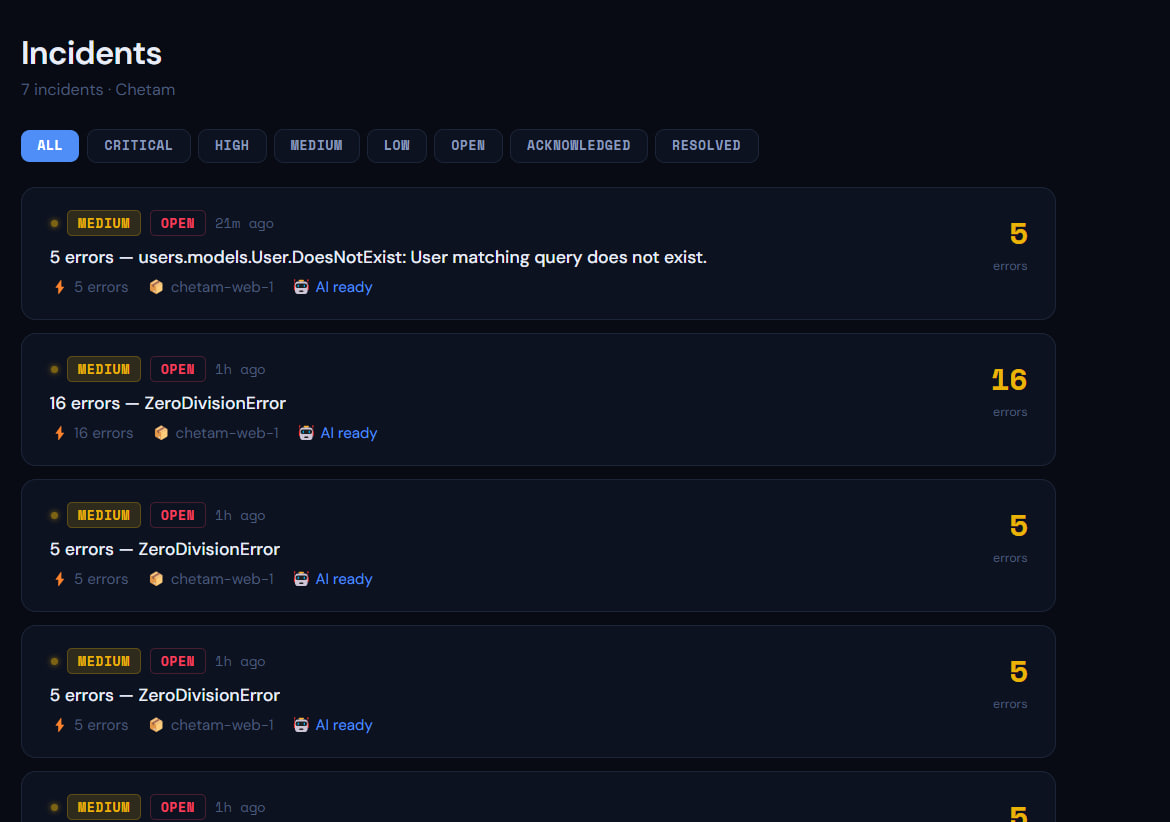
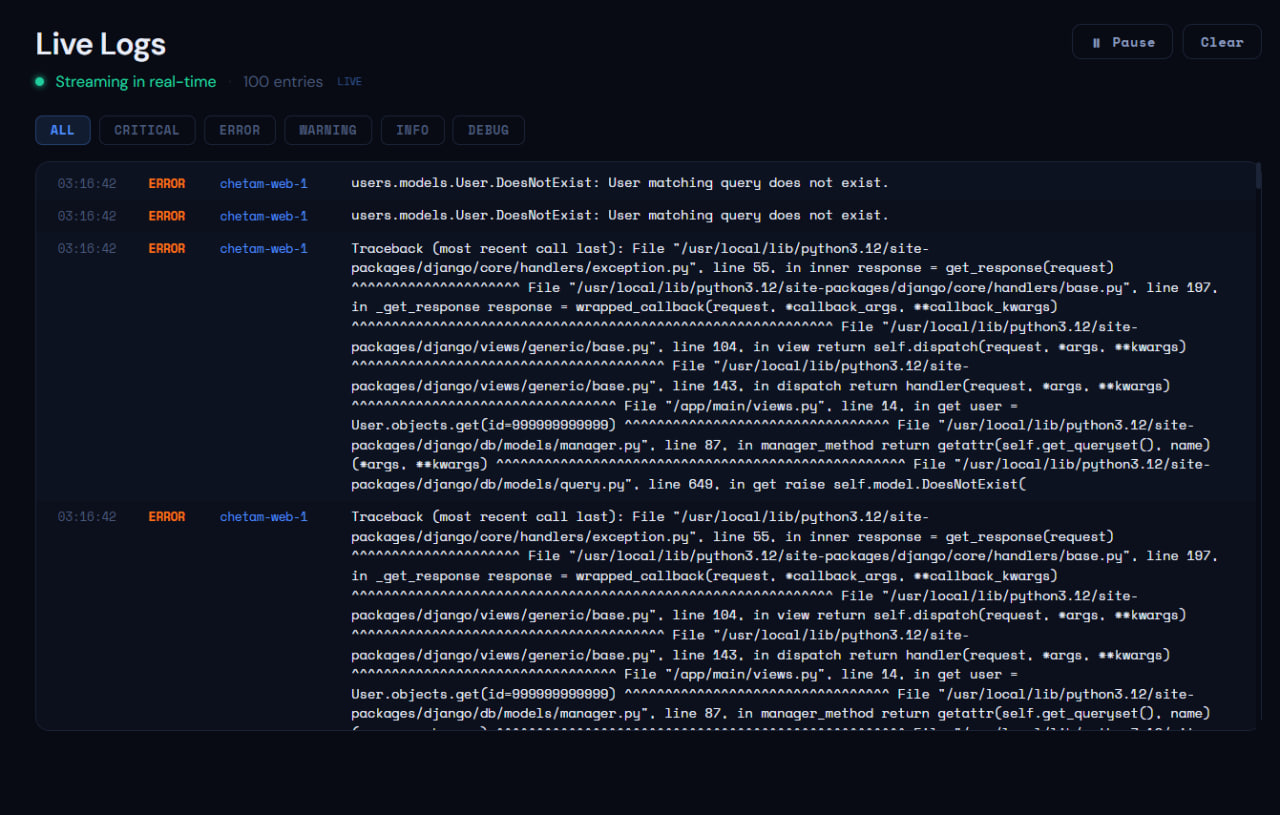
- Detects incidents in real time from logs.
- Groups related errors into incidents.
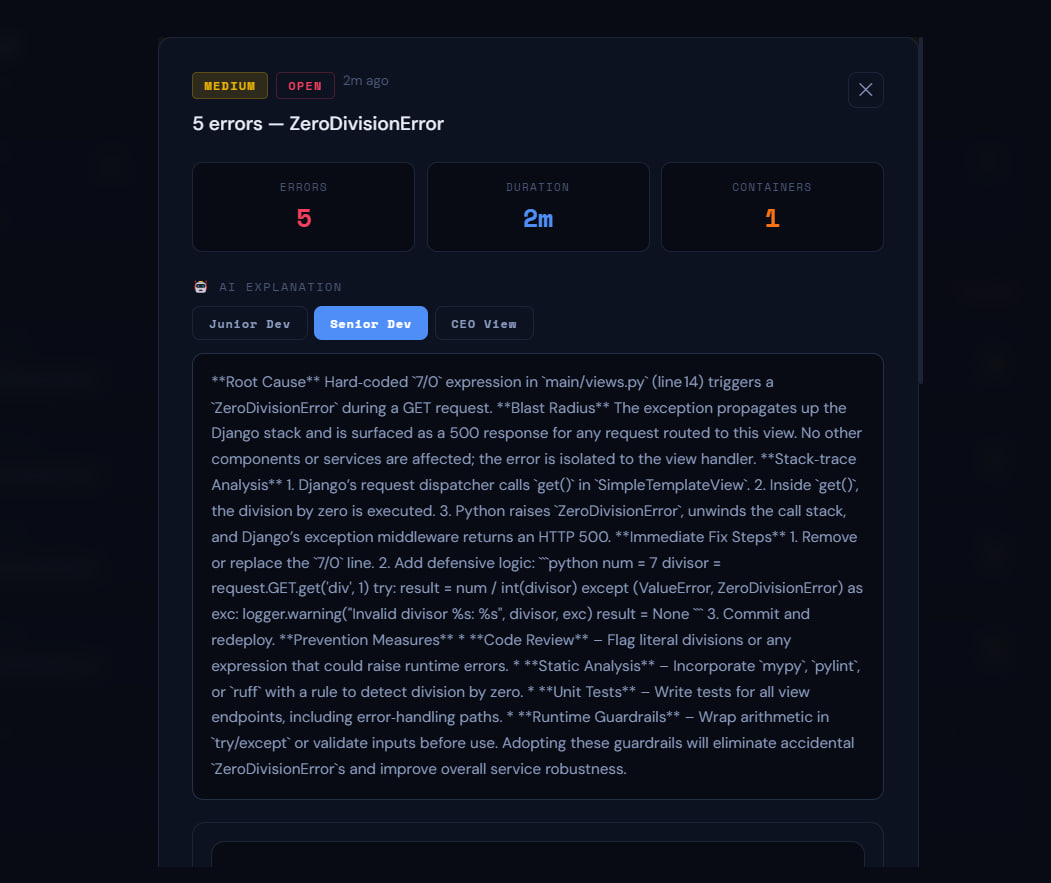
- Explains the issue for different audiences (Junior Engineer, Senior Engineer, CEO).
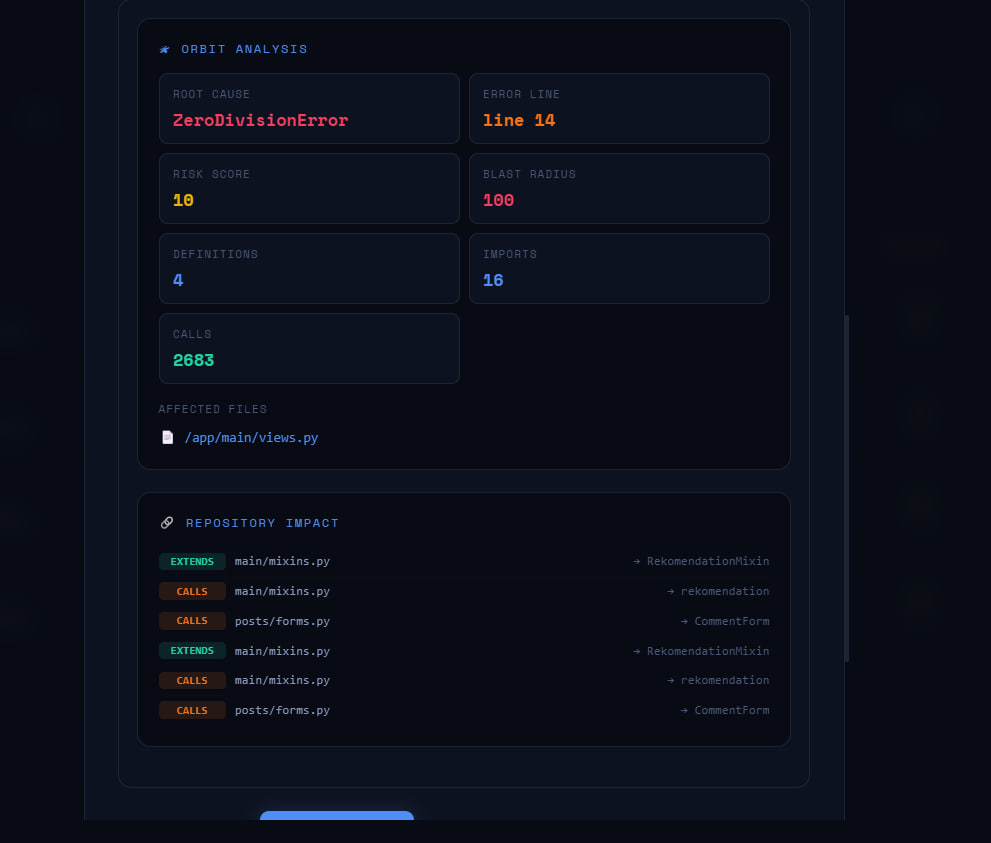
- Uses Orbit code intelligence to identify the root cause, affected files, and repository impact.
- Generates AI-powered code fixes.
- Creates GitLab merge requests automatically.
- Sends alerts through Telegram and Email.
The platform transforms raw production failures into actionable fixes.
How we built it
We built OPSMIND using:
- FastAPI for the backend API.
- PostgreSQL for incident and project storage.
- Redis for real-time event streaming.
- React for the dashboard UI.
- GitLab API integration for repository access and automated merge requests.
- Google Gemini for AI explanations and code generation.
- Orbit for repository indexing, dependency analysis, and impact assessment.
The system collects logs, analyzes incidents, enriches them with repository intelligence, and generates AI-assisted remediation workflows.
Challenges we ran into
One of the biggest challenges was connecting runtime incidents with repository-level code intelligence.
We had to:
- Parse stack traces accurately.
- Identify the real application file instead of framework files.
- Build repository graphs dynamically for different projects.
- Correlate production errors with source code locations.
- Generate safe code fixes without modifying unrelated files.
Another challenge was making the AI explanations useful for both technical and non-technical users.
Accomplishments that we're proud of
We successfully built an end-to-end autonomous incident response workflow.
Key achievements include:
- Real-time incident detection.
- AI-generated root cause analysis.
- Orbit-powered repository impact analysis.
- Automatic GitLab merge request generation.
- Multi-level explanations for different audiences.
- Telegram and Email alerting.
The platform can identify a production failure, locate the responsible file, explain the issue, and propose a fix with minimal human intervention.
What we learned
During development we learned:
- Advanced incident management workflows.
- Repository graph analysis using Orbit.
- Large-scale log processing techniques.
- AI-assisted software maintenance.
- Automated remediation pipelines.
- Building reliable integrations with GitLab and monitoring systems.
What's next for OPSMIND
Future plans include:
- Kubernetes-native monitoring.
- Multi-repository dependency tracking.
- Predictive incident detection.
- Automatic deployment validation.
- Support for GitHub and Bitbucket.
- AI-powered rollback recommendations.
- Deeper repository graph analytics using Orbit.
Our vision is to evolve OPSMIND into a fully autonomous AI Site Reliability Engineer capable of detecting, diagnosing, and resolving incidents before users are affected.
Built With
- alembic
- css
- fastapi
- html
- javascript
- postgresql
- python
- react

Log in or sign up for Devpost to join the conversation.