-
-
Final report
-
Working
Inspiration
When a production system goes down, engineers are flooded with logs, metrics, deployment histories, and alerts. Finding the actual cause often means jumping between multiple tools while the clock keeps ticking. I wanted to build something that could collect that evidence, connect the important pieces together, and help engineers understand what actually happened instead of making them search through thousands of log lines.
What it does
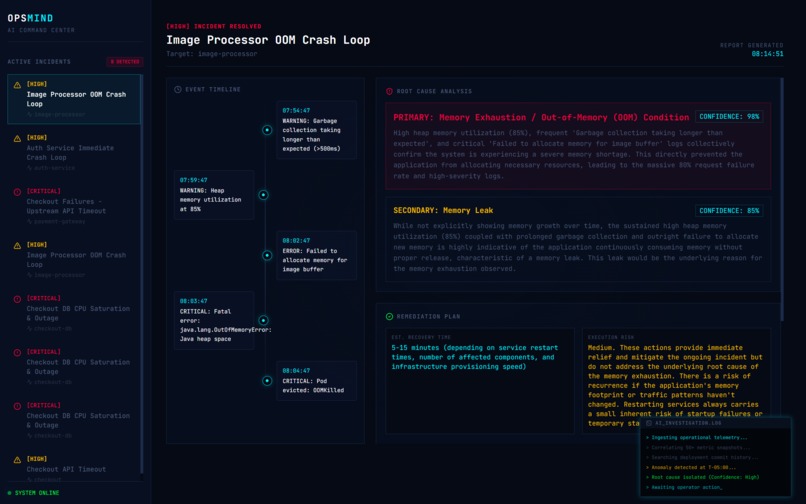
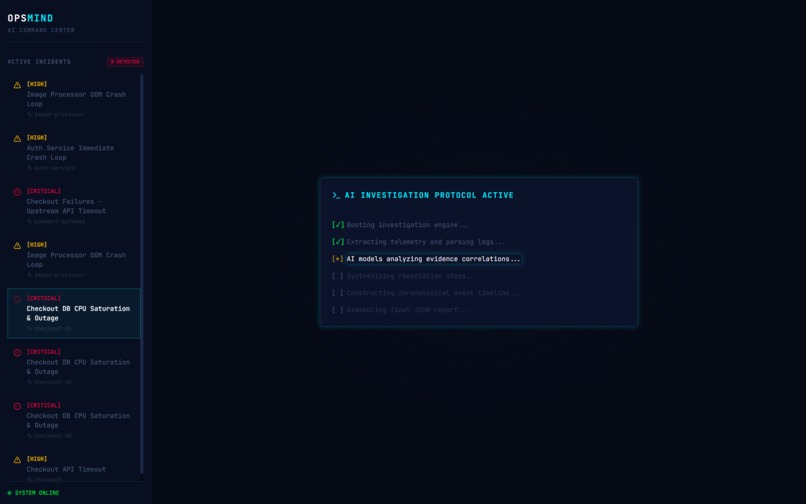
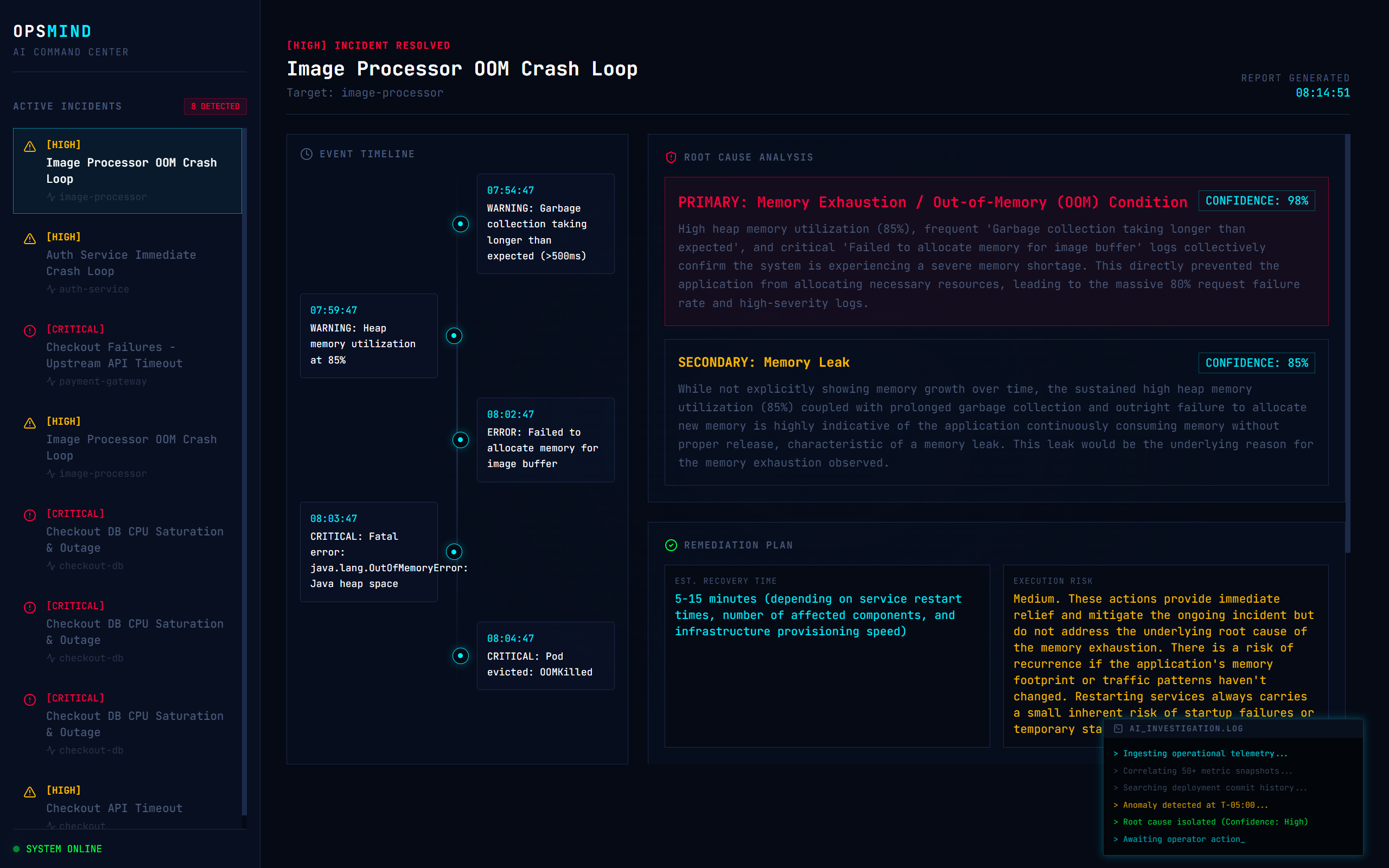
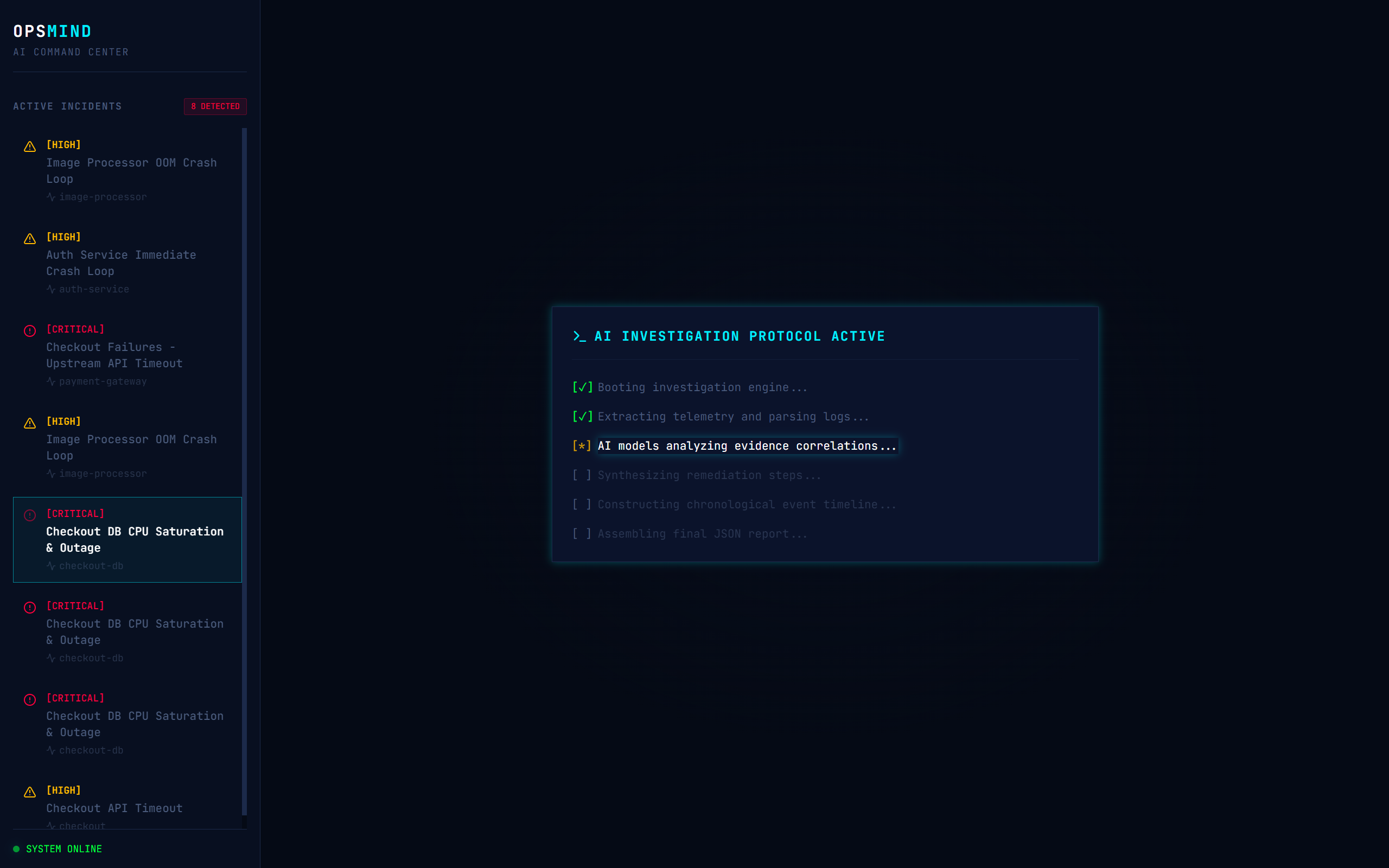
OPSMind is an AI-powered incident investigation assistant. It ingests incident data, extracts relevant evidence, correlates logs, metrics, and deployment information, and presents a structured explanation of the most likely root cause. Instead of replacing engineers, it helps them reach answers faster by organizing the investigation into a clear workflow.
How I built it
I built the backend using FastAPI and separated the project into modules responsible for incident ingestion, evidence extraction, and AI-powered analysis. The frontend was designed as a clean terminal-inspired interface that keeps the focus on the investigation instead of unnecessary UI elements. The goal was to make the experience feel like working with an intelligent incident response assistant rather than just another dashboard.
Challenges I ran into
The biggest challenge was connecting multiple pieces into one coherent investigation flow. Making AI responses feel useful instead of generic required careful prompt design and evidence organization. I also had to balance speed with presentation since the project was built during a hackathon with limited time.
Accomplishments that I'm proud of
I'm proud that OPSMind became a complete end-to-end prototype instead of just a concept. It accepts incident information, processes evidence, generates AI-assisted analysis, and presents everything through a polished interface. Finishing both the backend and frontend, along with a complete demo, within the hackathon timeframe was a huge milestone for me.
What I learned
This project taught me how to design AI systems around workflows instead of isolated prompts. I learned a lot about structuring FastAPI applications, organizing evidence for LLMs, and building interfaces that communicate complex technical information clearly. Most importantly, I learned how much can be accomplished by keeping the scope focused and executing well.
What's next for OPSMind
There are plenty of directions I'd like to explore. Future versions could integrate directly with monitoring platforms, log aggregation tools, and cloud providers to automate evidence collection. I'd also like to improve the reasoning engine, support collaborative investigations, and generate richer incident reports that teams can use during postmortems.


Log in or sign up for Devpost to join the conversation.