-
-
OpsGuardian: AI DevOps Copilot with Guardrails
-

OpsGuardian Architecture: Secure AI Execution Pipeline
-
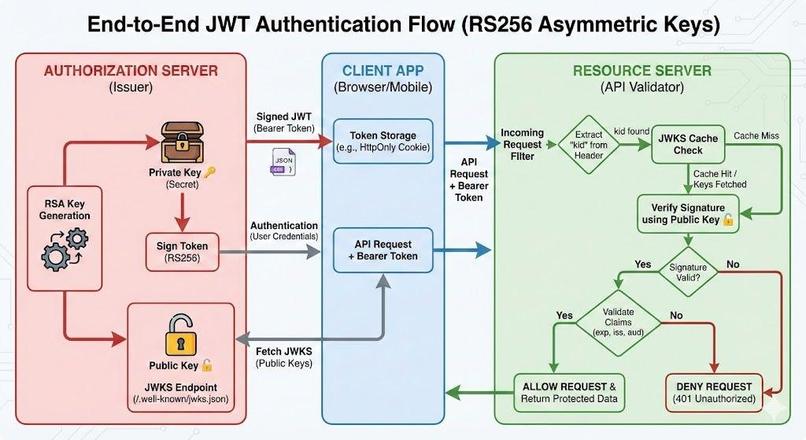
OpsGuardian Security: Blueprint
-
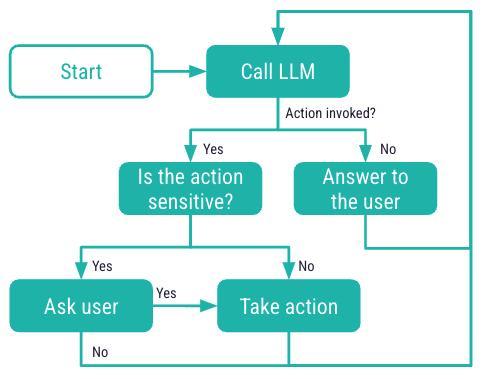
OpsGuardian: Logical flow

Inspiration
Most AI Agents have too much power. I built OpsGuardian to prove that we can have AI-driven automation without sacrificing enterprise security standards.
In DevOps, even a simple command like "restart service" can cause serious issues if executed without checks. Most AI tools focus on what can be done, but not whether it should be done.
We asked:
$$ How\ can\ AI\ safely\ execute\ real\ actions\ in\ production? $$
OpsGuardian was built to solve this.
What it does
OpsGuardian is an AI-powered DevOps copilot that executes tasks using natural language while enforcing security and safety.
It can:
- Understand natural language commands
- Convert them into structured actions
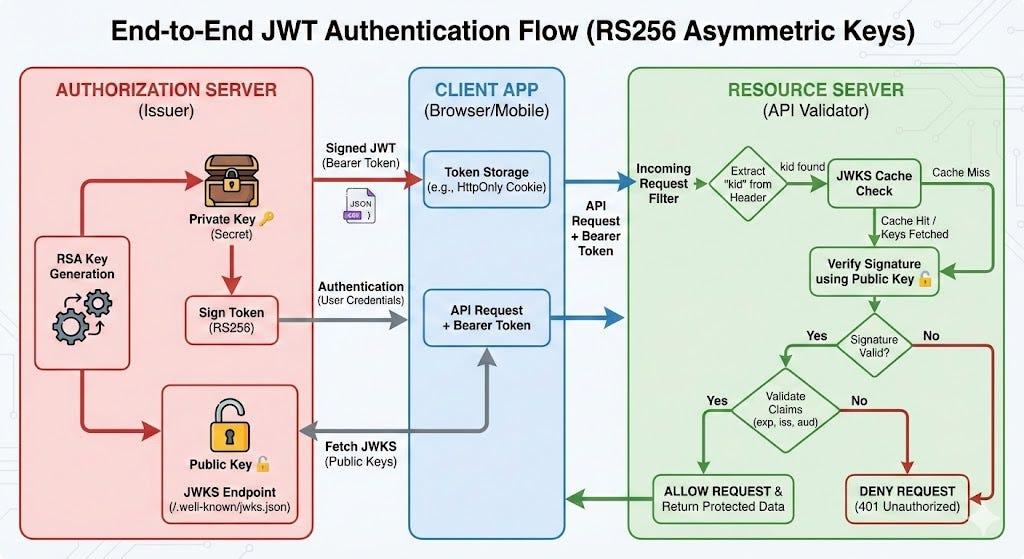
- Validate users via Auth0 (JWT)
- Enforce RBAC permissions
- Apply policy checks before execution
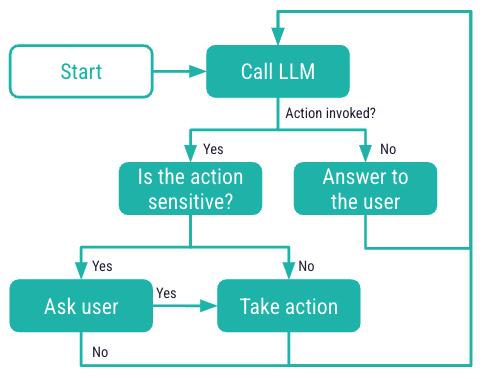
- Require confirmation for risky actions
- Execute tasks via DevOps tools
- Show step-by-step reasoning
Flow:
$$ User \rightarrow LLM \rightarrow Policy \rightarrow RBAC \rightarrow Execution $$
How we built it
Backend:
- Spring Boot (Java)
- REST APIs
- Agent service for orchestration
AI Layer:
- LLM converts input into: $$ (action,\ target,\ reasoning) $$
Security:
- Auth0 JWT validation
- RBAC enforcement
Agent System:
- Planner + Executor
- Policy engine: $$ ALLOW,\ WARN,\ CONFIRM,\ BLOCK $$
Frontend:
- JavaScript chat UI
- Real-time reasoning display
Integrations:
- GitHub
- Simulated DevOps APIs
Challenges we ran into
- Preventing unsafe AI execution
- Converting flexible language into reliable actions
- Integrating RBAC with AI decisions
- Balancing safety with usability
Key challenge:
$$ Safety + Usability \neq Friction $$
Accomplishments that we're proud of
- Built a real AI agent with guardrails
- Integrated Auth0 for secure execution
- Implemented transparent reasoning
- Added human confirmation for risky actions
- Designed scalable architecture
What we learned
- AI agents must be treated as privileged systems
- Security must be built-in from the start
- Transparency builds trust
$$ Trust = Transparency + Control $$
What's next for OpsGuardian AI
- AWS integrations
- Session memory
- Streaming responses
- Advanced policy engine
Vision:
$$ AI = Intelligence + Security + Explainability $$
Bonus Blog Post
Building OpsGuardian started with a simple question: what happens when AI is allowed to take real actions in production systems? Most AI demos focus on intelligence, but very few address what happens after the decision is made. That gap became the foundation for this project.
Early on, the biggest challenge was trust. It’s easy to build an AI that suggests actions, but much harder to build one that executes them safely. This led to a key design decision: every AI action must pass through a strict security pipeline before execution. Integrating Auth0 was central to this approach. Instead of treating authentication as a separate concern, we embedded it directly into the agent flow, ensuring that every decision is tied to a verified identity and permission set.
Another challenge was balancing autonomy and control. We didn’t want to completely block high-risk actions, but we also couldn’t allow unrestricted execution. The solution was a policy engine that introduces a “confirm” layer, enabling human-in-the-loop validation for sensitive operations like service restarts or scaling.
One key learning was how token-based systems shape AI behavior. By leveraging JWTs and RBAC, the agent doesn’t just act—it acts on behalf of a user, within clearly defined boundaries. This creates a strong foundation for integrating secure token management solutions like Auth0 Token Vault, which can be used to safely store and retrieve third-party API credentials for systems like GitHub or cloud providers without exposing secrets.
OpsGuardian represents a step toward production-ready AI agents—systems that are not only intelligent, but also secure, explainable, and accountable.
Built With
- ai-agents
- auth0
- github-api
- java
- javascript
- jwt
- llm
- natural-language-processing
- rbac
- rest-ap
- spring-boot

Log in or sign up for Devpost to join the conversation.