Inspiration
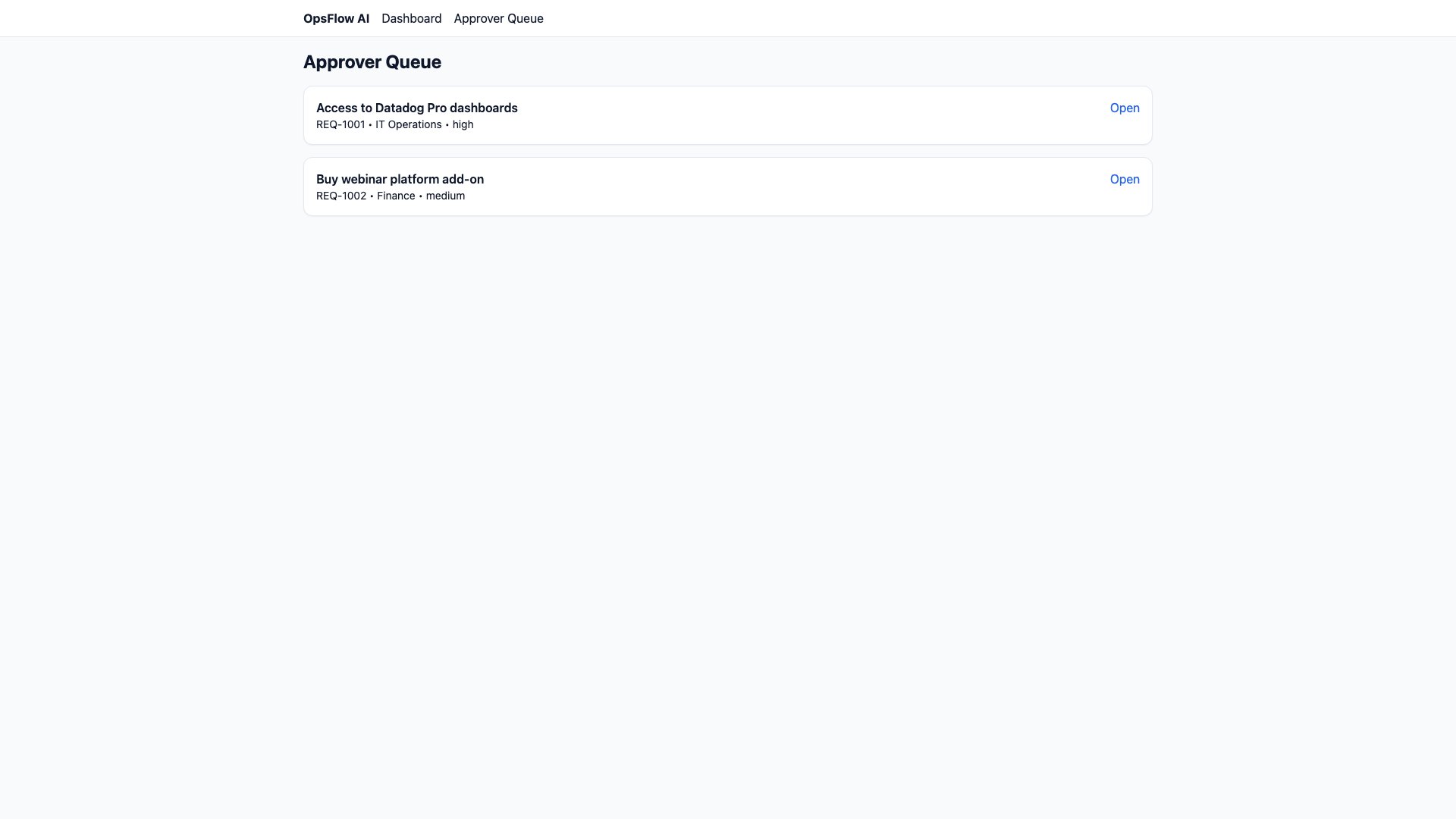
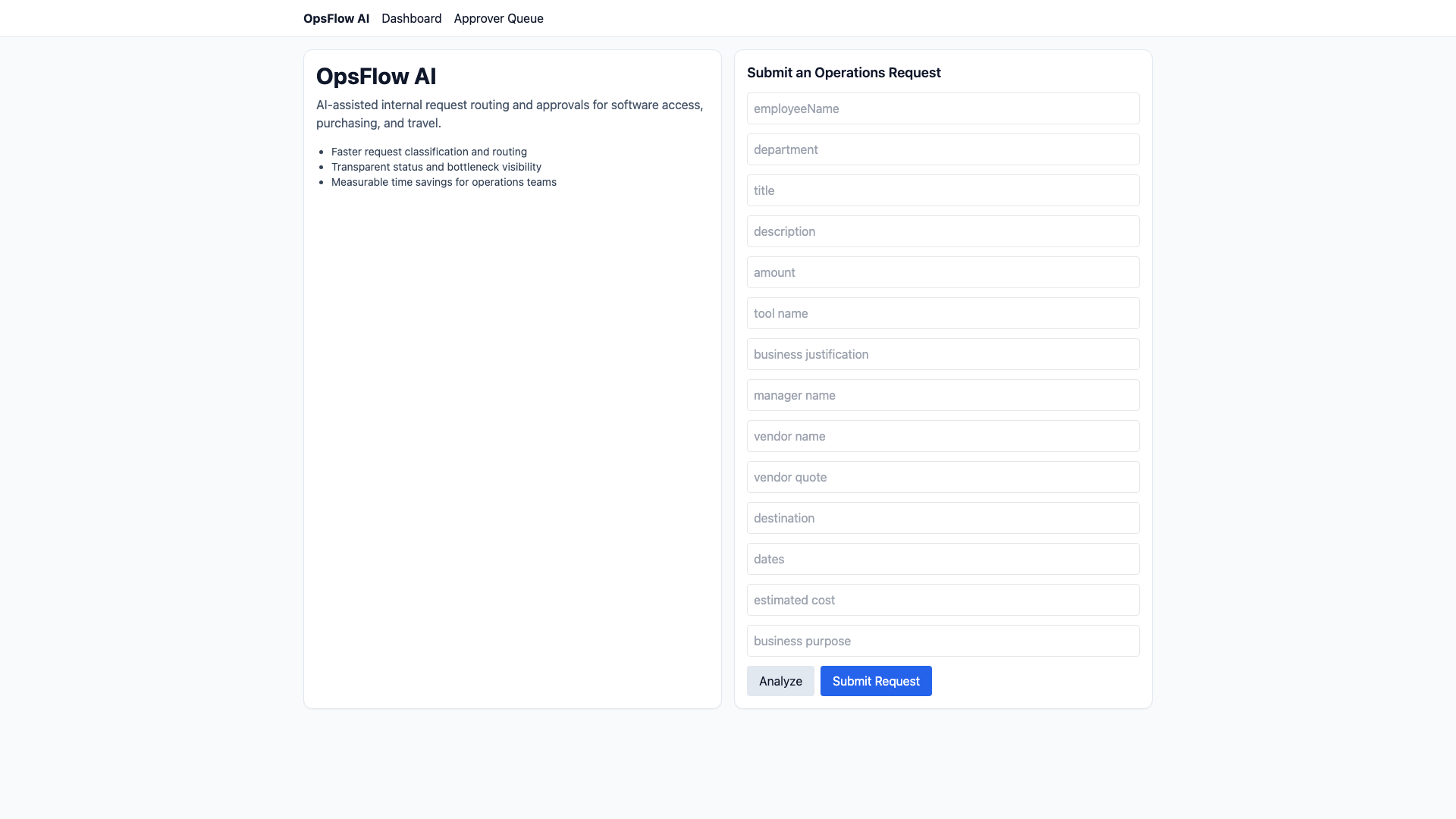
Operations teams at fast-growing companies often become the silent bottleneck of the organization. We observed that for every request, be it software access, a new monitor, or conference travel, there was a triage tax: hours wasted on back-and-forth emails, manually classifying requests, and chasing down missing info. We wanted to build something that felt less like a static form and more like an intelligent assistant that knows what you need before you even finish typing.
How we built it
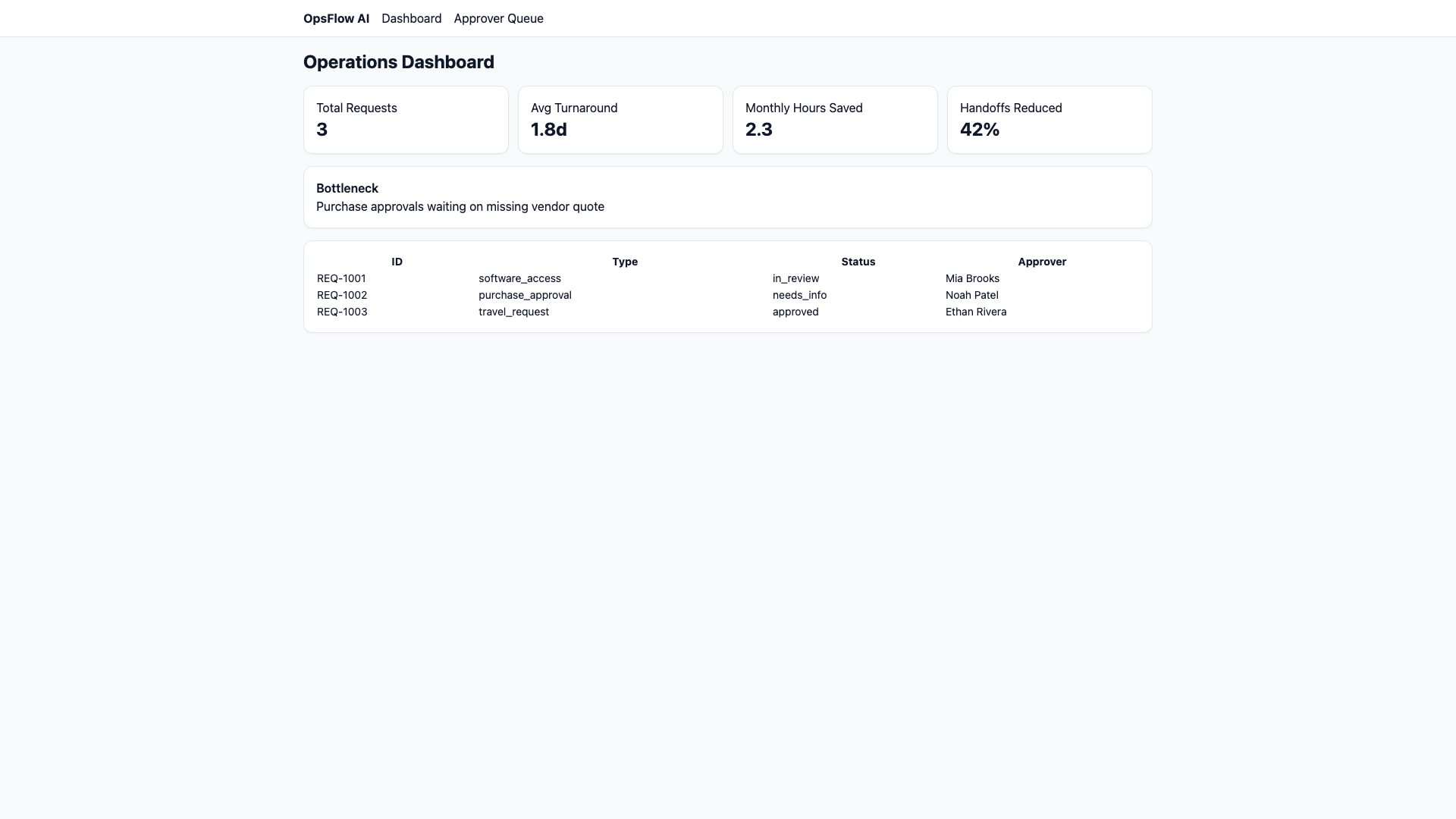
We built OpsFlow AI using Next.js 15 (App Router) for a high-performance frontend, styled with Tailwind CSS. The brain of the application leverages NVIDIA NIM (Llama 3.3 70B Instruct) for real-time analysis. We implemented a dynamic form system that injects specific fields based on AI-detected intent, and our workflow engine provides real-time ROI tracking by calculating efficiency gains against our baseline triage metrics.
Challenges we ran into
The biggest challenge was moving from deterministic regex matching to a robust, LLM-based triage system without sacrificing the stability required for internal tools. We solved this by implementing a structured-JSON response format with strict fallback mechanisms, ensuring that even if the AI is unreachable, the system reverts to high-performance, local deterministic rules.
What we learned
We learned that the transition from rule-based logic to LLM-orchestrated workflows is fundamentally about trust. By combining deterministic routing with AI-driven intent extraction, we could guarantee reliability while gaining the flexibility to handle complex, human-like requests. Integrating NVIDIA NIM taught us that low-latency AI inference is the final piece of the puzzle for creating truly "live" UI experiences.
Built With
- next.js
- nvidia
- react
- tailwind
- typescript
- vercel
- zod

Log in or sign up for Devpost to join the conversation.