-
-
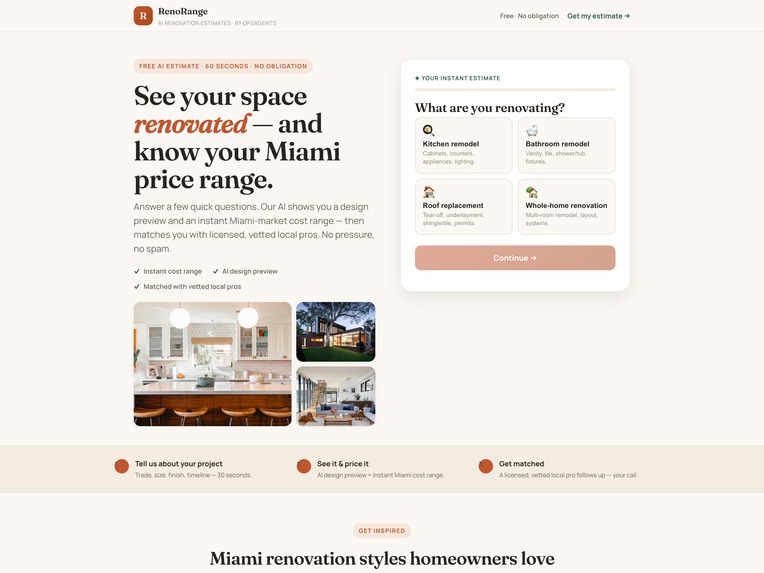
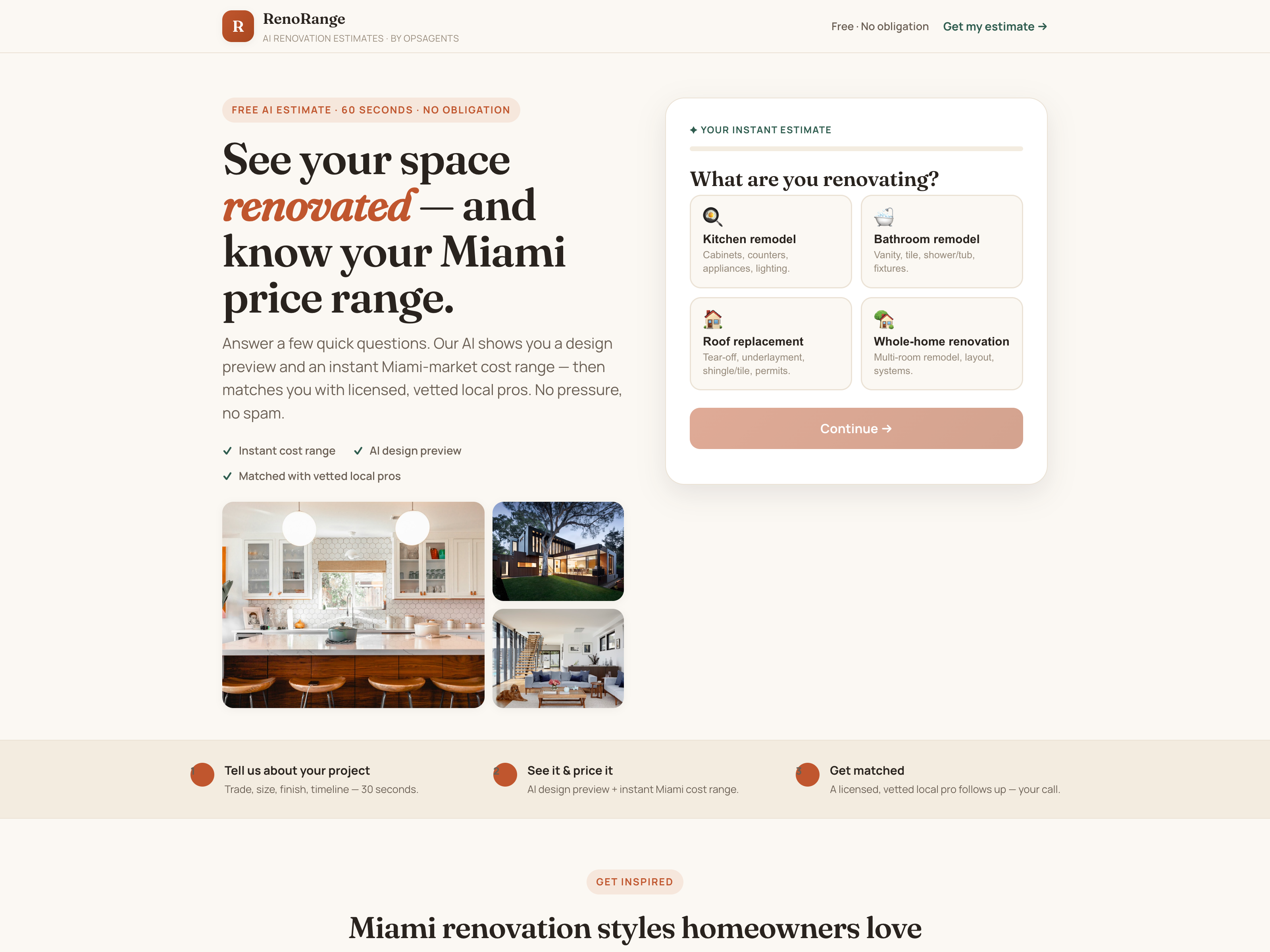
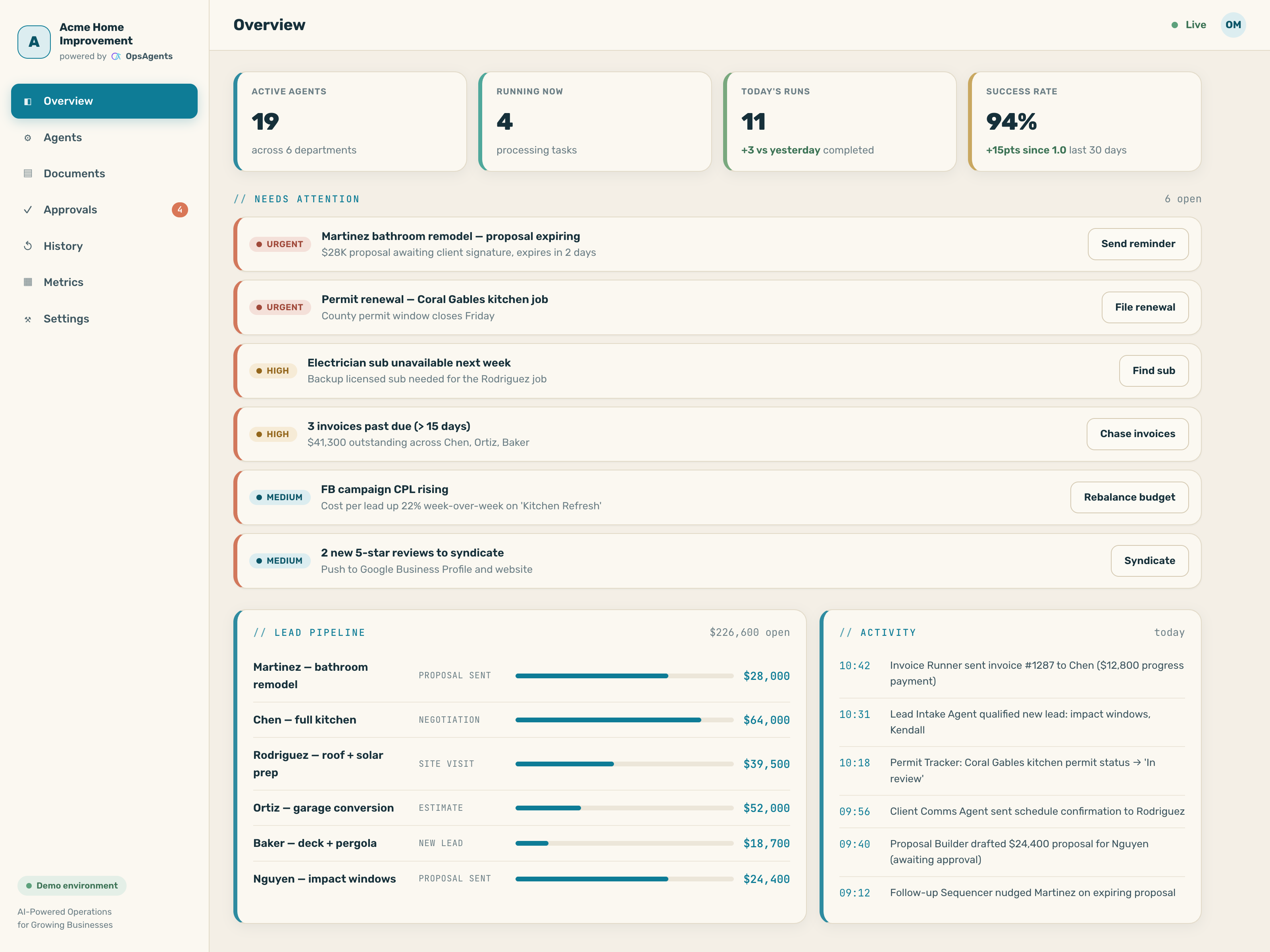
https://opsagent-reno-funnel.web.app
-
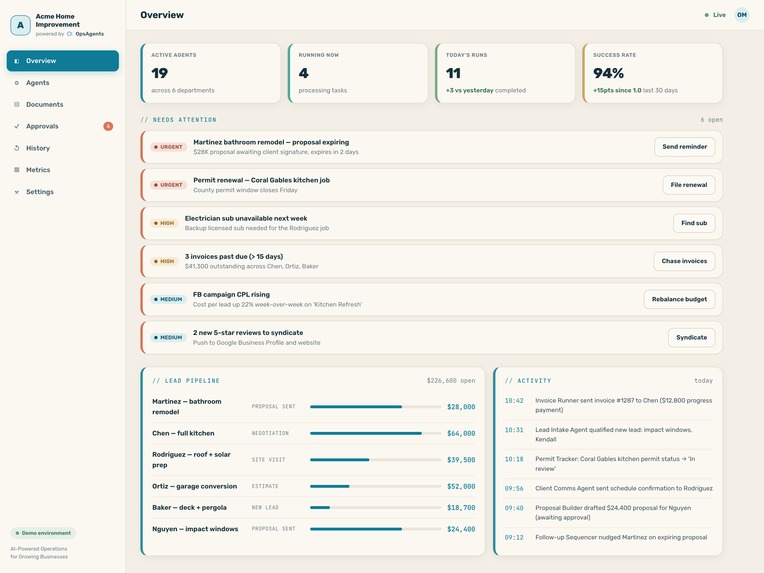
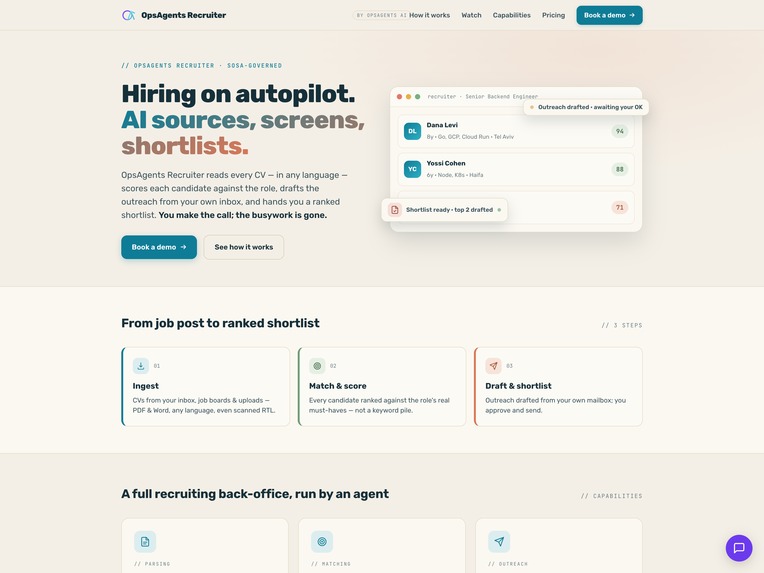
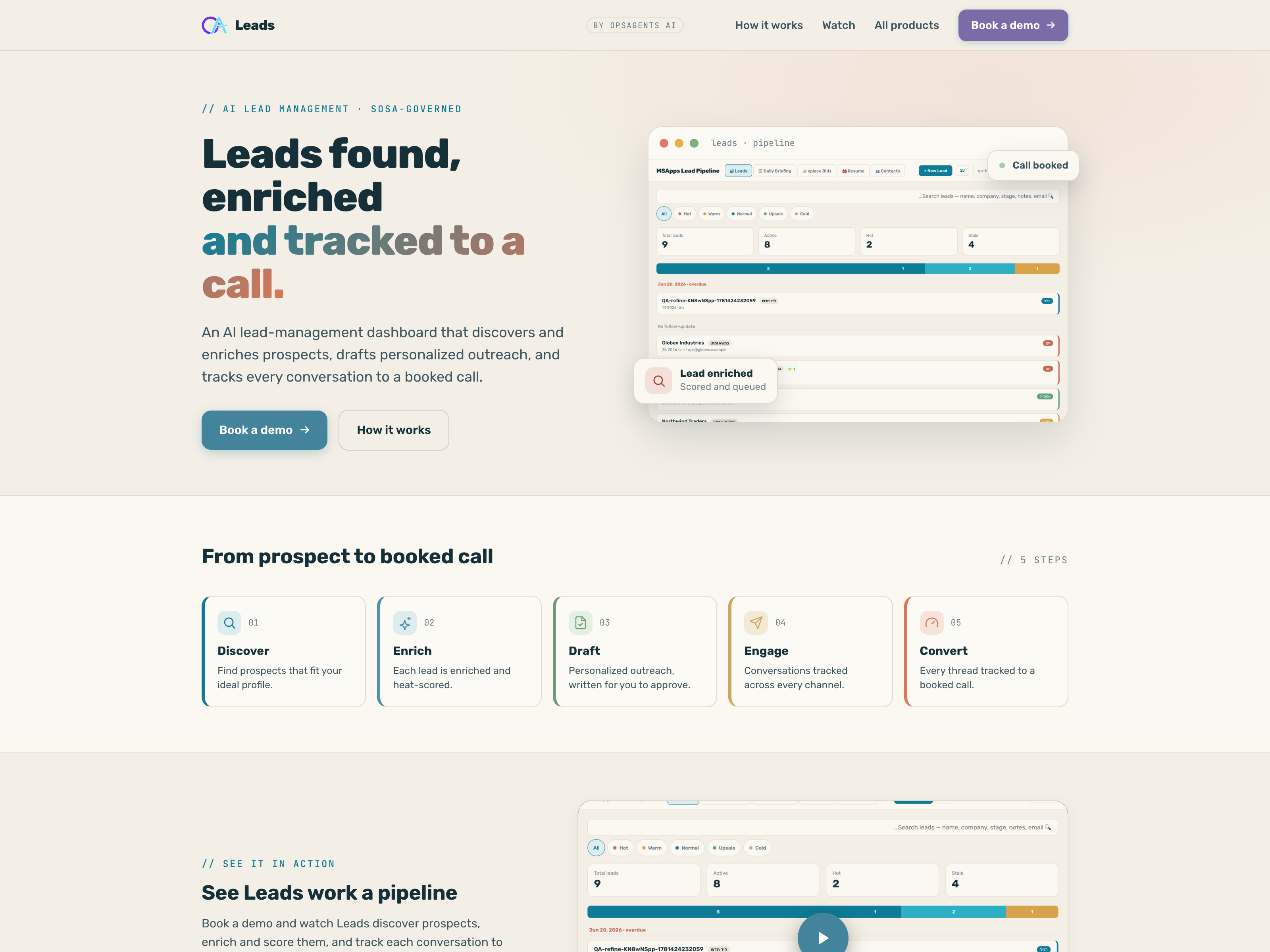
https://leads.opsagents.agency
-
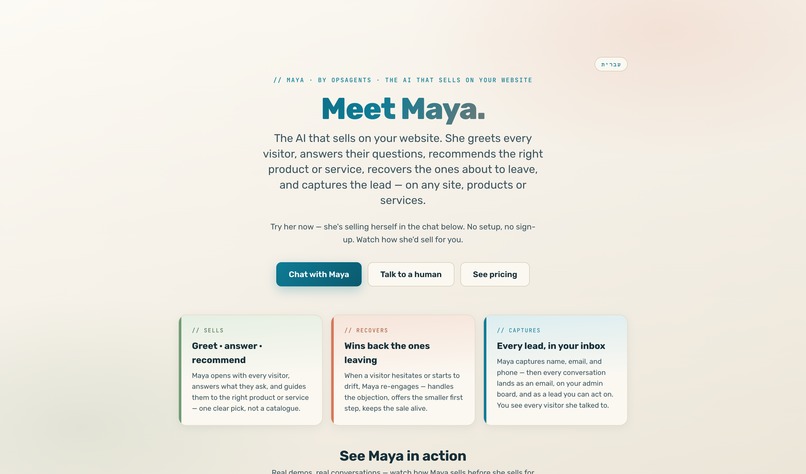
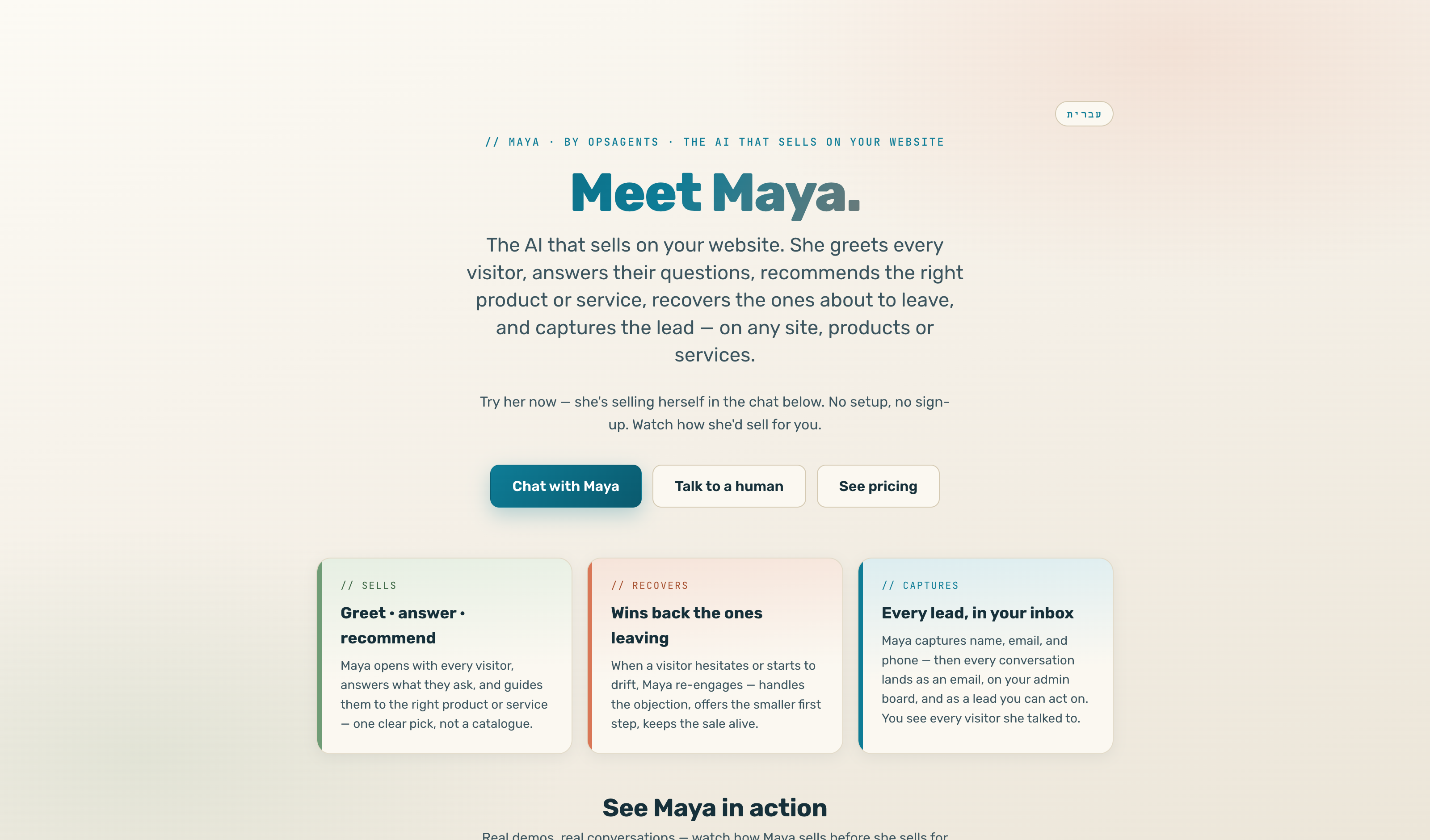
https://maya.opsagents.agency
-
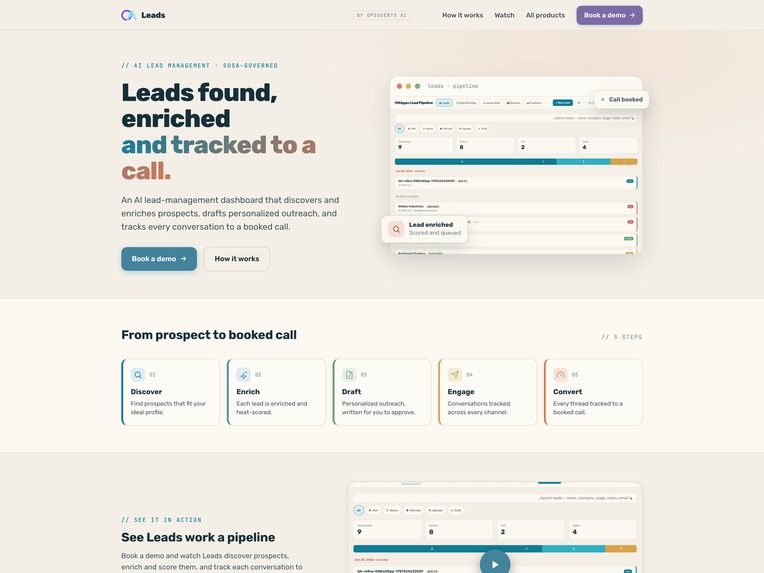
Our AI first CRM. Can use as standalone or plug and play integration to of our partners CRM
-
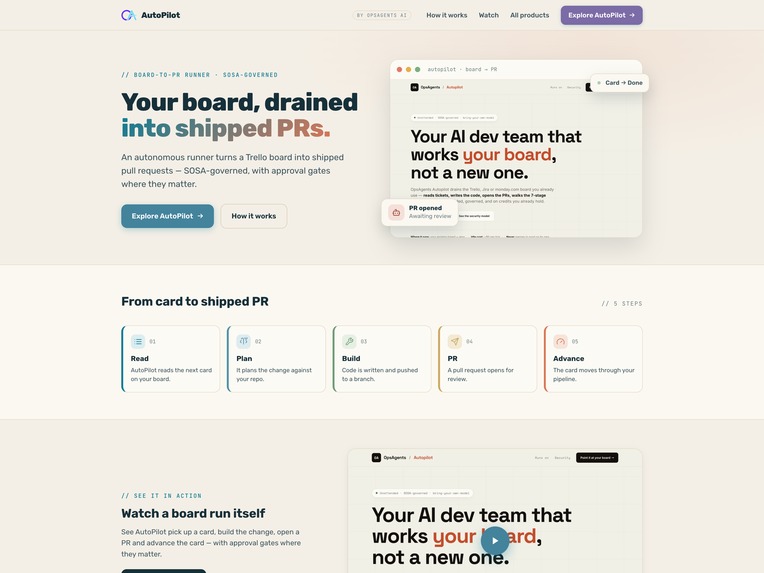
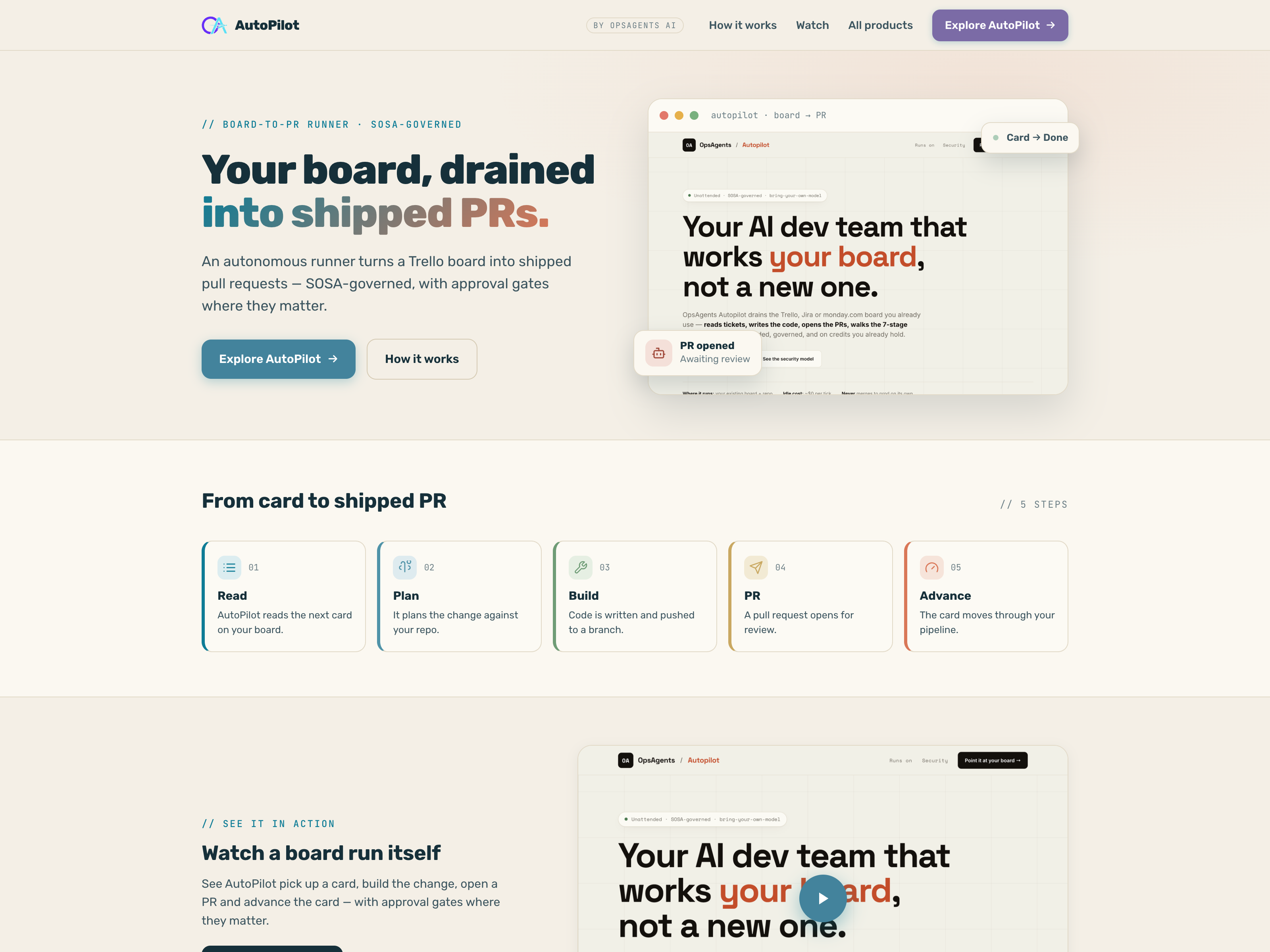
https://opsagents.agency/autopilot
-
AutoPilot - drain your coding tasks, save 60% time and money
-
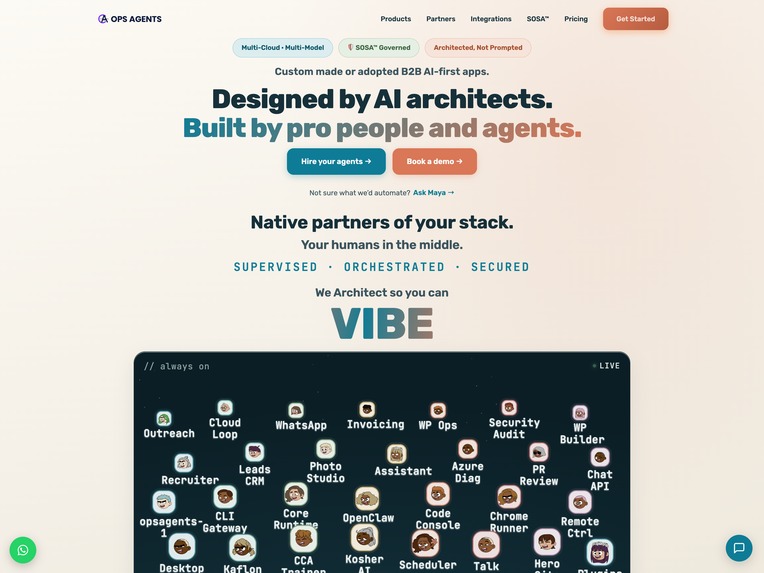
https://opsagents.agency
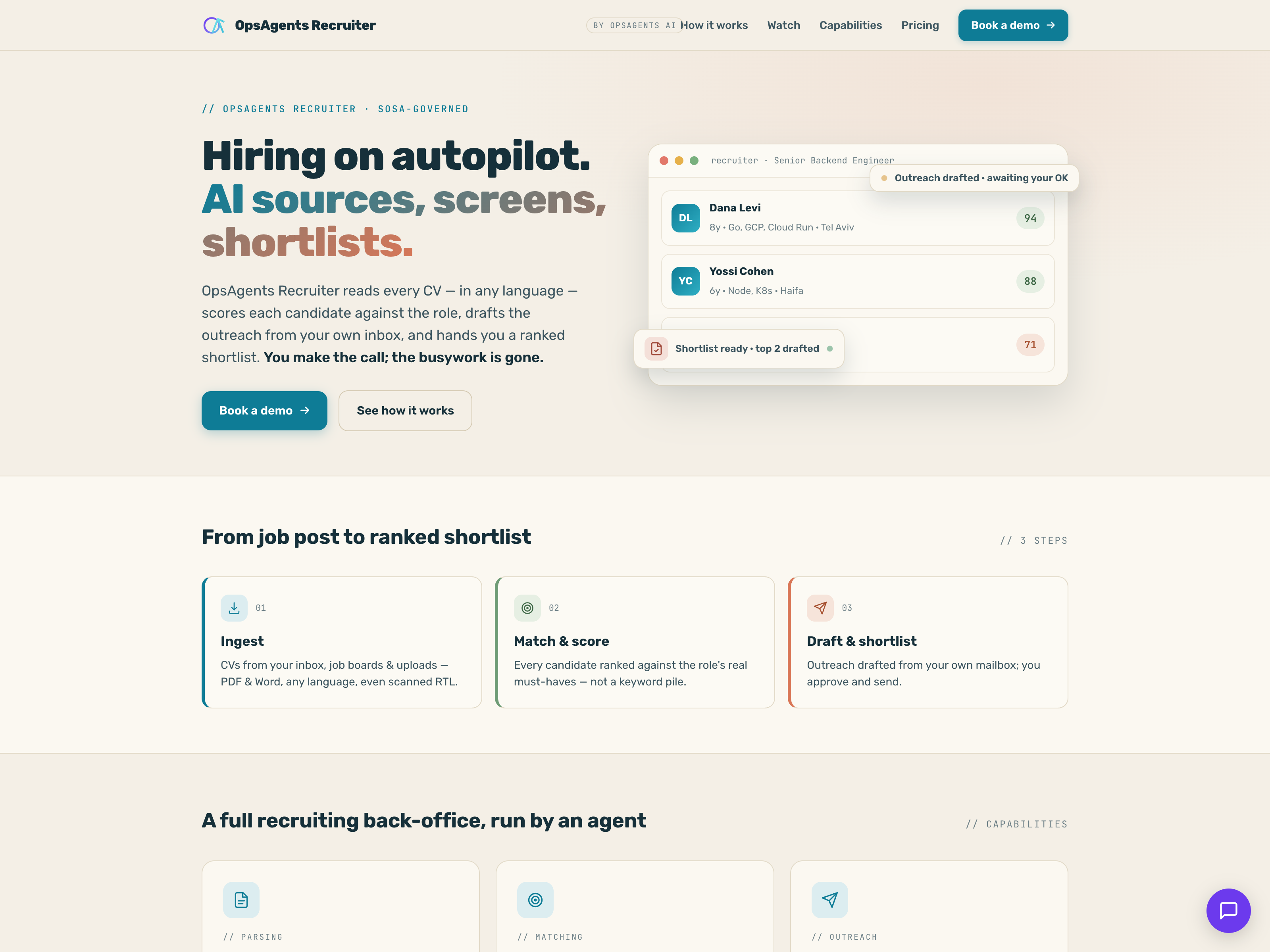
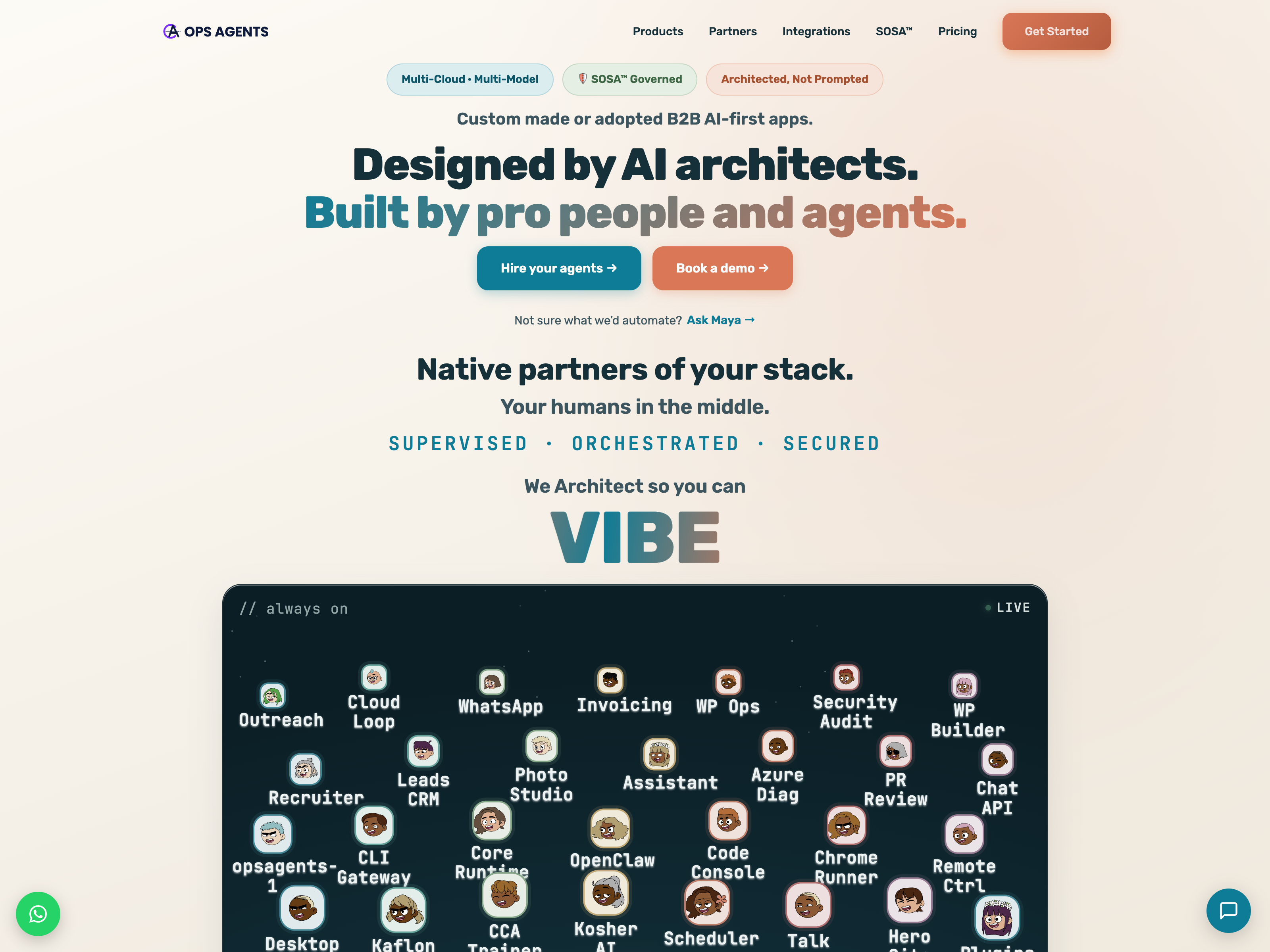
Start with the number that hurts
Under your definition — arms-length revenue from customers new in this window — my number is small, and one anchor customer carries almost all of it. I am not going to dress that up. You said revenue gets verified, and I would rather you hear it from me than find it. Every figure in the financial fields is disclosed as related-party, and our invoicing-entity mismatch is disclosed in writing rather than buried.
That is the honest floor. Here is what I built standing on it.
What OpsAgents is
OpsAgents is a software company operated by AI agents rather than staffed by employees. Bootstrapped — no venture capital, no seed round, no outside money at all. One founder sets direction and owns every irreversible decision; everything else is executed by a fleet of AI agents running continuously on Google Cloud, with Gemini on Vertex AI as the decision surface.
The loop: Maya, Leads, AutoPilot
We are not submitting a catalog. We are submitting one closed operating loop.
Maya is the front door — an AI concierge that lives on a business's website, greets every visitor, answers real questions about the real product, recovers the ones about to leave, and captures the lead. Public and usable today.
Leads is the qualifier: Gemini scores and enriches every lead the moment it lands, routes it, and drafts the follow-up and the proposal.
AutoPilot is the operator. Once a lead converts, autonomous pipelines run the delivery work end to end. This is the product behind Smart Link Logistics (Masa Kal), our anchor design partner, where agents took over coordination that previously required paid humans and cut project cost by roughly 60%. Smart Link contracts and is invoiced through Ford Municipal Systems Ltd (VAT 512024654) — so the name on the invoice differs from the name in this narrative, and I would rather state that here than have you wonder.
Capture, qualify, operate. Every edge feeds the next, all of it on Gemini and Google Cloud.
The company itself runs on the same machine
The unusual claim is not that we sell AI products — it is that the company selling them is agent-operated. Product development runs on a 30-minute autonomous cadence. Agents pick a Trello ticket, write the code, open a pull request, pass Gemini-powered review gates, deploy to staging through GitHub Actions, run Playwright QA against a real browser, and promote to production — at night, on weekends, through holidays. We run a "Shabbat autopilot" specifically so the company keeps shipping during the 26 hours the founder is unreachable. The back office runs the same way: agents issue legally final Israeli tax documents through iCount, chase collections, and handle client communication over email, WhatsApp and LinkedIn.
The seam that makes it real is cli-gateway — roughly 30 real command-line tools exposed as authenticated, audited cloud endpoints, so an agent takes an action and it lands in the actual system: gcloud, gh through keyless Workload Identity Federation, bq, Trello, iCount, Shopify, Google Workspace. Without that layer, "AI runs the business" is a slide. With it, it is an audit log.
What 90 days actually taught us
We started this window believing we sold AI software. We finished it knowing we sell demand.
Every customer conversation converged on the same thing: they did not want another dashboard, they wanted more qualified leads and less human coordination between the lead and the money. So we turned the machine on that problem, and marketing stopped being how we found customers and became a product line — the same agents that ship code now run content, engagement and AI-search visibility as a service.
Then we followed the demand geographically. This month we hired our first employee to open a Miami branch — bootstrapped, out of revenue, no outside capital. Not to do the work the agents do, but to be the human in a market where trust is local and in-person. He lands there this month. That is the shape of this model: agents scale the delivery, humans open the doors.
Miami is also where we picked our sharpest vertical. We studied that market and chose home-improvement contractors — a fragmented industry that lives and dies on lead flow — and built the funnel for it: a homeowner uploads a photo of their space, Gemini's image model renders the renovation, an LLM prices it against real market rates, and the qualified lead lands in the contractor's command centre. It is live today, built before we have a single Miami customer, because that is how fast the machine turns a decision into a product.
Two more vertical builds landed inside the same window. One is a design-studio product for a product designer. The other began as a tax-preparation pipeline for an expat accounting practice and became the product I am most certain about: two adversarial agents — one prepares the return, one attacks it — behind an eval harness that gates every ship and a nightly loop that keeps a lesson only if it beats the baseline.
And then a customer told us we had built the wrong half. The practice did not want the preparation. They wanted the review. Preparation is licensed, slow and crowded; review is none of those, and nobody gets a second opinion on the most expensive form they sign all year. So the next product is the reviewer, standalone, for individuals — upload the return you already have and an adversarial AI tells you what your preparer missed. It does not file for you, which is a far lighter posture than being preparer of record. The engine runs today; the consumer packaging is what we are building next.
That is the only real market correction we got this window, and it is worth more than the roadmap it replaced.
Neither counts as revenue here. Both prove the machine repeats across verticals without hiring per vertical.
Jobs and economic opportunity beyond the founding team
The direct answer is new this month: we now employ someone. Bootstrapped, out of revenue, no outside capital — and the role we created is a market-opener, which is the role this model actually generates. Agents do not remove the need for humans. They change which humans you need, and let a company that could never fund a department fund a person.
The indirect answer is bigger. Our customers are small operations that could never staff an ops team. What they bought was not software they now have to hire around — it was the operational work itself, at a fraction of what a hire costs. Smart Link's ~60% project-cost reduction is the concrete version, and that margin stays in their business.
Why this outlives the window
Cost of goods is close to zero, and even at retail, inference is a small fraction of one salary. Capacity scales with agents and compute, not headcount — which is why one founder plus one employee can carry two countries and five verticals.
I am not asking you to believe a projection. Get on a call and watch the agents work a live board in real time.
Demo user for all gated apps - [email protected] - pass:XprizeWinner2026
Built With
- bigquery
- cloud-functions
- cloud-run
- cloud-sql
- firebase
- gemini
- github-actions
- google-cloud
- node.js
- playwright
- postgresql
- python
- shopify
- trello
- typescript
- vertex-ai

Log in or sign up for Devpost to join the conversation.