-
-
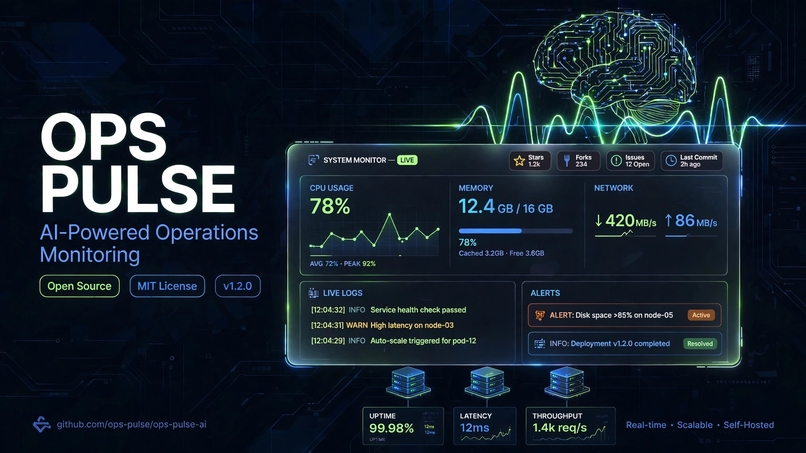
Ops-pulse by Sriramoju Anirudh
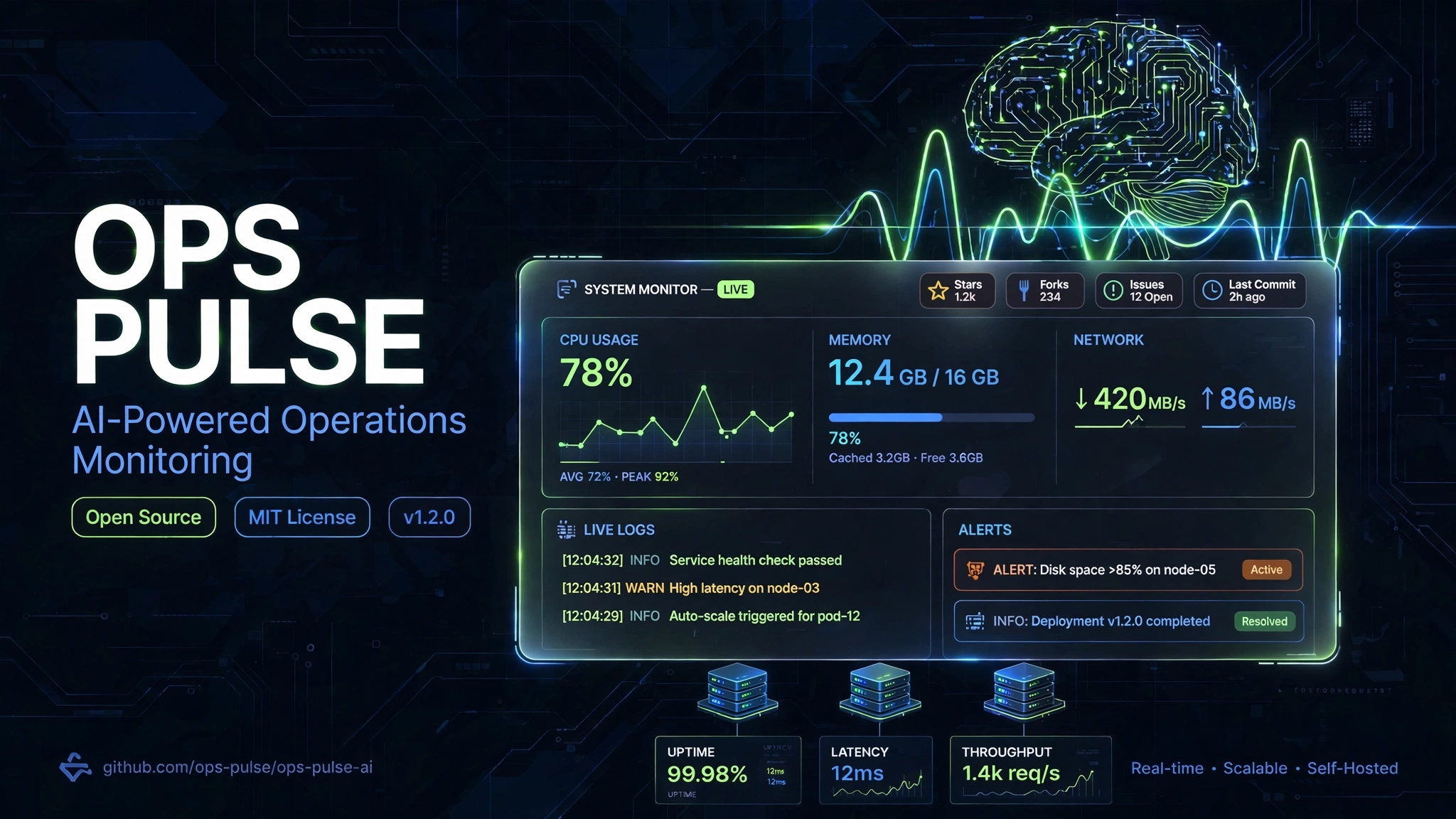
Inspiration
Modern software systems generate thousands of metrics, alerts, and logs. When a critical service fails, engineers often spend valuable time identifying the root cause, understanding the impact, and deciding what to do next.
We wanted to explore how Artificial Intelligence can make this process faster and smarter by transforming complex operational data into clear explanations and actionable recovery guidance.
Our vision is to build an AI-powered command center that helps teams move from detecting incidents to making informed decisions faster.
What it does
Ops Pulse AI is an AI-powered operations monitoring and incident response platform designed to help developers, DevOps engineers, and Site Reliability Engineering (SRE) teams understand system health and investigate service disruptions.
Key capabilities and development goals include:
- Intelligent monitoring: Track service health, latency, error rates, and availability.
- Incident management: Organize alerts and prioritize critical problems.
- AI-assisted root cause analysis: Analyze incident evidence and identify possible causes.
- Smart recovery recommendations: Generate step-by-step troubleshooting guidance.
- Impact analysis: Help teams understand which services and users may be affected.
- Human-controlled response: Keep engineers in control of important recovery decisions.
- Operational intelligence: Bring monitoring, incident analysis, and recommendations together in one dashboard.
The goal is to go beyond displaying alerts and help operators understand what happened, why it may have happened, and what they should investigate next.
How we built it
Ops Pulse AI builds on a web-based operations dashboard and incident management foundation.
The project uses web technologies to present operational information in a user-friendly interface. Our planned AI architecture integrates NVIDIA Nemotron through Nebius AI infrastructure to analyze incident evidence and produce structured recommendations.
The intended workflow is:
- Collect or simulate service metrics and incident data.
- Identify abnormal behavior and potential incidents.
- Gather relevant evidence for investigation.
- Send the evidence to an AI model for analysis.
- Generate an incident summary and possible root causes.
- Display recommendations and next steps in the dashboard.
- Allow a human operator to review and approve consequential actions.
Our goal is to create a modular architecture that can evolve from a demonstration into a more complete operations platform.
Challenges we ran into
Developing an AI-assisted operations platform presents several challenges.
- Distinguishing genuine incidents from noisy alerts.
- Organizing operational evidence into a format an AI model can analyze.
- Reducing unsupported or misleading AI conclusions.
- Generating recommendations that are clear, relevant, and safe.
- Designing a dashboard that remains understandable during critical incidents.
- Integrating cloud AI services while protecting credentials and sensitive data.
- Planning a scalable architecture for future real-time monitoring.
These challenges helped us recognize that an effective AI operations tool must combine reliable data, useful AI analysis, and human oversight.
Accomplishments that we're proud of
We are proud to develop Ops Pulse AI around a practical problem faced by software teams: understanding and responding to incidents quickly.
Our key accomplishments and design goals include:
- Establishing an operations dashboard and incident-management foundation.
- Designing an AI-assisted investigation workflow.
- Focusing on actionable insights rather than overwhelming users with raw alerts.
- Prioritizing explainability and human approval for consequential actions.
- Defining a roadmap for NVIDIA Nemotron and Nebius integration.
- Building a project vision that connects observability, AI reasoning, and incident response.
We aim to demonstrate how AI can make complex operational information more accessible and useful.
What we learned
This project reinforced that building a useful AI application requires more than connecting a language model to a website.
We learned the importance of structuring data, providing relevant context, validating model outputs, designing understandable user interfaces, and keeping humans involved in critical decisions.
We also learned that AI-generated root causes should be treated as hypotheses supported by evidence, not guaranteed diagnoses. Reliable integrations, testing, security, and clear documentation are essential to building trust in AI-powered tools.
What's next for Ops Pulse AI — Autonomous Incident Commander
Our next goal is to turn Ops Pulse AI into a working end-to-end incident investigation platform.
Our roadmap includes:
- Completing and testing the NVIDIA Nemotron integration through Nebius.
- Connecting real monitoring data from supported infrastructure.
- Improving anomaly detection and incident prioritization.
- Building evidence-based root-cause timelines.
- Generating AI-powered post-incident reports.
- Adding team collaboration and approval workflows.
- Evaluating AI recommendations against test incidents.
- Exploring predictive incident detection and safe, human-approved remediation.
Our long-term vision is to build an intelligent incident commander that helps teams understand failures, make better decisions, and restore service more efficiently while keeping people in control of critical operations.
Ops Pulse AI — From alerts to understanding. From incidents to intelligent action.
Built With
- ai
- css
- html
- incident
- javascript
- management
- nebius-ai-cloud
- nvidia-nemotron
- observability
- python
- rest-api


Log in or sign up for Devpost to join the conversation.