-
-
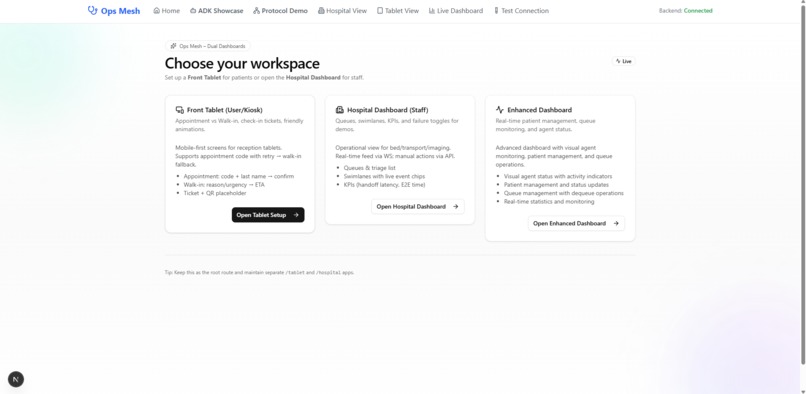
Main Dashboard
-
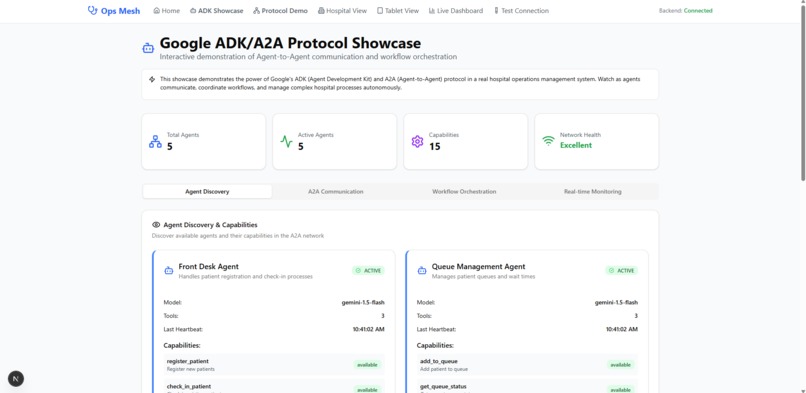
Visualize the process here!
-
-
## Inspiration
We were inspired by the rise of autonomous AI agents and the potential of the A2A (Agent-to-Agent) protocol to transform real-world workflows. Whether in hospitals, logistics, or customer support, organizations face bottlenecks when agents and tools operate in silos. We wanted to explore how agents could collaborate in real time, run in continuous loops, and divide work across parallel workflows to create efficiency and resilience.
## How We Built It
Our system is a full-stack demo that brings these ideas to life:
Backend (FastAPI + SQLite)
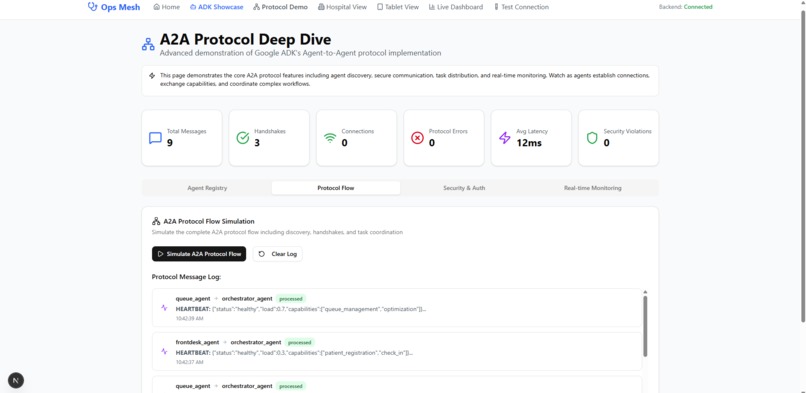
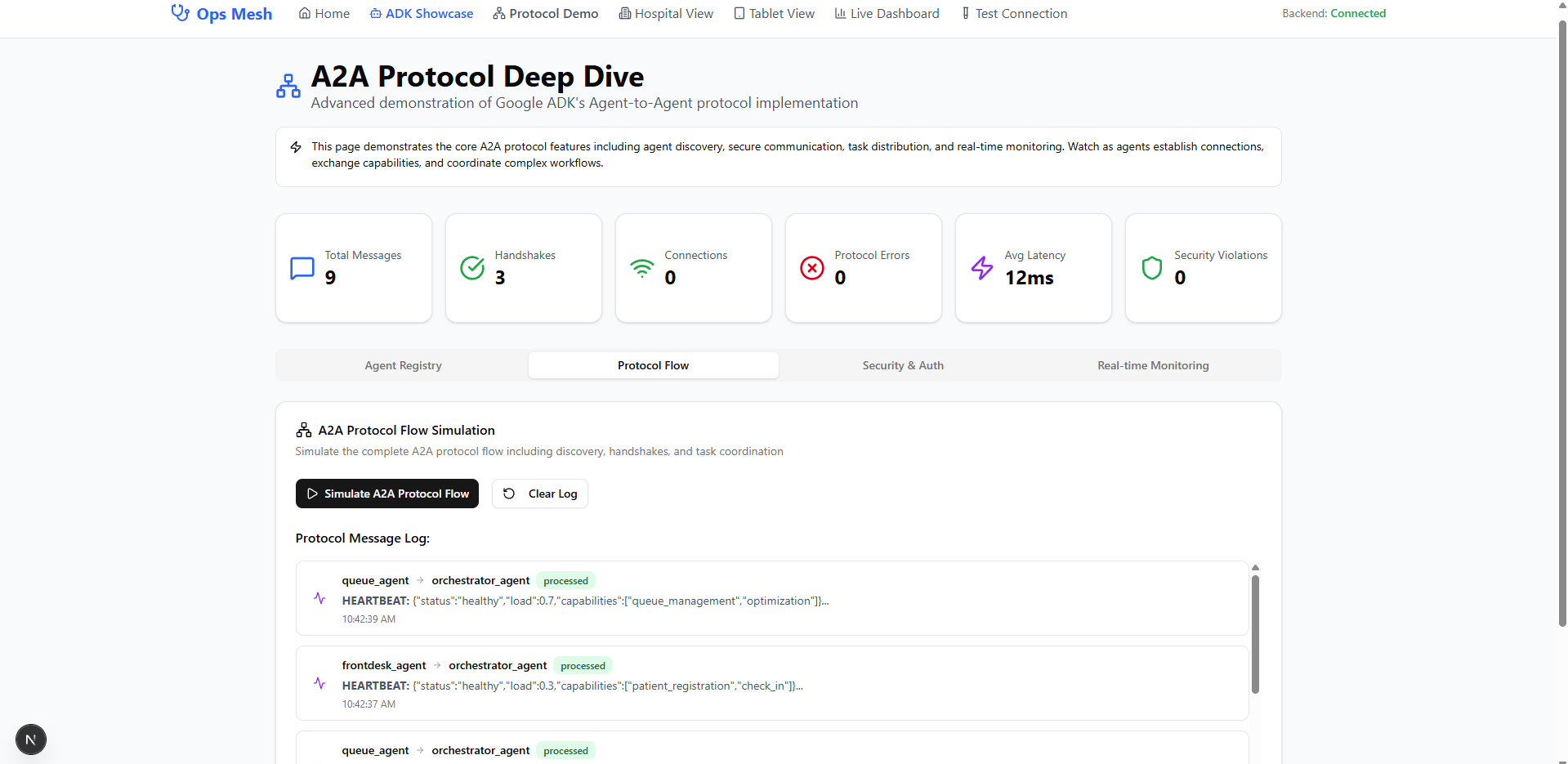
Implements the A2A protocol for agent-to-agent communication.
Provides REST + WebSocket APIs.
Automatically initializes the database and schema.
Runs with Uvicorn inside Docker or locally in a Python venv.
Frontend (Next.js + shadcn/ui)
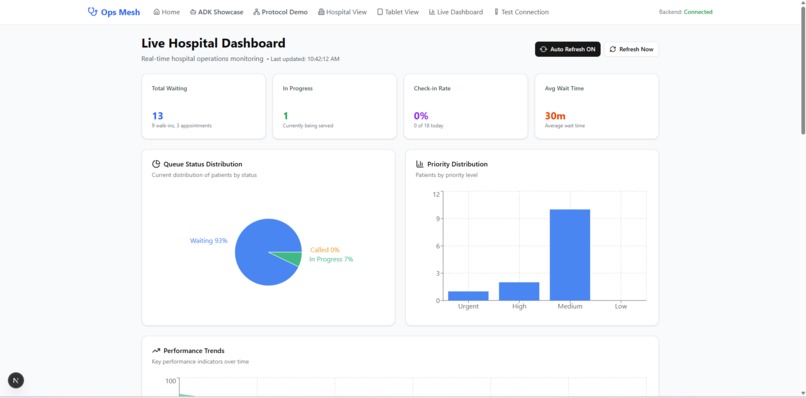
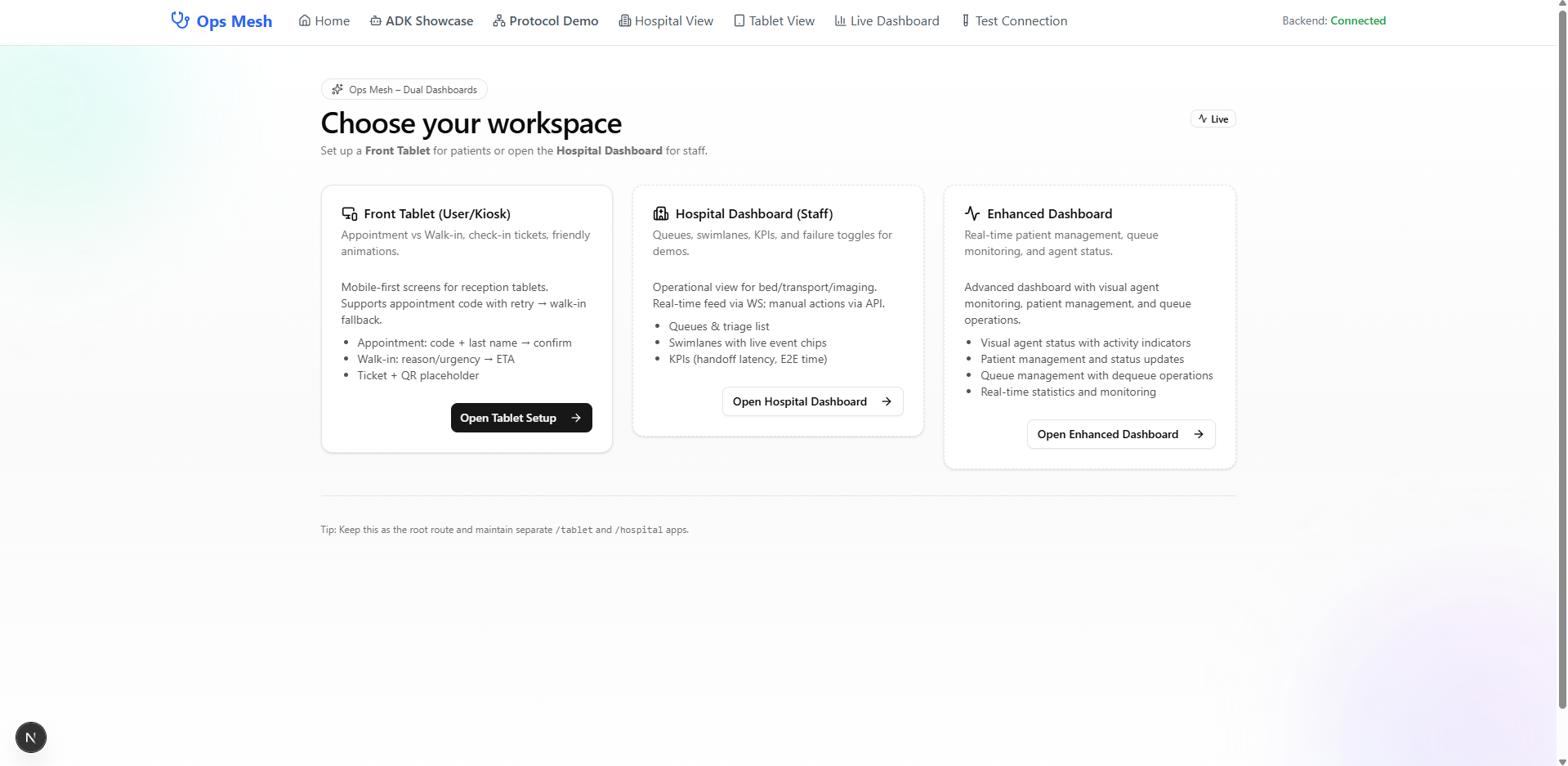
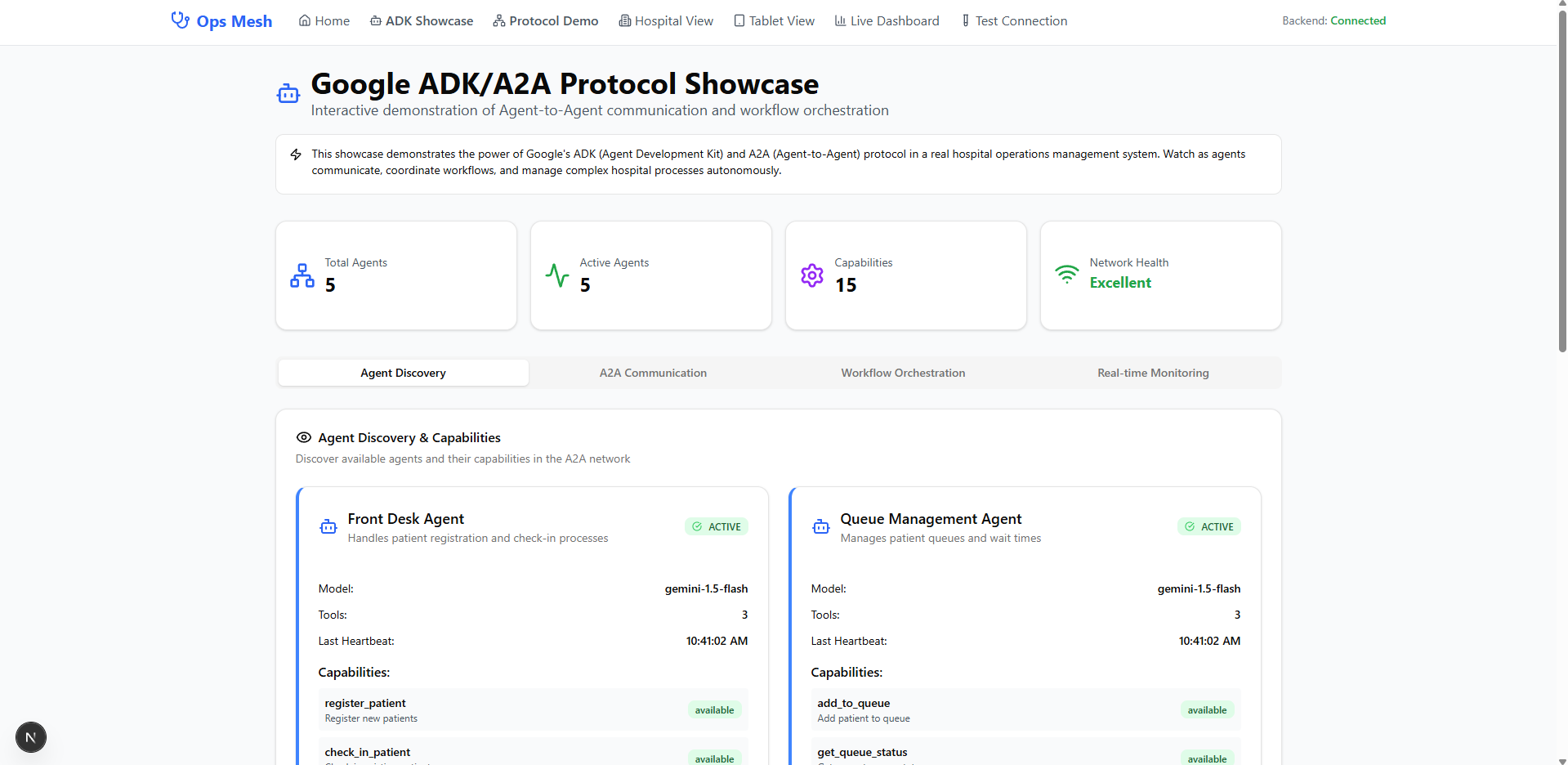
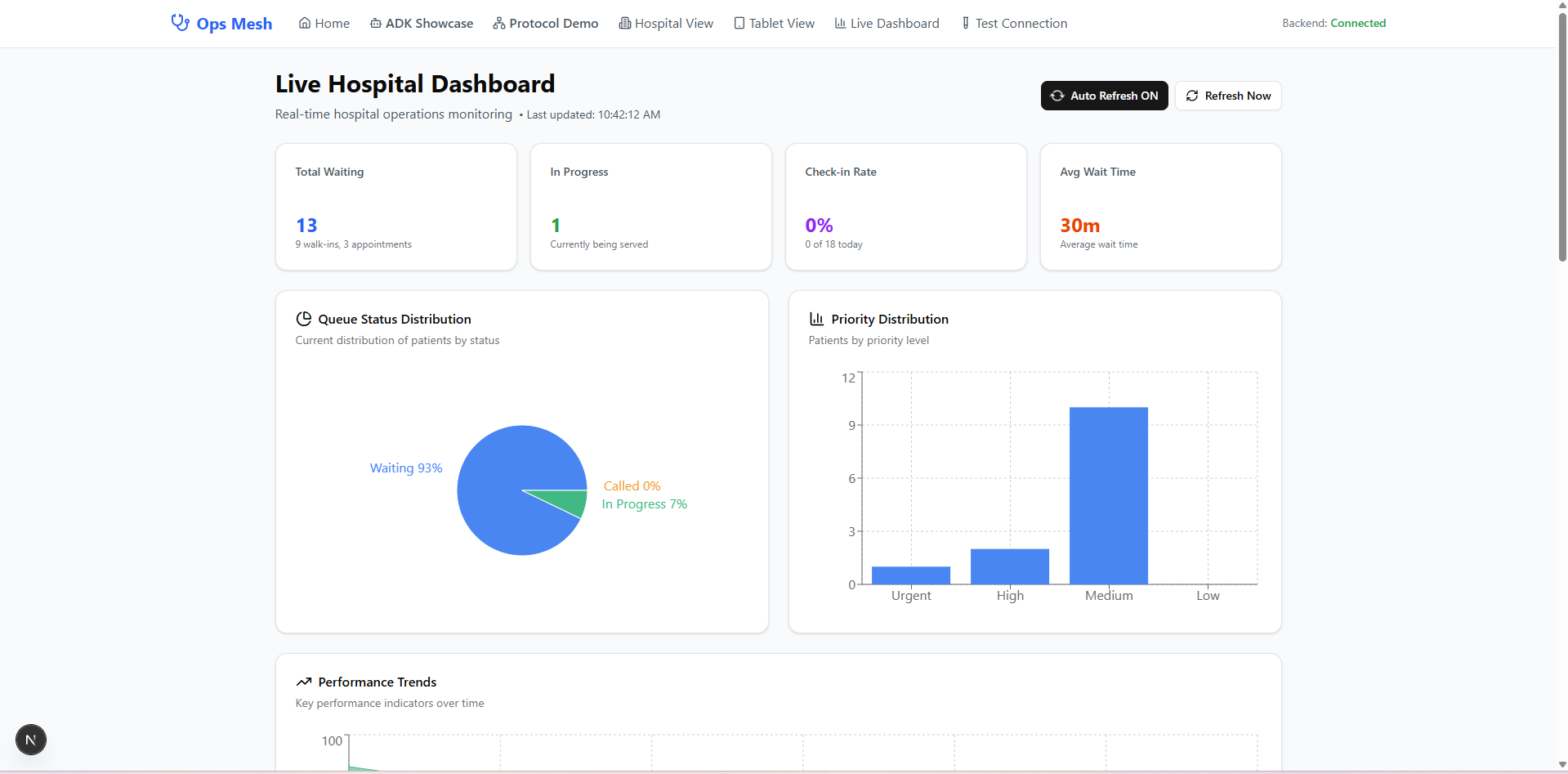
Interactive dashboards at /enhanced-dashboard, /agent-demo, /live-dashboard, and /patient-flow.
Real-time monitoring of agent status, queue management, and live logs.
Clean UI powered by React + Tailwind.
## Agents
Designed with continuous loops that keep them adaptive.
Support parallel execution, splitting tasks among agents for faster completion.
Example: one agent handles queue intake, another updates statuses, while a third tracks performance metrics.
## Deployment
Containerized with Docker (docker-compose up) for a one-command demo.
Custom entrypoint script initializes DB, starts backend, waits for health, then boots frontend.
## What We Learned
How to orchestrate multi-agent systems using loop and parallel execution strategies.
Best practices for Dockerizing full-stack apps, making backend and frontend boot together smoothly.
The importance of health checks and service readiness when multiple processes must sync.
Real-world lessons about WebSockets and maintaining consistent real-time communication across services.
## Challenges We Faced
Dependency wrangling: making FastAPI, Uvicorn, and Next.js coexist in a Docker container without blocking each other.
Database setup timing: ensuring the SQLite schema initializes before agents try to run.
WebSocket stability: ensuring reliable agent-to-agent messaging loops across environments.
Cross-platform development: making the project runnable in Windows, macOS, Linux, and WSL.
## Impact
This project demonstrates how autonomous AI agents can:
Reduce bottlenecks in workflows.
Divide and conquer complex tasks.
Be applied in healthcare, logistics, or IT operations to improve efficiency and resilience.
Our vision is to highlight the future of AI-driven operations, where multiple agents collaborate seamlessly in real time.
Built With
- docker
- fastapi
- next.js
- python
- react
- shadcn
- tailwind
- uvicorn
- websockets


Log in or sign up for Devpost to join the conversation.