-
-
OPS ELITE
Inspiration
After five years working underground, I have seen how mining reporting is often fragmented across paperwork, radio calls and disconnected systems. This delays visibility, weakens accountability and slows operational decisions.
OPS ELITE was inspired by the need to move critical operational information faster and accurately from the underground workplace to the people responsible for acting on it.
What it does
OPS ELITE is an offline-first operational visibility platform for underground mining.
The current prototype connects:
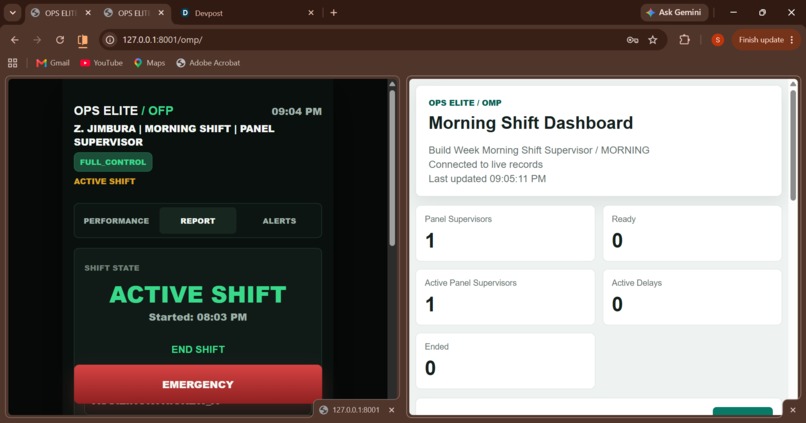
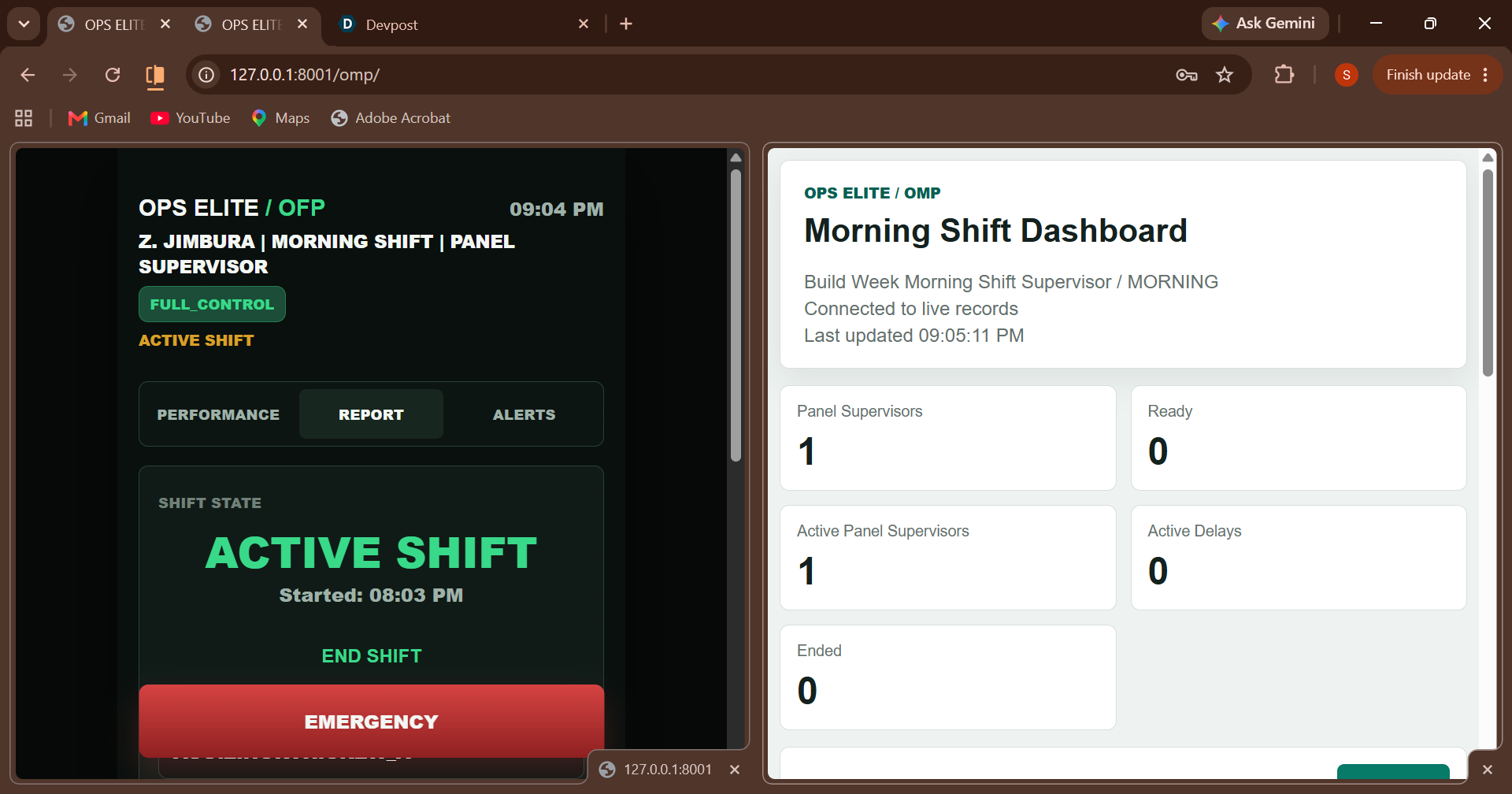
- OFP: Used by panel supervisors to start shifts, complete safety examinations, report delays and record shift outcomes.
- OMP: Used by shift supervisors to monitor active workplaces, delays and operational status.
The full system is designed to extend visibility through mine overseers, section managers and ultimately the general manager.
How I built it
OPS ELITE was built as a connected web application with frontend platforms, a backend API and a structured database.
Codex was used throughout development to:
- Inspect and understand the codebase.
- Build and refine features.
- Connect the frontend, backend and database.
- Diagnose and fix errors.
- Refactor duplicated logic.
- Test workflows across the OFP and OMP.
The system was designed around real underground roles, reporting structures and operating conditions.
Challenges we ran into
The main challenge was translating complex underground workflows into a simple interface for frontline users.
Another major challenge was designing for unreliable underground connectivity. OPS ELITE therefore follows an offline-first principle, allowing critical information to be captured locally, prioritised and synchronised when connectivity returns.
I also had to ensure that the system could support different mine structures instead of being hardcoded for one operation.
Accomplishments that we're proud of
We built a working connected workflow where:
- A panel supervisor can start a shift.
- Safety examinations can be recorded.
- Delays can be reported and resolved.
- Operational status updates become visible on the OMP.
- Shift outcomes can be captured.
- Role-based workflows remain clearly separated.
The prototype demonstrates that underground events can be converted into structured, visible and actionable information.
What I learned
I learned that industrial software is not only about code. It requires a detailed understanding of authority, accountability, user behaviour, connectivity limitations and operational consequences.
I also learned how Codex paired with GPT 5.6 can function as an engineering partner for code inspection, implementation, debugging, refactoring and testing.
What's next for OPS ELITE
The next stage is to:
- Complete the broader management platform.
- Strengthen offline capture and synchronisation.
- Add production estimation and performance analytics.
- Expand emergency and notification workflows.
- Improve configurability for different mines.
- Test the system with real operational users.
OPS ELITE reduces the time between an underground event and management action. It creates one operational truth—from the underground workplace to mine management.
Built With
- api
- codex
- css3
- flask
- github
- gpt-5.6
- html5
- javascript
- openai
- postgresql
- python
- rest
- supabase
- vs

Log in or sign up for Devpost to join the conversation.